EXPLORING VILLAGE LIFE

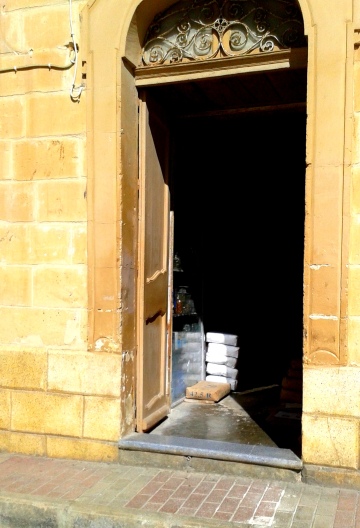
It is wonderful here in Gozo and we are enjoying life to the full, grateful for blessings. We are here now a week and a half, our second weekend already! The first week or so I was very busy with sourcing shops locally. In doing so I have started to explore the village where we live at this moment, Ghajnsielem. It takes me about 15 to 20 minutes to walk to the shops depending on how often I stop to admire something or to take a photo. At first, and because I went shopping during the closing hours (12 to 4pm) I thought that there were no shops at all except one supermarket on the main road between Mgarr and Victoria. But then I went to the village after four o’clock and discovered a bakery, a hardware store, a green grocer, and a small food shop, also several cafés. The fact is that generally there is nothing advertising that it is a shop, and when the door is closed you cannot see that it is a shop. Here is an example of the hardware store, it is one long narrow room filled with glass jars containing screws and nails and what have you, a delight to go hunting for something you need, and to be sure to find it!
20171014_111451But I’ll tell you a little more about this village.
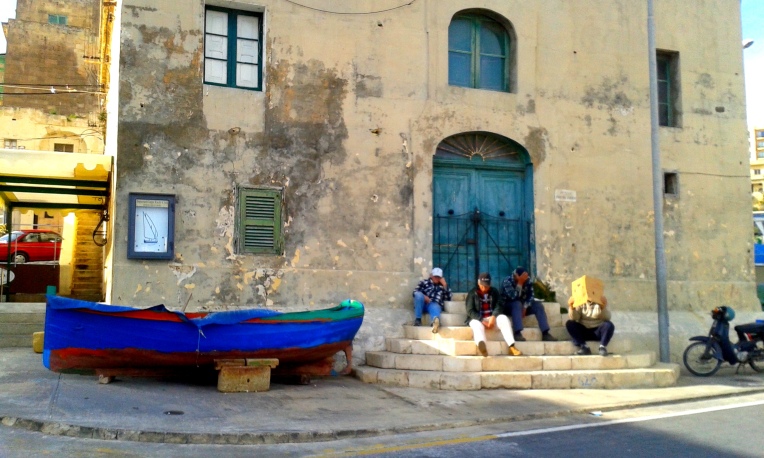
It has a population of 3000 souls, there are several churches, the main one is in a neo-gothic style, rather impressive and amazing inside. Another older church is much smaller, was built mostly by voluntary labour of the farmers around the area and I fancy this one much more, it has simple architecture, and it has many steps leading up to it.

20171011_093736

This is a photo of one of the squares in the village, I really like this square, people go and sit outside in the evening enjoying each other’s company, it is found in the oldest part of the village. There is a butcher shop in this square and a young woman who grows her own organic vegetables and sells a number of other products like gram flour and sesame seeds and so on… she has told me how to cook rabbit the Maltese way because I ordered some at the butchers, I like to cook at least some of the local dishes.  I’m getting to know some people and finding so many friendly and helpful folks, making me feel at home.
But there are several other squares in this village, all with plenty of benches, important for Ian, but also nice to just sit and take in the atmosphere. Beautiful trees and flowers are also in plentiful supply in these squares.
There is also the huge Band club café where a coffee only costs 50cent. This is sort of the hub of the village where young and old gathers and where the local band holds its practice.

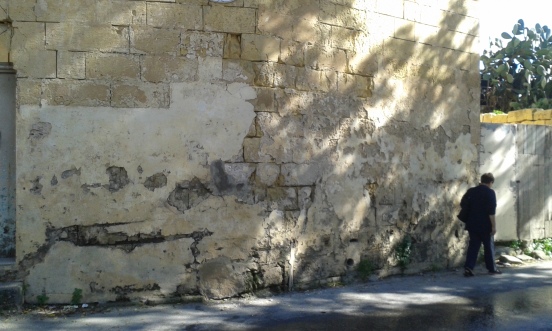
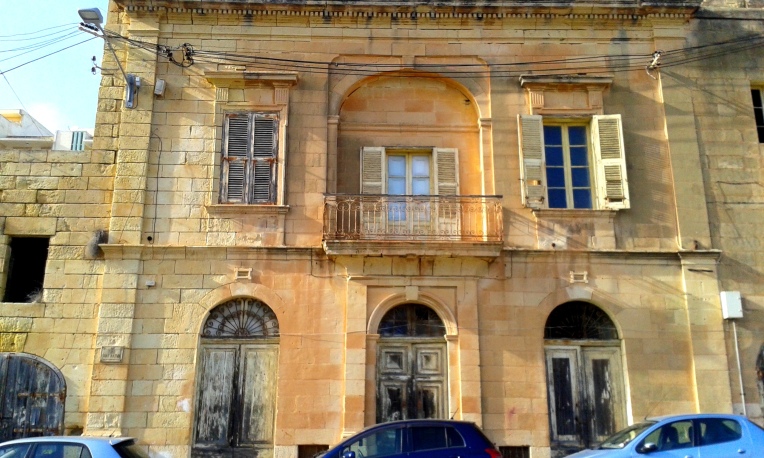
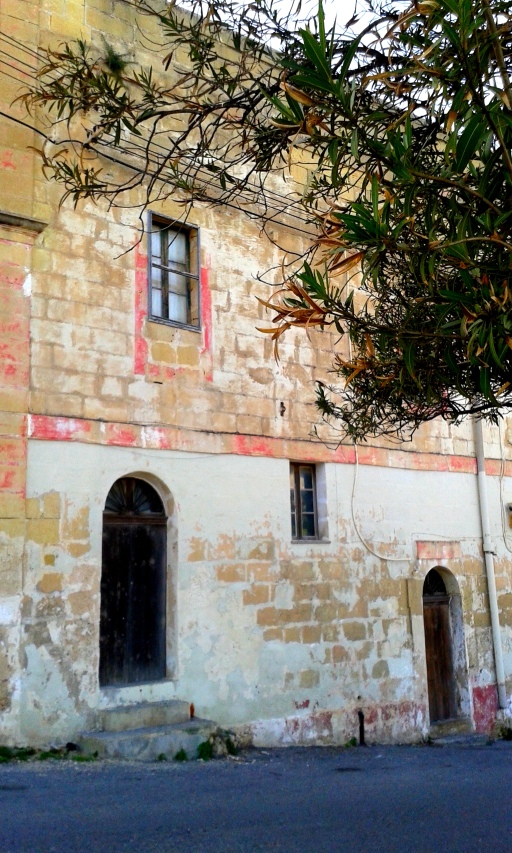
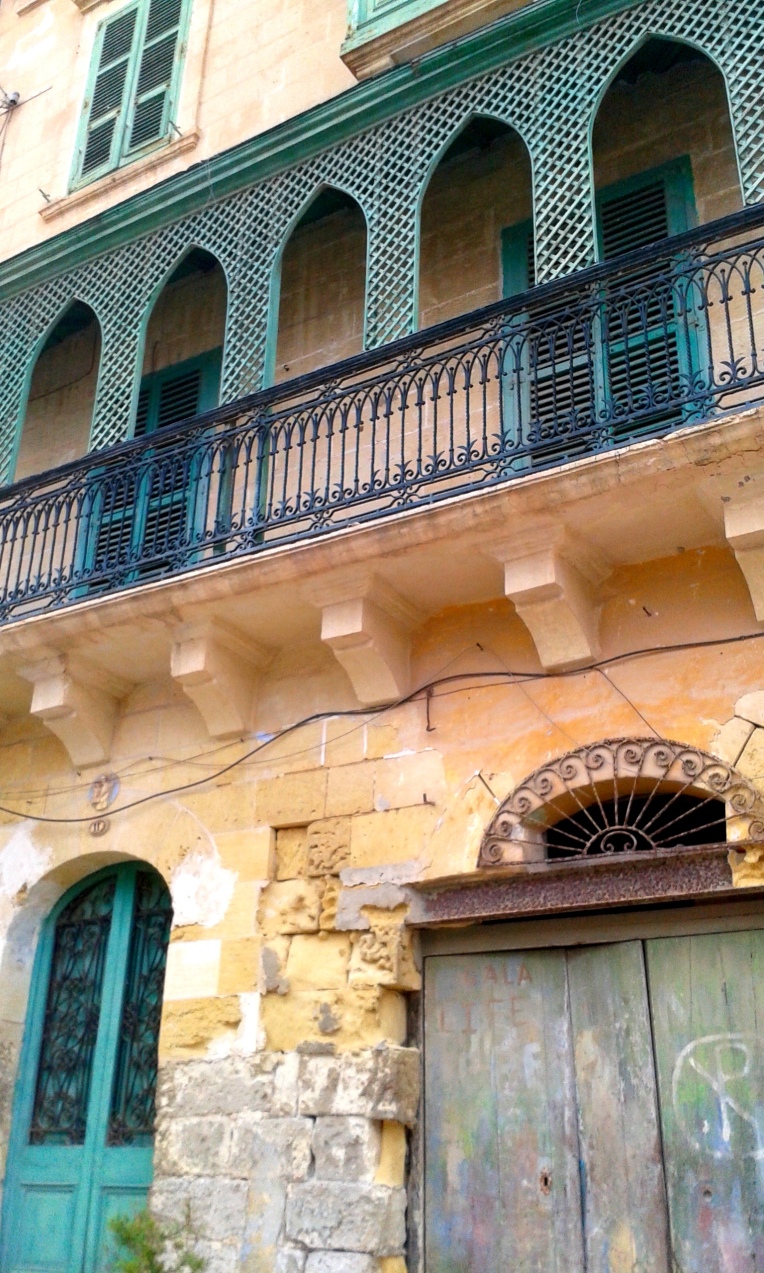
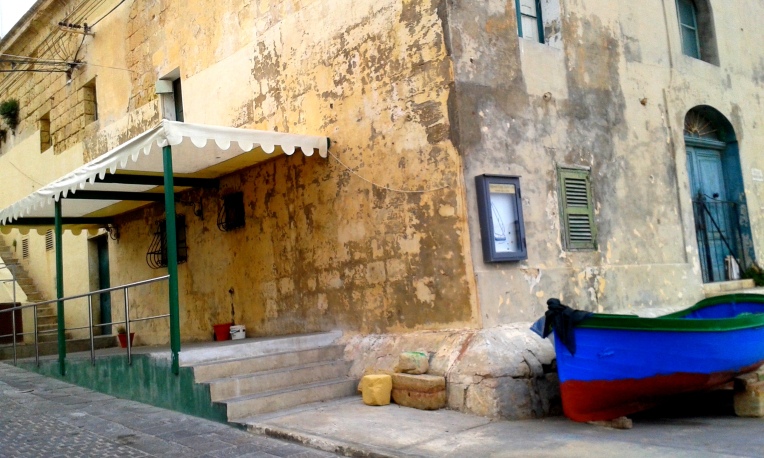
I like to walk through the narrow streets and the squares, there is a special atmosphere and often I find some beautiful features in the vernacular architecture using local limestone. Old doorways are also always a joy to admire and take photos of, they are so picturesque that I always feel I want to paint them, well this time I brought my watercolours and we’ll see how it goes. There is a lot to explore yet around here, I read that remains of a prehistoric temple complex are to be found within the limits of Ghajnsielem, but they have almost been destroyed by road building, but what does remain are two groups of megaliths, they were probably originally part of the same structure, can’t wait to plan a walk out there to go and see what I find.

These are photos of an old washing place, the source of the water is an ancient well and women used to communally do their washing here. The rest of the village would have been built around this area. The above photos are of a reconstruction of the original washing place, a shame that the original one got destroyed but at least the original well is still there and the water is still running! There is a story attached to this well. Long ago when the village was only starting to be formed a local farmer named Anglu Crech used to take his sheep and goats to this spring every single day, and because the sun was so hot he would take shelter under the surrounding trees and say his prayers. Well one day while doing this he saw an apparition of what he thought was Mother Mary who invited him to raise a statue close by and this the farmer, together with his friends, achieved and they would gather there in prayer, and eventually a church was built close by. It’s nice to learn something more about the places we stay, it makes it so interesting, it is the small church I was talking about above.
20171014_111155

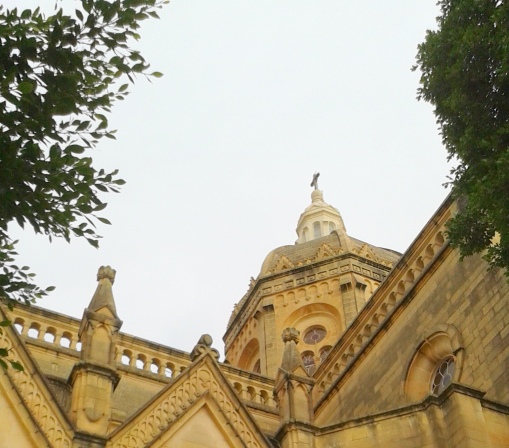
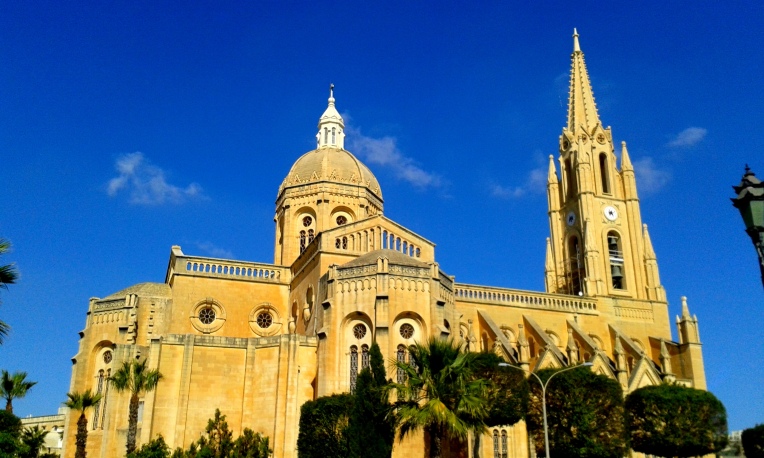
This photo is the neo-gothic church, I took it today and include it to show the blue sky and the way the sun shows off the honey coloured limestone which is most commonly used as building stone here and sourced locally. I have not messed around with this photo, the colours are real.
Close by is the library which is so small that I won’t have a problem reading those books that I fancy. I found some there on the history of the village, to my delight. Most of the books are for children and just like at home there was a class of them in there yesterday, all excited about getting their books. I was laughing as one little girl was told she could not take that many books because she had still some out… she went over to the table and found the books, just like what we often came across back home when I was still working in the library, I did not need to know Maltese to understand what was going on!
20171012_165049

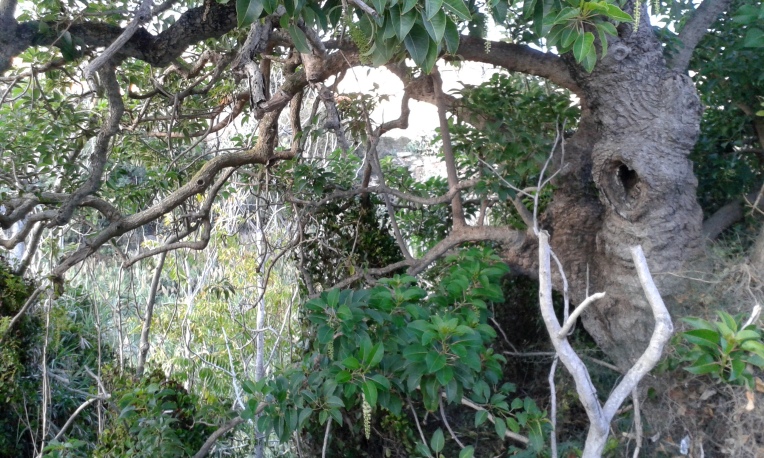
Also along the main road between Mgarr and Victoria, are some beautiful trees. It is an alternative route to the village from where we live and even though it is uphill all the way I like it because of the interesting plants and rocks along the way. So shopping is no hardship even without the car and as it is always nice outside the walking is a pleasure.
20171005_162258

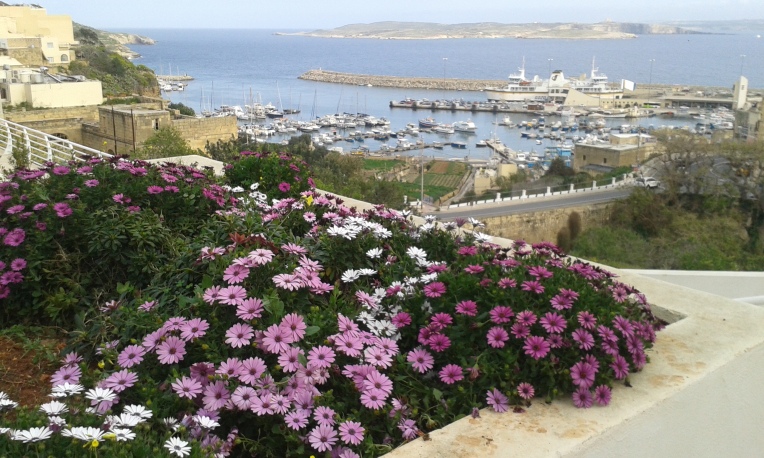
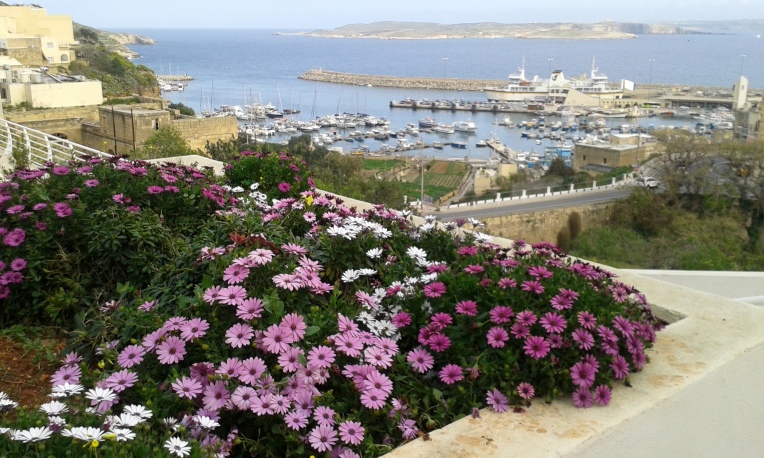
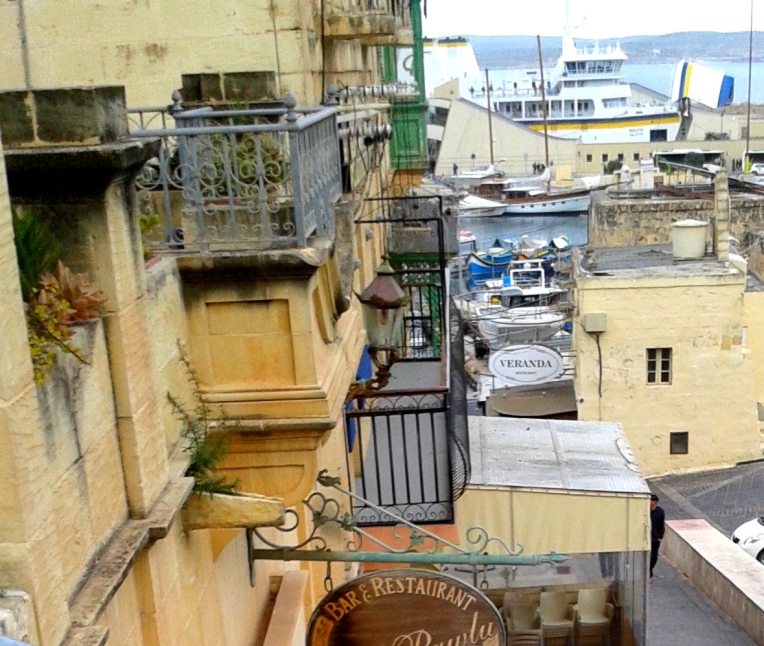
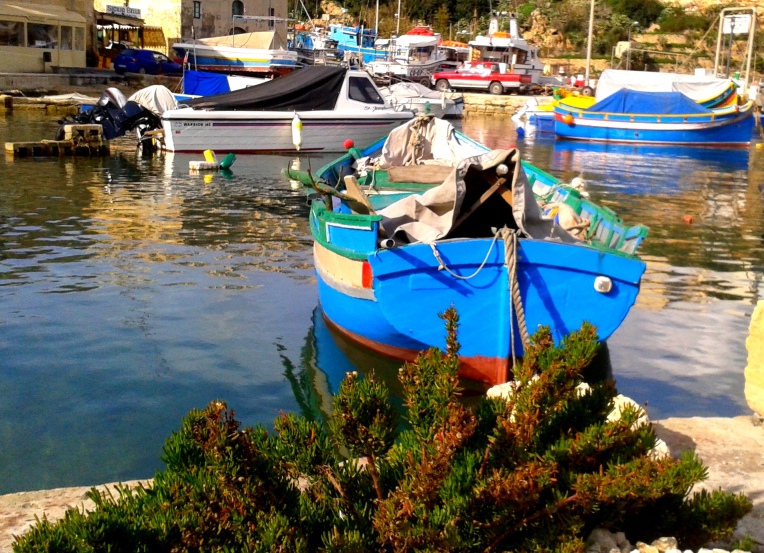
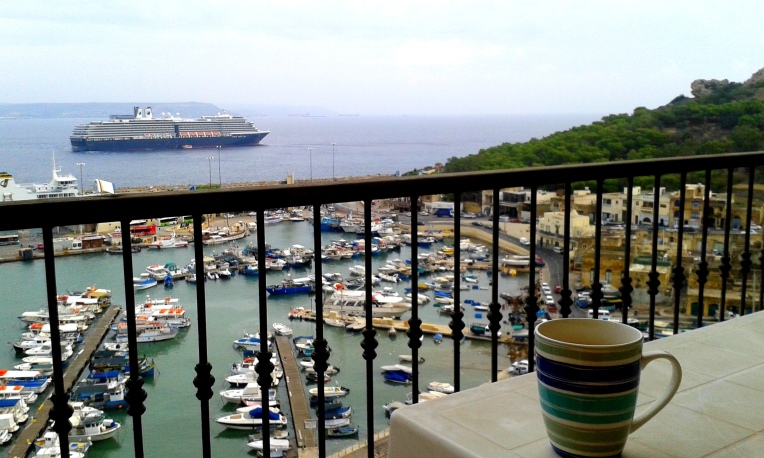
This is the view from our balcony, mostly in the day it is almost too warm to sit here, but in the morning and evening it is lovely. At night the view too is great with the lights of Malta and Comino in the distance. The ferries come and go every 45 minutes and there is always plenty of life to observe. There are little fishing boats at the marina, typically Maltese – at the moment they go out fishing for Lampuki, a fish locally used in traditional dishes. This fish migrates past the Maltese islands during the autumn so it is then that you can find it everywhere and it is very popular here.
DSCF3371

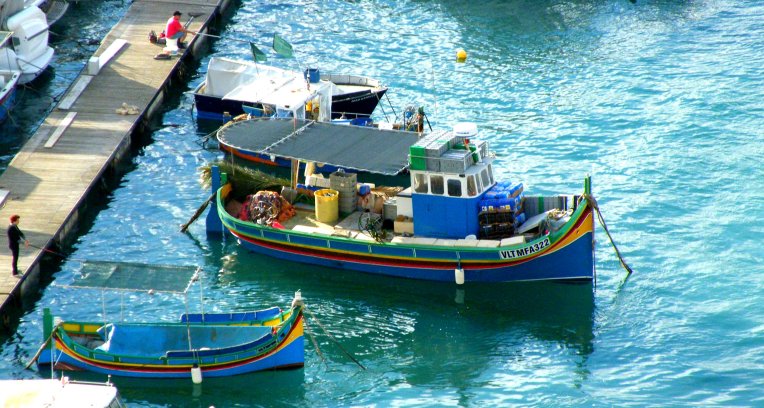
One of the Luzzu boats, original Maltese fishing boats, they go out early in the morning or at night to try and get their catch.  We used to see very many of them while staying in Marsaxlokk, Malta.  Very colourful boats, and usually having an eye painted on its bow, said to protect the boat and those in it.

So this is only the beginning of another winter’s stay in Gozo and there will be plenty to discover and learn and write about, it seems that in order to experience a place fully I have to write about it, then it becomes more real for me.  It is always very exciting though and no matter how many times I walk the same road, there is always something new to find and see or experience.  Awesome!  I hope that you all enjoy coming along with me on my journeys.
THE BEAUTY THAT IS GOZO

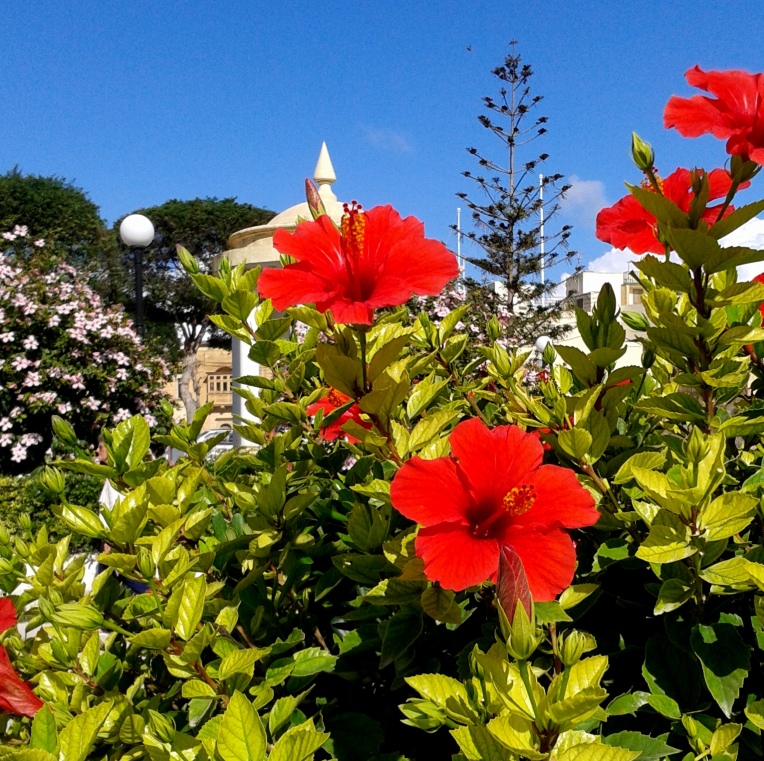
It is hard to believe that it’s nearly a week ago that we arrived in Gozo again. This time we are staying in a village, Ghajnsielem it is called, which lies on the East coast of Gozo and right at the little harbour of Mgarr which is where the ferries from Malta and Comino arrive, and where many boats of all sizes are anchored in the marina. Our flat is at the outskirts of Ghajnsielem and we overlook this harbour from a height which is very pleasant indeed. I am fascinated with the rock that our building is situated on, a beautiful rock, limestone. On my way to the village centre to fetch some groceries or go to the Post Office or such-like, I walk past lovely limestone buildings, old and new. The traditional, beautiful Maltese/Gozitan balconies can be seen in wood or stone along the way, a pleasure to the eye as always. Then you come to the neo-gothic parish church which rises up toward a blue sky, it’s eye catching! Surrounding the church are a variety of green and tree filled areas and an interesting Band club café where it’s nice to sit outside and observe village life while sipping a nice coffee or a cool drink. This morning I discovered where the library was. People all along the way were greeting me with either a bongu or a good morning! I’m starting to feel quite at home in this village.
20171010_104457

20171004_141150

FAREWELL GOZO, for the moment.

DSCF1538
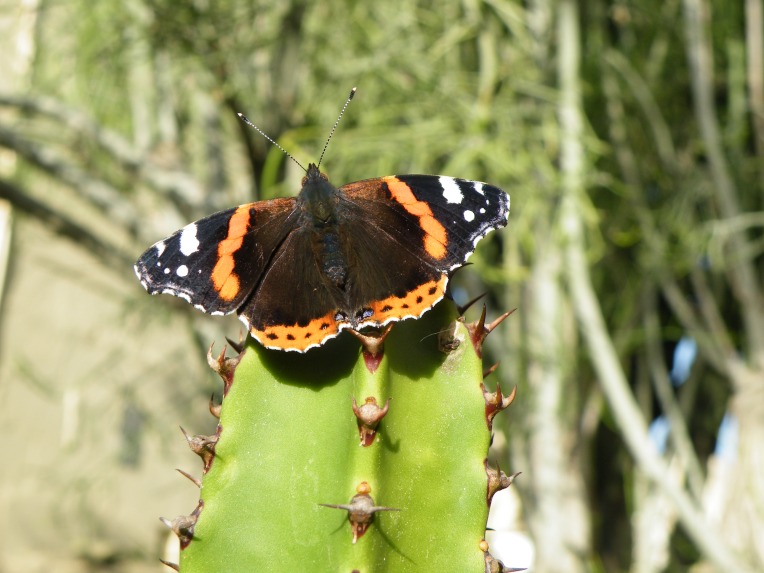
A beautiful Red Admiral butterfly came across my path the other day, or was it I that came across its path.

2017-03-24 10.33.57

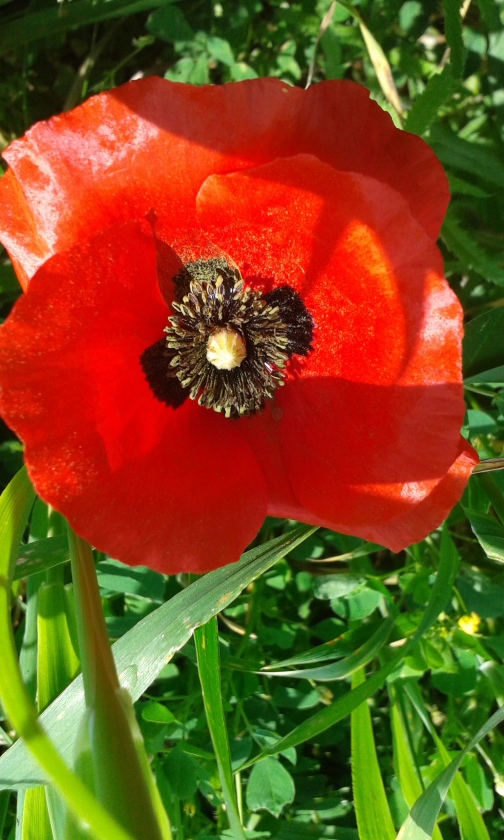
It is no wonder that we see bees and butterflies these days, the abundance of flowers is breathtaking, such a joy for both insects and humans.

Both in the wild and cultivated the delightful colours of flowers greet one, every inch of towns and village are made beautiful by these displays.

2017-02-08 10.03.39

In another day we are leaving Gozo for the summer months, we are already looking forward to coming back though I must say that we are also looking forward to spending the summer in Ireland and seeing everyone again.  Most of all we are just grateful for everyday we can live in peace and in beautiful nature among family and friends.  Living in the moment is the best way to enjoy life.

2017-03-19 15.14.55

We will leave some friends behind and the many people we interacted with the last few months have been lovely and very generous with stories, information and their time.

I’ve had a lovely and interesting time with my Gozitan bobbin lace making class, my great teacher, and fellow students, it was very enjoyable and I learnt a lot, and discovered that making lace can become addictive.

Ir-Rabat has been a wonderful place to live in and explore, all the artistic corners and the lovely ambience that is tangible in this great town have been top class, and the Citadella has been top of the list as have the little alleys around St.George Basilica and St.Francis Square too, and of course the library there.

Gozo has had so much to offer us, nature, people, art and culture, all much enjoyed.

2017-03-05 16.09.18

We are very grateful, that is Ian and myself, for having found a flat in Ghajnsielem for next winter, the view from the place is incredible, more and new adventures await, all being well.

Feeling very grateful and appreciative to avail of this opportunity.  So for now it is back to Ireland and to West Cork.  I must have taken thousands of photos while here and in the coming months will still be posting stories about Gozo, that is for sure.  But for the moment I am taking a week off from blogging, we will be with family in UK for several days, I will not be near WiFi perhaps.  So I wish all my dear friends and followers a good week, thank you for reading my blog, and see you soon.

PEACEFULNESS AND BEAUTY

Somewhere on the island of Gozo, towards the west lies a small village called L- Ghasri, it is close to the sea and high up on a hill the Ta’Gurdan lighthouse keeps watch over the land and the sea. A little way inland a basilica was build many years ago in request of the Blessed Virgin according to a local woman who had received this request in a vision when she was praying in a chapel standing on the same site where the basilica is now today.

The Blessed Lady of Ta-Pinu basilica stands tall and majestically in the middle of fields full of, at this time, colourful spring flowers. A few days ago I paid the area a visit. In the brochure it said that the place is one of peacefulness. This Ta-Pinu is a sanctuary, it is a place where pilgrims go and where sometimes people get healing.

It was a beautiful morning with a warm sun shining over the land. I took the bus to my destination which it reached from Ir-Rabat in less than ten minutes. I had read that the church is built in the Romanesque Revival style so there was interesting architectural treasures to discover, the beautiful sculptures, fine capitals and mosaics I noticed immediately. Among my favourites are the stunning mosaics over the main altar in gold and bright colourings. But also the intricately woven stone carvings of the capitals and other decorations. In the background and very quietly there was Gregorian chant being played, well I was not sure as it sounded so real and I did notice that there were people and a priest celebrating mass so I thought maybe somewhere hidden there were also monks singing… no not true. But really the atmosphere did get me and I felt ver peaceful.

Coming out and back into the blazing sun I turned my attention to the surroundings, and what a beautiful panorama I could see! Towards the South lies another village called Gharb. But I decided to go and have a look at L Ghasri, a picturesque and very small village, on the walk along to the first of the houses I noticed many wild flowers, some of which I had not seen yet on Gozo, so photos had to be taken you can imagine. Lizards darted here and there on the warm limestone. I chatted with a lady sitting in her doorway and also talking to a South African man who was visiting too. After a lovely walk I went looking for the bus stop to return home, but on the way a local friend happened to be passing and gave me a lift, his car loaded with stones for building something and his dog was also in tow, and more chatting of course was done.

The day had passed in a most lovely way, getting the feel of the land, the people, and their heritage is something I really enjoy here, as everywhere really.  I hope you enjoy my photos.

DSCF1369

TA-PINU GOZO

DSCF1447

The small village of L-Ghasri has many beautiful corners and little alleys, and it is so peaceful and quiet there, expect for some birds singing and people talking.

These shrines are often found on older farm houses.


THE FERRY PORT OF MGARR

Mgarr in Gozo has been a fishing harbour and a Ferry port since medeaval times, since the thirteenth century. In the olden days a small jetty was used for passengers to board a ship and for fishermen to unload their catch, it is still there just below the Gleneagles bar.  (which by the way was the name of a ship which operated between Malta and Gozo 1885 – 1914)

The little town was build around this harbour. Further away from the port the rocky shore rises high and steep and is now quite built up in parts. The oldest part of Mgarr still has this feel of days gone by about it, and is quite charming. There are little restaurants and chairs and tables outside where one can watch the goings on of boats and fishermen, but also sample nice fresh seafood of course.  There is a chapel high up on the cliffs, and a plantation of trees near Fort Chambray which also overlooks Mgarr from the West.  We often come here as there is a lovely walk along the shore.  There is a great buzz also of comings and goings.  I guess though that there is even more to Mgarr and that I will discover more in future, something that to look forward to.   I have enjoyed it very much so far.

20170305_160918

Overlooking Mgarr Ferry Port, taken from Ghajnsielem.

20170305_153850

20170305_152924

20170305_170406

20170305_170246

20170305_170522
This is the
Il-Kcina Tal-Barrakka Restaurant during winter, so no tables outside.

20170127_141115

A great vantage point where men sit, chat and watch the world go by.

20170127_140839

Down at the water and the colourful fishing boat brighten everything up, there are also many modern yachts, and a variety of ferries and pleasure cruise boats.

WISHPERING TREES

“If you reveal your secrets to the wind, you should not blame the wind for revealing them to the trees.”  Kahlil Gilbran

20170305_151205
Trees have always been my among my best friends, I love the feel of being near to them, their scent, their whispering, rustling of leaves, the first buds opening in spring, their beautiful and delicately fresh young green filtering the first rays of the warming sunshine. So much about trees talks to me and inspires me. But I also like to know their botanical names, their medicinal uses, and their importance in the landscape and to the earth. I’ve been taking photos of trees here on Gozo, but obviously I am not familiar with most of them. Some of the trees that came to my attention a lot here are the Olive and the Carob tree, two most lovely trees that produce health giving and delicious fruits. The Eucalyptus grows here too, I’m quite familiar with this tree as it grow in Ireland too.  I know there is a lot more to learn and explore about trees on the Maltese islands, something to look forward to next winter.
I’m just going to add photos to my post as I am still working on identifying and looking up information on the tree in my pictures.

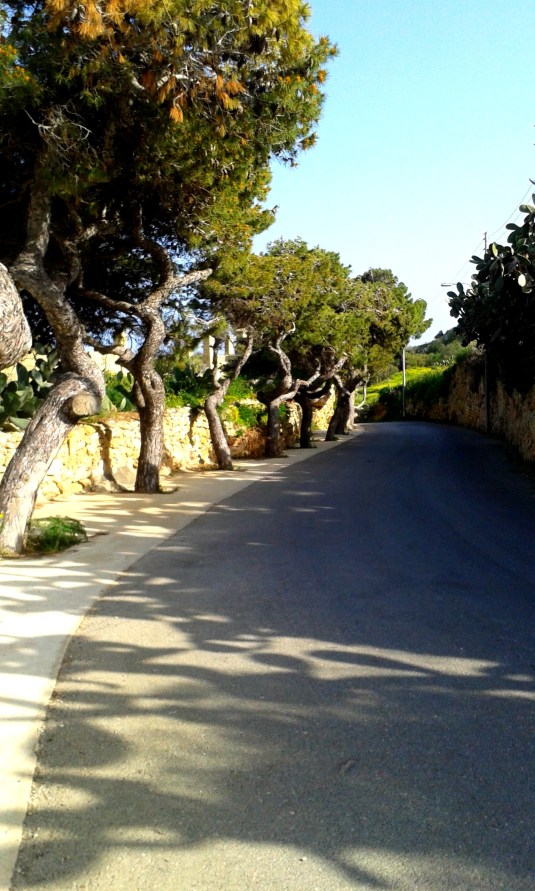
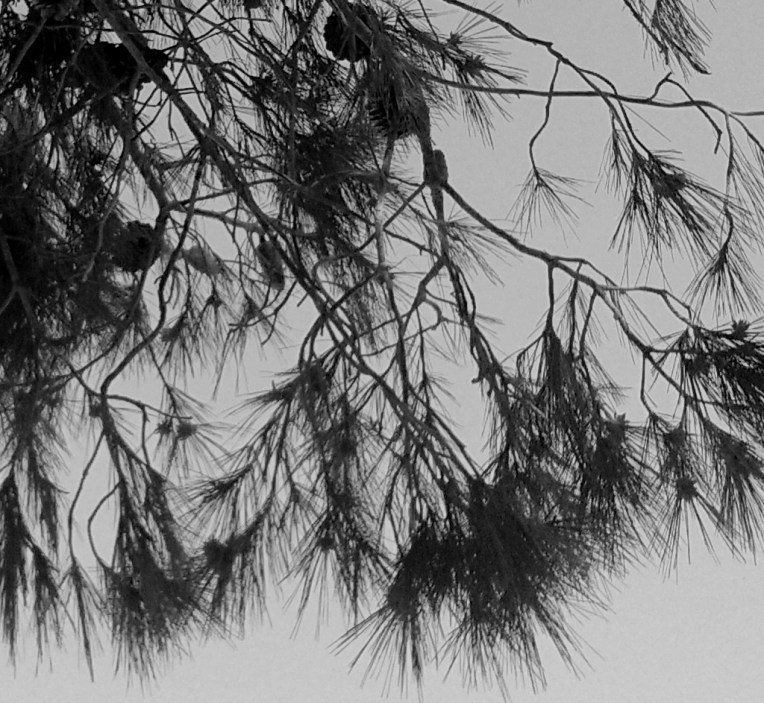
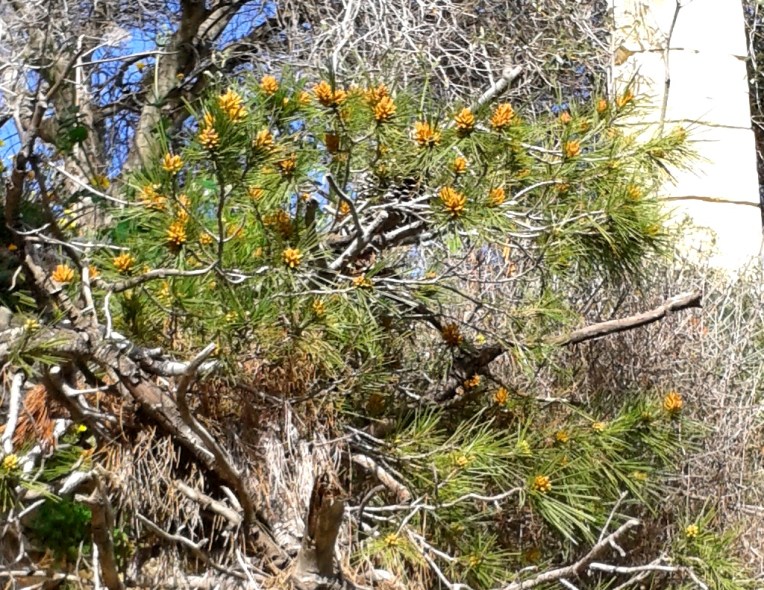
Foto above are a row of Aleppo Pine  Pinus Halepensis (Siġra taż-Żnuber/Siġra tal-Prinjol)

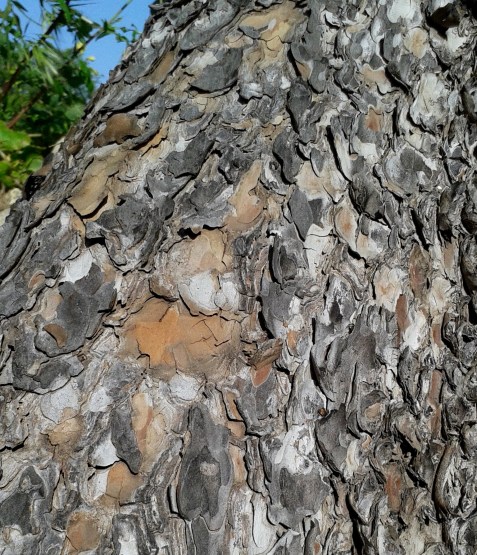
20170305_151310Bark of above Aleppo Pine
20170305_151355

More photos of the above Aleppo Pine.

20170305_151433

Young shoots.

Strongly scented sticky resin, and some of the open cones to the right.

20170305_151226


CARNIVAL IN VICTORIA – GOZO

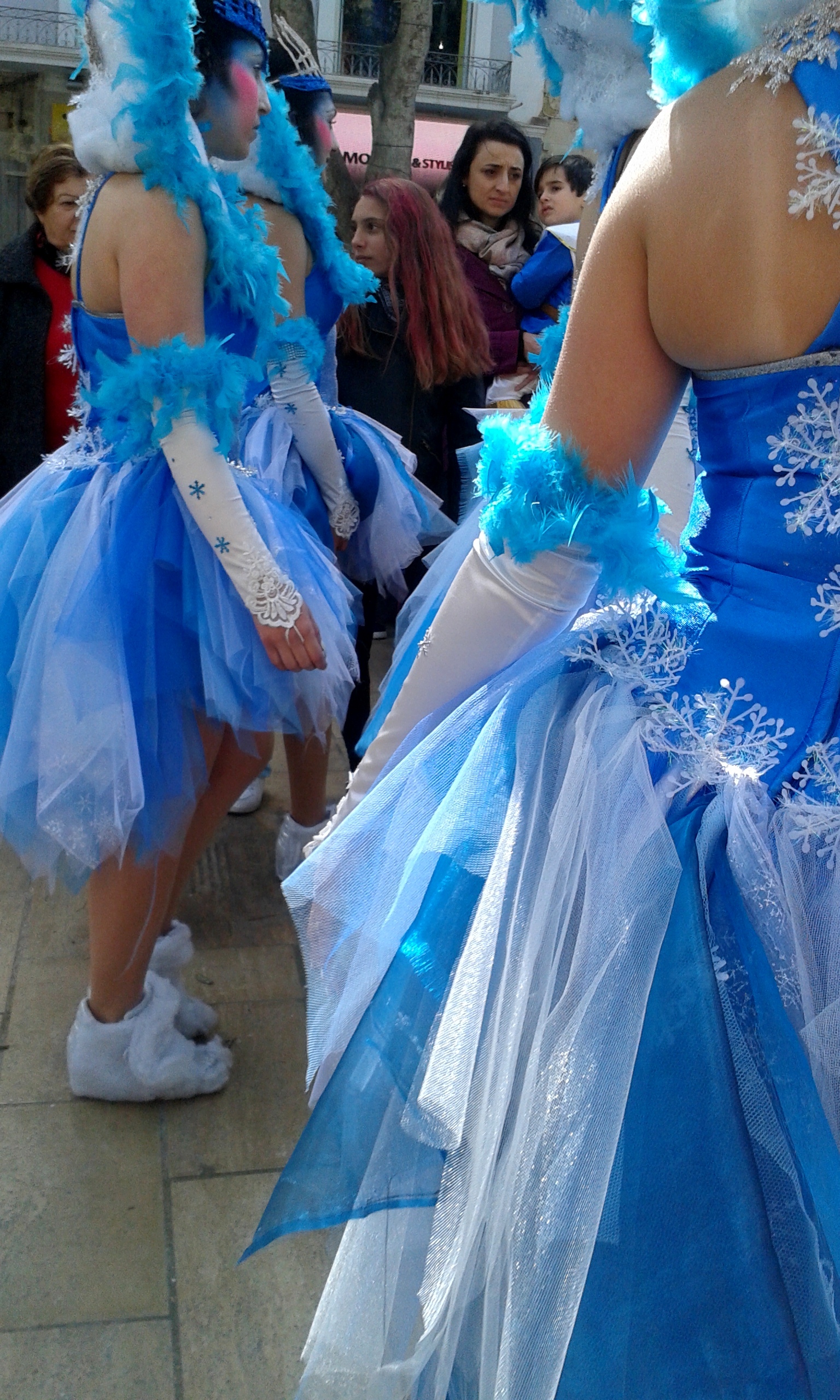
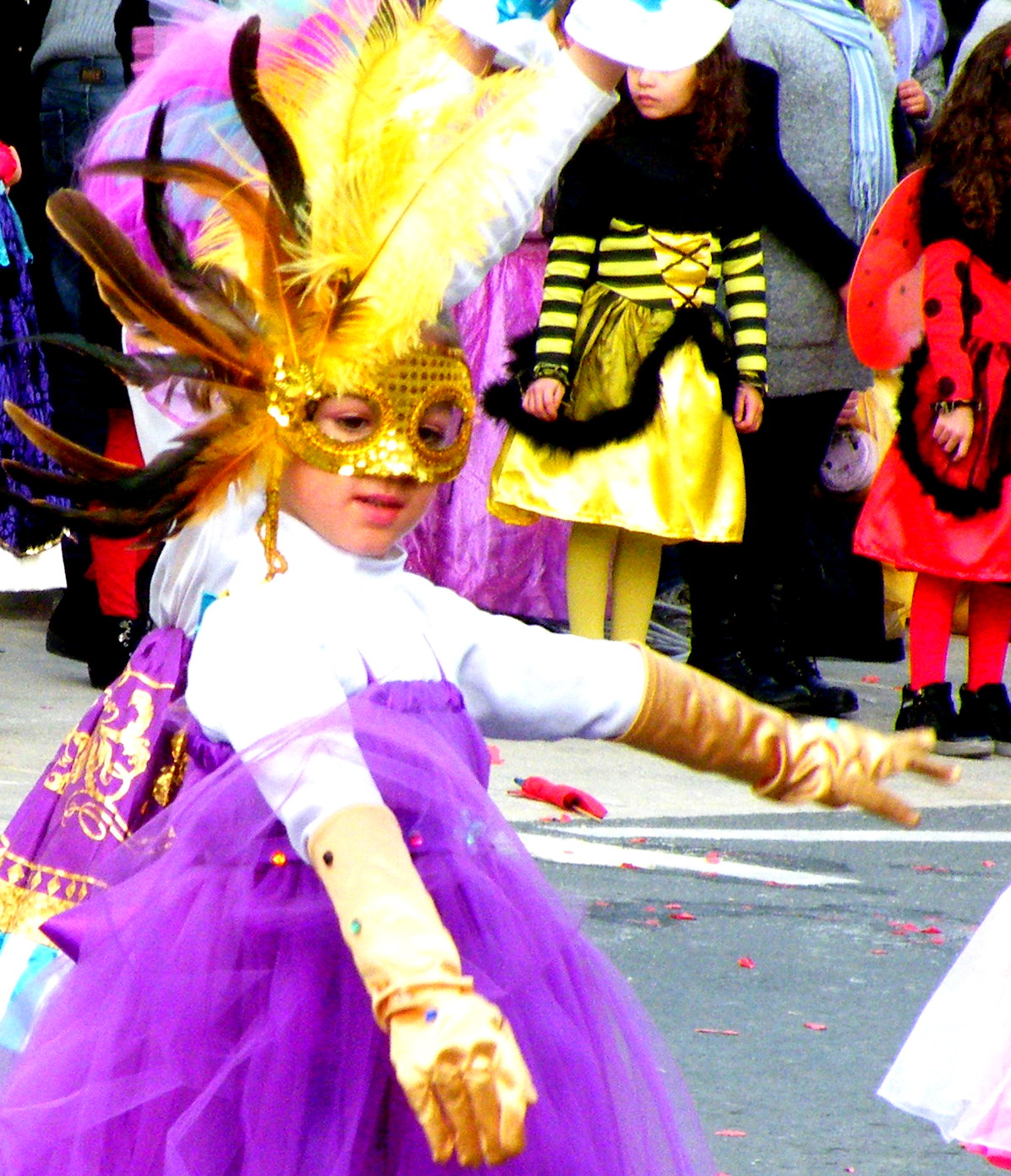
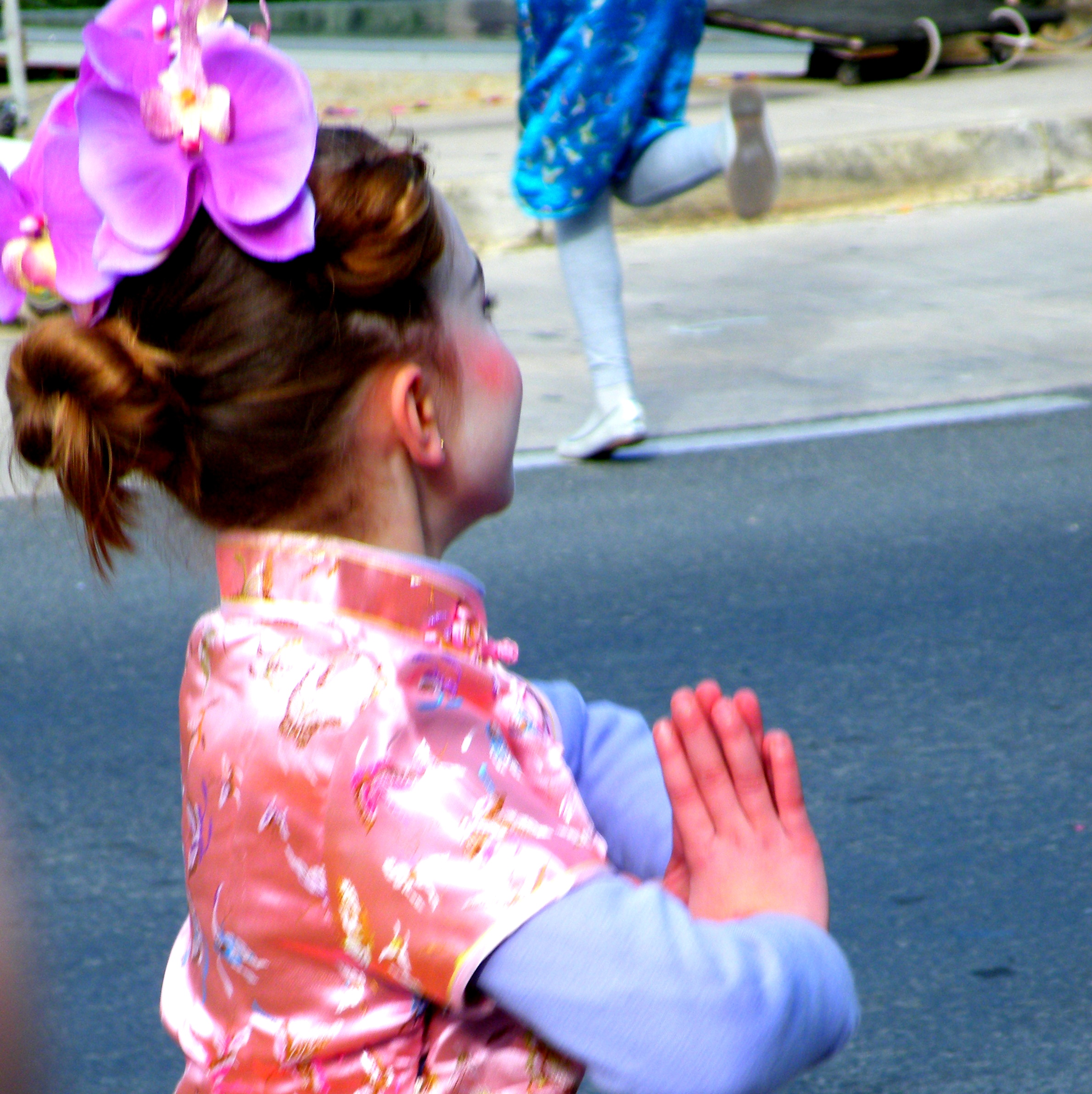
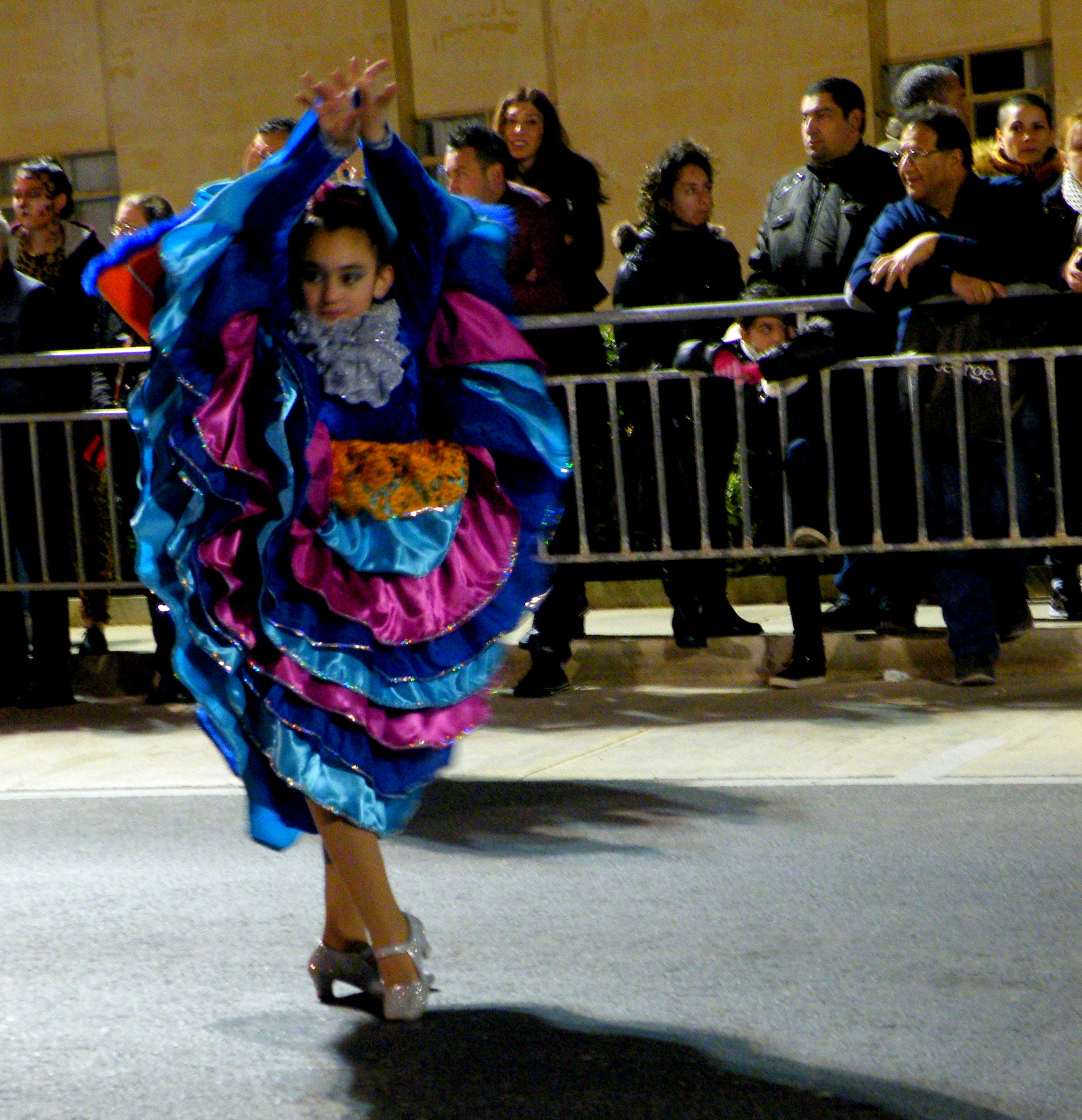
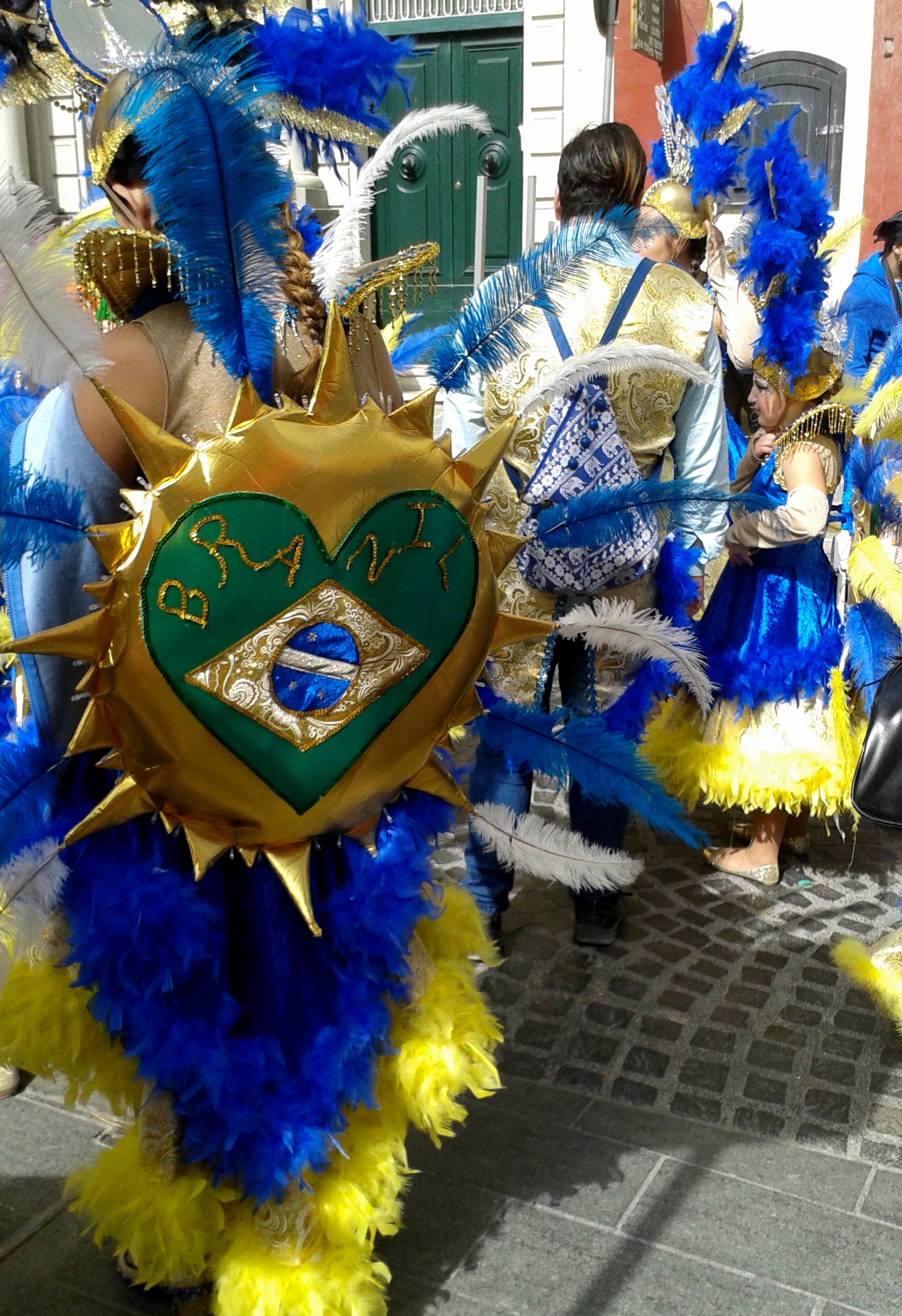
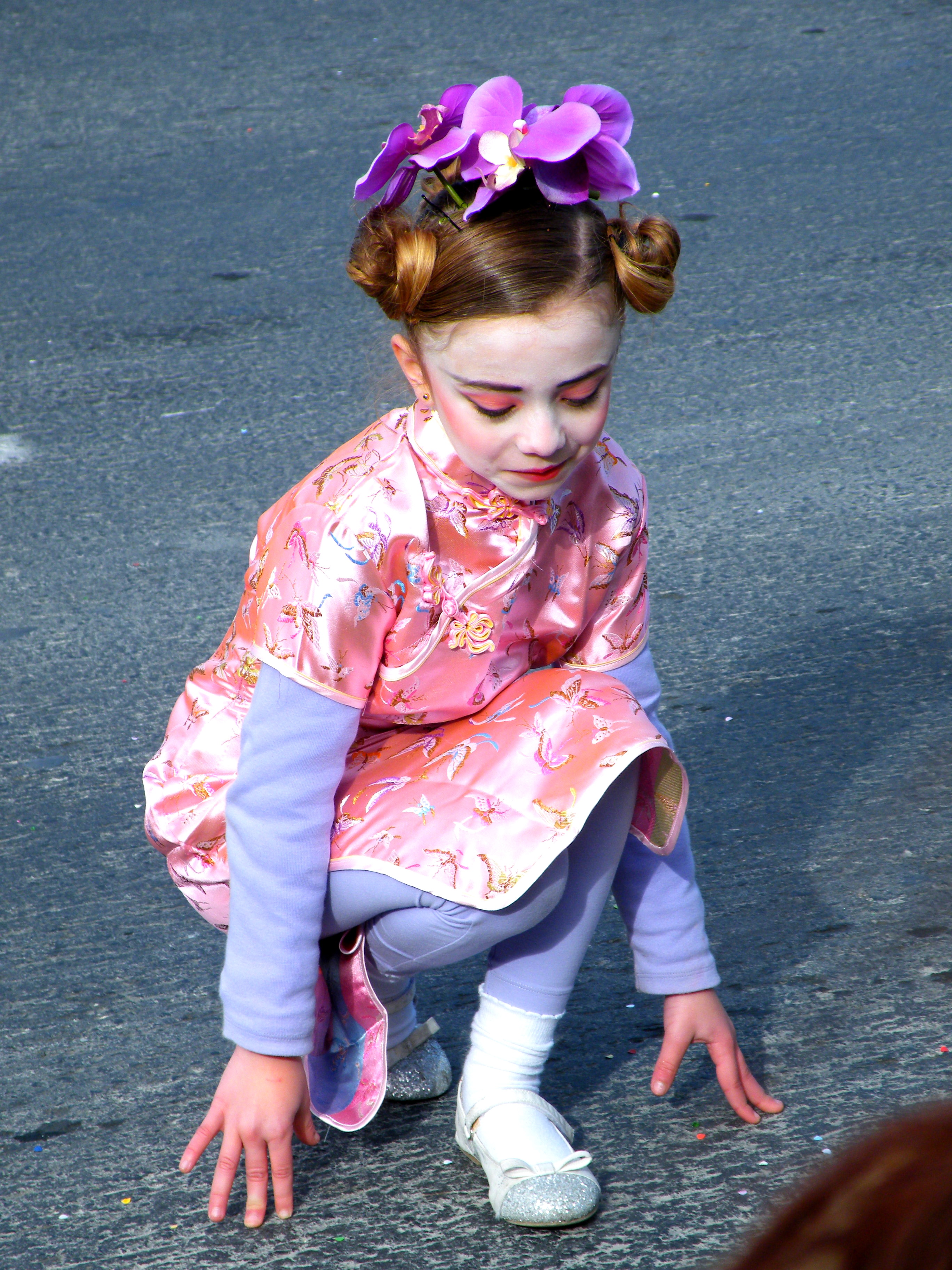
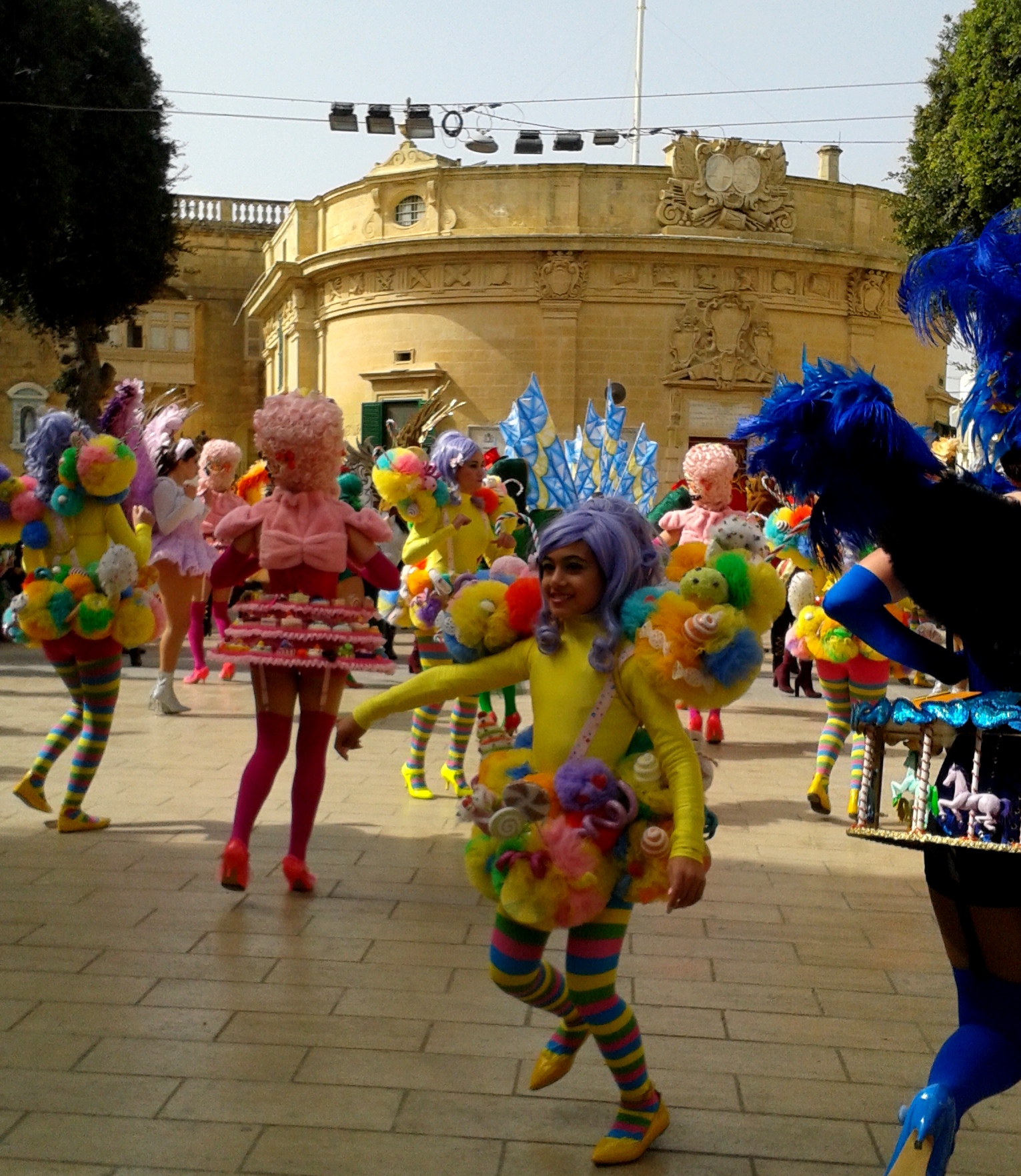
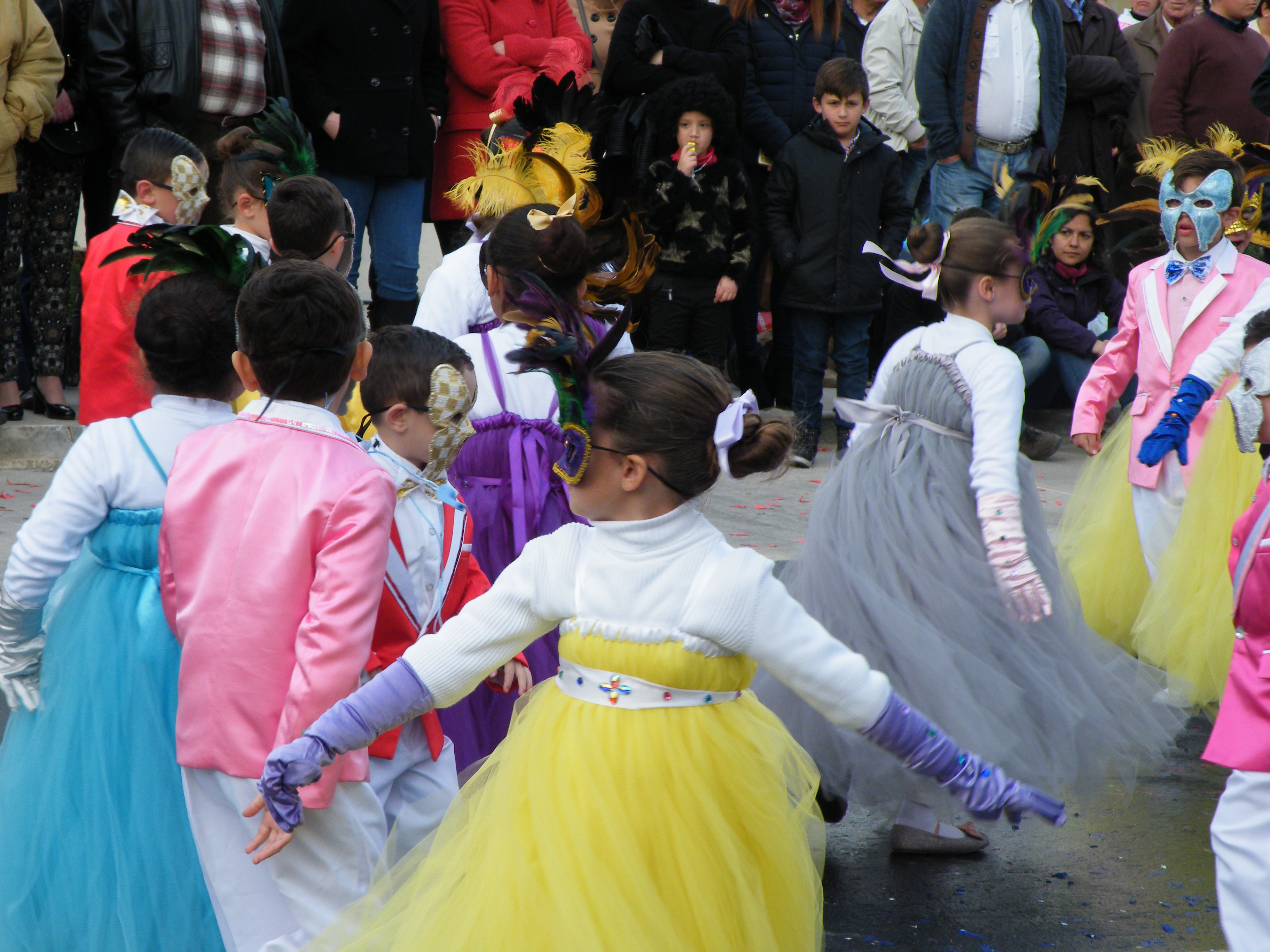
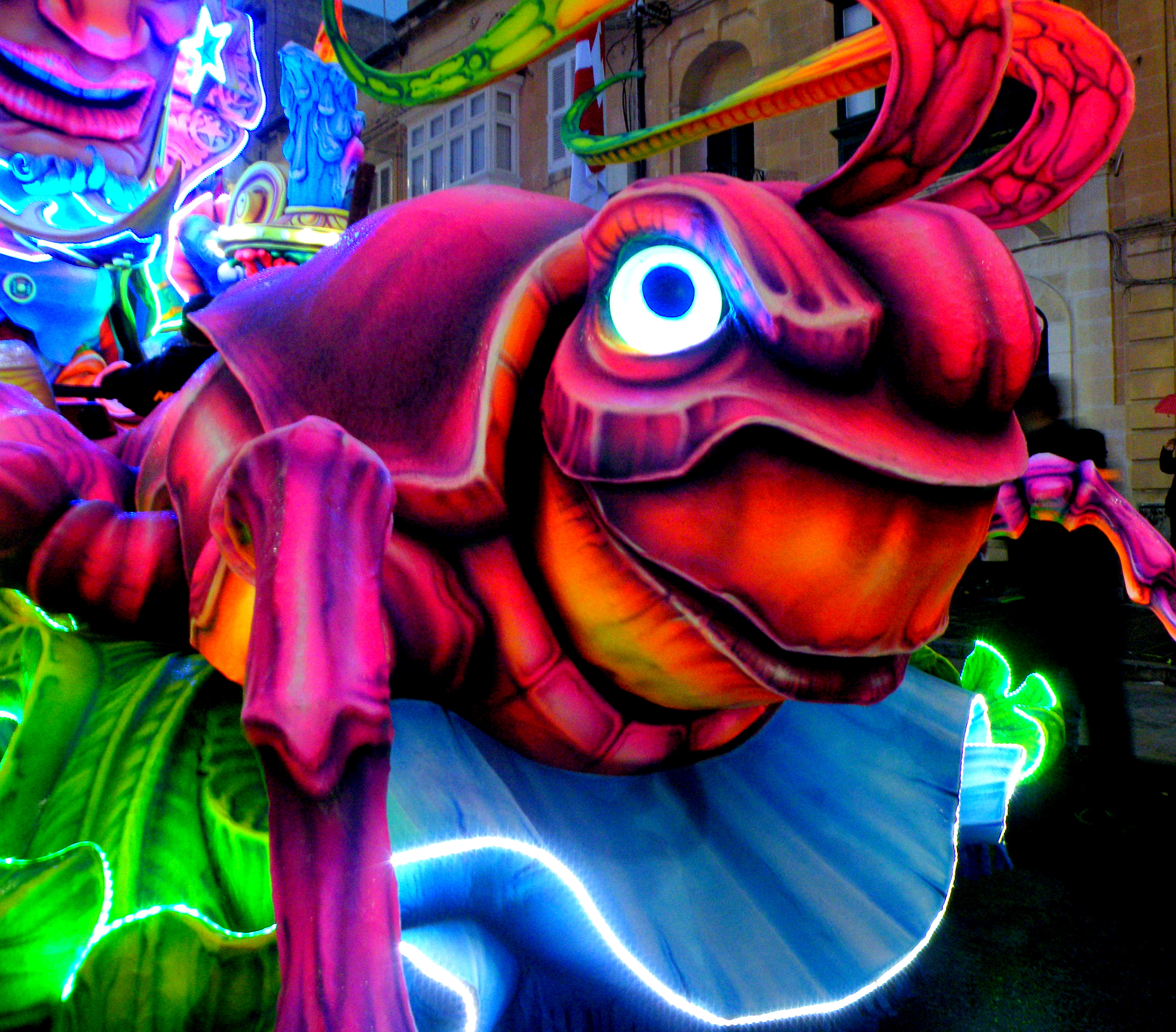
Last week, and for five days there were carnival celebrations on the Maltese islands. Gozo had celebrations in all the different villages, and then for several days also in Victoria, the main town. I’ve never been one for carnival, I had always looked down on the wildness that I had seen snatches of on TV, but I never knew it could be good fun too and here on Gozo it is a very family oriented festivity with plenty of choreographed dancing, some of it beautiful to watch, and very colourful. So many children and young people taking part. They work hard to get their moves all year long, it creates a good community spirit and comradery and that’s got to be good for a town. I’m just going to share some of my photos, in the past week I did not do anything on WordPress as I was out sick, and then I was touring Gozo with a friend, so no time or energy to write and post, but back on track now and I have plenty of new photos of Gozo to share.

dscf0365

A WILD FLOWER WALK

Yesterday I decided it was time to explore one of the cliff villages of Gozo. Ta-Sannat, and Il-Munxar were on the program, then to walk back from there to Ir-Rabat. It was a beautiful sunny and warm morning. Not sure what to expect as I had not read up on these villages, I was pleasantly surprised by the diversity of wild flowers that were in bloom, it really did fill out my inventory and photos of wild spring flowering plants that I have encountered so far here on Gozo. I was rather overwhelmed at the diversity, never having seen such a variety yet around the other villages, but that could be because the further in spring we get, the more flowers will be opened. The bees were buzzing, probably because the sun was rather hot, birds were singing, including the canary birds that many people here own and give fresh air whenever they can. Ta-Sannat also proved to be the first village where I heard a cock crow and saw horses and cattle outside. I got a lovely feel of the place, it is situated high enough for one to see the surrounding villages, like Ix-Xewkija, and Il-Munxar, I could also see the sea at L-Imġarr (Mgarr) from where I stood, and part of Victoria. A wide horizon is visible, and virtually the whole island of Gozo can be seen. The village itself was quiet, I was chatting with a lady in a small shop, apart from that and from the usual vegetable van which I had encountered on most of my village trips, all was still.
I know that there are quite a few things that I missed seeing around Ta-Sannat; the cliffs, the dolmen, the temple, and the ancient car ruts, but these were all outside the village and I did not like to go and see them on my own. I have a plan though, next time we spend the winter in Gozo I will link up with some friends to do things I do not like to do on my own, these activities will be on that list, I will organise that.
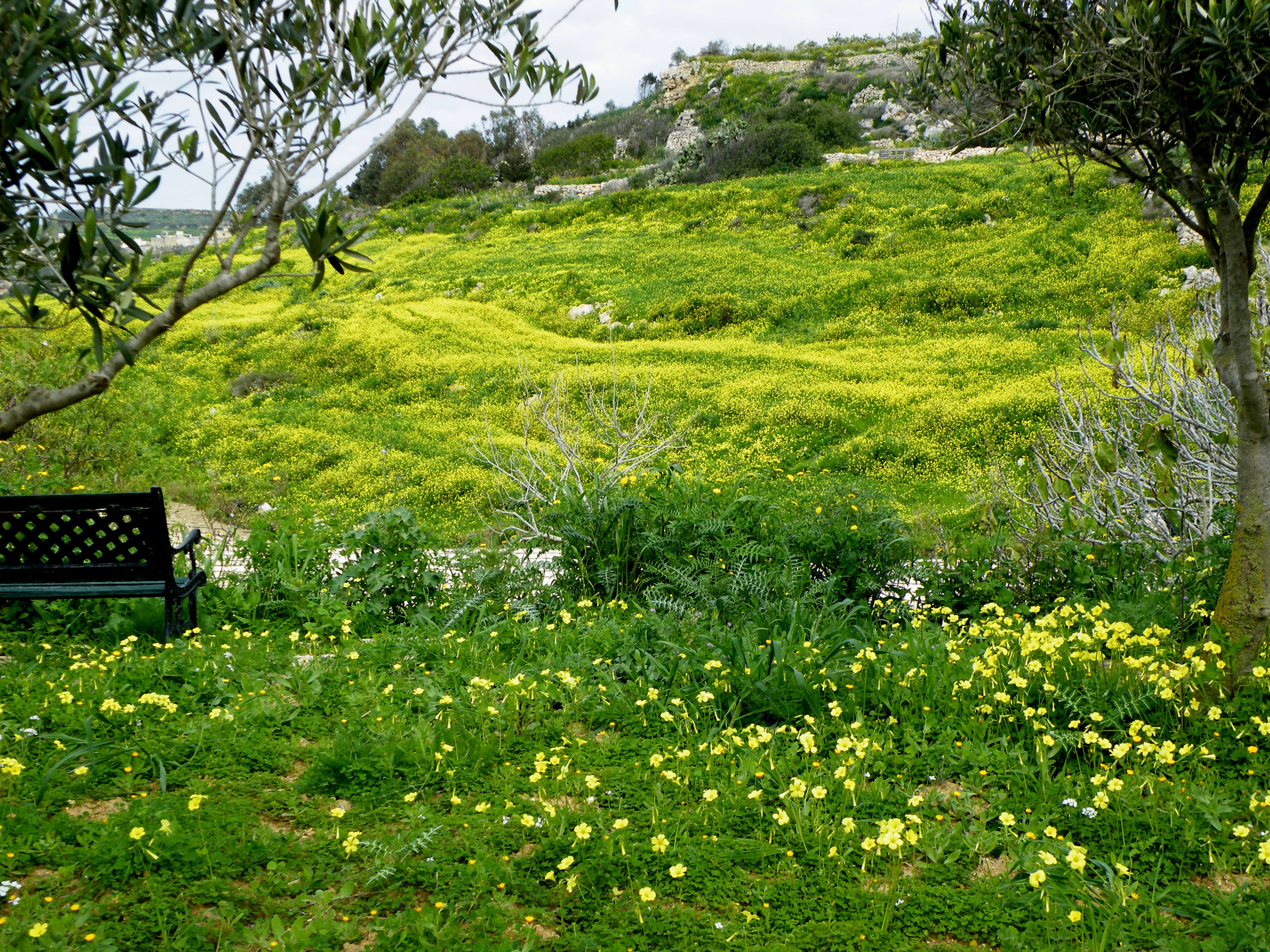
After taking many photos of the wild plants and flowers I started to walk toward the village of Il-Munxar. This is a very pleasant walk, it takes one along a whole stretch of farm land, land at this moment full of vegetables and here and there a farmer tending to his plants, heaps of manure were also to be seen lying ready to be spread out on places that were bare. I had a chat with one farmer who was obviously enjoying being on the land on such a sunny morning. Il-Munxar is another small village lying between Ta-Sannat and Ix-Xlendi, there is a walk that takes one from the Ferry Port of L-Imġarr (Mgarr) along these coastal villages toward Ix-Xlendi, the walk must be so beautiful as all along there are to be seen the highest cliff of Gozo. In Il-Munxar where I walked some bit out of the village, I saw meadows so full of flowers, like a painting with full blocks of bright yellow, so cheerful I just sat and watched it all and tried to take it in so I could take it away in my heart and mind, such a beauty!
Eventually I kept walking toward Ir-Rabat (Victoria) and reached there well in time to share lunch with Ian who had been at home meanwhile and working on writing his children’s book. We both excitedly shared our mornings adventures and decided once again how much of soulmates we really are and how thankful we can be for all that we are given day by day.

dscf9816

dscf9948

dscf9735

MEETING WITH THE OMBU TREE

While on the island of Gozo I took notes of and enjoyed some of the trees unfamiliar to me. It is nice and interesting to find out what they are called and then to search on Google about their uses, growth, country of origin and so on, it keeps me quite busy at times. Then I will take many photos of all the different attributions, leaves, flowers, seeds, seed hulks, shoots, trunks etc. And of course I like to share this in my blog, my blog is after all a celebration of all that the earth so generously has to offer to us and to life itself. And so here goes, I hope you enjoy.


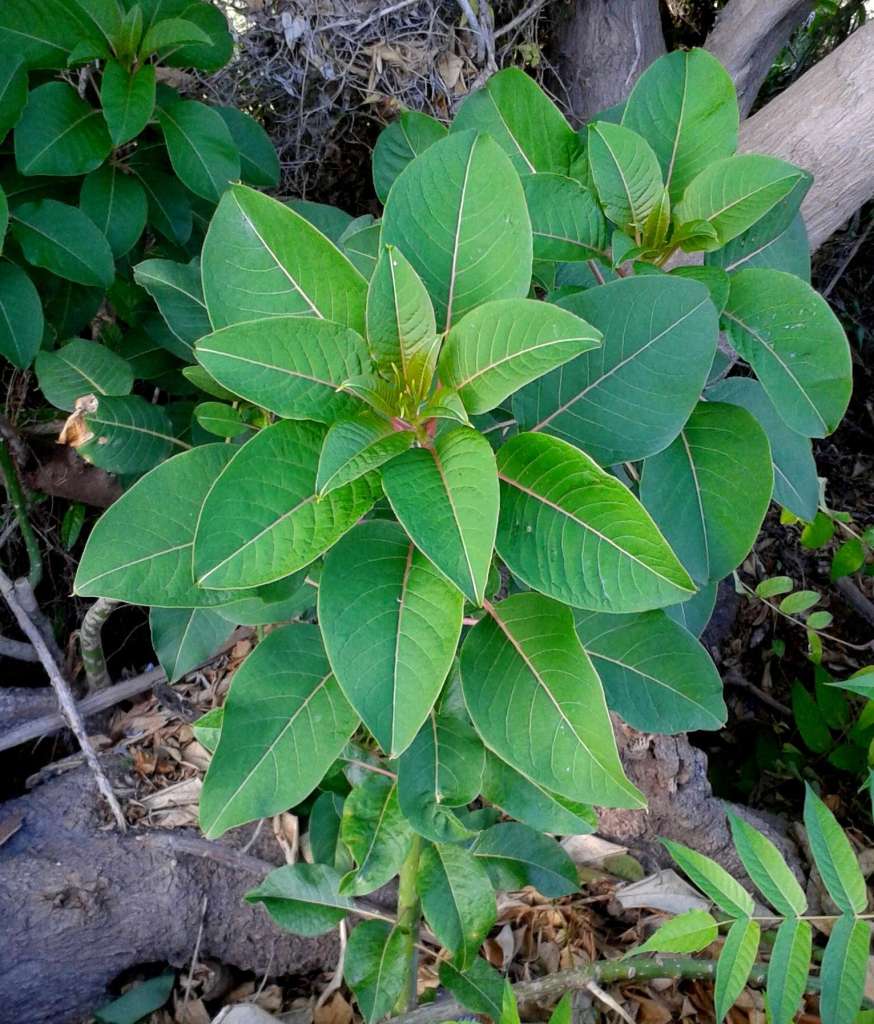
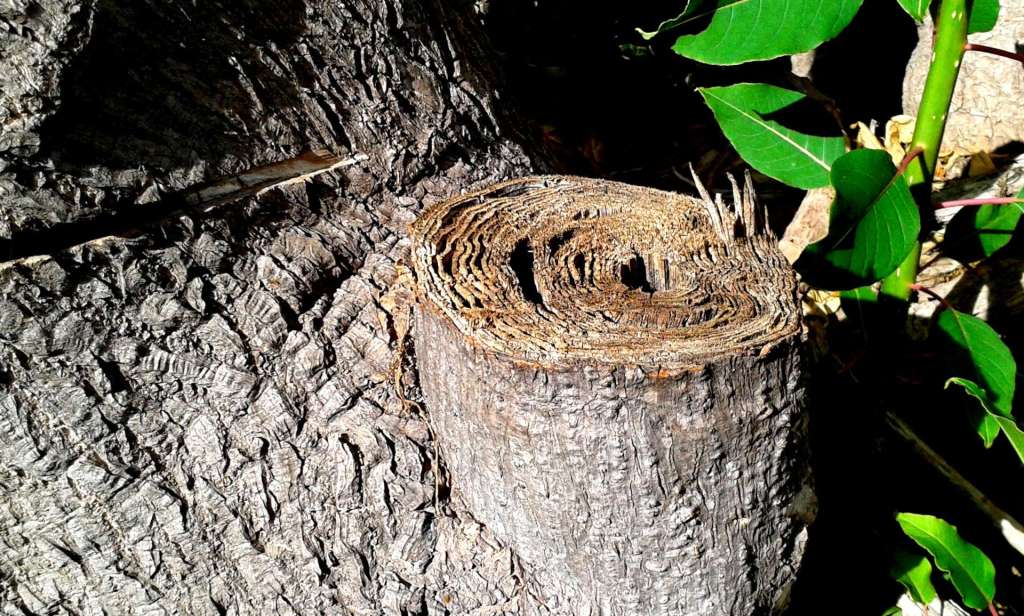
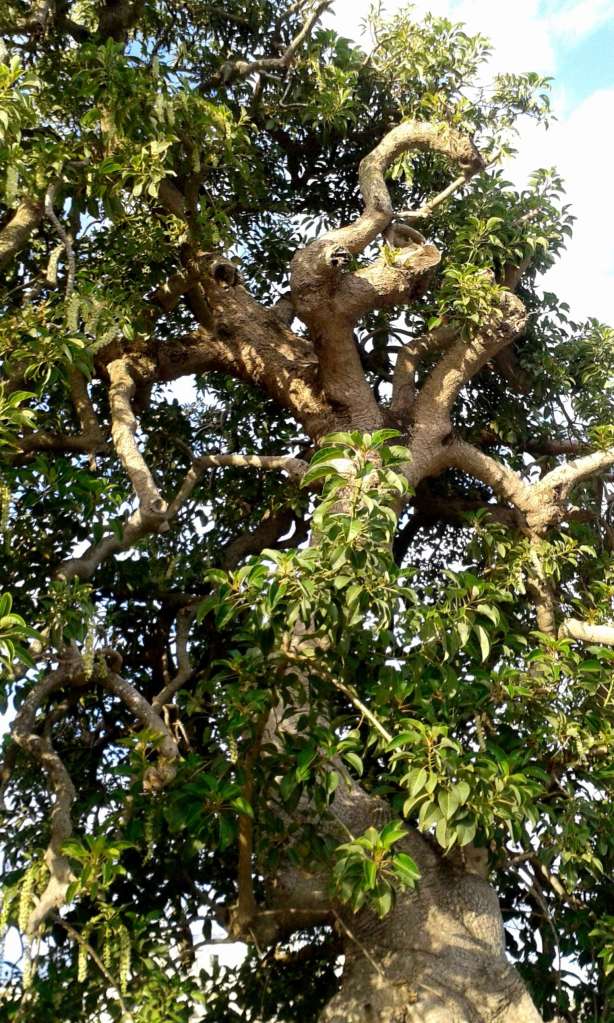
The Ombu tree, or to give it its proper name the Phytolacca dioica L. is an attractive tree. I found it growing in the area of Ghajnsielem along the main road. I was amazed to learn that this tree is actually an evergreen shrub that can become quite old and grow to look like a rather large tree. I became fascinated by the beautiful glossy dark green leaves, looking very healthy and growing very vigorously out of the trunk. Apparently the more you cut it, the more fiercely it grows. Its trunk is a soft spongy wood, the rings are loose and not at all like proper timber rings. It is resistant to fire and drought and this is due to its many trunks which store water very efficiently in its large base. Its sap is poisonous. The Ombu is a South American relative of the pokeweed (P. Americana) It is indigenous to Argentina, Brazil and Uruguay, there it grows easily in the wild, and it is there that it manages to survive on the pampas. Put to good use because of its large canopy it shelters both animals and humans alike, but is especially good for the many cattle and so it is of agricultural value.

Being a dioecious plant it produces male and female flowers on separate trees. The flowers are greenish white, little and many on one long spike. The fruit is green and is clustered in a bunch together, I see both flowers and fruits on the tree at this time (November). To date I have not myself seen the seeds but believe that they are brown, small and glossy. I shall be on the look out for them just to find out.
I learnt that extracts of the Ombu have Antifungal potencies which would probably make it interesting to Naturopaths or to pharmaceuticals.
Some of its uses are:
• Fodder – leaves are used as fodder in time of drought.
• Medicine – infusion of leaves has been used as a laxative, but don’t take my word for it please.
• Hot drink – locally the leaves may be used as a hot drink. (I am not planning to try it out myself not being sure of what the result will be).
• Soapy juice – containing salts of lime and potash.
• Shade in regions where other trees won’t grow – in the pampas it is the only tree that will naturally grow and provide shelter.
• Bonsais – something I did not know is that it is an ideal tree to grow as a bonsai, nice to know!
• Dyes – juice extracted from the berries can be used as a source of dyes.
• Berries – apparently the berries are eaten by birds as they are not affected by the toxin as the seeds contained within the berries passes through the bird intact.
I also read that in South Africa Ombu is treated as an invasive plant, possible because it grows so rapidly. Here in Gozo there is more and more emphasis on the growing of indigenous trees and plants, and eradicating to an extent the growth of invasive plants and trees. This is, of course, a tendency all over Europe these days. I am not sure at which time the Ombu tree was introduced in the Maltese islands and why, I wonder if it was introduced because of the high temperatures in the summer months, the drought some years, and the lack of tree cover in general.

One of the beautiful and typical specimen of Phytolacca dioica L.

I hope you enjoyed this little bit of information on the beautiful and interesting Ombu tree which in fact is not a tree at all. I for one will enjoy twice as much when I am passing these trees in the knowledge of all its good uses.
And finally what I would like to know but could not readily find an answer to is whether the water stored inside the Ombu tree’s large trunk can be used in case of water shortage by cattle or people, or is it already juice in which case it is toxic? I would say, it is juice and it is toxic so it cannot be used. If anyone can shed more light on this please do.