MEETING WITH THE OMBU TREE

While on the island of Gozo I took notes of and enjoyed some of the trees unfamiliar to me. It is nice and interesting to find out what they are called and then to search on Google about their uses, growth, country of origin and so on, it keeps me quite busy at times. Then I will take many photos of all the different attributions, leaves, flowers, seeds, seed hulks, shoots, trunks etc. And of course I like to share this in my blog, my blog is after all a celebration of all that the earth so generously has to offer to us and to life itself. And so here goes, I hope you enjoy.


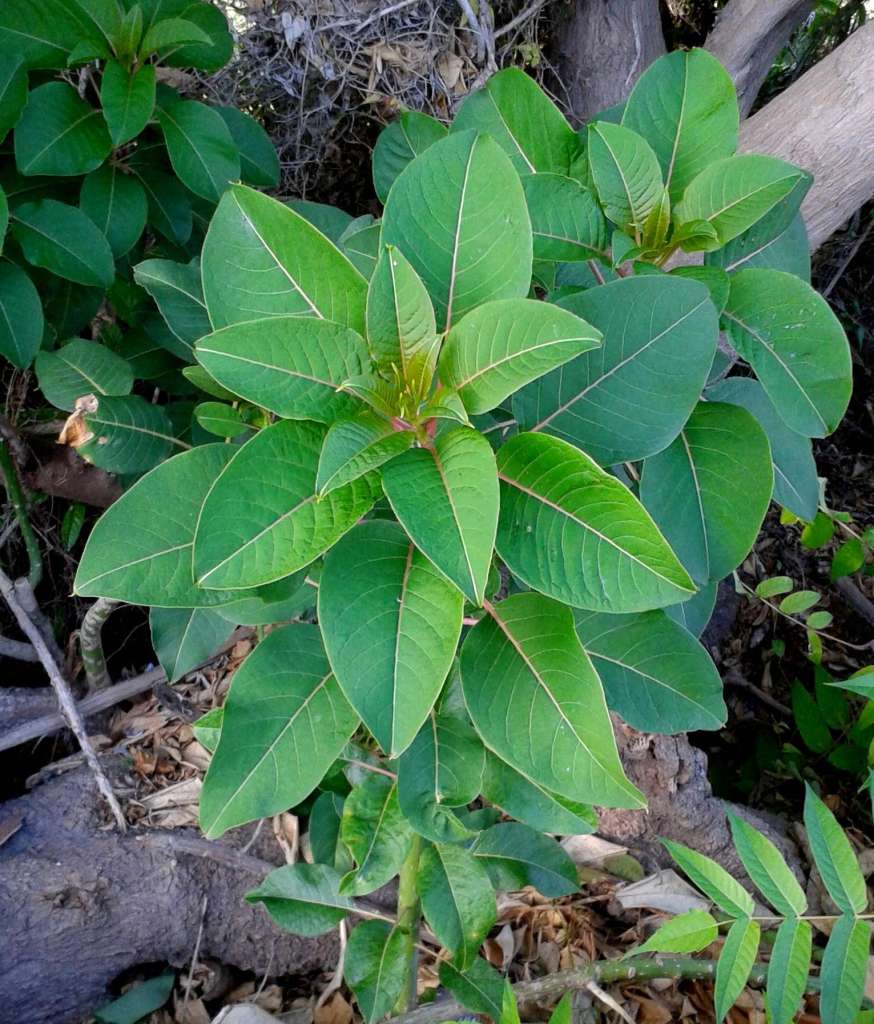
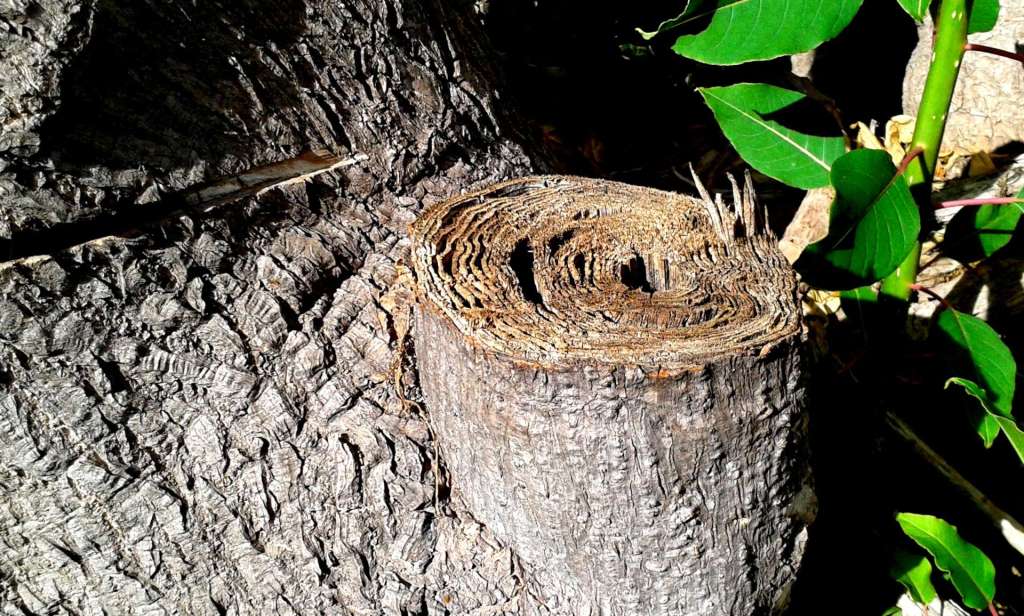
The Ombu tree, or to give it its proper name the Phytolacca dioica L. is an attractive tree. I found it growing in the area of Ghajnsielem along the main road. I was amazed to learn that this tree is actually an evergreen shrub that can become quite old and grow to look like a rather large tree. I became fascinated by the beautiful glossy dark green leaves, looking very healthy and growing very vigorously out of the trunk. Apparently the more you cut it, the more fiercely it grows. Its trunk is a soft spongy wood, the rings are loose and not at all like proper timber rings. It is resistant to fire and drought and this is due to its many trunks which store water very efficiently in its large base. Its sap is poisonous. The Ombu is a South American relative of the pokeweed (P. Americana) It is indigenous to Argentina, Brazil and Uruguay, there it grows easily in the wild, and it is there that it manages to survive on the pampas. Put to good use because of its large canopy it shelters both animals and humans alike, but is especially good for the many cattle and so it is of agricultural value.

Being a dioecious plant it produces male and female flowers on separate trees. The flowers are greenish white, little and many on one long spike. The fruit is green and is clustered in a bunch together, I see both flowers and fruits on the tree at this time (November). To date I have not myself seen the seeds but believe that they are brown, small and glossy. I shall be on the look out for them just to find out.
I learnt that extracts of the Ombu have Antifungal potencies which would probably make it interesting to Naturopaths or to pharmaceuticals.
Some of its uses are:
• Fodder – leaves are used as fodder in time of drought.
• Medicine – infusion of leaves has been used as a laxative, but don’t take my word for it please.
• Hot drink – locally the leaves may be used as a hot drink. (I am not planning to try it out myself not being sure of what the result will be).
• Soapy juice – containing salts of lime and potash.
• Shade in regions where other trees won’t grow – in the pampas it is the only tree that will naturally grow and provide shelter.
• Bonsais – something I did not know is that it is an ideal tree to grow as a bonsai, nice to know!
• Dyes – juice extracted from the berries can be used as a source of dyes.
• Berries – apparently the berries are eaten by birds as they are not affected by the toxin as the seeds contained within the berries passes through the bird intact.
I also read that in South Africa Ombu is treated as an invasive plant, possible because it grows so rapidly. Here in Gozo there is more and more emphasis on the growing of indigenous trees and plants, and eradicating to an extent the growth of invasive plants and trees. This is, of course, a tendency all over Europe these days. I am not sure at which time the Ombu tree was introduced in the Maltese islands and why, I wonder if it was introduced because of the high temperatures in the summer months, the drought some years, and the lack of tree cover in general.
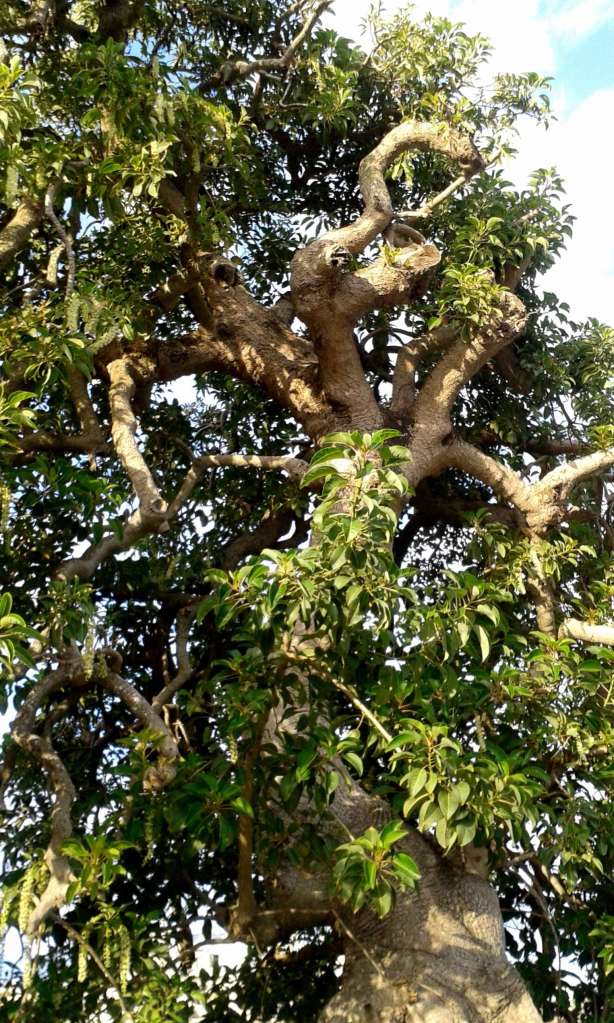
One of the beautiful and typical specimen of Phytolacca dioica L.

I hope you enjoyed this little bit of information on the beautiful and interesting Ombu tree which in fact is not a tree at all. I for one will enjoy twice as much when I am passing these trees in the knowledge of all its good uses.
And finally what I would like to know but could not readily find an answer to is whether the water stored inside the Ombu tree’s large trunk can be used in case of water shortage by cattle or people, or is it already juice in which case it is toxic? I would say, it is juice and it is toxic so it cannot be used. If anyone can shed more light on this please do.

THE SCENT OF ALMOND BLOSSOMS

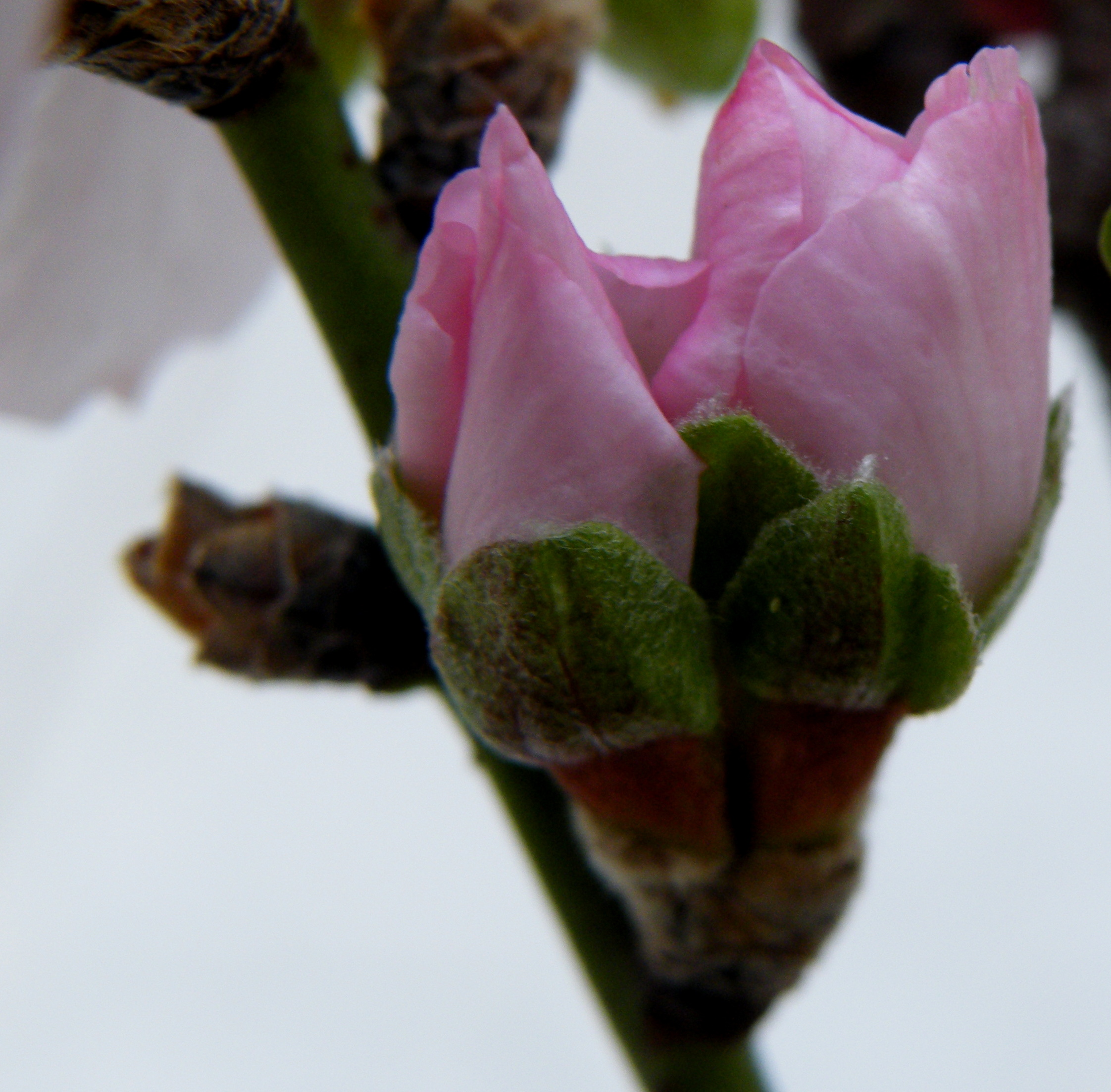
The Almond tree is in full bloom by now, at least those in sheltered places are and it’s a delight to the eye and the senses, their scent being subtle and sweet. To see these blossoms to me is just wonderful as it is something totally exotic in my book and my imagination is heightened merely by the beauty of this happening.
Great writers and philosophers have been inspired by the blossoms of the Almond tree. Here is a quote by Nikos Kazantzakis, from his “Report to Greco”
“I said to the almond tree, ‘Sister, speak to me of God.’ And the almond tree blossomed.”

And from his ‘Saint Francis’: “When an almond tree became covered with blossoms in the heart of winter, all the trees around it began to jeer. ‘What vanity,’ they screamed, ‘what insolence! Just think, it believes it can bring spring in this way!’ The flowers of the almond tree blushed for shame. ‘Forgive me, my sisters,’ said the tree. ‘I swear I did not want to blossom, but suddenly I felt a warm springtime breeze in my heart.”
dscf9525

dscf9509

dscf9516
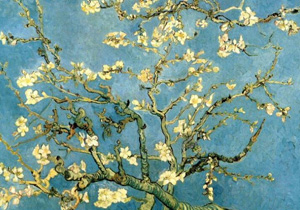
The Almond blossom has inspired literary and artistic people through the ages it seems. Van Gogh painted it beautifully and often when he was in Southern France, for him they signified awakening and hope.

Almond blossoms have been used in legends in countries like Portugal, and in the bible there is mention of them too in several place.
The Almond tree was first cultivated in the Mediterranean about 3000BC. It is said native to Syria and Palestine. Almonds were carried on the trade routes by the Greeks, Egyptians and Romans.

According to Greek mythology the Queen of Thrace, Phyllis was turned into an Almond tree by the gods.
I will never forget myself the rapture when watching a movie called ‘Venus’ which made good use of Wagner’s Tannhäuser Overture, at some point, during the performance of this opera the pilgrims chorus, which to me is the most beautiful part, the staff of a pilgrim starts to blossom, it was an Almond blossom, it was a stunning moment, never left me since.
According to the book: “Myths and Legends of Flowers, Fruits, Trees and Plants” by Charles M.Skinner, branches of the Almond tree are used to find hidden treasure.
Here is a link to the book, and there you can also read a summary of Wagner’s Tannhauser story and how the Almond branch figures in it.
https://archive.org/stream/mythslegendsoffl00skin#page/40/mode/2up

I was not really aware of the fact that to me also the Almond blossom has great significance, but it has, and to see the blossoms here on Gozo opening up over the last few weeks has delighted me beyond words.


THE AZURE WINDOW

On a most beautiful late January day, today, with the sun pouring over the island, and not a breeze to be felt, there was nothing better to do than to take the bus to the Azure Window at Dwejra on the West coast of Gozo. Quite a few tourist were there with us, many Chinese in fact and I also heard some Northern Irish accents. Everyone was soaking up the sun, and unlike us, who are still wearing socks and woollies, I saw women in sandals, in bare arms and very light clothing, some were working on their tan in fact, others were taking selfies or photos like myself. The ambience was pleasant and the views breath-taking. We had been there before, I was very impressed with the amount of fossils under our feet in the rocks. Rocks are very much eroded here making for all sorts of strange and interesting shapes. The rock pools too had mirror-clear water standing in them. The sea and sky were both so very blue!
The Azure Window is special, very nice to see time and time again.  The inland sea too is a place where it is so nice to sit and see the little boats come and go

One sweet girl asked us if we would like our photo taken together, we said yes as this does not happen very often, the result was good. We took coffee in the only café that was open, and just soaked up the sun.
What a most beautiful day it was, and for a while we could forget about all the world events that has kept our minds so busy this past week.
20170131_135750

20170131_140618

20170131_140201

20170131_142018

20170131_140252

MGARR HARBOUR MUSINGS

Yesterday we had took a lovely walk around the harbour of Mgarr here on Gozo. It is the first village that you get to see when you arrive on the island because the ferry docks here. I love this fishing village as it is overshadowed by beautiful rock formations, plenty of lovely greenery and wild flowers too right now, and colourful fishing boats, besides yachts and ferries of all sorts to enable visitors to visit some of the other smaller islands and take a cruise around Gozo.

Yesterday it was quiet, or else it was the quiet time of the day (which runs from 12:30 until 16:00hrs. Some men were sitting on the stairs of a lovely old building, reading the newspaper and chatting. The ferry station was busy whenever the ferry was due to arrive or to leave.

We took coffee at a kiosk right down by the water and sat for a long time watching the few activities taking place, and enjoying the sun. It is a quiet place during winter, a peaceful place. We then walked along the original part of the harbour where the first ferries from mainland Malta used to arrive long ago at the time when the harbour was still undeep, and walked along the promenade, which for both of us had plenty to offer, Ian loves looking at the sea and the boats, while I looked upwards direction Ghajnsielem at all the wonderful rock formations, the plants, and even the few farms where I saw tomatoes ripening in the sun, and that during January!

We spent the rest of the afternoon just walking, resting, enjoying the sunshine and taking in the peace and quiet of this lovely little harbour, and it wasn’t even cold.

20170127_143144

20170127_141150

20170127_141051

20170127_140839

20170127_145233

20170127_151731

COLOURFUL PERIPHERY OF VICTORIA

A walk to the outskirts of this historical town treats me to wonderful views of the surrounding villages and countryside, places like Sannat, Xewkija and Xaghra can be seen easily, and in between the villages there is a wealth of greenery and meadows full of yellow flowers. It was a cold day, a slight breeze made me put on my hat, but for walking it was excellent weather. I had been to the library, where the librarians were freezing, obviously because their job demands deskwork, it is a fairly small library here but the librarians are very helpful and friendly. The book stock, although some of it is old enough, is very interesting to me for my chosen subject while we are here. So after that visit I decided to head off on the nearest street and see where it would bring me. Interestingly it turned out to be a different area from most of what I have seen of Victoria because up to now I have just hung out in the oldest part of town, here it is very residential. The whole town of Victoria is very residential, a pleasant town to live in I can say from experience, very friendly, always something happening and buzzing with people, yet quiet and peaceful, you feel safe here. It is historic, and beautiful in its limestone buildings.  Here a few photos of today’s walk.
2017-01-17-13-20-57

2017-01-17-13-13-23-copy

Looking towards Xewkija, I could easily have walked there if I wanted to, so close to here.


2017-01-17-13-21-12                             A beautiful little flower on a patch along the road.

2017-01-17-13-15-52-copy                                  Cats meet you all over Gozo

2017-01-17-13-17-49-copy

2017-01-17-13-18-48-copy

A VILLAGE WHICH LIES STILL AND TRANQUIL.

Zebbug is a village in an elevated area on the North coast of Gozo. It was a Wednesday morning when I visited, everything was quiet, I saw no one when I got off the bus and I was the only person riding on the bus too. So tranquil was this place, everything was shut, that is except the church for which I headed, crossing over a large empty square I reached the steps leading up to an impressive Baroque façade of the village church, I was on a mission, to go and see the beautiful interior which is made up mainly of locally quarried brown Onyx stone, and the book where I read about it did not let me down, I was very impressed and delighted to be able to see this, and to touch this semi-precious stone. I found myself looking at the altar, the confession chair, the pillars, holy water container, a statue, the chairs for the priests, everything made out of Onyx stone, it looked amazing. Yet again I am finding that the ‘stones’ or rocks found on Gozo are very pleasing to the eye!

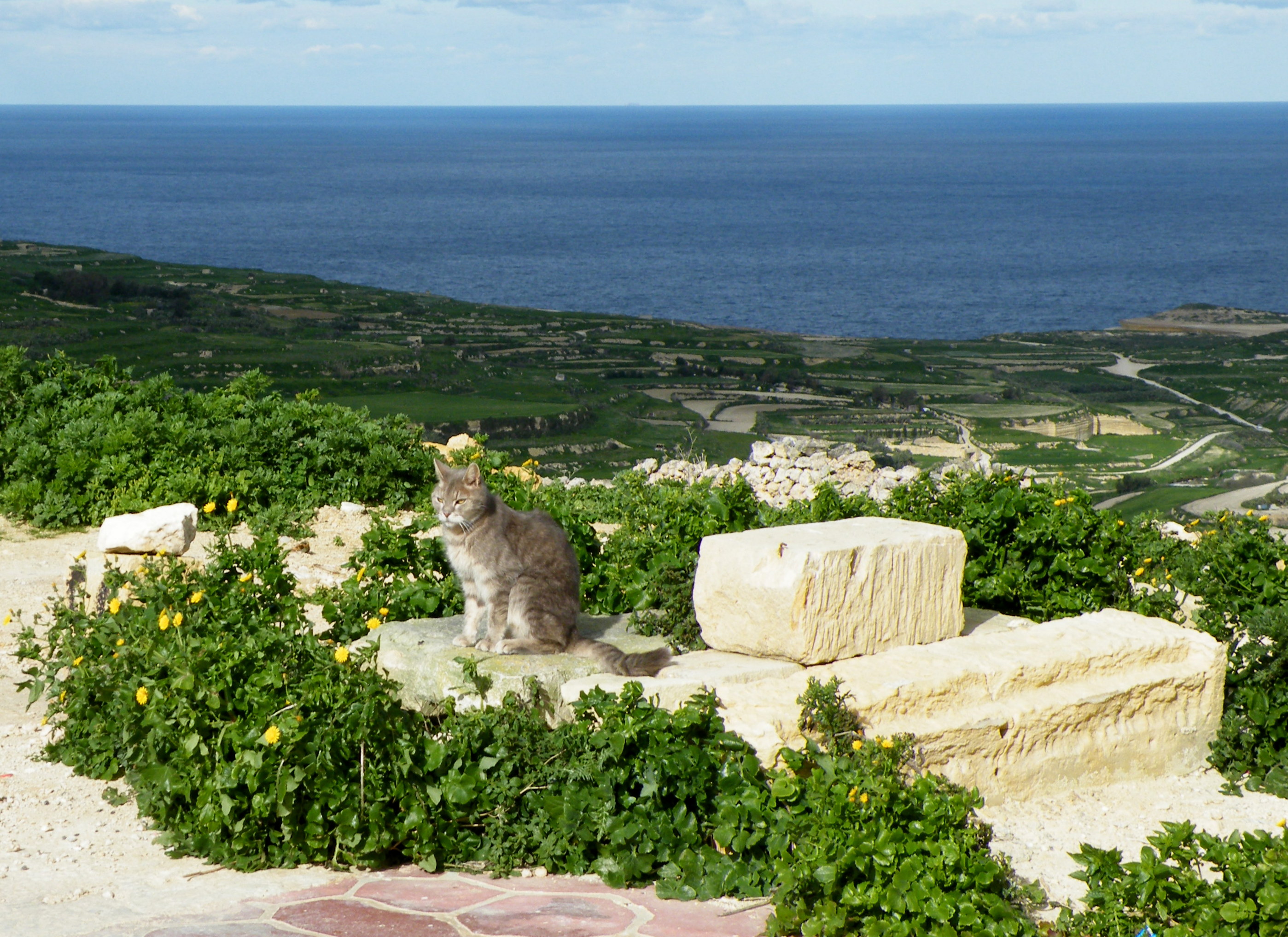
So I walked on along one of the streets and took in all that was to see, soon I got glimpses of the sea and the beautiful green agricultural landscape along the coast, I found it interesting to see lots of fields like patchwork, the land was being worked by some farmers I noticed. I read that Zebbug derives its name from the Maltese word referring to the Olive tree. The village is also known for its lace making, its weaving and its woollen blankets, but I did not see any of this when I went, no shops were open. The village was quiet, there was a vegetable van driving around, I bought a very tasty orange from him, a few people were gathered around this van buying stuff. There was also a gas delivery truck driving around blowing the horn at intervals as is done here in Gozo. It was when I saw a bread van that I decided to check out if it carried ‘Ghazziela’ I had read about it and had to see one, it’s a biscuit in the shape of the ‘M’ for mother Mary, tradition is to hang it behind the door of your house in order to protect the place from storms and lightning. These biscuits are blessed after they are baked. Of course the bread van lady did not have them, they are not for eating! However, a kind lady standing beside me and hearing me ask for the Ghazziela offered to have a look for some in her house, she did come out with two of them and gave them to me, we had a chat after that and she and her sister really made the visit to Zebbug a very memorial one, so kind and helpful people are, I am experiencing this all the time, it warms the heart. The kindness of these two ladies will not be in vain, it has touched me and showed me once again that people have such good hearts, humankind is not a failure, if we let our hearts speak then kindness has no bounds, it made me happy to mull over these thoughts on my way home.

I took many photos, some of which I will share here, but there is still much more beauty to find in this tranquil  village, I’m so glad that I went there.

The two Ghazziela gifts I received from the kind ladies, and on the right this is the inside of a Prickly Pear cactus leaf, people use this material in making jewellery.

dscf9376

A street leading towards the blue water, and butternut squash drying in the sun.

These four photos are of the village church and its Onyx interior.

I saw grapes hanging over the wall in a village street, and little country lanes lead out from the village to the pastoral land below in the valley.

dscf9316

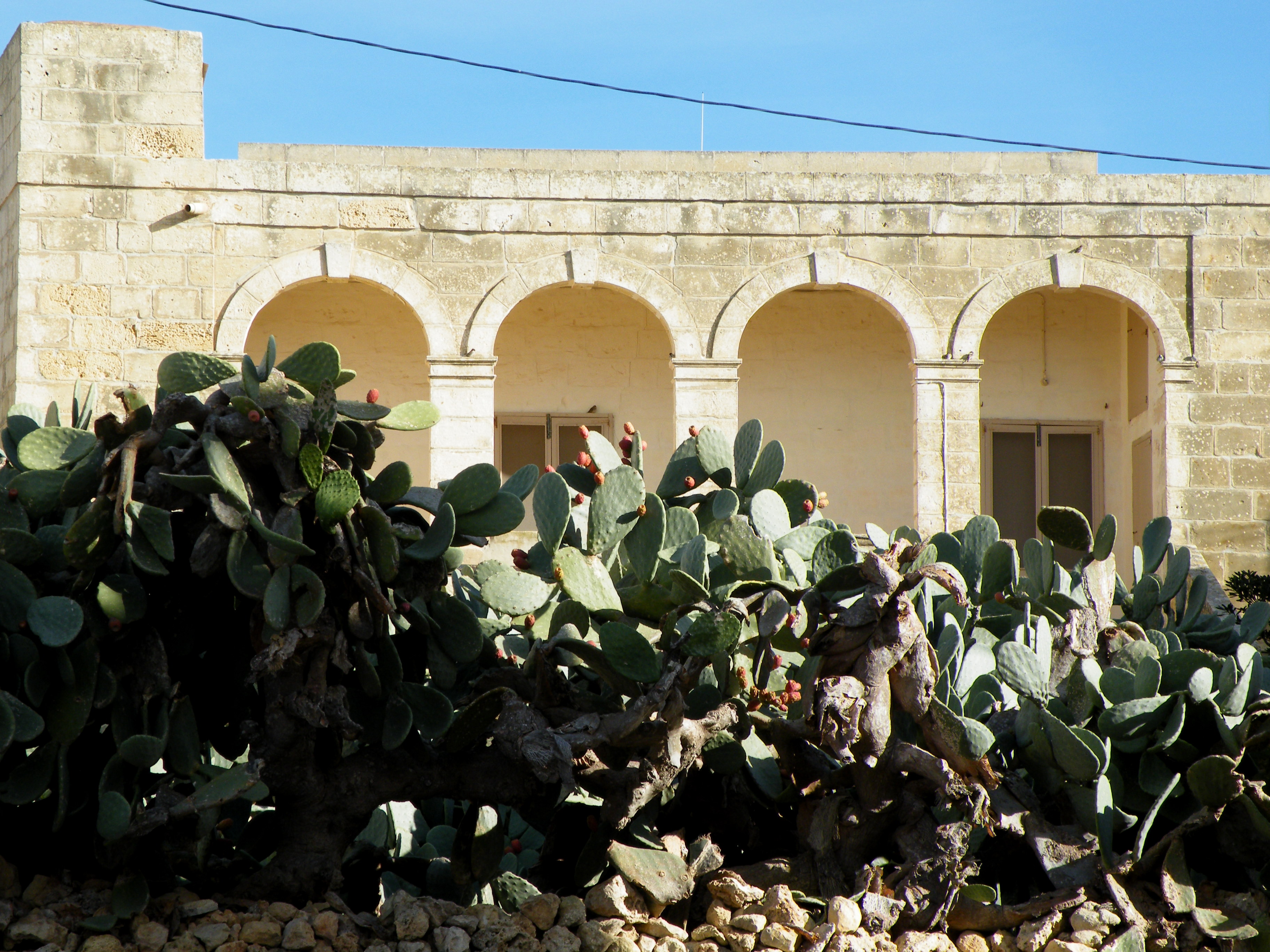
This village has its fair share of arches which I love so much, I hope that they can always be preserved.

dscf9417

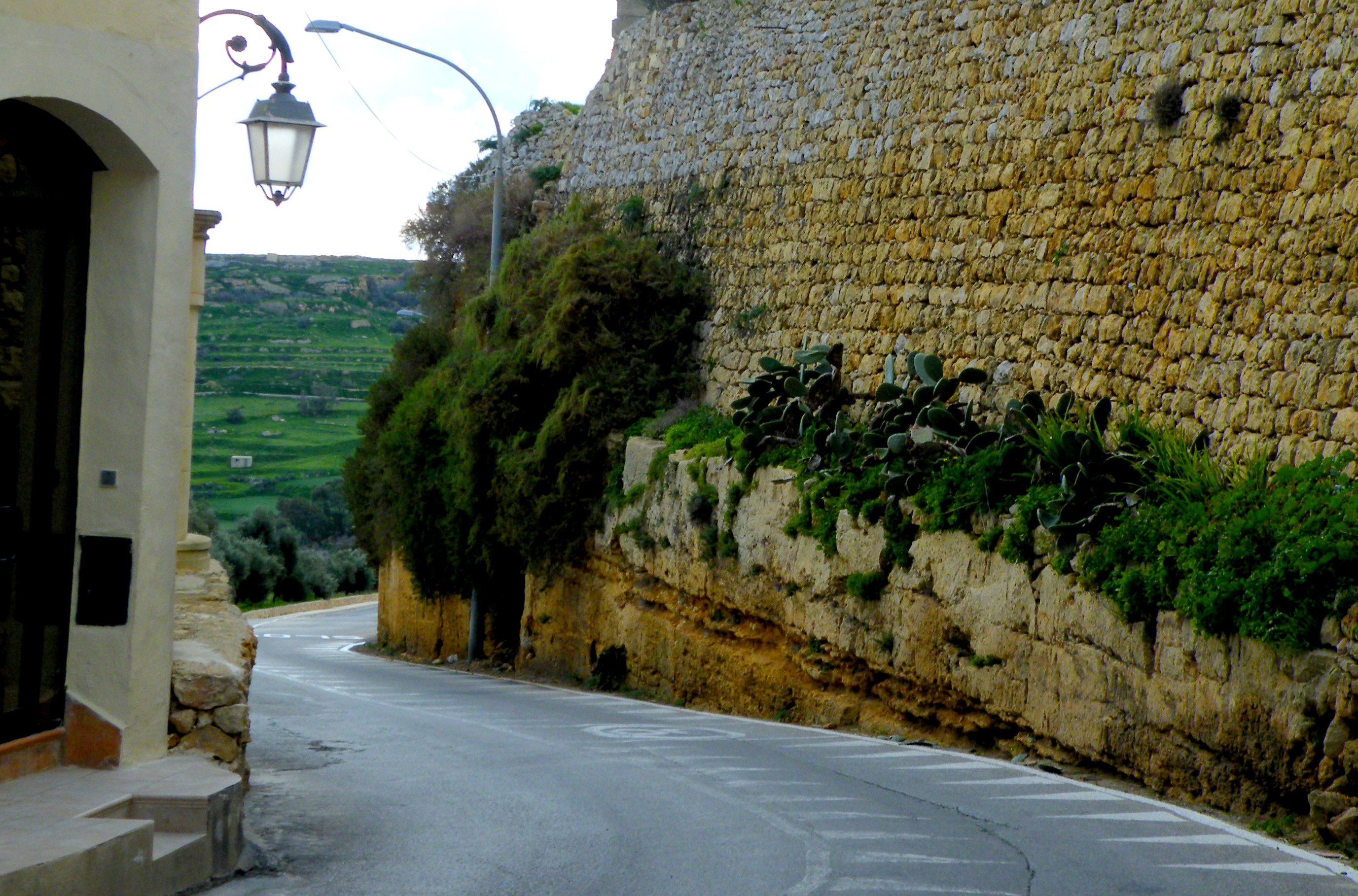
Greenery looks so nice against the limestone walls.

dscf9333

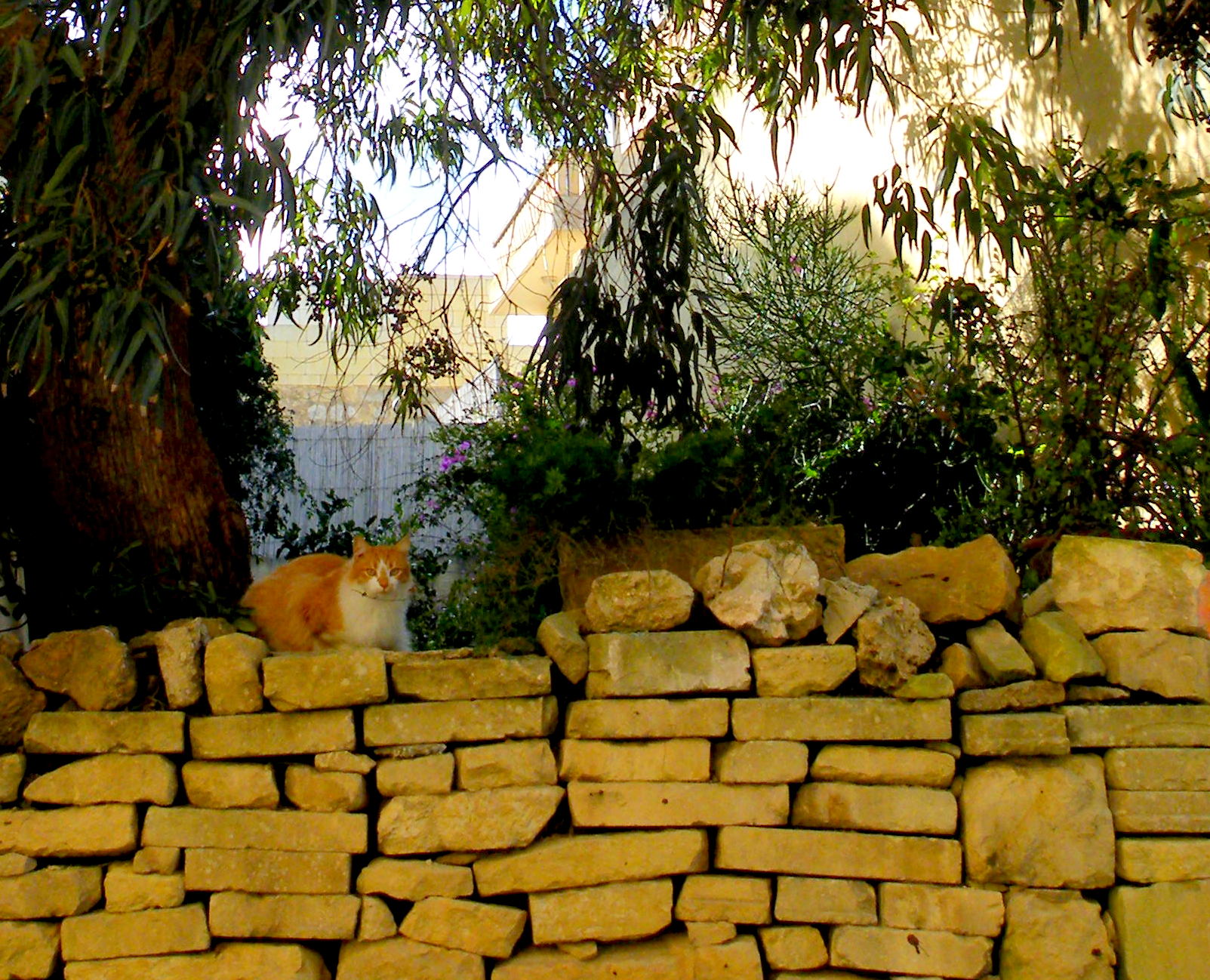
This cat did not have to say much for herself, she was just soaking up the few rays of sunshine on this winter day.  You are never short of cats on Gozo, and they are beautifully coloured animals.

DELIGHTFUL CLIFFS

20161221_134109

Xlendi, is a village on the South-West coast of Gozo, it is surrounded by steep cliffs to one side, they look very impressive from every angle.  One can climb them via stairs that lead one to the Caroline cave, this walk gives lovely views over the bay, the clear water, sometimes blue, sometimes green.  It is of great interest to people that are interested in the rocks and flora that grows in the crevices.  Beautiful!  So one day we walked, or rather climbed this delightful hike and I like to share some of what we found.

20161221_134732The limestone rocks along the walk. 20161221_135022The rocks are amazing, full of fossils, beautifully light in colour.

And finally one goes down to the Caroline Cave where the water laps against the weathered rocks.

Some of the flora along the walk, amazing how the plants grow out of the crevices of the rocks, and look so healthy and fresh!

Back down at the sea front. Xlendi is actually a fishing village, though a lot of it’s income these days comes from tourism too.  We always love going to Xlendi, it was the first place we stayed in last spring, we get there by bus in about five minutes from here and because there are more and other beautiful cliff walks to be found there we never get bored, always we come across something new, a plant, an insect, always something interesting to see.  I also love the trees in the square, there are some old Tamarisk trees, which look like old men riddled with arthritis, but they are beautiful too.

20161221_155655

I guess I will never, no matter how small the island of Gozo is, find at a loss of what to go and explore, so much to see and do, in fact a great place to live.


TWO EGGS AND A LEMON

Today started just like any other day, with the sun shining into the bedroom window showing us that it was going to be another blue sky, and sunny day. Though the temperature has gone right down in the Maltese islands, there is always the sun to warm you up. Something else has been very warming today, it has warmed my soul rather than my body. The story goes as follows:

After my morning walk and as I approached the entrance to our flat, our neighbour woman came walking across the street with a tin in her hands, in it she had some eggs laid by her own hens whom she keeps behind a wall in our street. We got talking and we must have stood there in the sun for half an hour. Then, with a smile she handed me over two of her precious free-range eggs, here she said for you and your husband, one each. I thanked her and was touched by her kind gesture.

Later on today I again nipped out to go to the shop, and this time from across the street, out of the house where Rita lives (another friendly neighbour who has connected with us)came Tessie. Now I’ve never in my life met someone as generous in her approach to a stranger as Tessie, she chatted and told me all about her life, and brought me into her home, as she lives only around the corner, to show me the huge nativity scene that her son had made. We immediately hit it off with each other and talked ten to the dozen about life here on the island, how very interesting! When I left it was with an invitation to come and visit, and then she ran out into her garden and handed me a home grown, beautifully scented lemon.

It is not about the lemon or about the eggs, but it is about the friendship that these local women are generously offering us. It is exactly what I wanted here, to meet the people of this land, and to hear all their stories, stories about their lives on Gozo.

For me this is a perfect ending to 2016! and a great beginning to 2017 – the year in which I would like to give the gift of my time and attention to new friends, and to friends from the past.

A hearth warming way to end the year!

20161230_170826

My feeling about seeing the world is that it’s going to change you necessarily, just the very fact of being out there and meeting people from different cultures and different ways of life. Ewan McGregor

A GOZITAN MID WINTER

Under a bright sun on this midwinter day we took a walk among the limestone rocks and wild plants in Xlendi, a seaside fishing village on Gozo.
It feels so good to be among these beautiful honey coloured rocks, and to see the fresh young green after the days of rain we have experienced.
How beautiful this earth really is and how everything regenerates even when the drought of last year threatened to destroy so many trees and plants. It is a joy to behold all this freshness.
My partner said earlier “today is the shortest day, from now on the days are lengthening again”. Yes ‘light’ is coming, that is what we celebrate on Christmas day after all isn’t it, the ‘light’ coming into the darkness.
There is hope yet for mankind and for the earth, I will never give up hope. Every new little plant that comes up out of the earth even through the rock gives me that hope. People are much more beautiful than we think they are. Love to all my friends at this Christmas time.

20161221_134528

20161221_133908

20161221_134554

20161221_134456