From inert fossils and lichens, to the very much alive and energetic lizards, bees and ants, and a huge range of other creatures, the flowers, trees, the amazing rocks and limestone buildings, the land here has such riches to offer for the eye and the mind. It will take me a while to analyse it all. I have taken so many photos while here, and I still have so much in mind to write about. I am still finding out about the agriculture, the organic and permaculture on Gozo. I’m also reading up about the local bees, the honey, the production of local wines, the economy of the land. I have met local people on buses and in shops and we have had great chats, I have also visited the libraries and talked with people at an art exhibition. I find the Gozitans very approachable, they are friendly people and welcoming to strangers.
And that was the story today, more wonderful creations to admire. While visiting the Ggantija Temples, of which I will write at some later stage, we experienced a wonderful outing, very interesting, the ancient works of mankind. And yet the eye did wander off to where the flowers, and the insects were. And here are some to share.
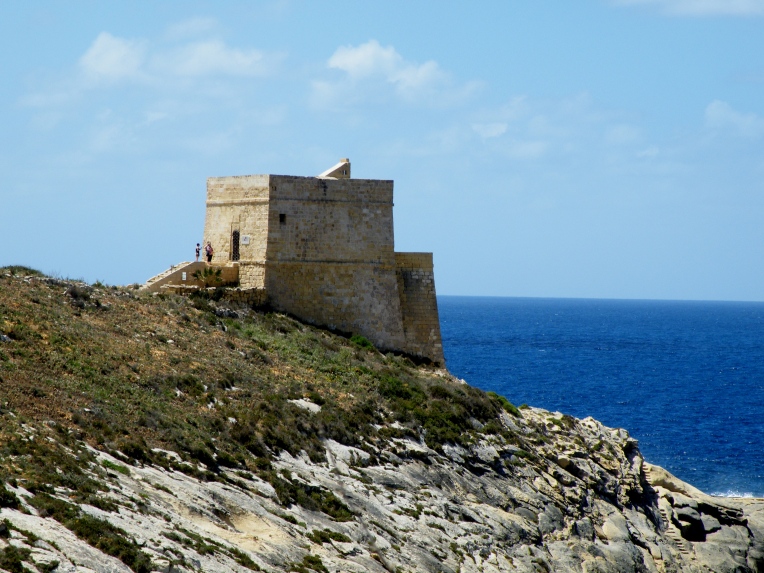
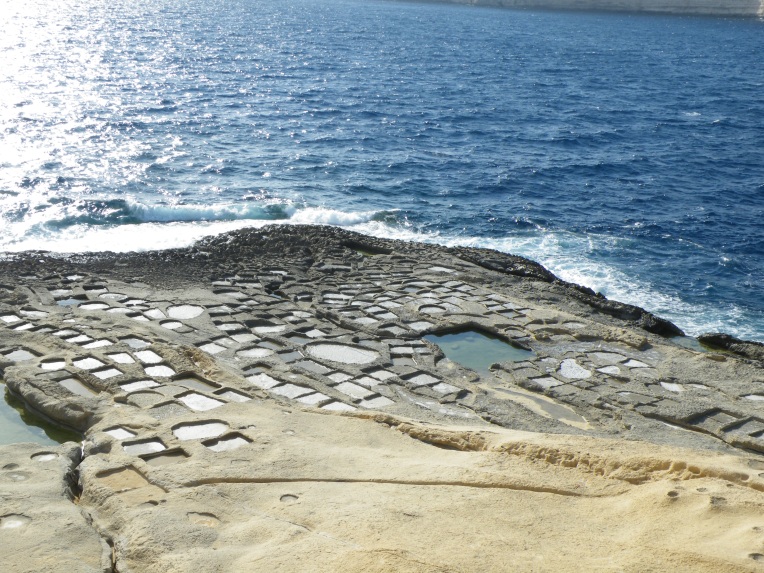
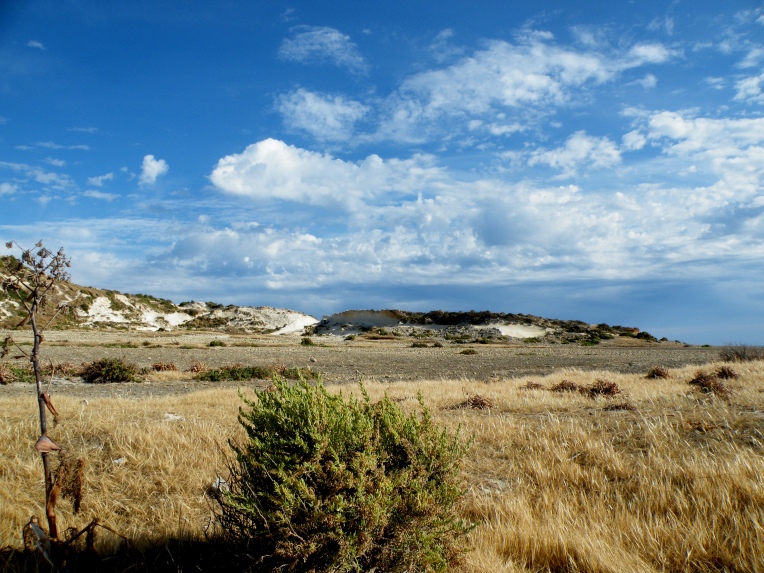
Our walk yesterday took us to the oldest watchtower on Gozo, the Xlendi watchtower. It was a nice walk to get to there, to our left the ever higher reaching stone terraces, and to our right a deep gorge, the Il-Kantra valley, sweeping down to the sea and lifting our heads up again to the cliffs on the other side of Xlendi bay, apart from the magnificent views a lot of wild plants and flowers made the walk interesting. Eventually we reached a plateau seemingly made partly out of pure white chalkstone, and partly out of other limestone types. Out towards the sea we saw the tower, it is lying just at the edge, and before the cliff steeply descends to the salt pans.
I read up a little about the watchtower. There are a number of them all over Malta and Gozo (I guess Comino too), they were built as a defence against the Ottoman invaders who would come and take the Gozitans bringing them home to use as slaves. I read that in 1551 there was a siege on Gozo, and 6000 Gozitans were taken into slavery. This is close to my heart because a small village back in Ireland, Baltimore, was raided back in 1631 by pirates from the Algiers, and the Ottoman Turks, they took nearly the whole village into slavery, the remainder of the inhabitants of Baltimore moved more inland, up river and established the town of Skibbereen, which is where I made my home many years ago.
The Xlendi tower dates back to 1650, it has been in continuous use both during the British rule and during the second world war, but it had become in disrepair and today it is being restored.
The cliff behind the tower reveals the salt pans which are as far as I know not in use anymore, but I could be wrong. They do look quite interesting, what a clever invention by humans to reap salt from the Mediterranean in this way. I wondered at the people working there and reaping the salt which the seawater left behind after the sun had done its drying out, it must have been hard work.
Looking back at the scenery in land from the tower the view is breath-taking, the rock formations brilliantly white, the vegetation scares but beautiful.
This is a walk I will not forget easily, nature at its most powerful, the winds were strong that day too. A walk that highlights a piece of social history, in a most beautiful natural setting, perfect for anyone.
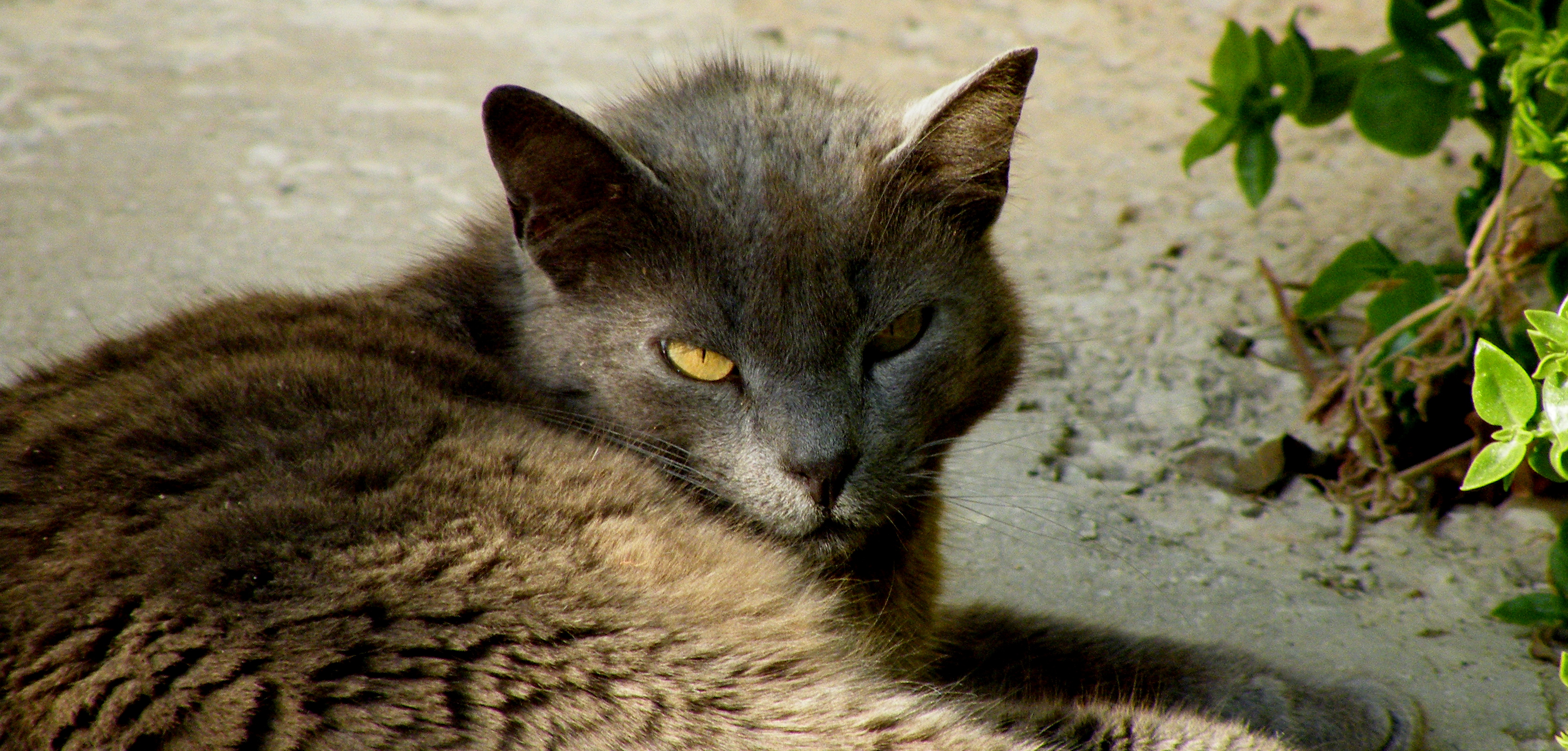
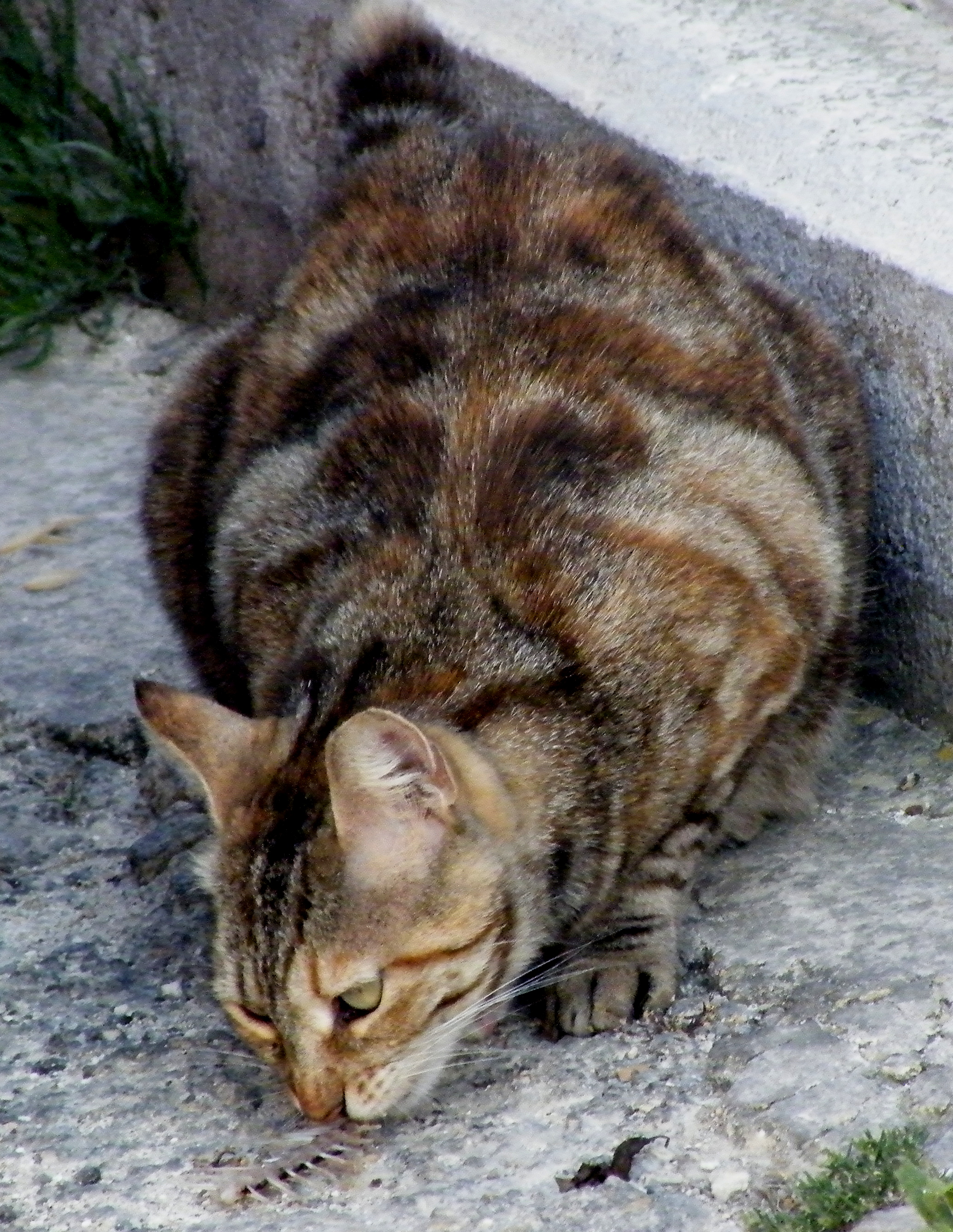
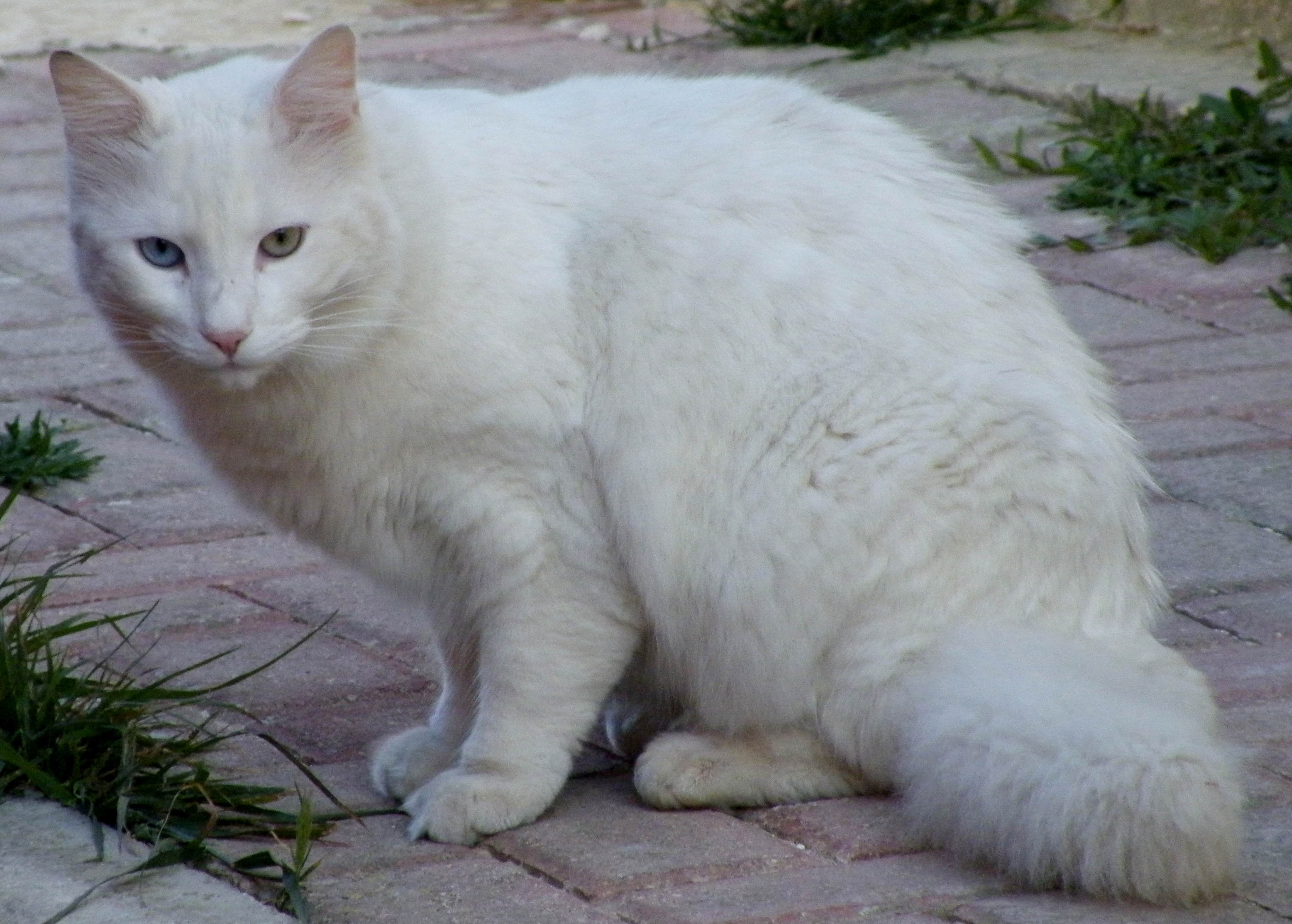
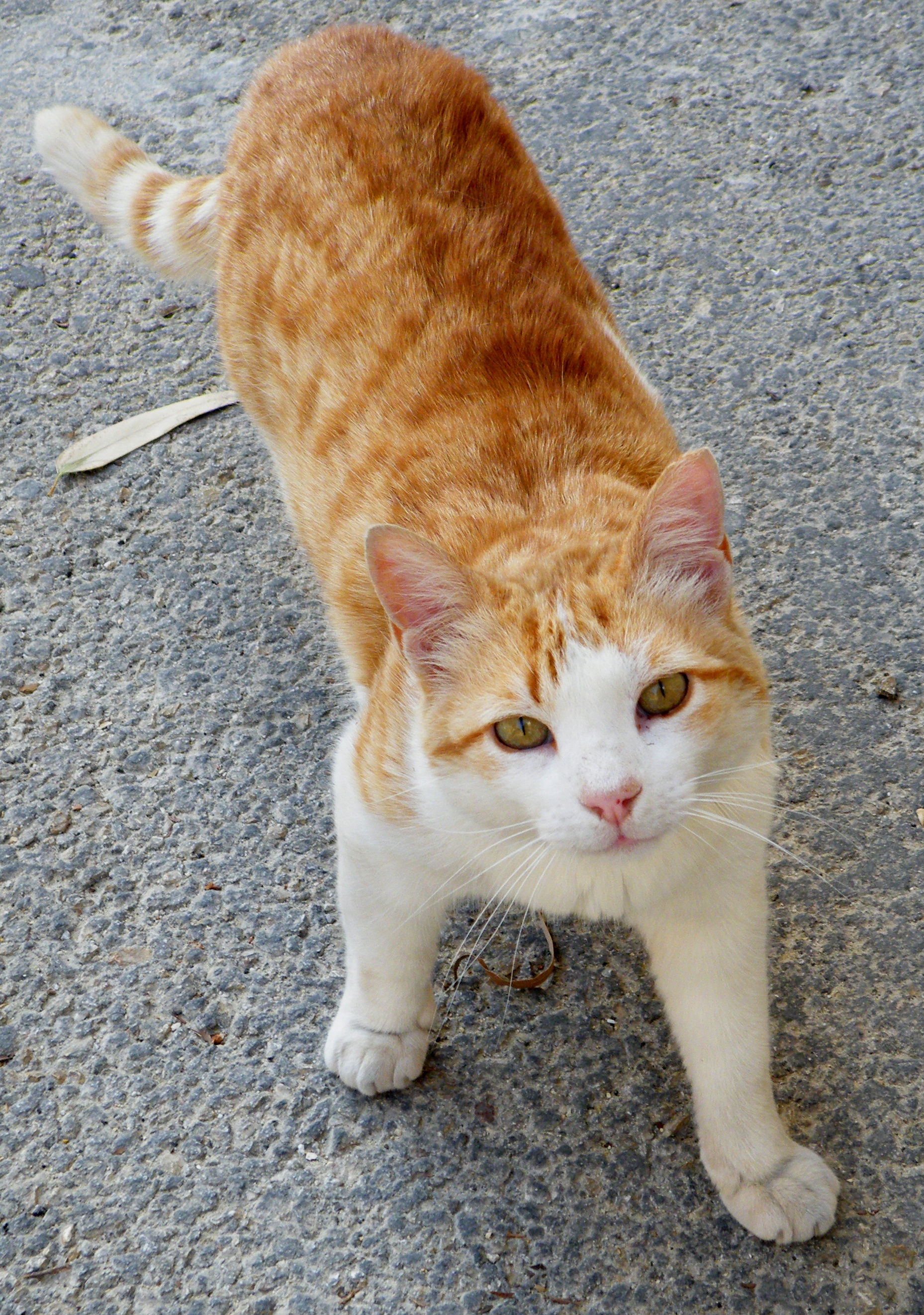
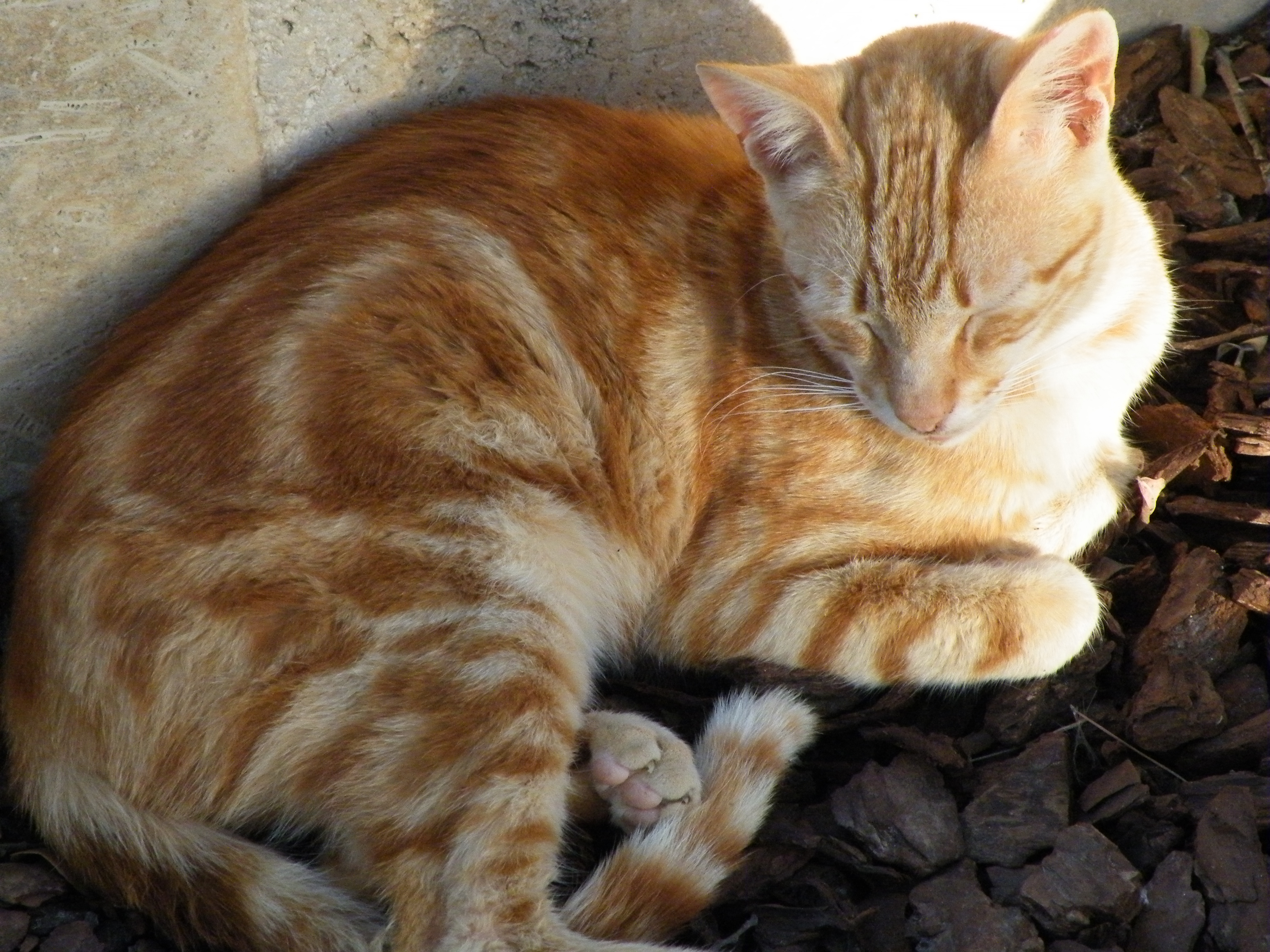
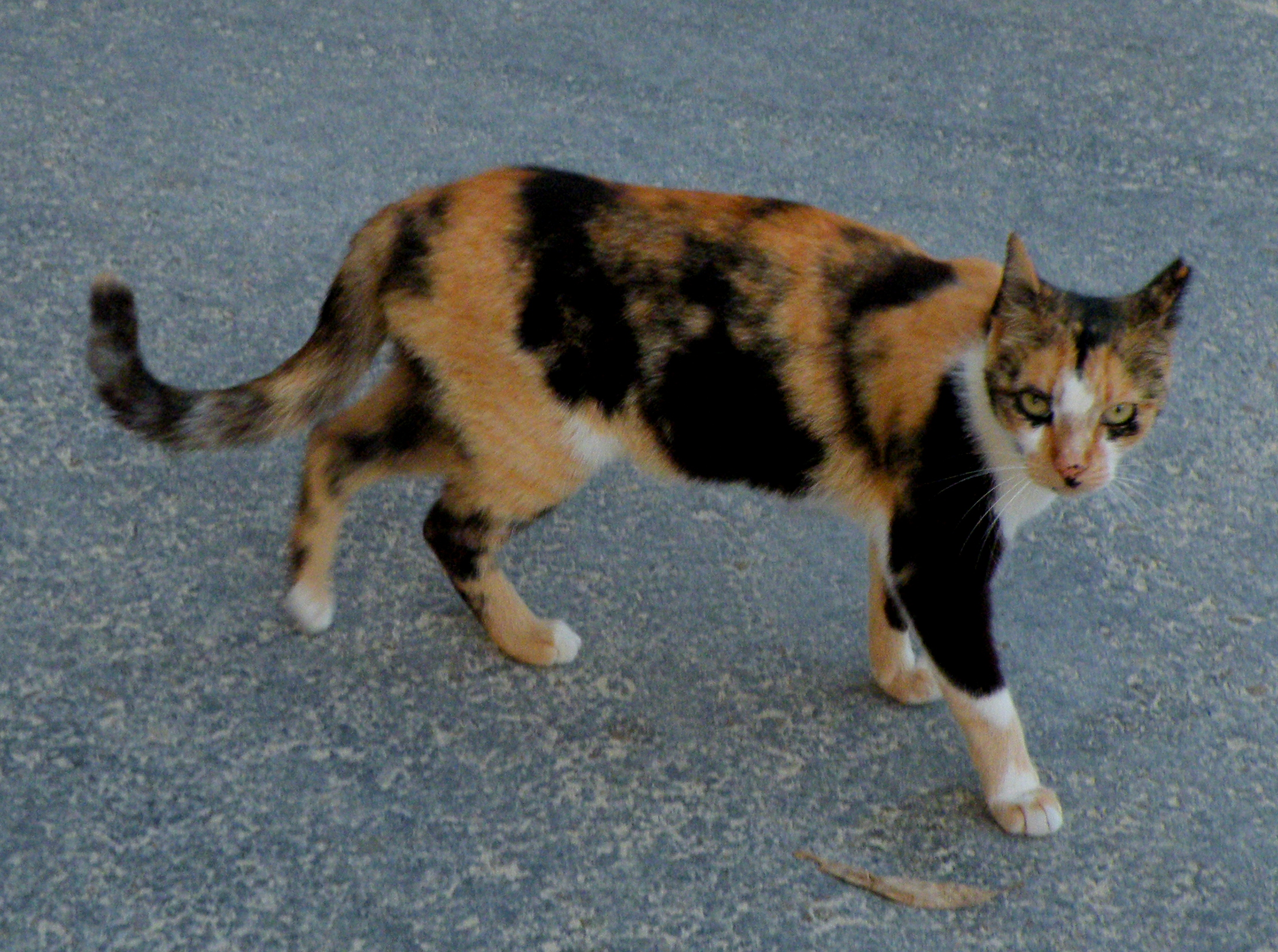
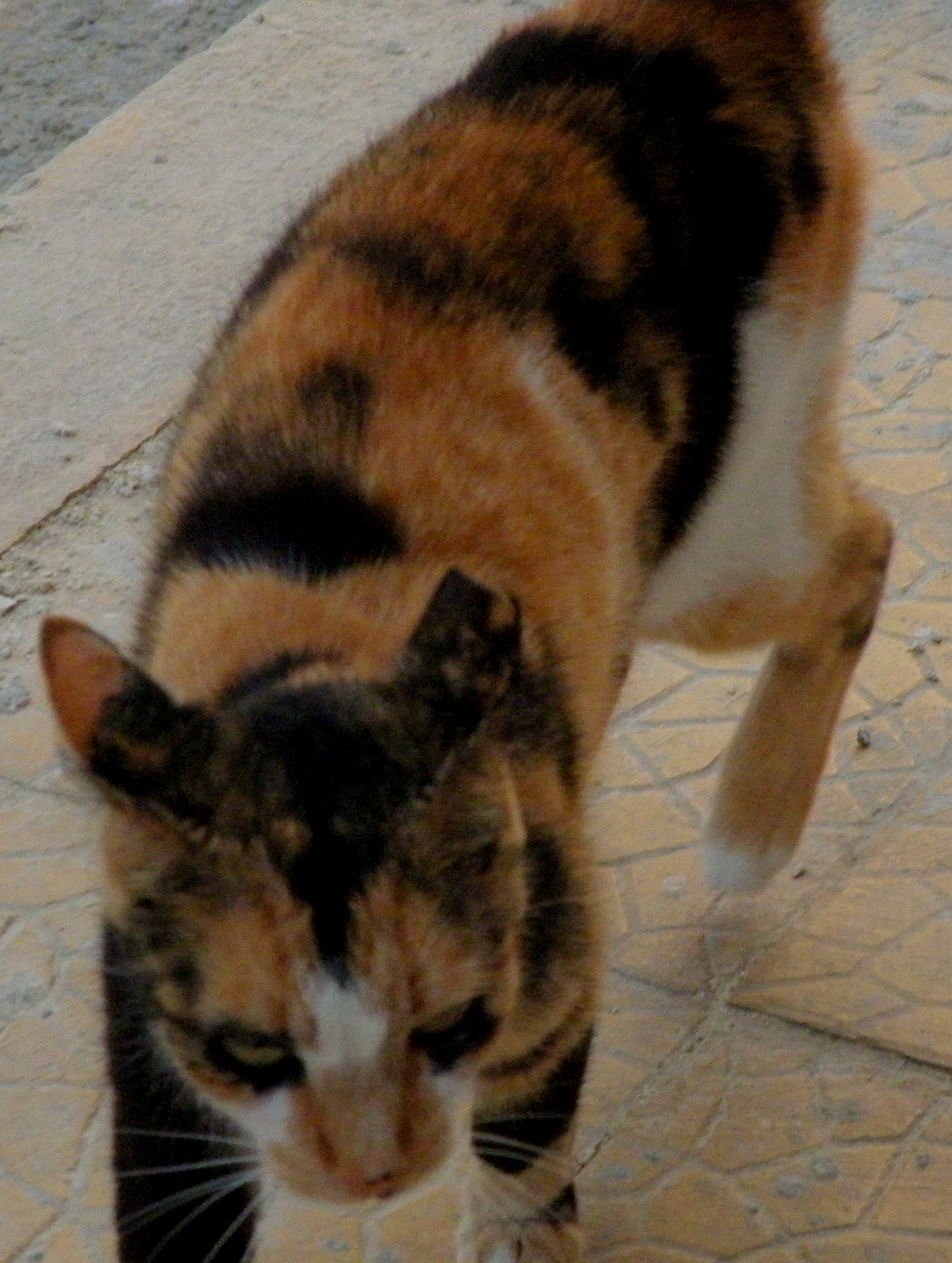
I just have to share this with all of you. I’m not a sentimental cat person, but you just got to love these guys around here, they are awesome, the Maltese cat! Feral cats have been around humans for a long time, they thrive not only in the city but also in rural areas, and here on Gozo and on Malta you see quite a few of them, they walk the streets, and they are not as used to people as the domesticated cat obviously, they are used to looking after themselves, fending for themselves and finding food. I look at them and see character in their faces! In the park in Victoria (capital of Gozo) there are several cats that lounge about, one lovely ginger is my favourite there, it stands high on its legs, a graceful animal. (A lot of these Maltese feral cats seem to stand high on their legs I have noticed). You see them in all sort of shades from grey to white, but most beautiful are the patchy ones who have deep ginger, black and grey colours. They have buckets of attitude, and walk around as if the street is their backyard, I just love their confidence. Here are a few of the guys around the street where we are staying.
Below I would like to share with you my favourite of all time. It is this patchy cat, I only saw him/her today for the first time and hope to catch sight again, this cat is the type that you could write about with great imagination because that is what she/he does to you, makes you wonder how she/he gets her food, survives the night with all the other toms around. What an intelligent look in her/his face too, no wonder she is looking after herself so well. One of the most noticeable things about her is the long full tail, longer than any cat’s tail I have ever come across, she uses it to her full advantage to express how she feels, brilliant!
I hope you enjoyed my cat photos, I cannot for the life of me resist taking more pics of them, goodness me! 🙂
Today we ventured on one of the ‘hop on hop off’ busses which travels virtually the whole of the island. It was the first day we that the sky was overcast and there was a breeze which made it quite chilly travelling on top of the open bus, but the views were spectacular. I wanted in particular to see what sort of crops were produced on the land. I have got a much better idea about that now, I took many photos and will write about this particular subject in the near future, it is a subject close to my heart. We enjoyed the Craft village where we saw all sorts of crafts being worked, most interesting to me was the lace making, but more about that also in a later blog. So much to write about…. Meanwhile I hope you enjoy the photos.
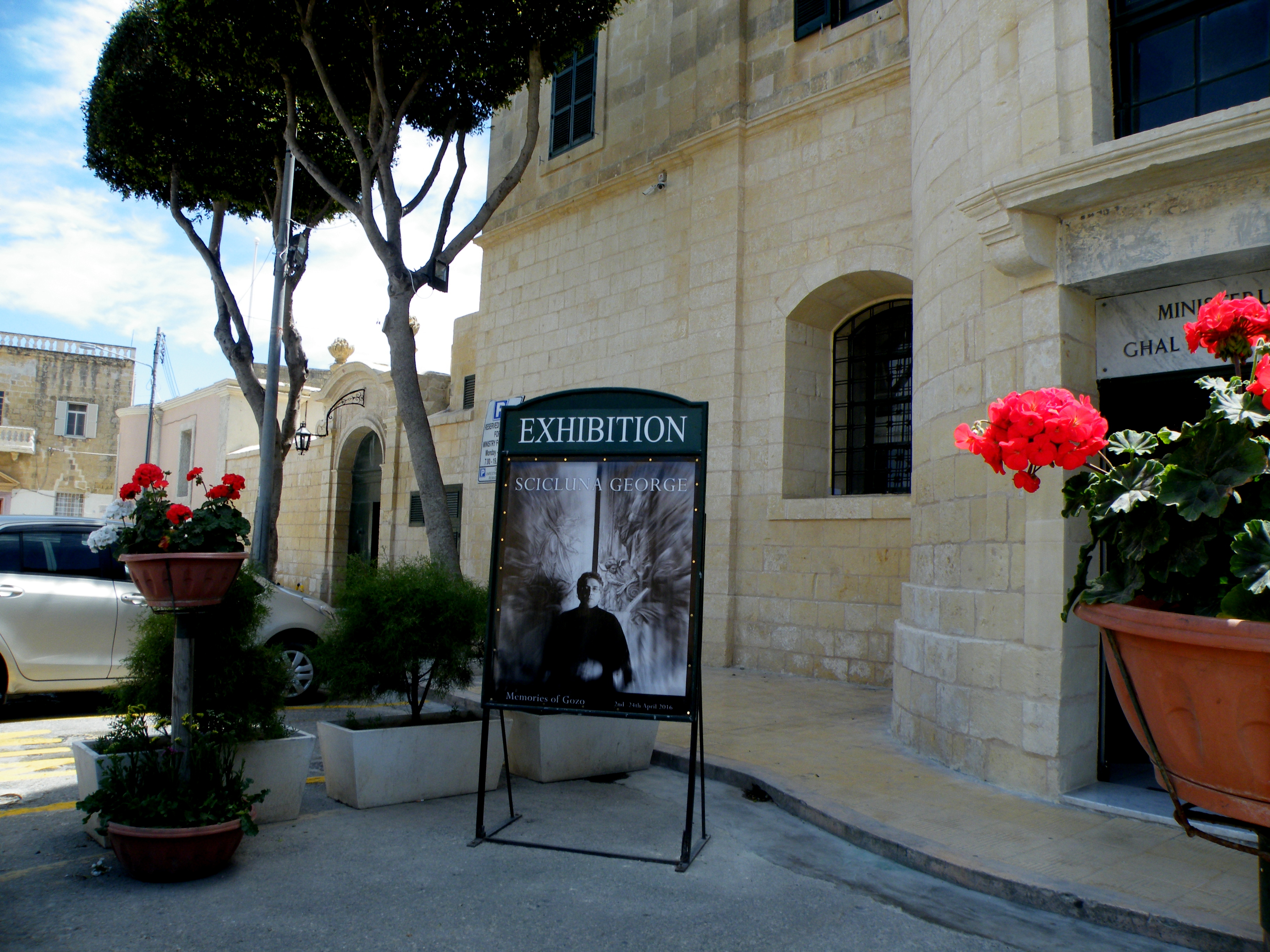
I’ve had my eye on this exhibition for a few days already, I did not know anything about the artist or his work, but I thought that I had to start somewhere if I wanted to discover the art of the Gozotian people, and that I wanted. So today I stepped inside the hall and immersed myself in the works of George Scicluna, an artist born right here in Victoria on Gozo. His work did not immediately appeal to the eye, you had to look at it long to try and get what was going on in the artists mind, I struggled a bit with that, I did notice that all of the large paintings had a religious motive, but not in a devotional way, I thought that the artist was looking for answers in his mind, in a most torturous way, looking for answers about life, about belief, faith, fear, torture, redemption, humankind. I could be totally wrong about all this. But I strongly believe that true ‘Art’ is supposed to allow or encourage the observer to ‘feel’ something, or to ‘experience’ something, and that it did for me, this exhibition of paintings made me feel how mankind does run around with deep anguish about its existence, about the why and how. I can relate to that very well.
That’s all, and that is good enough for me.
Later on I went to check out some more work of the same artist and found that he is also a sculptor, creating fine, sculptors in lime stone. Nice.
Some of the works in the exhibition, with the artist.
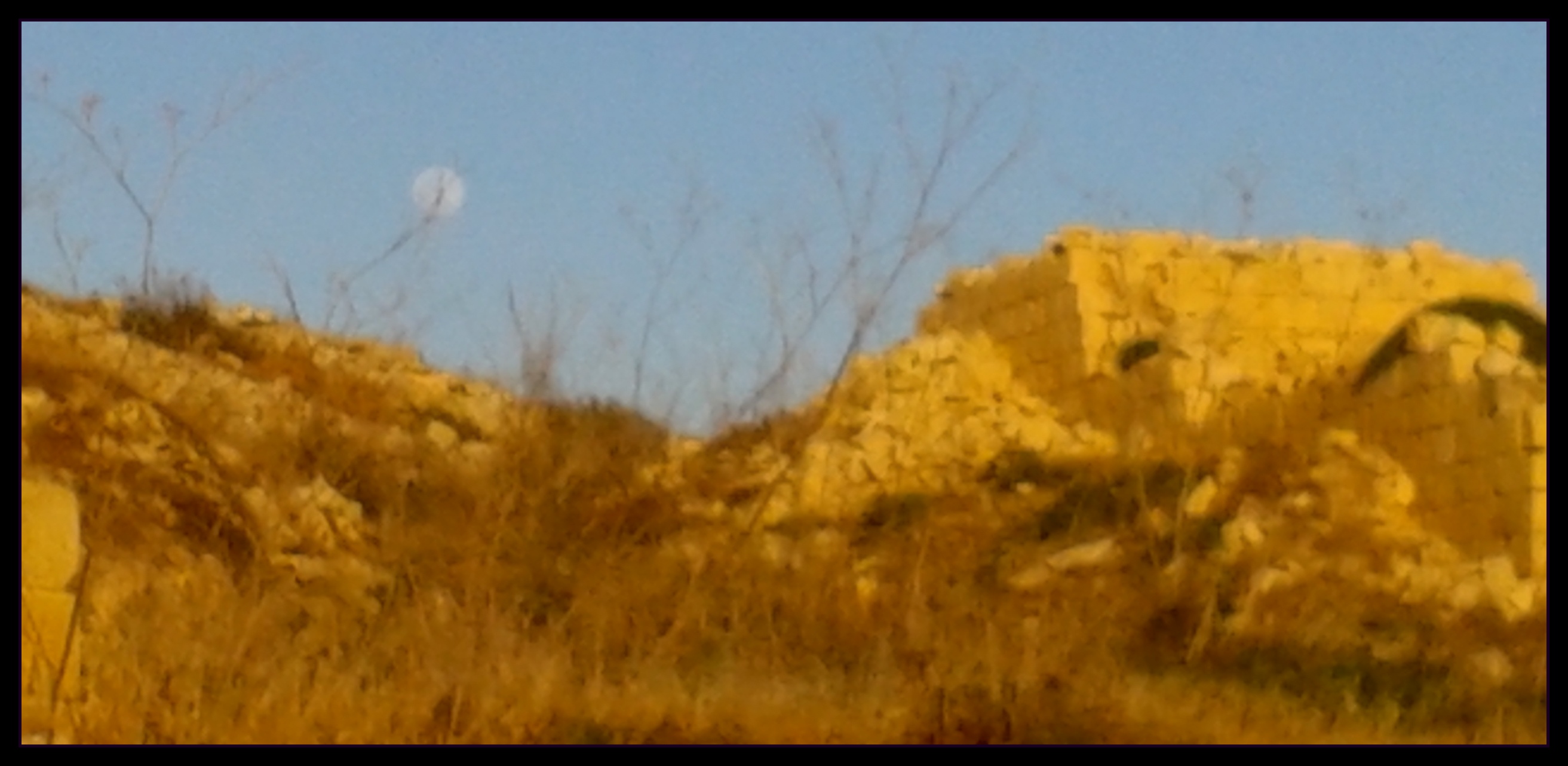
This evening we took a walk along the cliffs at Xlendi. It had been a hot day and the evening cool was nice and refreshing. Where the path leaves the road it becomes interesting and I found many wild plants and flowers growing here. The landscape was beautifully lit by the setting sun, which throws a special warm light over the earth. Higher up along the cliffs there is an amazing array of terraced walls in the local stone, the walls are dry, stones just left on top of one another. It looks like they are terraced agriculture land but they are actually a pathway winding its way up to the top of the cliff, towards the tower, we did not get that far this time but are planning another walk and pick-nick soon up there. The moon was rising at the same time, full moon it seems too, it is so very beautiful here, photos just don’t do it justice.
A little journey to visit Marsalforn today, an apparent busy tourist place in the North-East of the island, where the apartment buildings greet you as you get closer to the sea and the promenade. The narrow little streets of the older village are quant and more interesting. The sea itself is so blue and transparent, and to the north of the harbour you can still see some fishing boats and nets. It is only a few minutes bus drive from Victoria, which is the capital of Gozo and lies in the middle of the island. Every place on Gozo is close by each other, a short bus drive and you are there.
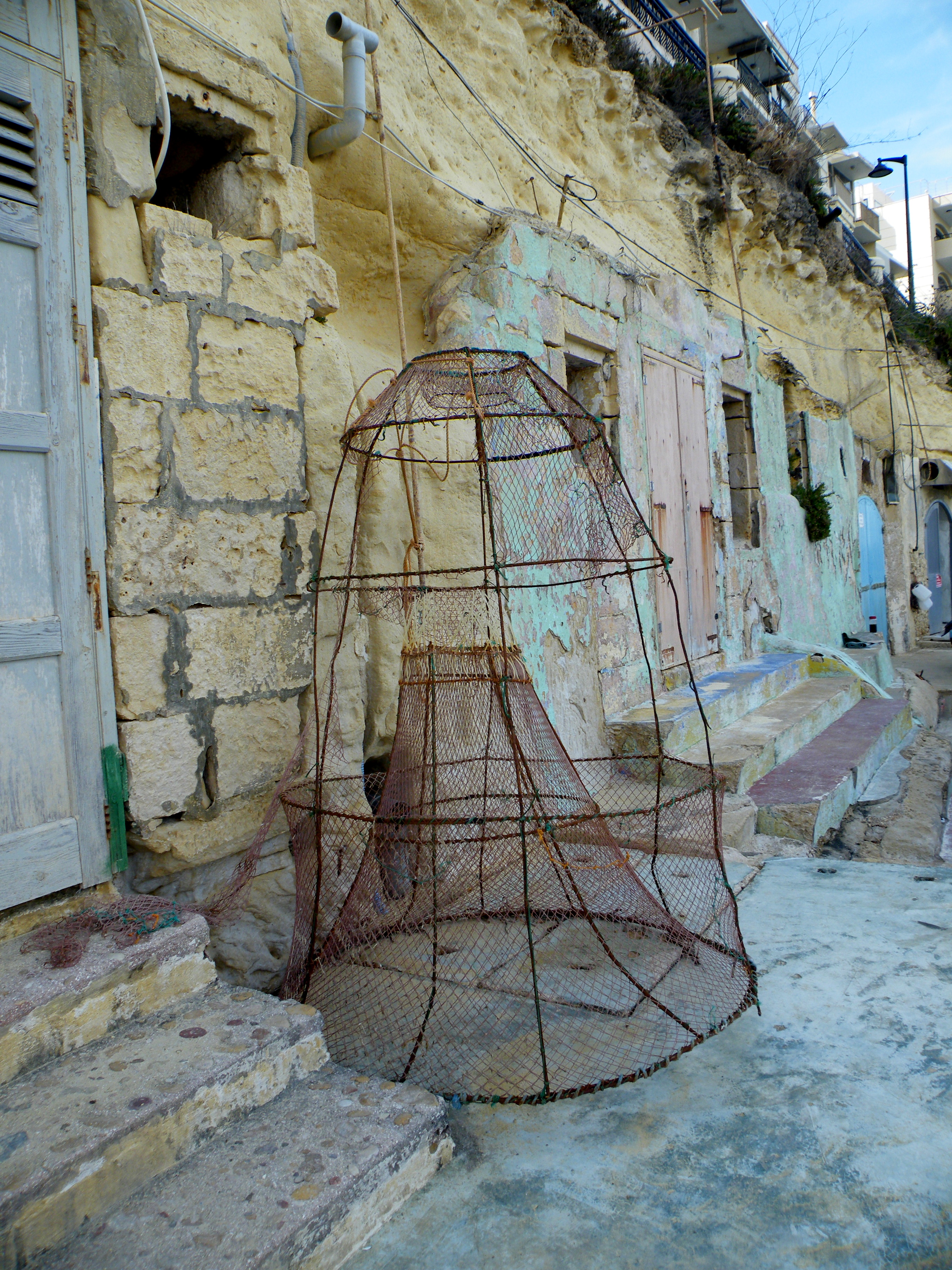
I discovered a few colourful and beautiful sights while there today. I saw that the reddish fishing nets they had in Marsaxlokk, Malta were being used here too, and baskets to catch octopus, as far as I know. While walking in among some of the apartment blocks I then came across the little yellow Oxalis Pes-Caprae flowers, and a few of the Sulla flowers which brighten everything with their beautiful shade of red.
On the way to Marsalforn I saw some signs of agricultural practices, this I am very interested in, Gozo has suffered drought for a few months now and everything does look very dry, though the neatly ordered rows of vegetables, I saw lots of onions, looked healthy enough. The hay had been harvested too in lots of fields. I want to explore this further, what is being grown, produced and so on. I did see quite a few vine yards but they were smaller than in Malta. The grapes are delicious here though. I know that a lot of wells are being used to water the land, but also that the mains water comes from desalination of seawater, I want to find out more about all this.
The views out to sea along some of the coast are impressive with the limestone eroded in all sort of shapes. .
As far as I know it is a basket to catch octopus with
One of the stones of which newly built walls were made near the dried out river in the town, in this limestone I could see crystals if that is possible, very beautiful and intriguing. These type of walls you see all over Gozo and in Malta too, they used to be erected to prevent erosion but also of course to divide the land. I think they look so lovely, all the white limestone pilled up on each other. The wall I came across in Marsalforn was a new one, but I believe that the older types are now under the protection of the Heritage rules.
Though I was not that impressed with the touristy area of this town, we are going to go back and explore the older town and beyond, beyond is where the salt pans are and some other villages, I am curious! More to come on that part of Gozo.
I walked up a rocky path along the deep blue water today.
Lizards were scuttling about all over the place. Their green skin beautiful. It was sunny and hot, very hot, water dripped from my cap and down my forehead. I saw so many wild flowers and plants around me and I wanted to record them all, like I usually do. It is then I saw the black bees, lovely, a type I do not know.
People are swimming in the creek this afternoon, and snorkelling and diving. The walk takes me up along the hot rocks, and then down to a small cave and to the water. The views are magnificent. The rocky outcrop consist of limestone in white, grey, black, and brown. I take photos, lots of them. The rocks are quite eroded in some places, making for interesting shapes and hollows.