NATURE TRAIL – BALLYDEHOB

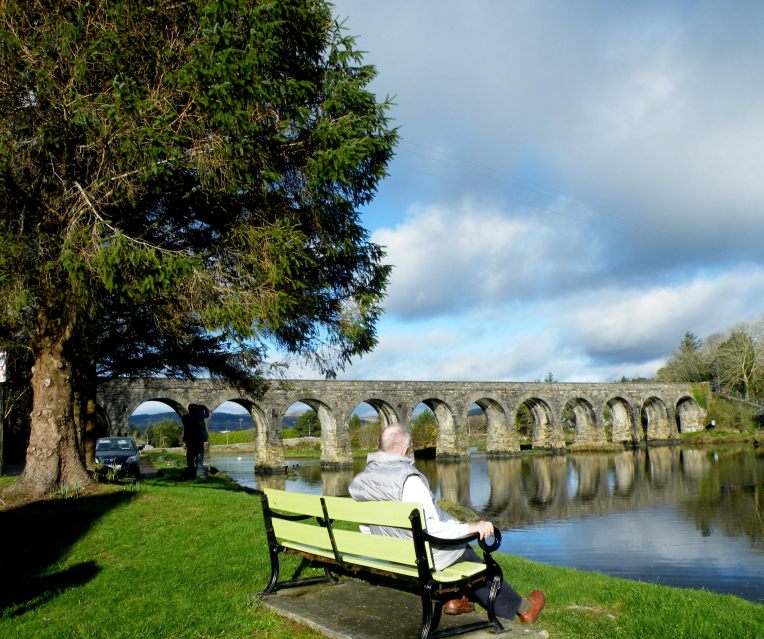
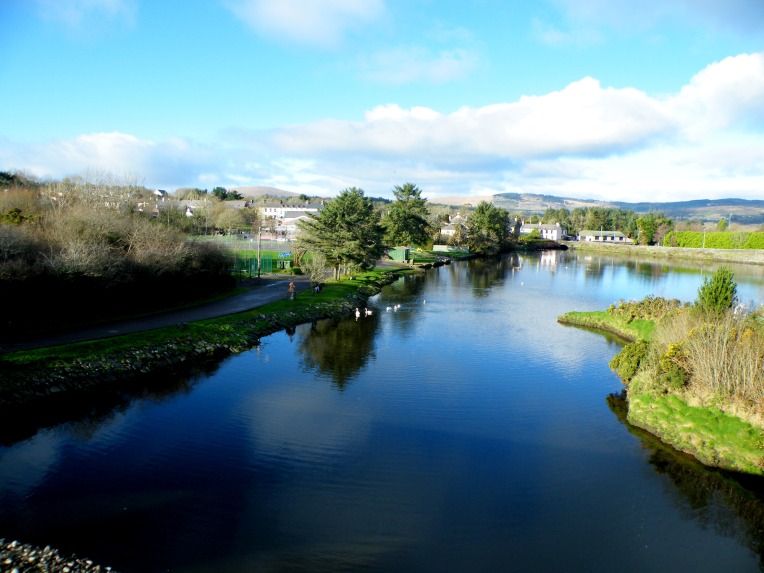
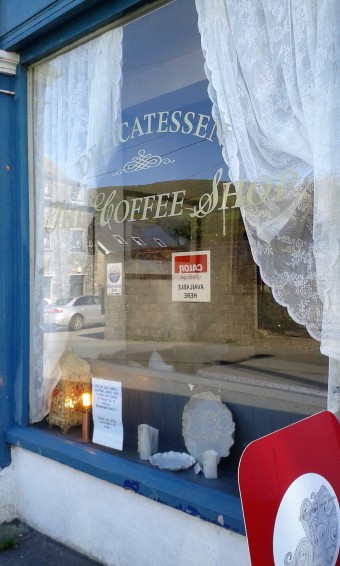
Ballydehob is a small and very charming village on the coast of West Cork, and along the Wild Atlantic route. It was once a thriving mining town, now-a-days it is still overlooked by Mount Gabriel which is where copper was mined back then. Its beauty is superb, and last Saturday we decided to go on the Nature Trail which leads around and over the old railway bridge which leads over one of Ballydehob’s two rivers, the Bawnakeane and Rathravane, but I am not sure which of the two it is! We took along one of my granddaughters, she is a real nature child and took delight in drawing pictures of some of the scenery in her note-book. Ian was well able for this walk and enjoyed it too. I took note of all the new growth along the way, there were several flowers open, Lesser Celandine, Daisies, and Herb Robert were among them. I also noticed young leaves of the March Violet, a wild Geranium, and quite a few very pretty ferns.  The walk along the trail is easy for anyone and the views are magnificent.  We finished our walk in the village with coffee and delicious cake at a delightful eatery called Budd’s.
dscf3632

dscf3638

dscf3663

dscf3653

dscf3665

dscf3651

dscf3646

TEXTURE, COLOUR AND BEAUTY

20180927_150653

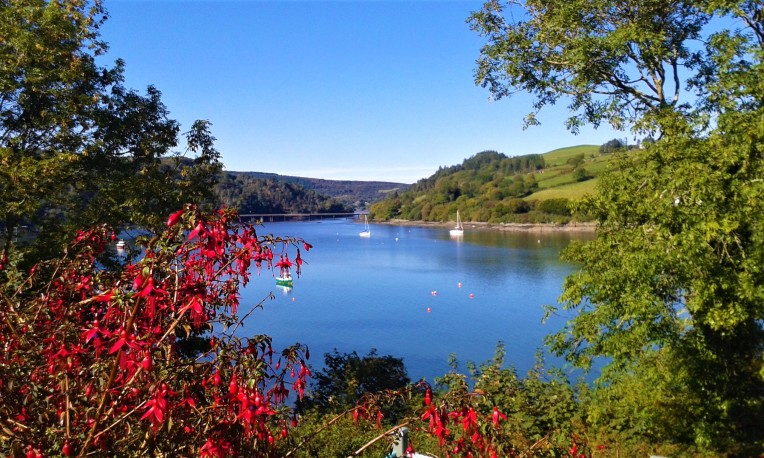
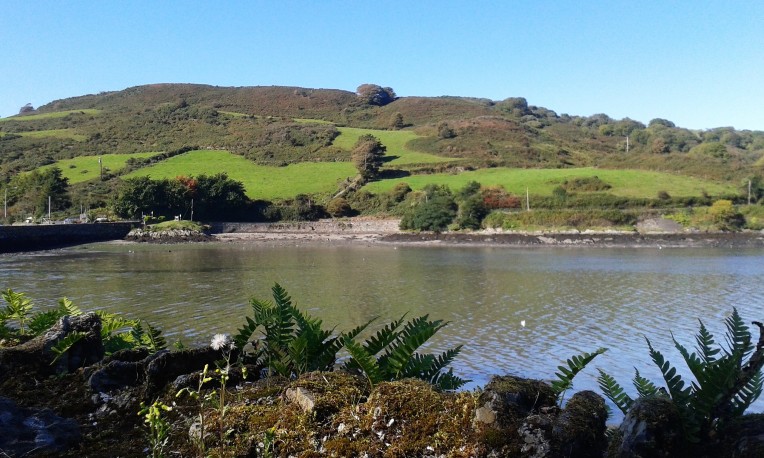
Yesterday found us in one of the most beautiful places in West Cork, a small fishing village along the coast.  It was a quiet and a sunny day, a day like you might get in September or October, when the sun is golden, bringing out the colours everywhere and in everything.  The air was crisp, and all along the hedgerows lashes of bright red fuchsia were still proudly in bloom, lifting the landscape and infusing in us a feeling of vibrancy and beauty.

20180927_133454
We stopped for a bite to eat, seafood chowder and smoked salmon on homemade brown bread, it was delicious.

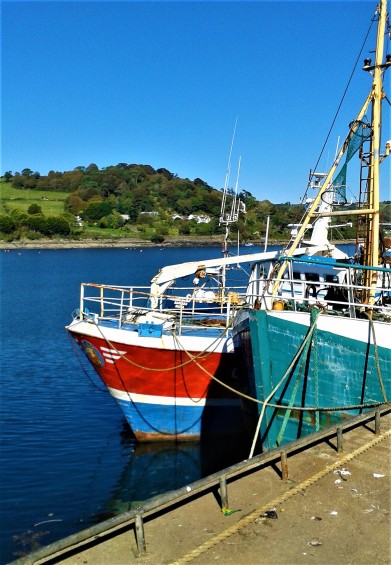
We walked to the pier to watch the fishermen mend their nets, bright colours were everywhere, whether the nets were new or old, or whatever other materials are used by the fishermen, there is a wealth of texture and colour to be seen.

20180927_145048
Fisher boats moored along the pier

Everywhere I looked I saw art and beauty, was it me or was it the reality of things?

Fishermen working on their nets, nice to watch, dedicated work.

Ian having a great walk down memory lane, and nets everywhere!

20180927_143834

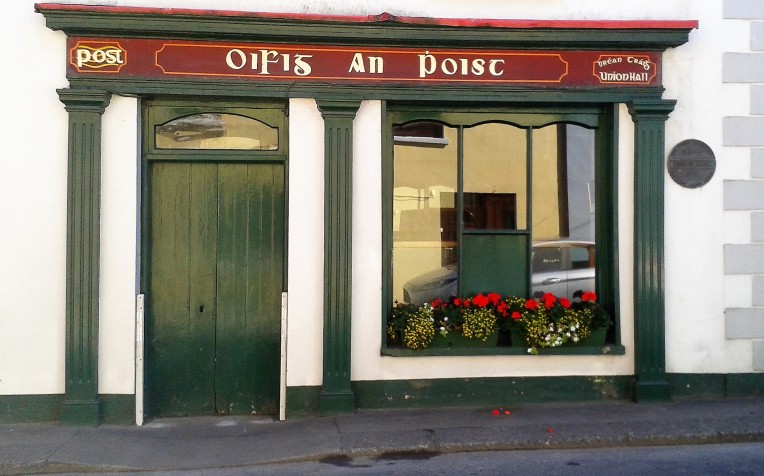
This is, or was the Post Office in this little village, the village of Unionhall.

20180927_144130

We were celebrating my 69th birthday and it was a wonderful way to do so.

Thank you Ian for helping to make this day so very special.

COMING HOME

‘Coming Home’ is the name of a special, and I would say, a poignant exhibition which has been running all summer in the Art Centre in Skibbereen town.  It aims to commemorate and indeed give value and respect to all the many Irish who died during one of the biggest calamities that hit this land.  ‘The Great Hunger’ (1845-52) it has been called, and it was a famine that was unprecedented in its destruction, indeed it was the worst demographic catastrophe of nineteenth century Europe.  Several million people died or were transported to Australia or Canada, or emigrated to a variety of countries.  There is so much history behind this present exhibition, and the talks, lectures and performances that have been laid on as part of this exhibition.  How moving this has been, and how healthy – not to dwell on the past to remember it with bitterness, but to appreciate and respect those that suffered during that period in Irish history.  Myself as a foreigner I never realised what an effect this famine has had on the present Irish generations, but in a way it has, and that is why it has been so good to bring the hurt and hidden sadness’s from generations past into the open, and to look at this on a nationwide basis.  People are then able to let it go, and to have renewed energy and I think that is what will happen.  This exhibition brought people back from many countries to experience, up to a point, what it would have been for their ancestors.  I went to it early in the summer, and though I am not a very emotional person, I am very sensitive and I could literally feel the emotions around me, I was very moved, but also very happy as it felt like a cleansing for the people who are the survivors and perhaps are living with memories from ancestors that faced starvation, and or, the coffin ships to travel to far off countries in order to survive.

I was speechless walking out of the Art Centre that day.


I would like to dedicate this blog post to my friend Rowena, who is a survivor of ancestors that suffered the workhouse in Ireland, and were transported to Australia.

BALMY SUMMER DAYS

20180615_134512

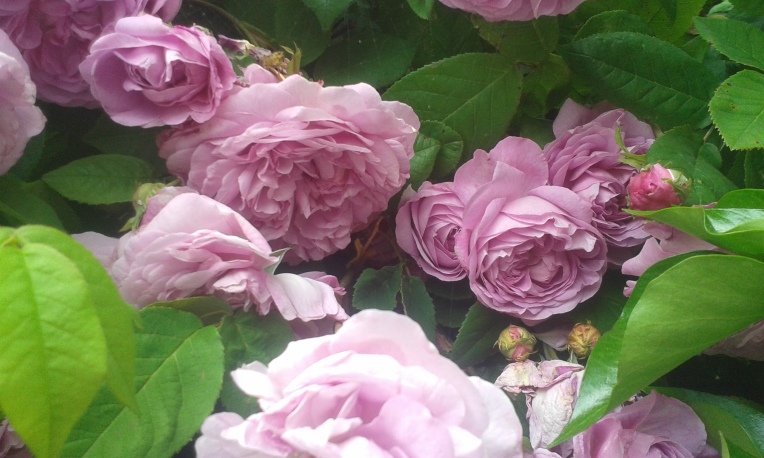
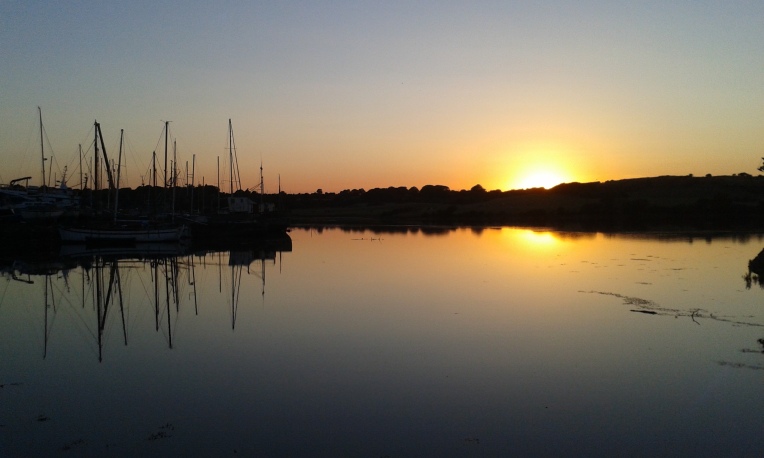
You have got to love these balmy summer days, when the wild roses are flowering along the hedgerows, and the dark yellow of the ragwort is blending in with the straw-coloured grasses now dried out from sun and water need.  And the bright red of the fuchsia bells against the dark green foliage of the hedges all along the country roads.  And the evenings when the scents fill the air, scents of night flowers, of grasses and trees, of the soil, delicious are the fragrances of the land as the earth cools down as the sun slowly disappears.  How lovely these long and light summer evenings, stretches of brightness seen along the horizon as late as midnight – to reappear as early as four in the morning when the sky lights up again.  I used to set my alarm to witness this magical moment to see the new morning appear, glad for another chance at life and anticipating a wonderful day.  These are the restoring days of the year, the sun brimming with health giving vitamin D3 (well at least our bodies can avail of the sun to make it).  It has been since 1976 that Ireland had a summer like this, with higher temperatures than we get here normally.  And as the heat continues there is said to be a water shortage and resulting ban on using the water hose in the garden, so I’m keeping all my grey water and what is left in the rain water barrel for my vegetables.  The dry earth soaks up the water eagerly.

At this moment I am very much out of routine, seems to be like this for a while now, my regular blog reading and writing has diminished.  I miss it, but too much is happening and I’m getting little done.  It is just that type of a summer I think – a summer of laziness, but also a summer of beauty and of enjoyment, of scents and sights.

I do hope that it is full of goodness for everyone of you too.


20180703_214312

20180518_155840


A DELIGHTFUL DISCOVERY

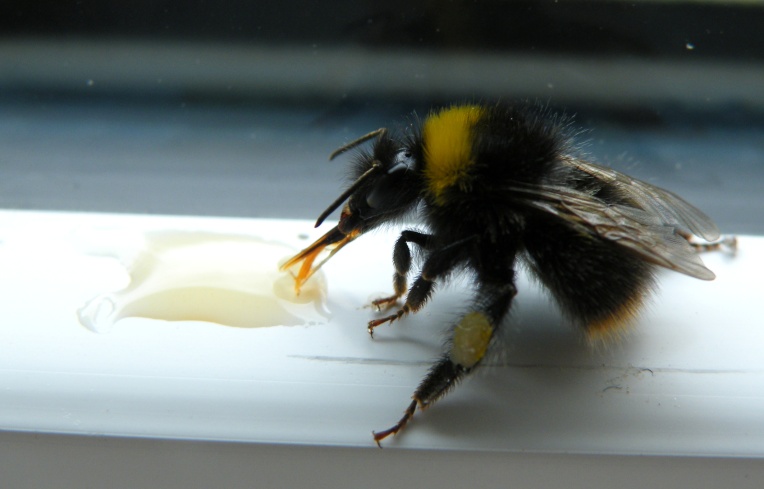
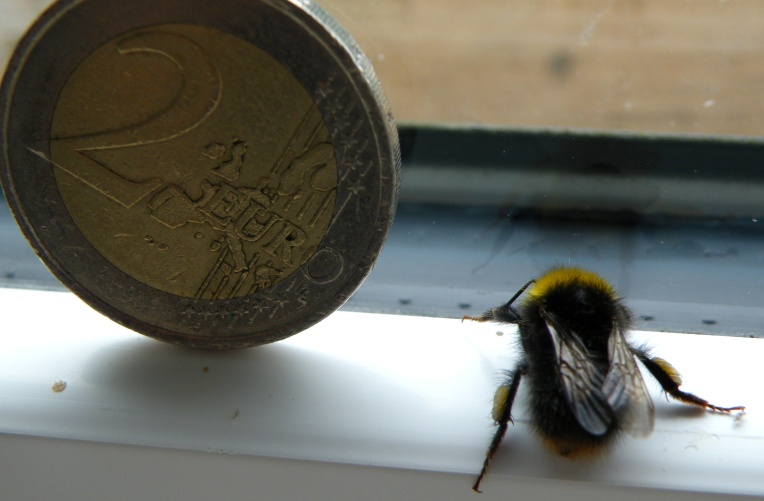
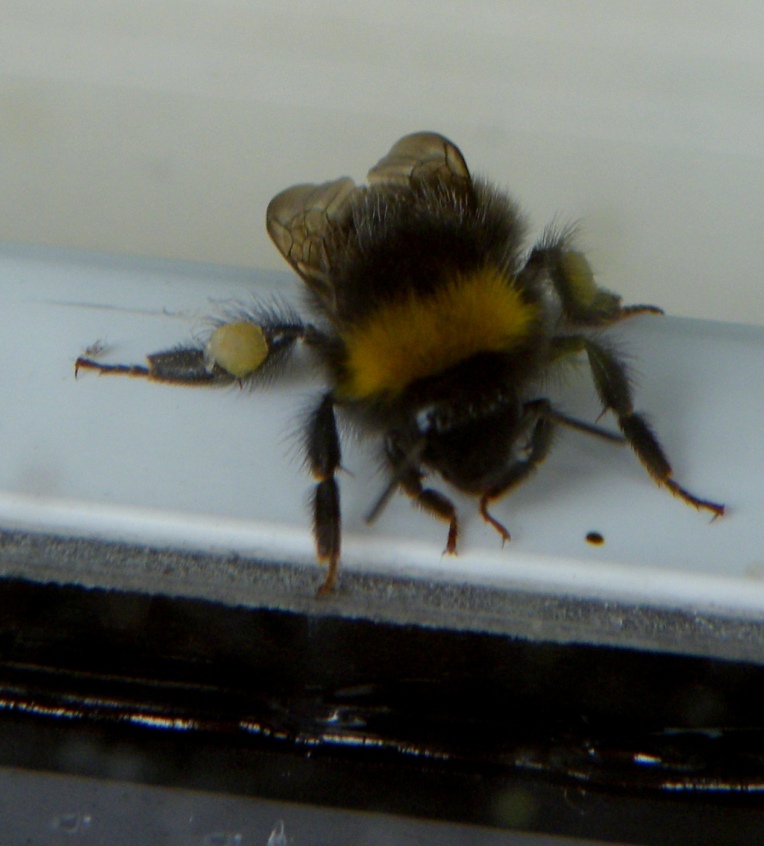
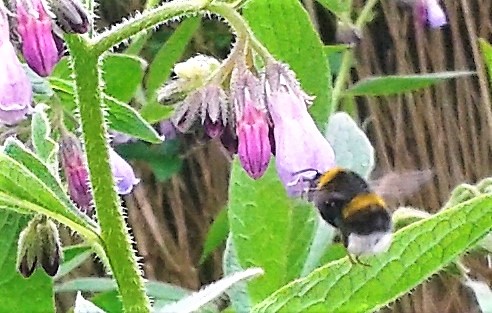
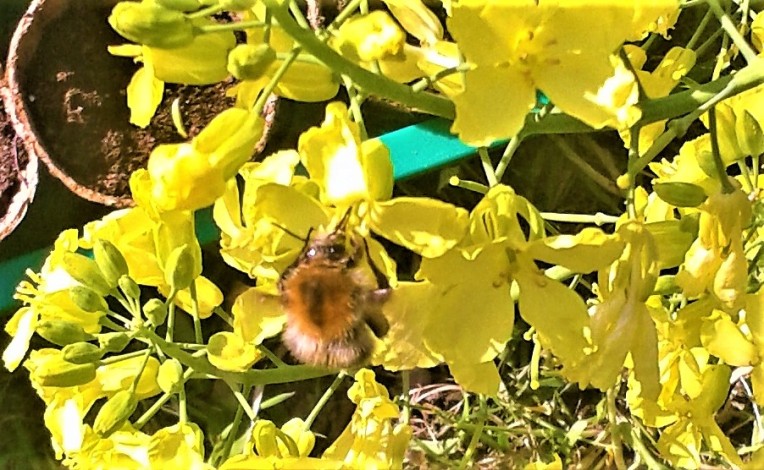
A bumblebee that was sitting on the bathroom window, not moving. I grabbed my camera to take some shots and then got out the honeypot and as soon as I touched the surrounding area of this beautiful insect it put out its proboscis and started to suck the honey with gusto, lovely to see this. It gave me another chance to take photos. I see this little bumblebee type in the garden a everyday, feeding or at least looking for nectar on the flowers of the large comfrey bush. They are very small in comparison to other bumblebees and move fast, never been able to take a photos until now. Just found out something else interesting, from observation, they do not go into the comfrey flowers, rather they bore a little hole in the tip of the flower petals and suck that way (I guess). I’d love to have a proper identification. I’ve looked at all sort of websites without any luck. Now I came across a blog post of a fellow blogger that looks very interesting, it is at https://standingoutinmyfield.wordpress.com/2017/06/29/cheat-guide-to-the-irish-bumblebees/
Could it be a young male B.Lapidarius I wonder?  And no it is not!  I have since learnt from a very reliable source, one of my fellow bloggers who is an ecologist, see her blog at https://murtaghsmeadow.wordpress.com/ that our little bumblebee is a bombus pratorum, or early bumblebee worker.  It is not a male because males do not collect pollen and in the photo we can see lots of pollen on its legs.  Only the queens and the workers collect pollen, the males do visit the flowers for nectar though (Murtagh’s Meadow).
DSCF2389

DSCF2383

DSCF2388

Just adding two more photos of other bumblebees from the garden.

20180610_175555

This one is also small but it has two bands of yellow and a white bum, so different from the previous bumblebee.

20180523_174945

And this is a large one orange top, a lovely one.  Must get better photos though.

I would also like to pass on recommended reading:  Dave Goulson’s book – A sting in the tale –

GREEN-VEINED WHITE – Pieris napi

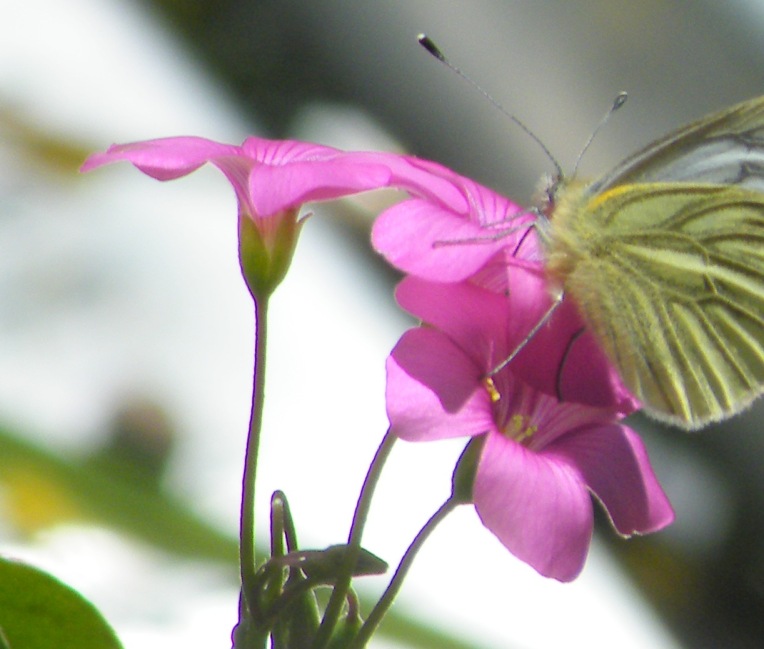
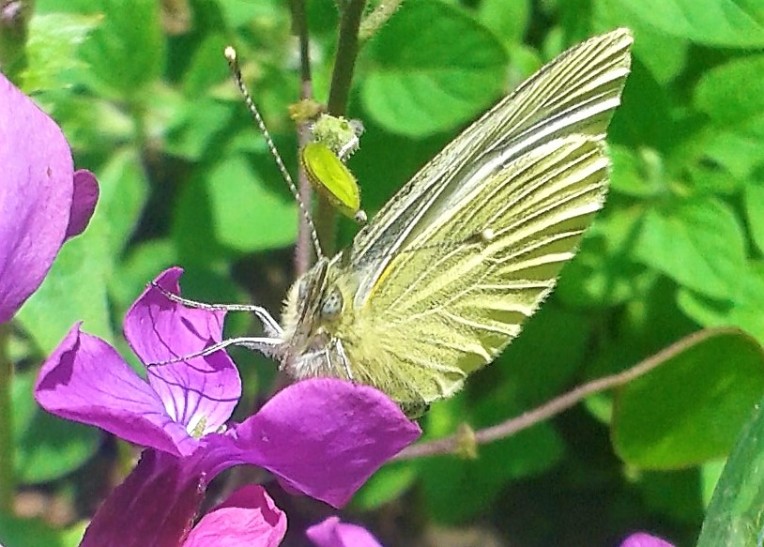
Today while gardening a lovely butterfly came to check out some dark pink Oxalis flowers, it was a warm and sunny day here in West Cork, and because the two previous days we experienced soft Irish rain the garden was fresh and beautiful. The colours and the green shades were easy on the eye. And since we have quite a few wild flowers in bloom, we are visited by a good variety of visitors from the insect world. But today it was the butterflies that took away first price.  Yes, since I started reading the book “The Butterfly Isles: A Summer in Search of Our Emperors and Admirals” by Patrick Barkham, my interest in butterflies has intensified. Patrick Barkham first went butterfly spotting as a child with his father in Norfolk. His book documents his search for different butterflies found in the British islands. It is a slow read but quite interesting, I am hooked.
I think that the butterfly in my photos is a Green-veined White (Pieris Napi).

Biodiversity Ireland is holding a Butterfly Bash this week and we are sending records of all the butterflies we see into https://records.biodiversityireland.ie/start-recording

Lovely to have seen this striking butterfly today and I will be on the look out for more. I hope you enjoy them too.

DSCF2218

20180522_143332

“WE ARE ALL BUTTERFLIES. EARTH IS OUR CHRYSALIS.” LeeAnn Taylor

THE NIGHTS ARE DRAWING IN

I cannot believe that yet another week has passed by! Cooler now and the leaves are turning multi-coloured, while some are twirling lazily off the trees, and covering the front garden with a brown rustling carpet of glorious scented autumn!

I’ve been busy over the last few days and I know that I have quite a bit to catch up with – blog entries of friends that I follow, eventually I will get to read all. The reason why I got so busy is that I started an online course with FutureLearn, this time with Trinity College in Dublin. The course is called ‘Achieving Sustainable Development’ and it takes us through four of the 17 UN development goals. As a start we examined goal 16 which aims for the elimination of all violence as a basic for the establishment of sustainable development. Both physical violence, structural violence (embedded in social structures of inequality), and cultural violence (where traditions condone direct or structural violence. So covering the whole area of peacebuilding and peacekeeping. I found this very interesting because I run around (like so many of us)trying to work out how we can help to bring about world peace. The way that this course works is, it gives a video of an interview, in this particular first week different professors were interviewed on conflicts in Kosovo, Sri Lanka, Northern Ireland, and Colombia. Links are provided to other reading material (lots of it), and then we students write our thoughts on what we learnt, there are students from all over the world taking part which of course makes for an interesting dialogue. It is so thought provoking! Tomorrow is week 2 and we will be looking at SDG 3 ‘Challenges to Health’. I’m looking forward to it.

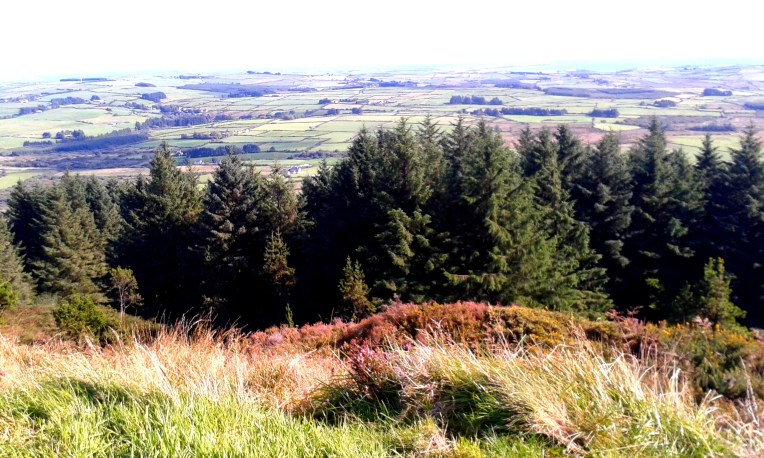
And at the same time it is only another eleven days before we leave to return to Gozo, after a visit to Norfolk to see Ian’s family first. I’m totally packed and organised, all that remains for us to do is see family and friends and that is always a pleasure. Two days ago my daughter, and the children took me to climb a hill overlooking much of the area here, we saw the sea and the patched fields and meadows. It was beautiful – though the climb nearly killed me. I will share some photos with you all.  In a way it is a sort of farewell to the area here – for the time being.
20170914_154151

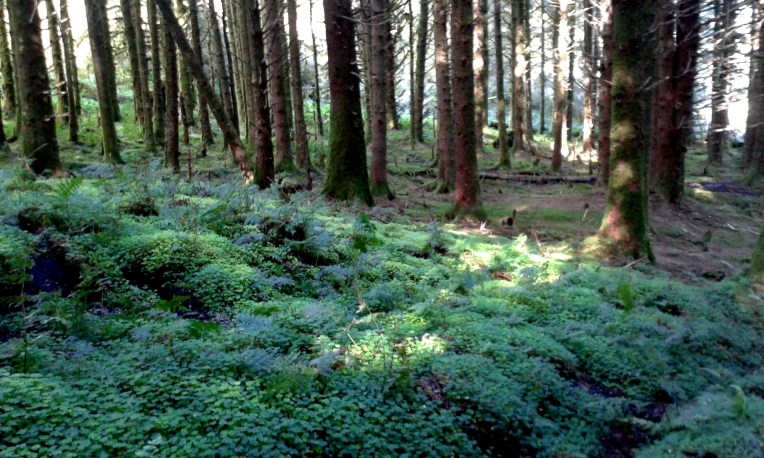
An ancient stone wall covered in moss, everything was covered in moss, the trees, walls, ground, different types of mosses, very nice and green.
20170914_160659


20170914_153634
As we came above the tree level it became quite windy, the kids were running up and down like mountain goats, exploring and discovering creatures and all sort of things growing. Ferns, heathers, mosses, fungi, and they even brought me clear water from a little stream to show how fresh and clean it looked.

20170914_154154

The view was spectacular once we were on top of the hill where a lone cross was keeping watch.

So beautiful.  One thing puzzled me and that is the higher we went to more wet the soil became, I think that the soil is peat as it was pure black in colour.  Walking down was actually harder in a way than climbing up, we were all ready for a nice cup of tea.  Luckily the weather was sunny and quite beautiful really.

After all of that, the cobwebs were out of our hair, that is for sure.
 

AUTUMN AT GLEBE GARDENS

A visit to Glebe Gardens in Baltimore, West Cork, was on the agenda for a while and finally some days ago we took the opportunity to celebrate my daughter’s birthday with a delicious cup of coffee and cake, and a lovely walk through the flower gardens, the woodland, herbaceous borders, and the vegetable plots. This 5 acre garden is bordering on the sea where the Ilen river enters Roaring water Bay. Vegetables for use in the restaurant are grown organically in the gardens. Because of the vicinity being so close to the sea there is a mild micro climate which makes everything grow very lush. There are again to be found a number of sub-tropical plants, with palm trees and exotic rhododendrons among them. When you walk through the woodland and over the little bridge you come to an open grassland where there is an amphitheatre where music and other entertainment is put on regularly.  I’ve not been to anything yet but again it is on the agenda. There is an orchard and we saw several varieties of apples ready to eat and fallen from the trees too. Grapes were a plenty in the tunnel, different varieties of tomatoes and cucumbers too.

I only took a few photos as I was wearing my grandmother hat, but still got quite a collection which made it hard to pick some for my blog! (Much as I would like I never put photos of my grandchildren on internet, it is an agreement between my daughter and I).  What the children really enjoyed was the goats and chickens, finding apples in the orchard, and the open space of grassland where they spontaneously started dancing.

It is a garden offering not only beauty but also peace and tranquillity.


20170826_162351There are benches where one can have some time to relax in beautiful surroundings!  My partner and I enjoying very much.

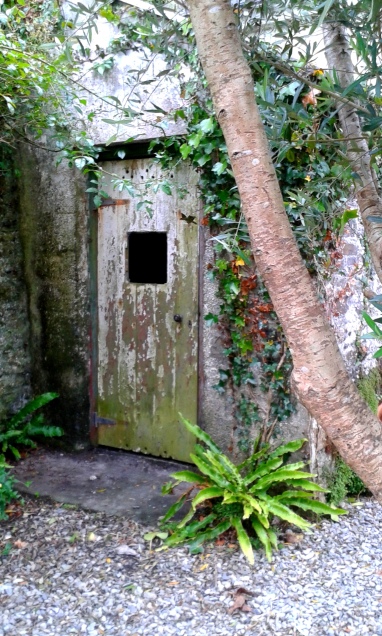
20170826_165409This old but lovely doorway – to goodness knows where, I could not resist taking a photo of, thought it looked so lovely what with the fern growing around it too.

20170826_162640

If you enjoyed my photos then you might like to look up more information on the Glebe itself.  When on holidays in this area it is a wonderful place to visit and have lunch or coffee, a walk in the gardens, and maybe go and enjoy some open air night time entertainment.  Here is a website:

http://www.glebegardens.com/the-garden/


SEAWEEDS OF THE IRISH COAST

Yesterday saw a whole bunch of us interested folks going to explore the arboretum at Ardnagashel in Glengarriff, West Cork, but apart from admiring the wonderful trees we also received lots of information on the seaweeds and lichens along this stretch of coast. Ardnagashel was established by the Hutchins family and it was as part of the Heritage Week of Ireland that these activities took place, in memory of Ellen Hutchins (1785-1815)who was a remarkable Irish Botanist. The talks on the lichens and seaweeds were given by Howard Fox, who is the State Botanist (National Botanic Gardens) and by Maria Cullen. This ‘life’ introduction to the seaweeds and the lichens of the coast of Bantry Bay was so very interesting. a true first introduction in this field for me. Later in the afternoon Madeline Hutchins (Ellen’s great great grand niece) took us through the forested area of this garden and introduced us to some wonderful trees, among them an enormous Japanese Cedar (Cryptomeria japonica). But more about the trees in another blog.  Now to concentrate on the seaweed for a start.  There is so much information that I took in yesterday and research I want to do on this that I feel delighted (because it’s right here at my doorstep), but I am also a bit overwhelmed because so far in my life I have been concentrating on enlarging my knowledge about wild plants, flowers, insects and spiders of Ireland.  Now this is taking it one step further with looking at lichens and seaweeds.  There are no days enough in the week to enjoy all this abundance of nature, and to do the research.  Needless to say I am a huge amateur in all this. (an enthusiastic one).
DSCF2684
So we learnt that there are three types of seaweeds and they are divided by their colour. These are the greens, reds, and brown seaweeds. There are about 10 000 species.  This particular species is called Fucus serratus L.  (Serrated wrack).  This seaweed is used commercially in the manufacturing of cosmetics and seaweed baths.

Photo on left is Knotted or Egg Wrack (Ascophylum nodosum) with another seaweed growing parasitically (it gets its sugar from the Knotted Wrack) on it, it is called Polysiphonia lanosa. Maria Cullen (right photo) told us to nibble some of the parasite and to me it tasted only like….sea water!  Maria gave us great demonstrations of a variety of seaweeds which she picked straight from the sea there.

Duileasc (Palmaria palmata) a red seaweed, and Nori (Porphyra tenera) and another one of the Wrack seaweeds (Fucus) .

Top right photo is a calcareous red seaweed, Howard is here showing and telling us about the Sea Spaghetti (Himanthalia elongata).  The book I am giving attention to on the right is an excellent cookbook with lots of information on the edible seaweeds.  I bought it for my son-in-law once and he was very pleased with it.

DSCF2696The coast of Bantry Bay is rich in seaweeds, and it’s beautiful too.

Nori seaweed, Laver (Porphyra tenera) in the top left photo is paper thin and edible, much used in countries like Japan of course.  The green seaweed is sea lettuce (Ulva lactuca).  The book on seaweeds looks real interesting and essential if seaweed foraging and identification is taken seriously.

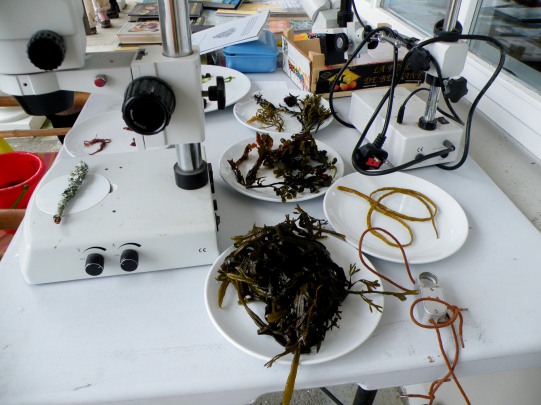
DSCF2706Microscopes and strong magnifying glasses were all available for us to have a look through.

More samples laid out for us to check out and learn about, far more than I can identify right now.  Further in the water there were even more types of seaweeds to be seen.  Howard and Mary never tired of explaining to us all the details, it was such an interesting hour spend on a lovely and warm Saturday afternoon in this beautiful part of Ireland.  My brother Johan and his wife Lorraine who were visiting Glengarriff, were among those interested and it was lovely sharing this time with them too.