SEAWEEDS OF THE IRISH COAST

Yesterday saw a whole bunch of us interested folks going to explore the arboretum at Ardnagashel in Glengarriff, West Cork, but apart from admiring the wonderful trees we also received lots of information on the seaweeds and lichens along this stretch of coast. Ardnagashel was established by the Hutchins family and it was as part of the Heritage Week of Ireland that these activities took place, in memory of Ellen Hutchins (1785-1815)who was a remarkable Irish Botanist. The talks on the lichens and seaweeds were given by Howard Fox, who is the State Botanist (National Botanic Gardens) and by Maria Cullen. This ‘life’ introduction to the seaweeds and the lichens of the coast of Bantry Bay was so very interesting. a true first introduction in this field for me. Later in the afternoon Madeline Hutchins (Ellen’s great great grand niece) took us through the forested area of this garden and introduced us to some wonderful trees, among them an enormous Japanese Cedar (Cryptomeria japonica). But more about the trees in another blog.  Now to concentrate on the seaweed for a start.  There is so much information that I took in yesterday and research I want to do on this that I feel delighted (because it’s right here at my doorstep), but I am also a bit overwhelmed because so far in my life I have been concentrating on enlarging my knowledge about wild plants, flowers, insects and spiders of Ireland.  Now this is taking it one step further with looking at lichens and seaweeds.  There are no days enough in the week to enjoy all this abundance of nature, and to do the research.  Needless to say I am a huge amateur in all this. (an enthusiastic one).
DSCF2684
So we learnt that there are three types of seaweeds and they are divided by their colour. These are the greens, reds, and brown seaweeds. There are about 10 000 species.  This particular species is called Fucus serratus L.  (Serrated wrack).  This seaweed is used commercially in the manufacturing of cosmetics and seaweed baths.

Photo on left is Knotted or Egg Wrack (Ascophylum nodosum) with another seaweed growing parasitically (it gets its sugar from the Knotted Wrack) on it, it is called Polysiphonia lanosa. Maria Cullen (right photo) told us to nibble some of the parasite and to me it tasted only like….sea water!  Maria gave us great demonstrations of a variety of seaweeds which she picked straight from the sea there.

Duileasc (Palmaria palmata) a red seaweed, and Nori (Porphyra tenera) and another one of the Wrack seaweeds (Fucus) .

Top right photo is a calcareous red seaweed, Howard is here showing and telling us about the Sea Spaghetti (Himanthalia elongata).  The book I am giving attention to on the right is an excellent cookbook with lots of information on the edible seaweeds.  I bought it for my son-in-law once and he was very pleased with it.

DSCF2696The coast of Bantry Bay is rich in seaweeds, and it’s beautiful too.

Nori seaweed, Laver (Porphyra tenera) in the top left photo is paper thin and edible, much used in countries like Japan of course.  The green seaweed is sea lettuce (Ulva lactuca).  The book on seaweeds looks real interesting and essential if seaweed foraging and identification is taken seriously.
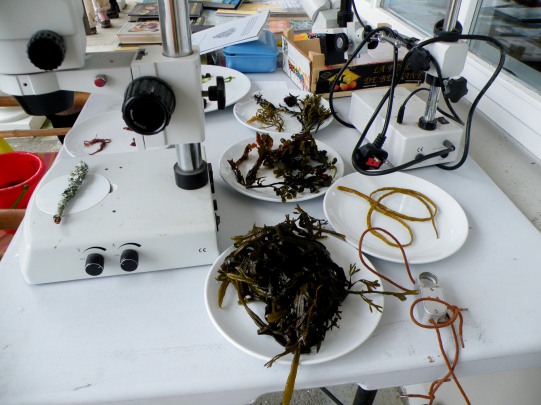
DSCF2706Microscopes and strong magnifying glasses were all available for us to have a look through.

More samples laid out for us to check out and learn about, far more than I can identify right now.  Further in the water there were even more types of seaweeds to be seen.  Howard and Mary never tired of explaining to us all the details, it was such an interesting hour spend on a lovely and warm Saturday afternoon in this beautiful part of Ireland.  My brother Johan and his wife Lorraine who were visiting Glengarriff, were among those interested and it was lovely sharing this time with them too.
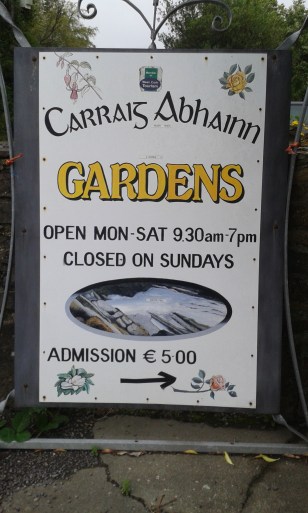
CARRAIG ABHAINN GARDENS

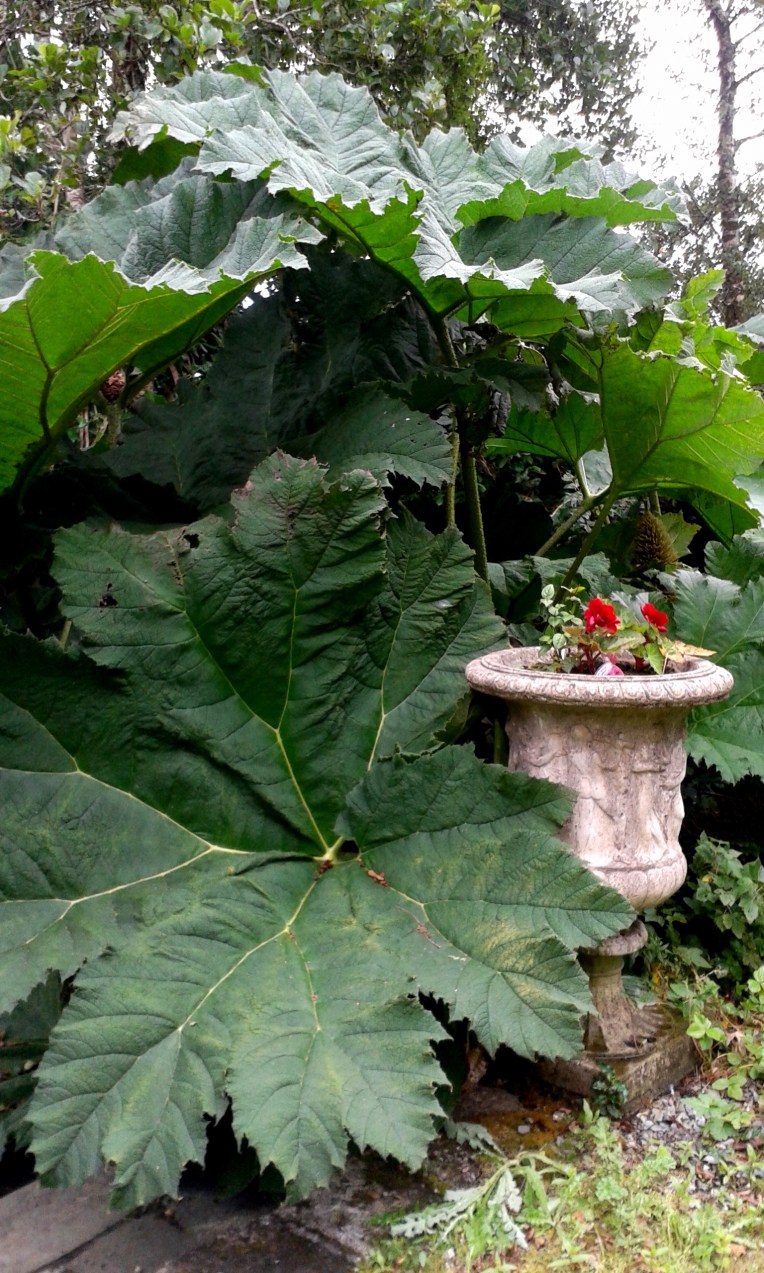
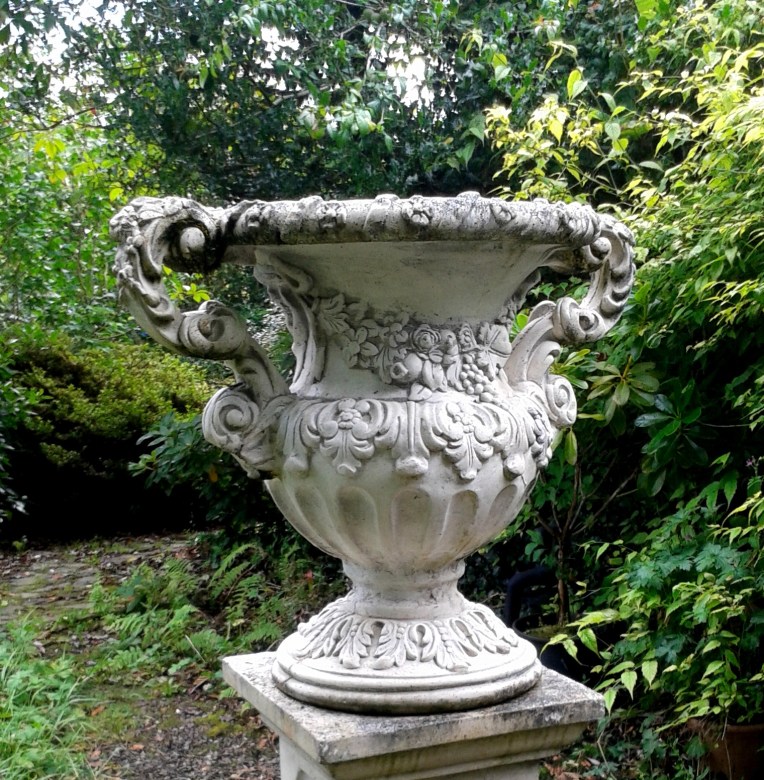
Carraig Abhainn Garden which lies in Durrus, West Cork.  It is one of the very interesting, well established and peaceful gardens in the area. It consists of 1-hectare which is bound by a mill stream. An amazing waterfall and further along the tranquil stream add to its charm and serenity. My daughter and I visited it recently with my grandchildren and the garden was loved by one and all. The children found it exciting with all its nooks and crannies, and we adults – although we often become like children when we are surrounded by nature – we just loved the tranquillity of the place. I was particularly interested in the variety of trees and plants, among them a Mimosa tree, a Korean Fir, and a whole range of other exotic trees, even a Banana tree! The variety of other subtropical plants, Palms, Rhododendrons and others was interesting too. I think it would be a lovely garden to visit in the autumn also just because of the variety of trees, although many of them are evergreens, a lot of them are deciduous trees also. I think my photos will speak for itself.  I hope that everyone enjoys the walk through this lovely garden with me.
20170803_132306

20170803_133143

20170803_132552
20170803_142255After our walk we had a chat with Eugene, the owner together with his wife of this beautiful garden.  Eugene is a goldmine of information on plants and trees and he knows his garden inside out.  I will be visiting again and he promised me a guided tour to which I am looking forward very much.  Here is a link to information on this garden.

http://www.ireland-guide.com/gardens/carraig-abhainn-gardens-.7116.html


ODE TO OUR POLLINATORS

This week has been the week that we remember and show appreciation for our pollinators.

pw2017_sticker_eng

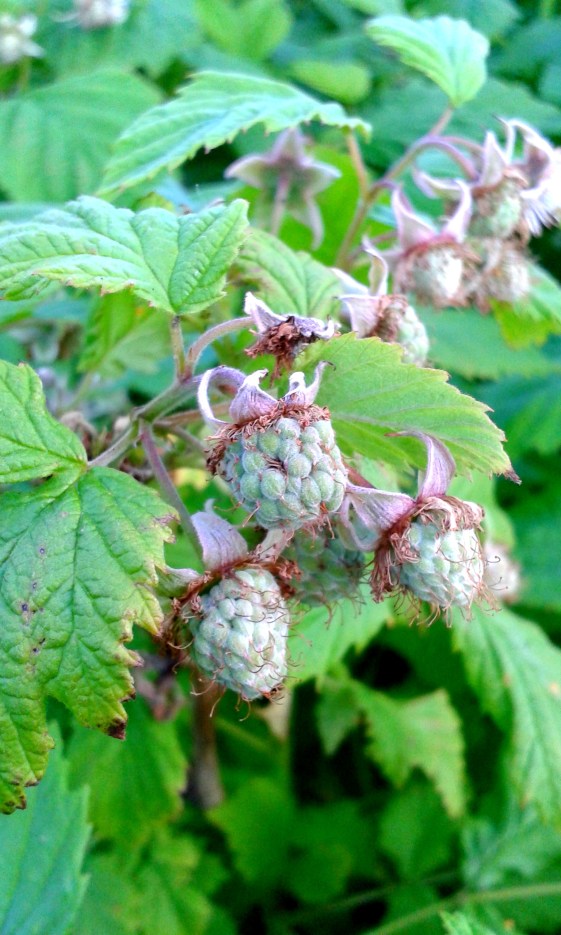
I read recently in the Irish Times that here in Ireland, bees are a crucial link in the supply chain of our apples, raspberries and other soft fruits. and that a third of the Irish species of bees is threatened with extinction. One can imagine what problems this will cause down the line. Personally we are having a great crop of raspberries and the pollination, as far as I have been able to observe, has been done by bumblebees. There is of course a large number of different pollinators, luckily.  I can’t resist taking photos of any wildlife I find in the garden, so here is a series of pictures taken this spring/summer of our pollinators.

20170518_115814

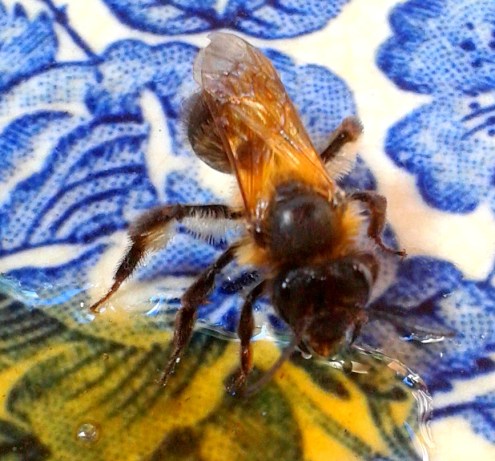
This bee was just lying there, I guess it was almost dead, but it soon revived with a little honey.

Also many other pollinators visit the gardens.

Thanks to Murtaghsmeadow’s blog for bringing Pollinators Awareness week to my attention.  This is a link to her blog.

A week in celebration of pollinators?

Here is another interesting link:  http://www.biodiversityireland.ie/projects/irish-pollinator-initiative/all-ireland-pollinator-plan/


AN ALMOST TOTALLY WILD FLOWER GARDEN

DSCF2152
These days as we find ourselves getting towards the end of the beautiful month of May, I am delighted with the many birds, bumblebees and other insects that I am finding in our half wild garden.  Every morning I listen to the dawn chorus of blackbirds, robins, and other little birds who are nesting in our overgrown hedge.  It is a wonder to see the wealth of these creatures enjoying our smallish garden and we in turn enjoying their company and song.  The butterflies and bees have still to come, maybe the temperature is not warm enough.  Yesterday, a day of heavy rain freshened up all the plants and today the bumblebees are out in full force, the sun is out and it is warmer, a glorious day!  We are expecting friends for lunch and it seems like a day we might be able to sit outside.

DSCF2192

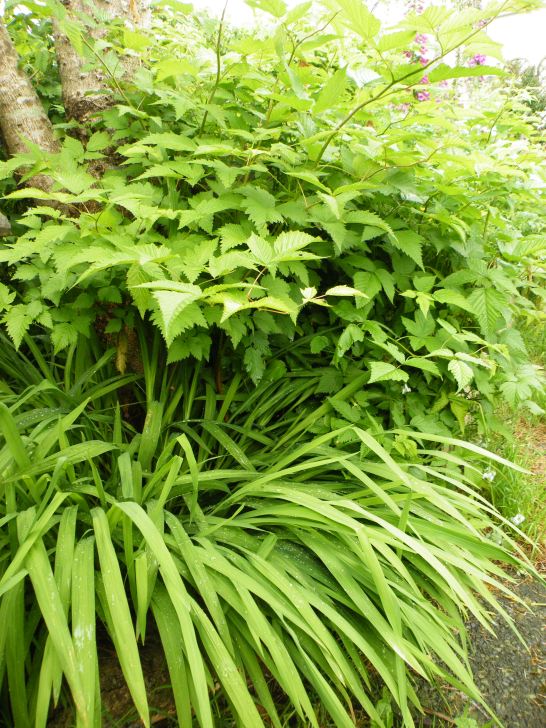
I have found a beautiful fern growing around the old pump and the red stone wall, both of which are in this garden from the time we first created it decades ago, my then husband Ron was a great garden creator, though I owe the present raised beds to my partner Ian who has put in a lot of work creating these also.  But the creation of the present lush wild flowers and plants has come about totally as a gift from nature, and happy I am about that.  It seems all I have to do this spring is walk around in this luxurious growth and admire the colours and shapes that nature throws out there, what a palette, what a beauty.

DSCF2188

DSCF2160

20170518_181812And so spring is slowly turning into summer, at least its got that feel about it.  Weather- wise it seems to be warming little by little, in fact we were able to sit outside sharing a lovely meal and glass of wine with friends, chatting into the late evening surrounded by the sounds and scents of our garden, wind still.  I would not wish to be anywhere else at moments like this and feel very grateful to be able to enjoy this wealth.  The moisture and warmth after a day of rain in West Cork is something you have to taste before you can believe it.


Our friends brought us some young asparagus seedlings which they planted out with me, in two years time I should be able to harvest some of them and make a lovely soup, Ian’s favourite.  This bed was full of ranunculi and it took me a whole morning to get all the roots out, much as I love buttercups, they had to make space for the asparagus.  There is great satisfaction in creating something in the garden apart from enjoying all the wild plants.

HAWTHORN – THE SACRED TREE

20170518_191407

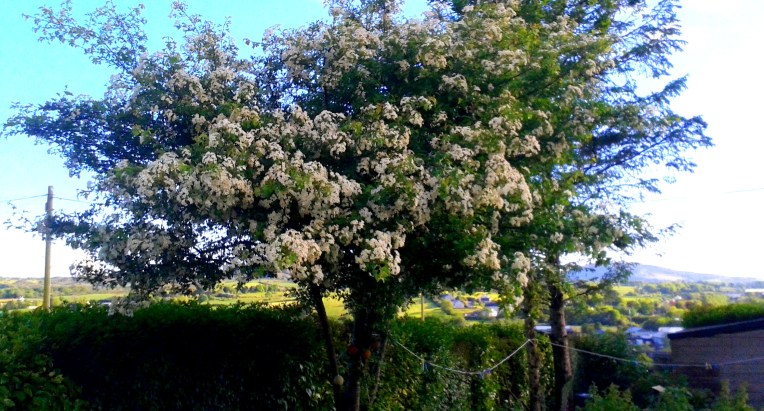
That I am writing about the Hawthorn tree is because the other day while sitting around the table talking, my mind drifted away at seeing our Hawthorn laden down with its beautiful blossoms gently being carried up and down by the wind, this tree is probably the favourite in our garden, mainly because it chose to grow in that very spot all by itself some years ago.

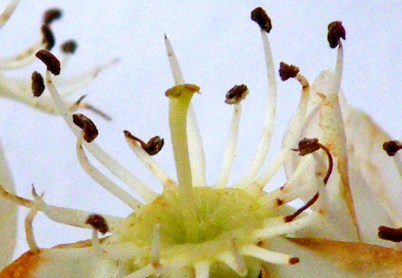
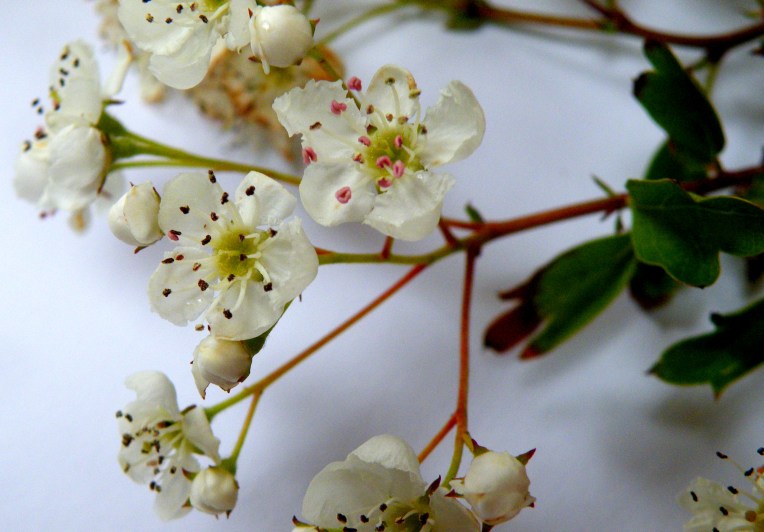
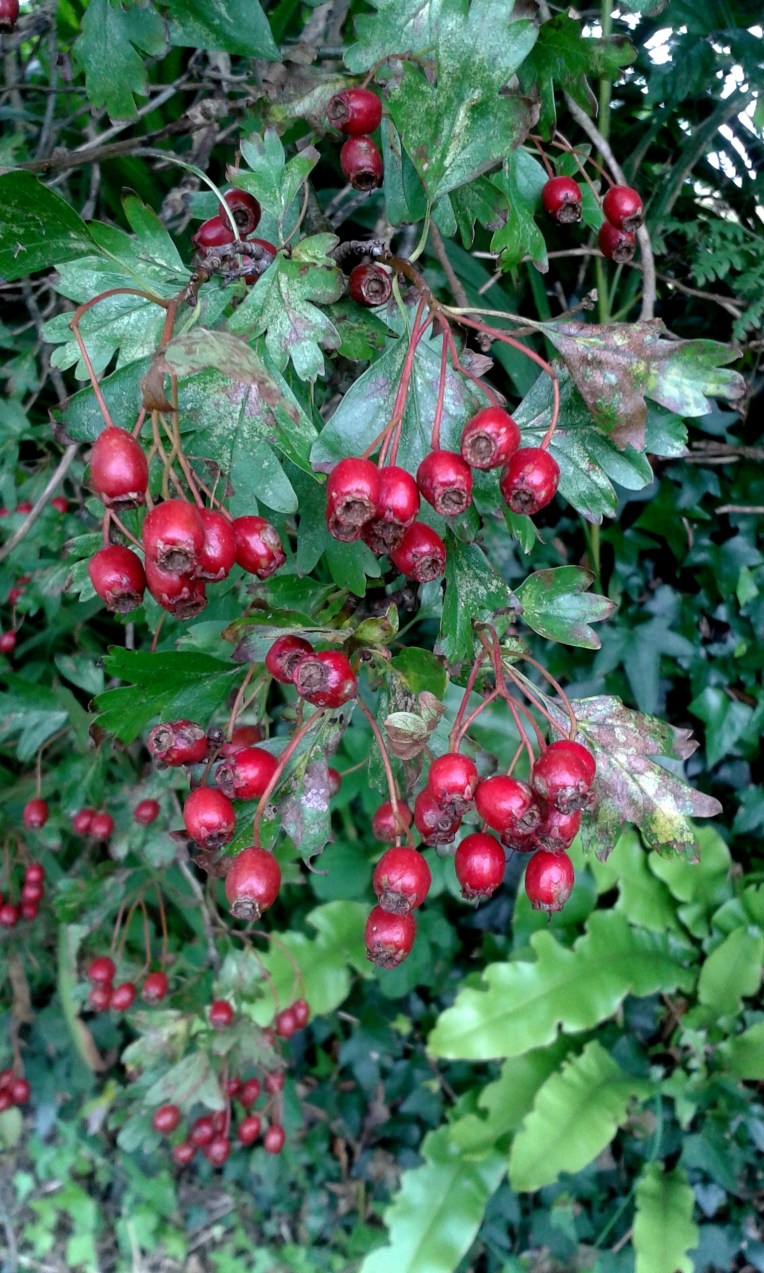
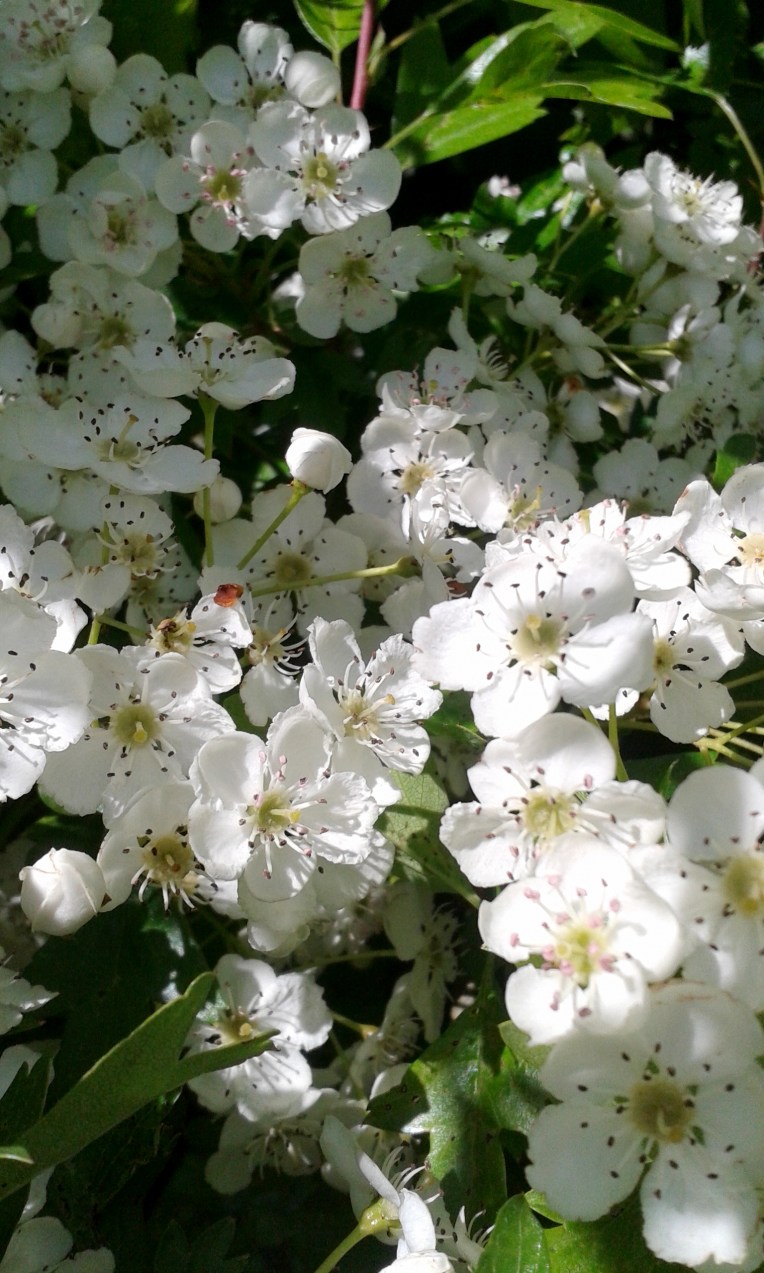
Crataegus monogyna, or common Hawthorn tree is very wide spread in the South-West of Ireland. A nice tree or bush it is especially beautiful in spring or autumn because of its profusion of creamy white blossoms and or dull red berries.  The tree or bush is often used in hedgerows or as a boundary of land or property.  Its Irish name is Sceach gheal. The flower has five petals, one style and numerous stamens with pink or dark anthers. 

DSCF2037

According to folklore the hawthorn was the most likely tree to be inhabited or protected by Faeries.  In Ireland these trees were considered sacred and could not be cut down for fear of attracting some fatal misfortune, even the branches or flowers could not be brought inside a house. 

http://treesforlife.org.uk/forest/mythology-folklore/hawthorn/  excellent article by Paul Kendall

Many people would refer to the leaves of the Hawthorn as ‘bread and cheese’, they would eat them.  I’ve tasted them myself often and they are ok.

Another good website where I found lots of information on the lore of the Hawthorn is:

http://www.plant-lore.com/217/hawthorn/

DSCF2031

About the scent of the flowers I also found it interesting to learn that in Teutonic lore, Hawthorn symbolized death and was used in funeral pyres.  It’s not altogether surprising because according to some sources;

“Mediaeval country folk asserted that the smell of hawthorn blossom was just like the smell of the Great Plague in London. Botanists later discovered that the chemical trimethylamine present in hawthorn blossom is also one of the first chemicals formed in decaying animal tissue”.  (Paul Kendall)

And hence in times when people would have had their loved ones laid up after dead inside their home, they did not want to be reminded of the scent of death by bringing the Hawthorn flowers into their houses, it is thought that from this the superstition originated.

I’ve always found the scent of the flowers strange and could never say that it is sweet.  But the flowers are very beautiful, being from the Rose family – Rosaceae – they are white, sometimes with a hint of pink.  In the town of Skibbereen we also have two mature deep pink trees but I think that they are cultivated species, beautiful to look at, not sure of their medicinal qualities though.

From the berries one can make a tasty liquor and a jelly, and from the blossoms wine can be made.  Some years ago I made a Hawthorn honey, I used ripe berries (the berries taste tart) and a good quality honey, when ready I used it all winter to good advantage.  Even just making something totally different in the culinary way was just such a joy.  The jelly I made many years ago, my mother always made it too and it was delicious, apparently the berries contain a lot of pectin.  So nice to know that we can use natural and wild produce all around us.  It is known that the berries can cause irritation if ingested, the little seeds need to be removed in order to avoid this.  I think one has to be careful with this, I’m not recommending anything, let each one do their own research.

20150902_155541

Some of the ideas I got from the following website;

http://www.witchipedia.com/herb:hawthorn

We would drink a cup of the tea made from the flowers and leaves to strengthen the heart and lower blood pressure or cholesterol.  My mum always used to say that this tea was also used during the war when China tea was hard to get by.  During the First World War the berries were used in Germany as a coffee substitute. 

The birds also do enjoy the berries, our tree is always full of birds, from sparrows, to finches, to blackbirds, it is a wonderful sight to behold, and of course we always leave plenty of berries as their winter food.  The flowers are known to be very attractive and beneficial for butterflies.  The tree is also native to Ireland which is quite important, more and more importance is given planting native trees these days.  The fact that it is widespread in hedges means that hawthorn also plays an important role in supporting the many species that live in and around Irish hedgerows. 

20170501_151716

Our own tree is now mature and it gives us shade during the summer months, lovely to sit under it and share a meal with friends or family.

There is more to be told about the Hawthorn tree, much more, remains it to be said that I love this tree and that it gives us a lot of pleasure.  I hope that all my lovely readers and followers of my blog have enjoyed some of the story that I have shared.

“The earth laughs in flowers.” Ralph Waldo Emerson.

“What we do see depends mainly on what we look for. … In the same field the farmer will notice the crop, the geologists the fossils, botanists the flowers, artists the colouring, sportsmen the cover for the game. Though we may all look at the same things, it does not all follow that we should see them.”
John Lubbock, The Beauties of Nature and the Wonders of the World We Live in.

20170512_154601

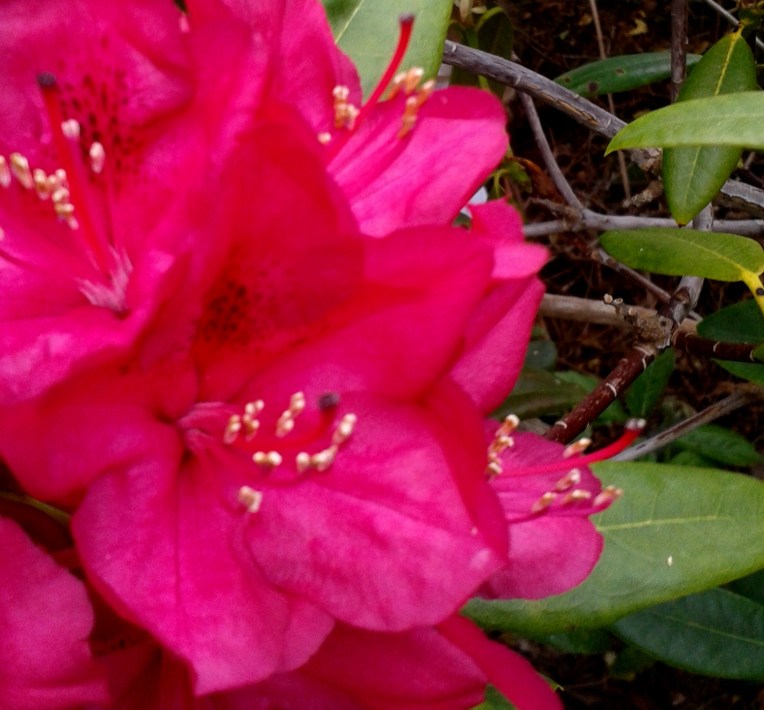
A variety of rhododendron flowers in beautiful shades.

20170512_154825

And Azalea’s too!

My sister smelling the Lilac flowers, a sure favourite of her and mine.

20170512_160414

These flower photos I took in the gardens of Rolf’s Country House, (http://rolfscountryhouse.com/) in Baltimore, Ireland.  We partook of a lovely cup of coffee and some scrumptious cakes and pies, to celebrate the birthday of one of my grandchildren.  The garden is interesting and beautiful.

“Does the walker choose the path, or the path the walker?” ― Garth Nix, Sabriel

Well today we choose the path, at least we thought that we did, together with my daughter and four of my grandchildren, all of us girls we choose to take a walk in Dromillihy Forest, a walk that led us to the freshly opened bluebells which carpeted the forest landscape in between the deciduous trees. A wonderful view to behold! The girls were climbing the lower branches of the larger trees and excitedly looked for the fairy houses hiding between the ferns and mosses. The children love the forest, love the leaves in autumn and everything else in between. I’m also a tree lover, even hug them, we all do – it feels good. Here the trees are often covered in ivy and moss, also in beautiful lichens. We were touching the moss today and it was as soft as feathers, or silks with a lovely springy feeling like marshmallows. My youngest grandchild, she is only two, choose me as the darling of the day and held my hand right through the walk, we ran down the hilly paths she laughing out loud, a real nature child she is. All the children love nature. We discovered Wood anemones, violets, and other little spring flowers. The scent of the bluebells though was fine and delicate and spread itself all around.
It is the highlight of being back in Ireland, activities with my grandchildren, and chats with my daughter.

20170414_151309 - Copy

20170414_151741 - Copy

20170414_155725

BUTTERFLIES, HONEYBEES AND THE NEIGHBOUR’S CAT

A happy Monday morning wishes to all, hope that your week has started well. My week could not have started any better when early on I woke up to glorious sunshine. I happen to glance out of the window to the front garden and the buddleia bush and there I saw the most beautiful butterflies, five different species. They were fluttering among the honeybees of which there were over half a dozen.   I stood watching them for a long time and only then thought about taking some photos and I’m glad that I did because in a way I feel that I have captured their beauty to share with so many others, and that makes me happy!

What a beautiful time of the year it is!
DSCF7656
This is a peacock butterfly, it is found all over Ireland. It hibernates during the winter. It’s got to be the most beautiful of the butterflies in Ireland.
DSCF7635
This was amazing, so many species on the one flower spike, there is the red admiral, these feed on over-ripe fruit and also in particular you see them on the buddleia bush. There is also a painted lady and a small tortoise butterfly.  Not to forget the lovely honeybee, it’s so nice to see many of these around isn’t it, knowing that they are on the decline.

Painted Lady butterfly

After I had stood there for a long time watching them, there came a neighbour’s cat and she could think of nothing better to do but to try and catch the butterflies, she managed to get hold of one branch of flowers and destroyed that, but the butterflies were able to escape and of course, much as I love cats, she got chased away very quickly by me.

DSCF7652

DELIGHTS OF ART AND YOUNG MINDS

Last week there was the yearly Art Festival in our town of Skibbereen. It is getting better every year, and what nicer way to explore it than with my two growing grandchildren, who are little artists in their own way, and they take an intelligent interest in art.

So we set off on our exploration of some of the exhibitions, and there were many, they were held all over the town. We did not strictly stick to the Art Trail, we started off at the Uillinn Art Centre where we wanted to see the work of John Kelly. There were his beautiful landscapes, which were scrutinised by our young artists, including technique and paint finishes.  Our main interest though was Kelly’s group of paintings which he produced during his stay in Antarctica, and on his way there in 2013. The wall was covered with these works, large and small, the whole collection told us his story of that journey, and the girls were quite impressed. I wanted them to take away this idea of telling a story in a collection of small paintings. Later in the day we were going to get paints and boards to try our hands on this idea.
Some of Kelly’s other works did get some comments, even some raised eyebrows.
The paintings in Catherine Hammond’s Gallery got much approval, and favourites were picked, this exhibition was called ‘Contemporary Realism’. A little Gallery further along in Bridge Street was really interesting, at least for me it was, and the girls took it in their stride too. Vauney Strahan’s works were an education for me and I had to look her up on Google, I do like her art very much, here is a link to her profile; http://www.saatchiart.com/vauneystrahan
Least interesting to the young minds was the Old Bottling Plant where we saw works by Angela Flowers, though some of Angela’s works were fabulous.  And the exhibition by Paul Cialis, ‘Saints and Sinners’ did not even get a look into, which was just as well, because it was a little beyond their age group.

We were all three getting tired, taking in a lot of visual stimulation can use up energy fast! So we just popped into one last exhibit, a re-creation of a shop of the early twentieth century, the girls loved it, they were looking all over it. It showed them a example of shopping before the supermarkets started.

We went home after buying the art materials, and we started to paint, after a pizza meal, and lots of banter with Ian. Both grandchildren gave a very individual interpretation to what they saw during the day; my 9 year old painted a beautiful image of a horse, incorporating colours and combinations she noticed today, and my 8 year old painted an ice scene with penguins after John Kelly’s paintings.  It is very nice to be able to share the love of art with my grandchildren, and lovely to see young minds at work, and hearing their opinions on what they observe.


Paintings also exhibited were by Karen Billings, and earlier on in the week I attended an excellent event called ‘Dark Matter’, Greg Sholette in conversation with Katherine Waugh. The topic was ‘What’s missing in art and politics in an enterprise culture’. Enjoyed a lot.


The Souvenir Shop


Works by the two girls