THE SILK FLOSS TREE

Ceiba speciosa or Silkfloss tree

This is the flower of a most beautiful and exotic tree, it is called the Silk-floss tree or in Latin Ceiba speciosa . It is a deciduous tree that belongs to the mallow family.  A native of South America I have watched it growing and flowering here on Gozo and what a delight it has been, at first to see the beautiful yellow and cream flowers – though for some reason some of the flowers on this tree turned out to be pink, then to see the flowers wilt and one by one fall off to expose the fruits, and today when we walked in that area again I saw the fruit fully grown and some had burst to expose their fluffy white silky material.  It was only hard to reach high enough to get good photos, so these will have to do.  While doing some research on this tree I realised that it is not from this species that kapok is produced, namely this white silky fibre, which as children our pillows were filed with. This made me more determined to look up as much information as possible, it heightened my interest in this tree species. Of course it is always interesting to learn what the uses are of any plant or tree. I learnt that the kapok is produced by another Ceiba, the C. pentandra, this species is found growing in the tropics, it does not grow in Malta or Gozo as far as anyone I have asked knows.

20171008_170358

So going back to the C.speciosa our local Silk-floss tree, I noticed the other day that there are fruits or seed pods to be seen. And then I found this white fibre underneath the tree, it was as close as I could get to see the texture. White, fluffy and silky is how I would describe it and the seeds are embedded in this white fibre. I now know that it is not the real kapok. Though the fibres of the C.speciosa can be used in a similar manner as those of the C.pentandra. The C.pentandra is cultivated in South East Asia for its seed fibre. I also found that kapok is the lightest natural fibre in the world, with a density nearly five times as light as cotton. I read that this fibre was used in the design of the first life jackets because of its buoyancy. As a child I remember seeing kapok, feeling it, and found that it was quite dense actually. Something tells me that it is not used much anymore these days, you never hear of it being used, maybe because it is highly inflammable. I also seem to remember that while it was lovely to have natural fibres in our pillows, it did become lumpy quite quickly, so maybe it just isn’t a practical material for today’s needs.

In my research I then came across the Red Silk Cotton Tree, Ceiba Bombax. Also from the family Malvaceae. What is used from this species are the unopened flower buds, they are called Marathi Moggu and are a fragrant spice indigenous to south India’s Chettinad region, used in its regional cooking. They also go under the name of Kapok Buds and are roasted to bring out their flavour. In Thailand they are traditionally used in curries.

A fruit hanging down, and one of the flowers well passed its blooming time, fallen on the grass. C.speciosa

Photos below, here can be seen the seed pod and some of the fluffy material, also a seed pod that fell off the tree before it matured.

20171122_162320

Some more facts are: The flowers of the Ceiba trees are an important source of nectar and pollen for honey bees, although apparently they are often pollinated by bats. http://www.iisc.ernet.in/currsci/may252005/1679.pdf
Native tribes along the Amazon River harvest kapok fiber to wrap around their blowgun darts. It is grown commercially in some countries but to harvest and separate the fibers is labour-intensive and done manually so it is probably another reason why it is not very popular anymore. Then it is also difficult to spin.
Another use I read about is the oil that the seeds produce, this is used in manufacturing of soap and sometimes it is used as a fertilizer.
I guess this is about all I found out about the Ceiba tree, the three different species that I examined a little. Only one of them I found growing in Gozo. (C.speciosa). One mature tree, at least some years old, but close by I found a very young one that has been planted by the council. Nice to see this.

I am on such an exciting and interesting journey here, getting to know more about the native plants, the rocks, the trees, the agricultural practices, the people (Gozitans) and their traditions, the vernacular architecture, and then sharing some of it via my writing.
I would like to thank you for reading some of my story.

THAT MOMENT WHEN THE SUN RISES

I was waiting patiently early in the morning, the sky had already begun to have a glow but nothing yet had appeared on the horizon, until all of a sudden there was the first glimmer of a sun.  The moment was magic, and I felt my heart fill with happiness, joy and gratitude, there was another day about to start, another day was breaking and in what a glorious way!  What a powerful moment!
DSCF3380

20171018_154801 Another day has started in which to explore, and see the beauty around me, and be intrigued by all the little adventures that this day would bring.

The gray-green leaves of the Olive tree, a beautiful flower, the bright colours of the Luzzu boat.

20171025_180121The view out of the window of my lace making class in Victoria.
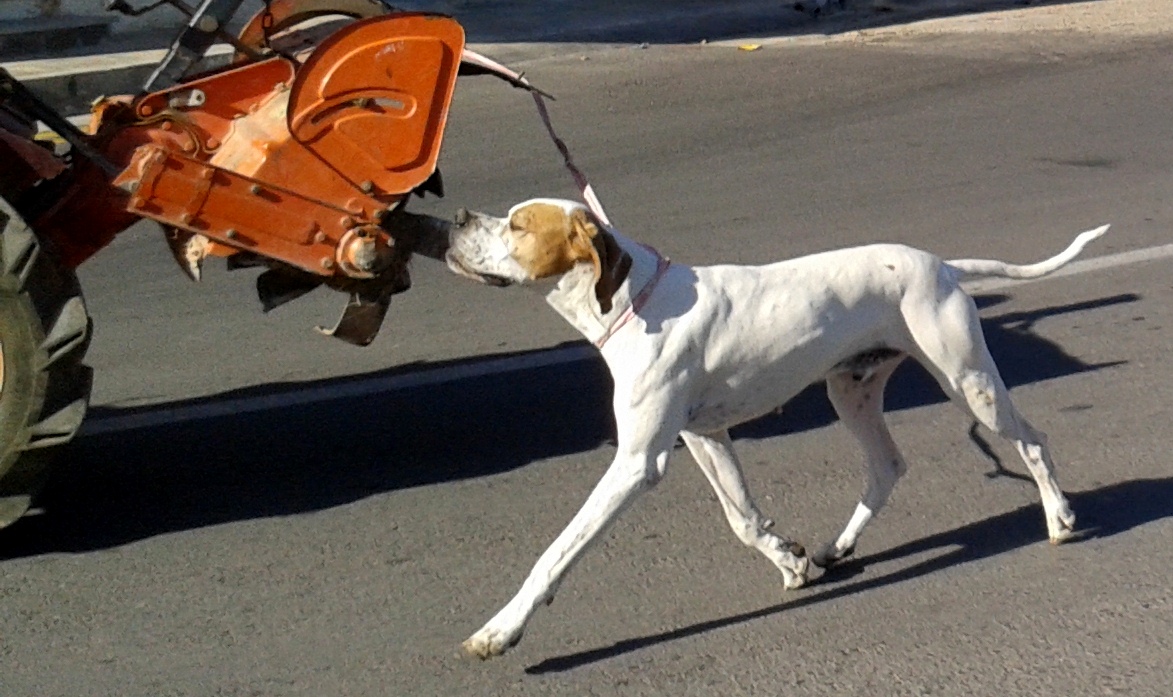
20171025_152530The humour seen in this proud dog trotting beside its owner in the funniest way.

20171025_151014And the funniest of all, me taking the wrong bus on my way to Victoria for my lace class and ending up doing a tour of almost the whole island before I got off the bus in Xaghra and taking another bus to town.  I so enjoyed this little detour and could only laugh at my own mistake!
20171024_181143
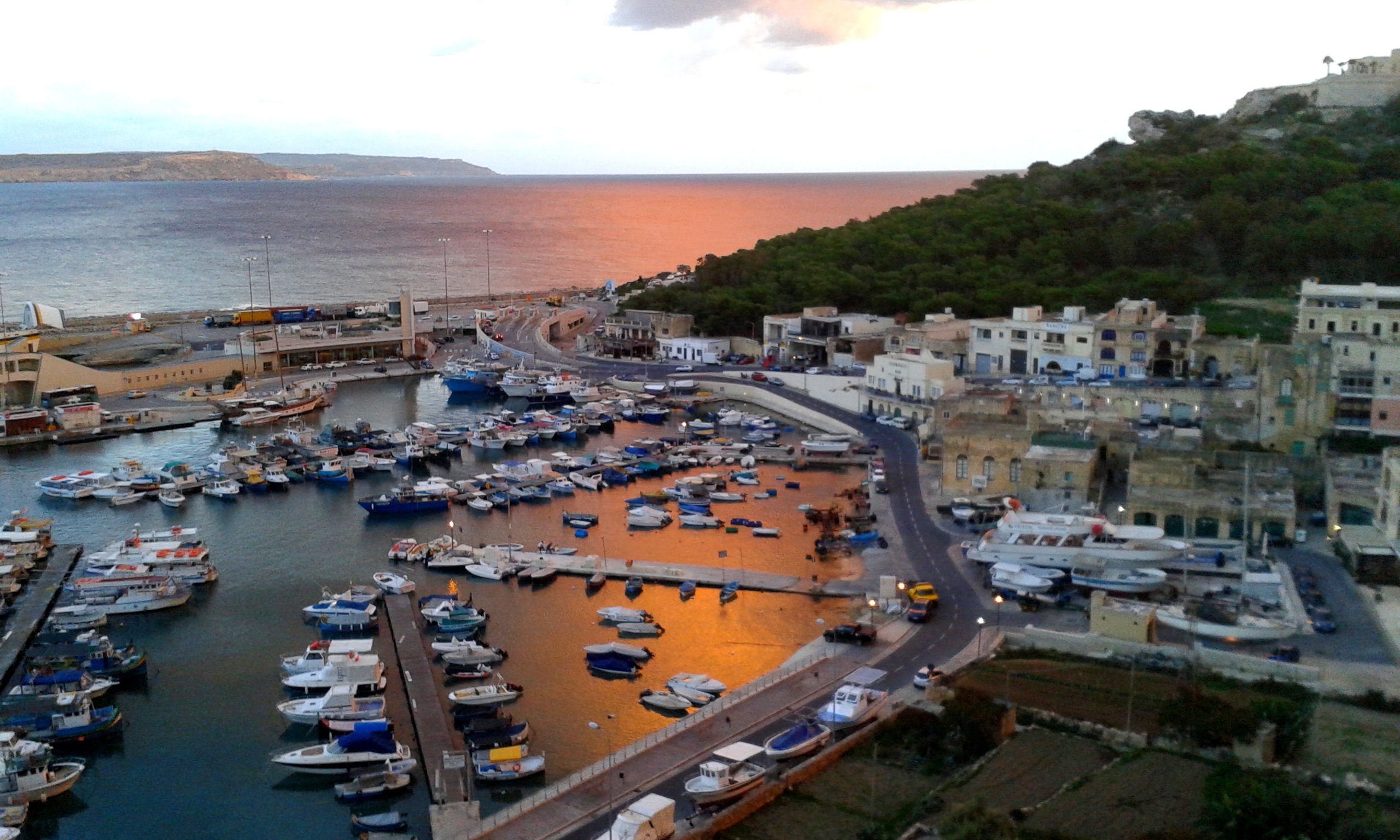
And when the day is done and a glorious sun is setting, painting beauty for long moments more, then, well then it’s time to happily be grateful again.

EXPLORING VILLAGE LIFE

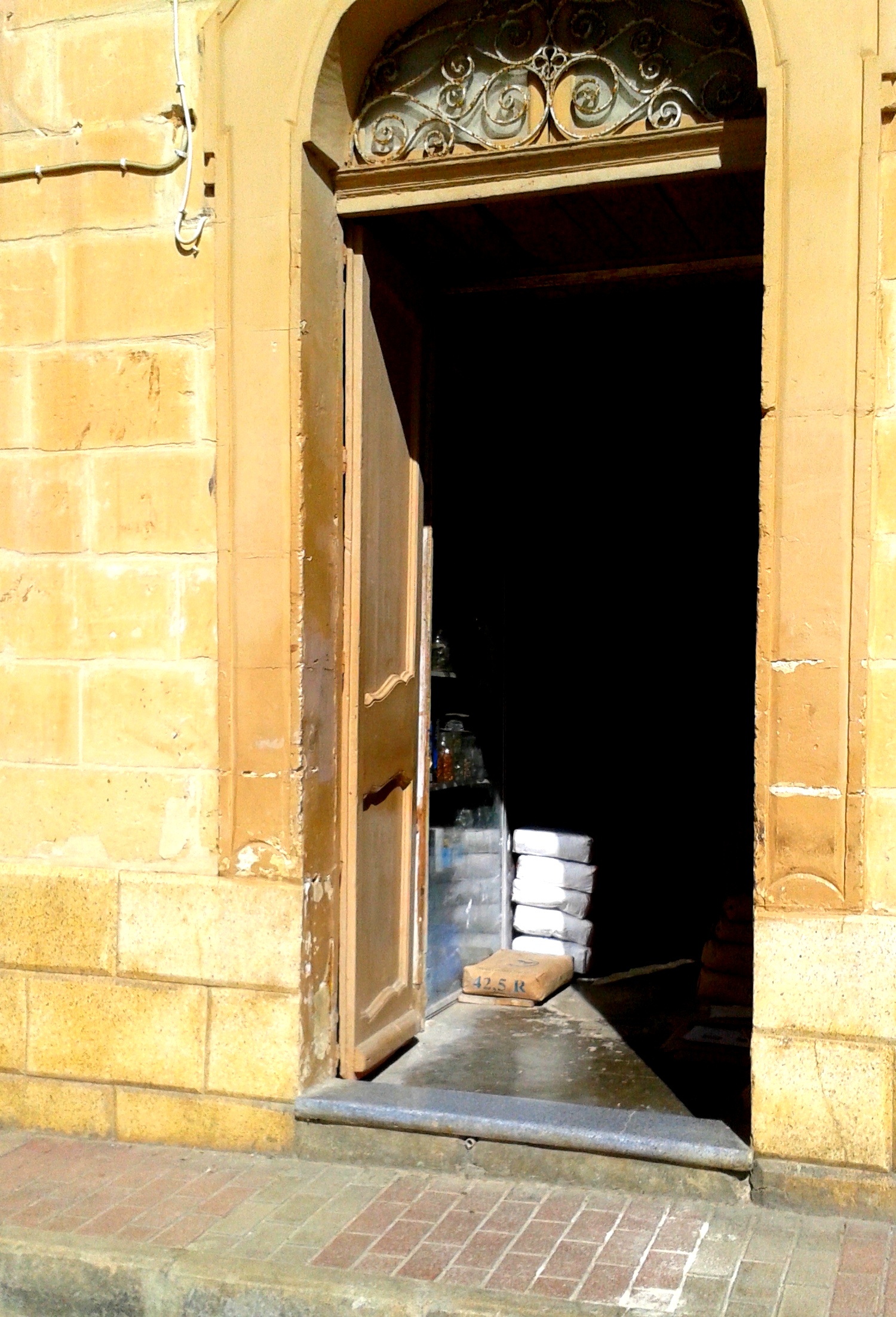
It is wonderful here in Gozo and we are enjoying life to the full, grateful for blessings. We are here now a week and a half, our second weekend already! The first week or so I was very busy with sourcing shops locally. In doing so I have started to explore the village where we live at this moment, Ghajnsielem. It takes me about 15 to 20 minutes to walk to the shops depending on how often I stop to admire something or to take a photo. At first, and because I went shopping during the closing hours (12 to 4pm) I thought that there were no shops at all except one supermarket on the main road between Mgarr and Victoria. But then I went to the village after four o’clock and discovered a bakery, a hardware store, a green grocer, and a small food shop, also several cafés. The fact is that generally there is nothing advertising that it is a shop, and when the door is closed you cannot see that it is a shop. Here is an example of the hardware store, it is one long narrow room filled with glass jars containing screws and nails and what have you, a delight to go hunting for something you need, and to be sure to find it!
20171014_111451But I’ll tell you a little more about this village.
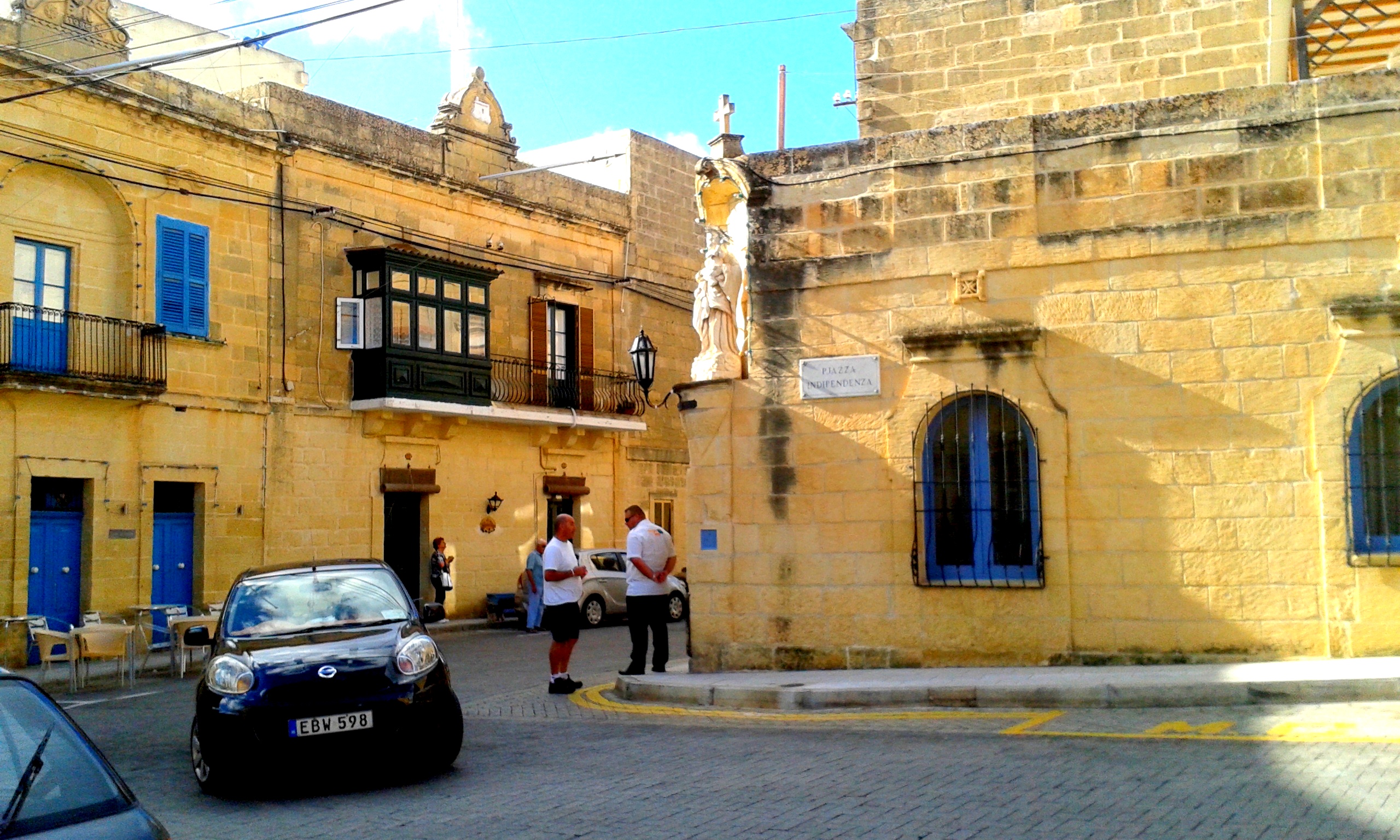
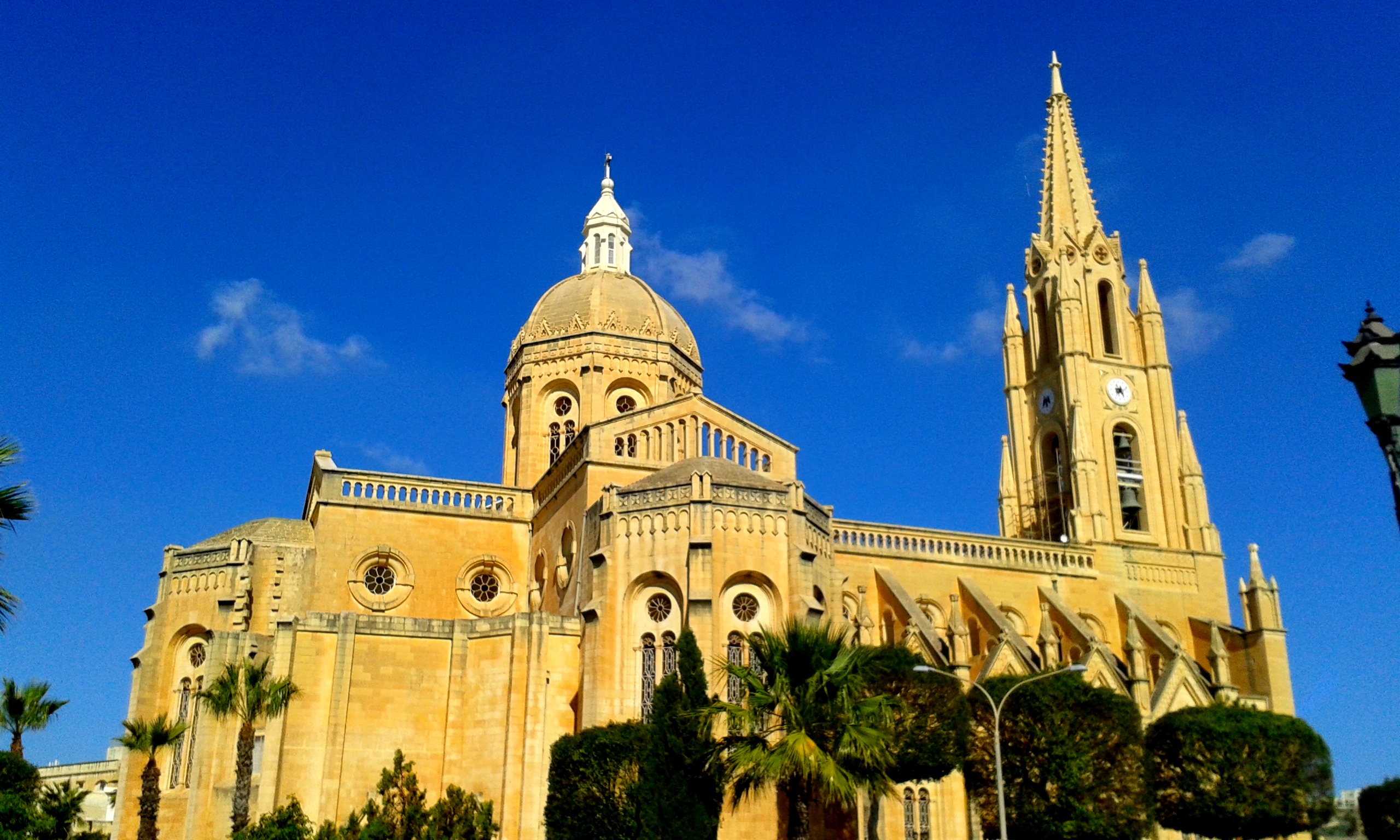
It has a population of 3000 souls, there are several churches, the main one is in a neo-gothic style, rather impressive and amazing inside. Another older church is much smaller, was built mostly by voluntary labour of the farmers around the area and I fancy this one much more, it has simple architecture, and it has many steps leading up to it.

20171011_093736

This is a photo of one of the squares in the village, I really like this square, people go and sit outside in the evening enjoying each other’s company, it is found in the oldest part of the village. There is a butcher shop in this square and a young woman who grows her own organic vegetables and sells a number of other products like gram flour and sesame seeds and so on… she has told me how to cook rabbit the Maltese way because I ordered some at the butchers, I like to cook at least some of the local dishes.  I’m getting to know some people and finding so many friendly and helpful folks, making me feel at home.
But there are several other squares in this village, all with plenty of benches, important for Ian, but also nice to just sit and take in the atmosphere. Beautiful trees and flowers are also in plentiful supply in these squares.
There is also the huge Band club café where a coffee only costs 50cent. This is sort of the hub of the village where young and old gathers and where the local band holds its practice.

I like to walk through the narrow streets and the squares, there is a special atmosphere and often I find some beautiful features in the vernacular architecture using local limestone. Old doorways are also always a joy to admire and take photos of, they are so picturesque that I always feel I want to paint them, well this time I brought my watercolours and we’ll see how it goes. There is a lot to explore yet around here, I read that remains of a prehistoric temple complex are to be found within the limits of Ghajnsielem, but they have almost been destroyed by road building, but what does remain are two groups of megaliths, they were probably originally part of the same structure, can’t wait to plan a walk out there to go and see what I find.

These are photos of an old washing place, the source of the water is an ancient well and women used to communally do their washing here. The rest of the village would have been built around this area. The above photos are of a reconstruction of the original washing place, a shame that the original one got destroyed but at least the original well is still there and the water is still running! There is a story attached to this well. Long ago when the village was only starting to be formed a local farmer named Anglu Crech used to take his sheep and goats to this spring every single day, and because the sun was so hot he would take shelter under the surrounding trees and say his prayers. Well one day while doing this he saw an apparition of what he thought was Mother Mary who invited him to raise a statue close by and this the farmer, together with his friends, achieved and they would gather there in prayer, and eventually a church was built close by. It’s nice to learn something more about the places we stay, it makes it so interesting, it is the small church I was talking about above.

20171014_111155

This photo is the neo-gothic church, I took it today and include it to show the blue sky and the way the sun shows off the honey coloured limestone which is most commonly used as building stone here and sourced locally. I have not messed around with this photo, the colours are real.
Close by is the library which is so small that I won’t have a problem reading those books that I fancy. I found some there on the history of the village, to my delight. Most of the books are for children and just like at home there was a class of them in there yesterday, all excited about getting their books. I was laughing as one little girl was told she could not take that many books because she had still some out… she went over to the table and found the books, just like what we often came across back home when I was still working in the library, I did not need to know Maltese to understand what was going on!

20171012_165049

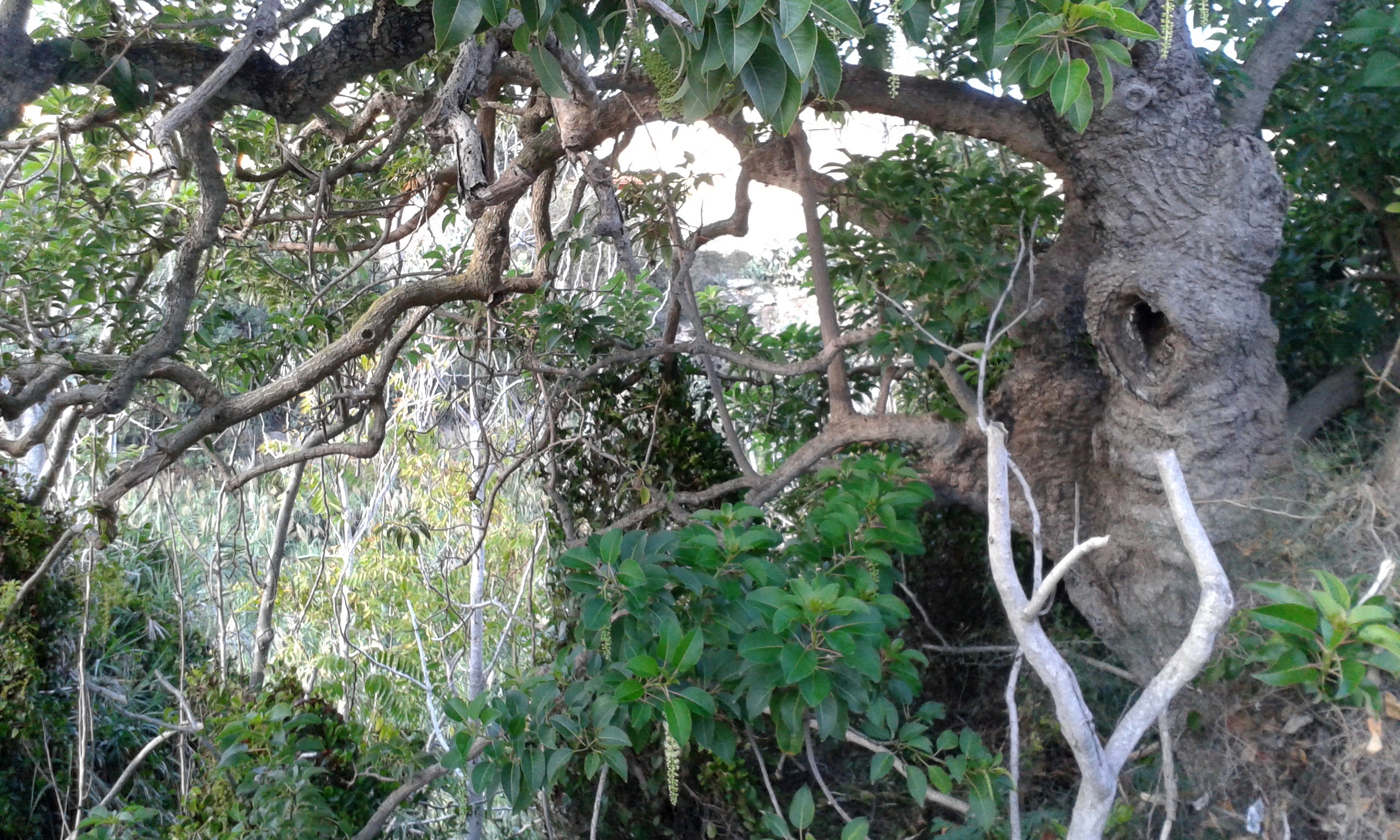
Also along the main road between Mgarr and Victoria, are some beautiful trees. It is an alternative route to the village from where we live and even though it is uphill all the way I like it because of the interesting plants and rocks along the way. So shopping is no hardship even without the car and as it is always nice outside the walking is a pleasure.

20171005_162258

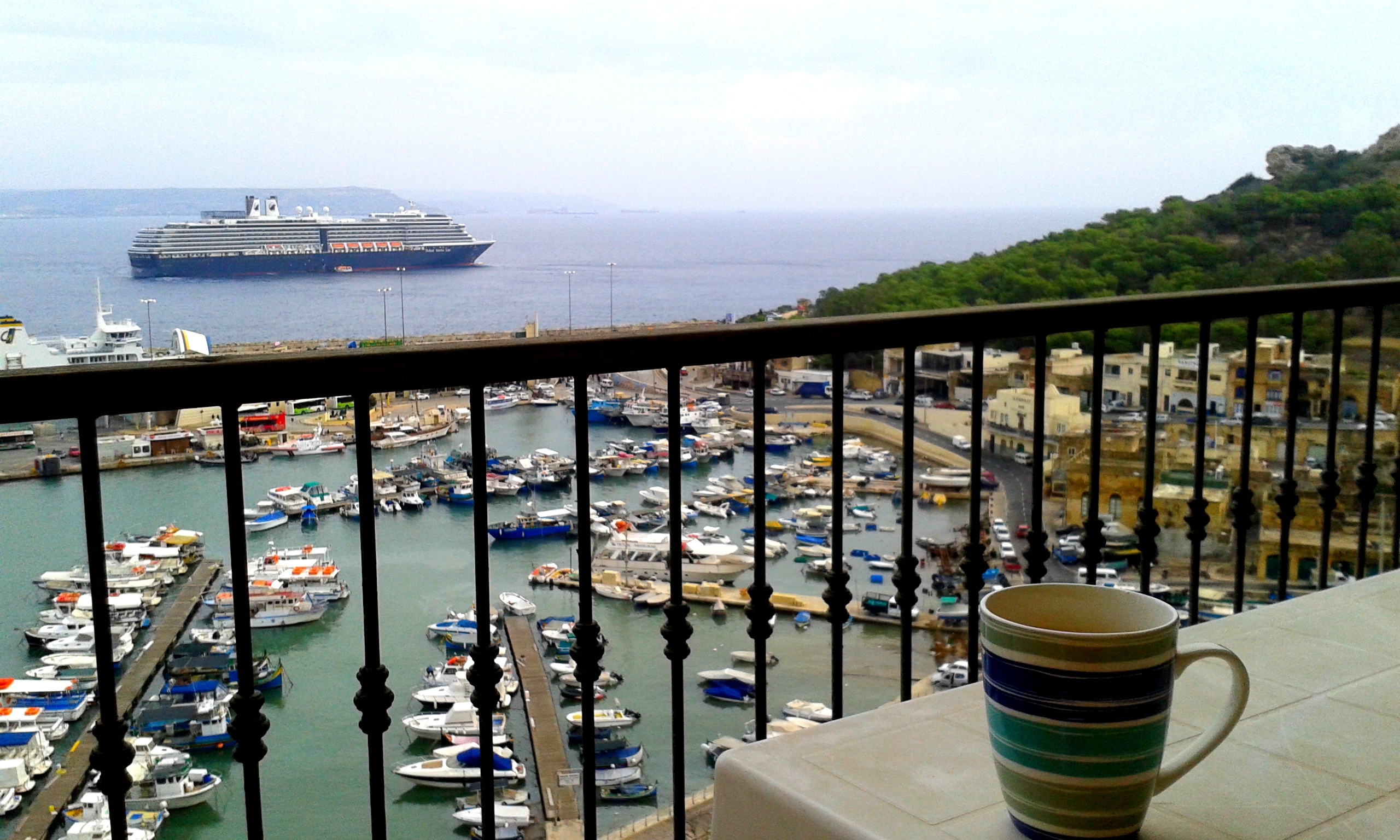
This is the view from our balcony, mostly in the day it is almost too warm to sit here, but in the morning and evening it is lovely. At night the view too is great with the lights of Malta and Comino in the distance. The ferries come and go every 45 minutes and there is always plenty of life to observe. There are little fishing boats at the marina, typically Maltese – at the moment they go out fishing for Lampuki, a fish locally used in traditional dishes. This fish migrates past the Maltese islands during the autumn so it is then that you can find it everywhere and it is very popular here.

DSCF3371

One of the Luzzu boats, original Maltese fishing boats, they go out early in the morning or at night to try and get their catch.  We used to see very many of them while staying in Marsaxlokk, Malta.  Very colourful boats, and usually having an eye painted on its bow, said to protect the boat and those in it.

So this is only the beginning of another winter’s stay in Gozo and there will be plenty to discover and learn and write about, it seems that in order to experience a place fully I have to write about it, then it becomes more real for me.  It is always very exciting though and no matter how many times I walk the same road, there is always something new to find and see or experience.  Awesome!  I hope that you all enjoy coming along with me on my journeys.

LIFE MOVES ALONG

Summer has come to an end. We are not ungrateful, we had a gently warm summer with enough moist to keep land and animal happy, so, looking at some other countries where people endured hardship because of the weather we have every reason to be happy. Today is dark, windy and very wet. It is time for us to go I think and that is what will happen in the week to come, all going well.

Reflecting on the summer months for a moment, for me personally it was wonderful because of all the activities with my daughter and grandchildren, we went for many walks and explored a variety of wonderful gardens around West Cork. At home also spending a peaceful time with Ian and enjoying many long conversations and discussions on everything under the sun, for some of these my sister Josefine was a part and a great input that was. There were the Art Exhibitions and the Art Festival, also the Historical Festival here in Skibbereen, and the Ellen Hutchins Festival in Glengarriff with an amazing walk in the grounds of her estate, all of which I enjoyed to the full. I’m sorry that I had to miss the Literary Festival in Bantry!   I am also very happy because I was able to connect with all of my siblings (8left), this is something that is both important to me and very dear to my heart.

So I leave some images for everyone to enjoy. As I will be travelling in the next week or so I will again miss checking out all blog entries of my lovely friends and followers , but I hope to catch up soon. It has been a bit hectic around here. Meanwhile I would like to thank each and everyone for your encouraging support of my blog. Take care and be blessed.
20170915_103734

Bantry Bay with the Caha mountains in the distance.

20170921_095012

There was a lot of magic in the garden this summer, the sun on a dew drop early in the morning creating diamonds was just one such moments that creates a feeling of wonderment.

20170915_124559

20170917_115014

One of the amazingly beautiful paintings of Maurice Henderson, his works of flowers and his blues especially I love.  We attended a celebration of his life recently after he passed during the summer.

And of course there are always lots of wonderful discoveries in and around the garden.

AUTUMN AT GLEBE GARDENS

A visit to Glebe Gardens in Baltimore, West Cork, was on the agenda for a while and finally some days ago we took the opportunity to celebrate my daughter’s birthday with a delicious cup of coffee and cake, and a lovely walk through the flower gardens, the woodland, herbaceous borders, and the vegetable plots. This 5 acre garden is bordering on the sea where the Ilen river enters Roaring water Bay. Vegetables for use in the restaurant are grown organically in the gardens. Because of the vicinity being so close to the sea there is a mild micro climate which makes everything grow very lush. There are again to be found a number of sub-tropical plants, with palm trees and exotic rhododendrons among them. When you walk through the woodland and over the little bridge you come to an open grassland where there is an amphitheatre where music and other entertainment is put on regularly.  I’ve not been to anything yet but again it is on the agenda. There is an orchard and we saw several varieties of apples ready to eat and fallen from the trees too. Grapes were a plenty in the tunnel, different varieties of tomatoes and cucumbers too.

I only took a few photos as I was wearing my grandmother hat, but still got quite a collection which made it hard to pick some for my blog! (Much as I would like I never put photos of my grandchildren on internet, it is an agreement between my daughter and I).  What the children really enjoyed was the goats and chickens, finding apples in the orchard, and the open space of grassland where they spontaneously started dancing.

It is a garden offering not only beauty but also peace and tranquillity.


20170826_162351There are benches where one can have some time to relax in beautiful surroundings!  My partner and I enjoying very much.

20170826_165409This old but lovely doorway – to goodness knows where, I could not resist taking a photo of, thought it looked so lovely what with the fern growing around it too.

20170826_162640

If you enjoyed my photos then you might like to look up more information on the Glebe itself.  When on holidays in this area it is a wonderful place to visit and have lunch or coffee, a walk in the gardens, and maybe go and enjoy some open air night time entertainment.  Here is a website:

http://www.glebegardens.com/the-garden/


SEAWEEDS OF THE IRISH COAST

Yesterday saw a whole bunch of us interested folks going to explore the arboretum at Ardnagashel in Glengarriff, West Cork, but apart from admiring the wonderful trees we also received lots of information on the seaweeds and lichens along this stretch of coast. Ardnagashel was established by the Hutchins family and it was as part of the Heritage Week of Ireland that these activities took place, in memory of Ellen Hutchins (1785-1815)who was a remarkable Irish Botanist. The talks on the lichens and seaweeds were given by Howard Fox, who is the State Botanist (National Botanic Gardens) and by Maria Cullen. This ‘life’ introduction to the seaweeds and the lichens of the coast of Bantry Bay was so very interesting. a true first introduction in this field for me. Later in the afternoon Madeline Hutchins (Ellen’s great great grand niece) took us through the forested area of this garden and introduced us to some wonderful trees, among them an enormous Japanese Cedar (Cryptomeria japonica). But more about the trees in another blog.  Now to concentrate on the seaweed for a start.  There is so much information that I took in yesterday and research I want to do on this that I feel delighted (because it’s right here at my doorstep), but I am also a bit overwhelmed because so far in my life I have been concentrating on enlarging my knowledge about wild plants, flowers, insects and spiders of Ireland.  Now this is taking it one step further with looking at lichens and seaweeds.  There are no days enough in the week to enjoy all this abundance of nature, and to do the research.  Needless to say I am a huge amateur in all this. (an enthusiastic one).
DSCF2684
So we learnt that there are three types of seaweeds and they are divided by their colour. These are the greens, reds, and brown seaweeds. There are about 10 000 species.  This particular species is called Fucus serratus L.  (Serrated wrack).  This seaweed is used commercially in the manufacturing of cosmetics and seaweed baths.

Photo on left is Knotted or Egg Wrack (Ascophylum nodosum) with another seaweed growing parasitically (it gets its sugar from the Knotted Wrack) on it, it is called Polysiphonia lanosa. Maria Cullen (right photo) told us to nibble some of the parasite and to me it tasted only like….sea water!  Maria gave us great demonstrations of a variety of seaweeds which she picked straight from the sea there.

Duileasc (Palmaria palmata) a red seaweed, and Nori (Porphyra tenera) and another one of the Wrack seaweeds (Fucus) .

Top right photo is a calcareous red seaweed, Howard is here showing and telling us about the Sea Spaghetti (Himanthalia elongata).  The book I am giving attention to on the right is an excellent cookbook with lots of information on the edible seaweeds.  I bought it for my son-in-law once and he was very pleased with it.

DSCF2696The coast of Bantry Bay is rich in seaweeds, and it’s beautiful too.

Nori seaweed, Laver (Porphyra tenera) in the top left photo is paper thin and edible, much used in countries like Japan of course.  The green seaweed is sea lettuce (Ulva lactuca).  The book on seaweeds looks real interesting and essential if seaweed foraging and identification is taken seriously.

DSCF2706Microscopes and strong magnifying glasses were all available for us to have a look through.

More samples laid out for us to check out and learn about, far more than I can identify right now.  Further in the water there were even more types of seaweeds to be seen.  Howard and Mary never tired of explaining to us all the details, it was such an interesting hour spend on a lovely and warm Saturday afternoon in this beautiful part of Ireland.  My brother Johan and his wife Lorraine who were visiting Glengarriff, were among those interested and it was lovely sharing this time with them too.

CARRAIG ABHAINN GARDENS

Carraig Abhainn Garden which lies in Durrus, West Cork.  It is one of the very interesting, well established and peaceful gardens in the area. It consists of 1-hectare which is bound by a mill stream. An amazing waterfall and further along the tranquil stream add to its charm and serenity. My daughter and I visited it recently with my grandchildren and the garden was loved by one and all. The children found it exciting with all its nooks and crannies, and we adults – although we often become like children when we are surrounded by nature – we just loved the tranquillity of the place. I was particularly interested in the variety of trees and plants, among them a Mimosa tree, a Korean Fir, and a whole range of other exotic trees, even a Banana tree! The variety of other subtropical plants, Palms, Rhododendrons and others was interesting too. I think it would be a lovely garden to visit in the autumn also just because of the variety of trees, although many of them are evergreens, a lot of them are deciduous trees also. I think my photos will speak for itself.  I hope that everyone enjoys the walk through this lovely garden with me.
20170803_132306

20170803_133143

20170803_132552
20170803_142255After our walk we had a chat with Eugene, the owner together with his wife of this beautiful garden.  Eugene is a goldmine of information on plants and trees and he knows his garden inside out.  I will be visiting again and he promised me a guided tour to which I am looking forward very much.  Here is a link to information on this garden.
http://www.ireland-guide.com/gardens/carraig-abhainn-gardens-.7116.html


THE BEAUTY AFTER THE STORM

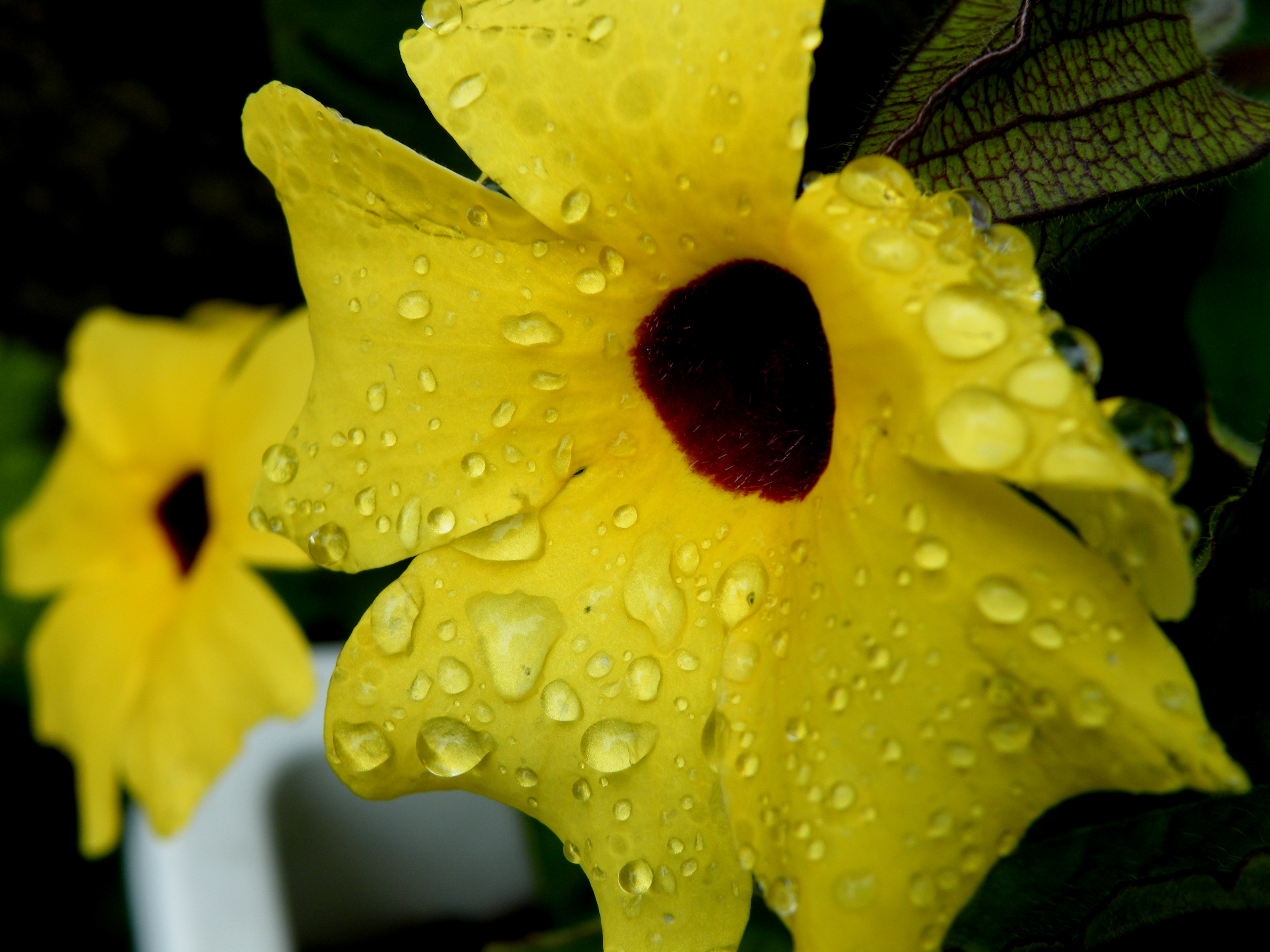
Beautiful raindrops shimmered on the flowers and leaves in the garden this morning, everything sparkled after last night’s rain and thunderstorm. There was a freshness about the garden and the scent was earthy. Soon the sun burned the mist away and the breeze dried out the raindrops but not before I had enjoyed their beauty. A fine summer’s morning in West Cork.
DSCF2606

DSCF2615

DSCF2611