
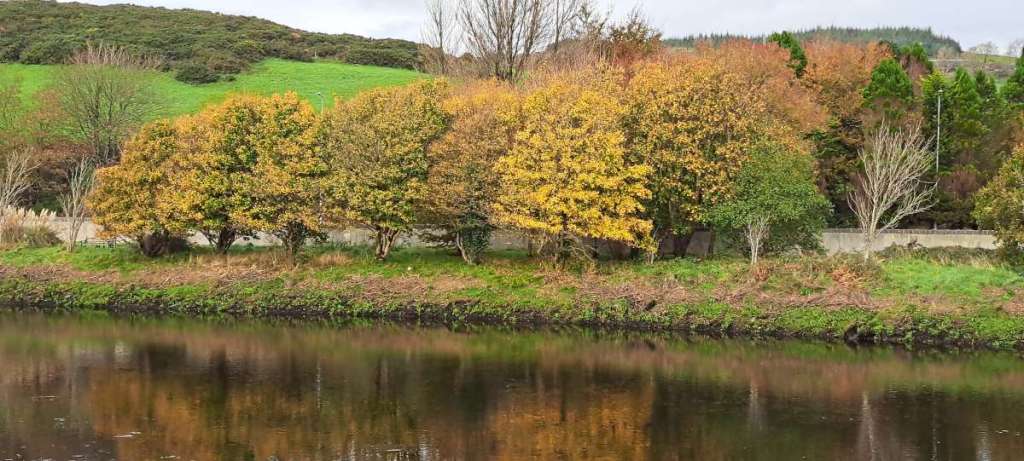
Autumn is well underway now and I’ve been enjoying every minute of it, the colours, the transformation in nature, the autumn activities and just the lovely, slow change from a really beautiful and warm summer to a mellow fall. And, because I’m doing an online course in tree identification, I’ve taken my lessons outdoors during plenty of tree laden walks, and I’m having lots of interesting explorations and discoveries. I never realised the variety of trees in my area!
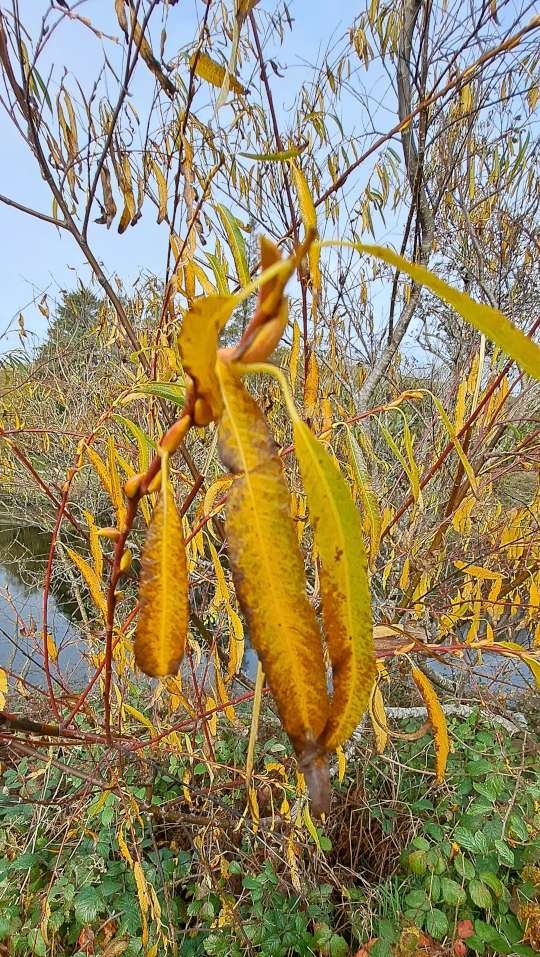
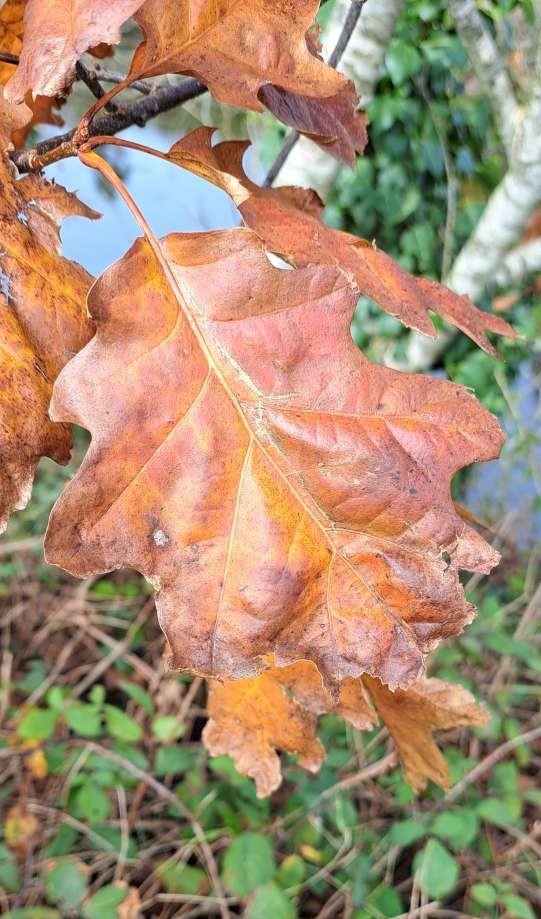
There are a lot of hybrid trees of course which have been planted in carparks, or in school – or official building grounds. Still it is interesting to try and identify them. Also it is always fun to discover new (to me) trees. While collecting my grandson from his summer camp I discovered that part of the play ground was lined with Hornbeam trees, and right enough I saw them today, and their foliage is showing beautiful fall colours, as expected.
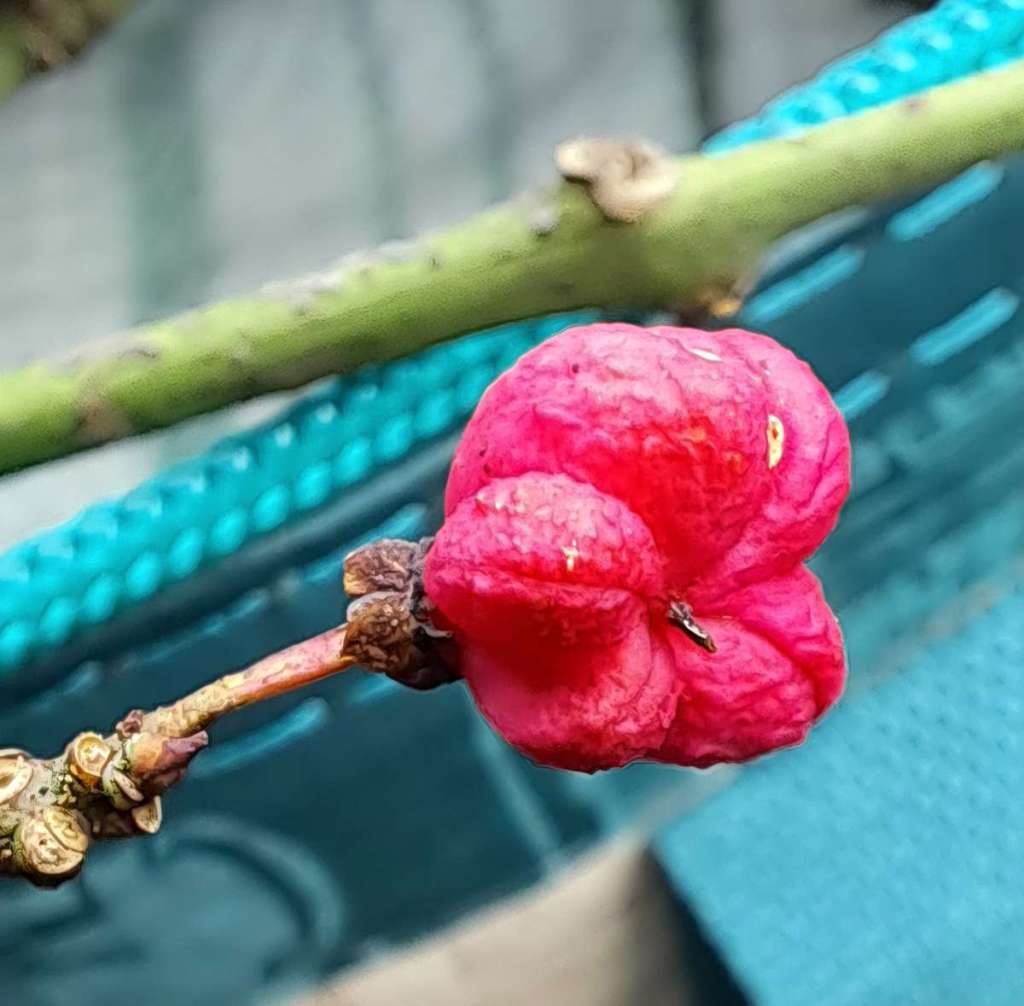
I discovered a Spindle tree, what a delight. Although I have to say that there were very few fruits to be seen on it, but I did find one.
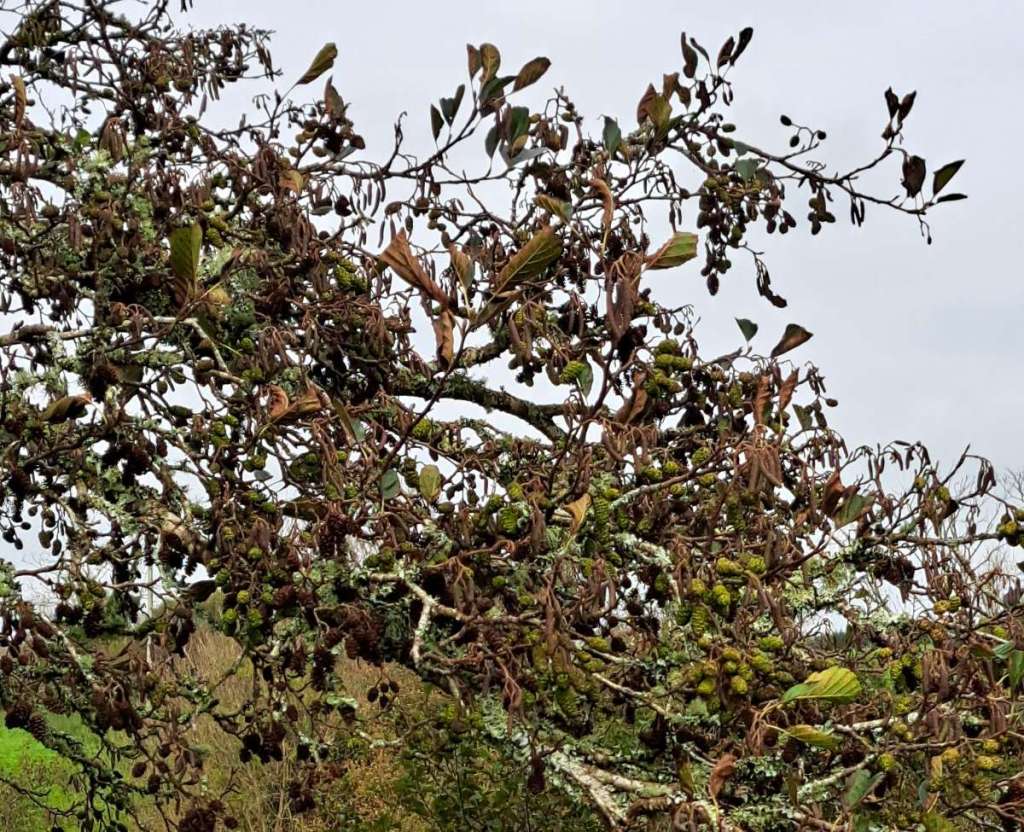
On a less happy note. While on a walk last weekend along the river Illen, I noticed that quite a few of the Alder (Alnus glutinosa) trees, are suffering from the dieback pathogen, Phytophthora alni. This is waterborne root rot disease. It is affecting Alder trees all over Ireland and some of the concerns are the effect it is having on wetland ecosystems, and the forest sector, as the disease will kill the Alders. Seeing an unusually heavy crop of cones is a final stress response that the Alder will show when it is affected, as can be seen in the following photo. In this particular tree the branches were laden down by the cones.
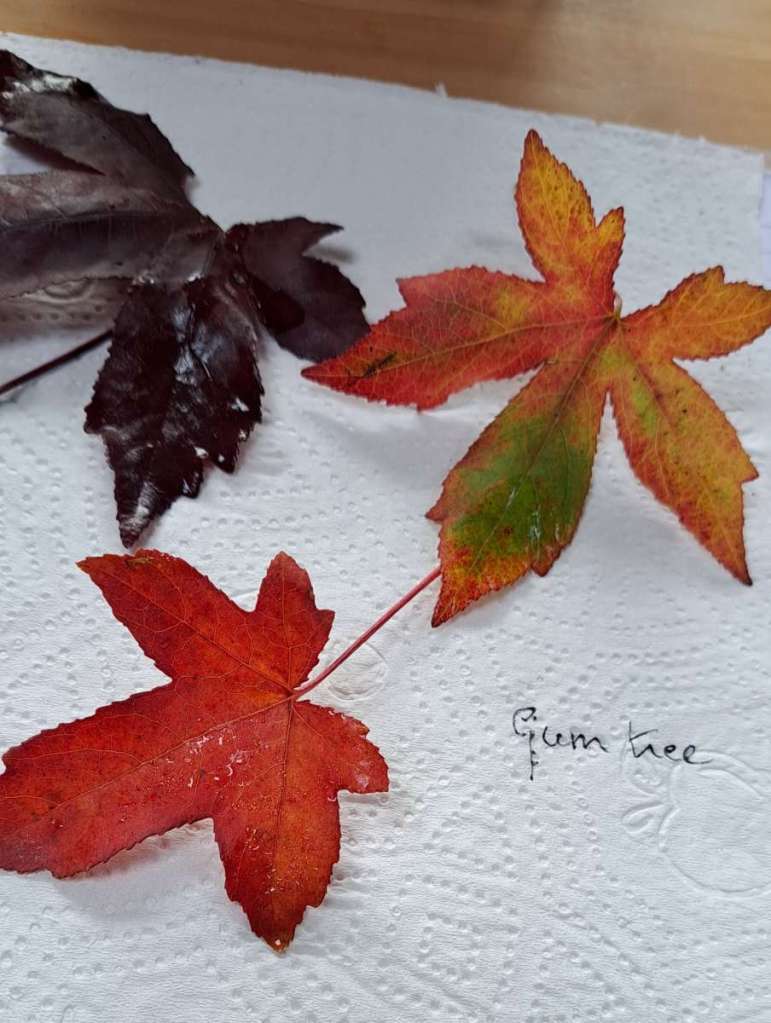
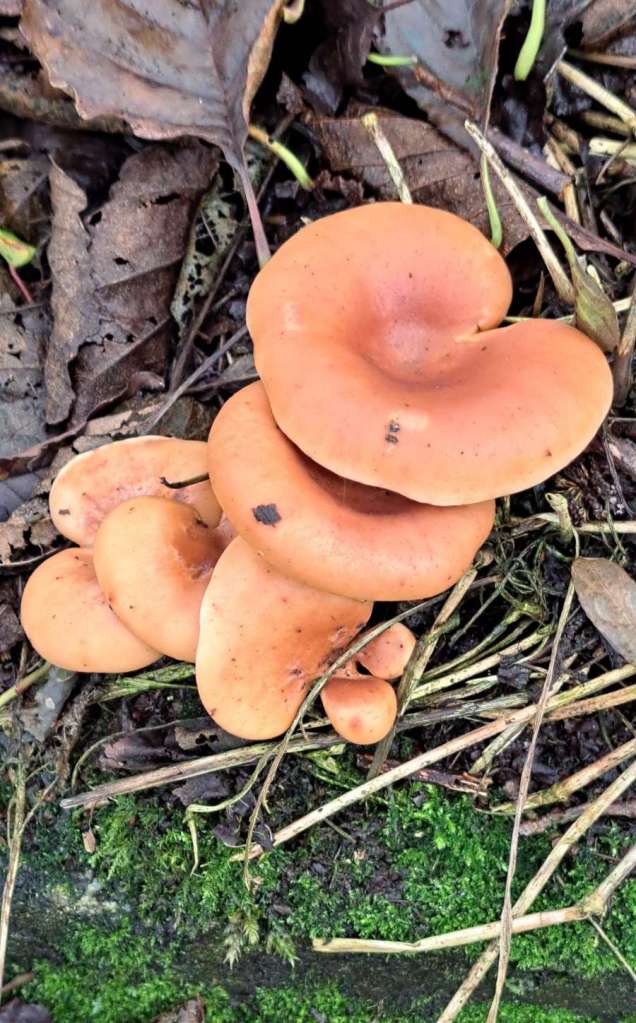
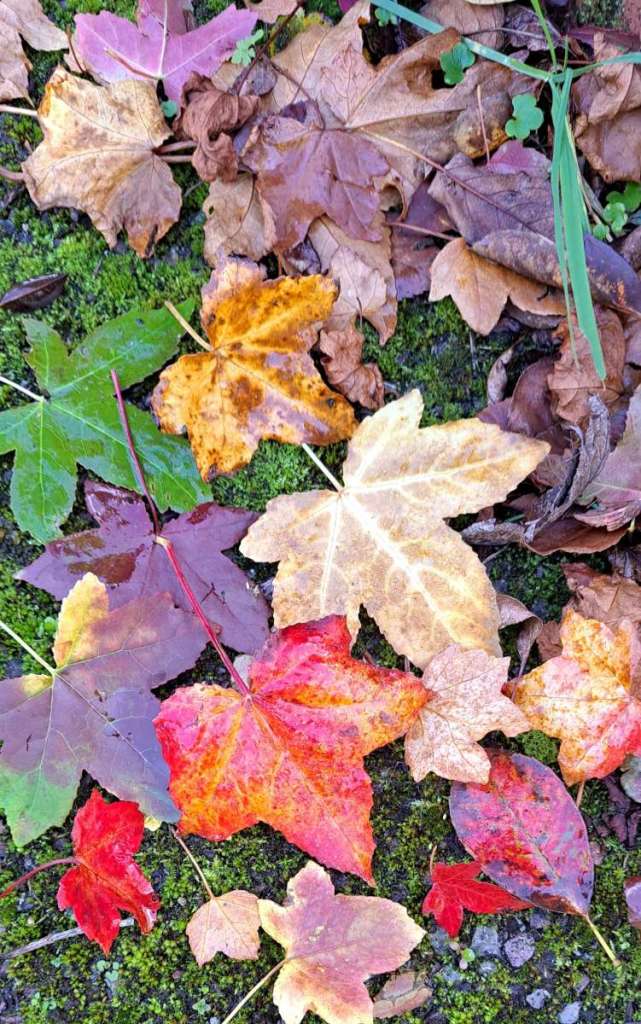
While looking for trees in autumn there are other treasure apart from leaves, a whole variety of fungi, some associated with particular trees are to be found. The leaves of the Sweet Gum tree (liquidambar styrasiflua) are beautiful, this tree actually is in our own front garden. The small red leaf on the bottom right of the photo is from our Currant tree (Amelanchier lamarckii) we call it a ‘krentenboom‘ in Flemish. Neither trees are native to Ireland.
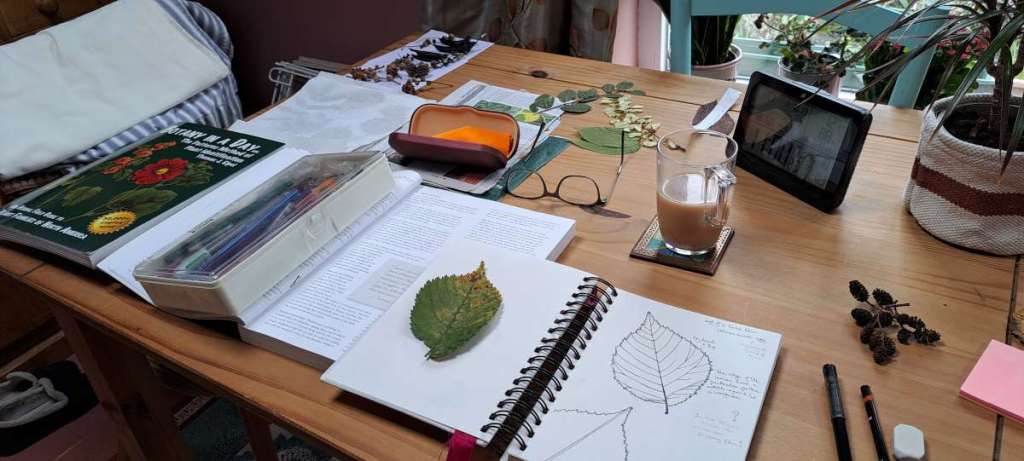
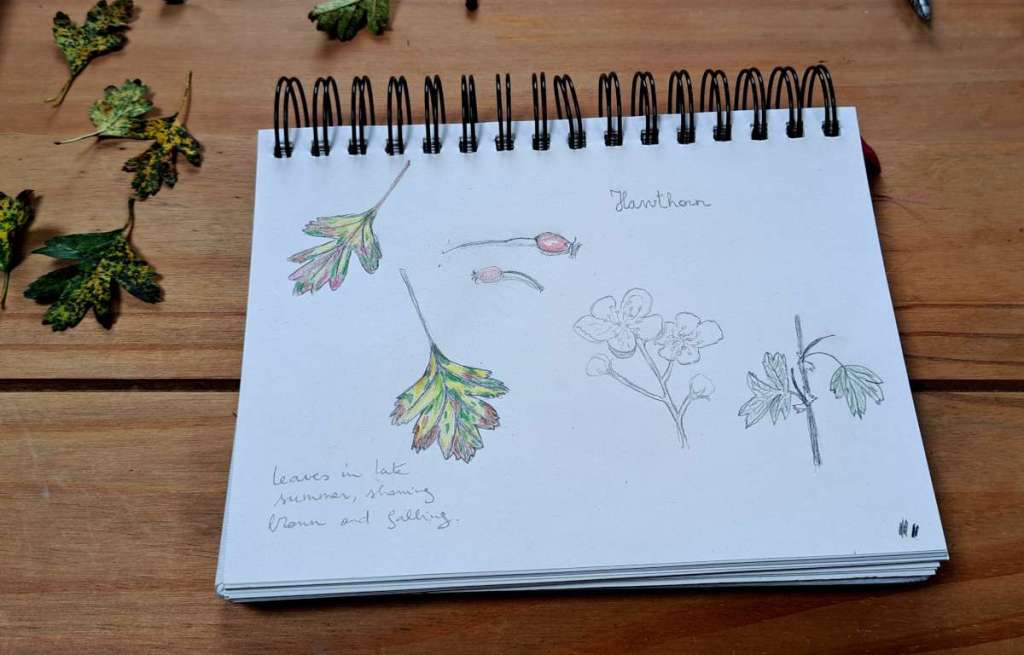
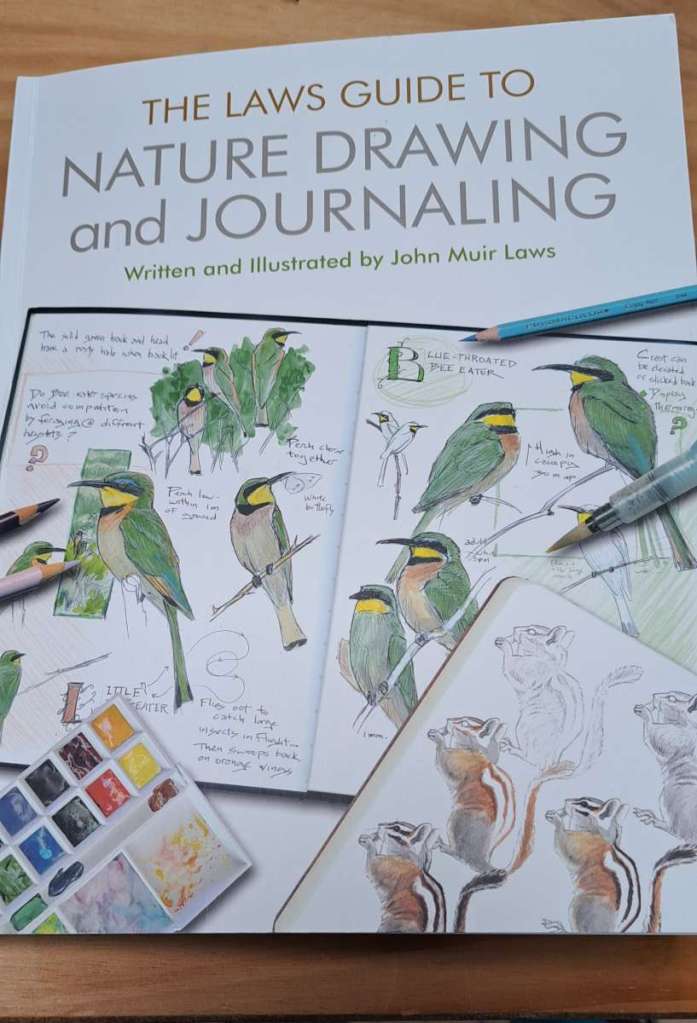
Although my tree course takes me outdoors a lot, there is also inside activity, studying the leaves or other aspects of the trees, very enjoyable activities. It also made me return to a childhood habit of keeping a nature journal, I bought a book on illustrating your nature journal and I’m having a go at it.
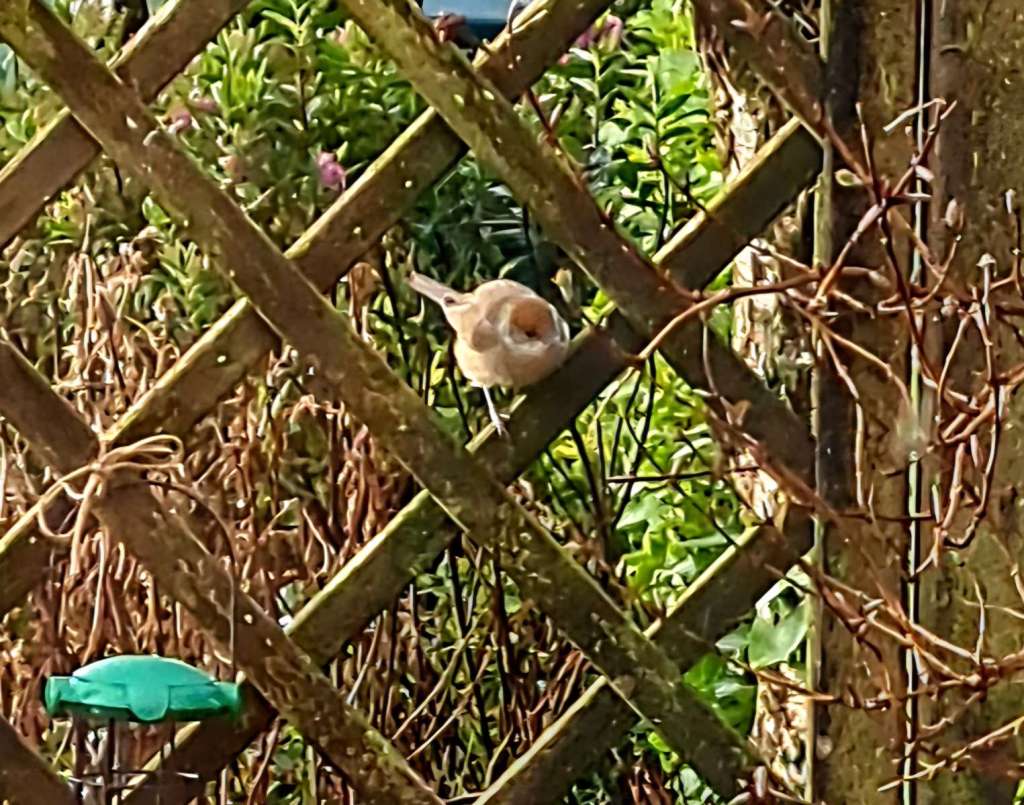
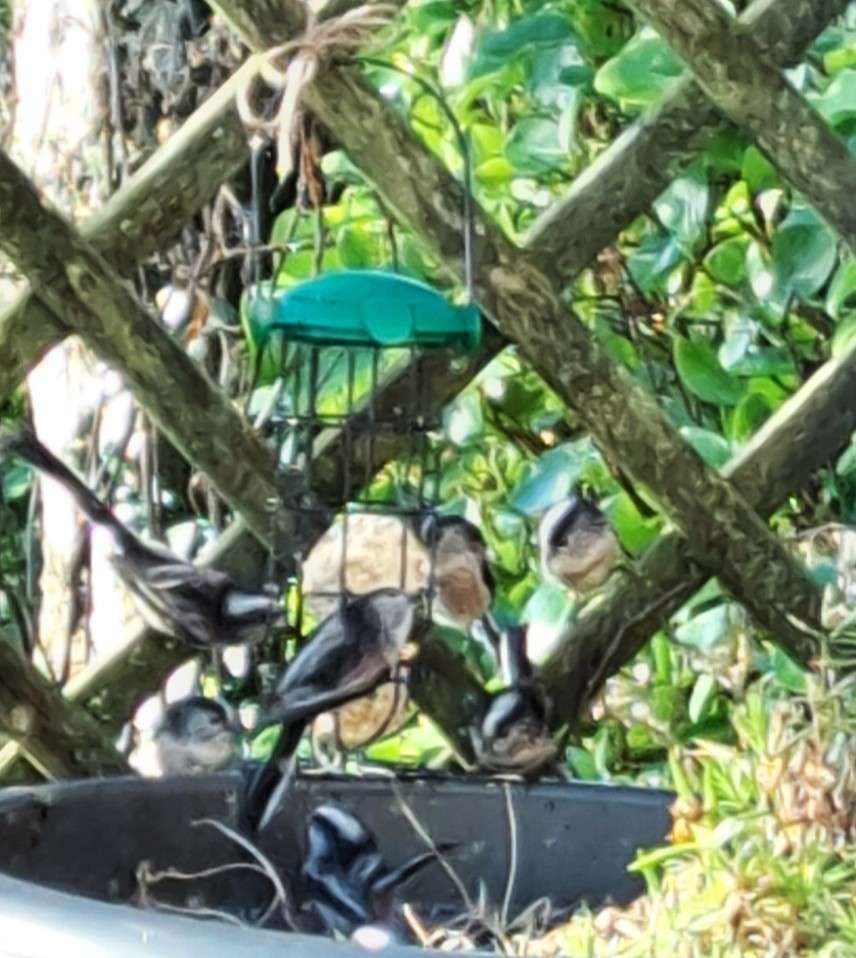
And that brings me to birdwatching, and soon the yearly garden bird survey will start up again for the winter. I’m all set! During the last twelve months I’ve seen new birds visiting the garden, they are a swarm of long-tailed tits, such acrobats! A chiffchaff, and male and female blackcaps.
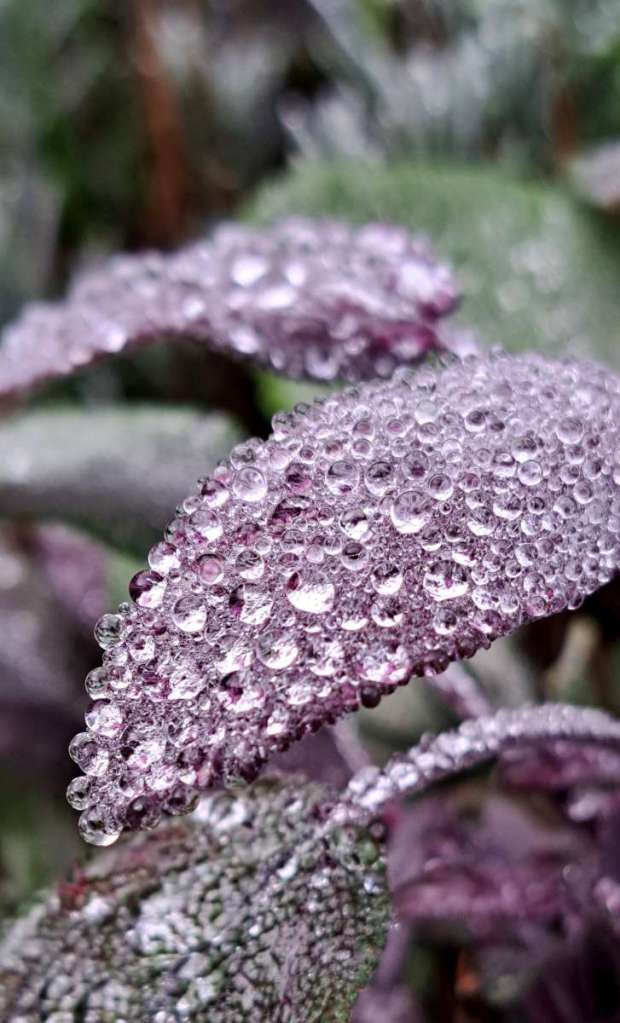
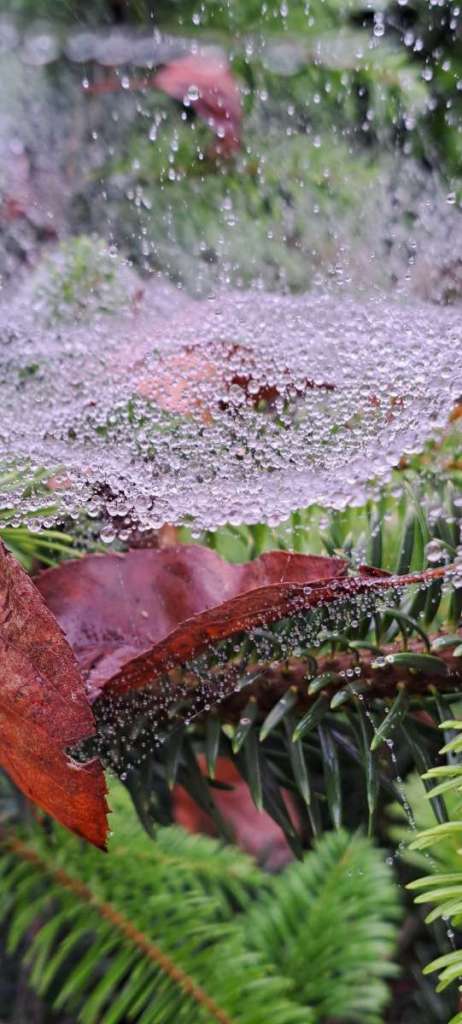
Also part of autumn delights are the raindrops looking like so many crystals, and spiderwebs beautifully decorated with them.
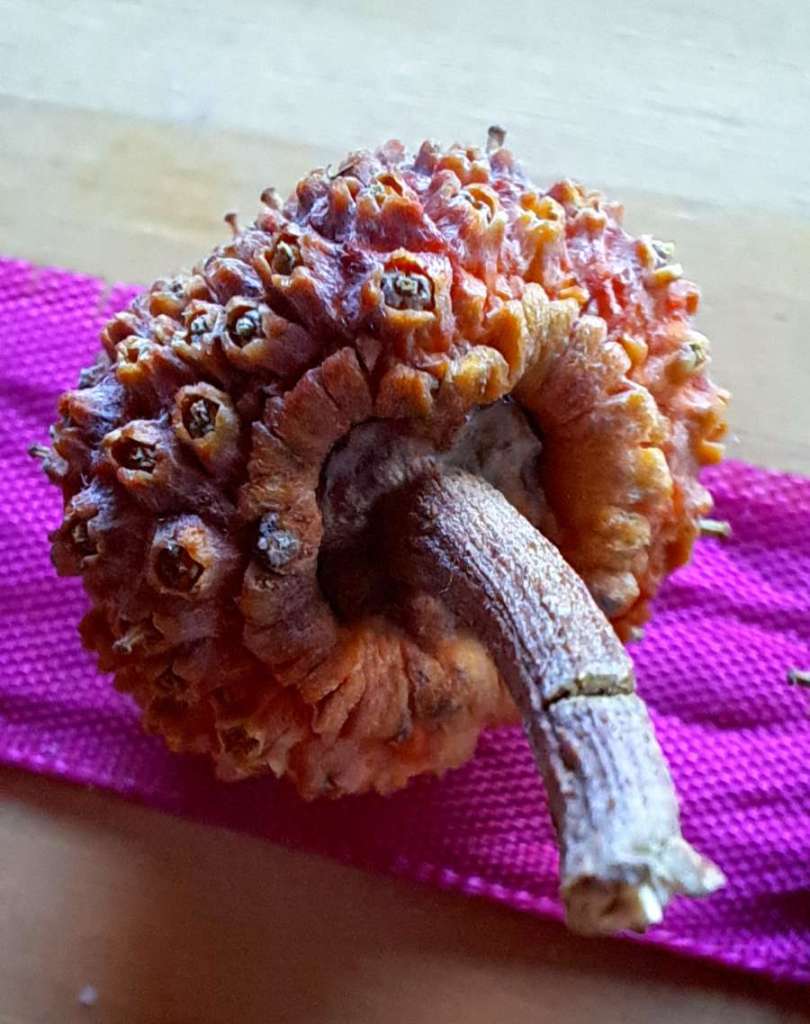
Above is the fruit of a Bentham’s cornel (Cornus capitata), I found it growing on the Colla road in Schull on my way to see my husband in the nursing home. The fruits reminded me of the Arbutus tree (Stawberry tree), and now I’ve learnt that another name for the Cornel is the Himalayan Strawberry Tree. I also recognised the flowers while doing my research, they are beautiful, large showy creamy white. Gosh I’m learning such a lot.
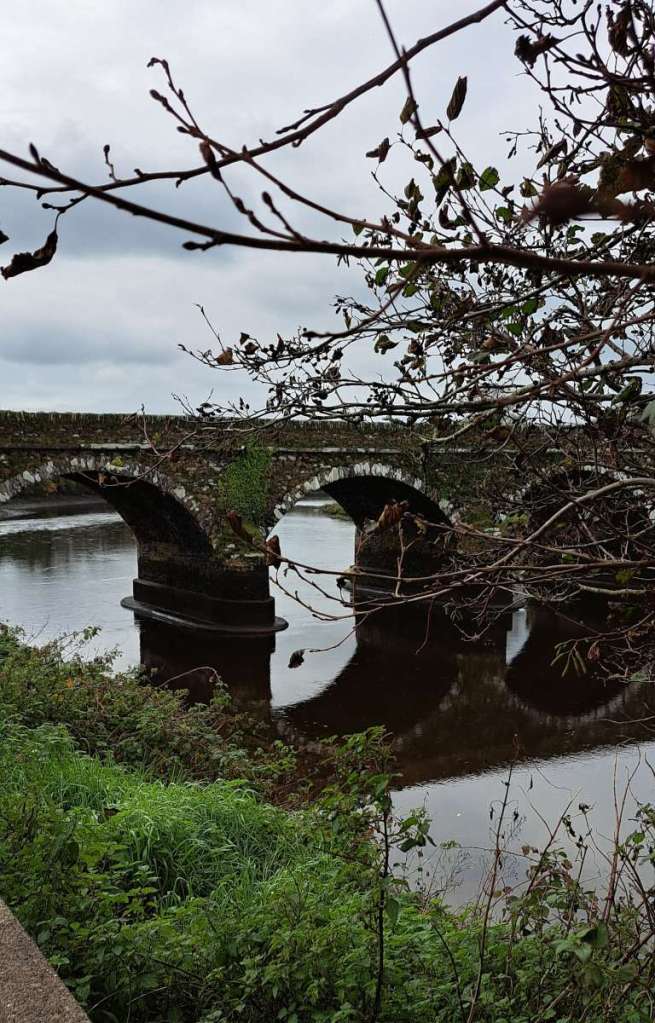
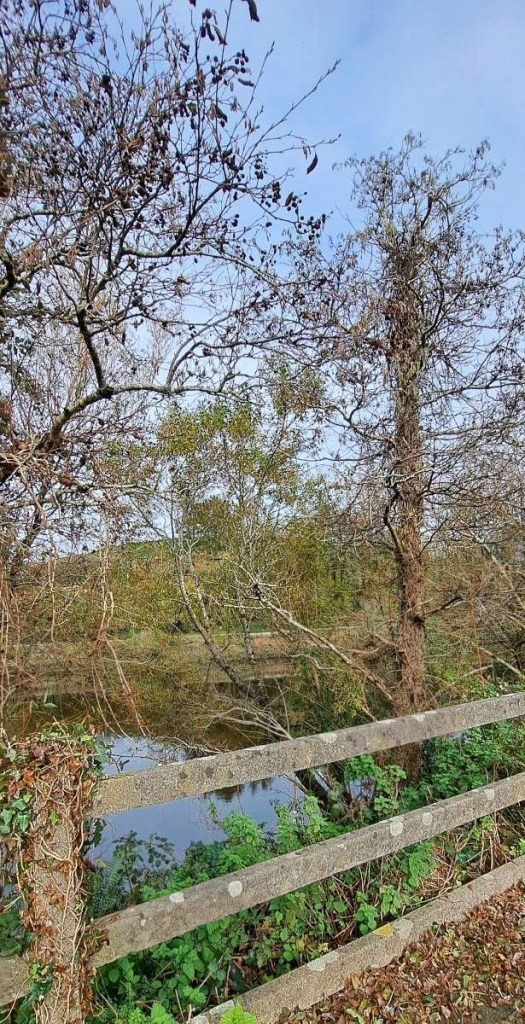
The walk along the river, called the ‘Kilcoe Trail’, is lined with a good variety of trees, the river itself has swans, several types of ducks, a heron, and probably other water birds. There is always something to see or experience.
And since the last few days the Christmas lights and decorations are starting to appear here in the little town of Skibbereen, and so the seasons keep moving along, never stopping… traditions, festivities, changes in the weather, in landscape, and much more…the rich tapestry of life.


Ook nog veel bladeren aan de bomen om af te vallen …
LikeLike
Learning is the fountain of youth! 🙂
LikeLike