ONCE I HEARD A BLACKCAP SING

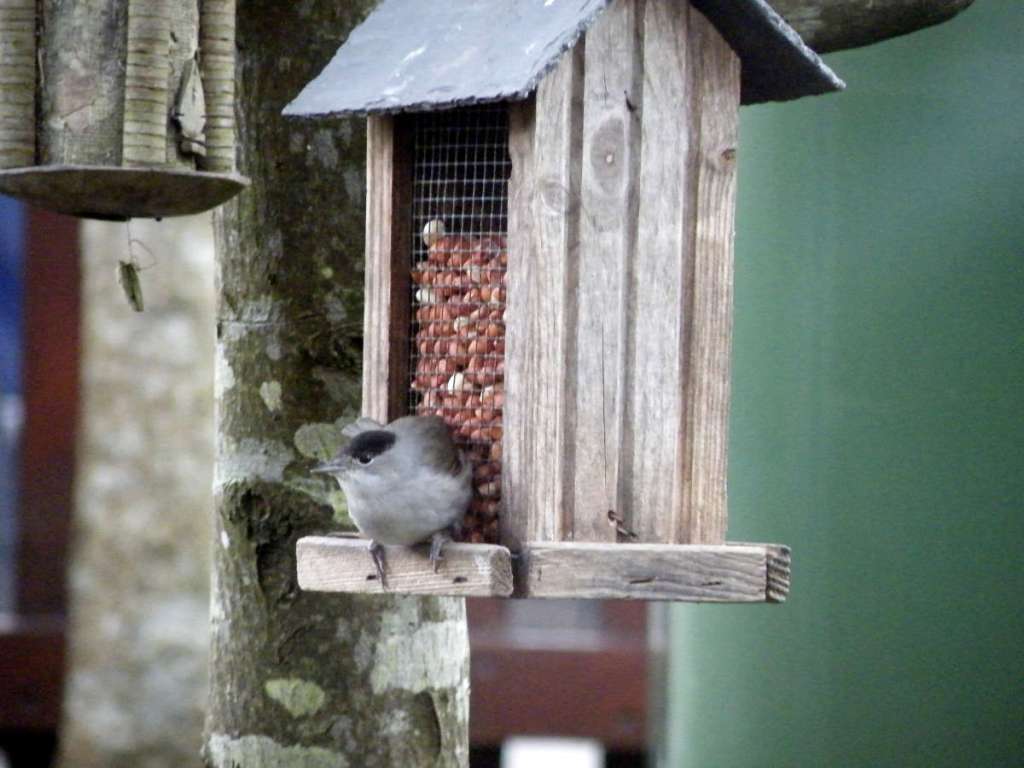
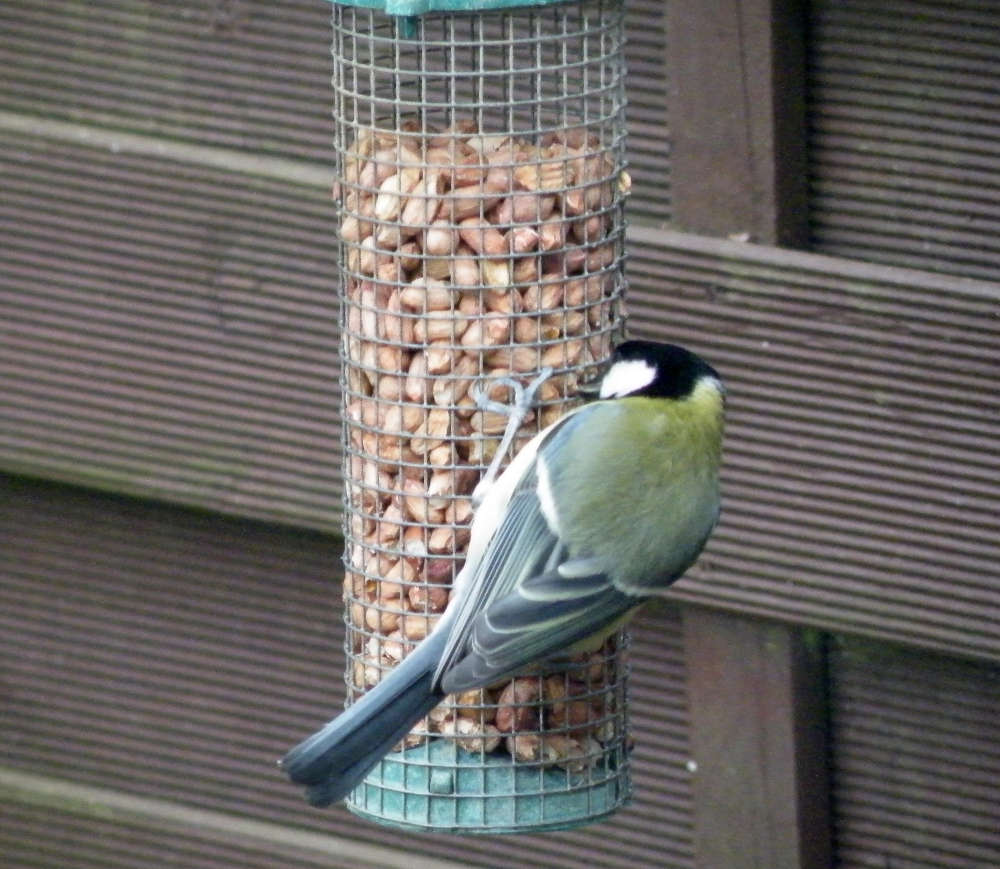
Recently I heard a delightful warbling song coming from the garden, it stopped me in my tracks.  I did not recognise this song and so I turned on Merlin app on my phone to identify it, and was told that it was the song of the blackcap.  I knew that, from time to time there are blackcaps in our garden, both male and female.  They are easily recognisable by their black (male) or chestnut brown (female) cap on their head.  They come to my peanut filled bird feeders.  It was some years ago also in January that I first saw them in our garden.  Another identifying mark is their beak which is black and sharp, useful as they feed on insects and berries, but also on peanuts it seems!  It is a handsome bird, its wings and tail some shade of grey.  And like I mentioned above its song is beautiful, no wonder then that it is sometimes called ‘the northern nightingale’.

Blackcaps (Sylvia atricapilla) belong to the warble family, they are found these days also during the winter in Ireland, they used to spend their winters in the Mediterranean regions.  I read that they nest in this country but they originate from mid-Europe.  Their conservation status in Ireland is ‘green’, so we don’t have to worry about their disappearing yet, luckily.

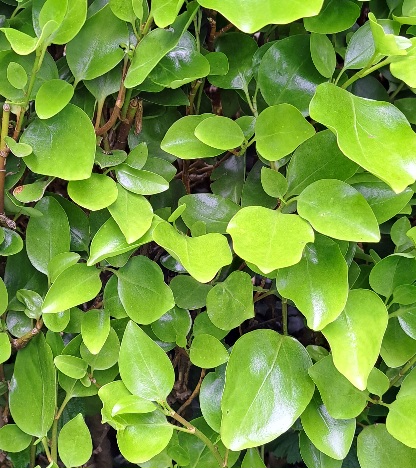
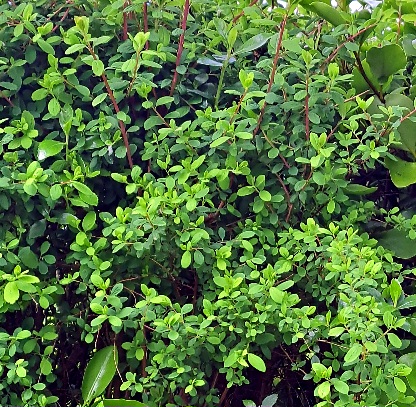
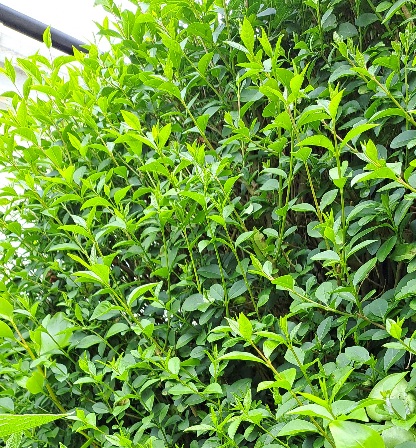
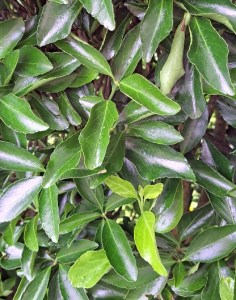
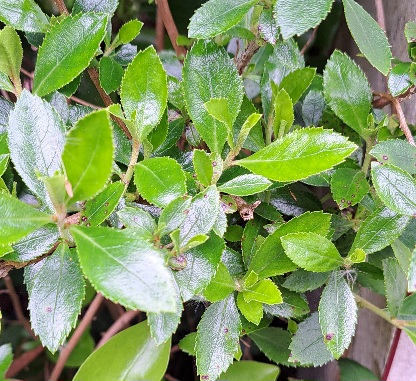
It is no wonder that they like our garden as we have lots of berry bushes and even a currant tree (amelanchier lamarckii) which also produces a multitude of lovely berries. As well as cotoneaster (Franchetii) and a hawthorn tree (crataegus monogyna), and Berberis darwinii, all attracting and feeding birds.  Another plus point is our very thick hedges, originally we planted cuttings, and they grew into an ever expanding hedge, among them are privet, griselinia, fuchsia, escallonia, spiracaea nipponica, and last but not least the evergreen spindle (euonymus japonicas). I know that there are wrens nesting there for years, also blackbirds, and the sparrows disappear in the hedgerow often, I sometimes wonder if that is where they go at night, or when it rains!  Anyway, I digress, the blackcap is known to nest in hedgerows, and our hedges only get a cut once a year in September or there about.
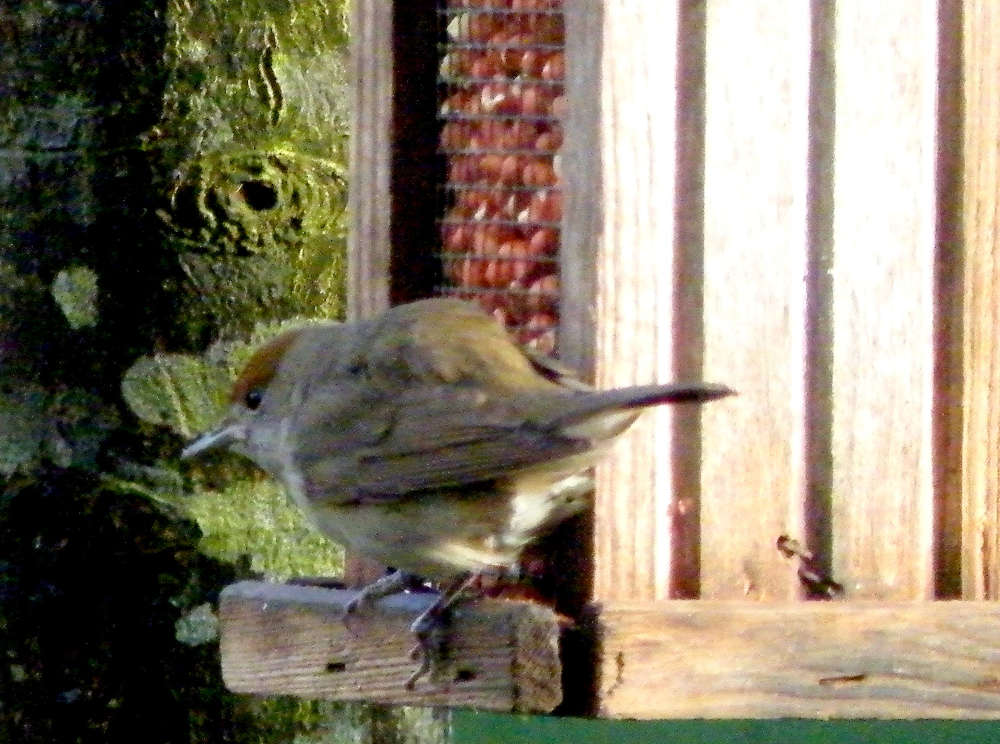
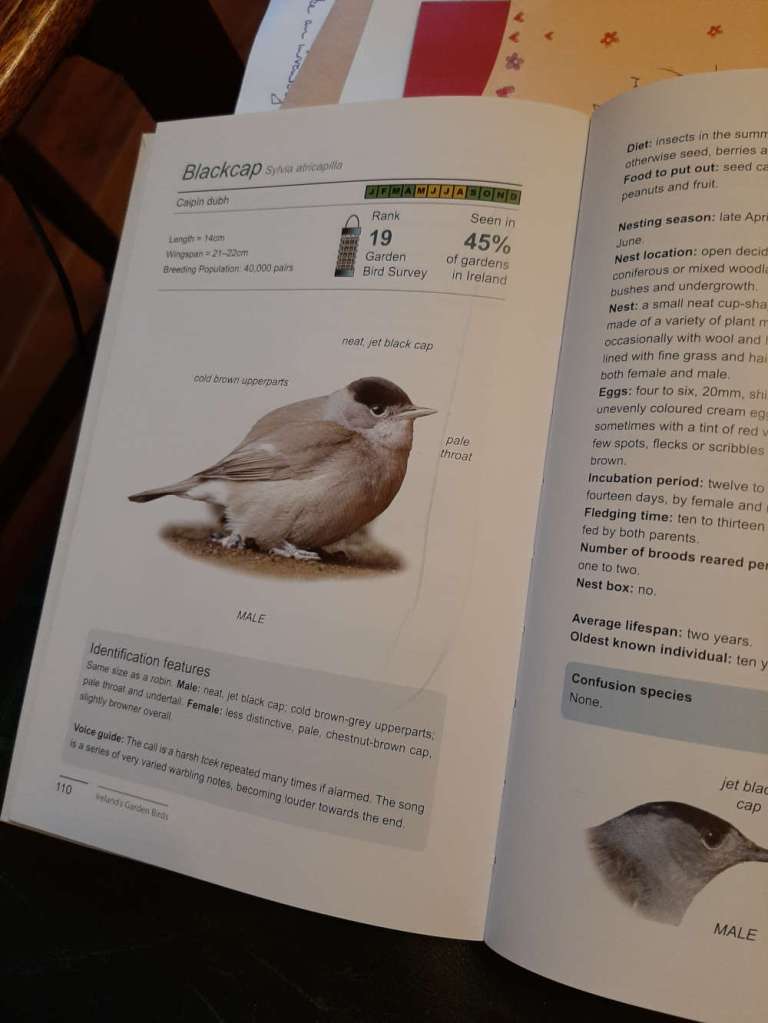
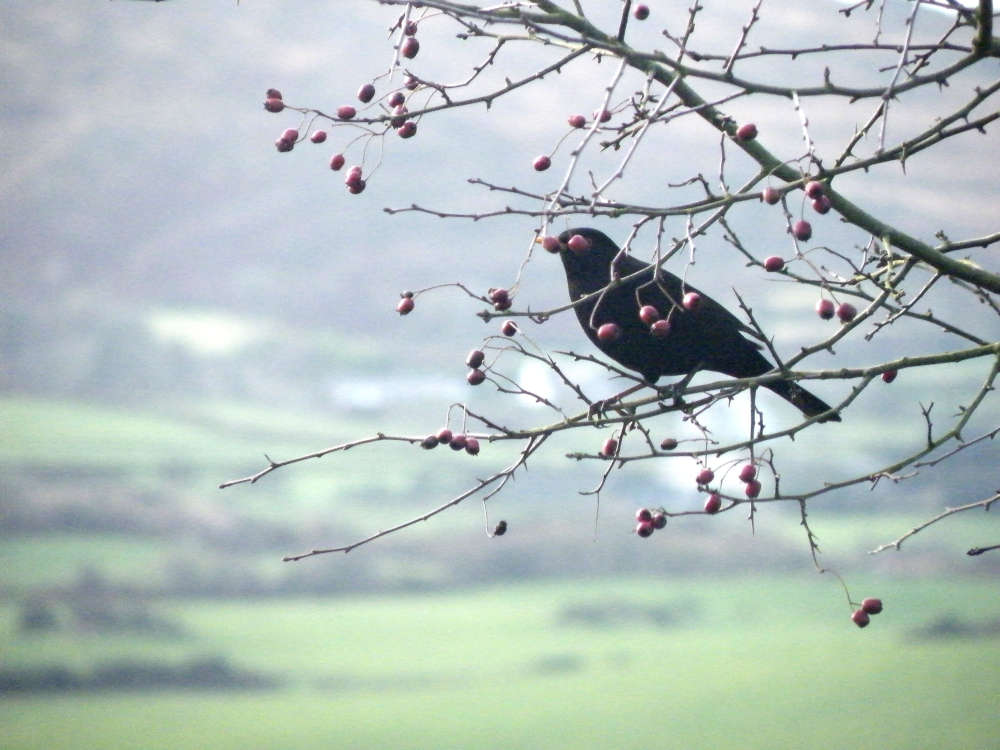
Female blackcap

Now that I’ve heard the blackcap, I’ve become interested in other birds of the warble family, birds like the chiffchaff (phylloscopus collybita) for example which I hear here all day long recently.

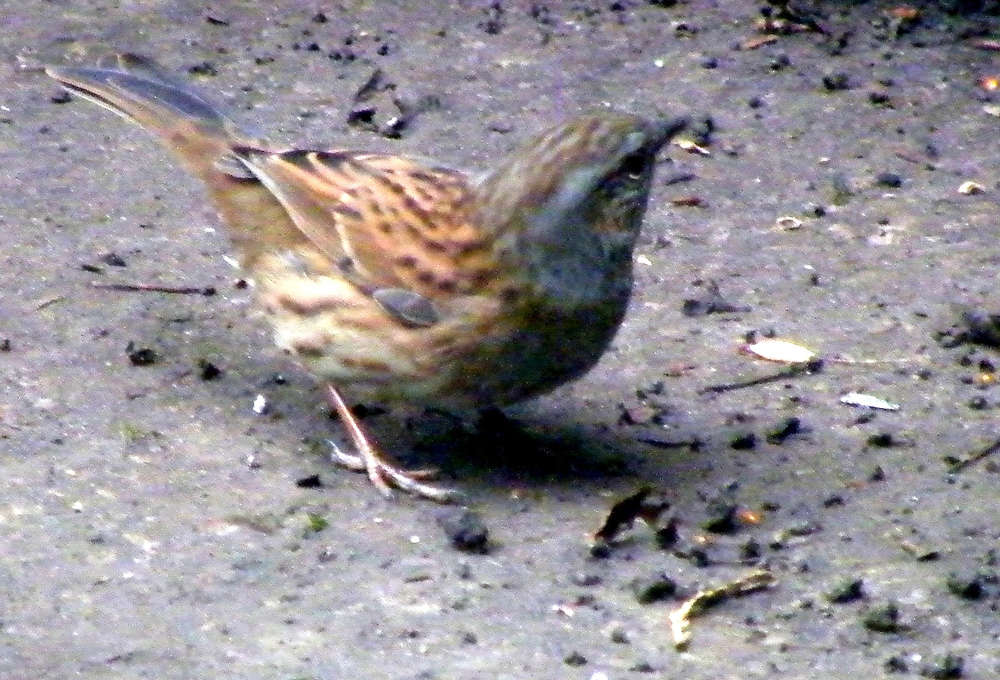
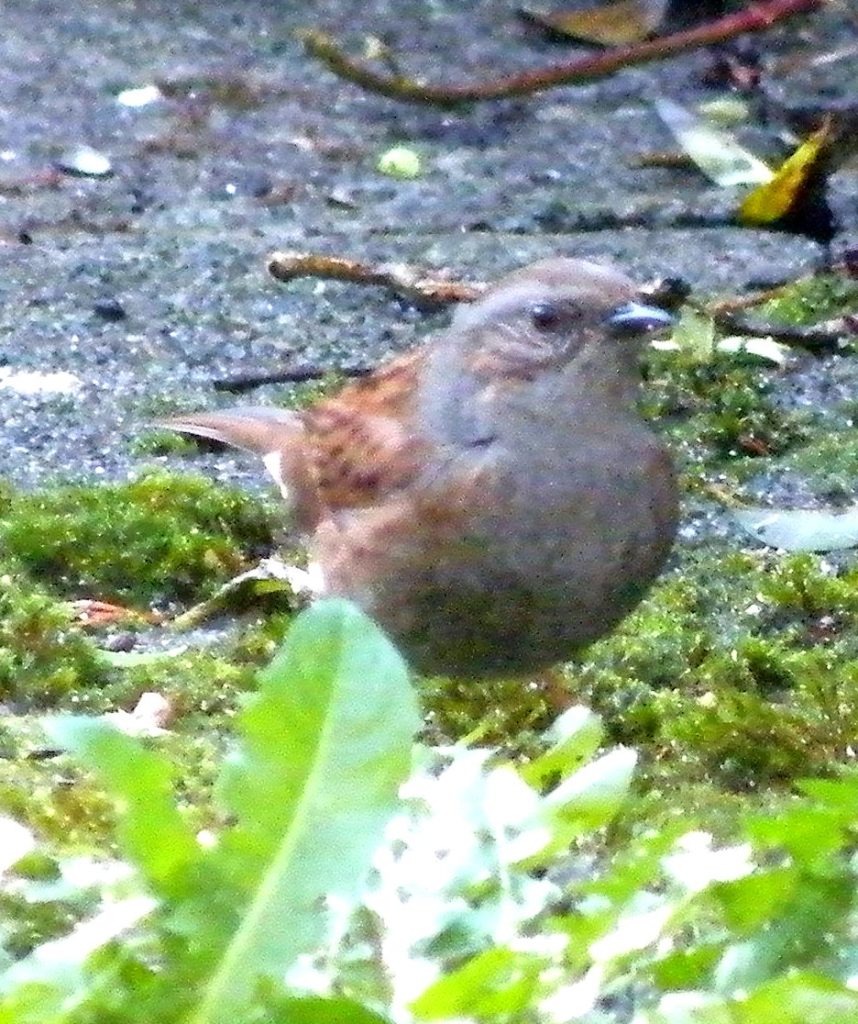
Another lovely singing bird is the Dunnock, I have two of them every winter and even now, they are there picking up the grains on the ground that fall from the bird feeders (I’ve stopped feeding though now).  Striking brown colouring, easy to mix up with sparrows but having a distinctive different beak, their colour move vivid.  I love their song and hear them regularly.
It is amazing how many bird species are found in suburban gardens.  I was delighted last winter to spot a flock of long-tailed tits feeding and flying very fast among the shrubs close by, delightful birds. Lovely to spot them.

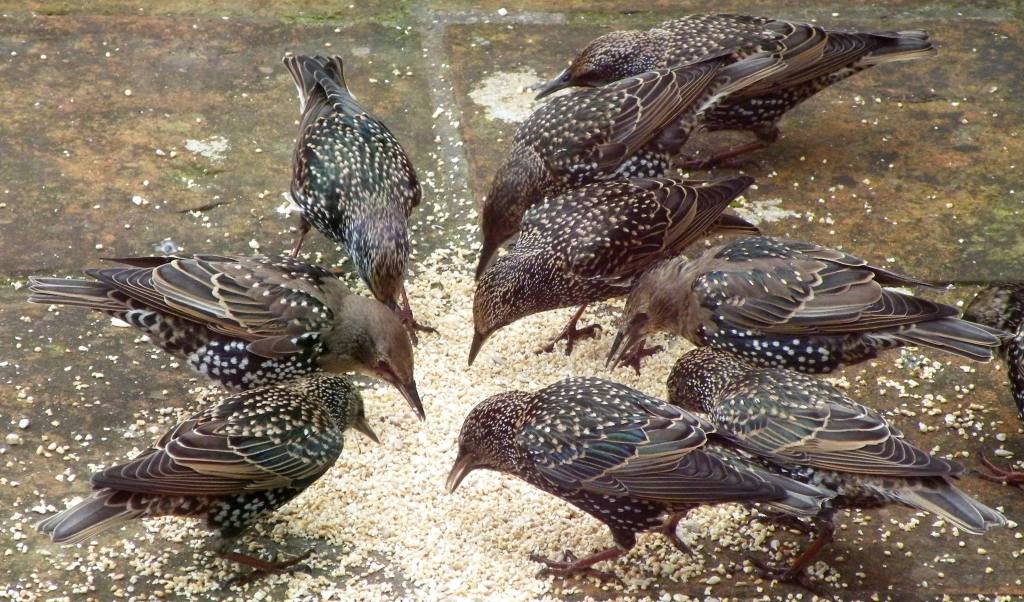
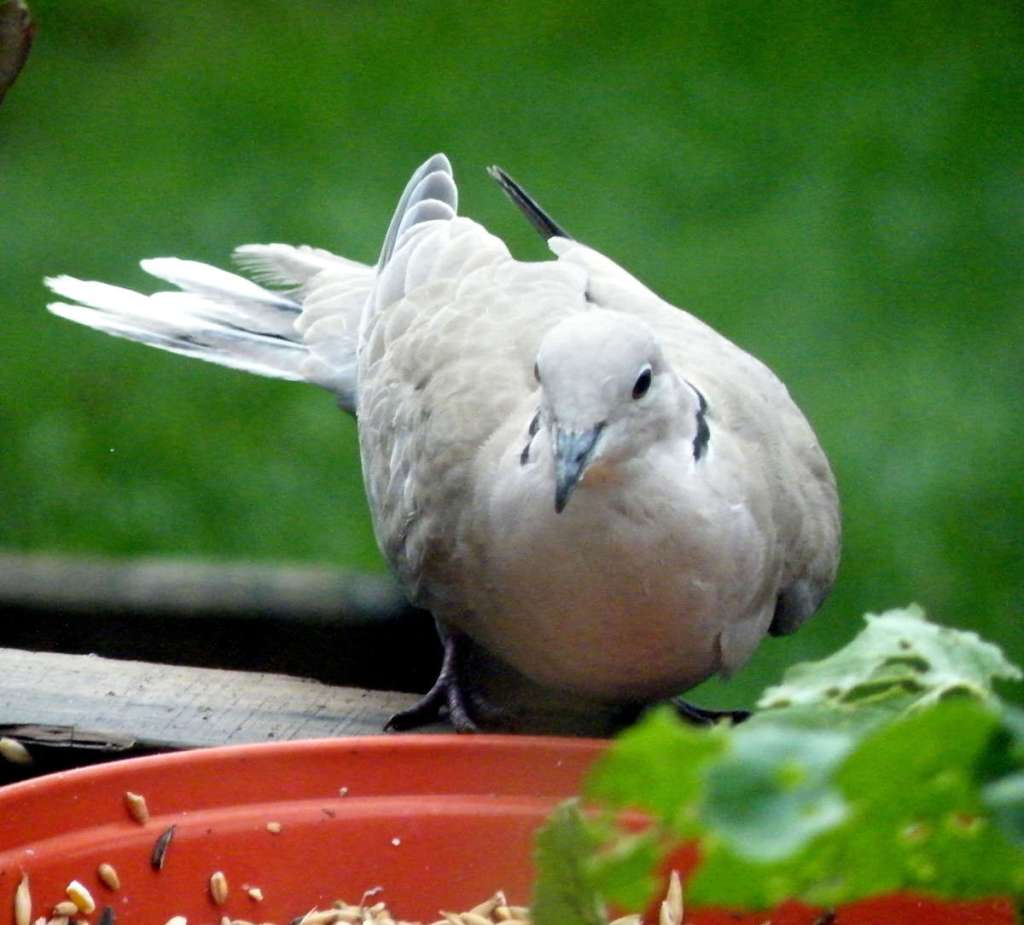
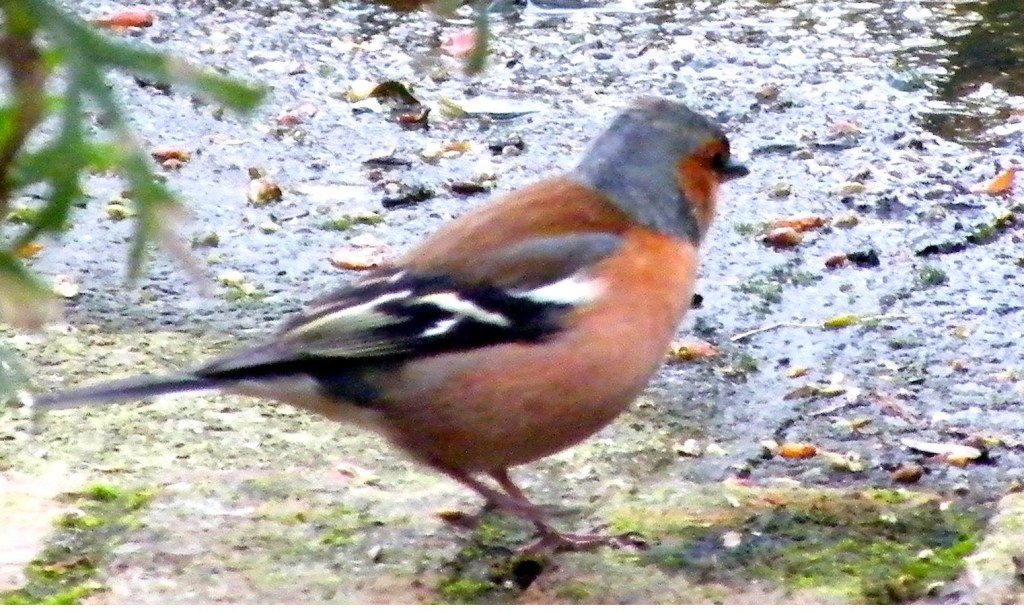
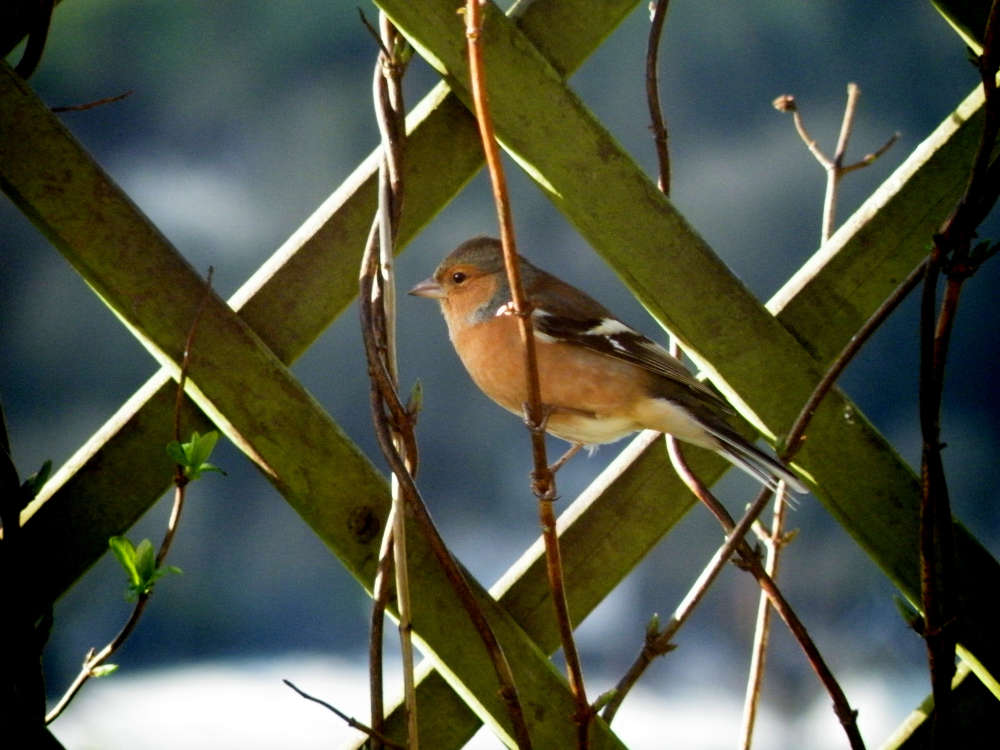
The two collared doves (it used to be six), also come every winter.  And the blue and great tits are plentiful always, as are the starlings, jackdaws, rooks, and sparrows.  Recently also pied wagtails came to feed.  But the chaff finches are diminishing, only about four of them now visiting our garden.  We do have a resident wren, robin and two blackbirds, thankfully.  They nest nearby, most probably in our hedges.

Goldfinch have been in our garden every winter due to the seed heads that I grow especially, or rather grow plants like evening primrose, tansy and others, and leave the seed heads for them.  And last winter I saw a bullfinch, the one bird that I seldom see, and a very beautiful bird I think.  
I do the Irish Garden Bird Survey every winter and I spend a lot of time looking after the garden birds, watching them and recording, in the end it becomes easy to even identify them just by their silhouette or by their behaviour.  Much fun actually.

Our houses here were built in 1933 which meant that for a long time their eaves would have been exposed, and birds like the swifts and swallows used to nest there.  Today this is not the way as a lot of houses have closed eaves.  My neighbour told me that long ago there were a multitude of swallows flying over these houses and nesting here, but much less so now.  The swifts which I have watched myself for many years have much reduced numbers now.  One can get swift nesting boxes, my next-door neighbour has them and every summer I hear the young swifts, such a delight.  But the swift numbers above our houses have dwindled from two dozen some 20 years ago to about 6 arriving and raising about 2 or 3 young during the summer.  A real disappointment, but hoping that the numbers will increase again, there is a lot of awareness about swift conservation these days, I think in fact that the numbers are rising.  We could all add some nesting boxes to help things along…. (Note to self).
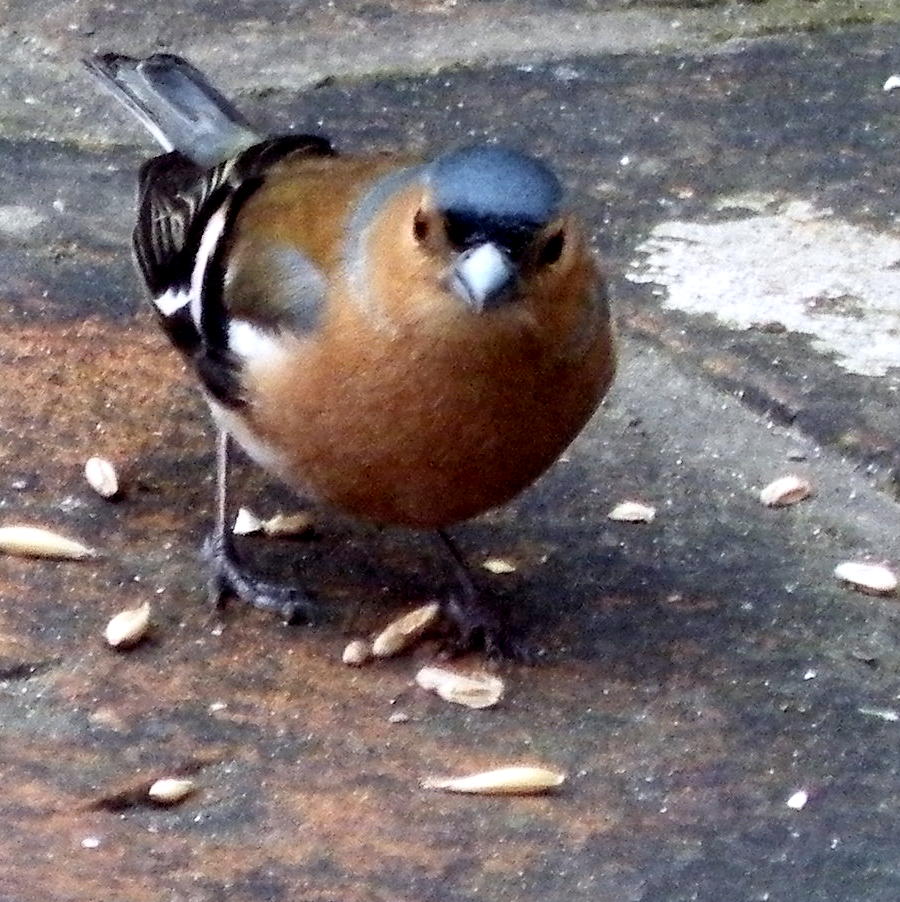
Collared dove

Some of our hedges below
THIS MOMENT IN TIME

The scairbhin (scaroveen) has almost come to an end.  For the past few days there was an icy east wind, quite blustery, a little crazy, it blew over the land.  Locally this wind is known to arrive between mid-April and mid-May. Also around here it is known as the “rough weather of the cuckoo”, as happens around the time that the cuckoo arrives, it is also the final bit of cold before the summer.  But the days are getting warmer all the same.  Yes this moment in time is just perfect, I look out at the trees, moving in the wind, and their young leaves a vibrant green, and I sometimes wish I could stop time.  Early spring in nature is awesome!

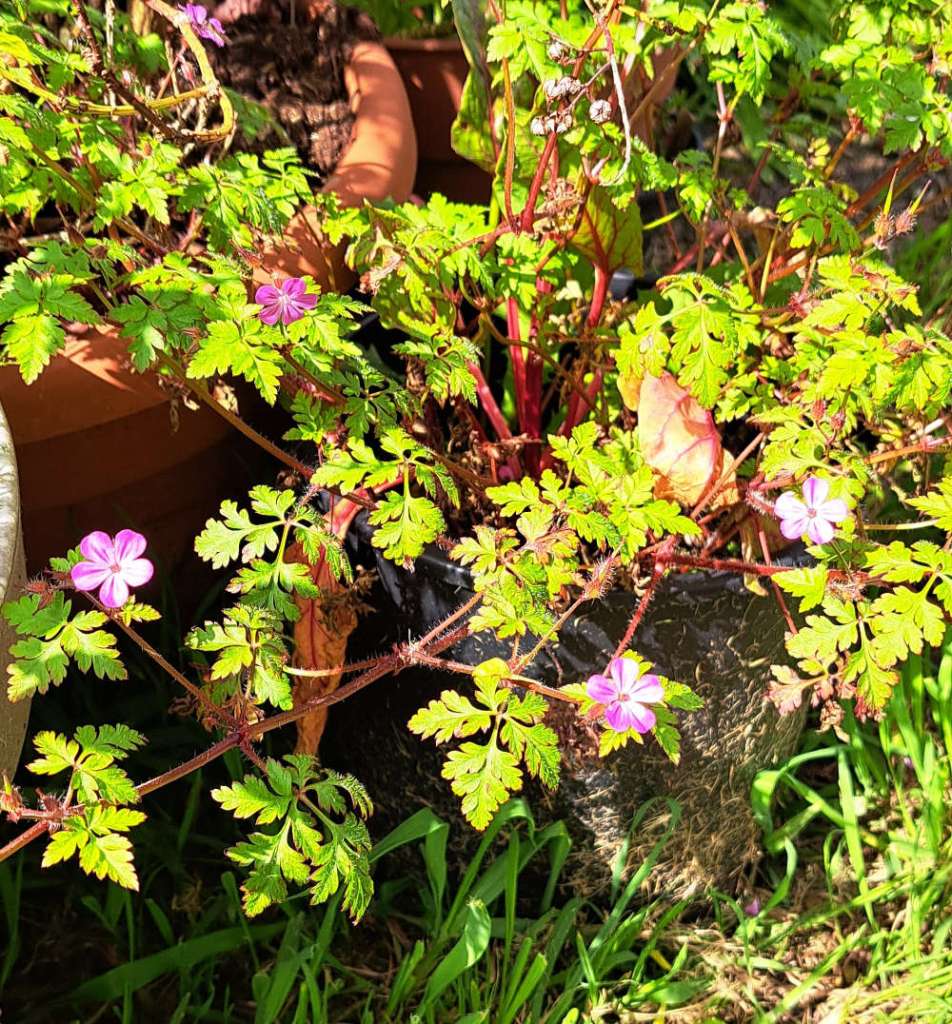
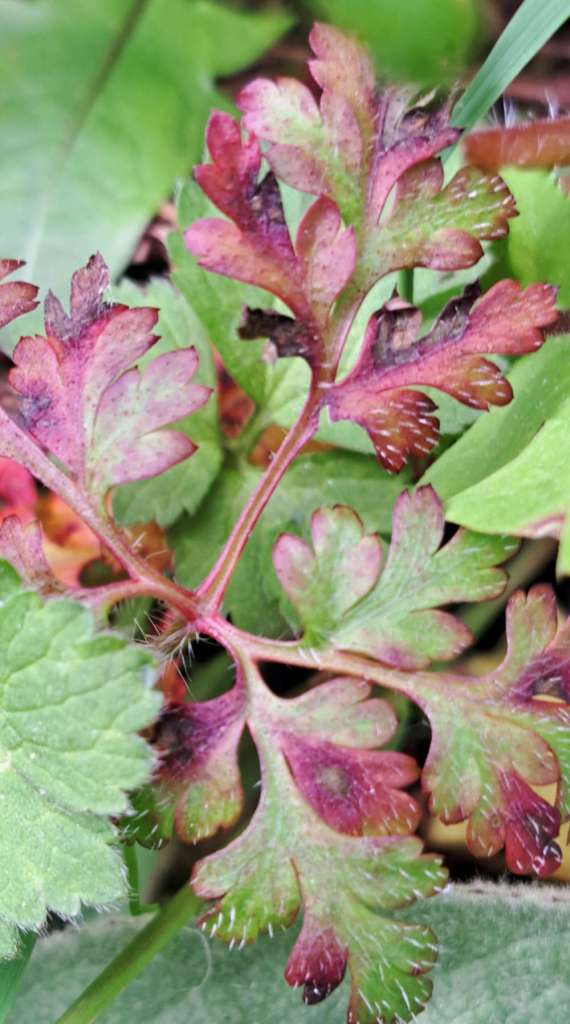
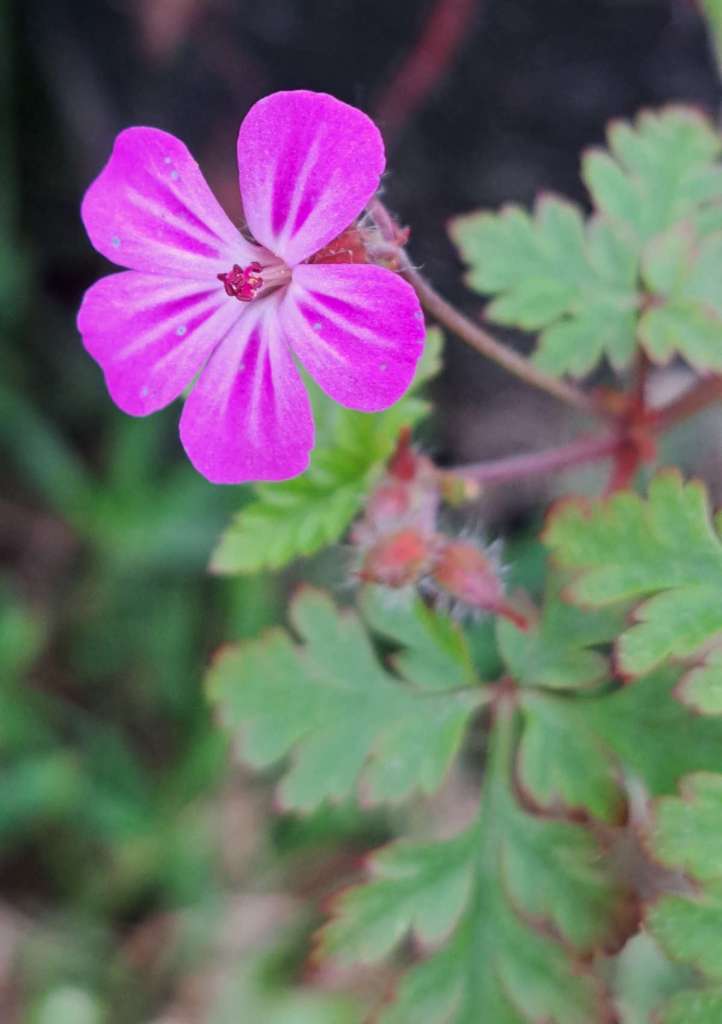
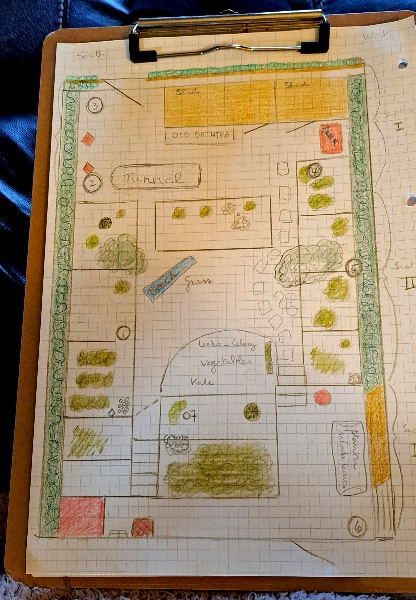
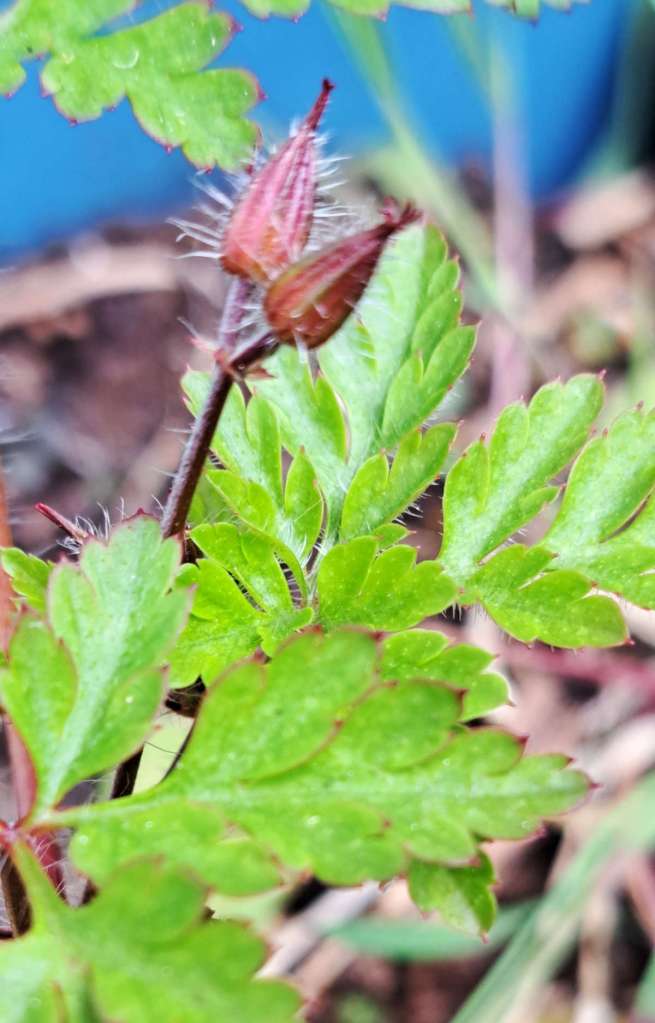
The sodden feeling underfoot in the garden is gone and so it is time to take the growing season more serious, whipping out detailed plans and giving them an overview, while being on the ground so to say.  Taking in what is happening, and bearing in mind that my garden more of less dictates what goes on in there, I adjust my ground plan.  My garden is mostly filled with wild plants and herbs, and also some quite residential shrubs which supply good and strong colour.  New for this season, is that a little plant, which I have been pulling up year after year, I’m now going to allow it to grow, it is the herb Robert, it usually thrives well, I love its scent when I crush a leave or disturb it in any way.  Beautiful, it grows in an interesting way, the fine red stems and light green leaves radiate from the centre, the little pink flowers delicate.  

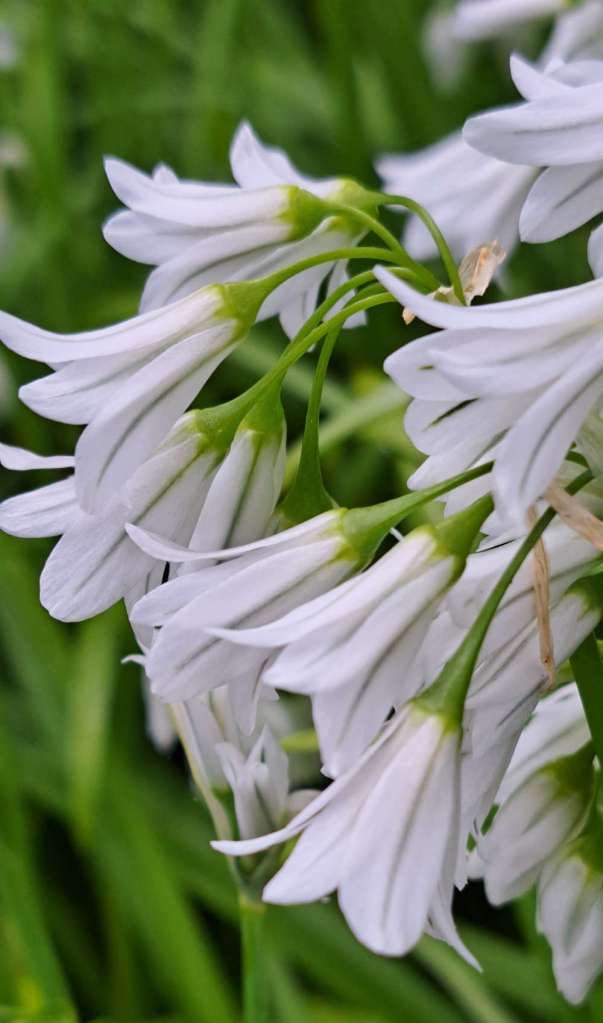
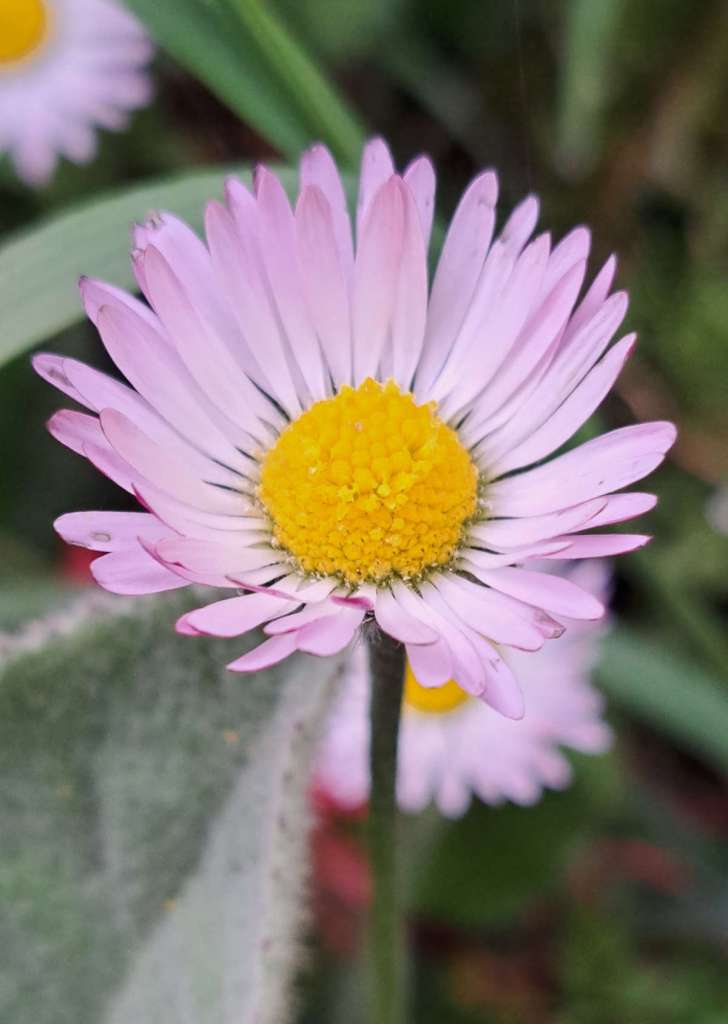
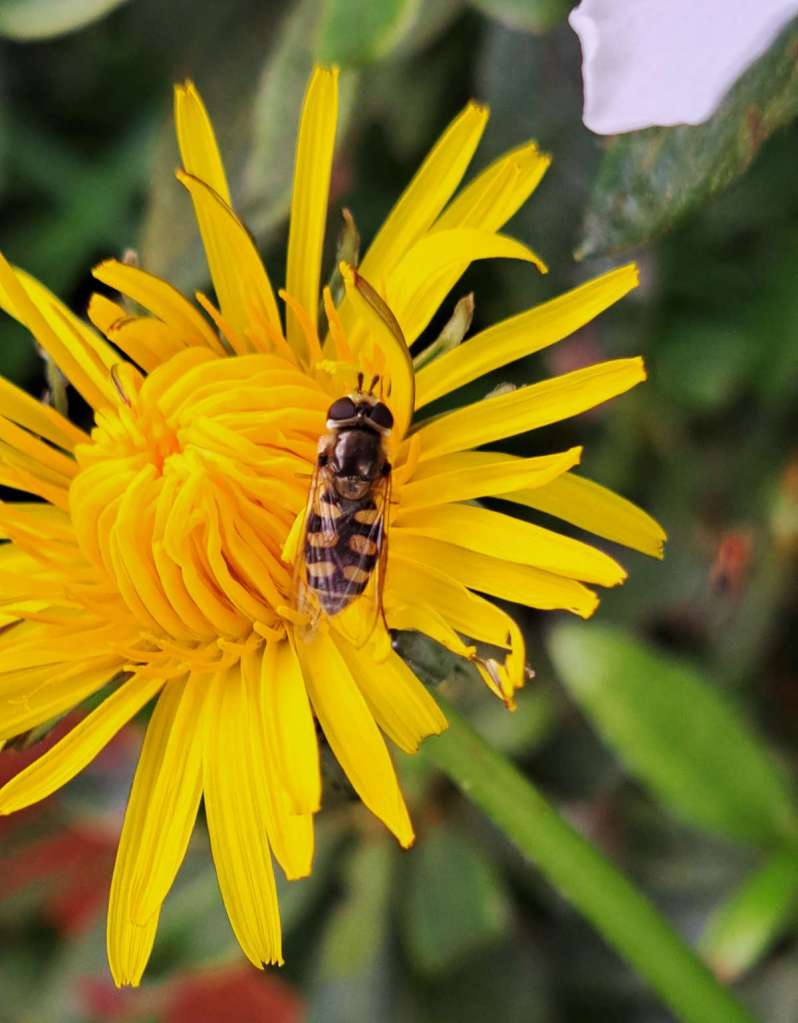
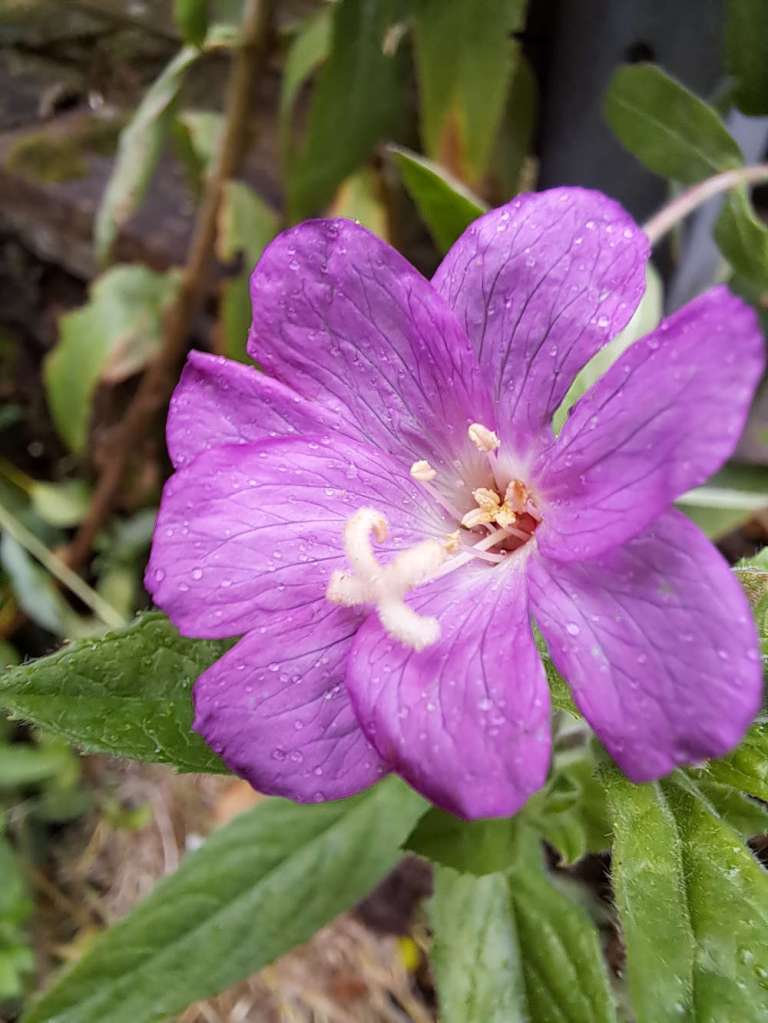
At the moment the three cornered leeks have rather taken over the borders, beautiful nodding white flowers streaked with fine green lines, I also love their delicate garlic taste.  Buttercups have started to bloom, they are some of my favourite flowers.  Daisies, white with a flourish of pink are also willing partakers of my garden, as are dandelions, all these are so important for our pollinators especially early in spring.  From year to year evening primrose, mullein and the different willow herbs have become well established.  Besides all this the usual herbs are enjoying regrowth and looking robust already.

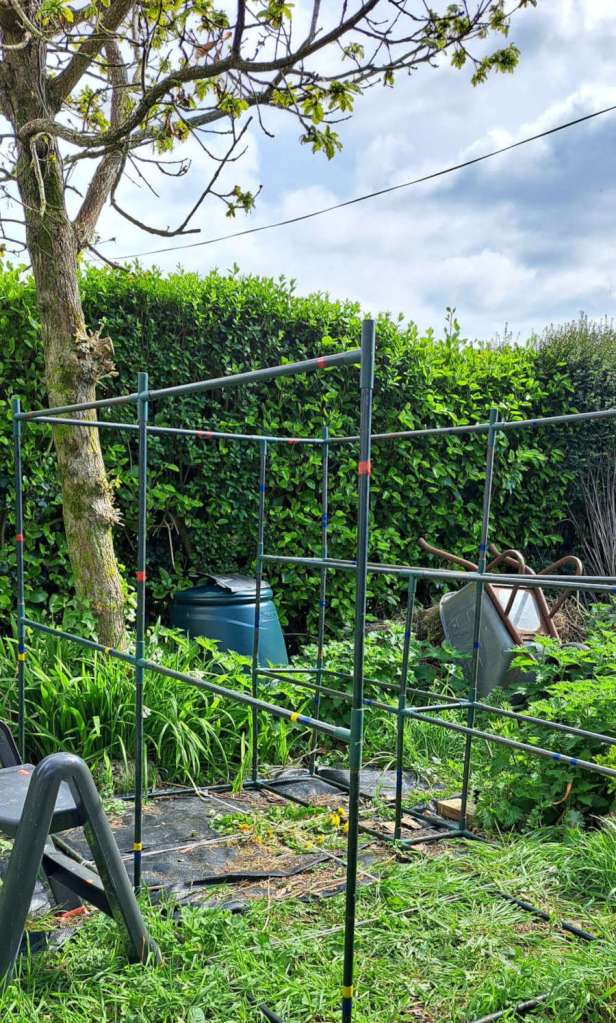
What used to be a lawn is now just tufts of grass, part of it marked for winter vegetables like leeks, celery and kale.  And I set up the small tunnel today, I’m going to try my hand at growing some tomatoes this year, my sister Eveline is very good at growing big bright red and deliciously tasting tomatoes year after year, and she is giving me advice.  It is nice to try something new.  So I bought some tomato plants at the market earlier

In the next few days attention will go to getting the new large planter ready for my summer greens and small herbs like thyme and chives. 

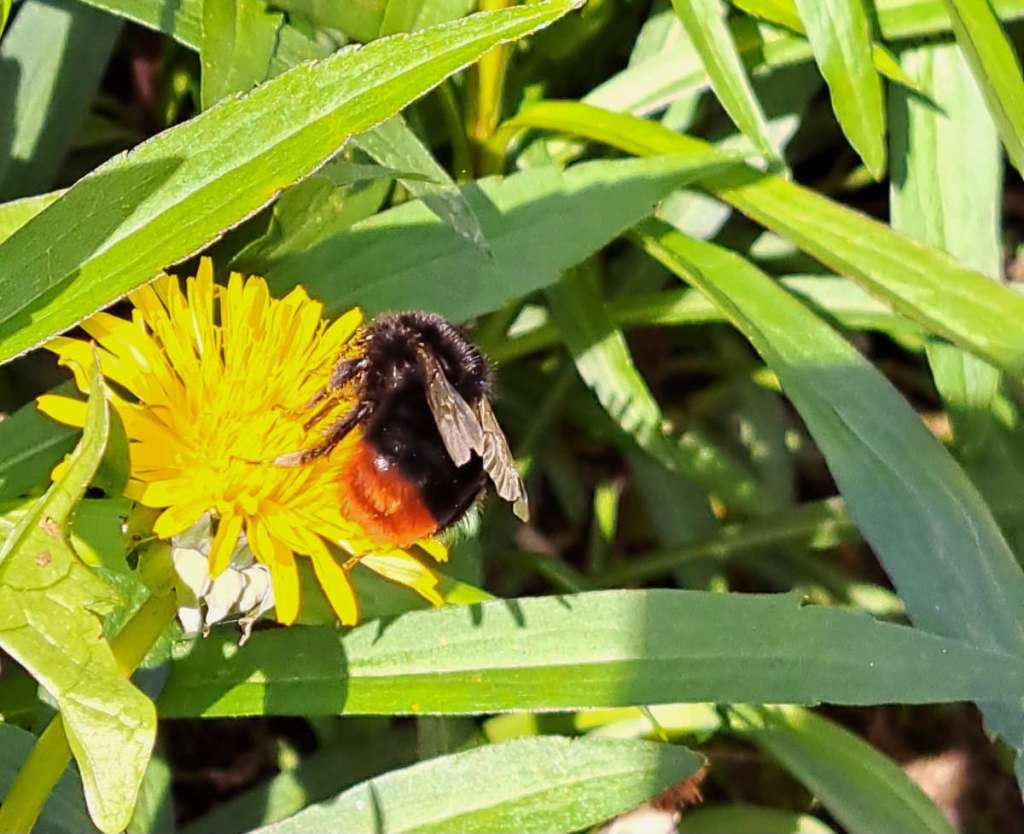
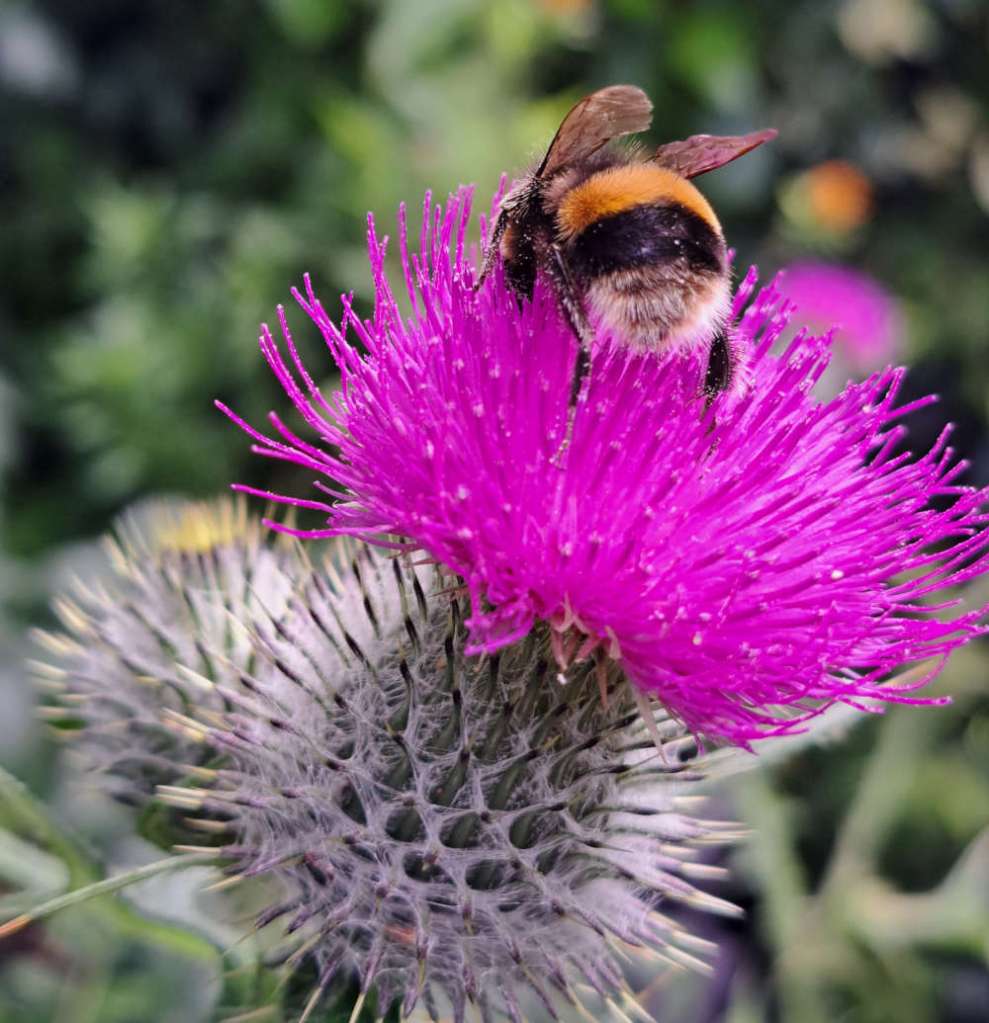
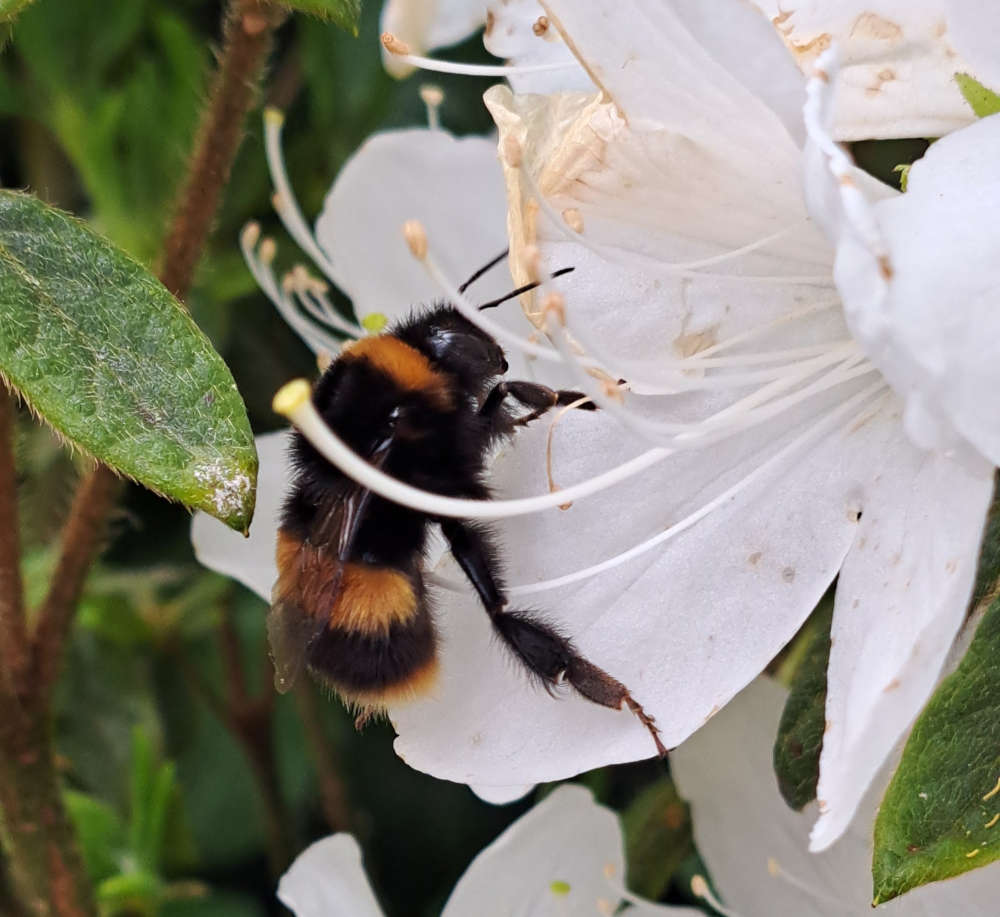
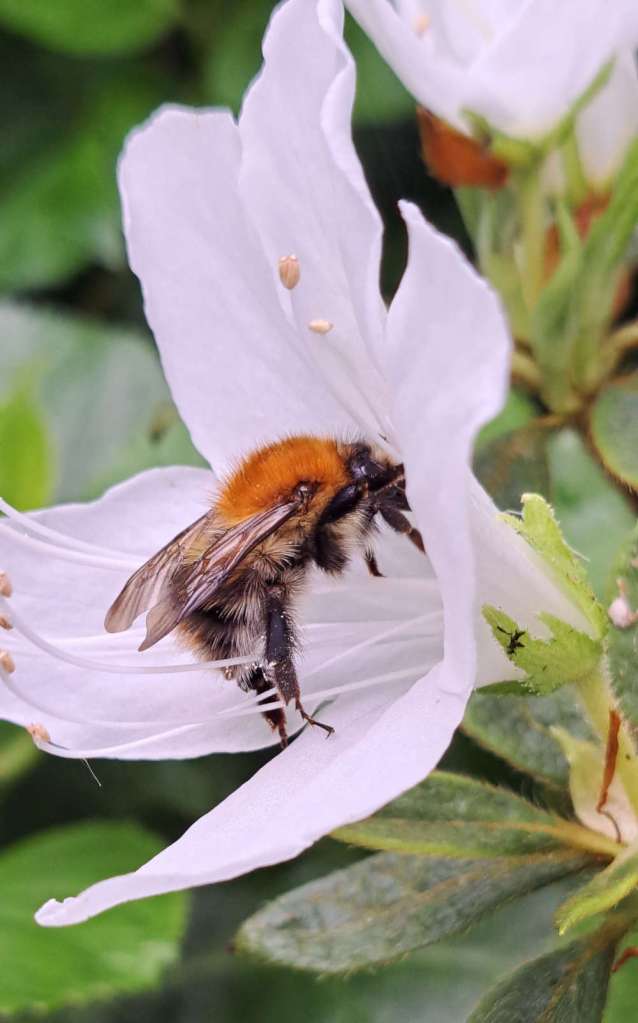
Thankfully the garden is already alive with bumblebees, so nice to see the pollinators.

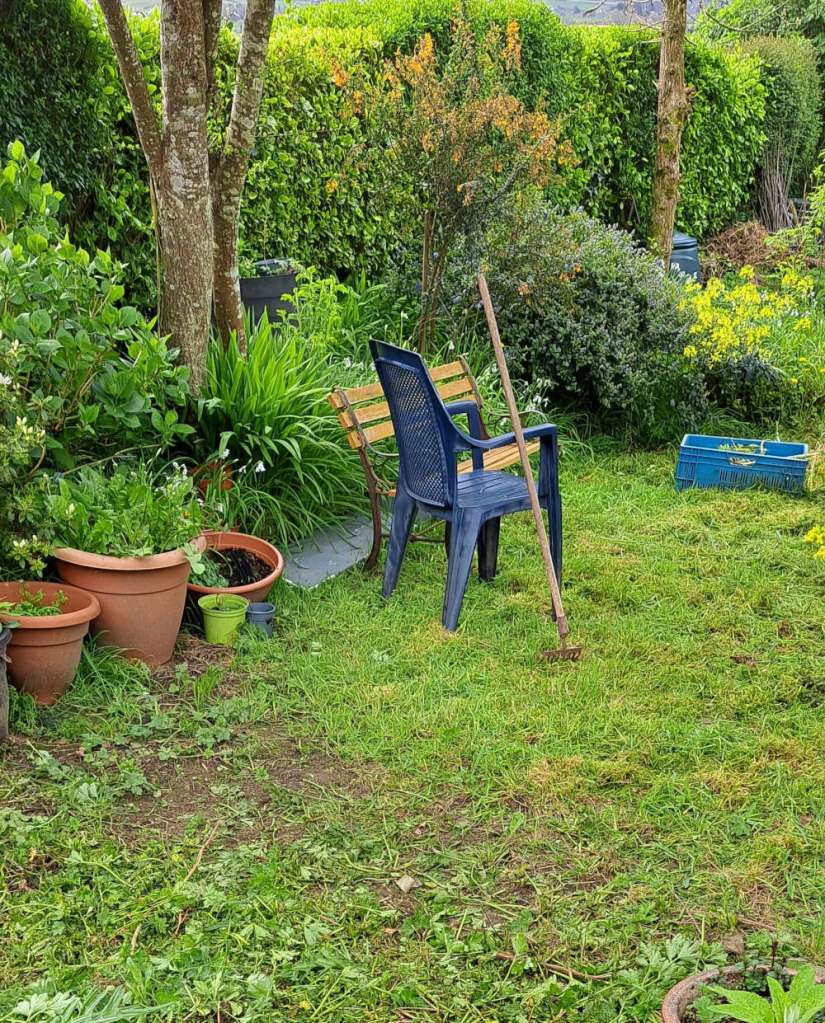
My garden is an adventure, an experiment, a place of observance, a real joy, where I find solace in this chaotic world.  It is a place where I feel good, relaxing on the bench under the hawthorn tree, cup of tea in hand, listening to the birds singing, or just soaking up the sunshine. 

OPPORTUNITY FOR ADVENTURE

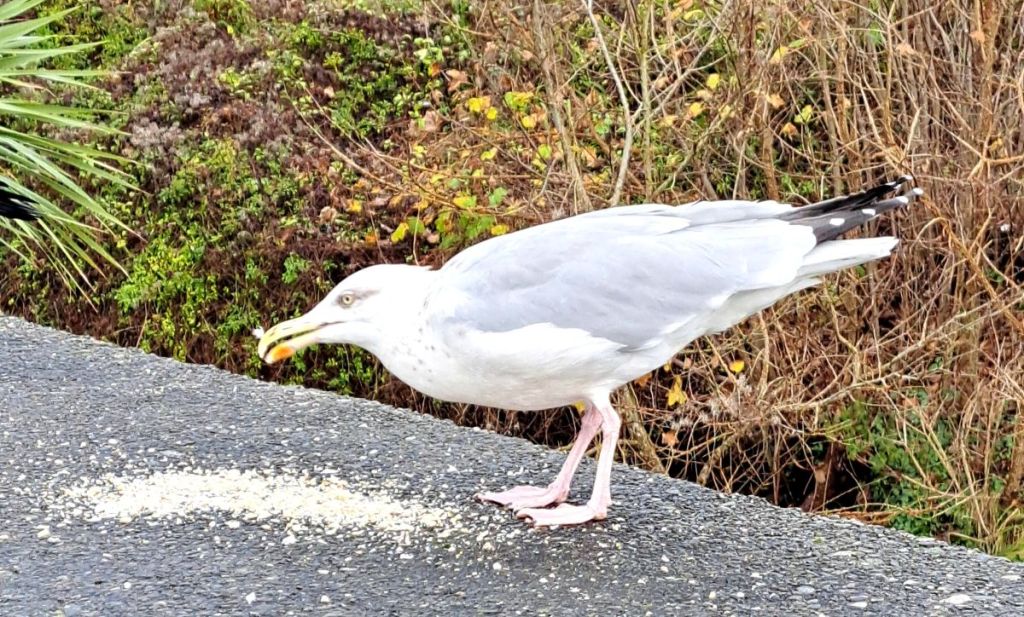
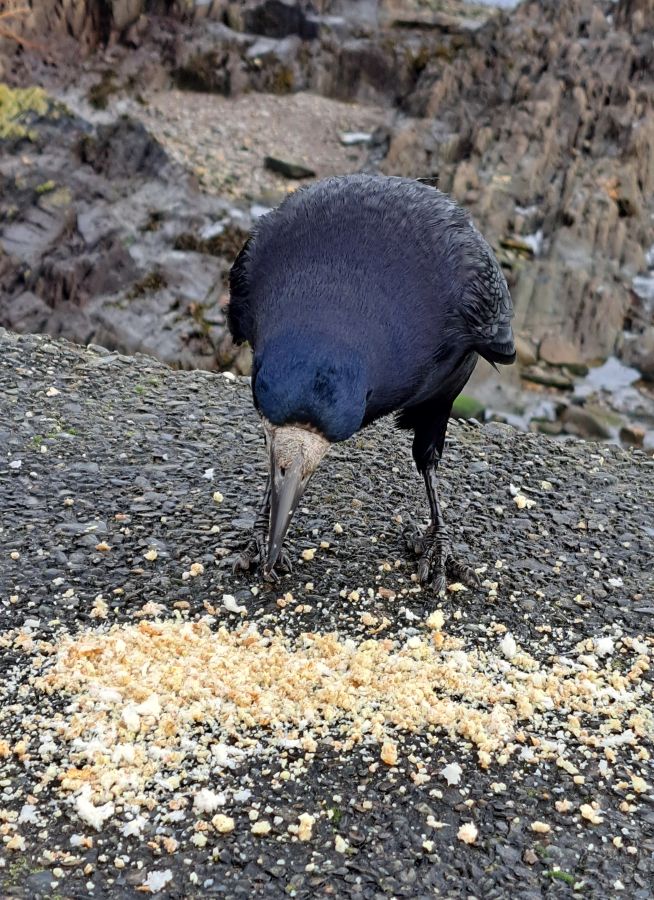
While seagulls and other sea birds fly in the wind to the sound of their own piercing keow, and the crow family fight them for the food that an elderly man is putting on the sea wall, I stroll past them on my way to the coast walk in beautiful Schull.  They, the birds, don’t bat an eyelid and continue their fervent snatching and feeding. The man never looks up, so intent on his dedication to the birds.

It is a sunny but very windy winter’s morning.

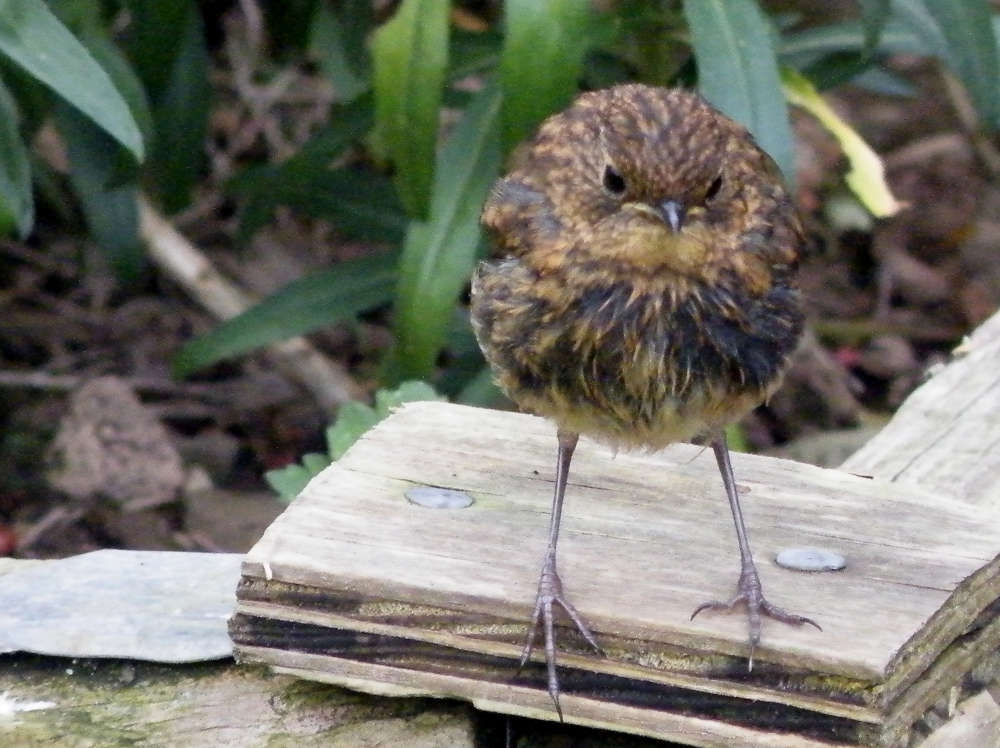
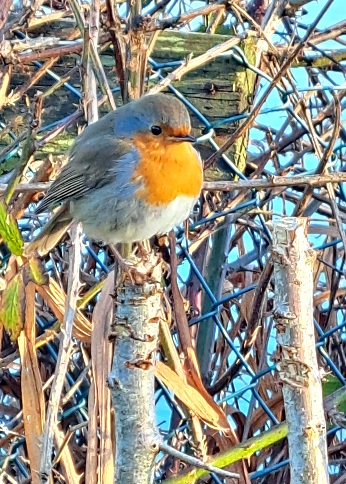
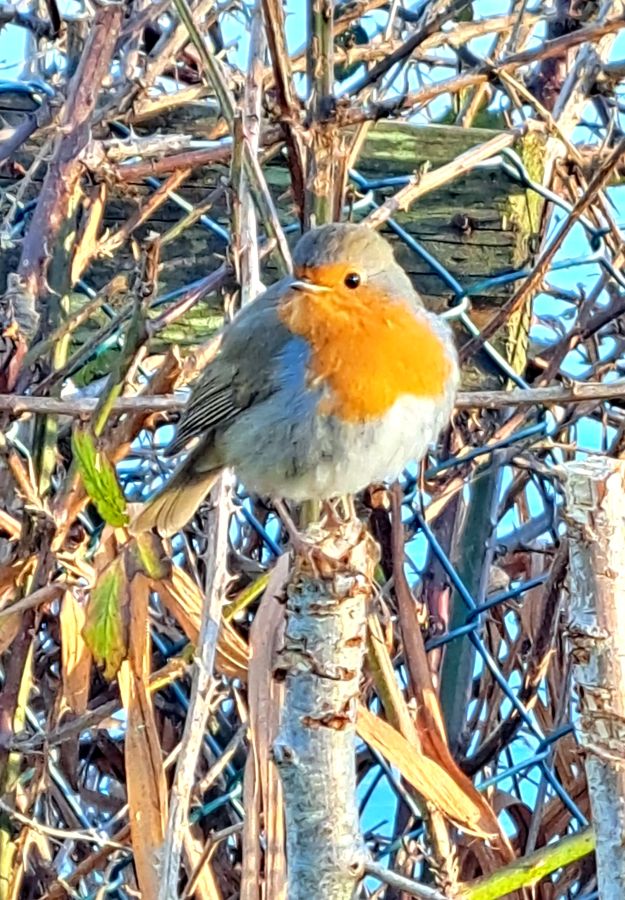
I’ve just past the path where a robin took my attention, it came up close and was making some sounds but not singing, that started later.  It was the most beautiful little creature, its colours vibrant, this got me thinking that it was a male bird and that the mating season is not far off.

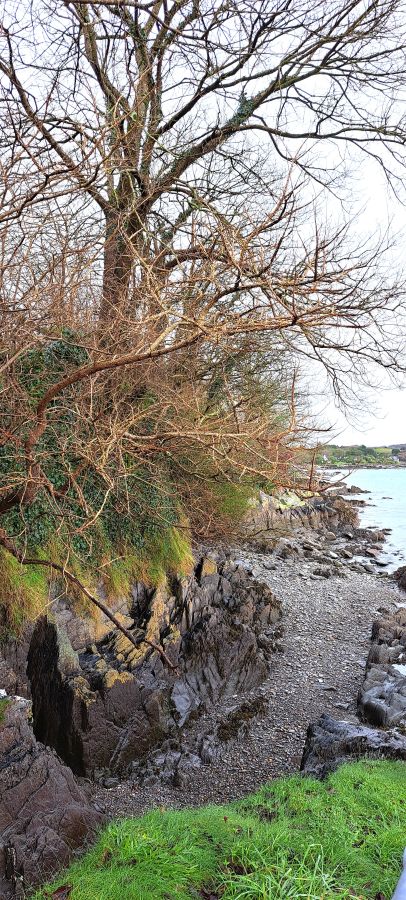
What fascinates me on this path are the trees.  Ever since I did a short course last year on tree identification during the winter season, I keep wondering what this or that tree is called.  I can recognise the obvious ones of course, and now I know an ash tree when I see one, its seeds, winged samaras or keys hanging down from twigs with black buds give them away.  Seeing that we have a fair (but not huge) amount of trees here in West Cork, I’m thinking of taking a further course in tree identification as it’s fun to recognise what we learn.

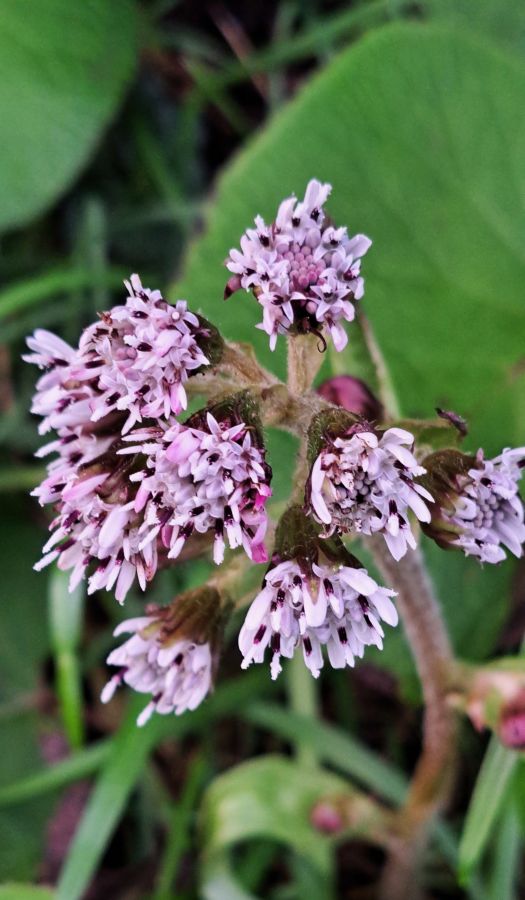
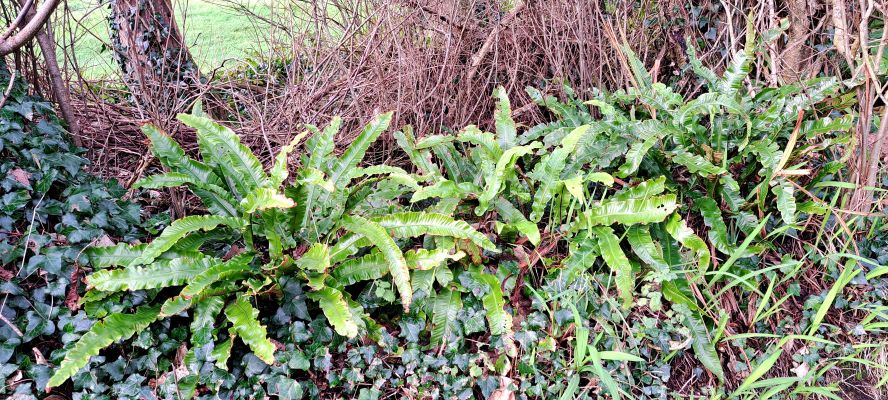
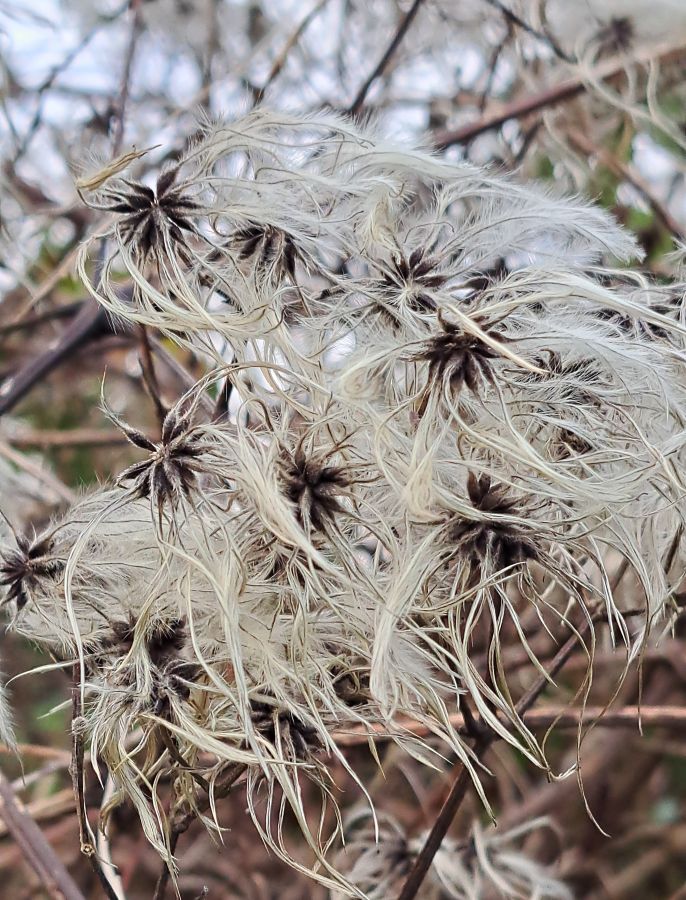
Celandine leaves, and here and there the yellow of the flowers are already to be seen, as are a more plentiful sight of winter heliotrope plants in flower, their pink breaking their greyish leaves along the path.  Ferns and old man’s beard are plentiful along this walk, as is ivy covered in thick berries.

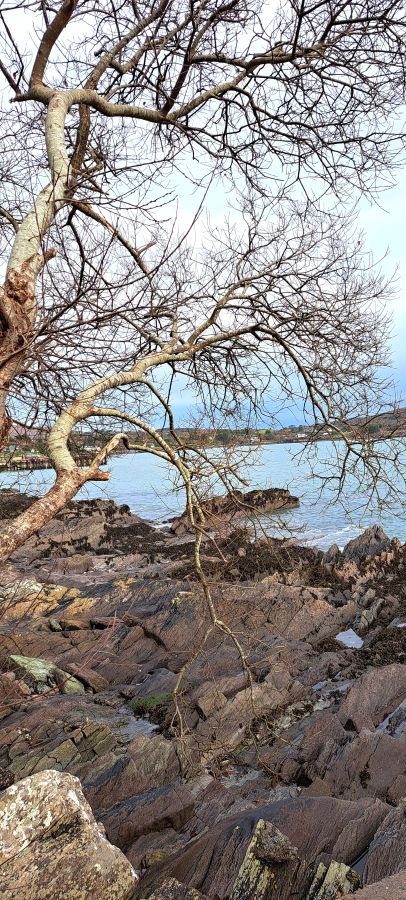
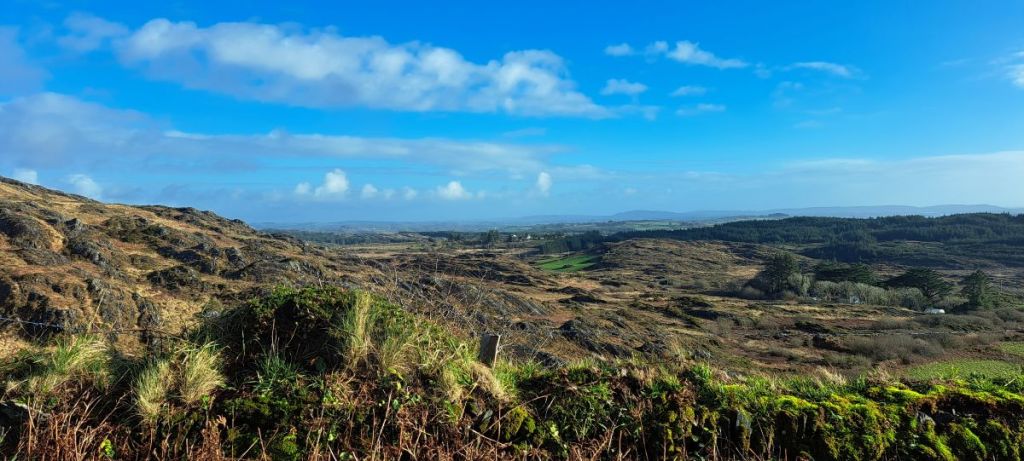
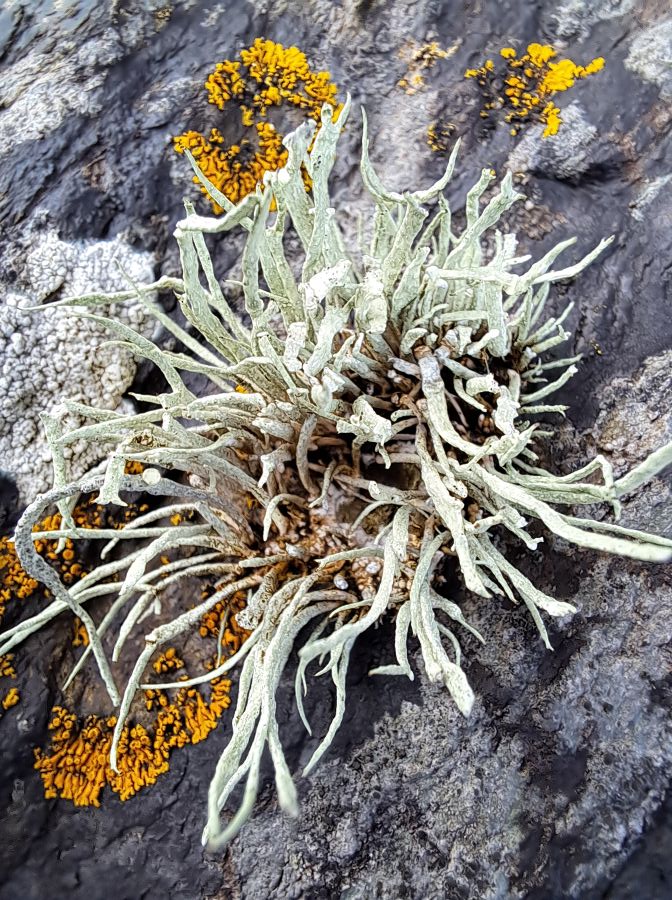
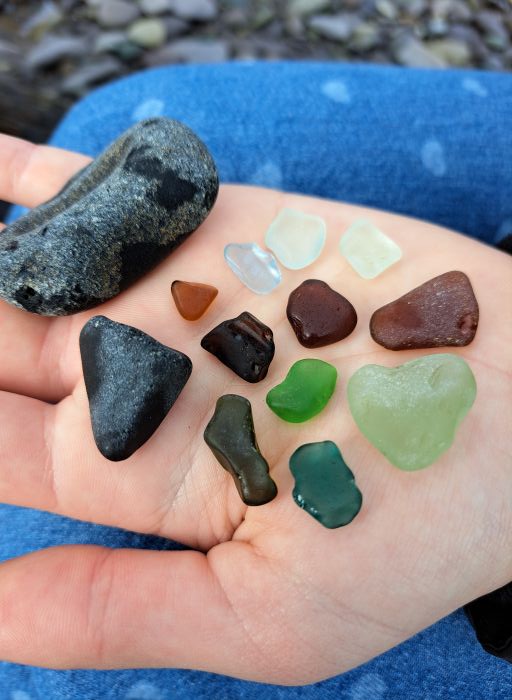
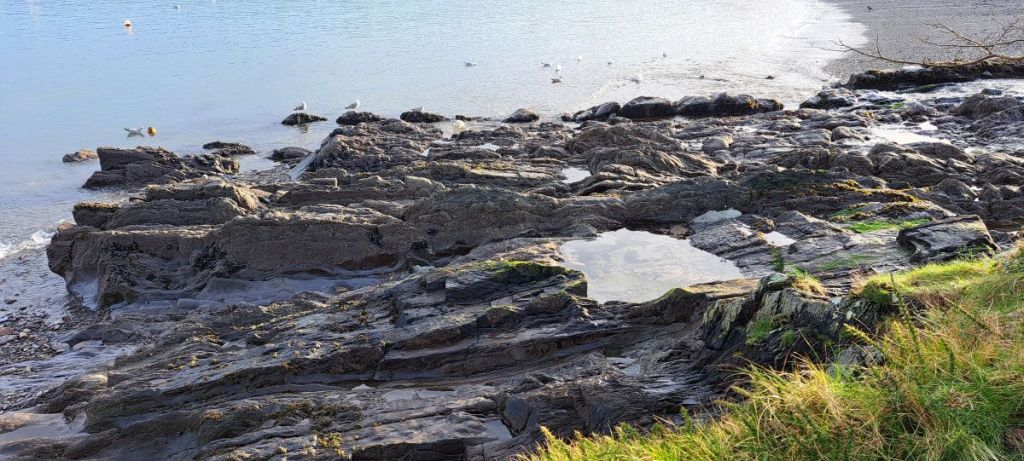
Walking further along the coastline, there is plenty to see, the rocks are covered with interesting lichens, as well as seaweeds, and sea glass can be found.  The rocks themselves Devonian mud and sandstones, look dark and some of them are quite jagged but some are really smooth.

The sea here is part of Schull Harbour which opens onto the Atlantic Ocean, where it is studded with a variety of islands.  During the calmer months the harbour is a lovely sight with all the yachts and plenty of activity.

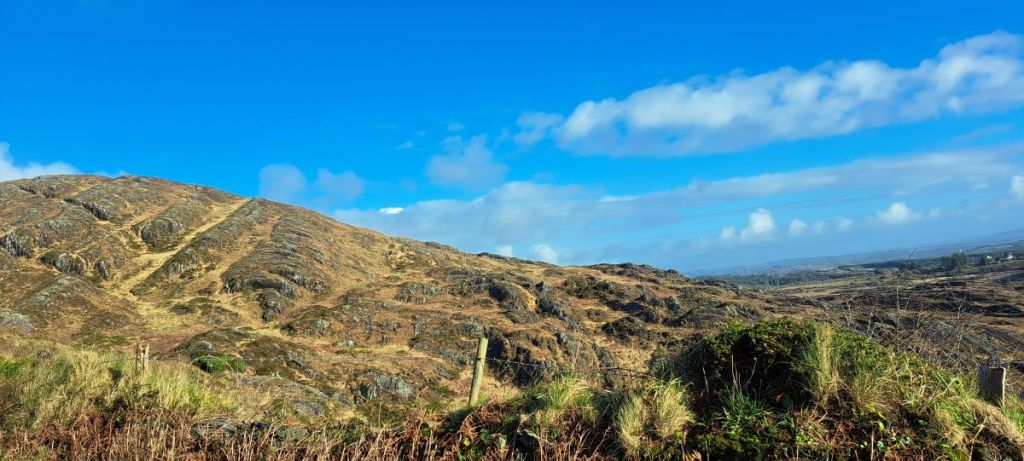
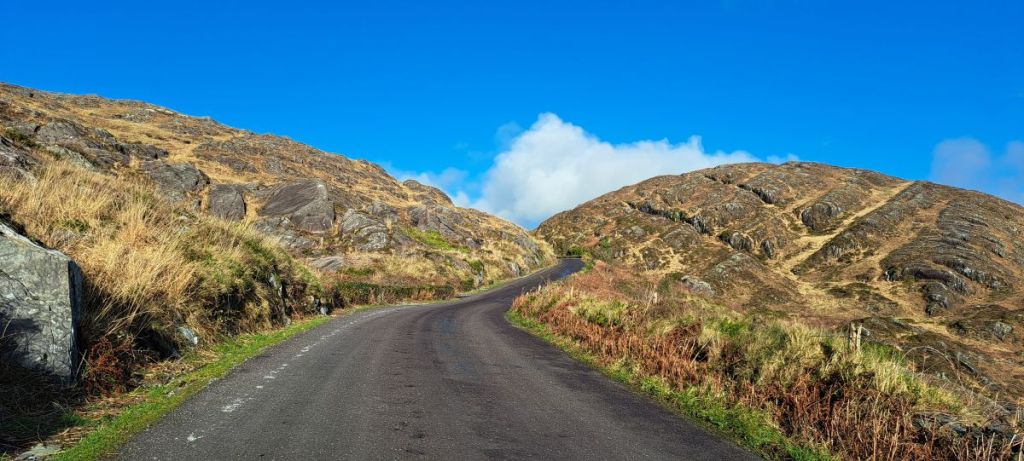
Mount Gabriel overlooks this whole area, it is a hill 407 m high. Two radar domes are to be seen on top, they monitor civilian aircraft in parts of Ireland’s air space.  Recently I have travelled along the western side of this mountain on the way to Bantry, I drove through the Barancleeve Gap along which is where archaeological evidence of extensive copper and barite mining operations during the Early to Middle Bronze Age is found.  I would like to explore.  And looking at my map I have just discovered a few more little roads in the surrounding area which might be of interest.

Barancleeve Gap

Memories of the area… Once, when I first came to Ireland with my family, I spent a year in Cork city as an au-pair, and the family took me with them for a month’s holiday to Crookhaven.  I still have wonderful memories of that time, all I had to do was walk the toddler to Barley Cove beach and entertain him.  It is there that I discovered coral and the bleached skeletons of sea urchins, and walking along the roads I noticed many wild seaside plants.  Crookhaven is about 23km from Schull, it is a peninsula and has a very rocky shore towards the top end facing the Atlantic, looking over this view, it was an amazing sight, and very invigorating as strong winds blow relentless there.

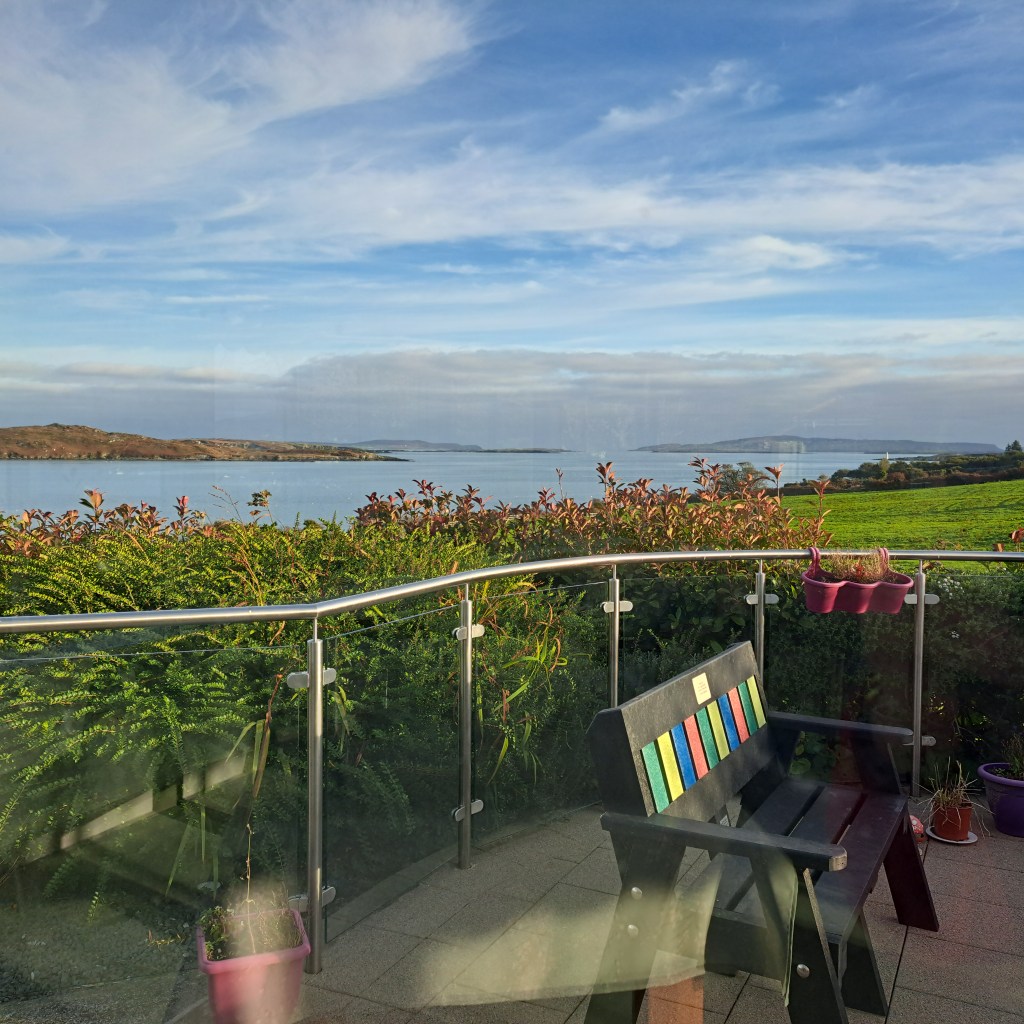
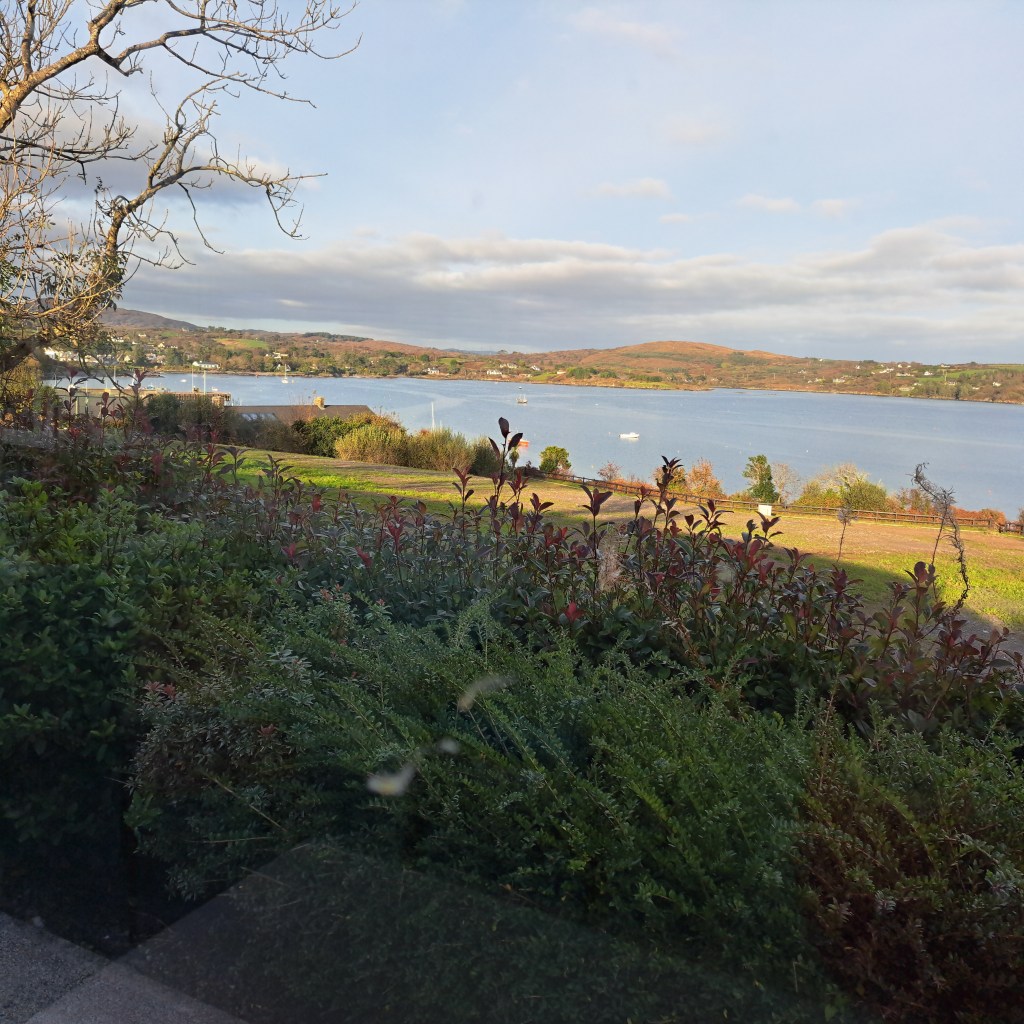
Views from the nursing home which is situated at Colla road in Schull and is a lovely place.

Seeing that I have the occasion to travel to Schull twice a week to visit Ian in the nursing home, which also lies along this coast line and has lovely views overlooking Schull Harbour, I’m spoiled really with a wealth of interesting walks and great photo opportunities. And with spring and summer coming up I look forward to this, map in hand and Google for research as a stand by. There is lots to discover I think, and I will take full opportunity of combining both seeing Ian and discovering this amazing landscape and what it has to offer.

THE GARDEN AFTER FROST

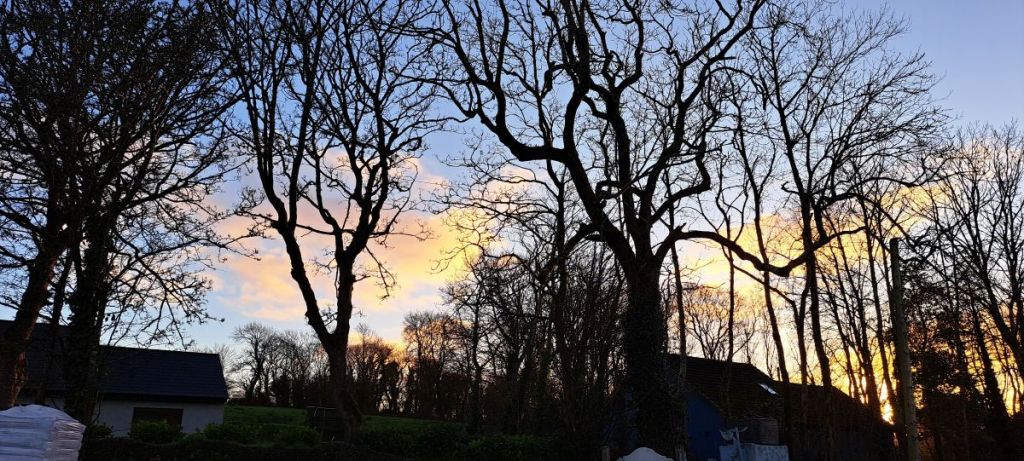
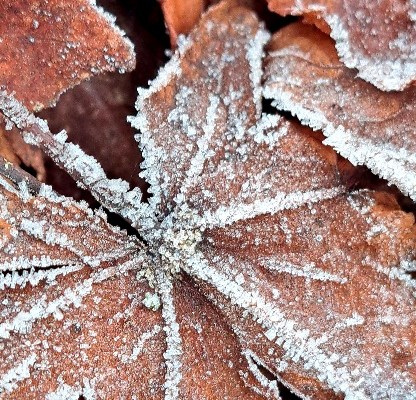
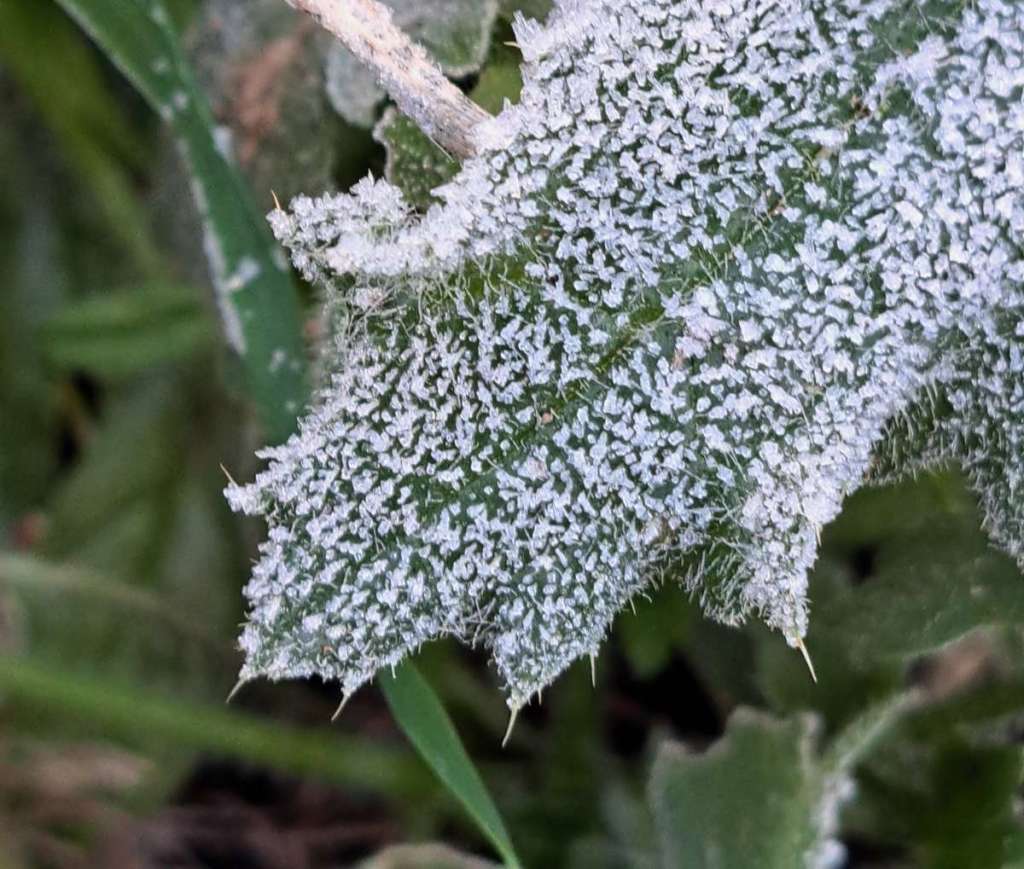
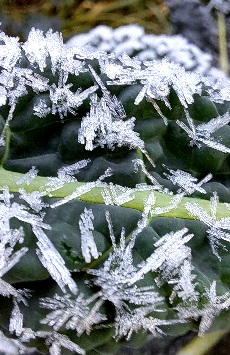
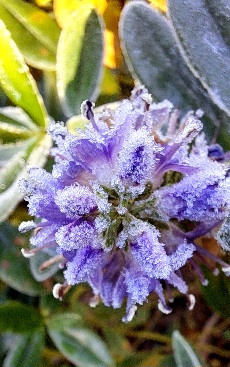
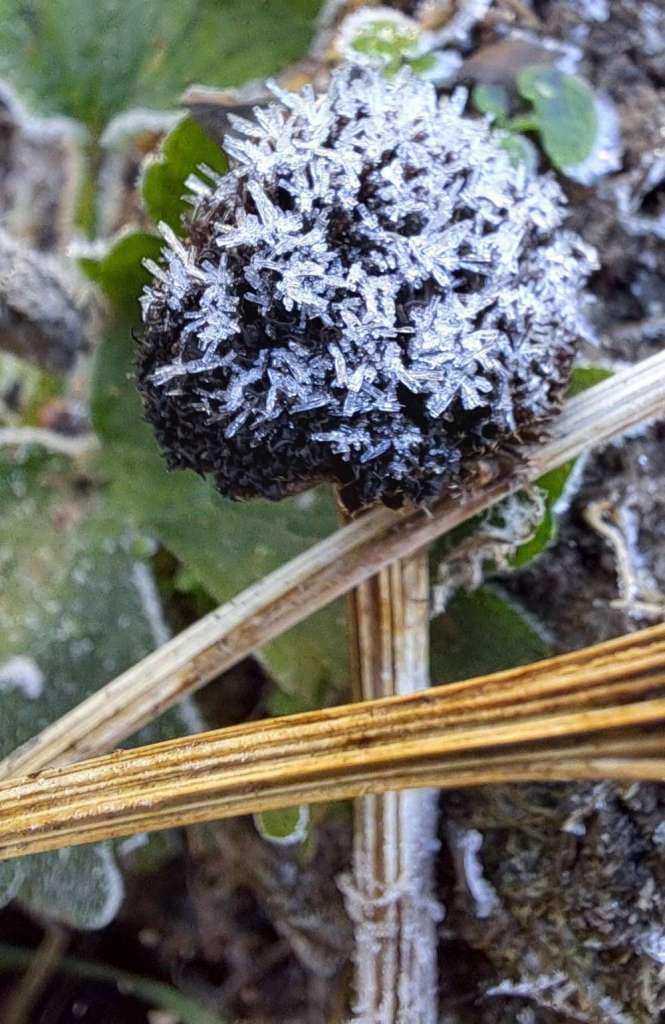
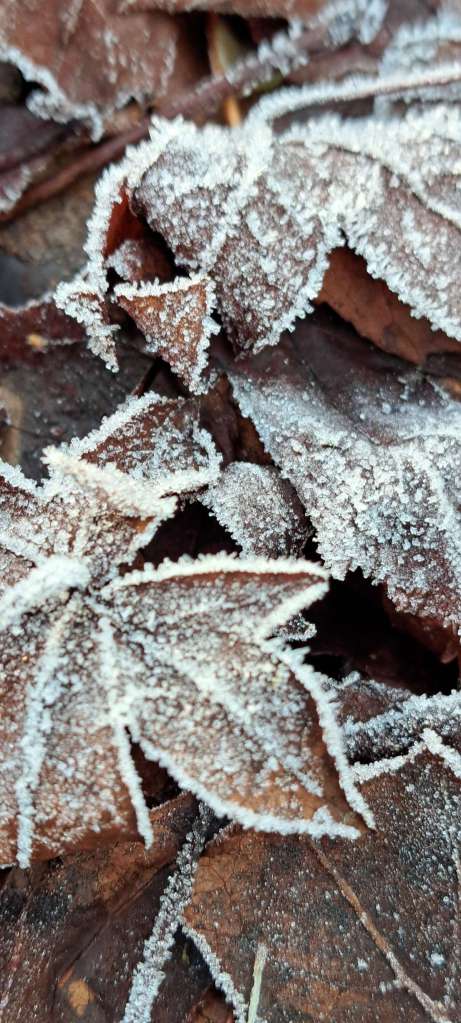
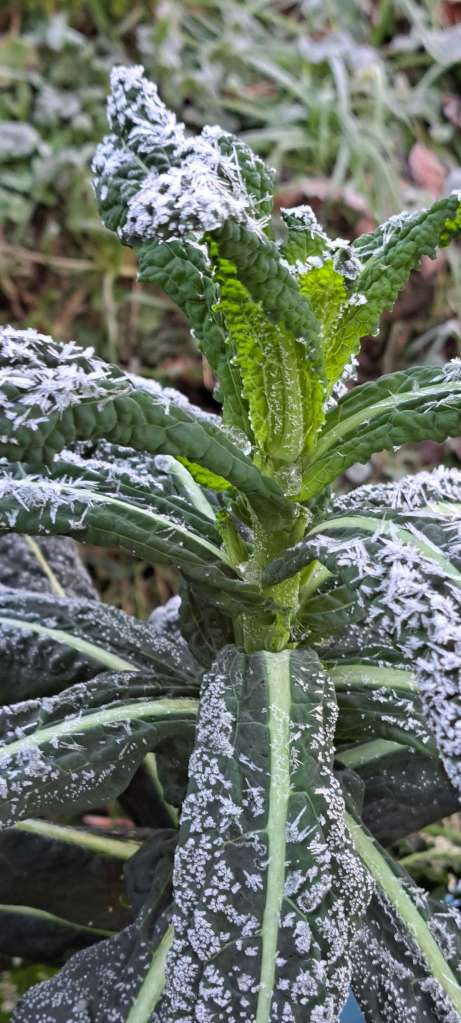
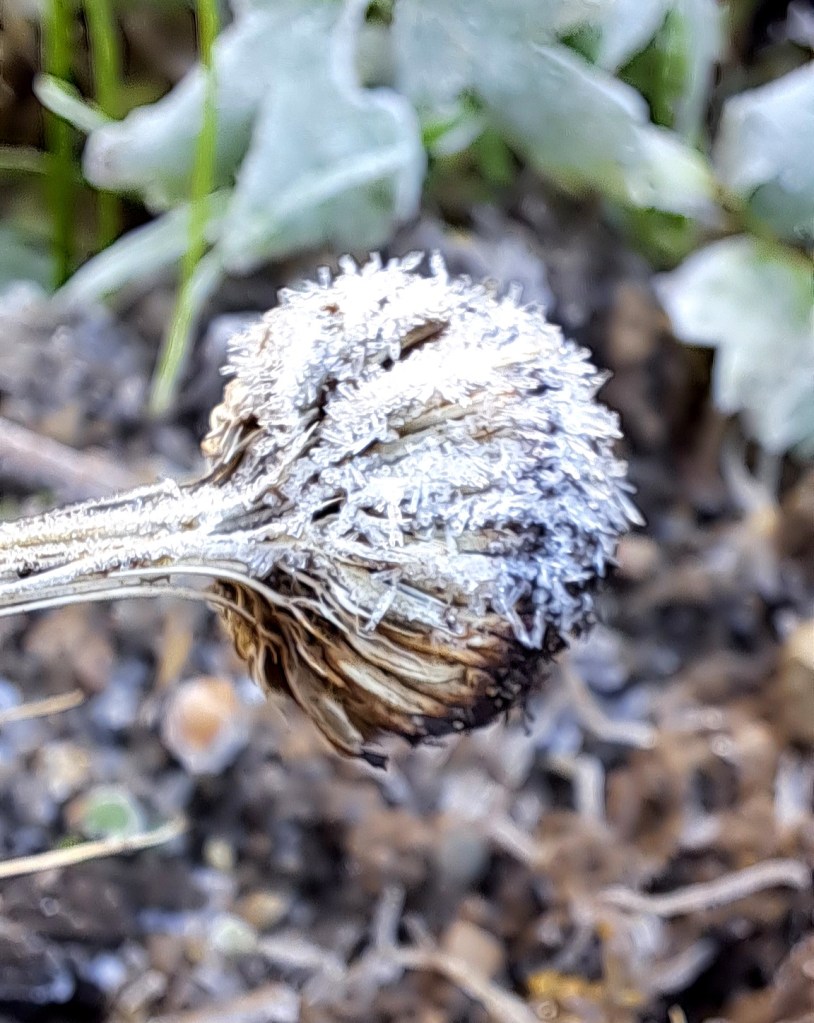
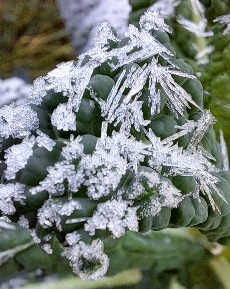
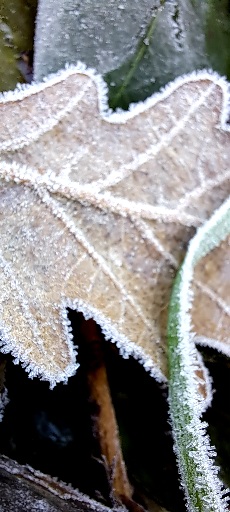
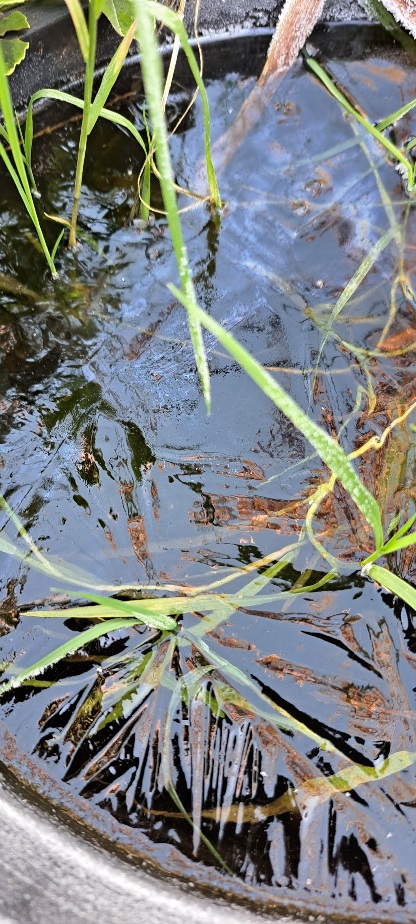
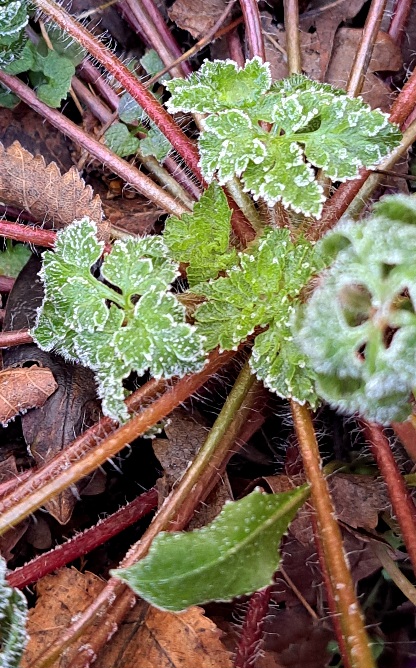
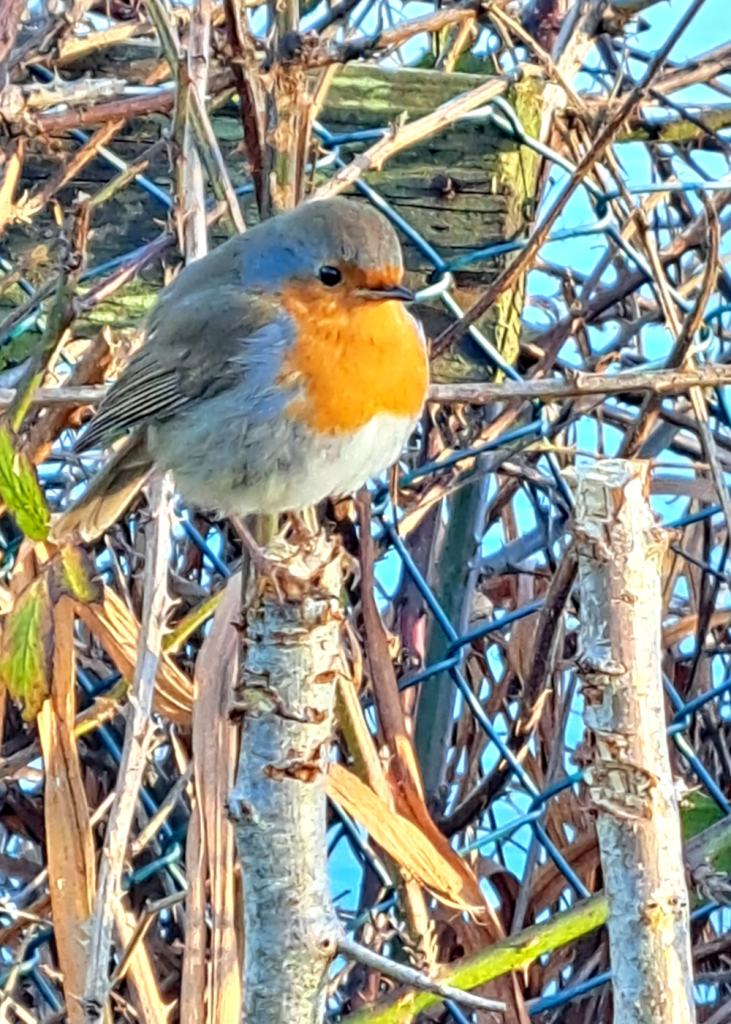
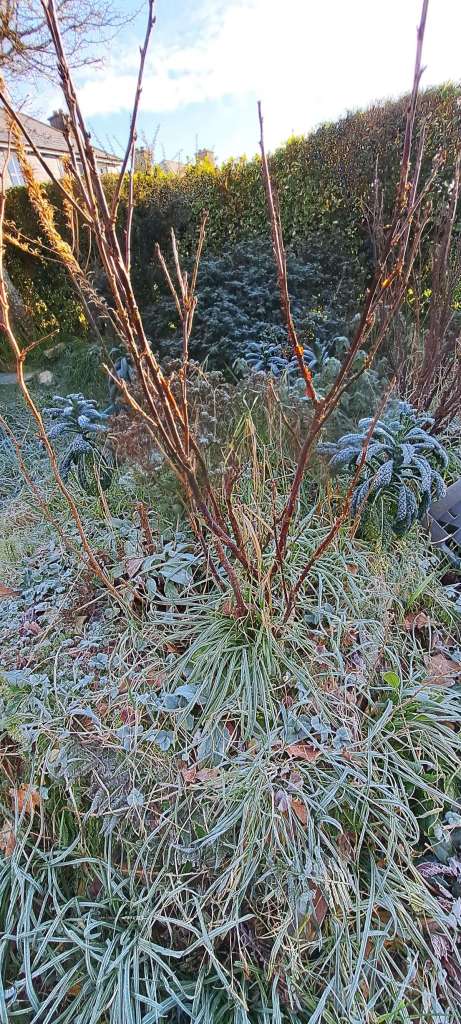
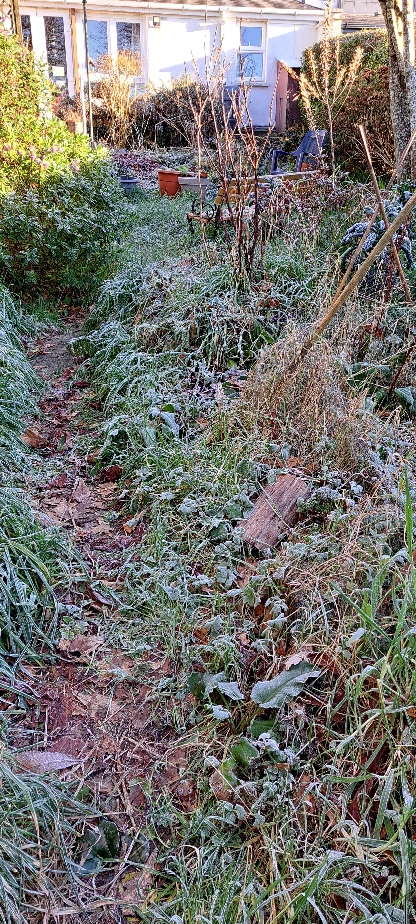
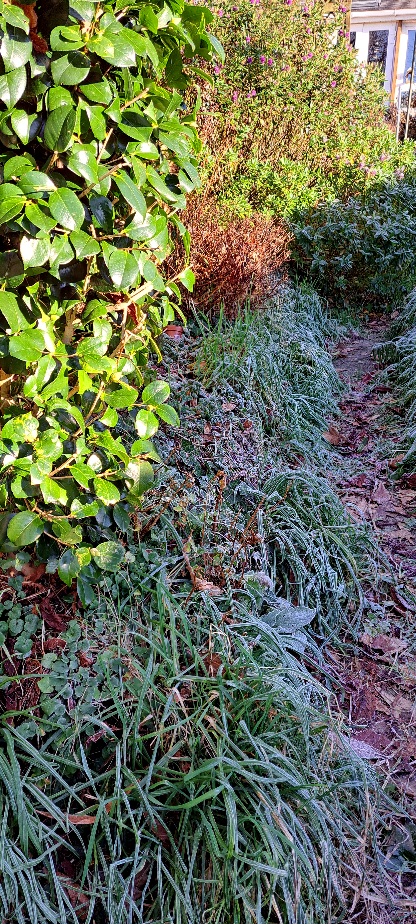
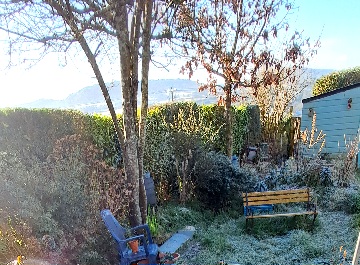
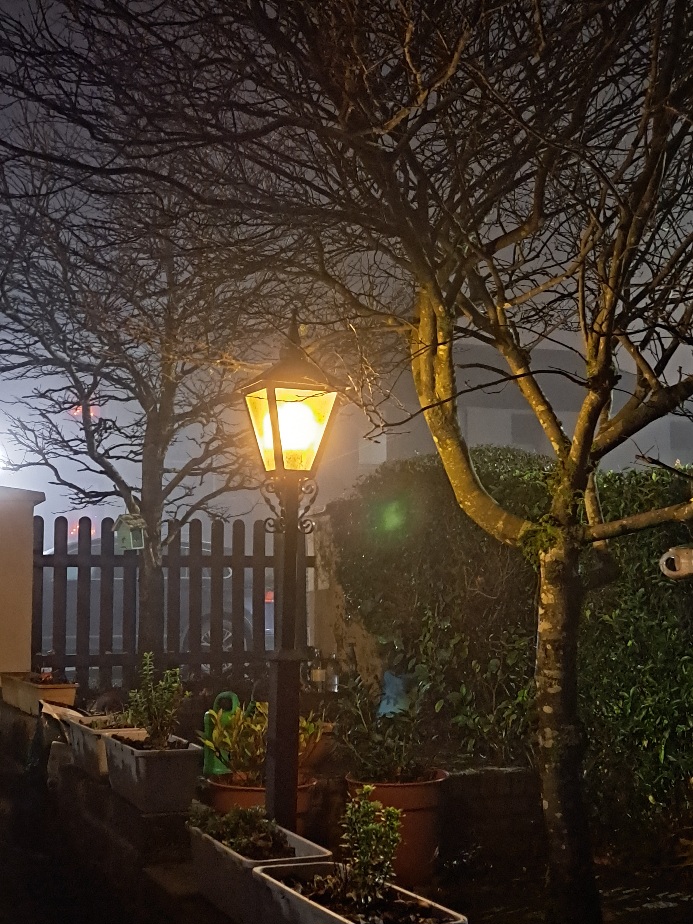
Yes, Jack Frost has been paying West Cork, as well as the rest of Ireland, and I believe other parts of Europe too, a nightly visit. That in the middle of it I ran out of heating oil through my own lack of attention is beside the point. I was able to solve the problem very quickly thanks to a loyal plumber and heating oil providers. This did not take awake from the beauty which greats me while attending to some domestic chores like emptying the kitchen waste into the compost bin at the end of the garden. I could not resist taking some photos at least. Meanwhile a little robin has been coming closer all winter and even sang to me the other day, how totally lovely.

And what I would really like to do this year is to make my garden into a lovely space, that is nurturing to the soul, a space where my family, friends and myself can rest and find quiet and peaceful admiration for nature. And a space for wildlife, where bees and other pollinators enjoy all the flowers and find nectar. Where birds can build their nests and sing their hearts out, for a mate when the time comes. I’ve had up to five goldfinch everyday feeding on the seedheads of the Evening Primrose, such a wonder. The usual bird population is fine this winter, I’m taking part on the survey again. The chaffinches are definitely down, the sparrow count is up. There is only one dunnock whereas there have been two for years. The wren is our resident bird, as are two blackbirds, a couple. Everyday there is now a Pied Wagtail feeding in the front garden, a first for our garden. Of course the robin is always there, but some years there are two, so far there is only one, I read that the males come feeding earlier than the females so I hope that the female is still on the way. It is nice when a robin comes up to you and it feels like they are really trying to communicate with you, and when they then start to sing so close, that is wonderful!

I wish you all a peaceful, joyful, healthy and happy 2026, enjoy!

THE BATHOUSE – BAT CONSERVATION

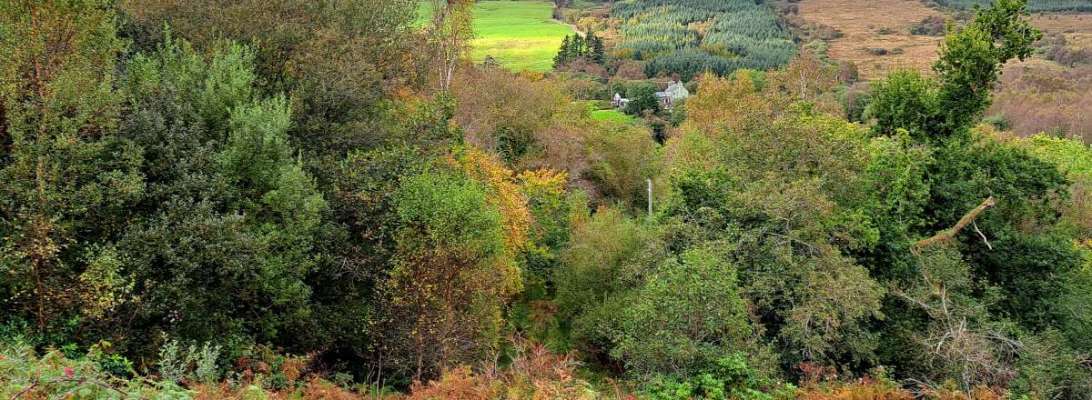
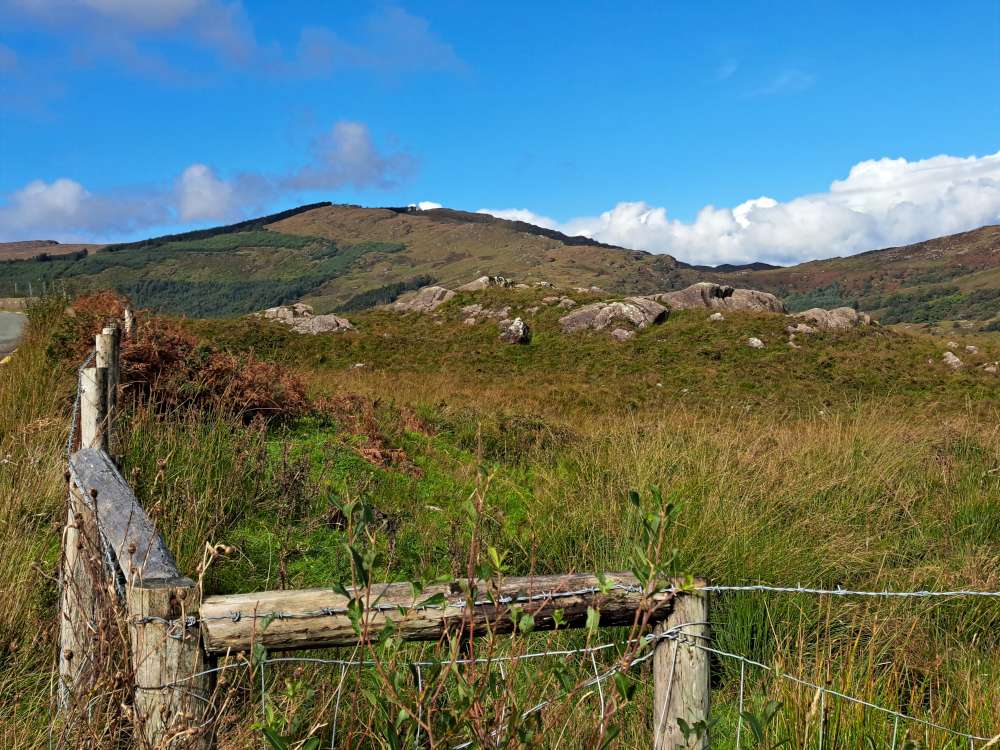
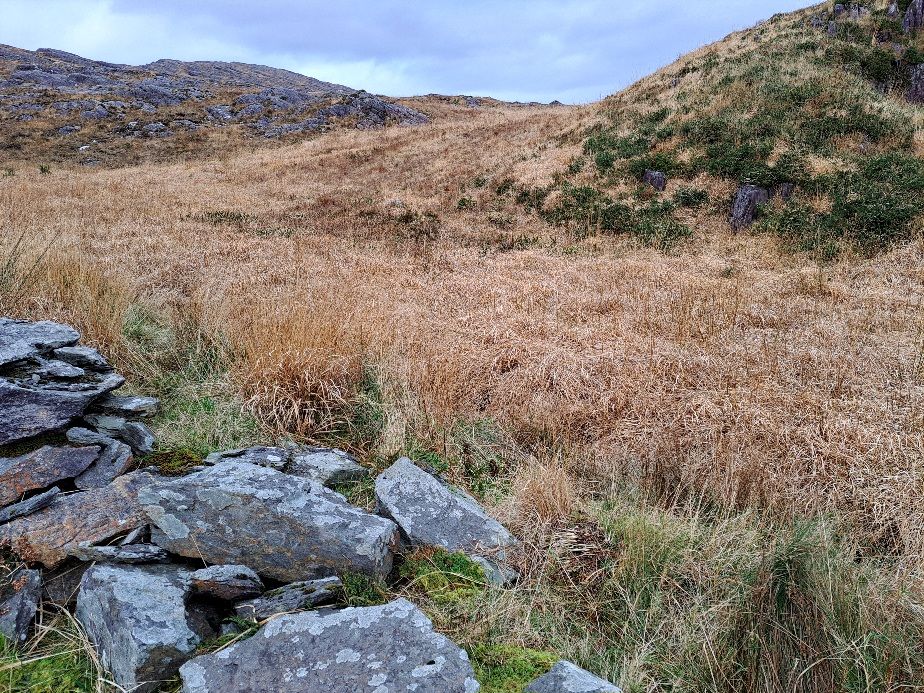
Along the road, somewhere in county Kerry I recently did a discovery. While on one of my journeys I stopped to take autumn photos and also to take a look at this cottage. I had often wondered while passing who would have lived there long ago, and why the people left, and where did they go, maybe across the sea to America as a lot of Irish people emigrated there in the late 19th or early 20th century. Anyway the house is boarded up but still looks in good repair. It is nestled among beech and other native trees, now beautifully coloured, and it looks out down the valley with hills in the distance. Some of the land is bog-like with a variety of grasses and sedges, some rocky outcrops and low bushes, and lots of bracken, beech and birch trees, a mixture of colour at this time of year.

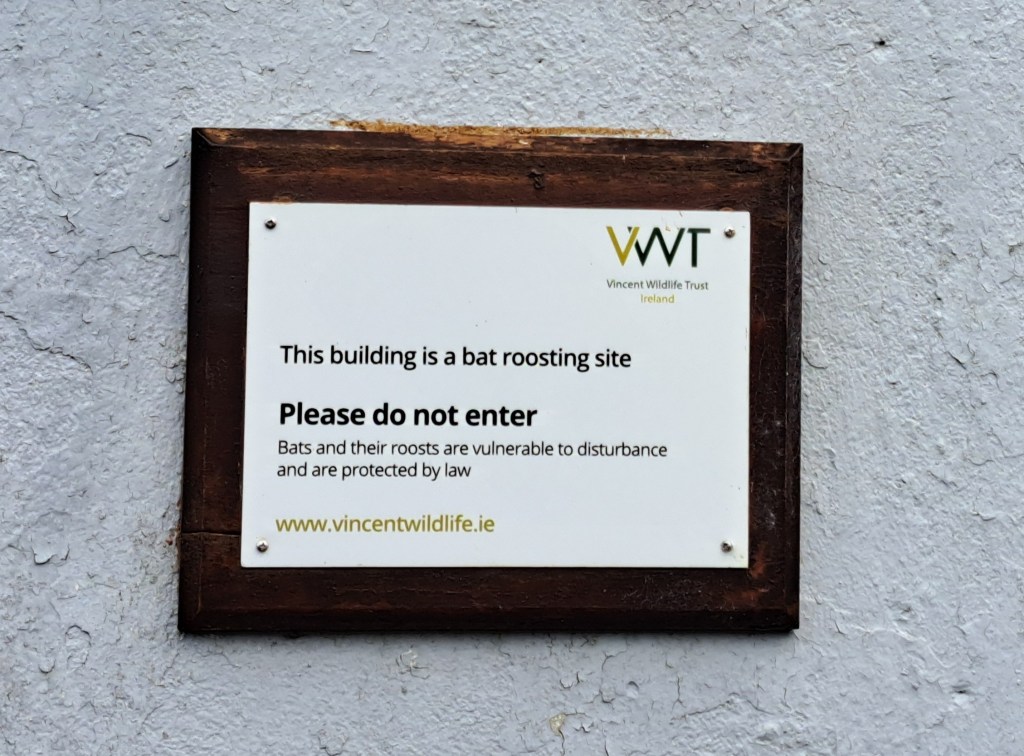
To my surprise I found a notice fastened to the wall of this cottage, it happens to be a roosting place for bats, and in particular for the lesser horseshoe bat. An organisation covering both Ireland and England called the ‘Vincent Wildlife Trust’ has a long and successful history of establishing and managing reserves for rare bat species. It manages 37 sites in Ireland, England, and Wales, all of which are roosts of the greater or lesser horseshoe bat. In Ireland, the Trust manages 12 reserves for the lesser horseshoe bat. And so this cottage has been put to very good use.

Website: Vincent Wildlife Trust Ireland | Managing Bat Reserves

The beautiful surroundings and peaceful countryside is a great place to let the bats find their space and hopefully continue to survive.

The landscape during autumn

Futher reading: https://vwt-production.ams3.digitaloceanspaces.com/uploads/VWT-Ireland/Resources/Lesser-Horseshoe-Bat-Species-Action-Plan.pdf

It was a great discovery, seeing how much effort is put into conservation of native wildlife.

CATCHING UP – TAKING STOCK

It is time for a bit of stock taking, and for catching up with many friends and followers of my blog.  Personally the year 2024 has brought many changes, some challenges, some sad, and some good.  Worldwide it’s been a sad and chaotic year too I think.  Many of us have asked ourselves serious questions about our general humanity, our deeds towards our fellow human beings.  A lot of good has been happening too during this past year, a lot of compassion has been shown, and brave and good people have shown to be always around. 

I visit Ian, my husband, in the nursing home every week, something we both look forward to very much.

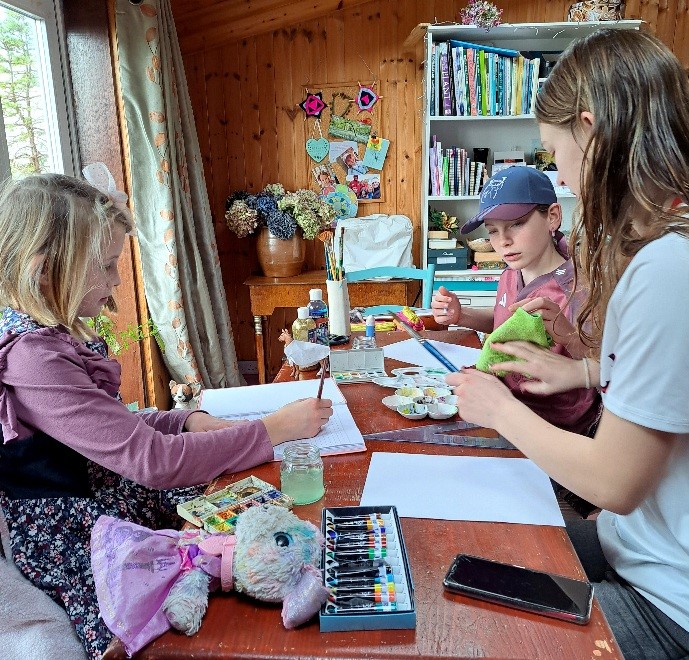
And now January is almost over and I’m still organizing my activities inside the house and out in the garden, and in society.  Lots to do, all good things.  During the winter I’ve availed of webinars and zoom meetings a lot.  Webinars about grasses and rushes, and other natural subjects.  Regular zoom meetings of a lace making group.  And an introductory course in tree identification.  Collage making or painting with my grandchildren is very rewarding too. Locally there have been meetings of the Early Retirement Group which has fabulous and interesting (mainly) other women as members and a good program, one of the things we do is a weekly chair yoga session which keeps us all quite flexible.  Then the monthly book club and the poetry circle are such a joy, as are the very regular and hugely interesting art exhibitions.  Skibbereen has it all.  There is simply not enough time to do it all.

And then there is the weather which during winter can be quite challenging, storms, heavy rain, frost, the type of weather that makes you want to crawl behind the stove with a good book.  Christmas and New Year celebrations seem to have come and went in a flash this past year.  The dark days are now getting a little lighter and soon it will be the first of February, for Ireland that heralds the beginning of spring, it is also the feast of St.Bridgid and has now become a public holiday.  And so…. I’m chitting my potatoes to have them ready for planting in March.  My garden is still my focus a lot of the time.

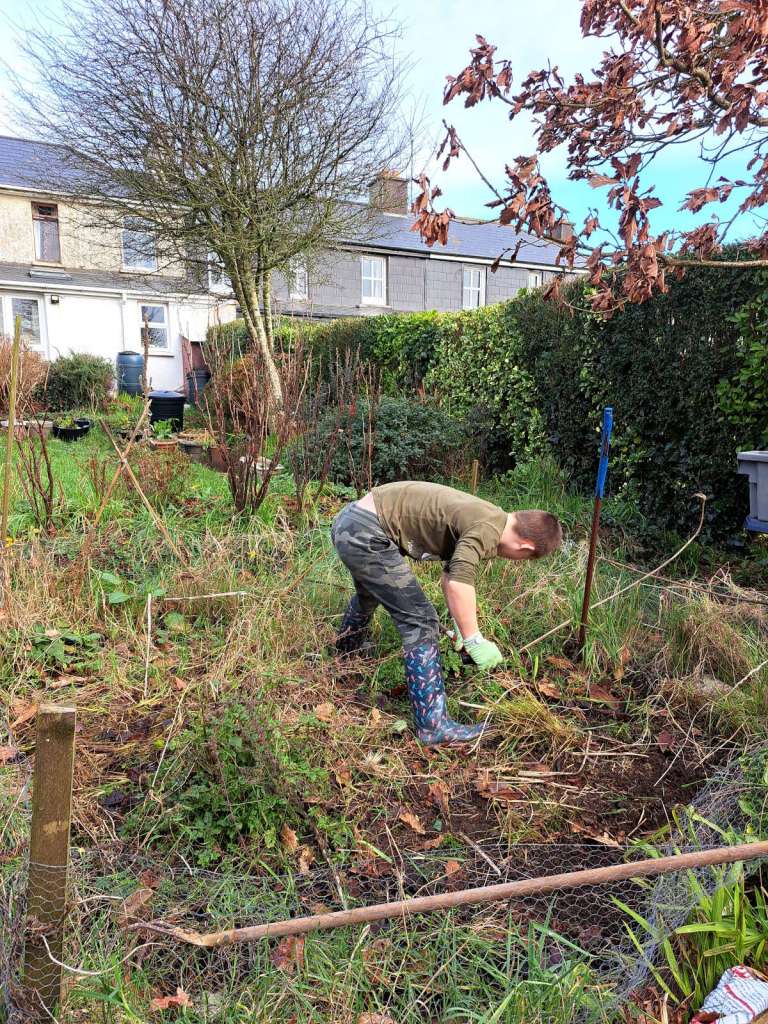
This coming season my main big plan for the garden is to plough up half my little grass field so I can plant more vegetables.  For the past five years I have added more and more shrubs because I had much less time to garden and thought it was the better way.  This meant that I now have less and less space for vegetables.  So space will have to be made.  My grandson Ruben who is now a strong teenager and very willing to help me has already cleared one plot in the back of the garden, he wants to do more.  We are great mates and I love him coming over and working alongside me, and afterwards we have pizza and watch a movie.

Luckily during the last storm none of our trees suffered, we have seven trees in a small garden.  We live in a terraced house and the garden is relatively small.  Ours are a birch, oak, chestnut, hawthorn and elderberry, and in the front garden, a currant tree and an acer.  Our hawthorn tree was affected by blight last summer and lost all of its leaves, we’ll see what happens this year.  The chestnut had been trimmed five years ago and has some rot in an outshoot and that will need looking after. 

Gardening and planning a garden, as many people know very well, is a great joy, and keeps us fit, it’s also hard work at times, but that can be done in part, an hour here and an hour there on a daily basis, weather allowing of course (I’m a fair weather gardener).  To be out in nature is such a joy, the fresh air, the scents, sounds, and seeing the growth is all delightful and will keep me going for ever.  The observation possibilities of seeing insects, birds, wild plants and herbs growing, as well as tasty vegetables and trying out new types.  And then there is the digging up of potatoes and the harvesting of edible produce, how much better can it get  I think it satisfies one of our most basic instincts as humans, that of survival. 

Not being sure what 2025 will bring for us all, I wish many blessing for each and everyone.

Loving thought to all.

WINTER LIGHT AND COLOURS

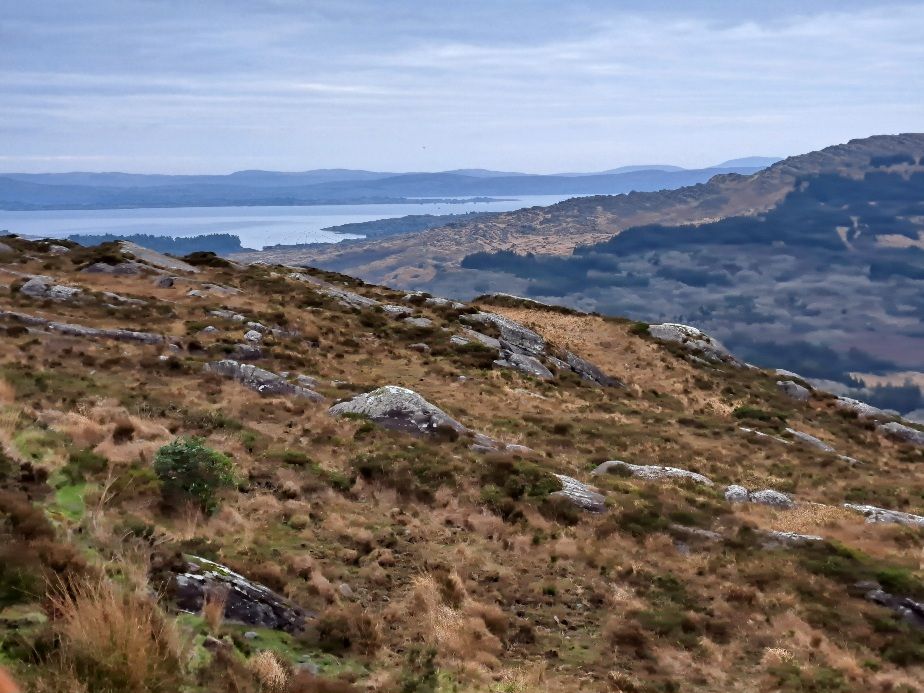
Travelling through the Caha mountains during winter I find that there is plenty of interest to see and get excited about even just along the way. While some of my drives are taken in bad weather conditions, heavy mist, rain and or wind, most of the time I’ve experienced dry and also regularly sunny weather.

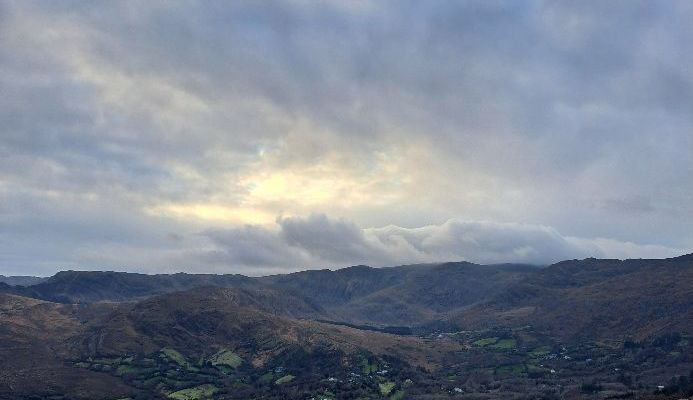
Most of all, this winter I find the skies fascinating. The colours, subtle, in pastel pink, light blue, ashen grey or radiant white, and even as if with a magic brush, diffused streaks of periwinkle purple. I’ve seen it all in skies over the Bantry Bay, over the Caha mountains and over the Glengarriff valeys. Ever changing skies with light of a beautiful quality. It certainly holds the attention of the traveller. These days I drive home when the sun is setting, adding another marvel of light, the setting sun, often spectacular!

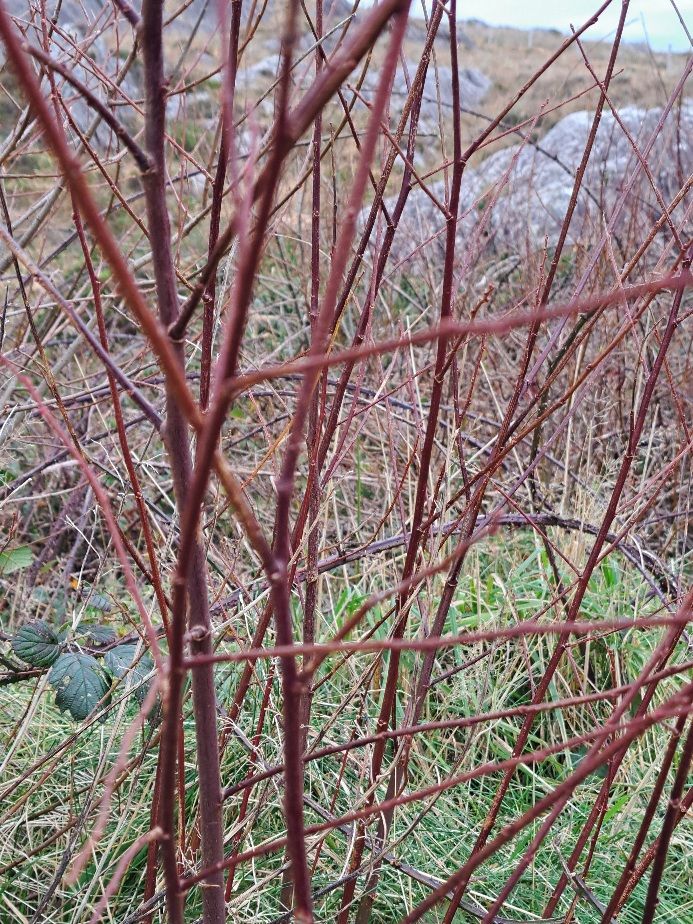
Looking down into the valley there is a whole palette of different browns, beiges and forest greens. A true feast for the eyes. As can be seen in the photo below Glengarriff National Forest has a lot of birch trees growing, and apart from their stark white trunks, their branches are particularly beautiful at the moment. Every time I pass clusters of them I try to think how to name their colour, a type of maroon, or a vintage wine, or does it look more like an English lavender, burgundy, gothic mulberry or umbral umber. It is hard to pinpoint exactly the colour of those branches, and it also depends how the light shines on them and how the rain brightens them.
Birch trees in the distance

A variety of other branches, among them the deep red of the dogwoods is always very nice in a landscape, and so is the drama of the bleached grasses, rushes and sedges covering whole stretches of hillsides with cream blonde colours or even rusty browns.

Darkness falls early these days, painting the landscape mainly in moss green, dark brown or black, though the mountains in the distance do give us some mauve. The landscape changes constantly, it is very noticeably when driving higher up, clouds throwing huge shadows over the valleys interspersed with stretches of sunlight. As I said there is a lot of interest even in winter on my journey. Probably much more to discover yet and that leaves me with a feeling of ever more excitement.

I came across two photos of winter foliage recently, these are paintings of the Danish painter Peder Mork Monsted, (1859-1941) from his ‘Winter’ series. I thought it shows the colouring of the birch trees beautifully and rather well. I think his work very nice. (Referenced from Gallery of Art) with thanks.

OCTOBER SUNSHINE

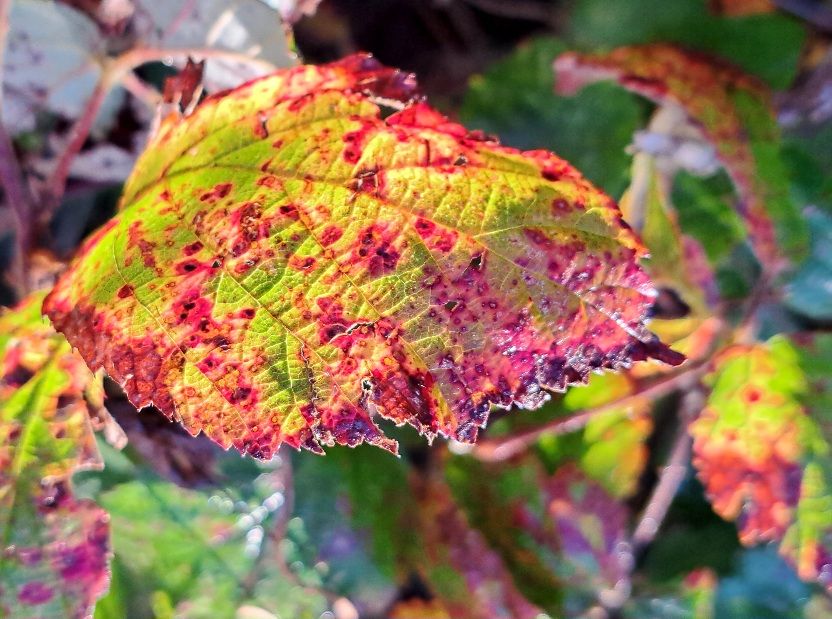
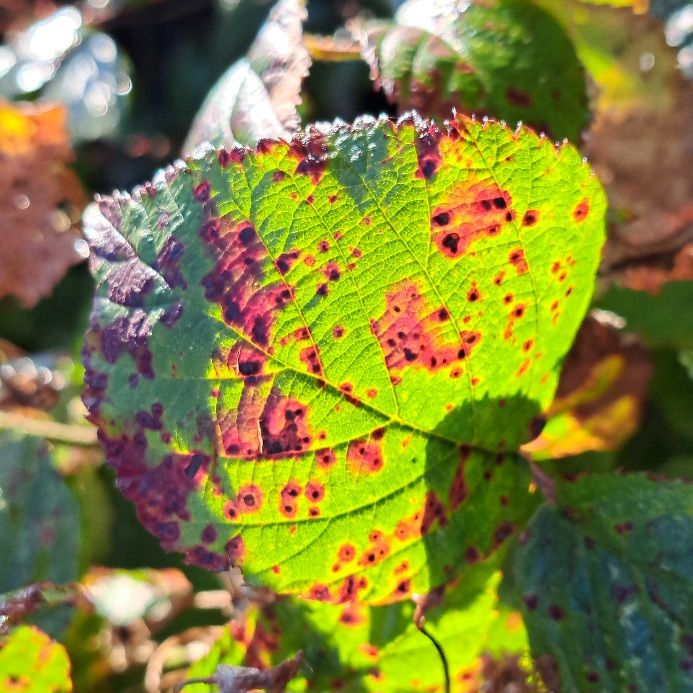
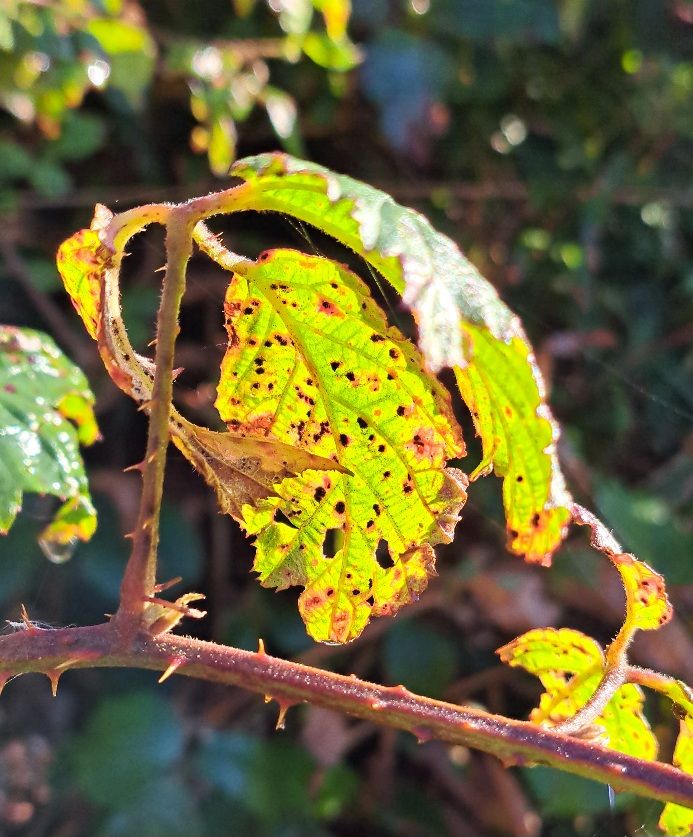
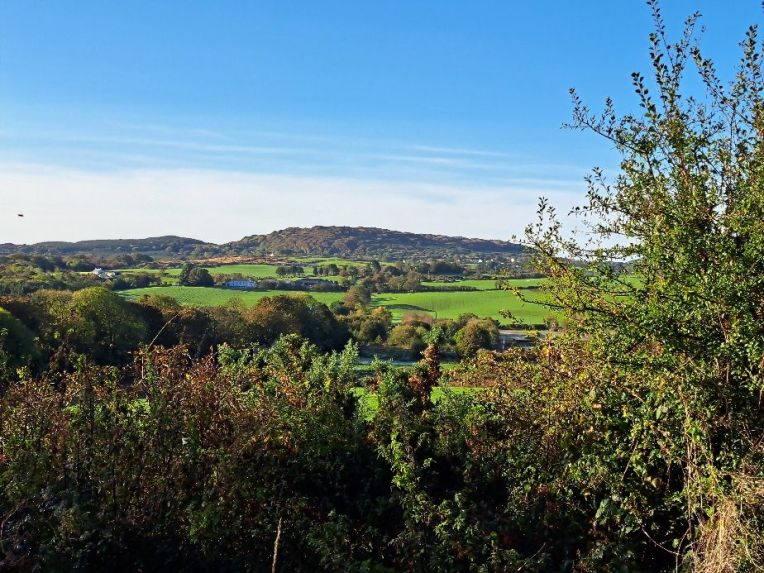
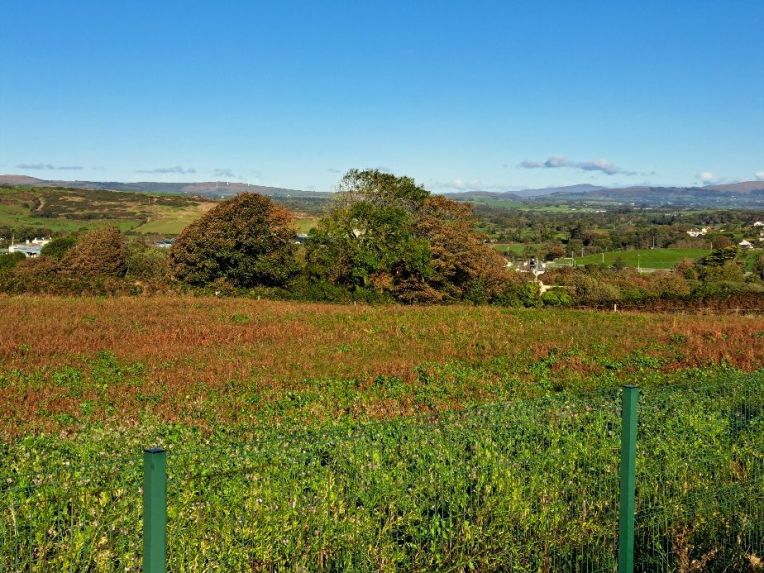
What a most beautiful autumn sunshine at the moment here in West Cork. After an incredible display of the Aurora Borealis last night, we woke up to a little bit white frost, nature has had a lot to offer this morning which I discovered during a much desired walk on the path to Russagh Mill. It’s one of my favourite walks, this path overlooks a long valley, still lush and green in the distance. Closer by I especially noticed the sunlight on the blackberry leaves lighting up their earthy colourings.

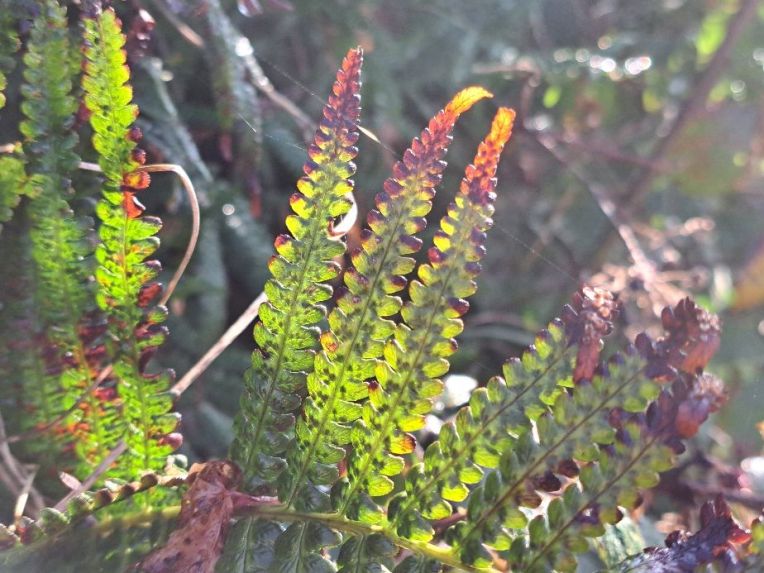
This walk also has many shaded areas with lots of ferns. The shade is created by the trees, mainly ash, willow, hawthorn, and other species too. In fact I discovered a new tree which had escaped my notice in the past. When I looked it up on my phone it turned out to be a White Willow (Salix alba), one of its common names is Golden Willow, I like that! A fact I’d like to share about this tree is that “Its inner bark – raw or cooked can be dried, ground into a powder and added to cereal flour, then used in making bread etc. It has a very bitter flavour, especially when fresh, and it is used as famine food when all else fails. The leaves and young shoots are not very palatable and used only in times of scarcity. The leaves can also be used as a tea substitute.” My Flora Incognita got this information from Wikipedia as far as I know, so that is my source of my information I want to acknowledge. I wonder if this tree was every used during the potato famine here in Ireland. Below is a photo of the said tree.
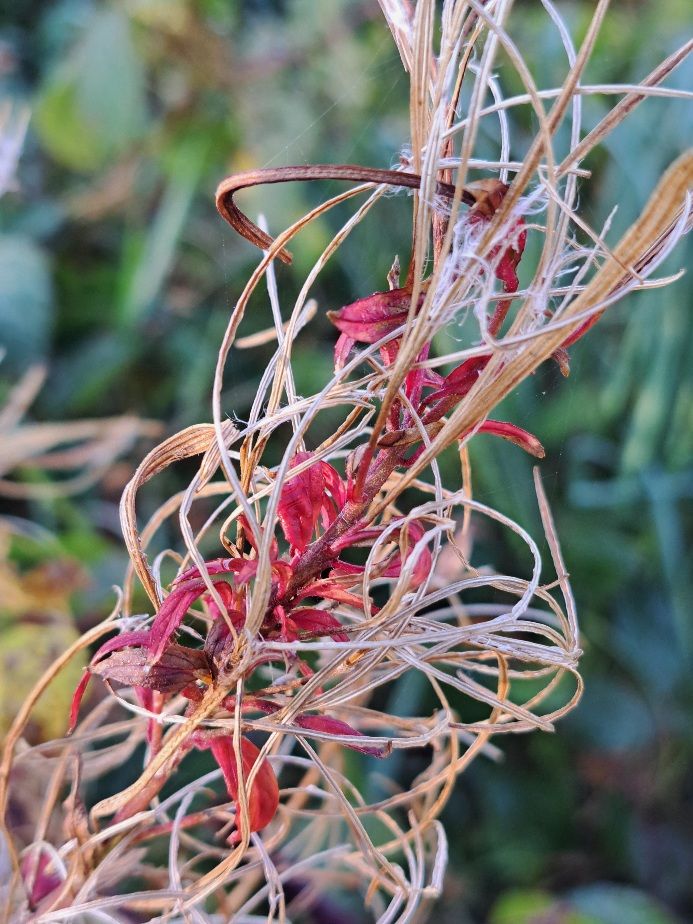
Below are the seedhead of Willow Herb, Hawthorn berries, Fern, and a late flower in the hedgerow.
Blue sky during these autumn months is very welcome.

This last photo is on another part of my walk. The farmer here was growing a plant of the legume family with lilac flowers and thick looking seed pods, there is a whole field of it here, and further along there grows a lot of Dock, now in seed. What caught my attention here was the several dozen of birds fluttering and flying around all at the same time, and definitely looking as if they had a mission in common. I whipped out my phone and checked the evolving picture before me with my Merlin app and to my delight these birds came up as Eurasian Linnets (Linaria cannabina) I was so impressed as I had not seen those before here, and so many of them together. They belong to the Finch family. Apparently they are fond of flax seeds, hence their name. The male’s colouring is beautiful during the breeding season, lots of red.
Well, that walk was so nice, and finally I’ve taken the time to write about it. I’ve missed my blog writing very much and I want to be back to it regularly. So much to research and write about. I’m still driving to Kenmare every week to see Ian, I travel through the Caha mountains and I love it, the beauty of that journey is a weekly joy. Every week something new and interesting to notice and discover. And after seeing Ian, enjoying a nice cup of tea and chat together, the journey back, very often I stop to look at a view or a rock or plant. It’s so dead quiet up in those mountains, even when I’m on a main road there are whole period of quiet. I’ll tell you more about that soon. Meanwhile, much love.

WHEN EVERYTHING IS SHADES OF GREEN, an update

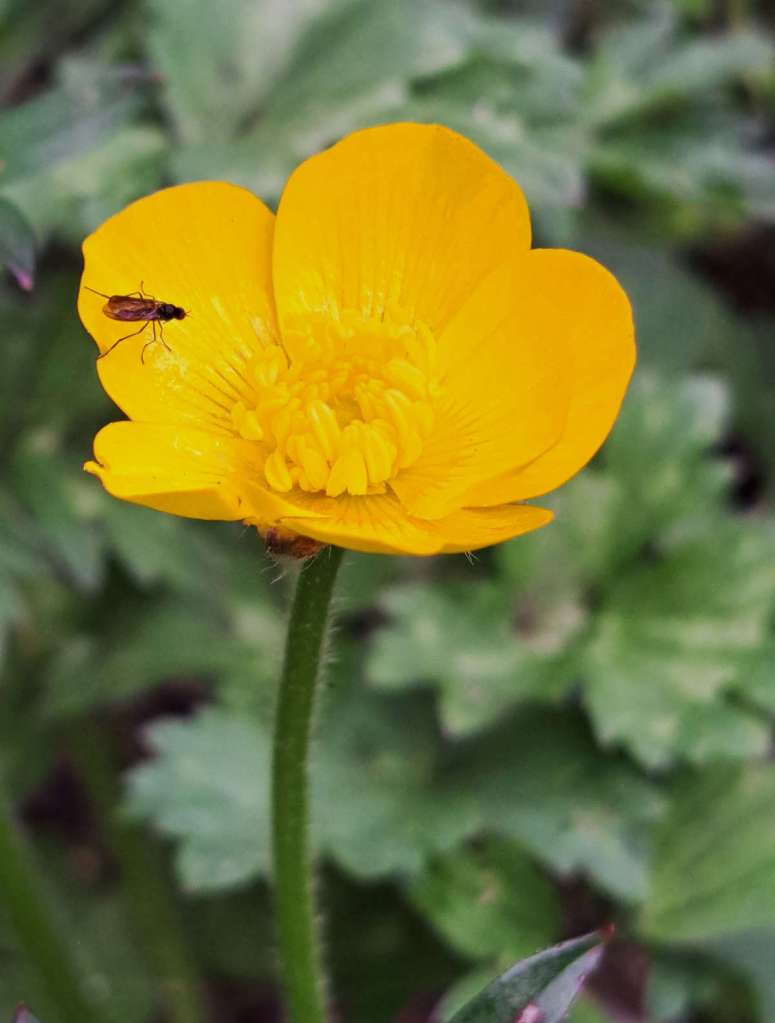
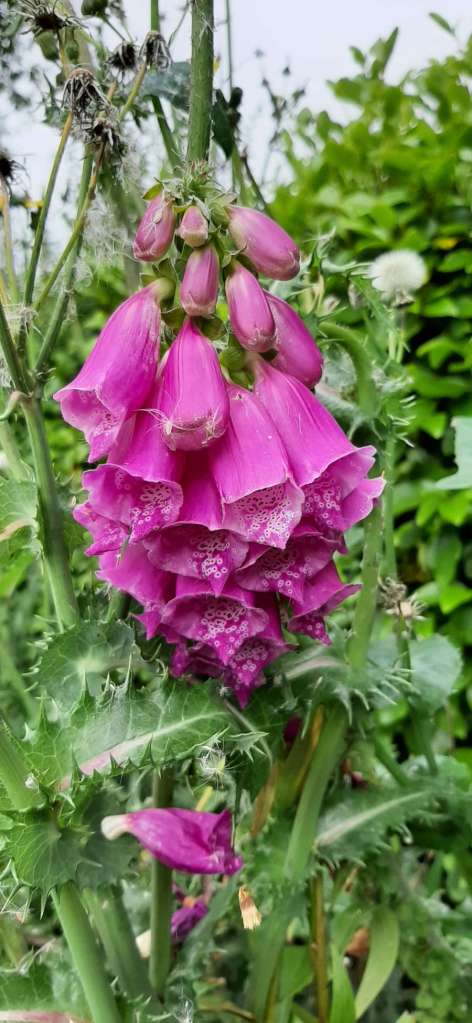
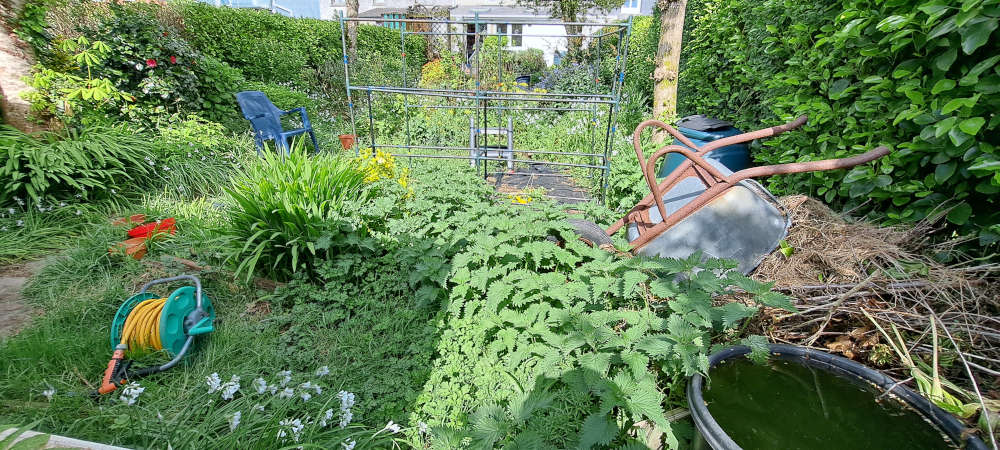
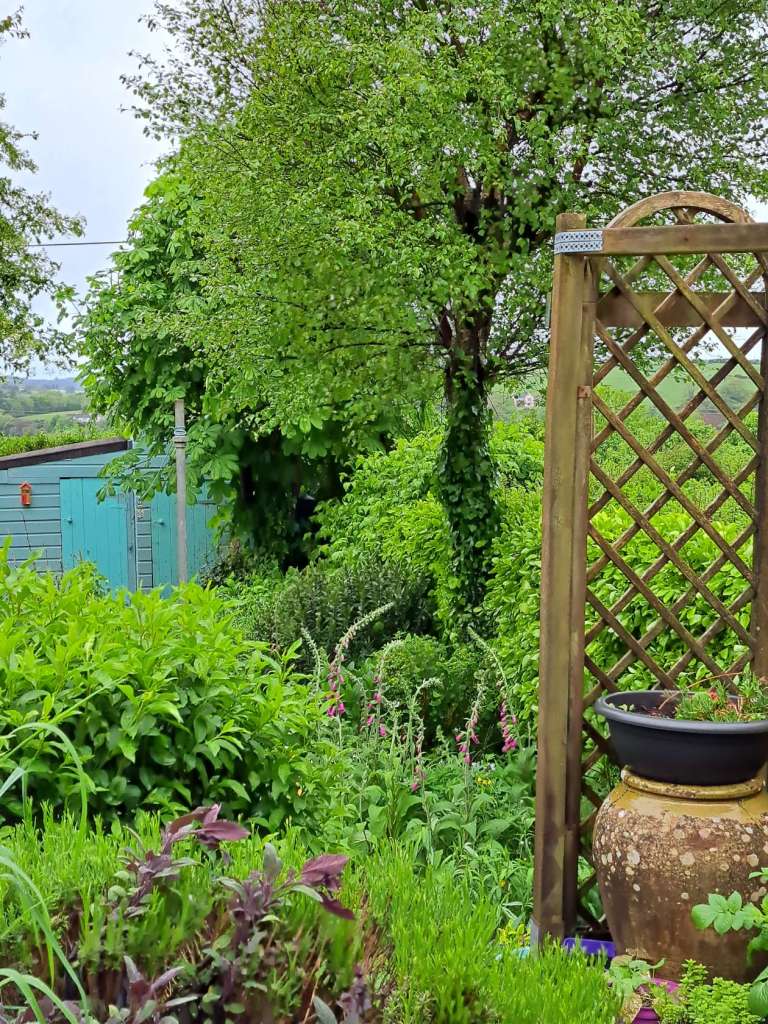
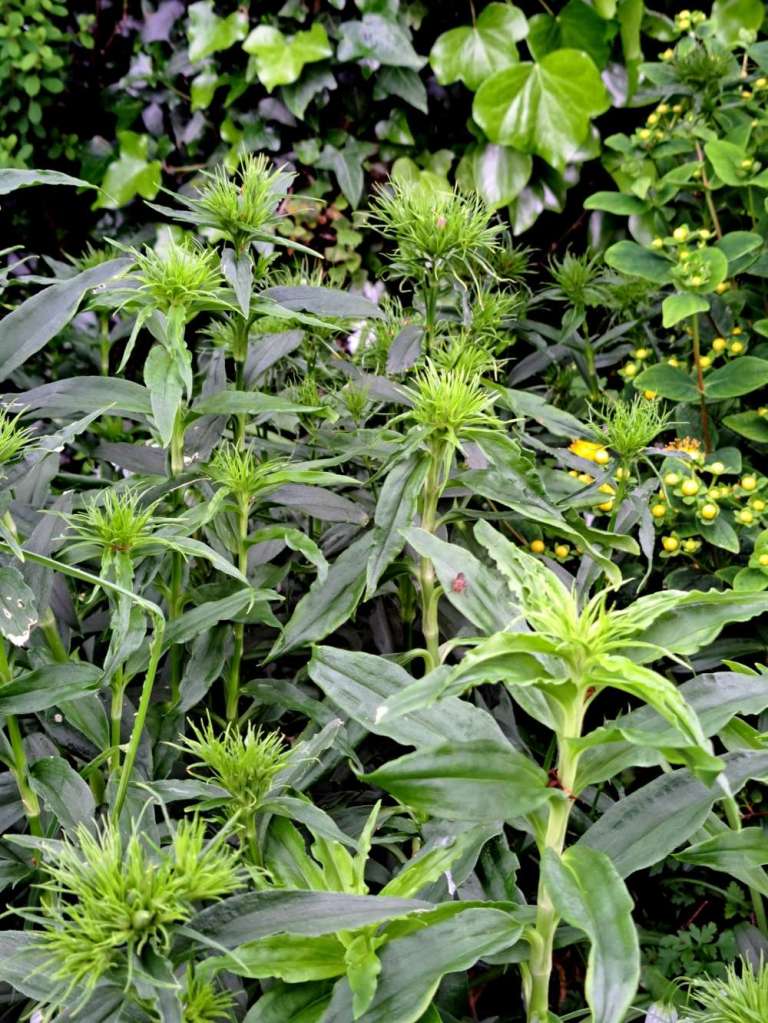
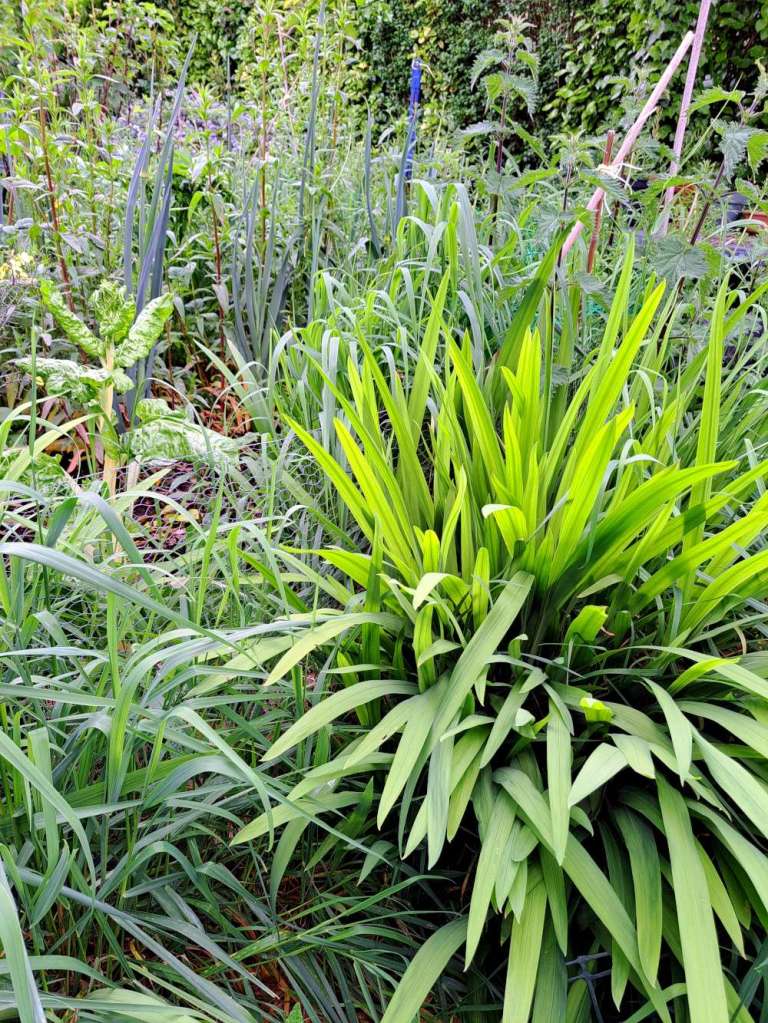
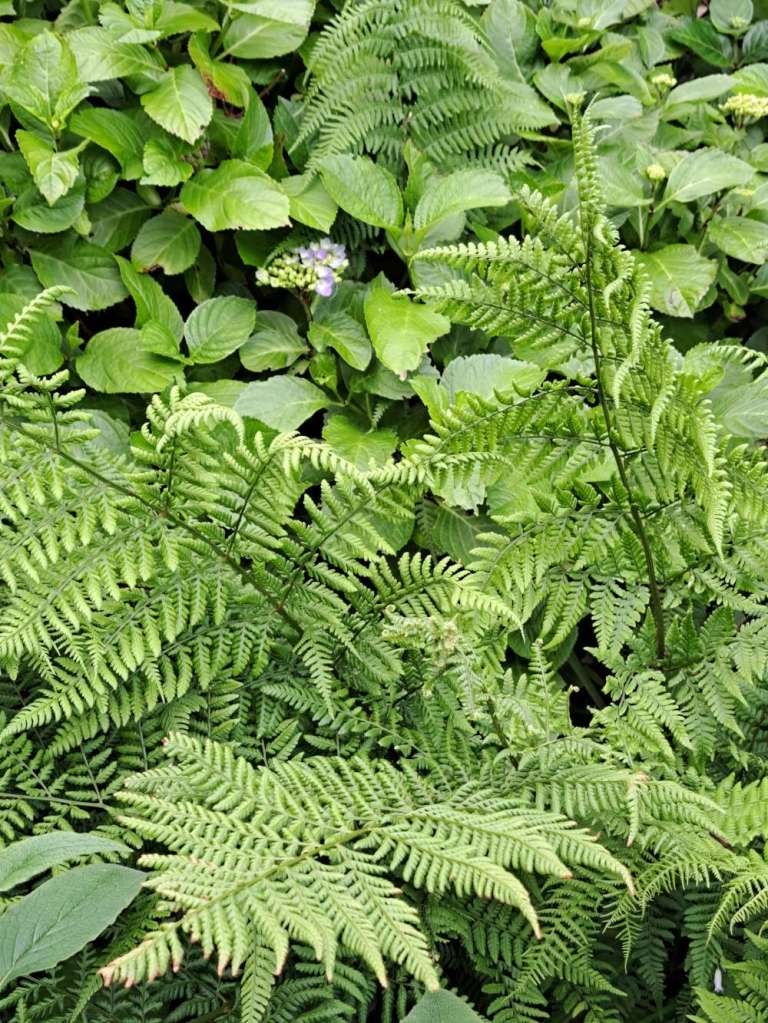
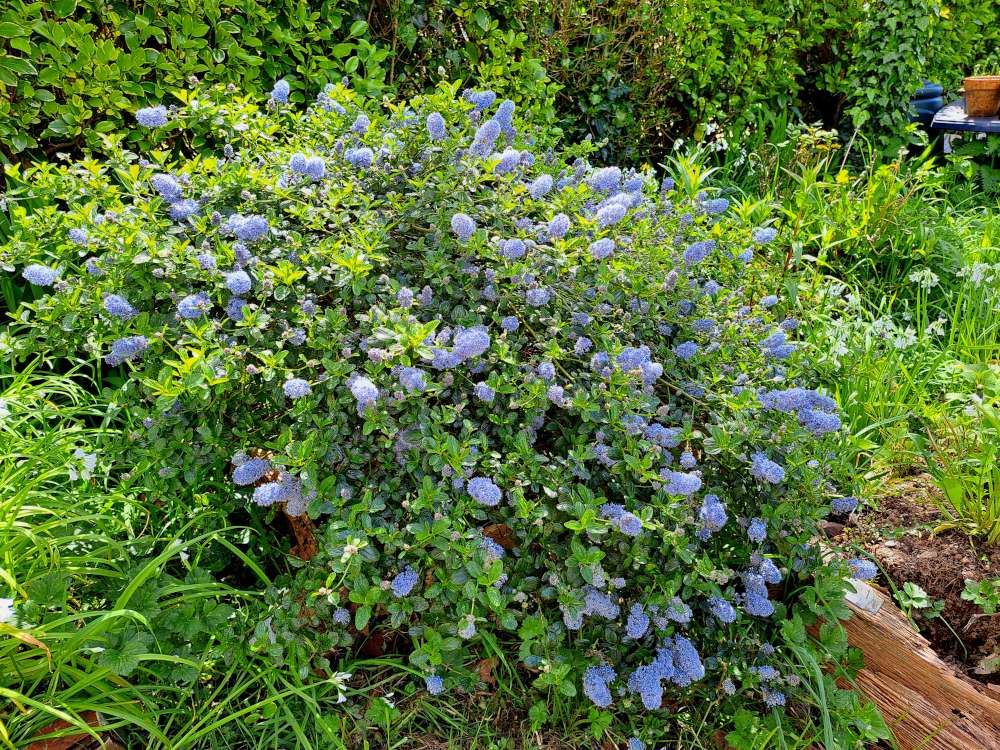
In our wild garden, and wild it is at the moment, I’m finding that everything is green, beautiful shades of green, but yet there are some colours to be seen too. I haven’t had much time, and less inclination to garden in the past few months and now everything has overgrown. But it’s beautiful, and there has been a lovely crop of very yellow buttercups in what is now a small meadow rather than a small lawn, I’ve really enjoyed that sight. The Californian lilac has also flowered in a pale blue. And the wild foxgloves that self-seed every year are in full bloom, a beautiful shade of pink.

I like the garden to be lush, and to have secluded spaces where I can sit on the old bench, or totally in the back under the oak tree and surrounded by nettles and foliage of montbretia foliage not yet flowering, protected by the sheds from the cooling wind. I often pick this spot for breakfast on fine days, the sun is only just hitting that spot then and it’s a lovely light. The old bench under the hawthorn tree is another one of my favourites, but I have to watch it as it is the domain of the sparrows and there are often droppings from above, not so nice in my tea.

I am not seeing many pollinators in the garden this year yet, probably because the weather has been rather unpredictable, I’m hoping they’ll come soon. I’ve seldom seen the garden so lush, or else my memory is failing me (which I doubt}. The month of May is of course the most beautiful month in Ireland, and often one of the warmest, not so this May, in fact I’ve had to light the stove today. Probably June will be better.

I’ll let you have a stroll through our garden for now. Enjoy!

Bright beauty of buttercups (Ranunculus)

Foxgloves (digitalis purpurea)

Californian lilac (Ceanonthus)

I hope to be back to my regular blog contributions, there is a lot of material which I can develop and plenty of photos to go with it. As I get used to the changes in my life I’ll get inspired again to share some of the beauty of Ireland, and of my past and future travels. And I look forward to interacting again with the blogs of all my friends and followers.