THE ABORETUM AT ARDNAGASHEL

DSCF2660
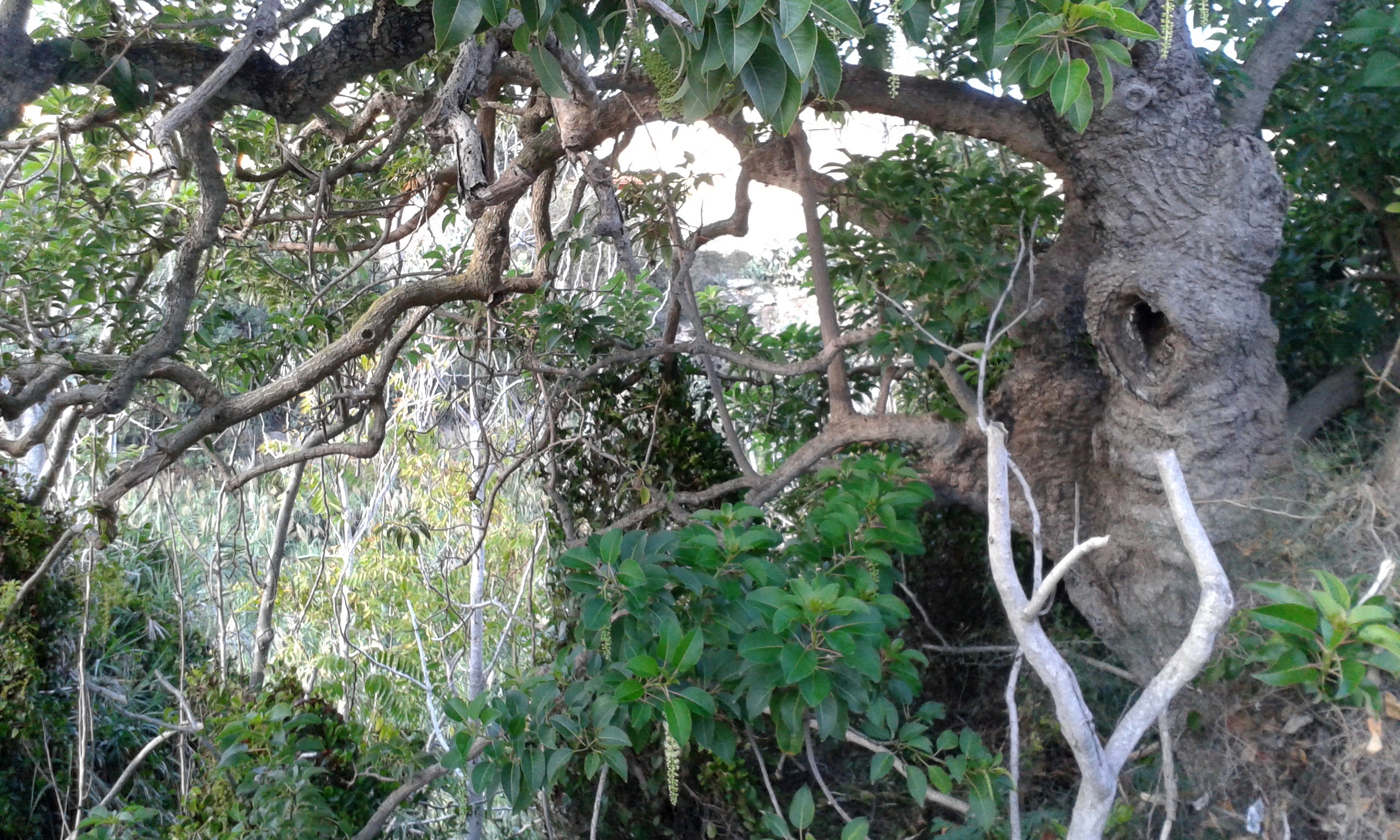
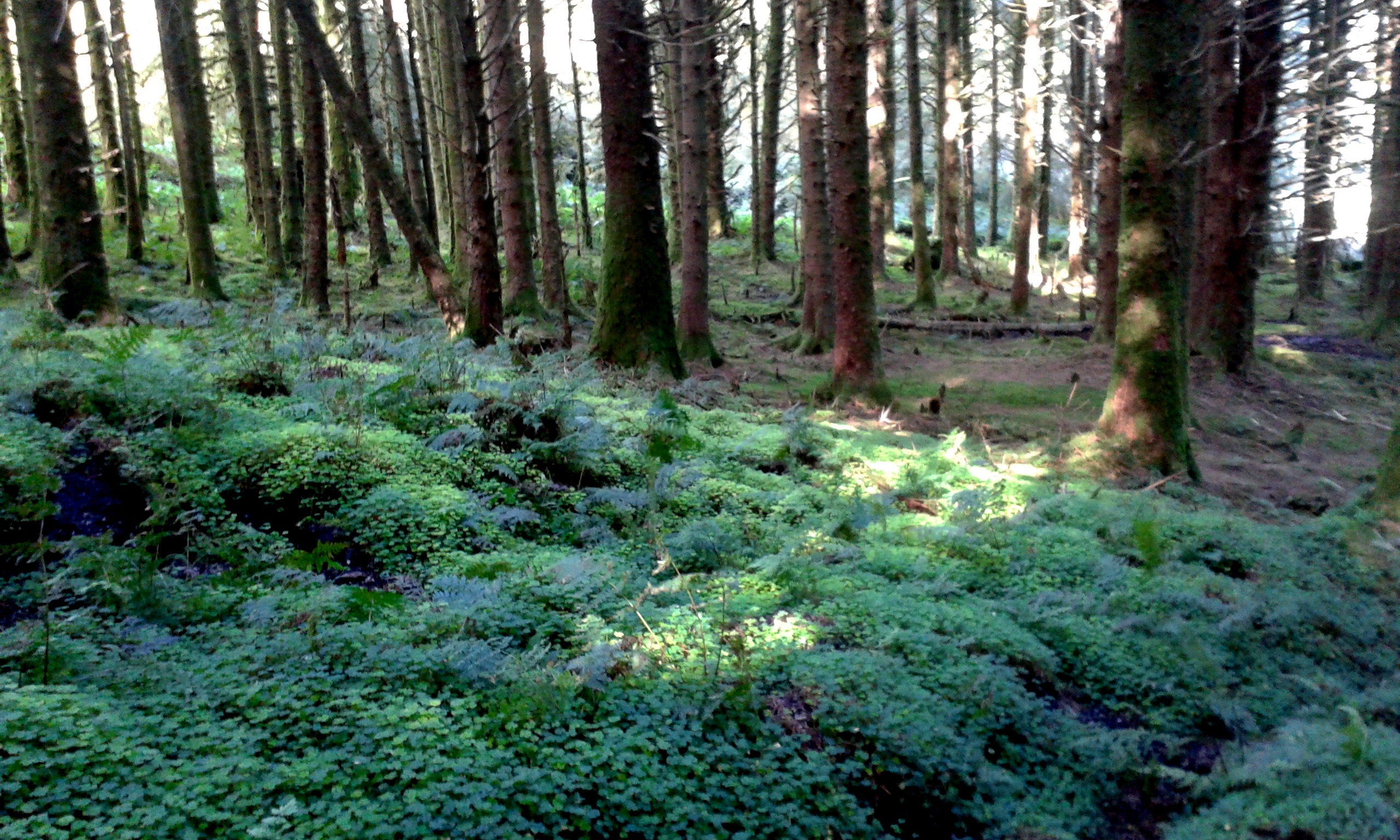
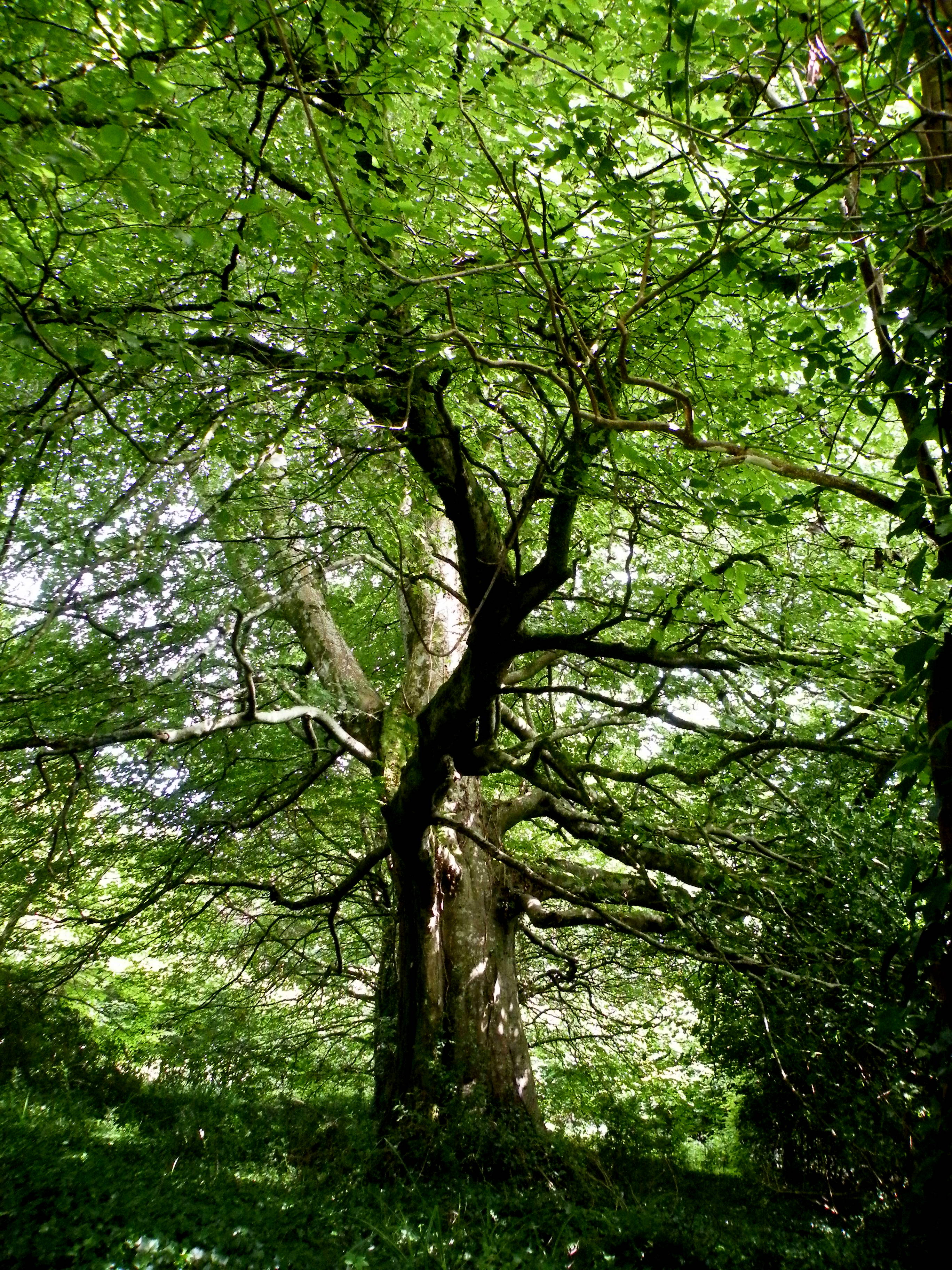
The second part of the guided tour of which I took part, it being part of the Heritage Week, was last Saturday’s visit to Ellen Hutchins gardens at Ardnagashel. Though quite overgrown, and in the sub-tropical climate of Glengarriff, in the South West of Ireland, a very lush garden, we did see a great variety of trees.  Many of them quite new to me.  Walking under their expansive canopies one becomes aware of the magnificence of their beings, our heads were constantly held high and apart from the sounds of wow and oh, the explanations of our guide, and the whispering of the leaves, the forest was quiet – the trees majestic!

One of the most impressive species in the gardens is this extraordinary large Cryptomeria japonica elegans or the Japanese red Cedar.  Its feathery leaves are so delicate.  The red brown bark peels in vertical strips, as can be seen in the photo below.  It is said that the wood is very scented and used in manufacturing of light furniture.

These are photos of the cork tree (Cuercus suber) these trees give us the cork which is used in so very many different ways.  The small tree in the middle bottom photo has actually died from the frost one year, but the large one that is standing between many other species survives and has grown very big.  Actually cork is a renewable source as when the cork is taken from the trunk it will regrow.  It is harvested about every ten years.

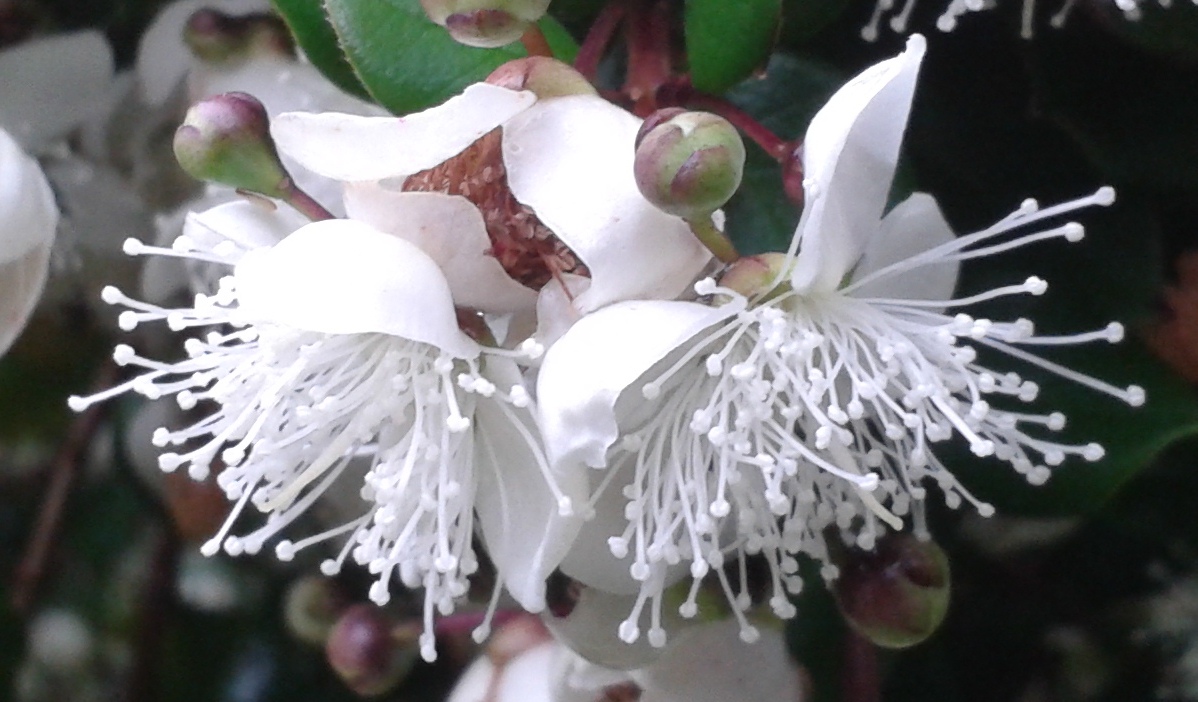
This is the Myrtus apiculate, closely related to the Myrtle tree.  It was introduced as a decorative tree but it soon became a very fast growing invasive weed.  The wood looks nice and is put to use when cut down for a variety of fencing and a little bridge was made out of it too.  It is not native to Ireland.  It gets beautiful white flowers.  Below is a photo.

Myrtus apiculata

This tree has had its roots growing on its trunk, the reason why is because the soil around it was so crowded apparently by the suffocating growth of the Myrtus trees that there was no space for its roots to grow underground (we were told by our guide).

A variety of interesting looking trees of which I am not sure what they are exactly.

DSCF2732

One of my favourites, again I do not know what its name is.  A trunk covered in moss!

Ferns were everywhere, including a few tree ferns (Dicksonia Antartica).  Ferns even growing on the branch of this large tree.

Rhododendrons grow very well in this part of the world, often giving a lovely display of purple along the roads of Counties Cork and Kerry.  But in Glengarriff one is able to grow quite exotic types of Rhododendrons, from the regions of the Himalayans.  Very large leaves (as my brothers is showing) and most beautiful flowers, whites or delicate pinks, among other colours.  Some of these types bloom already in January.  Besides Rhododendrons there are a variety of Magnolias, Ammonias, Camellias and Acacias growing in this garden.

Three other fabulous species.  The top left is a Griselinia Littoralis.  The one underneath I thought is the Cypressus macrocarpa.  The trunks of trees on the right I cannot identify – ideally I will visit this garden again and become more familiar with all the trees, something to look forward to I think.

Sequoia Sempervirens - Coast Redwood

This tree, again if I am right, is the Sequoia sempervirens (Coast Redwood tree), it was pointed out to us that it was growing here. A tree of the Cypress family.  It is an endangered species.

A beautiful and interesting walk it was, wetting our appetite for more that is for sure.  This garden also contains the Davidia involucrate or Handkerchief tree but I did not see it this time.  It has plenty of Vagus Silvatica (common Beechtrees) growing too.  As I already mentioned the climate in this part of Ireland is sub-tropical, very mild and wet winters, mild summers.  This garden is lying along the coast of the Bantry Bay.

20170819_164128

This is a list of the trees found in the garden.  The list was compiled by John Bevan and can be found here:  John Bevan’s article

And here is a link to the WordPress site of Ellen Hutchins (Botanist) and the Ardnagashel Estate.  There is a lot to explore on the following blog link, I hope you enjoy as much as I did to explore this rich heritage.

Ellen Hutchins – Ardnagashel Estate


SEAWEEDS OF THE IRISH COAST

Yesterday saw a whole bunch of us interested folks going to explore the arboretum at Ardnagashel in Glengarriff, West Cork, but apart from admiring the wonderful trees we also received lots of information on the seaweeds and lichens along this stretch of coast. Ardnagashel was established by the Hutchins family and it was as part of the Heritage Week of Ireland that these activities took place, in memory of Ellen Hutchins (1785-1815)who was a remarkable Irish Botanist. The talks on the lichens and seaweeds were given by Howard Fox, who is the State Botanist (National Botanic Gardens) and by Maria Cullen. This ‘life’ introduction to the seaweeds and the lichens of the coast of Bantry Bay was so very interesting. a true first introduction in this field for me. Later in the afternoon Madeline Hutchins (Ellen’s great great grand niece) took us through the forested area of this garden and introduced us to some wonderful trees, among them an enormous Japanese Cedar (Cryptomeria japonica). But more about the trees in another blog.  Now to concentrate on the seaweed for a start.  There is so much information that I took in yesterday and research I want to do on this that I feel delighted (because it’s right here at my doorstep), but I am also a bit overwhelmed because so far in my life I have been concentrating on enlarging my knowledge about wild plants, flowers, insects and spiders of Ireland.  Now this is taking it one step further with looking at lichens and seaweeds.  There are no days enough in the week to enjoy all this abundance of nature, and to do the research.  Needless to say I am a huge amateur in all this. (an enthusiastic one).
DSCF2684
So we learnt that there are three types of seaweeds and they are divided by their colour. These are the greens, reds, and brown seaweeds. There are about 10 000 species.  This particular species is called Fucus serratus L.  (Serrated wrack).  This seaweed is used commercially in the manufacturing of cosmetics and seaweed baths.

Photo on left is Knotted or Egg Wrack (Ascophylum nodosum) with another seaweed growing parasitically (it gets its sugar from the Knotted Wrack) on it, it is called Polysiphonia lanosa. Maria Cullen (right photo) told us to nibble some of the parasite and to me it tasted only like….sea water!  Maria gave us great demonstrations of a variety of seaweeds which she picked straight from the sea there.

Duileasc (Palmaria palmata) a red seaweed, and Nori (Porphyra tenera) and another one of the Wrack seaweeds (Fucus) .

Top right photo is a calcareous red seaweed, Howard is here showing and telling us about the Sea Spaghetti (Himanthalia elongata).  The book I am giving attention to on the right is an excellent cookbook with lots of information on the edible seaweeds.  I bought it for my son-in-law once and he was very pleased with it.

DSCF2696The coast of Bantry Bay is rich in seaweeds, and it’s beautiful too.

Nori seaweed, Laver (Porphyra tenera) in the top left photo is paper thin and edible, much used in countries like Japan of course.  The green seaweed is sea lettuce (Ulva lactuca).  The book on seaweeds looks real interesting and essential if seaweed foraging and identification is taken seriously.

DSCF2706Microscopes and strong magnifying glasses were all available for us to have a look through.

More samples laid out for us to check out and learn about, far more than I can identify right now.  Further in the water there were even more types of seaweeds to be seen.  Howard and Mary never tired of explaining to us all the details, it was such an interesting hour spend on a lovely and warm Saturday afternoon in this beautiful part of Ireland.  My brother Johan and his wife Lorraine who were visiting Glengarriff, were among those interested and it was lovely sharing this time with them too.

CARRAIG ABHAINN GARDENS

Carraig Abhainn Garden which lies in Durrus, West Cork.  It is one of the very interesting, well established and peaceful gardens in the area. It consists of 1-hectare which is bound by a mill stream. An amazing waterfall and further along the tranquil stream add to its charm and serenity. My daughter and I visited it recently with my grandchildren and the garden was loved by one and all. The children found it exciting with all its nooks and crannies, and we adults – although we often become like children when we are surrounded by nature – we just loved the tranquillity of the place. I was particularly interested in the variety of trees and plants, among them a Mimosa tree, a Korean Fir, and a whole range of other exotic trees, even a Banana tree! The variety of other subtropical plants, Palms, Rhododendrons and others was interesting too. I think it would be a lovely garden to visit in the autumn also just because of the variety of trees, although many of them are evergreens, a lot of them are deciduous trees also. I think my photos will speak for itself.  I hope that everyone enjoys the walk through this lovely garden with me.
20170803_132306

20170803_133143

20170803_132552
20170803_142255After our walk we had a chat with Eugene, the owner together with his wife of this beautiful garden.  Eugene is a goldmine of information on plants and trees and he knows his garden inside out.  I will be visiting again and he promised me a guided tour to which I am looking forward very much.  Here is a link to information on this garden.

http://www.ireland-guide.com/gardens/carraig-abhainn-gardens-.7116.html


EDGE OF LANDSCAPE – WILLIAM CROZIER

Skibbereen town is currently running its yearly Arts Festival and the town is buzzing with people, whole families, and lots of children – what a nice atmosphere I found today down town. I went to see William Crozier’s exhibition ‘Edge of Landscape’ in our Uillinn Art Centre, which by the way puts on lots of interesting exhibitions and other activities very regularly. There was a guided tour and I thought it would be nice to know a bit more about Crozier’s work, though I know his paintings for a long time as he was living locally. The tour took us through some earlier works and also showed us some of the most recent before his death. I was impressed with his lines and colours, with his painting of West Cork as he saw it – though he painted from memory. He painted the landscape as it relates to people, as it was created by the people, so you have what one might recognise as hay stacks and fields with borders, always borders. In a lot of his work, of a certain period, he painted high horizons, again this creating a border around his fields.
20170729_123104

Painting on the right is ‘The Ripe Field’ 1990

20170729_122613

Painting above is ‘Wolf’s Castle, Toe Head, 1998

20170726_12562320170729_122625

Above are some of his earlier works, on the right is a painting called ‘Winged Figure’ which he painted in the early seventies.  He stopped using figures in his paintings though he had used them a lot in much of his earlier work before he came to West Cork. Personally I find his work which include figures much harder to look at and make sense of.

20170729_122631

20170729_122837

The painting above and below are much later work before he died, I love the simplicity of these and I agree with what one of the visitors said, that they reminded her a little of Matisse.  We were told that Crozier was indeed influenced by Matisse, a thought that I liked.

20170729_122814
20170729_122942
20170729_123149
I’ve always loved visiting art exhibitions. I discovered the value of this in my late teens when I used to go look at paintings in galleries both in Antwerp and in Dublin and was impressed with the energy that would affect me coming from the works, such a difference from looking at a reproduction or print. I was going to Art college at night in those days and I guess that urge to go see paintings never left me since. Luckily Skibbereen town has a thriving Art Centre and other galleries besides. West Cork is a real haven for artists and people who love art. I feel so lucky.

THE BEAUTY AFTER THE STORM

Beautiful raindrops shimmered on the flowers and leaves in the garden this morning, everything sparkled after last night’s rain and thunderstorm. There was a freshness about the garden and the scent was earthy. Soon the sun burned the mist away and the breeze dried out the raindrops but not before I had enjoyed their beauty. A fine summer’s morning in West Cork.
DSCF2606

DSCF2615

DSCF2611

CHERISHING THE MOMENT

“Write it on your heart that every day is the best day in the year.”
Ralph Waldo Emerson
20170627_122820
20170707_160630
During the last few days I visited one of my dear friends, it had been too long since we caught up with each other, and it has been very necessary and a great joy and pleasure to make that time for her yesterday.


Since there was such a super crop of raspberries in the garden I have made plenty of jam, but also the cherries were cheap in the shops, but it’s not as easy to make these into jam hence they turned out runny and we are using the result on ice-cream and in porridge. Delicious!

Summer flowers, it’s good to concentrate on the beauty of nature, especially during days of sadness.

“Be present in all things and thankful for all things.”
― Maya Angelou

RIVER ILLEN - SKIBBEREEN

LEAP
It has been a sad start to the week here with one friend passing, and a joy later on in the week with visiting a precious friend who is very ill. It makes for quietness and reflection in my own mind. Realising, of course that nature, the beauty of nature, the flowers, the insects, the summer sun and evenings, the delightful scents in the meadows, the nearly full moon in the sky right now, the ripe red berries in the garden, the stillness of the river reflecting lush summer trees found along its banks all help to make life beautiful and meaningful. Letting go is an essential part of growing a little older too.

MEMORIES FROM BOSTON

Architecture of the nineteen seventies – architect Ieoh Ming Pei.
JF Kennedy Presidential Library and Museum
The Pavillion
Archecture at JF Kennedy Presidential Library and Museum
The sailboat Victura and the exterior of the library.
IMG_8744

If one would like to catch up with some historical and biographical information on John F. and Robert Kennedy, then it would be a good idea to visit the
J.F.Kennedy Presidential Library and Museum at Columbia Point in South Boston.

Apart from getting a good oversight of the life, the presidency and history of that period, a visit to the building itself is definitely worth it.
The building was designed by Chinese born American architect, I.M.Pei, and was build during 1977-79.
As you walk towards this massive construction, you see a stark contrast between its white concrete exterior and its black steel and glass façade, an unornamented expression in abstract shapes, a monument to modern American architecture.
Pei also designed other great buildings in Boston; like the extension to the
Boston Public Library, the West wing of the Museum of Fine Arts, the Hancock Tower.

I was particularly impressed to see how well old and new architecture can be together, this is shown over and over in the city of Boston, Boston is probably a good example to show how architecture has changed from the American Renaissance, to the Modern, in the 20th century, with the more modern buildings making a clear statement of what they are meant for, attracting visitors from afar, to not only look at the external building, but also see what is to be found inside, and what the buildings are used for.

It was interesting to learn that Pei was also the architect that designed the great pyramid shaped entrance and addition to the Louvre Museum in Paris, a piece of work that I have always admired very much.

Looking back I enjoyed very much taking photos of this building. And of course also learning a little bit about J.F.Kennedy. The friend who was with me was very knowledgeable on the history of all America’s presidents and he guided me around.
I have very many good memories of my stay in Massachusetts and Connecticut, especially visiting David Henry Thoreau’s and Walt Whitman’s Concord, and the Florences Griswolds museum in Old Lyme. I am looking at some of my photos and notes and hope to share more in future.

MINDFULNESS

Below follow some quotes from people I admire. I have put them among photos of our garden showing how lush it is at this moment, a moment to relish and savour, a moment to be thankful for and to enjoy to the full. Yes another summer is in full swing ~~~~~~~~

“Walk as if you are kissing the Earth with your feet.” Thich Nhat Hanh
DSCF2540
“Acknowledging the good that you already have in your life is the foundation for all abundance.” Eckhart Tolle
DSCF2551
“The present moment is filled with joy and happiness. If you are attentive, you will see it.” Thich Nhat Hanh


“There are a thousand thousand reasons to live this life, everyone of them sufficient” Marilynne Robinson
DSCF2529
“Life is a dance. Mindfulness is witnessing that dance.” Amit Ray


“If the only prayer you said was thank you, that would be enough.” Meister Eckhart


“Happiness is your nature. It is not wrong to desire it. What is wrong is seeking it outside when it is inside.” – Ramana Maharshi
DSCF2535
“You have a treasure within you that is infinitely greater than anything the world can offer.” – Eckhart Tolle


“Between stimulus and response there is a space. In that space is our power to choose our response. In our response lies our growth and our freedom.” – Victor Frankl
DSCF2569
“Mindfulness is about being fully awake in our lives. It is about perceiving the exquisite vividness of each moment. We also gain immediate access to our own powerful inner resources for insight, transformation, and healing.” Jon Kabat-Zinn

ODE TO OUR POLLINATORS

This week has been the week that we remember and show appreciation for our pollinators.

pw2017_sticker_eng

I read recently in the Irish Times that here in Ireland, bees are a crucial link in the supply chain of our apples, raspberries and other soft fruits. and that a third of the Irish species of bees is threatened with extinction. One can imagine what problems this will cause down the line. Personally we are having a great crop of raspberries and the pollination, as far as I have been able to observe, has been done by bumblebees. There is of course a large number of different pollinators, luckily.  I can’t resist taking photos of any wildlife I find in the garden, so here is a series of pictures taken this spring/summer of our pollinators.

20170518_115814

This bee was just lying there, I guess it was almost dead, but it soon revived with a little honey.

Also many other pollinators visit the gardens.

Thanks to Murtaghsmeadow’s blog for bringing Pollinators Awareness week to my attention.  This is a link to her blog.

A week in celebration of pollinators?

Here is another interesting link:  http://www.biodiversityireland.ie/projects/irish-pollinator-initiative/all-ireland-pollinator-plan/