THE BATHOUSE – BAT CONSERVATION

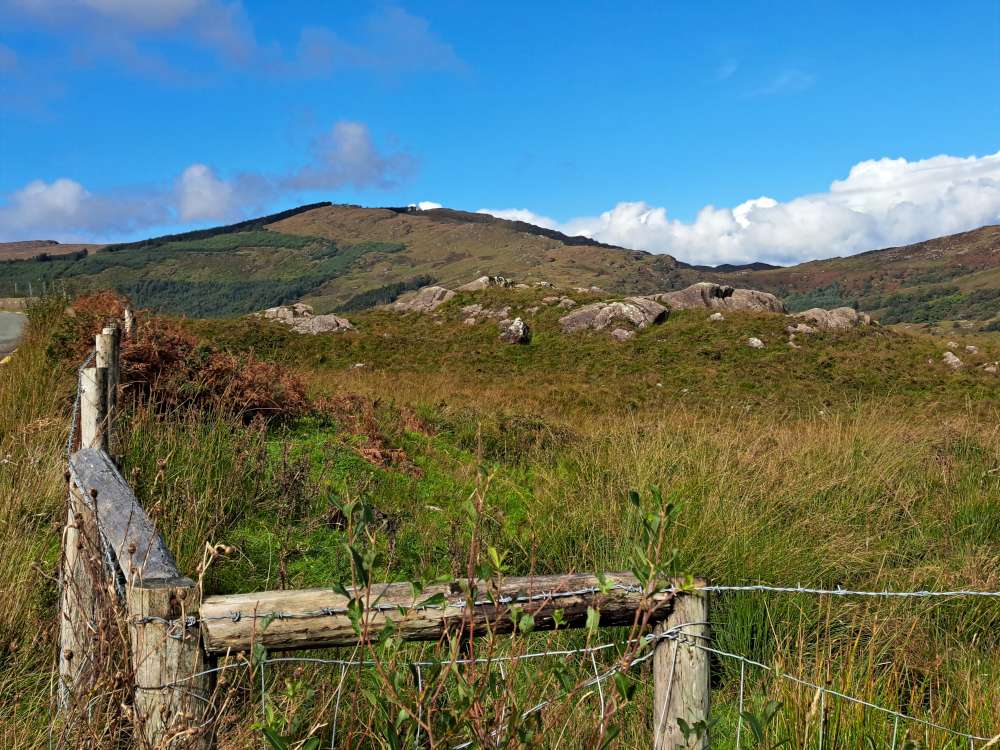
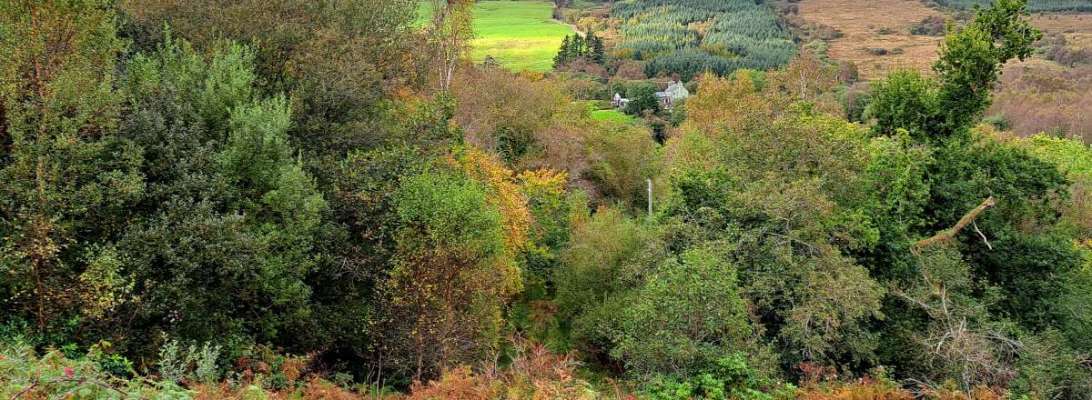
Along the road, somewhere in county Kerry I recently did a discovery. While on one of my journeys I stopped to take autumn photos and also to take a look at this cottage. I had often wondered while passing who would have lived there long ago, and why the people left, and where did they go, maybe across the sea to America as a lot of Irish people emigrated there in the late 19th or early 20th century. Anyway the house is boarded up but still looks in good repair. It is nestled among beech and other native trees, now beautifully coloured, and it looks out down the valley with hills in the distance. Some of the land is bog-like with a variety of grasses and sedges, some rocky outcrops and low bushes, and lots of bracken, beech and birch trees, a mixture of colour at this time of year.

To my surprise I found a notice fastened to the wall of this cottage, it happens to be a roosting place for bats, and in particular for the lesser horseshoe bat. An organisation covering both Ireland and England called the ‘Vincent Wildlife Trust’ has a long and successful history of establishing and managing reserves for rare bat species. It manages 37 sites in Ireland, England, and Wales, all of which are roosts of the greater or lesser horseshoe bat. In Ireland, the Trust manages 12 reserves for the lesser horseshoe bat. And so this cottage has been put to very good use.
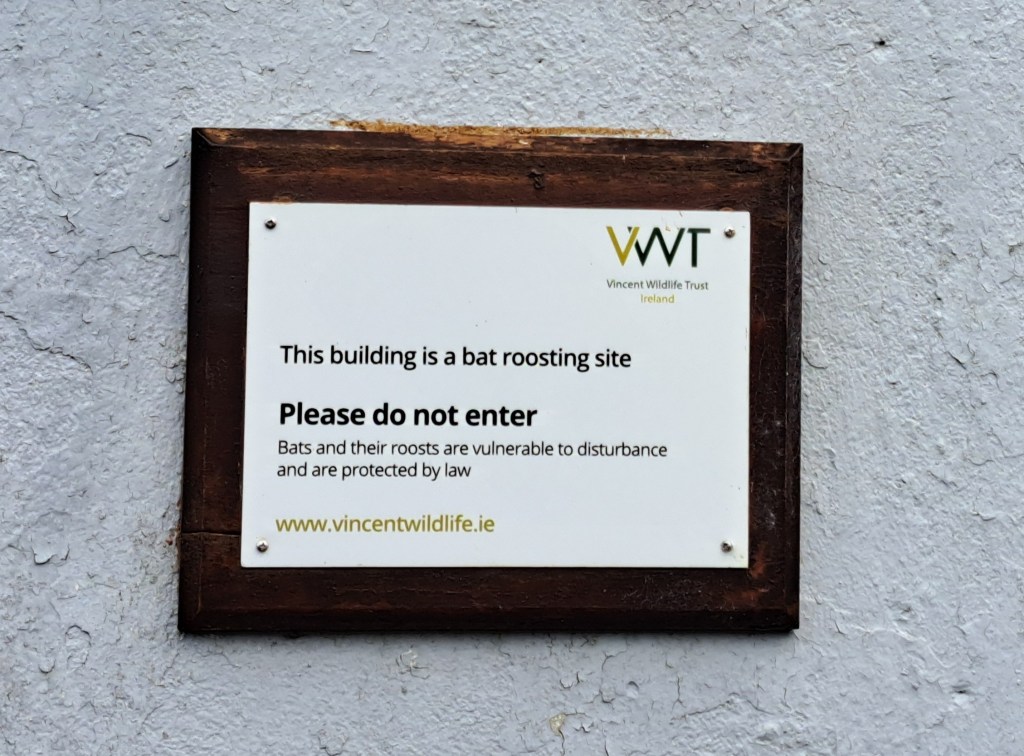
Website: Vincent Wildlife Trust Ireland | Managing Bat Reserves

The beautiful surroundings and peaceful countryside is a great place to let the bats find their space and hopefully continue to survive.

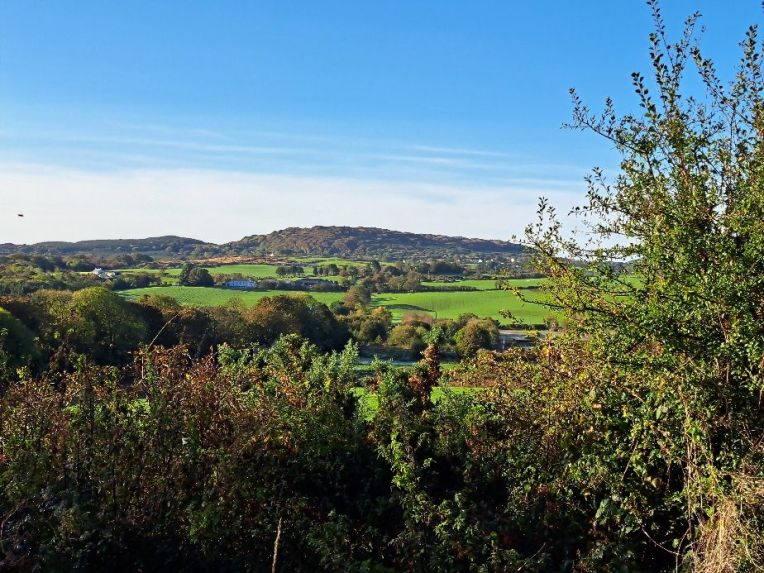
The landscape during autumn
Futher reading: https://vwt-production.ams3.digitaloceanspaces.com/uploads/VWT-Ireland/Resources/Lesser-Horseshoe-Bat-Species-Action-Plan.pdf

It was a great discovery, seeing how much effort is put into conservation of native wildlife.

OCTOBER SUNSHINE

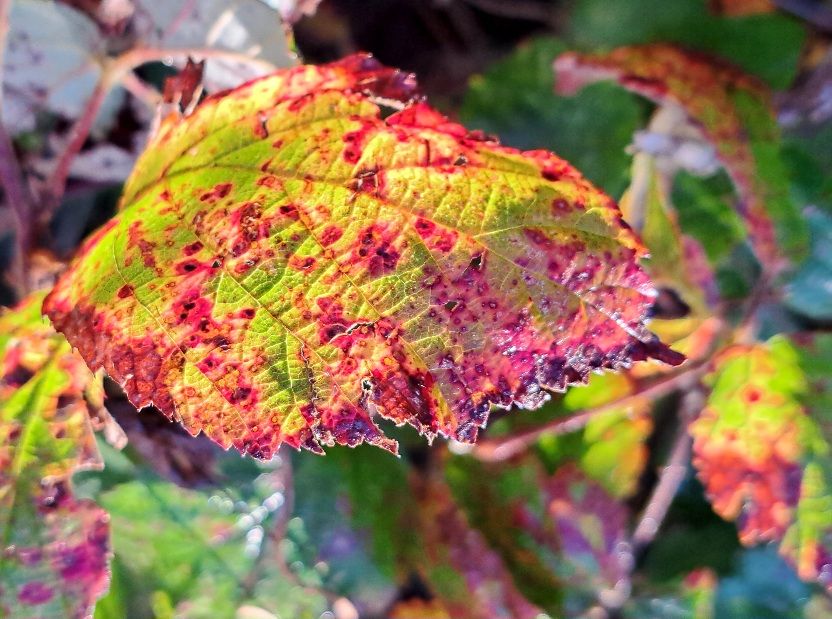
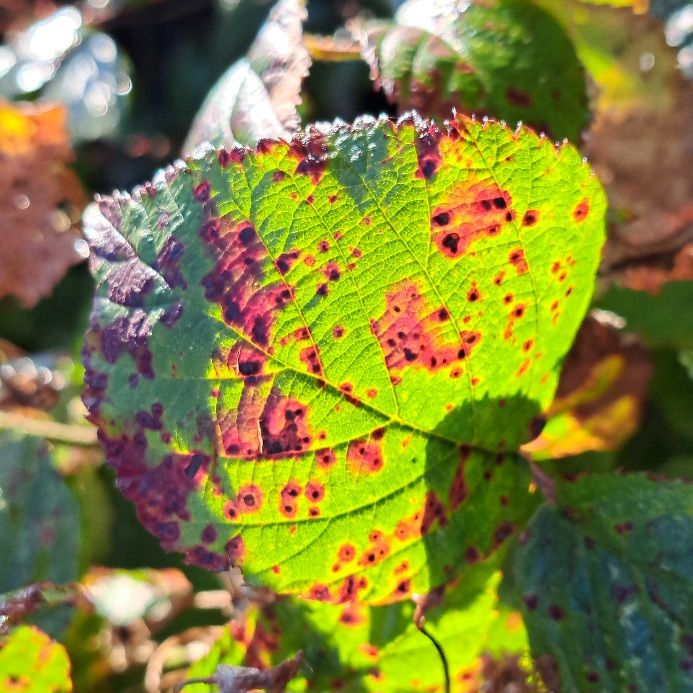
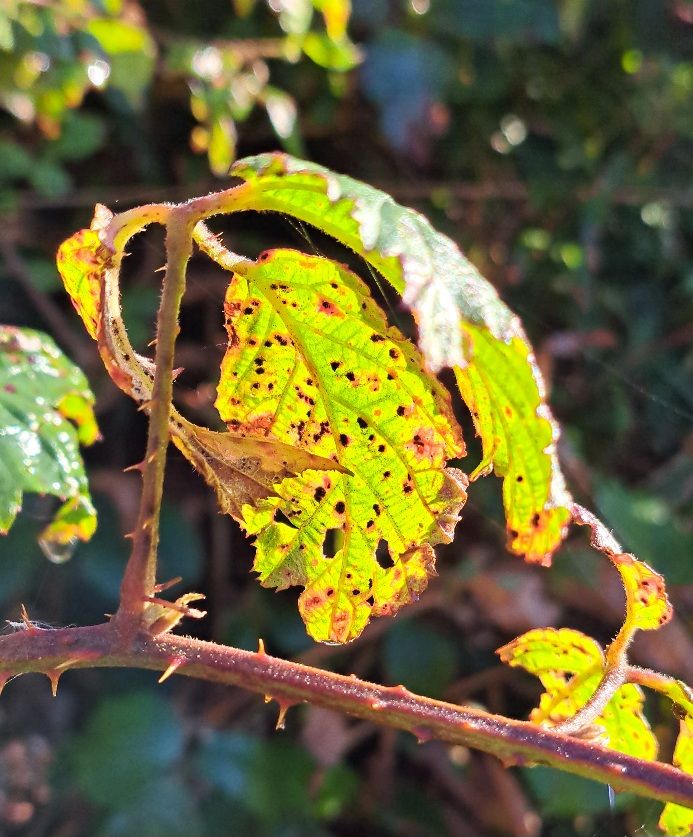
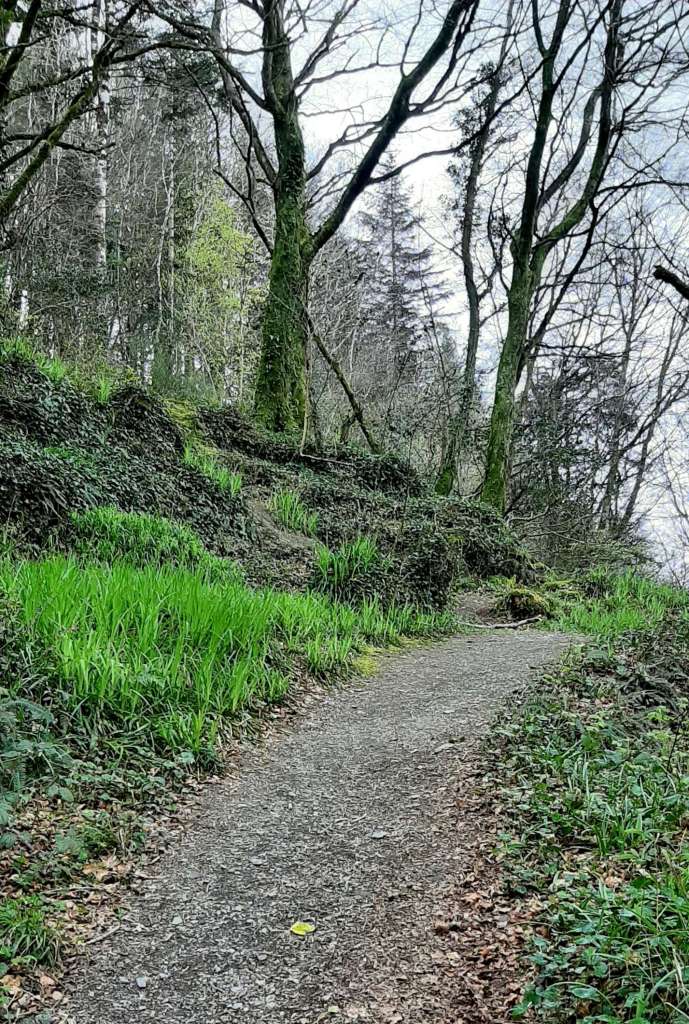
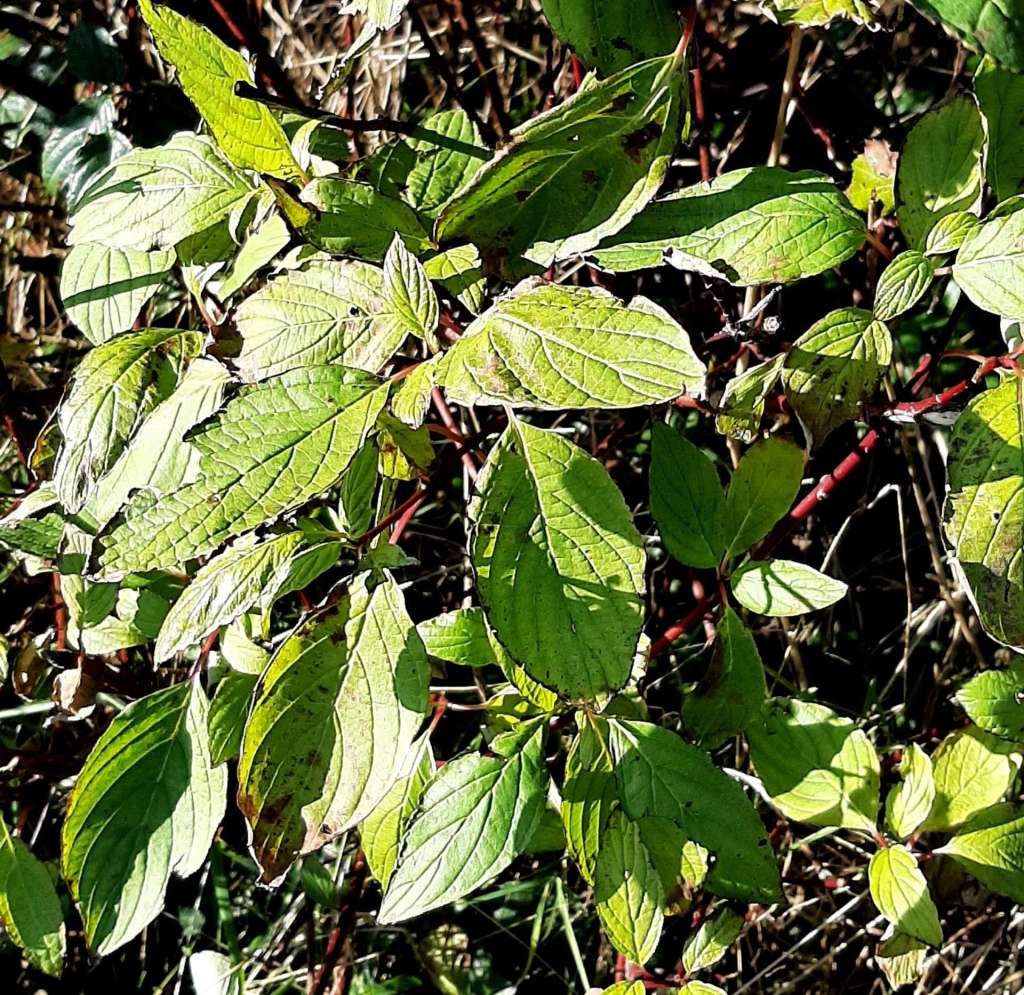
What a most beautiful autumn sunshine at the moment here in West Cork. After an incredible display of the Aurora Borealis last night, we woke up to a little bit white frost, nature has had a lot to offer this morning which I discovered during a much desired walk on the path to Russagh Mill. It’s one of my favourite walks, this path overlooks a long valley, still lush and green in the distance. Closer by I especially noticed the sunlight on the blackberry leaves lighting up their earthy colourings.
This walk also has many shaded areas with lots of ferns. The shade is created by the trees, mainly ash, willow, hawthorn, and other species too. In fact I discovered a new tree which had escaped my notice in the past. When I looked it up on my phone it turned out to be a White Willow (Salix alba), one of its common names is Golden Willow, I like that! A fact I’d like to share about this tree is that “Its inner bark – raw or cooked can be dried, ground into a powder and added to cereal flour, then used in making bread etc. It has a very bitter flavour, especially when fresh, and it is used as famine food when all else fails. The leaves and young shoots are not very palatable and used only in times of scarcity. The leaves can also be used as a tea substitute.” My Flora Incognita got this information from Wikipedia as far as I know, so that is my source of my information I want to acknowledge. I wonder if this tree was every used during the potato famine here in Ireland. Below is a photo of the said tree.
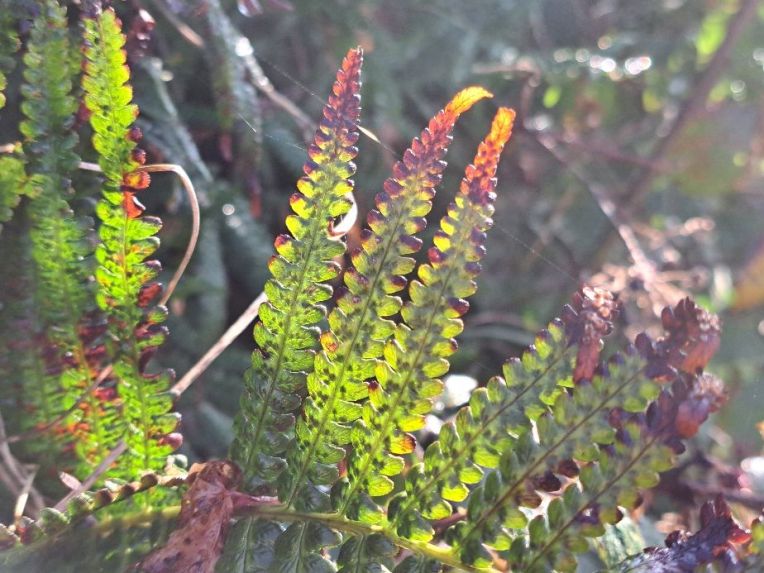
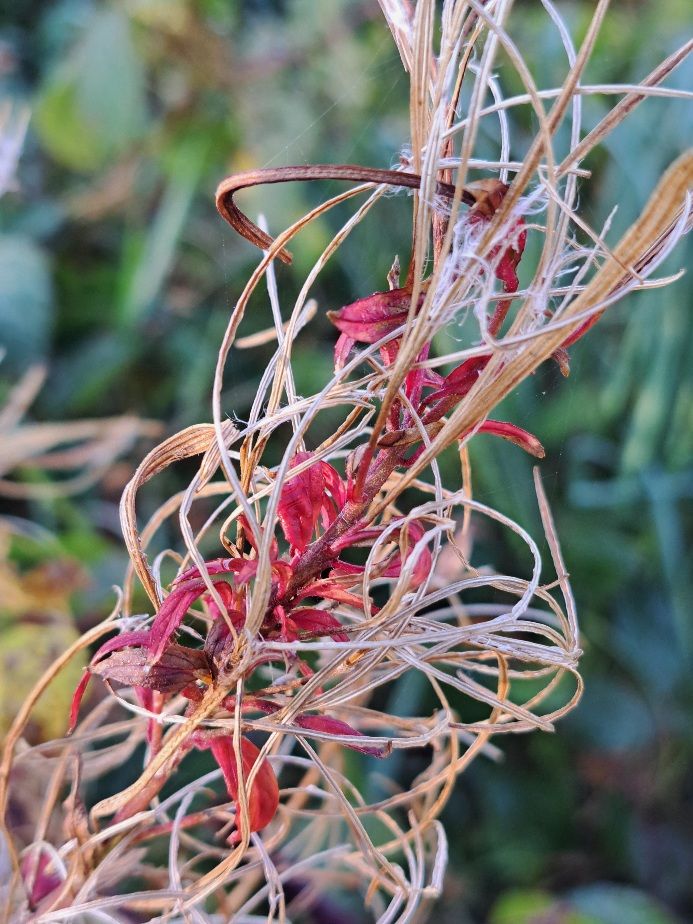
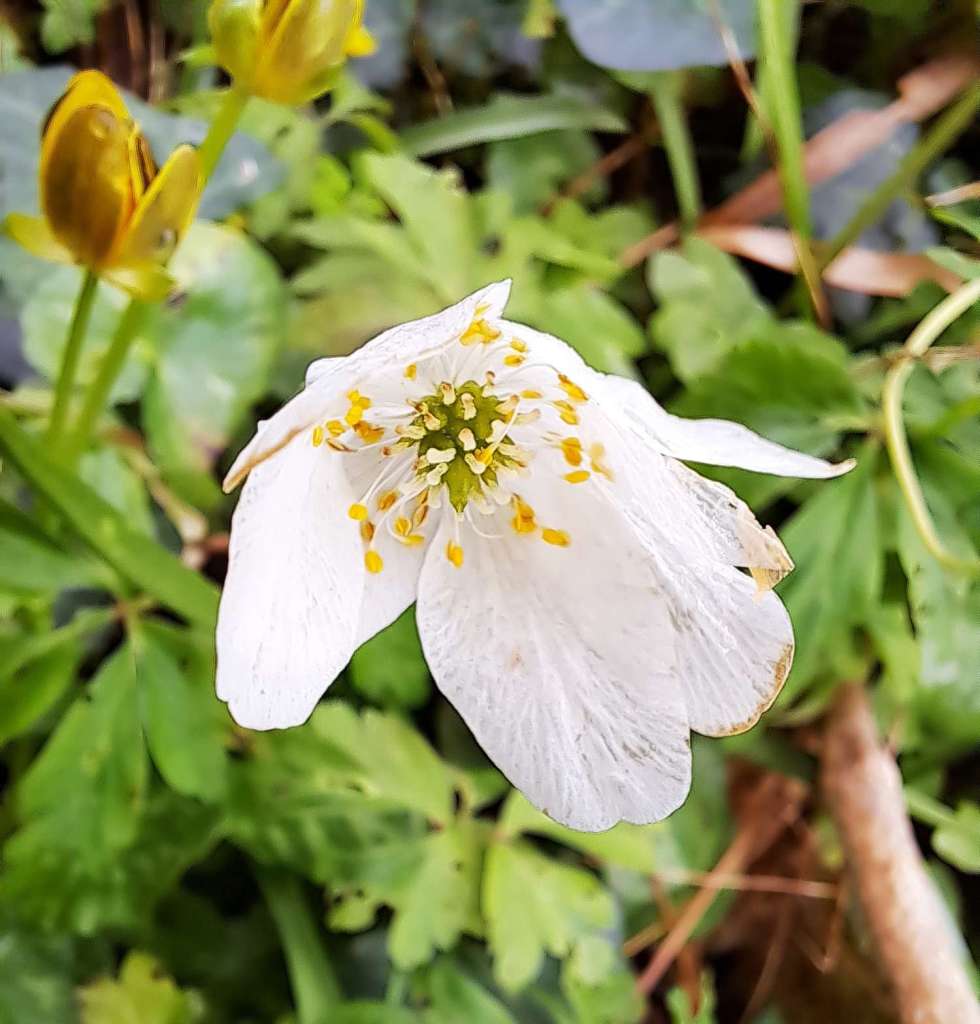
Below are the seedhead of Willow Herb, Hawthorn berries, Fern, and a late flower in the hedgerow.

Blue sky during these autumn months is very welcome.

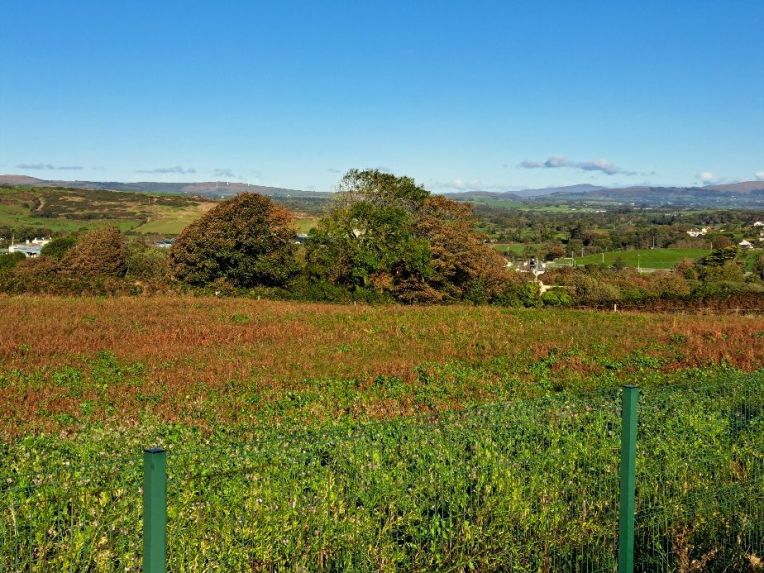
This last photo is on another part of my walk. The farmer here was growing a plant of the legume family with lilac flowers and thick looking seed pods, there is a whole field of it here, and further along there grows a lot of Dock, now in seed. What caught my attention here was the several dozen of birds fluttering and flying around all at the same time, and definitely looking as if they had a mission in common. I whipped out my phone and checked the evolving picture before me with my Merlin app and to my delight these birds came up as Eurasian Linnets (Linaria cannabina) I was so impressed as I had not seen those before here, and so many of them together. They belong to the Finch family. Apparently they are fond of flax seeds, hence their name. The male’s colouring is beautiful during the breeding season, lots of red.

Well, that walk was so nice, and finally I’ve taken the time to write about it. I’ve missed my blog writing very much and I want to be back to it regularly. So much to research and write about. I’m still driving to Kenmare every week to see Ian, I travel through the Caha mountains and I love it, the beauty of that journey is a weekly joy. Every week something new and interesting to notice and discover. And after seeing Ian, enjoying a nice cup of tea and chat together, the journey back, very often I stop to look at a view or a rock or plant. It’s so dead quiet up in those mountains, even when I’m on a main road there are whole period of quiet. I’ll tell you more about that soon. Meanwhile, much love.

LICHENS i FOUND GROWING IN WEST CORK

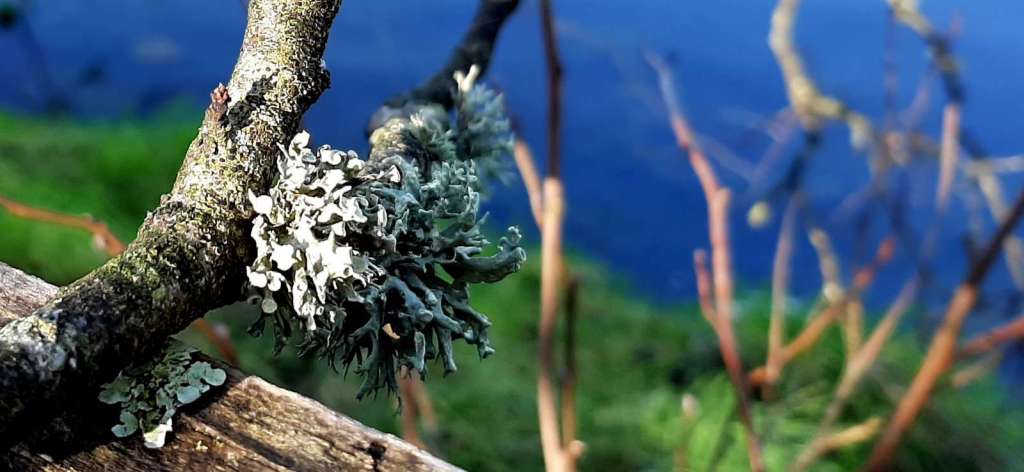
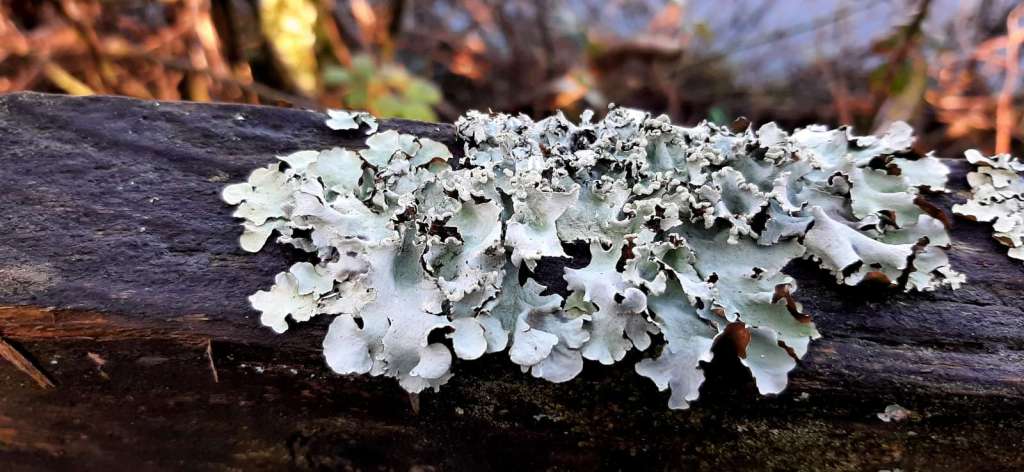
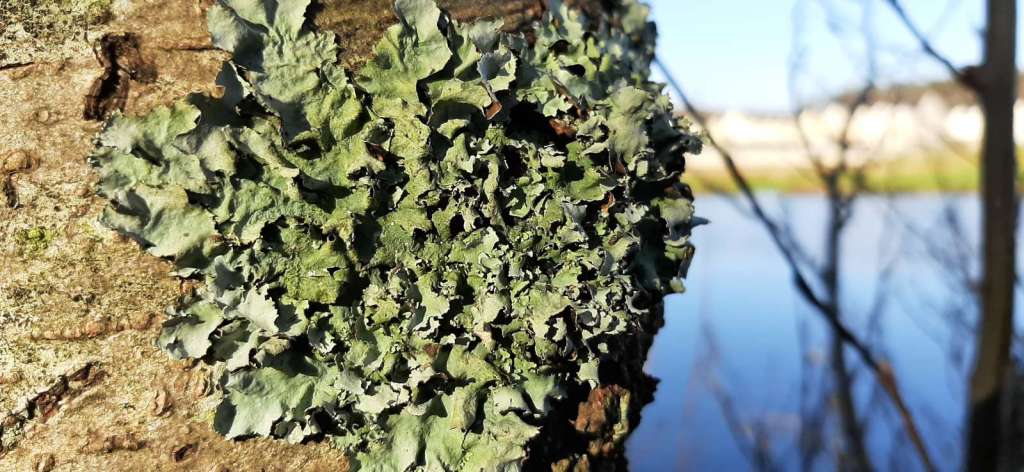
This Sunday afternoon I had a look through my recent photos of some of the lichens that I find growing in the area here, some of them in our own garden, others are found in the local forests of West Cork, growing on trees but also on rocks, on stone buildings, on roofs. Our own roof has some orange lichen (I read that this is a sign that we live in a clean environment… no pollution). I love lichen and find them fascinating but so far I have not had much luck with identifying them, for proper identification you need more than the naked eye, a microscope or at least a hand lens. So I’m not going to attempt to put identification with my photos as yet. Lichens are a combination of a fungus and one or more algae in a mutually symbiotic relationship. I read that the algae do the photosynthesis, providing the fungi with energy for reproduction, the fungi in turn provide structural form and protect the lichen from bright light . I find lichen beautiful and in fact would love a workshop on their identification, it would be very interesting especially as there are so many types of them growing here.

On the prompt of my brother-in-law I looked up this wonderful educational website: of the British Lichen Society ~ https://britishlichensociety.org.uk/learning/about-lichens: I’m sure it will be very useful for yours truly and for anyone else interested in lichen. Thanks Colin!

Lichens are found on so many trees.

Such an intricate pattern.

MYROSS WOOD ON A MISTY DAY IN APRIL

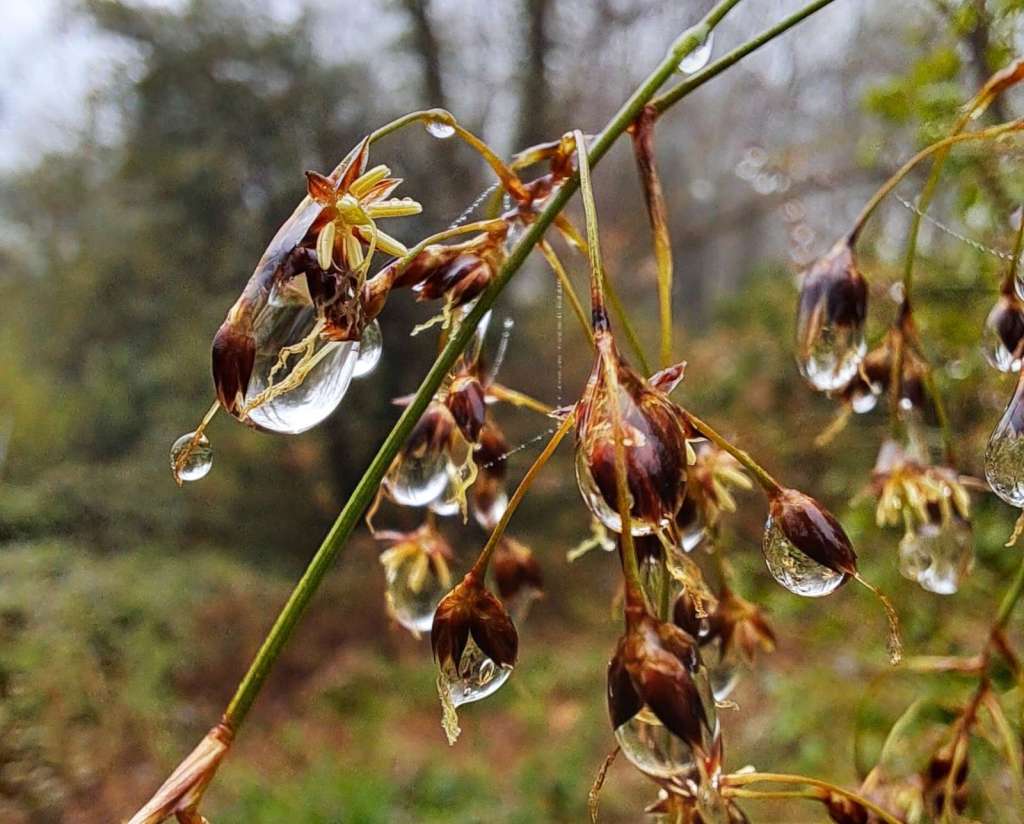
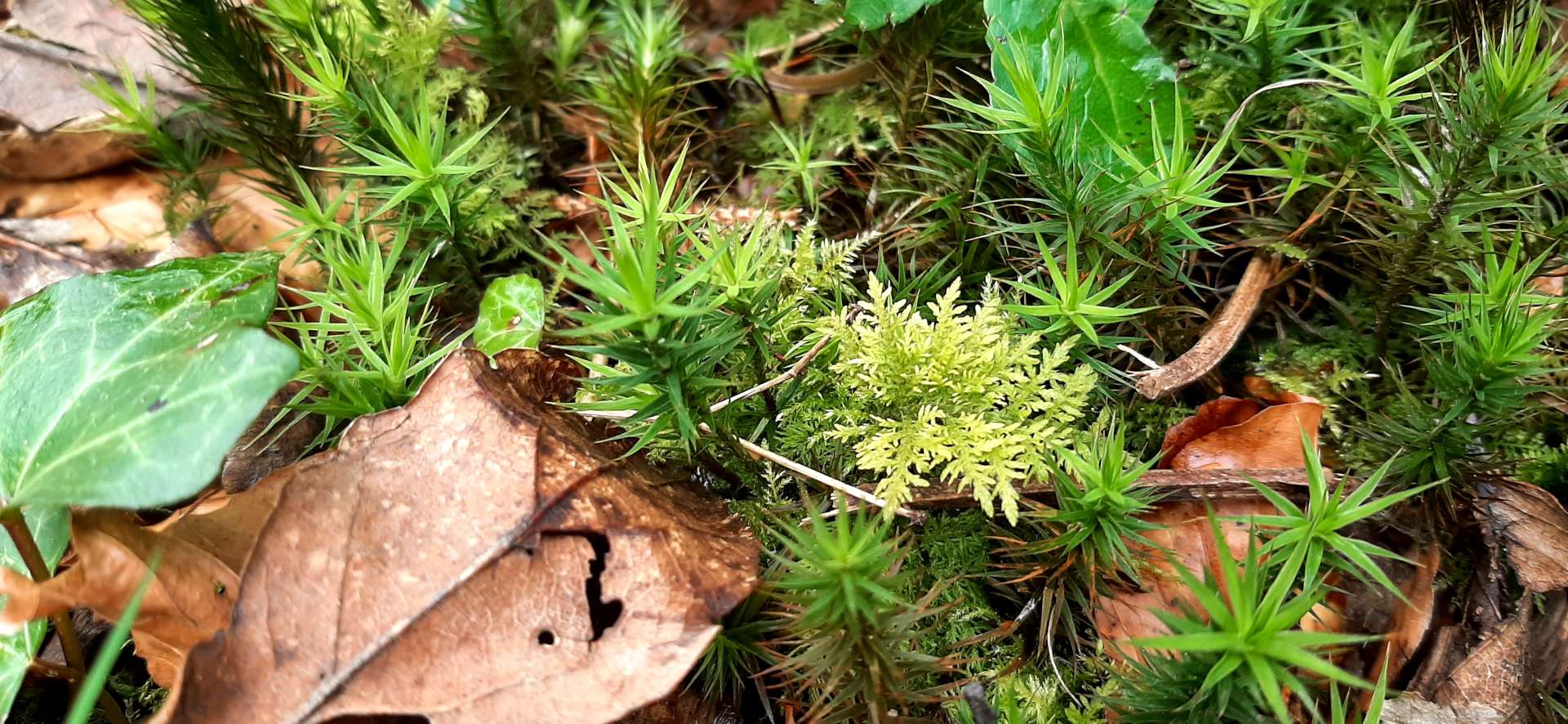
This misty Sunday afternoon was a good time for a walk in Myross wood. I’d been to the plant sale there and after picking some new plants for the garden, and a cup of tea that is just what I did. The birds were singing and there was a wealth of new life, flowers and plants, young leaves on the trees as well. I found plenty of beautiful mosses and lichens, also some fungi. As it has been rather wet the last week the woods were full of moisture and many of the plants had rain or mist drops dripping off them. An ideal way to see the forest, beautiful and calm, no wind. There were few other walkers. I could hear the brook from afar adding to an overall feel of dampness which in fact did not disturb me, rather it gave me a refreshing feeling. April in West Cork can be a nice month, still chilly at times but when the sun comes through it gives all of its warmth at once, a very nice feeling that is. Often the month of May is already our summer with temperature going over 20degrees Celsius. But seeing that it is still April the days can be unpredictable, today was misty and windstill, very quiet. The detail that is to be found on the forest floor among some of last autumn’s leaves is amazing, all the new life, so fresh and delicate, beautiful and interesting too. I found plenty of that today. The many photos that I took of the lichen I’ll be showing in another blog post, I simply love lichen and mosses too. Meanwhile enjoy what follows today and thank you for visiting.

HEALING FOREST AND WILD PLANTS

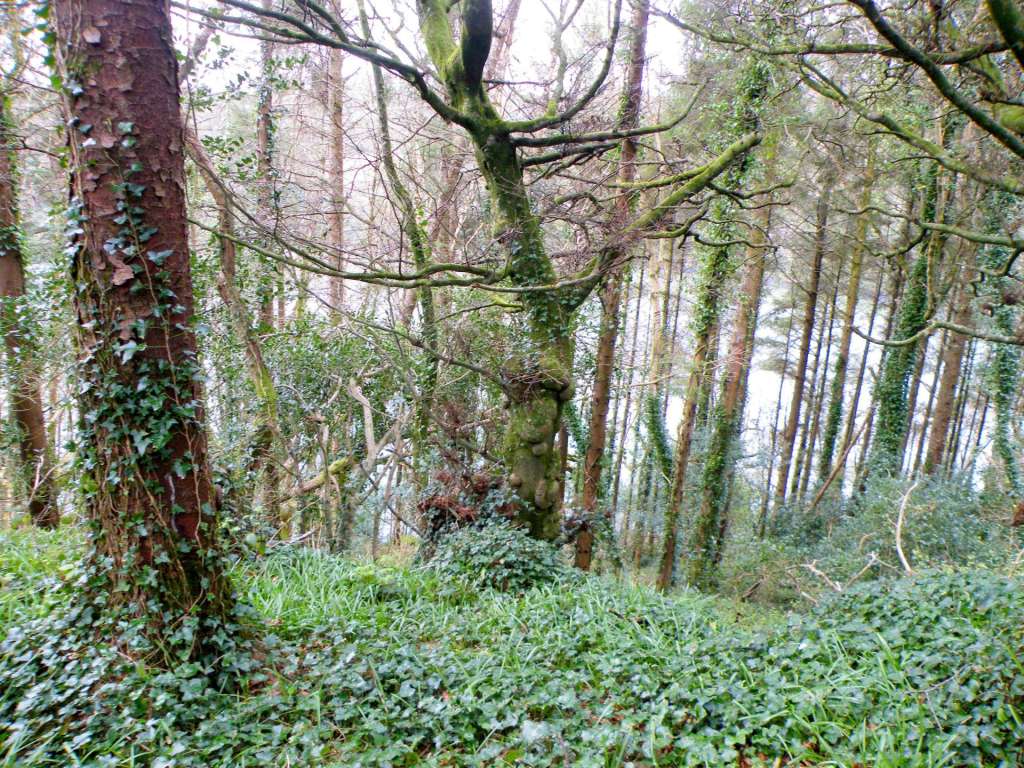
What is nicer and more calming than a walk in a forest. Listening to the sounds, the wind rustling in the canopies, smelling the trees and the herbs, looking at all the different shades of green or brown, feeling the roots or the rocks underfoot. Walking in a forest can be the ultimate sensory experience. When I walk in our local forests with my grandchildren I see them clambering over branches and rocks, paddling through some of the muddy paths, picking up pinecones and twigs with lichens or piece of old bark, and the youngest girl picks up and carries with her any dead branches and trails them behind her all along the walk. Their young minds are open to everything they see and experience no matter how often they actually do these walks. My daughter and son-in-law are real nature lovers and outdoor people and they take the children out on hikes, walks or beach days whenever they can. West Cork has good opportunities for this, and even the unsettle weather or rain does not faze them.

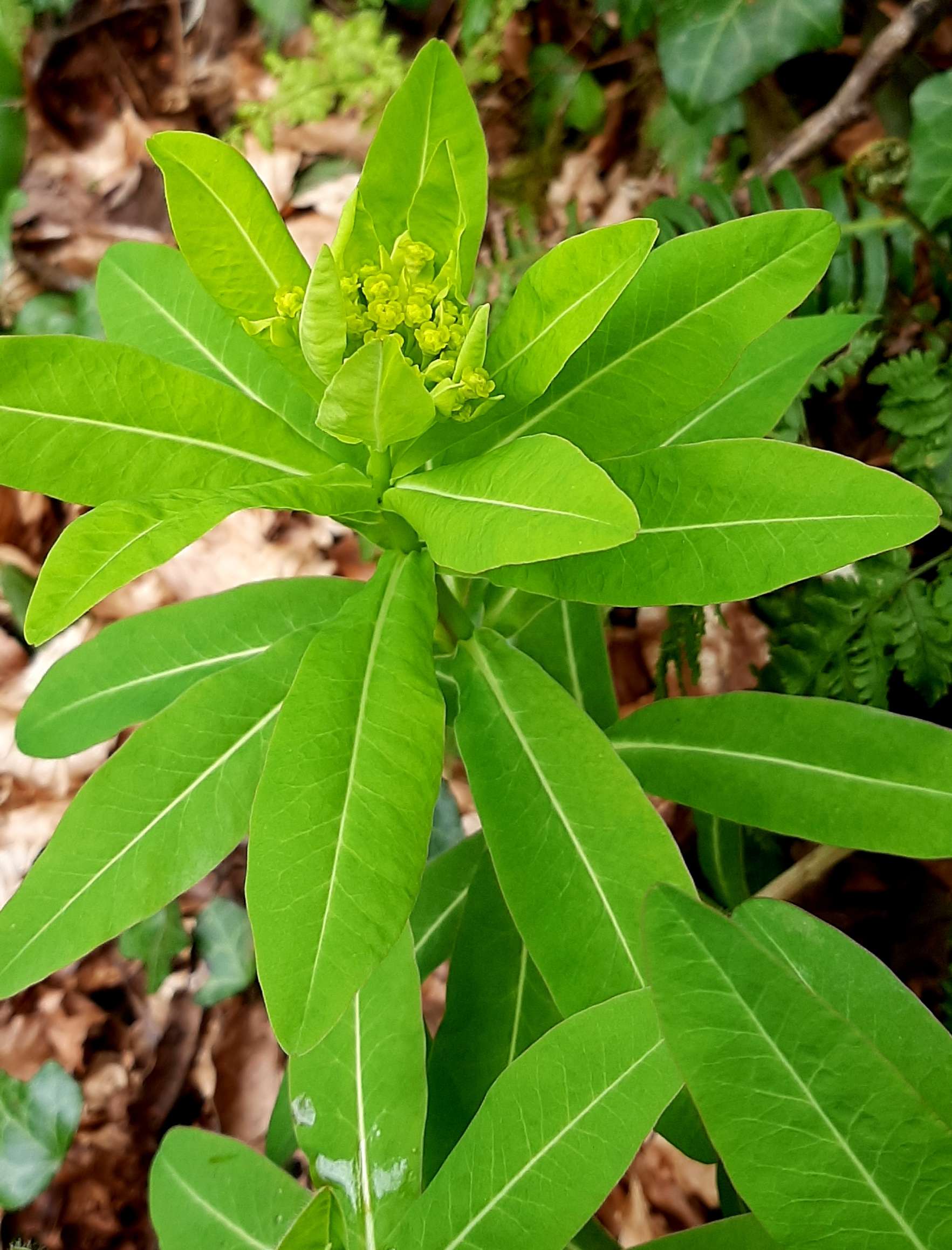
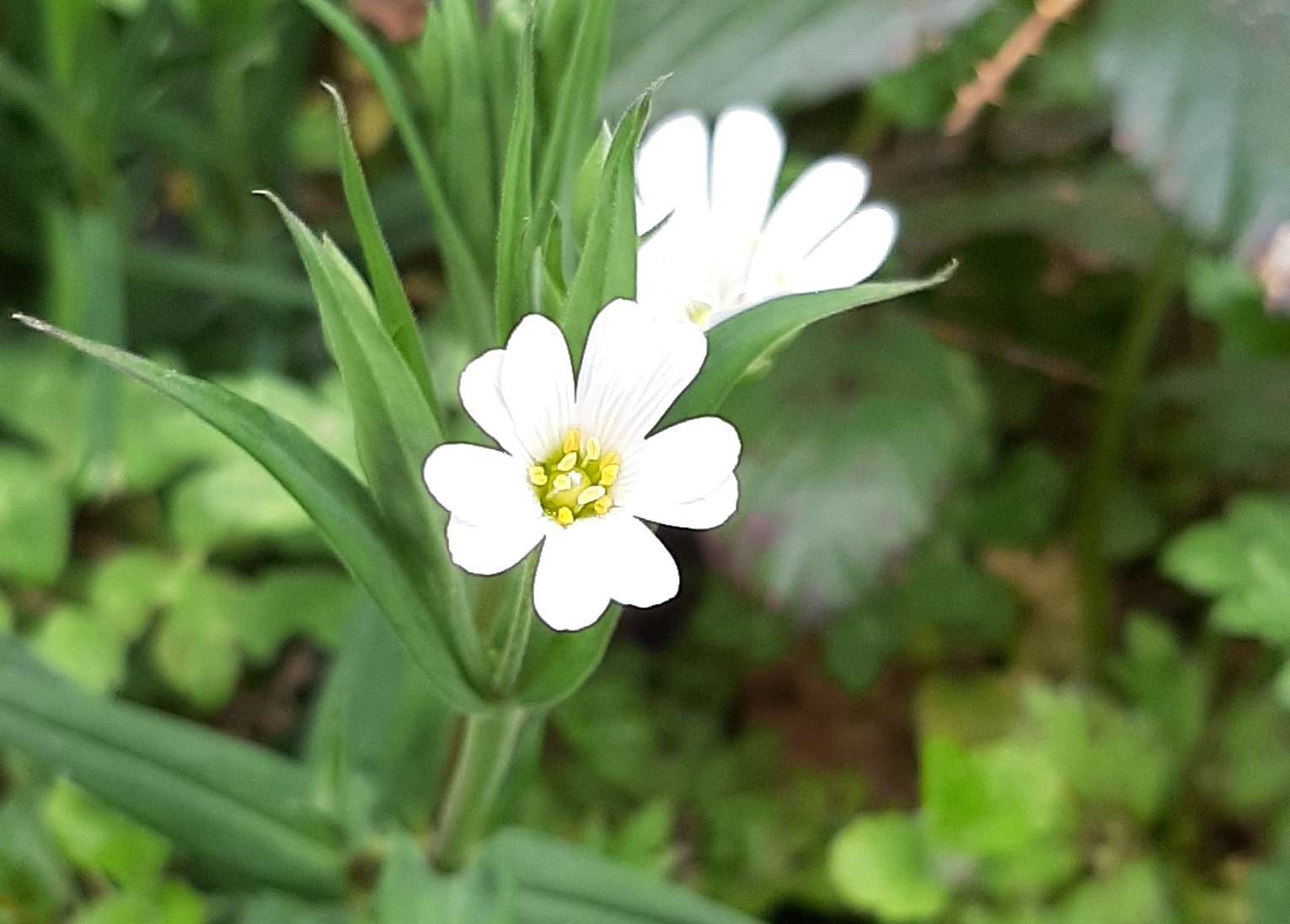
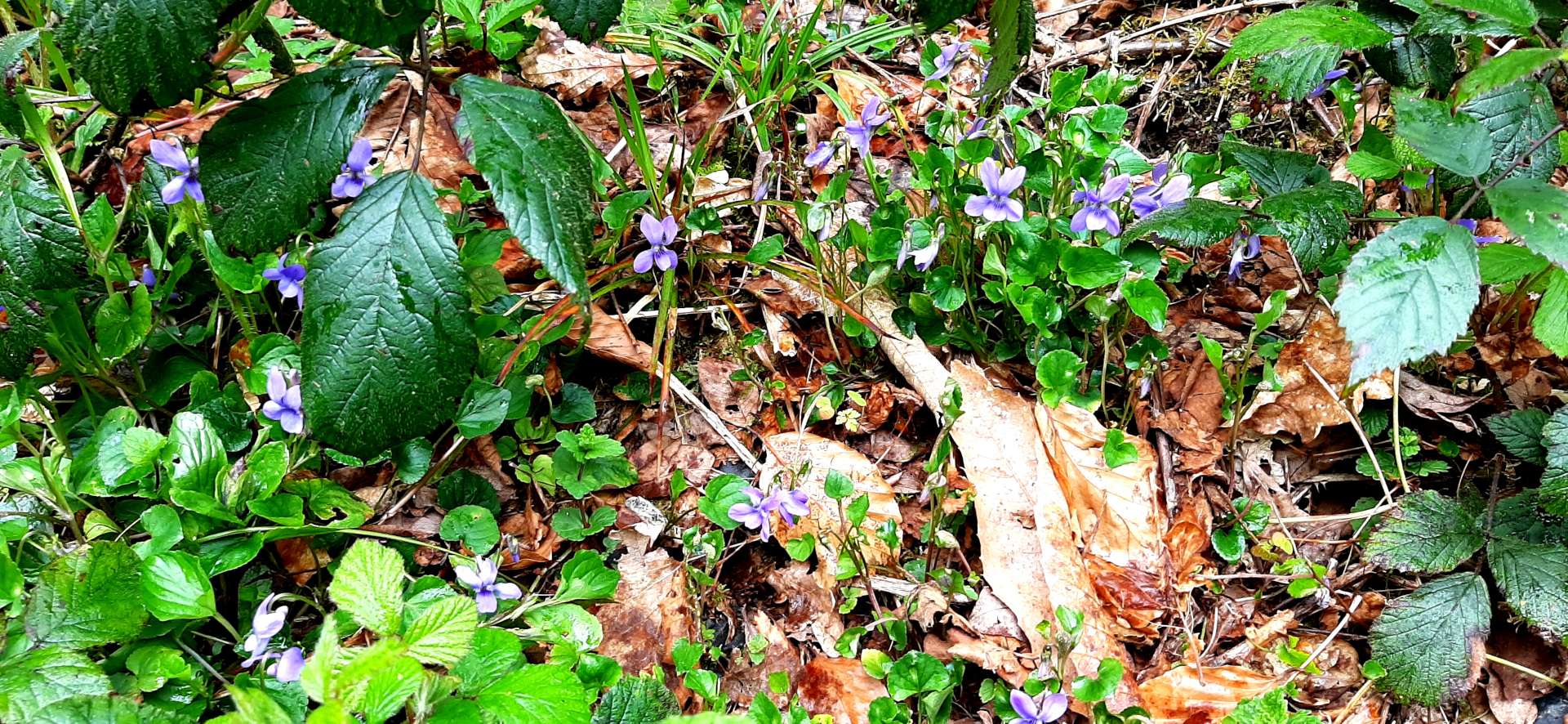
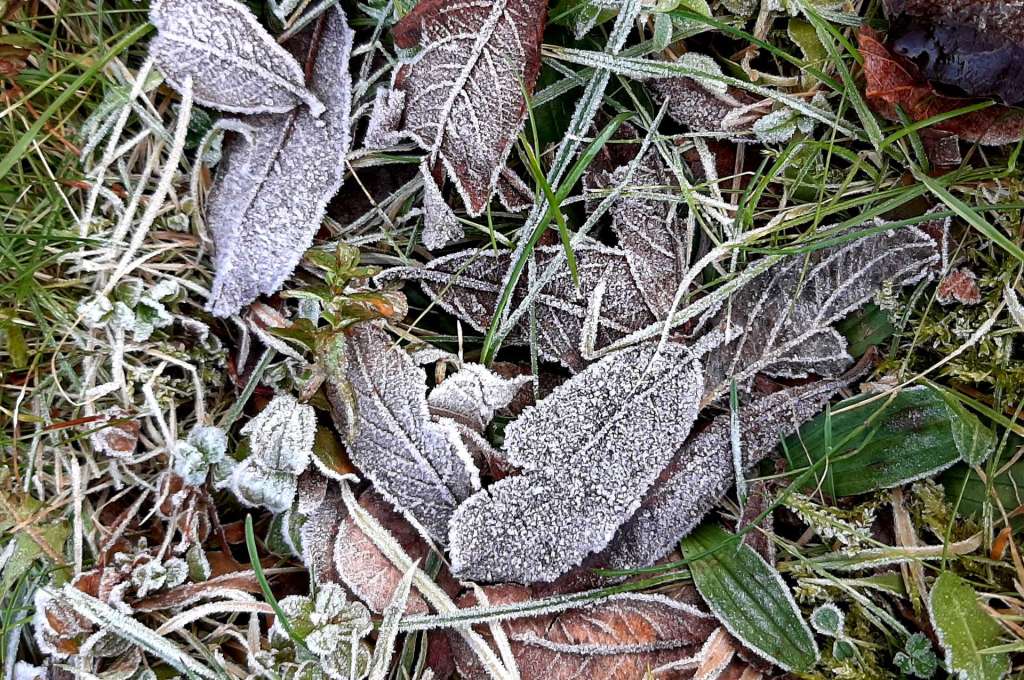
Right now the Irish native forests are full of new life, young plants, flowers and mosses. There are still night frosts and it is still a bit chilly but the sun is getting stronger by the day to our delight. We have had a real light April shower yesterday which refreshed everything and was good for growth. In the forest the spurges are giving a lovely show, the celandine, wood sorrel, blue bells, violets, stitchwort, and wild strawberries are equally blooming. The willow trees which are among the first to provide blossoms for the bees are now almost in full leaf. And already the bumblebees are buzzing!

I find a walk through the forest very calming but also refreshing, I think that it is the good air provided by the trees, the extra oxygen. But there is something more at work, Erich Fromm called it “Biophilia.” which is a love of life, an instinctive fondness for all that is living, our fellow humans, the plants, the trees, the animals. Our human brain craves greenery and an interaction with other living things. I read that we are naturally drawn to natural settings, and apparently things like ‘forest bathing’ can reduce our blood pressure, heart rate and lower our cortisol levels. But most of all it relaxes us and can quieten our often overstretched minds.

From a young age I have found it a need of mine to be surrounded by plants, whether it were houseplants or garden plants, now-a-days to see the green fields from some of our windows gives me great pleasure. But to actually be out in nature and get the full benefit of it has got to be far better still.

I hope that everyone is enjoying either spring or autumn seasons and also looking forward to less restrictions all over the globe.

MEETING WITH A SPINDLE TREE

It was quite unexpected that I came upon a Spindle tree (Euonymus europaeus), I first noticed the red berries now mostly decayed in the mud, and recognised them as being spindle berries. When fresh they are so very beautiful! So I looked out for the tree and found it growing beside a much thicker trunk of a tree unknown to me. Part of it had fallen down and is probably dead. The crown of the tree though was still full of the berries. Do some of the birds feed on them? I do not know. The first I ever heard of the Spindle tree was from a Dublin lady called Hilary. She used to read out her essays on nature on Sunday morning in a radio program called Sunday Miscellany. Although I was fascinated this was before the internet and Google search. So I never really bothered to look up something about what was said to be a very beautiful and also a native tree to Ireland.

Apparently it’s easy to grow from its seed and I might try it. I found quite a bit of information on how to go about it. Germinate Seeds from Spindle Trees – BBC Gardeners’ World Magazine

And here is another website link, it is full of information about this interesting bush. Tree Lore: Spindle | Order of Bards, Ovates & Druids (druidry.org)

Finding this to me new and interesting tree was the highlight of my week, we might be in lockdown but there are still always new wonders to discover.

I just want to add a little note here. I am not being very active at the moment both in posting and in reading posts from others. I am very busy but also my inspiration seems to have taken a downturn. I know this won’t last so I am just going with it. It is good to have a period of reflection as well as a period of posting a lot. I’ll soon be reading all your blogs again dear friends and followers and I wish you all the very best. Thank you for reading my words.

MAGICAL WINTER WALK

First I would like to wish all my friends and followers a beautiful new year ~ Let 2021 be a year filled with hope, many blessings, happiness and good health. That is my wish for everyone of you.
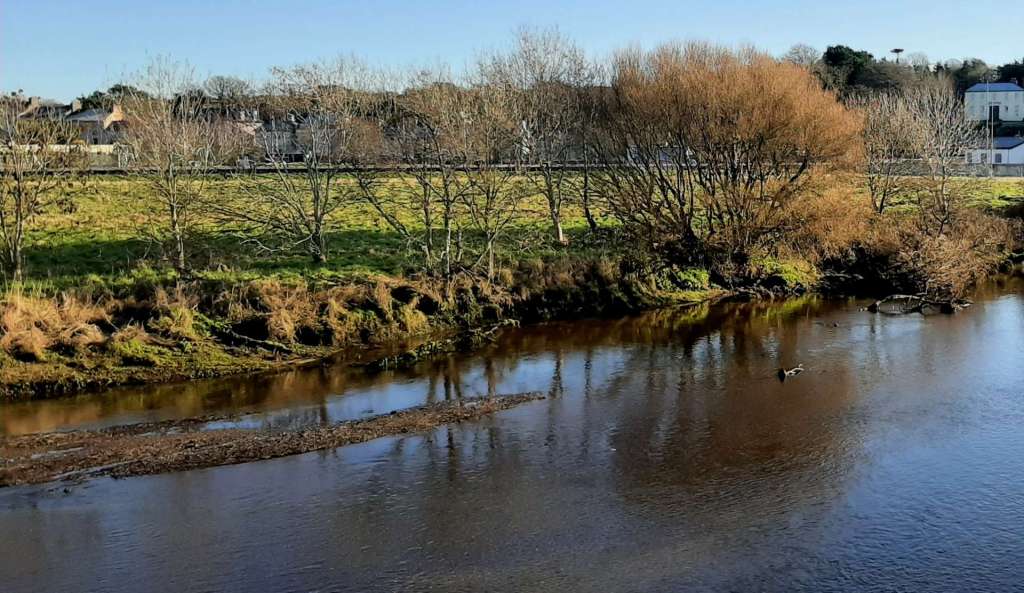
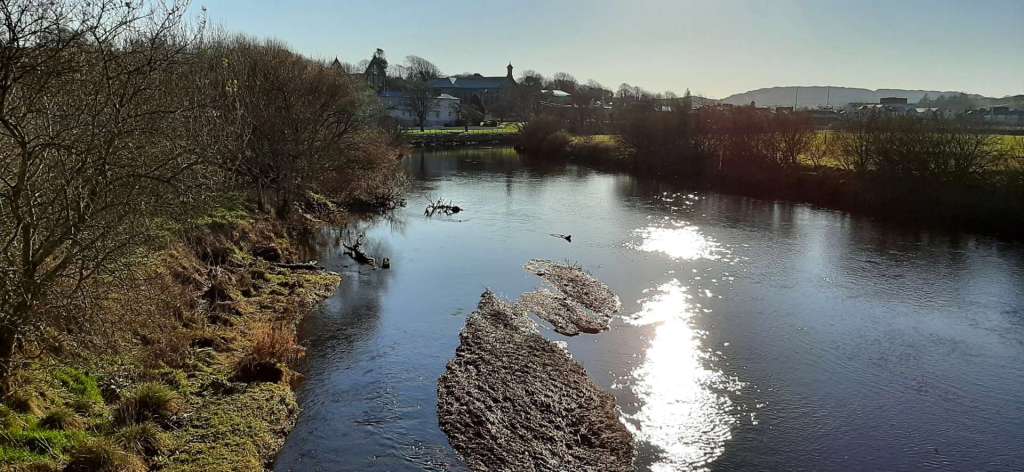
My walk took me around our little town on the ring road, this road is relatively new and is flanked with interesting shrubs. It also gives lovely views towards the town and behind it some the hills that surround us. At some stage the road crosses the river Ilen. The view is always spectacular, the river is tidal, today the tide was high which saw the sun sparkling in the water.

I am hoping that you all stay healthy and happy during these frequent lockdowns. Sending you all much love. Let 2021 be a year full of hope and happiness.

A LIVING LANDSCAPE

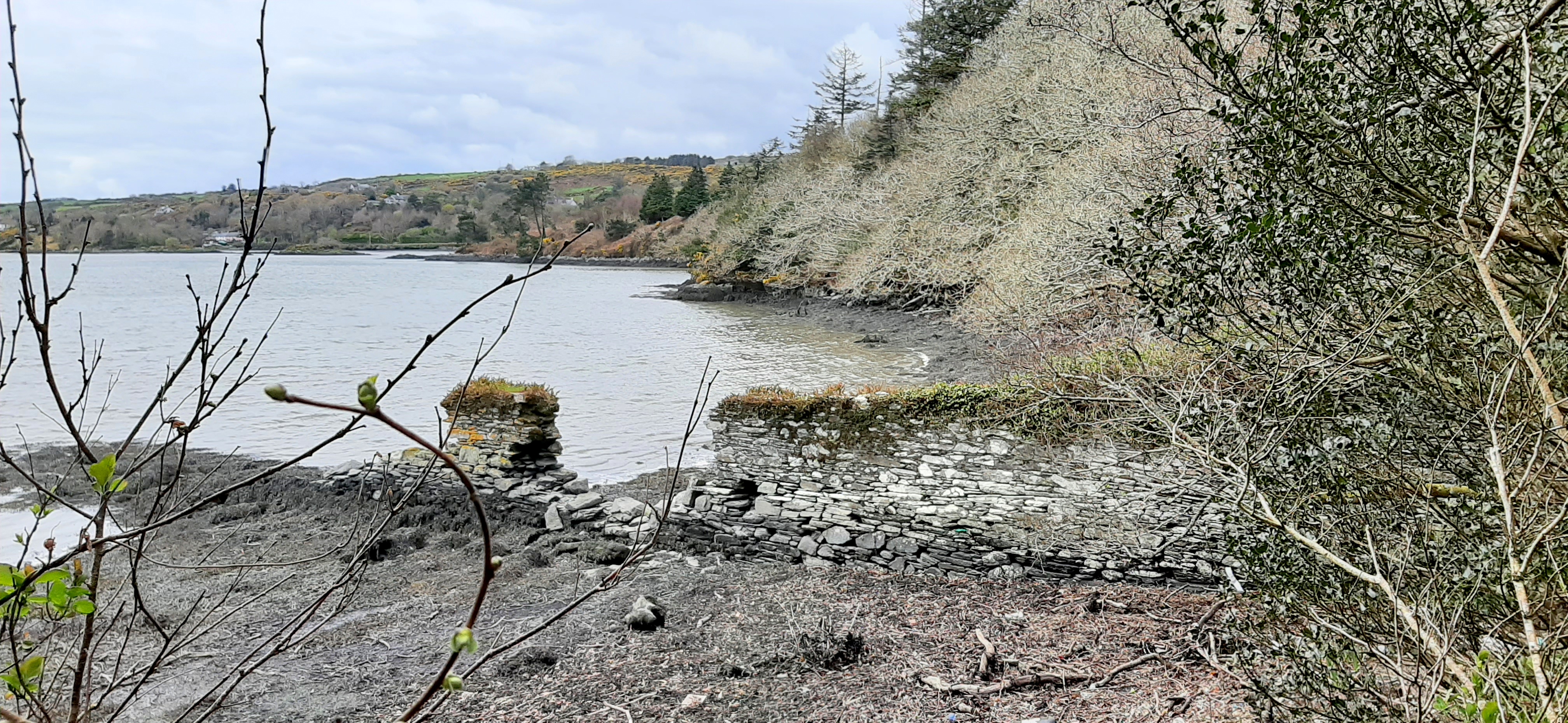
Looking for signs of life whether in the past or in the now. This is what currently interests me in my photography. I’ve always been shy of taking photos of people, I have felt that it would be too intrusive, and because of my interest in nature I mostly take photos of plants, landscape or insects. This I enjoy. But recently it has come to my attention that I am always searching for signs of human habitation or activity, signs that the land has been worked, of structures having been used by humans; bridges, stone walls, gate posts, ruins, ancient pathways, old churches or houses or other structures. All these are interesting and give pleasure, not only from trying to find out more about them locally, from the internet or from books, but also from the sheer beauty of them.

My attention has been drawn by my friends and followers that you like to see this variety too in my blogs, and I find this very helpful and realise that by blogging and interaction with my other blogger friends I get to know myself better, and I define what I really want to record. I am grateful to everyone.

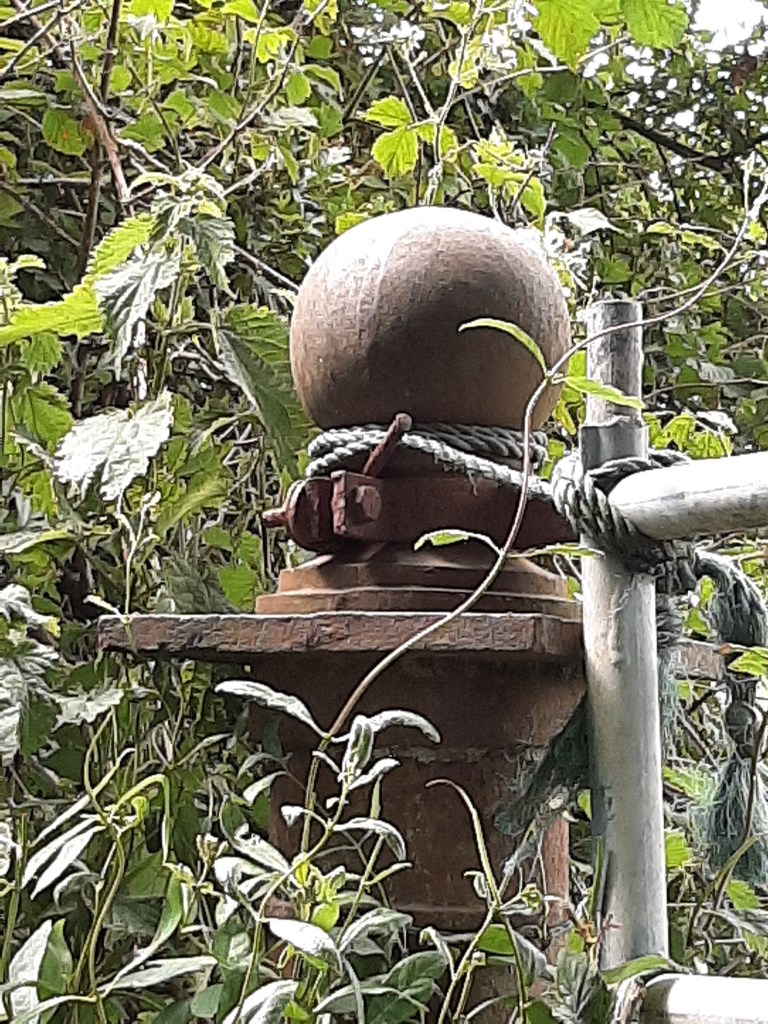
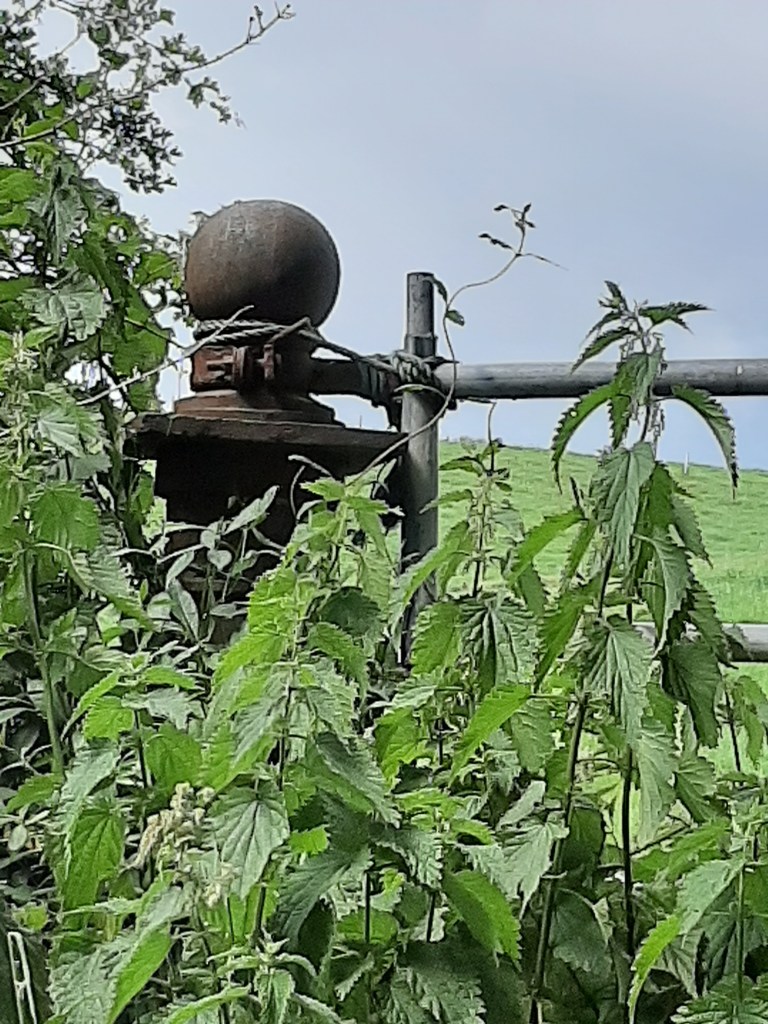
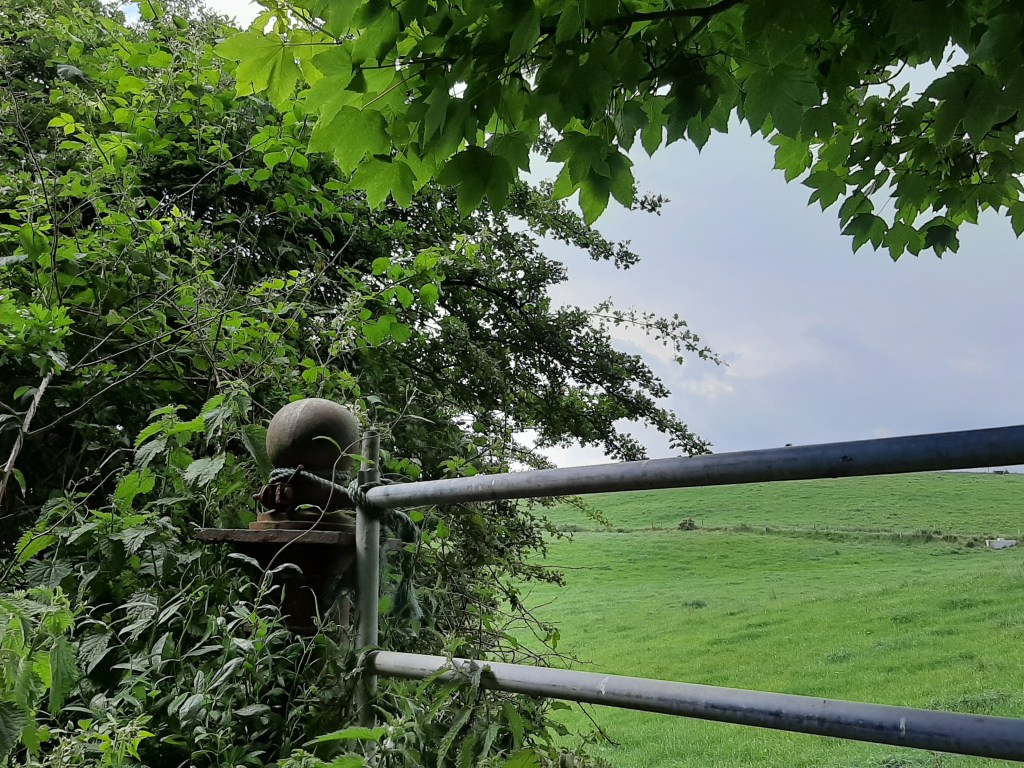
And so yes also on this walk last Saturday I did come across a broken old iron gate, rusty and fallen down, it has had its use in the past of that I am sure. And then I saw an iron gate post which is quite an unusual find around this area and I wonder how long it has been supporting this newish galvanised gate. Was this always a gatepost? Or did it start its life as something different on a farm in the area?

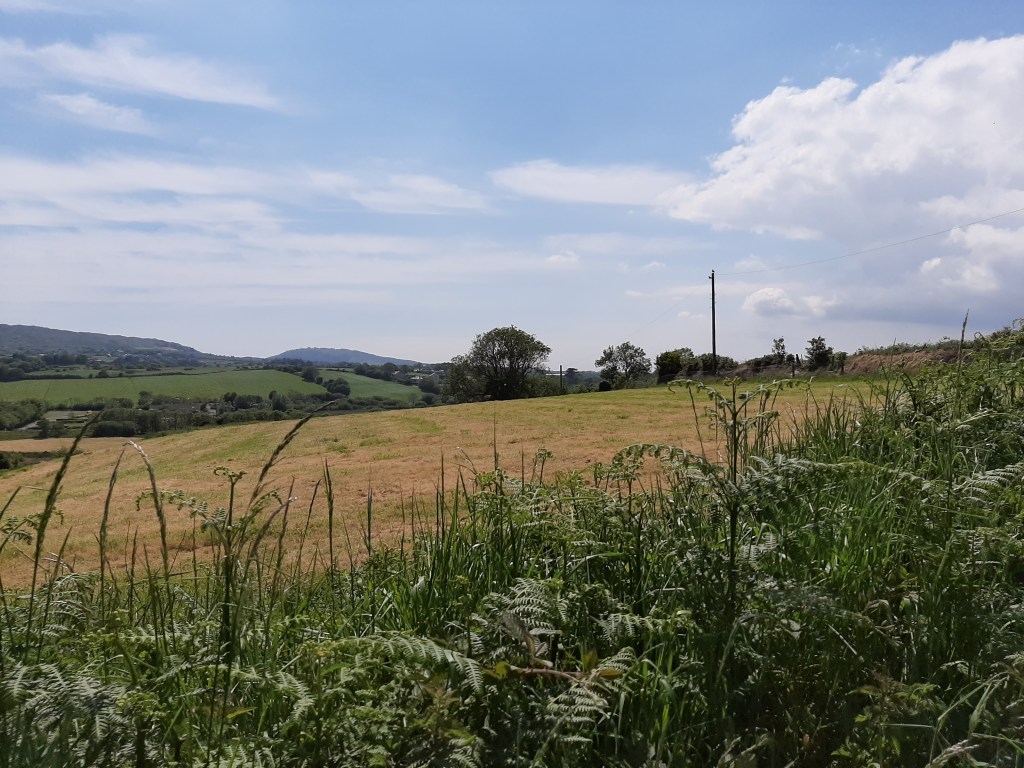
It is always lovely to see acres of crops, stretches of land that change colour according to the seasons and to what is grown on them, also fields or meadows sometimes with cattle. There is something so soothing and reassuring about a pastural landscape, I think that it goes very deep in a person, to see the land being used and crops being grown, it gives a deep feeling of safety and that all is still well with our earth despite all the environmental problems.

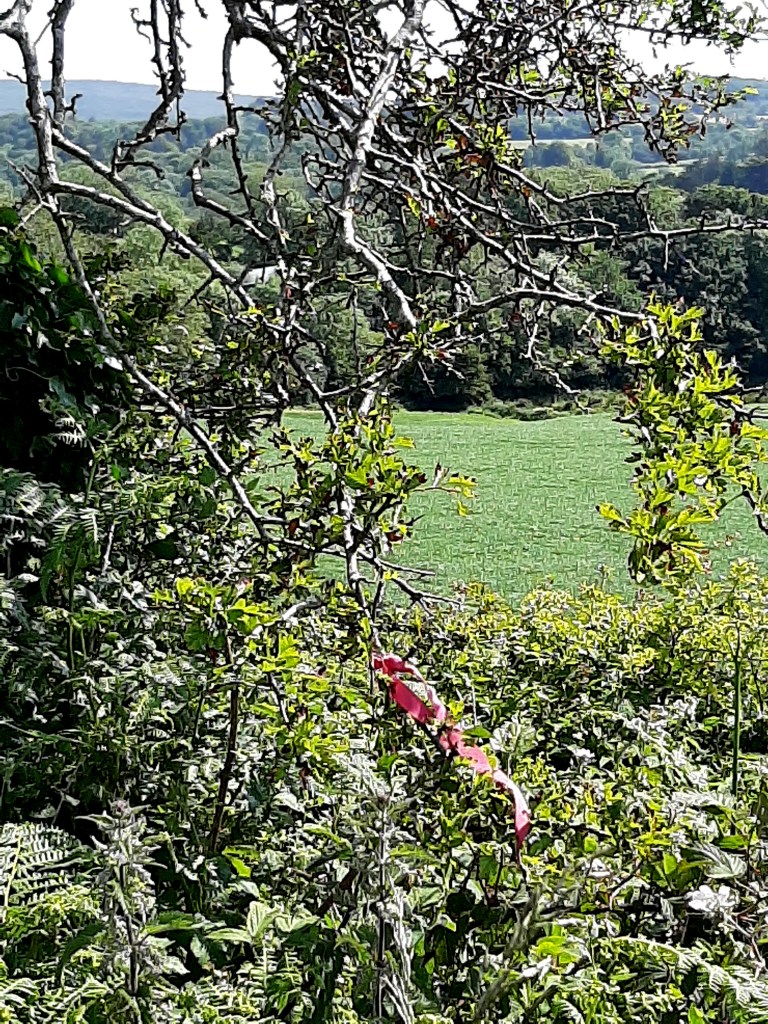
And then I spotted a red ribbon in this tree and it reminded me of an old tradition, not only in Ireland as I have seen it in South India too. People tie ribbons usually on hawthorn trees as a gift for spirits or fairies and as a symbol of a prayer or a wish granted, usually someone with an illness or unhappiness. This is done mainly during May around the feast of Bealtaine. I was quite surprised to spot this ribbon and it does add to the interest.

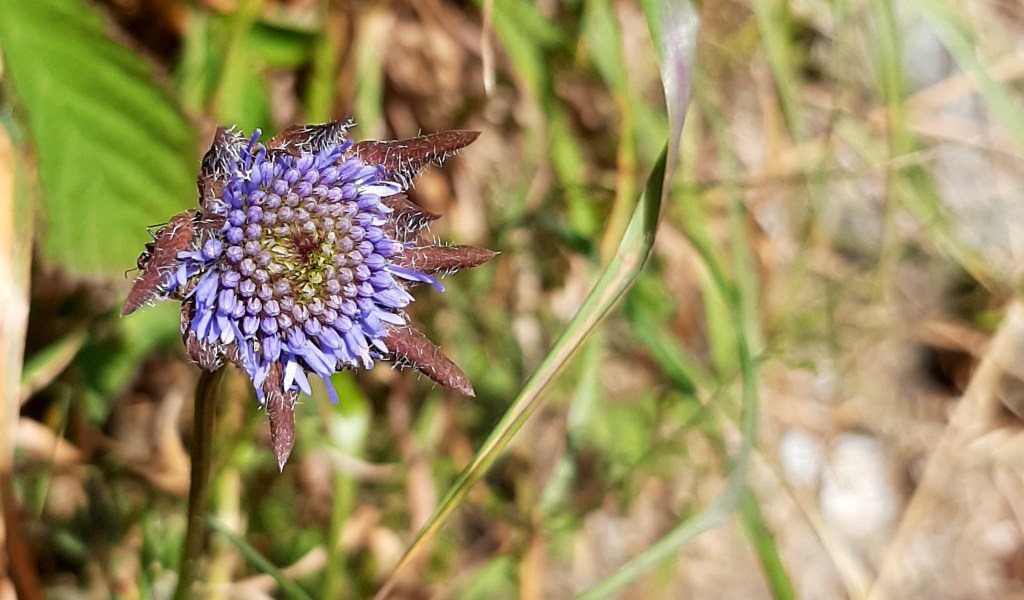
But here are also some of the wild flowers along my path, as always such a delight.

It has been another glorious day today after a real thunderstorm yesterday with a heavy rain shower, but it is this rain that makes the countryside in Ireland so green, lush and beautiful. We very seldom get thunder here usually only one clap and done, but this one took half an hour with brilliant skies and fantastic lightning and afterwards when the sky cleared and the rain stopped all was still, and then a blackbird started to sing!

JUST NOW

Just now we returned from catching some fresh air and admiring the beauty of Loch Hyne some 10 minutes drive from here. There were many people, young and old swimming and more people chatting over cups of tea. The sun had come out and it was now actually warm. A most beautiful evening and a great ambience.

Tranquil and lovely

I noticed two new flowering plants that I want to identify. Ok I think that both these two photos are Sea Spurreys. The one on the right might be Greater Sea spurrey (Spergularia media) but I have a suspicion that it is actually Rock Spurrey but in order to confirm that I have to go back and check the underside of the sepals. This little flower has 10 stamens and the sepals are shorter than the petals. The photo on the left, I will also go and double check this little plant, it is a Spurrey but I am not sure which one, probably the same as the one on the right but not in as good a condition. So some homework for me to do.

Cat’s-ear

Lichens growing on the stone wall.

We both feel refreshed and ready to head into a peaceful night.