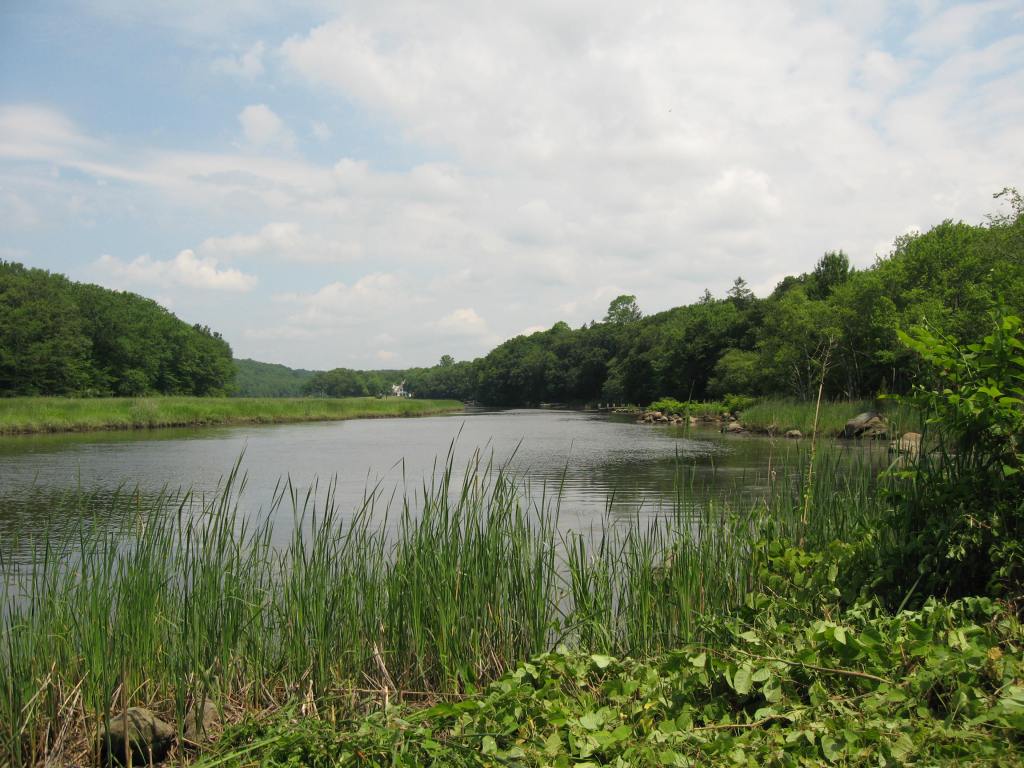
Along the seacoast of New England somewhere between New York and Boston lies the charming town of Old Lyme. It is a very peaceful place surrounded by beautiful mature hardwood trees and the river Lieutenant, which flows past this town adding to its total charm.

Old Lyme is also the place where Florence Griswold lived in a large house with an impressive façade of four tall columns capped with Ionic capitals. The extensive gardens, bordering on the same lovely river, where reeds are growing along its borders, make it a very pastoral setting.

I visited this large house, now a museum and was shown around on a guided tour. The moment that I learnt about the life of Florence Griswold, this amazing 19th century woman, I became a great admirer of her. A single woman, she decided to supplement her income by opening up her large house by taking in lodgers.
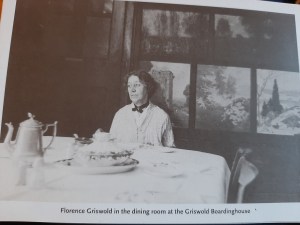
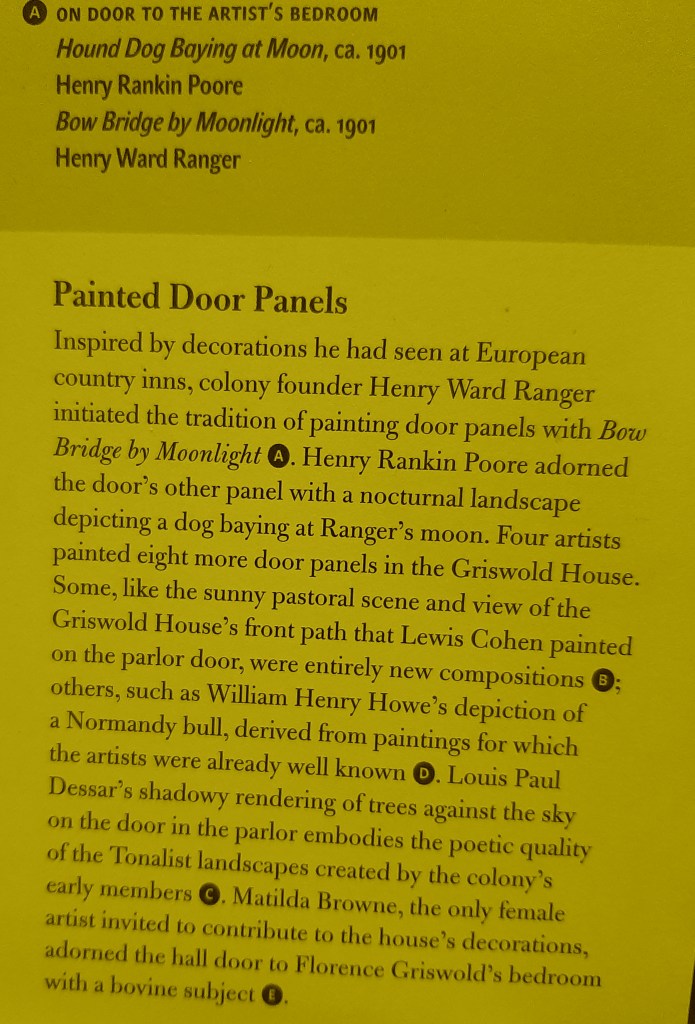
A New York artist, Henry Ward Ranger was one of the early lodgers in her place, and he brought along more artists, all of them were tired of modernist painting and they wanted to experiment painting rural life, in and out of doors. Soon an Art Colony was set up and more painters from all over the place came to stay and to paint, to enjoy each other’s company, and no doubt to compare and discuss their painting styles. In the early days many painted in the Tonalism style, in rather dull colours and tones, often giving a rather misty and perhaps poetic mood to their subject, i.e. the surrounding rural landscape of Old Lyme. Florence’s house has many examples of this style of painting as the artists enjoyed some of their time with painting all wooden panels of doors and walls in this large house. It is interesting to see the contrast with the impressionist style used in many of the later paintings.


It was in a visit to the Krieble gallery, which is found in the same grounds, that I learnt more about how these artists came to start to change their painting style and how they were influenced by French impressionism via contact with Giverny in France and the painting colony there.

In the Krieble gallery found in the grounds of the Florence Griswolds museum, there was an exhibition running (till 27th July 08) called “Impressionist Giverny – American Painters in France, 1885 – 1915”, which showed over fifty works that tell a story of an artist’s colony in Giverny, the village in France where impressionist painter Claude Monet lived.

Program of exhibition 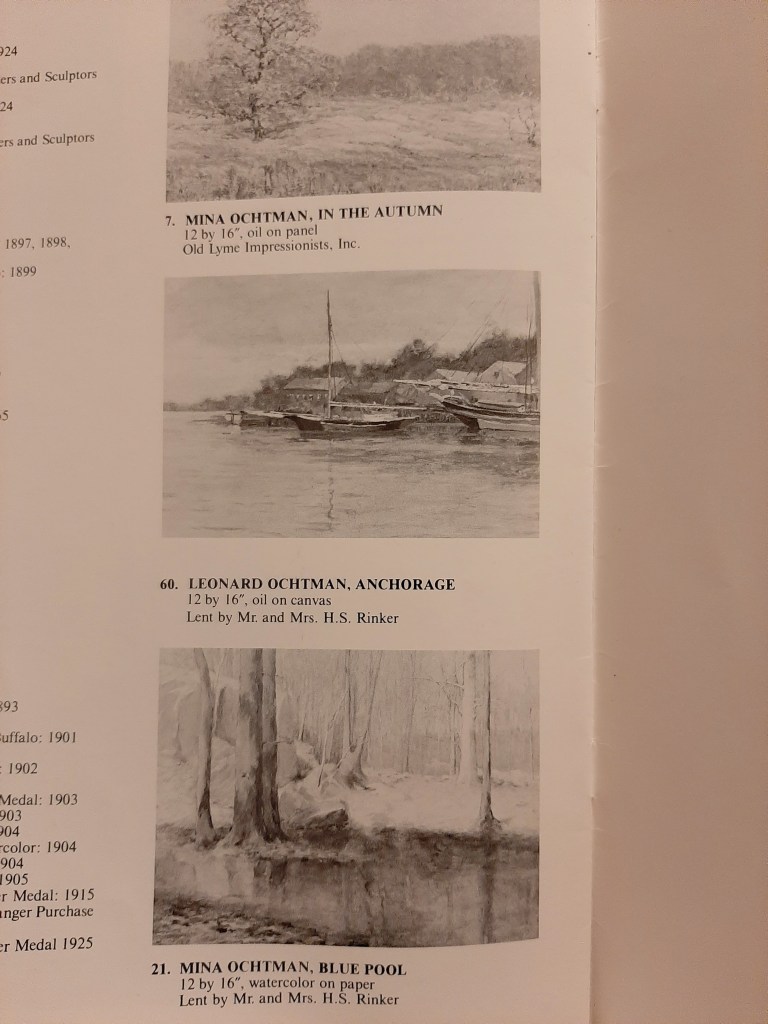


Mina Ochtman, Village street scene 
Leonard Ochtman, The return of spring 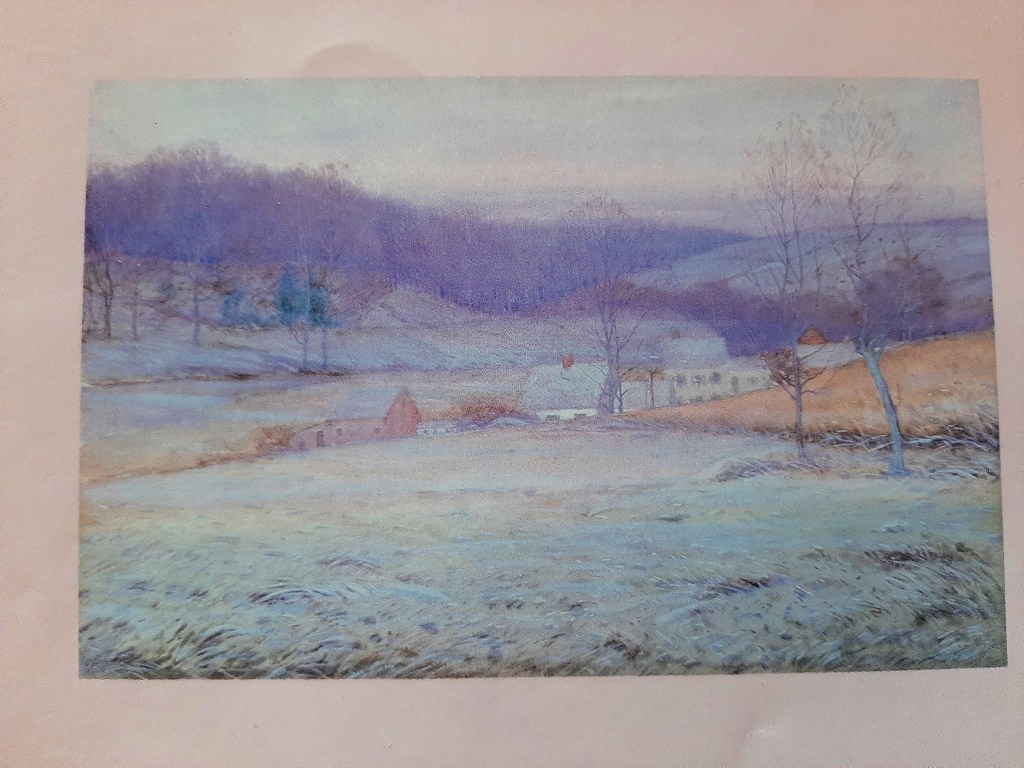
A little about Giverny and its Impressionist art colony
Giverny welcomed very many artists in the late 19th century, early 20th century. Claude Monet, who had moved there, acted as a magnet and attracted many other artists to come and stay or live in and around Giverny. Artists came from all over the world, but especially from America. They enjoyed painting in the village and the area around it, and enjoyed a busy social life too. Parallels have been drawn between Giverny and the town of Old Lyme in Connecticut as they both shared a similar history, in both places there were artist colonies, impressionist’s painting of and in nature, and enjoyment of each other’s company. The link between Giverny and Old Lyme became stronger when the American painter Willard Metcalf, who used to be part of the Giverny colony, went and lived in Old Lyme, joining the artists there at Florence Griswold’s boarding house, naturally he, among others, brought influences from Giverny impressionists to Old Lyme, and to American impressionism. This was an important development.
I enjoyed this exhibition very much, especially as I wanted to become more acquainted with American artists and art history. While enjoying this exhibition, my attention was drawn to the amazing “Studies of an autumn day” a series of 12 paintings of a haystack showing the changing light and shadows during a day, by John Leslie Breck. In truth this is a reminder of Monet’s many paintings, showing a haystack in all sorts of light. Among the paintings exhibited were also some beautiful garden scenes with people, and of flowers.

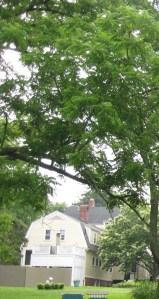
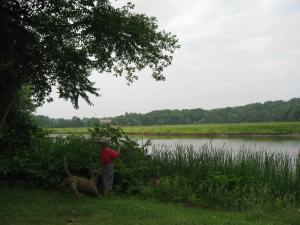
In the gardens, are a fantastic variety of mature and large beautiful trees, and the meadows leading down to the river, the stylish and typical American wooden houses, they all do give the area a lovely and rich atmosphere, stimulating the artistic imagination.
I spent two wonderful days here, having a love of art and of nature, visiting this amazing place was for me a very enjoyable learning curve. And even when my visit has been a decade ago, it still gives me lovely memories. I never did get to go to Giverny in France to explore the area and le Musee des Impressionnismes there, but well you never know it might happen yet.