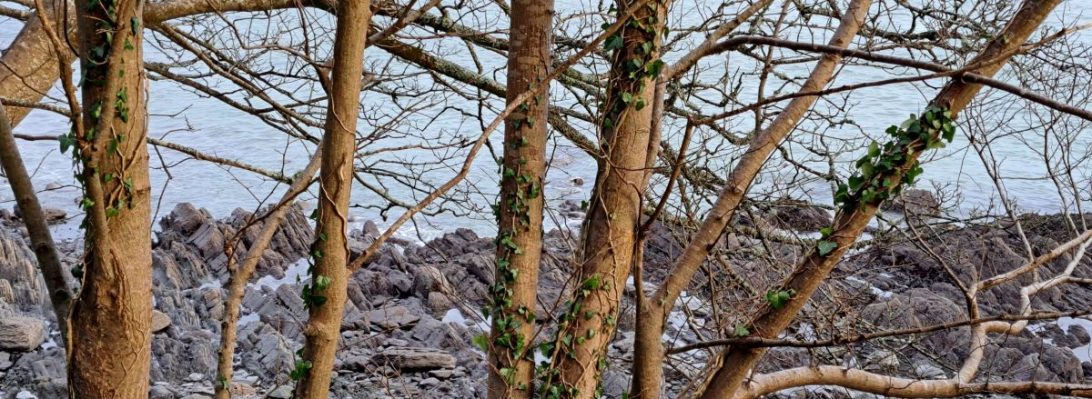
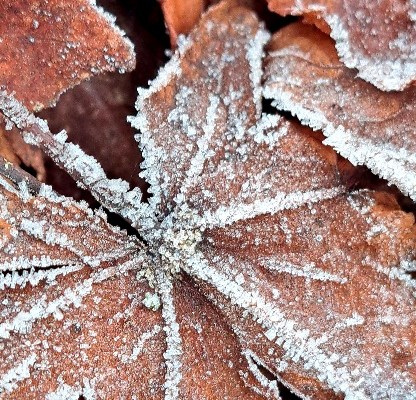
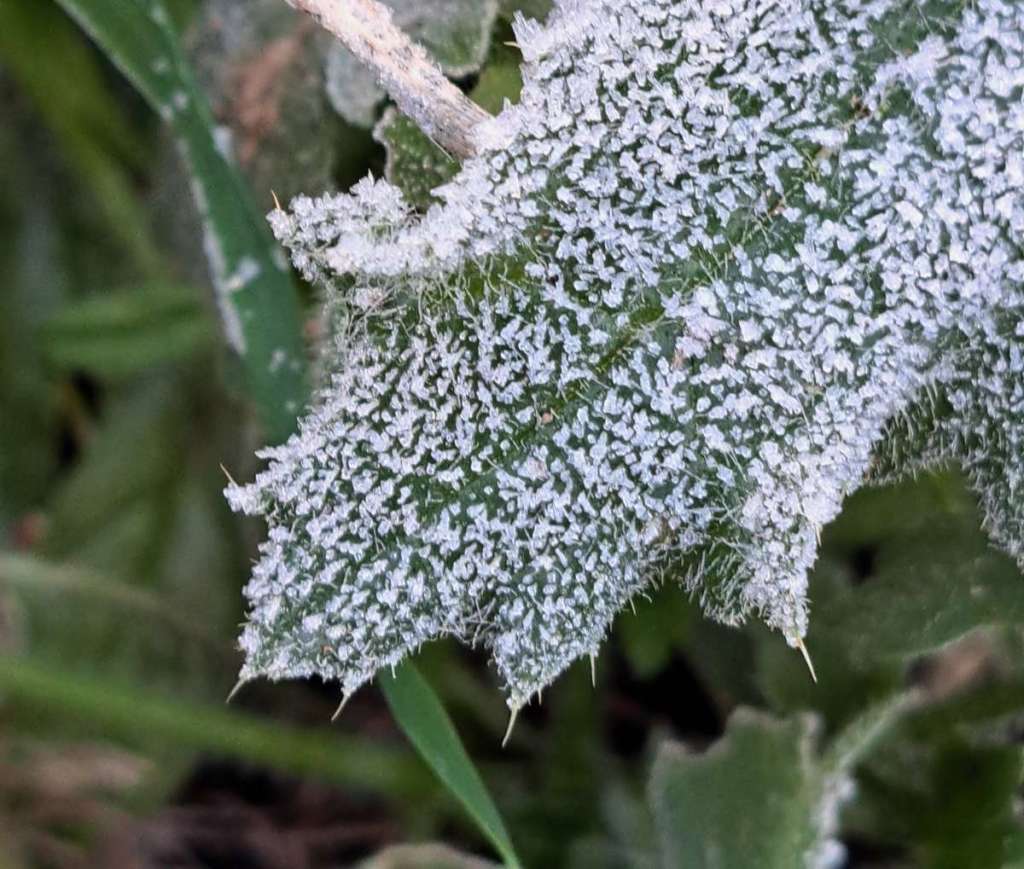
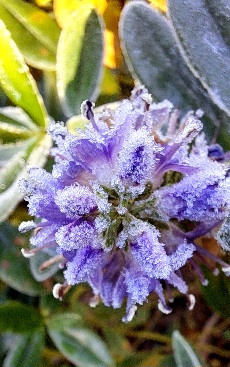
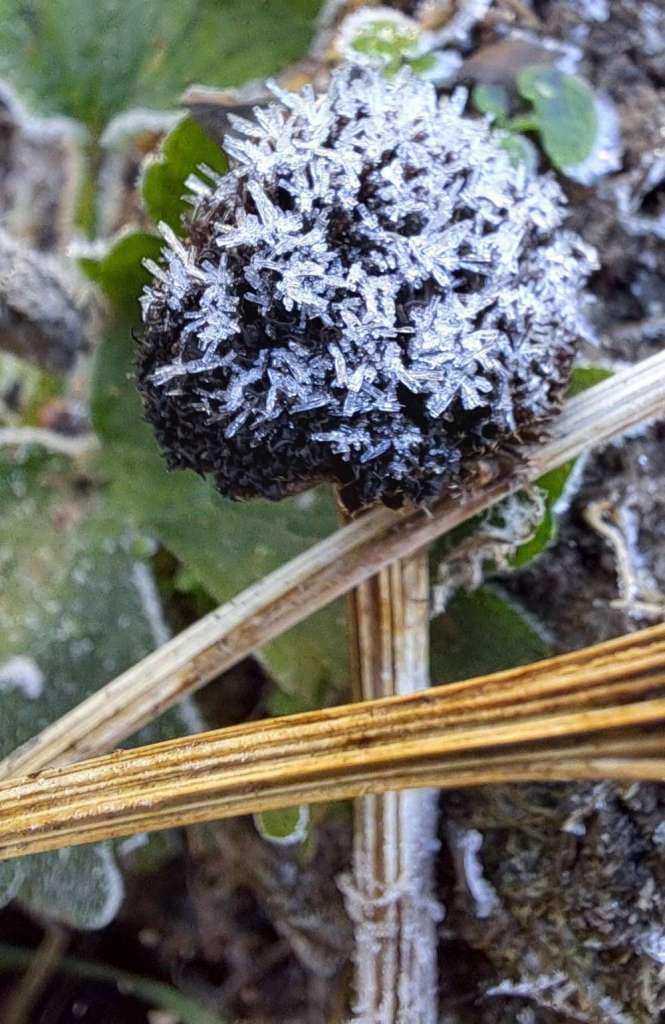
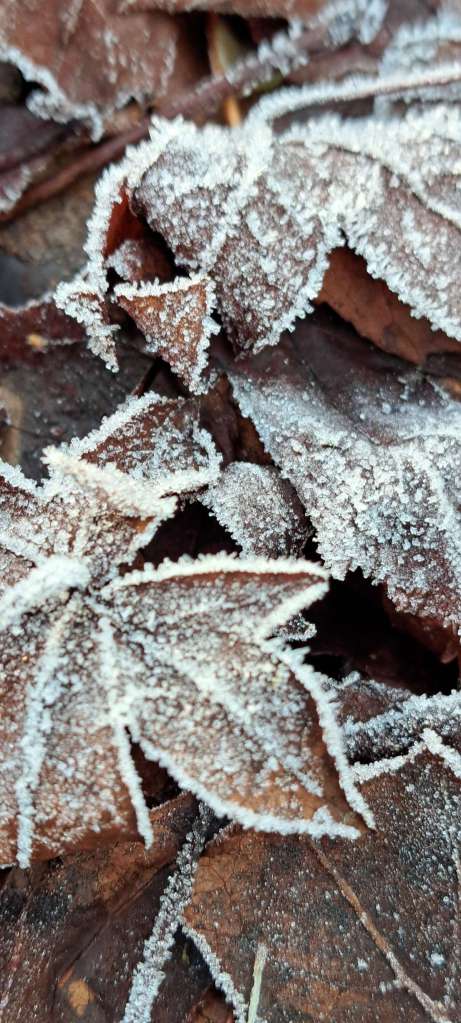
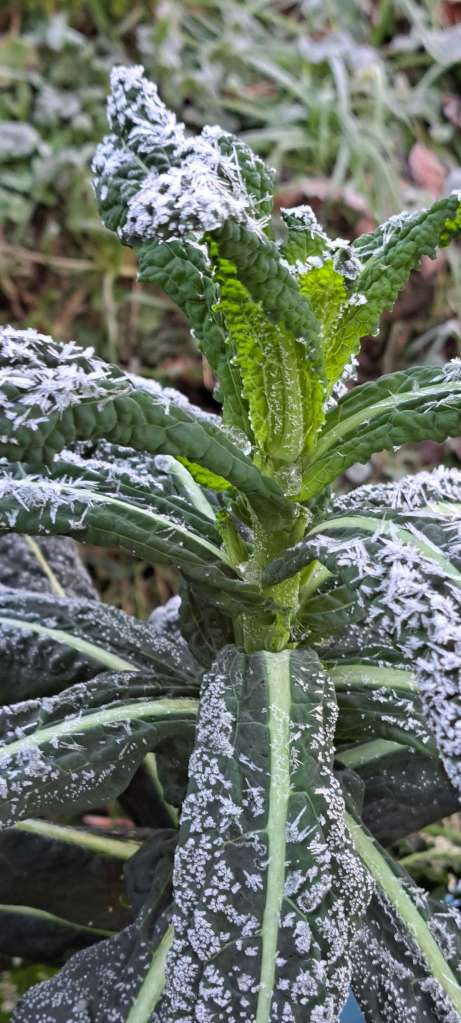
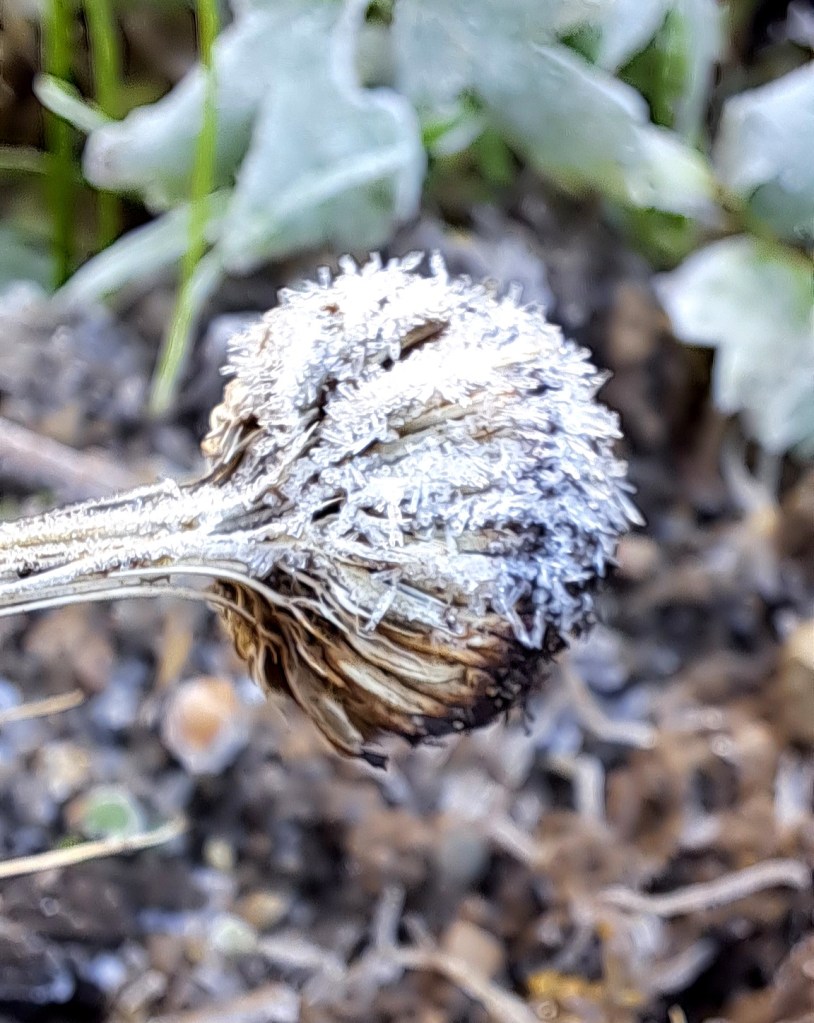
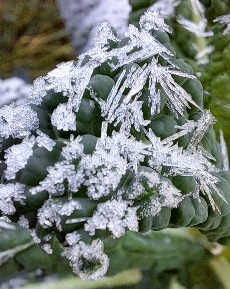
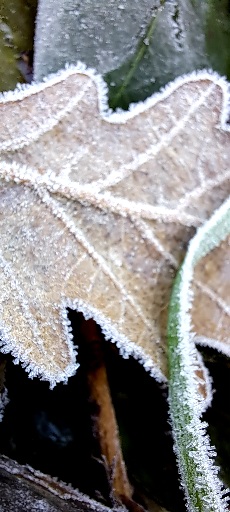
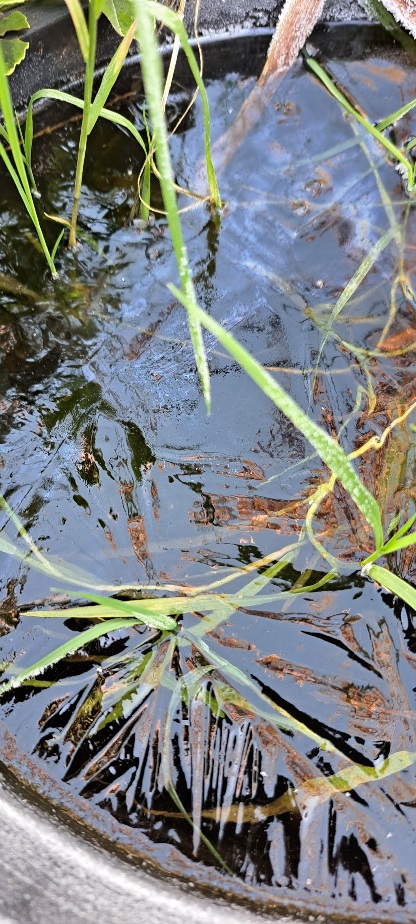
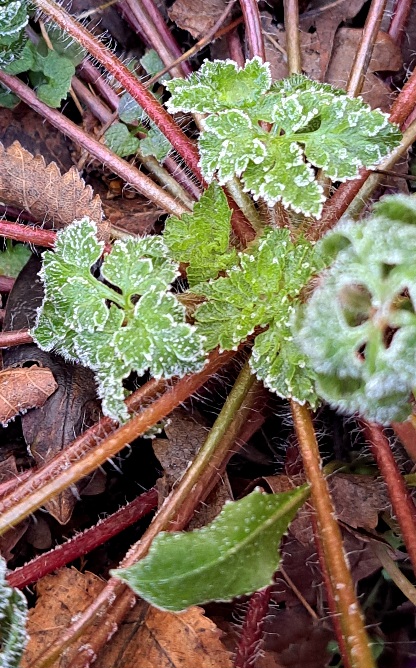
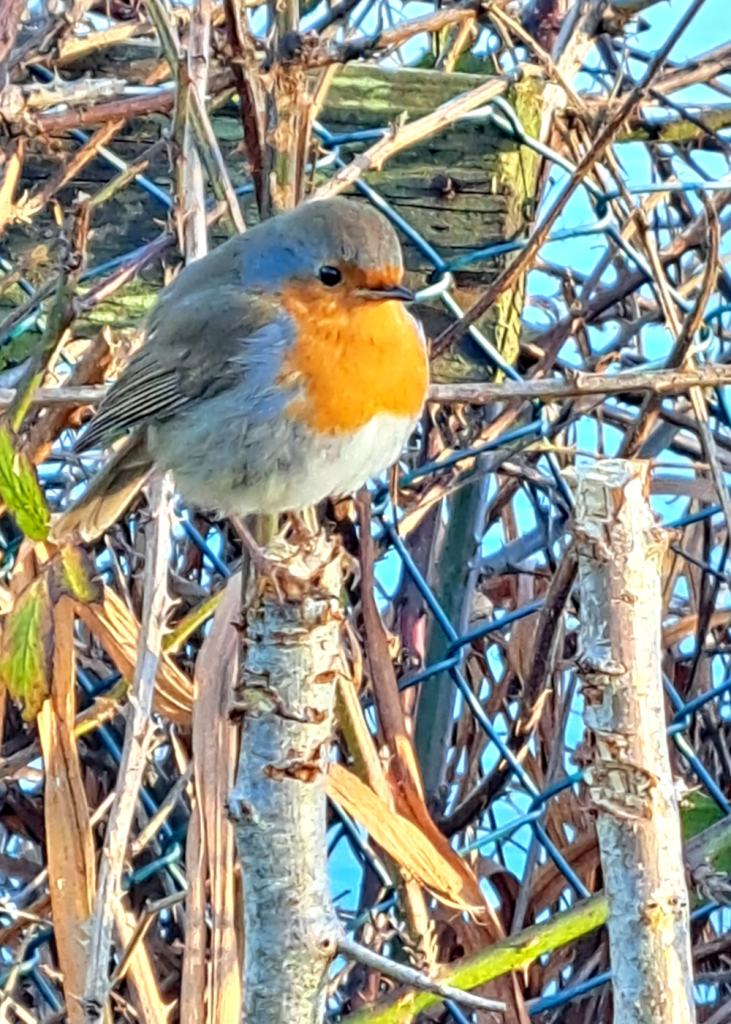
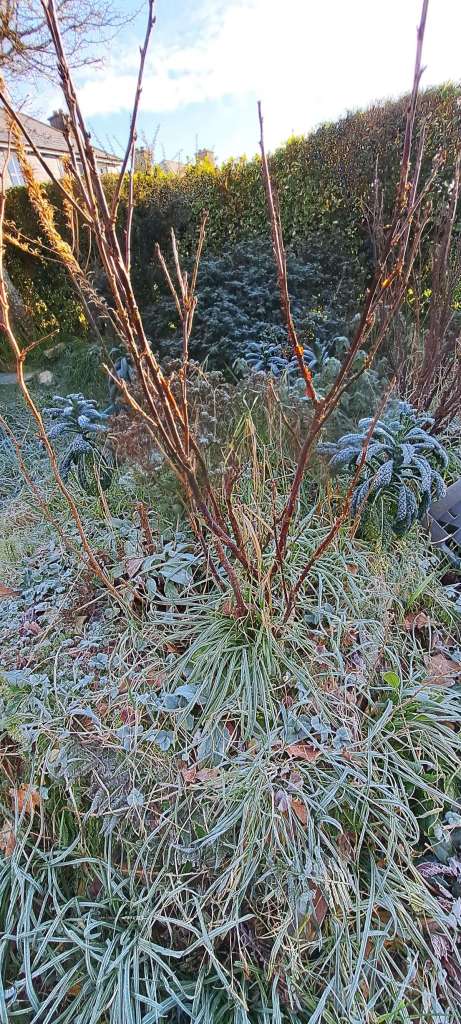
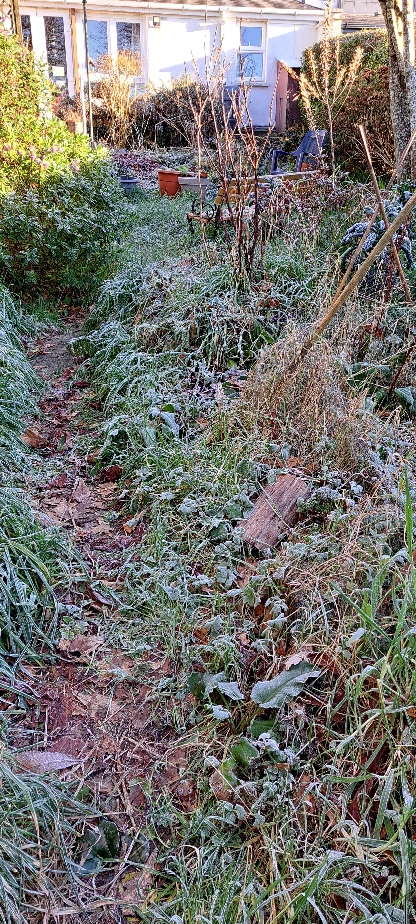
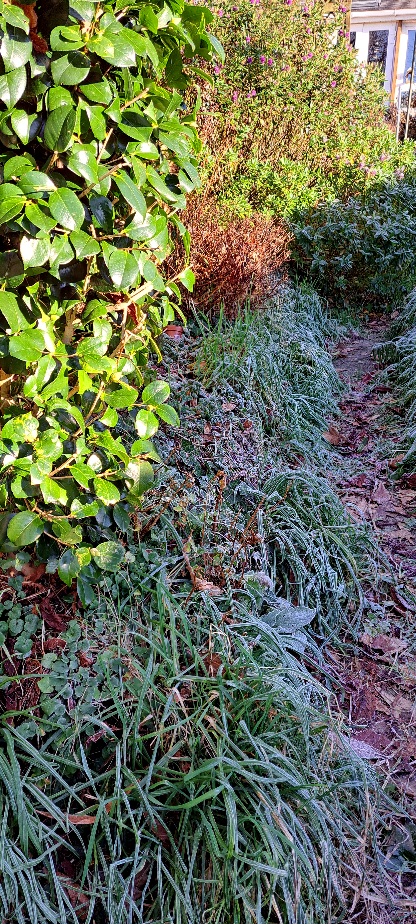
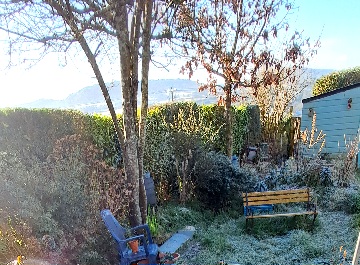
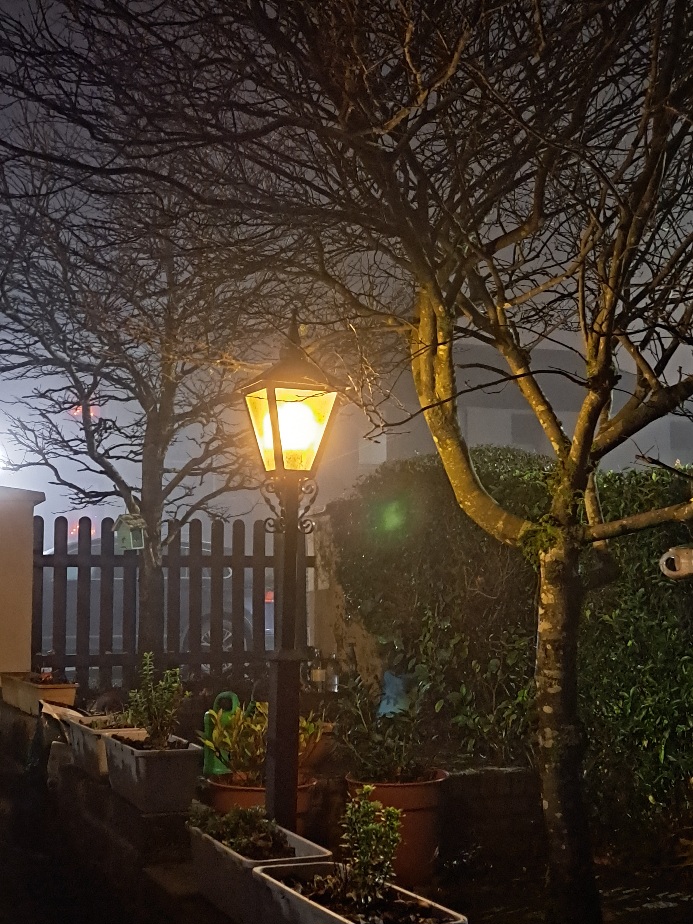
Yes, Jack Frost has been paying West Cork, as well as the rest of Ireland, and I believe other parts of Europe too, a nightly visit. That in the middle of it I ran out of heating oil through my own lack of attention is beside the point. I was able to solve the problem very quickly thanks to a loyal plumber and heating oil providers. This did not take awake from the beauty which greats me while attending to some domestic chores like emptying the kitchen waste into the compost bin at the end of the garden. I could not resist taking some photos at least. Meanwhile a little robin has been coming closer all winter and even sang to me the other day, how totally lovely.
And what I would really like to do this year is to make my garden into a lovely space, that is nurturing to the soul, a space where my family, friends and myself can rest and find quiet and peaceful admiration for nature. And a space for wildlife, where bees and other pollinators enjoy all the flowers and find nectar. Where birds can build their nests and sing their hearts out, for a mate when the time comes. I’ve had up to five goldfinch everyday feeding on the seedheads of the Evening Primrose, such a wonder. The usual bird population is fine this winter, I’m taking part on the survey again. The chaffinches are definitely down, the sparrow count is up. There is only one dunnock whereas there have been two for years. The wren is our resident bird, as are two blackbirds, a couple. Everyday there is now a Pied Wagtail feeding in the front garden, a first for our garden. Of course the robin is always there, but some years there are two, so far there is only one, I read that the males come feeding earlier than the females so I hope that the female is still on the way. It is nice when a robin comes up to you and it feels like they are really trying to communicate with you, and when they then start to sing so close, that is wonderful!
I wish you all a peaceful, joyful, healthy and happy 2026, enjoy!
It is time for a bit of stock taking, and for catching up with many friends and followers of my blog. Personally the year 2024 has brought many changes, some challenges, some sad, and some good. Worldwide it’s been a sad and chaotic year too I think. Many of us have asked ourselves serious questions about our general humanity, our deeds towards our fellow human beings. A lot of good has been happening too during this past year, a lot of compassion has been shown, and brave and good people have shown to be always around.
I visit Ian, my husband, in the nursing home every week, something we both look forward to very much.
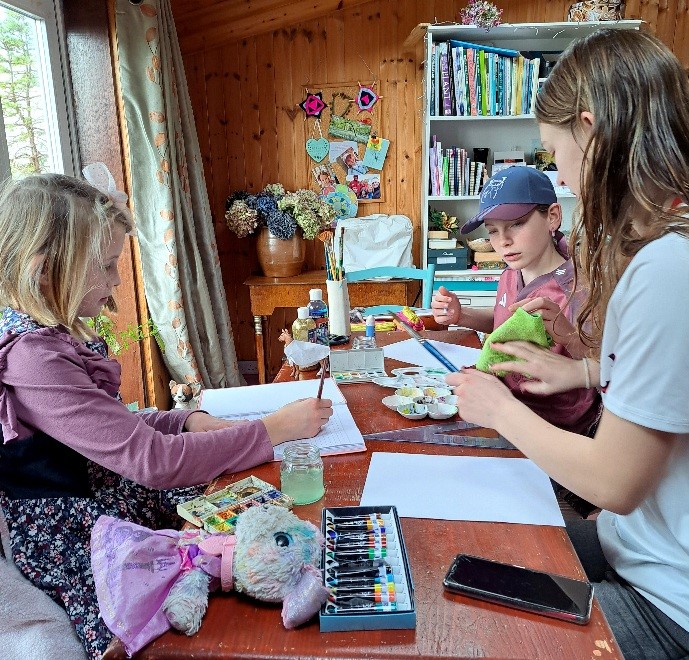
And now January is almost over and I’m still organizing my activities inside the house and out in the garden, and in society. Lots to do, all good things. During the winter I’ve availed of webinars and zoom meetings a lot. Webinars about grasses and rushes, and other natural subjects. Regular zoom meetings of a lace making group. And an introductory course in tree identification. Collage making or painting with my grandchildren is very rewarding too. Locally there have been meetings of the Early Retirement Group which has fabulous and interesting (mainly) other women as members and a good program, one of the things we do is a weekly chair yoga session which keeps us all quite flexible. Then the monthly book club and the poetry circle are such a joy, as are the very regular and hugely interesting art exhibitions. Skibbereen has it all. There is simply not enough time to do it all.
And then there is the weather which during winter can be quite challenging, storms, heavy rain, frost, the type of weather that makes you want to crawl behind the stove with a good book. Christmas and New Year celebrations seem to have come and went in a flash this past year. The dark days are now getting a little lighter and soon it will be the first of February, for Ireland that heralds the beginning of spring, it is also the feast of St.Bridgid and has now become a public holiday. And so…. I’m chitting my potatoes to have them ready for planting in March. My garden is still my focus a lot of the time.
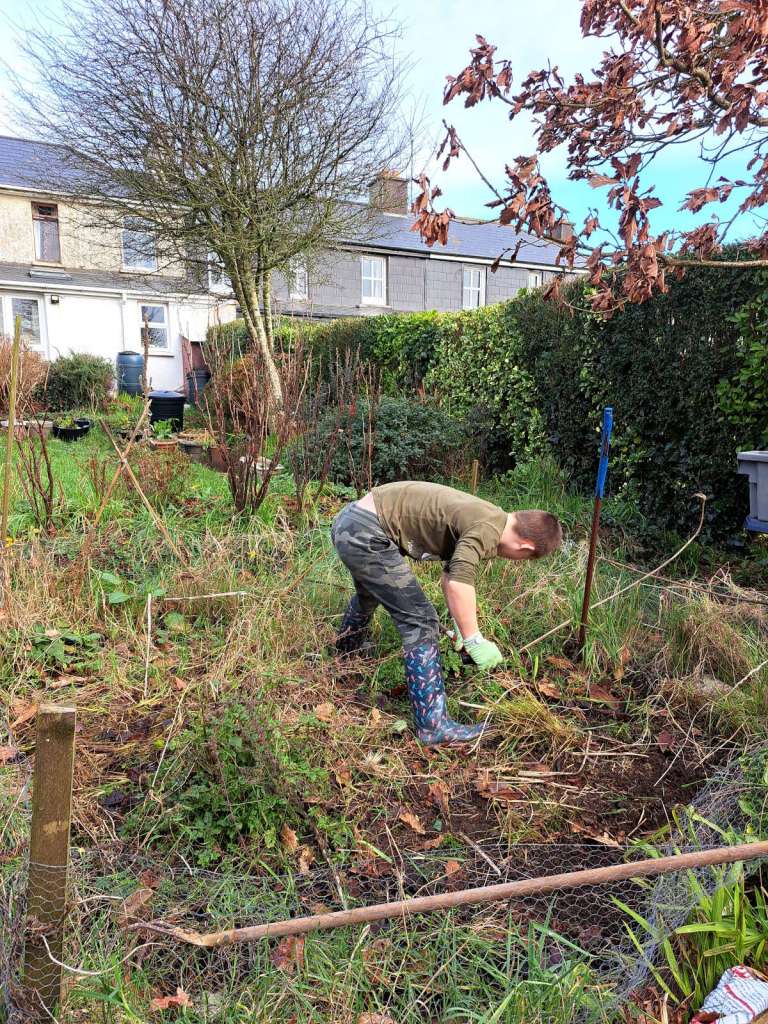
This coming season my main big plan for the garden is to plough up half my little grass field so I can plant more vegetables. For the past five years I have added more and more shrubs because I had much less time to garden and thought it was the better way. This meant that I now have less and less space for vegetables. So space will have to be made. My grandson Ruben who is now a strong teenager and very willing to help me has already cleared one plot in the back of the garden, he wants to do more. We are great mates and I love him coming over and working alongside me, and afterwards we have pizza and watch a movie.
Luckily during the last storm none of our trees suffered, we have seven trees in a small garden. We live in a terraced house and the garden is relatively small. Ours are a birch, oak, chestnut, hawthorn and elderberry, and in the front garden, a currant tree and an acer. Our hawthorn tree was affected by blight last summer and lost all of its leaves, we’ll see what happens this year. The chestnut had been trimmed five years ago and has some rot in an outshoot and that will need looking after.
Gardening and planning a garden, as many people know very well, is a great joy, and keeps us fit, it’s also hard work at times, but that can be done in part, an hour here and an hour there on a daily basis, weather allowing of course (I’m a fair weather gardener). To be out in nature is such a joy, the fresh air, the scents, sounds, and seeing the growth is all delightful and will keep me going for ever. The observation possibilities of seeing insects, birds, wild plants and herbs growing, as well as tasty vegetables and trying out new types. And then there is the digging up of potatoes and the harvesting of edible produce, how much better can it get I think it satisfies one of our most basic instincts as humans, that of survival.
Not being sure what 2025 will bring for us all, I wish many blessing for each and everyone.
The story of the Kalanchoe blossfeldiana is a nice one, at least in our household it is. Over the years I was often given one of these plants, and that in a variety of colours, red, white, yellow and rose mainly, but one year I received one with orange flowers, a real beauty! In fact they were all beauties. They fitted in alright with my other houseplants but I soon realised that the kalanchoe has something special, a strong will of its own, it grows how it wants, and rightly so. After it has finished flowering for the first time, I cut away all the large leaves. It then goes into its dormant period for a while. Eventually it starts to grow again and quickly show flower buds, they take long before they bloom open. The leaves it now produces are a lot smaller, growing into lovely rosette patterns. The stems grow of course depending on the light source. I leave my Kalanchoes (5) outside all summer but protect them from too much rain. I take them in during the autumn as they are not frost tolerant. I love seeing them coming into flower year after year. At times the colours of the flowers change, for example, my orange one never became orange again. As the years go by they are inclined to grow into very individual and interesting shapes.
Kalanchoe is actually a genus of around 125 species of tropical, succulent flowering plants. They are native to Madagascar and tropical Africa. I was surprised to read that the plant we call ‘mother of thousands’ is also a type of kalanchoe.
Although the genus kalanchoe was first described in 1763 by the French botanist Michel Adamson, it only became generally available and was commercialized in the 20th century after botanist Robert Blossfeld brought it to Germany and Paris. He found it growing in the cool region of the Tsarantanana Mountains in Madagascar. I know it to be a very adaptable plant.
Of interest is that Kalanchoe plants belong to the stonecrop (Crassulaceae) family.
The plant has been used in folk medicine, but is also studied in scientific circles. Co-incidentally a friend of ours in Tamil Nadu (South India) sent me a photo only recently of a flowering Bryophyllum Pinnatum which is also classed a subgenus within the genus kalanchoe. Bryophyllum is a group of plant species also of the family Crassulaceae and is native to Madagascar. Apparently these plants are used not only against kidney stones but in folk medicine are known to have anti-inflammatory, anti-oxidant and anti-histamine properties, also used for cancer treatment. Especially mentioned were the Kane and Kurichiyar Tribal Communities of Kerala. In Ethiopia this genus of plants is or was used for wound healing or tooth ache. In the Philippines as a muscle relaxant. For cats and dogs the Kalanchoe plant is toxic by the way.
A little clarification about Kalanchoe plant classification:
Crassulaceae is the family
Kalanchoe is the genus
Bryophyllum is the section or subgenus
Kalanchoe blossfeld is the species (and that is the species in the photos above and below).
The kalanchoe plant is known as a symbol of persistence and eternal love. In China where it is also a popular plant it is favoured at the New Year for its connection to prosperity.
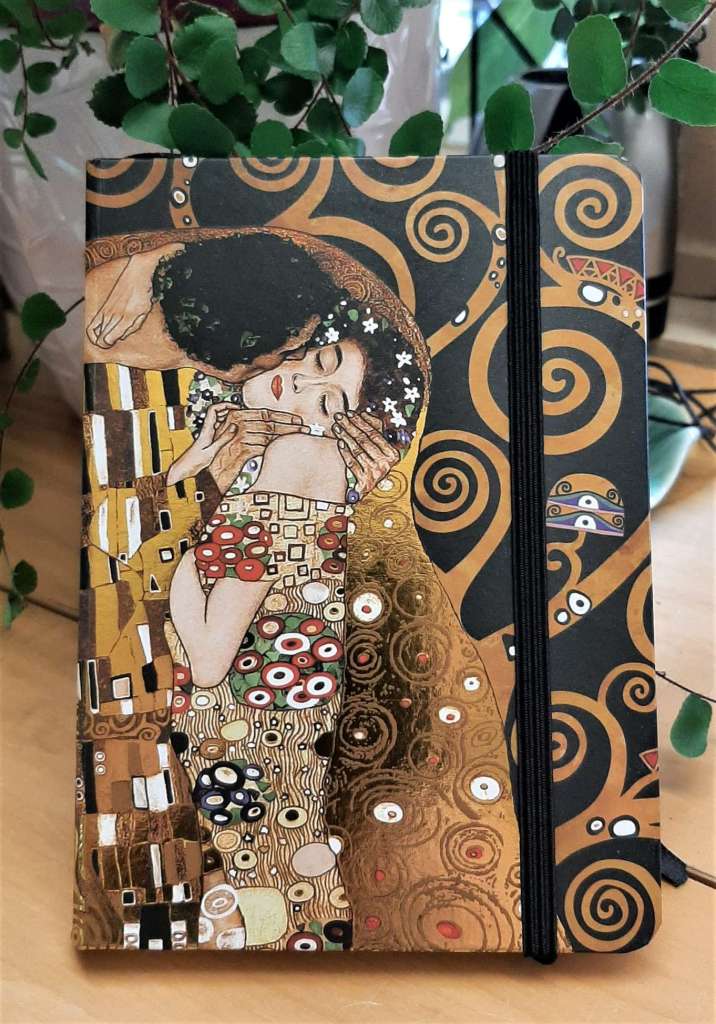
Some weeks ago my sister Josephine stayed with us, it had been three years since she travelled to Ireland and we were overjoyed to see her. With her she brought me this beautiful gift. A little special notebook that she bought at an exhibition of works by Gustaf Klimt in Brussels. It is so beautiful that I decided it can only contain words about beauty, and so the thought came into my mind to use it to note down some of the observations of my quieter moments. Observations in nature and in daily life. I like to share them with you.
Our elderberry tree
17 May 2022
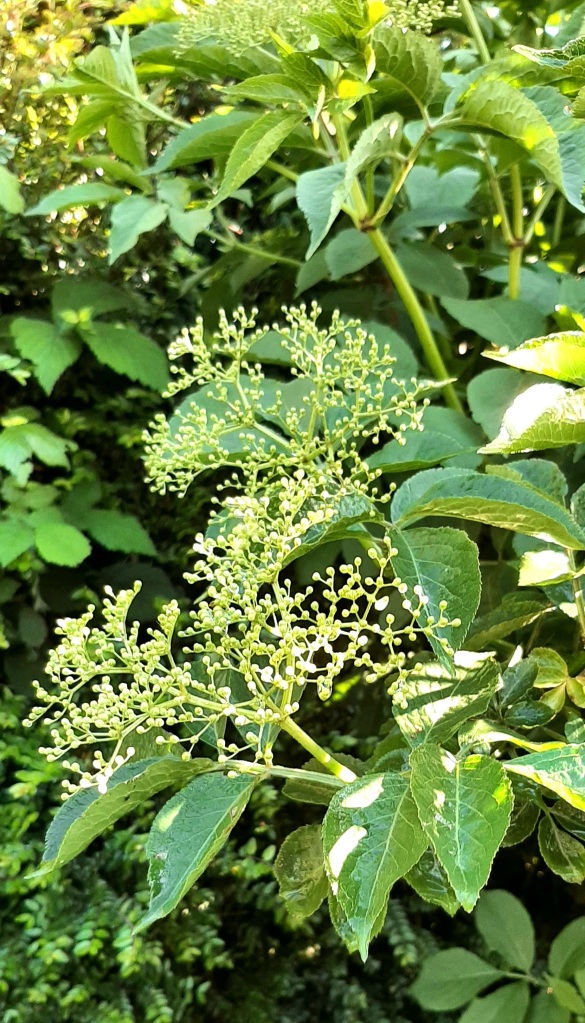
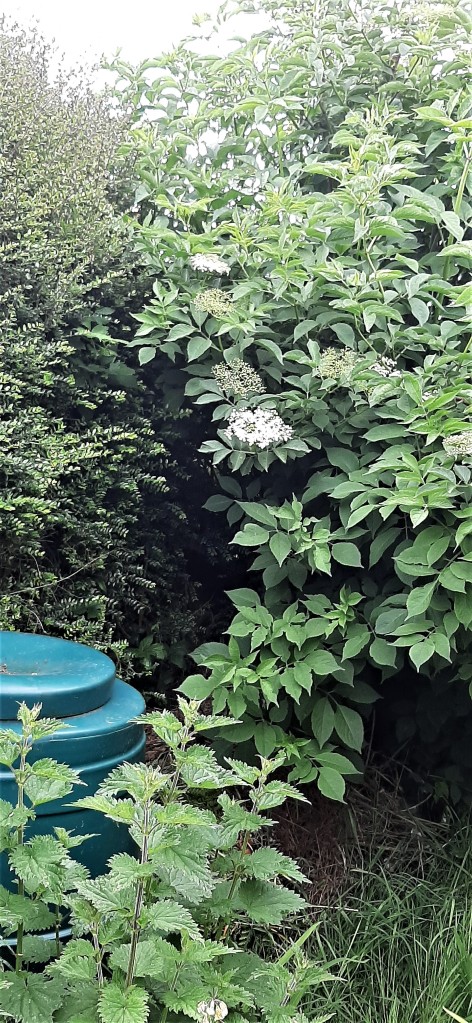
Today, in the garden I enjoyed the wild freshness after rain. I saw that our elderberry tree is about to come into flower, and that will be the first time since I planted it. The foxgloves are opening pink and beautiful. There are buttercups among other wild flowers, everywhere the growth is abundant and the trees, we have four, are looking very lush, their leaves still somewhat laden down with drops of rain. The hawthorn also has started to flower and there is a faint, delicate scent in the air. Birds started singing. I felt a breeze and now and then rain fell from fast moving clouds. These were perfect moments, I love the scent that rises from the earth after rain, it is so refreshing.
19 May 2022
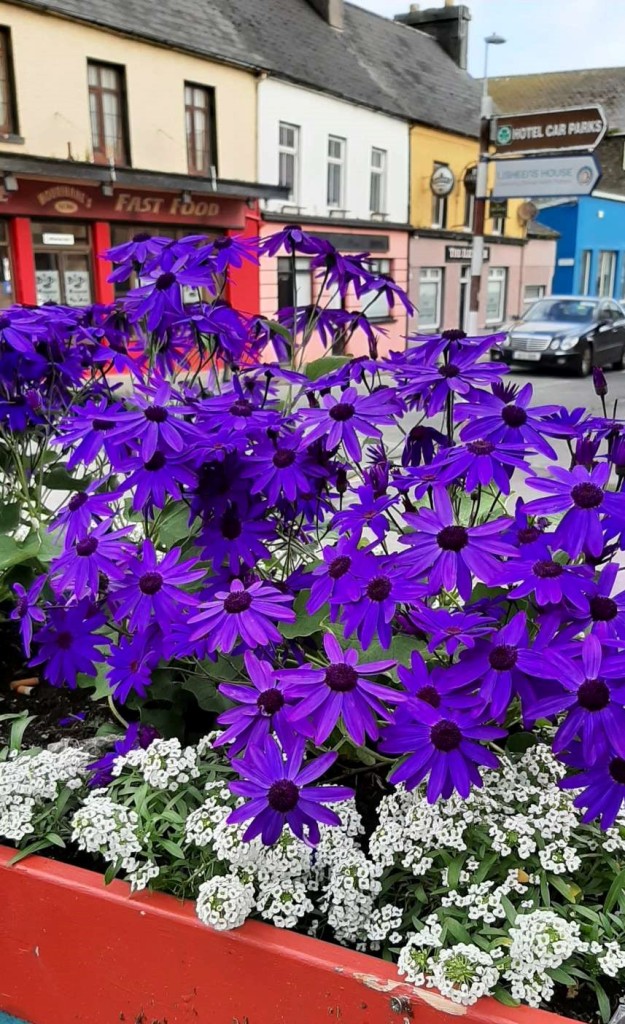
The intense colour from the cineraria flowers in the Ilen street in town, the deep sky blue was a sight to behold. The scent was faint, it just caressed my nostrils and soothed my brain. Early morning in Skibbereen, the sun has just started to warm the cement of the colourful town houses. I feel good in expectation of the day ahead.
20 May 2022
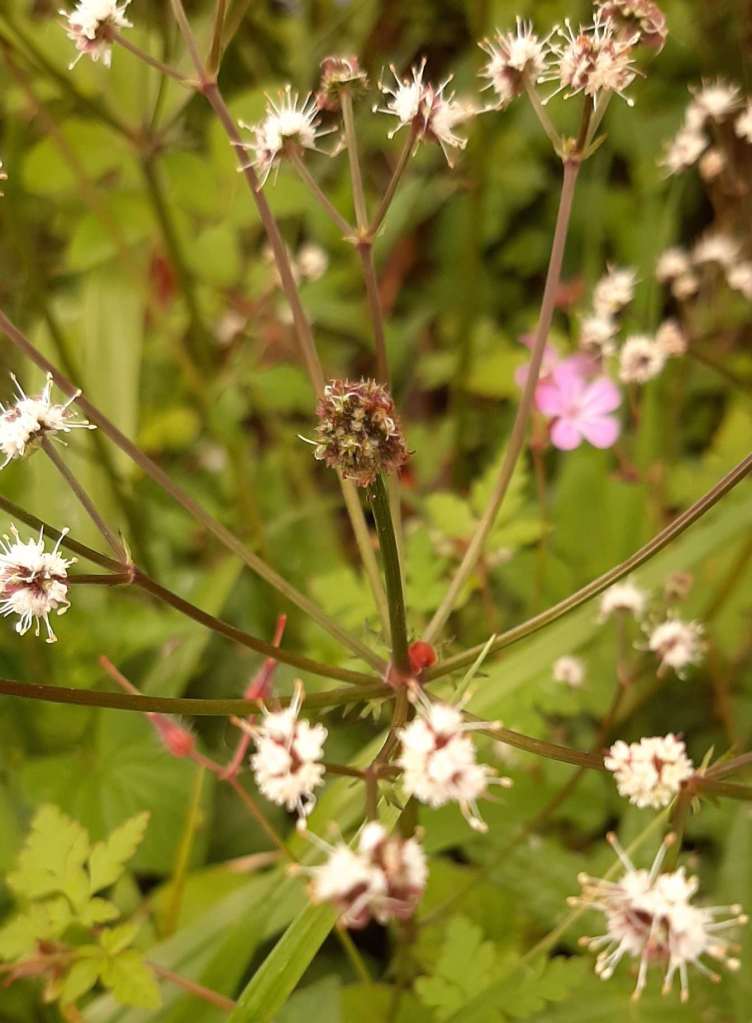
It was while on my course on biodiversity with Wild Work. We were having a conversation about native woodlands and native wild plants. What took my special interest was a little wild plant that I had not seen growing here in West Cork before, it is called Sanicle (sanicula marilandica). It’s native and a woodland plant, it belongs to the carrot family, we found it on the grounds of a large woodland area.
21 May 2022
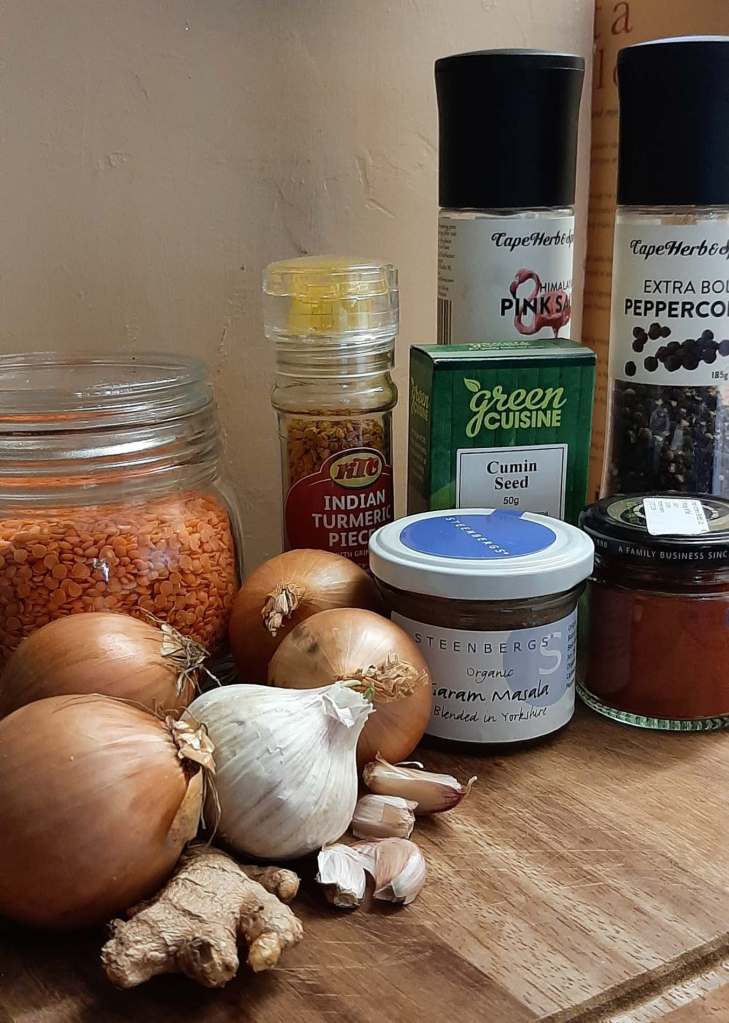
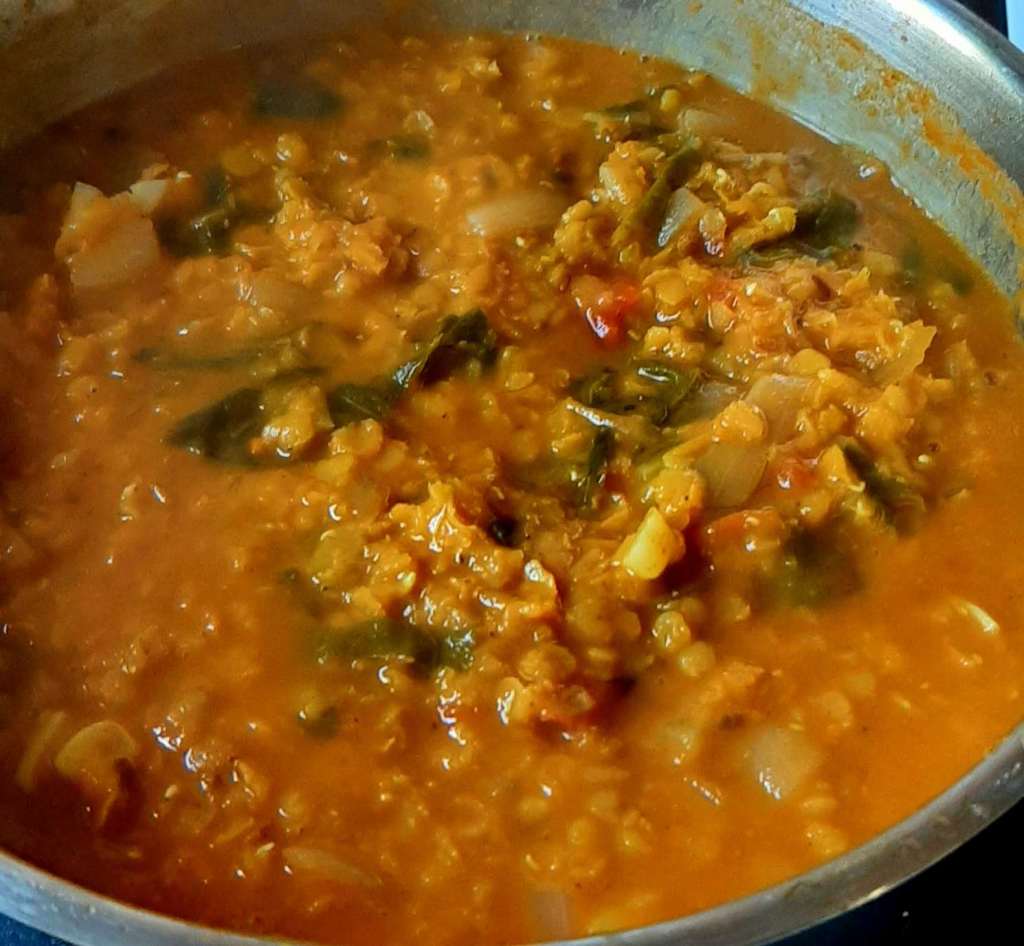
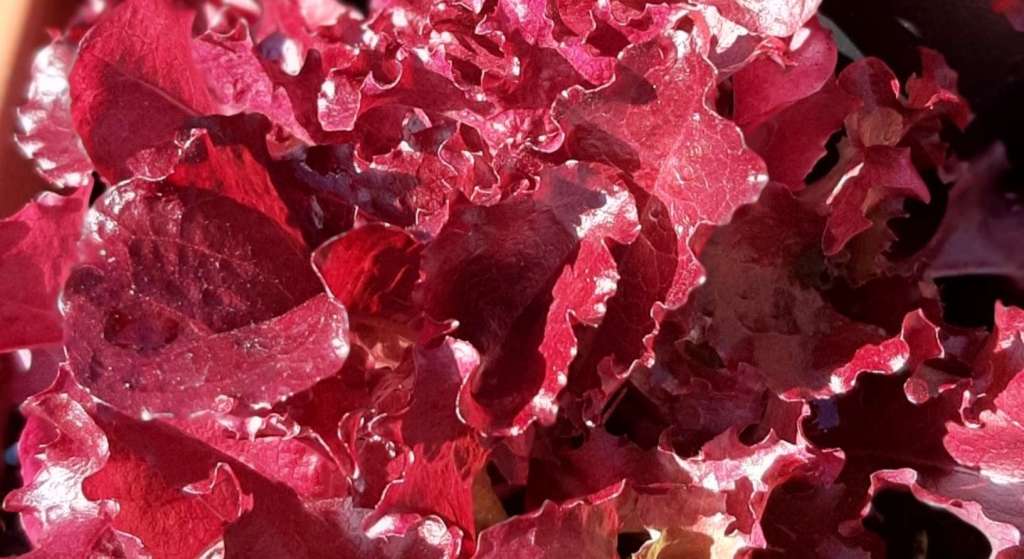
Today we cooked with aromatic spices and lentils, an Indian recipe. Alice and I enjoyed seeing all the spices come together and release their aroma, the dish we cooked was dahl. So delicious and an good dish for vegetarian Alice to learn to cook, she loved it. Earlier I was very pleased to see how well our oak-leaved lettuce were doing in the garden, the brightness of their various shades of red was invigorating.
22 May 2022
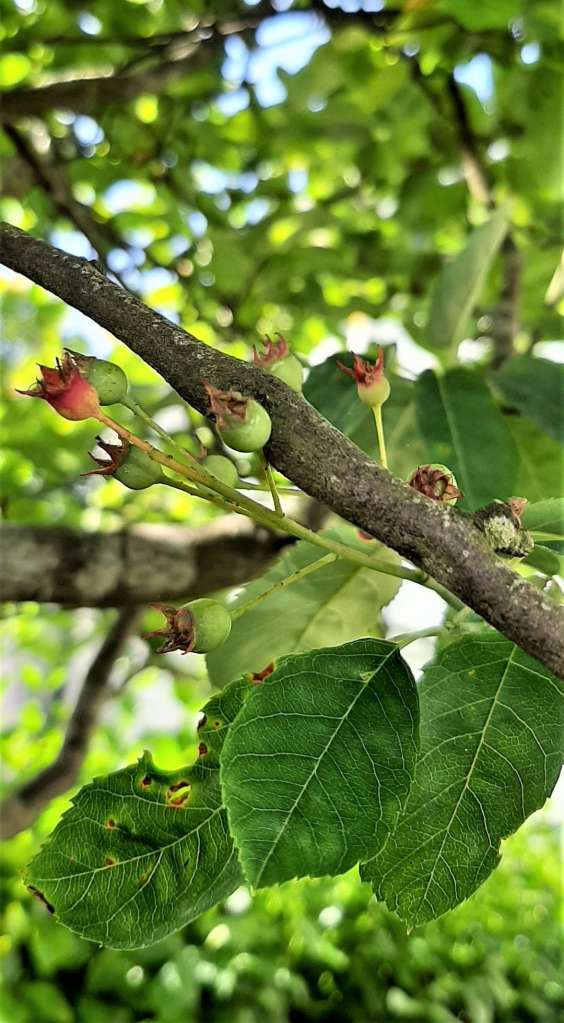
From my kitchen window I noticed the unripe fruits of the krentenboom (Amelanchier lamarckii), and it reminded me of the cycle of life; Just recently the flowers appeared, then the leaves turned the tree quite green, and now the fruits are already ripening, slowly they will become red later on in the year. I could see the parallel with our own lives and the thought that our times are fleeting moments in the greater cycle of things, of times. It is a very natural happening.
23 May 2022
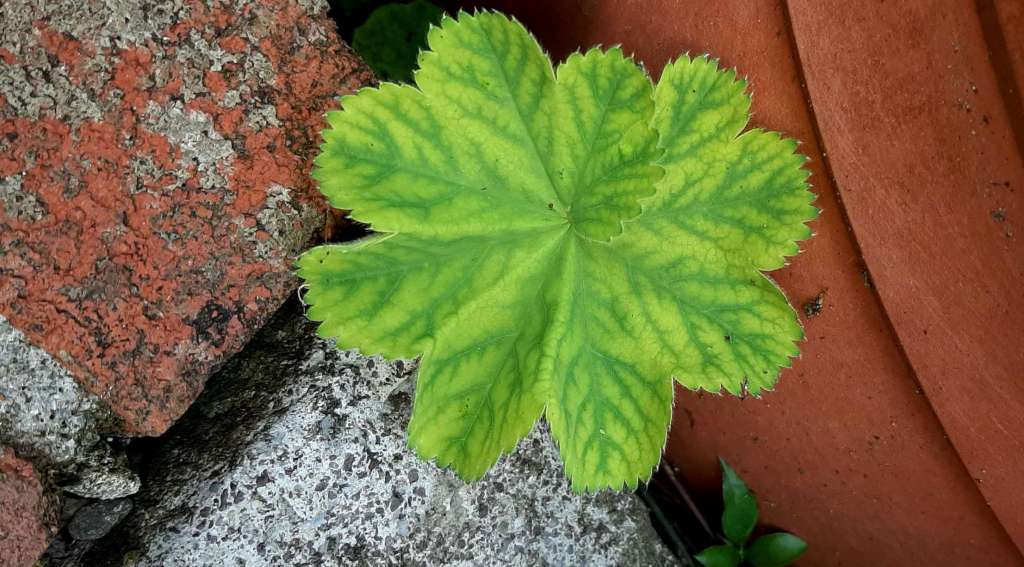
While opening our front door, I looked down to the yearly new growth of the lady’s mantle and it inspired me, very beautiful and delicate, its veins like capillaries in our own bodies, green instead of red, dark green actually on the light green leaf… spreading out from its twig. Perfection!
I hope you enjoyed a glimpse in my little book of observations, it has been a pleasure to share them with you.
Our garden does not know whether it should be asleep or begin to wake up. On this peaceful and last Sunday of the year 2019 I took a little stroll to check on my vegetables and herbs. So far it has been a mild winter except for one morning when all was white with frost. We did have more than usual rain though, and one or two real destructive storms which blew over our bird feeder and destroyed it.
I found that the few bean plants which survived being served as someone’s dinner (the slugs), are doing rather well, the spinach and the kale are doing great too. Among the herbs the oregano, thyme, sage, and rosemary are all thriving. The rosemary is even flowering, but then it flowered all summer too, perhaps it is an everlasting flowering type 🙂
The Camelia that I planted out weeks ago has buds and seems happy where I put it. The Californian Lilac is also doing great and I cannot wait to smell its flowers, and to look upon the red Camelia flowers later when spring comes along. Bulbs are pushing through the still very wet soil. And the young Californian Poppy plant I found fresh and green, early flowering is expected. It is always nice to take stock of the garden around the start of a new year I think, and to start planning.
A tender young Lupin plant has pushed through some leaf covering. And the Rudbeckias that I have been carefully tending since last spring when I sowed them, are so far doing fine, I hope that they will become strong plants and I know that they will last for years as I used to grow them before.
But I wanted to look a little further than my own garden today and took a walk through the Boreen and further-a-field. Planning has been received and work has started on building 50 houses for a social housing scheme. This will mean that from next year onward we will be surrounded by houses, whereas up to now we still had so many fields. But I understand that housing is needed badly and that the plan for rural Ireland is to have satellite towns and not much housing in the countryside, this to give easy access to all utilities without too much need for new infrastructure. Anyway that seems to be the plan for the future and the future is now. While walking the Boreen I found beautifully fresh and healthy Yarrow plants, I also found that the Gorse was flowering, and that the sweet little plants of creeping Hypericum are still intact and have not been affected by the wet weather.
There had been a certain quietness around the place here with some neighbours away over the Christmas period. The land was also quiet this afternoon apart from some starlings, a wagtail and a thrush that I saw along my walk. Year’s ending has that certain feeling about it in nature, a stillness that is a promise of new life and activity to come. I like it.
Along my walk and in the Boreen, Yarrow, Creeping Hypericum and flowering Gorse.
And so we enter the last days of this year. Tomorrow my grandchildren and their mum and dad are coming to open presents, that will be lovely. The rest of the week will also be spent with family visiting and so we will enter the new year surrounded by loved ones.











 agoyvaerts