SEEDLINGS AND A MYRIARD OF PLANT POTS

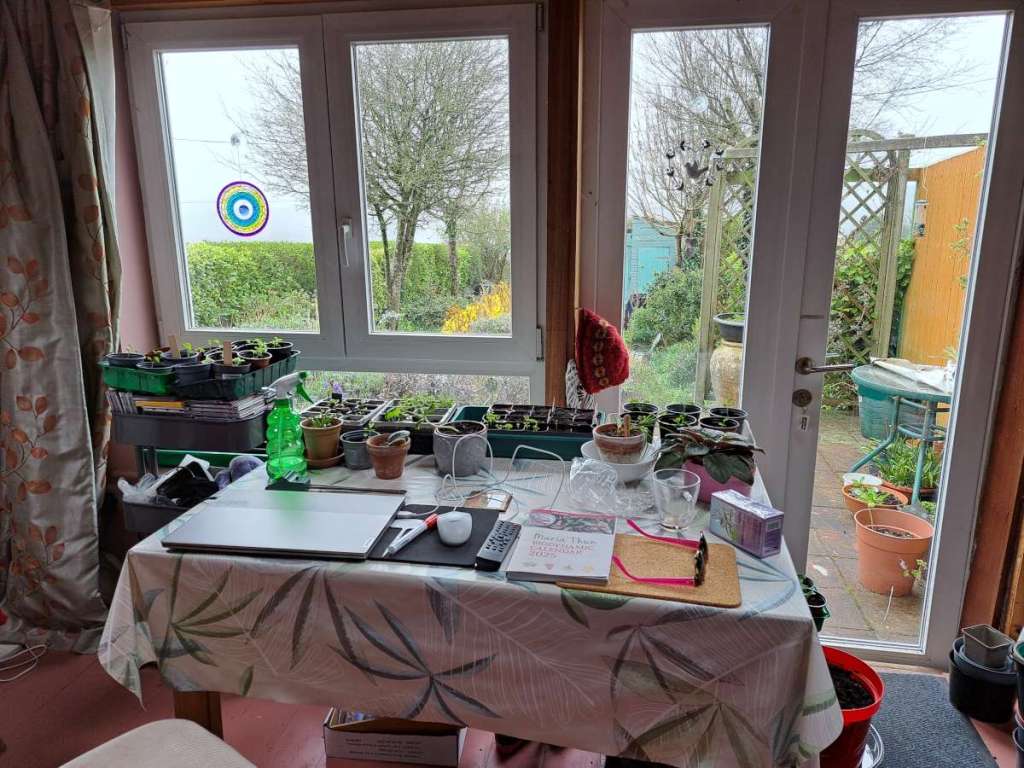
I’m sitting at the window looking out to our garden from our sunroom, which actually used to be called a Conservatory but when the old roof started to deteriorate and started to leak we got it covered in slate and put in two Velux windows, so now I call it the ‘sunroom’ and that will suffice.

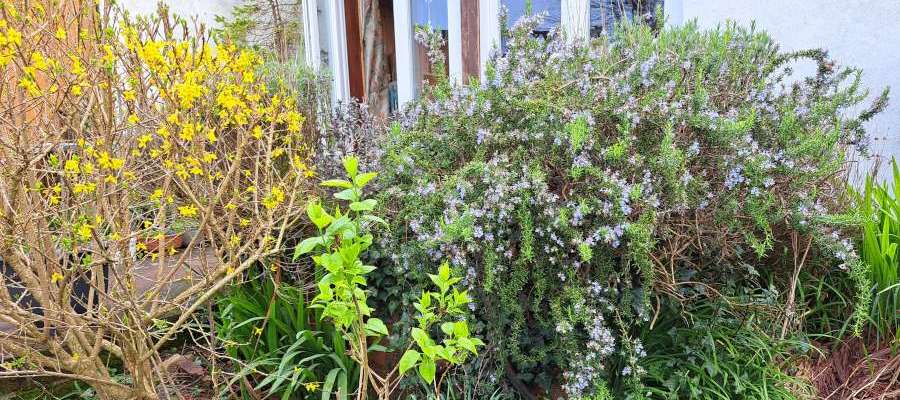
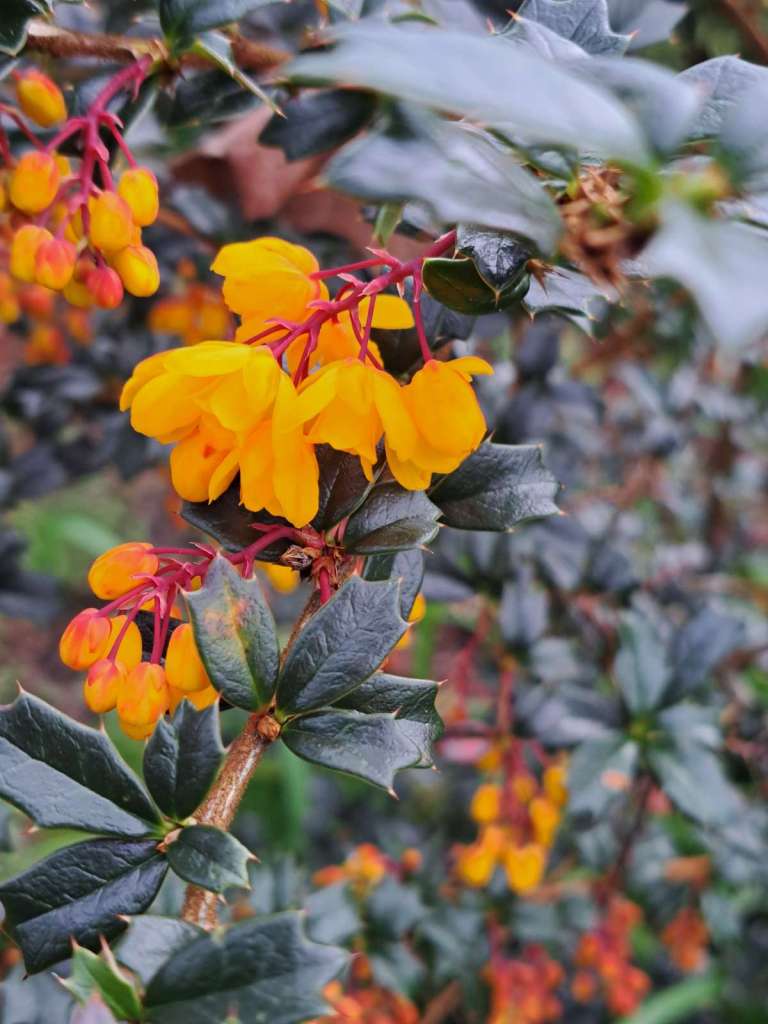
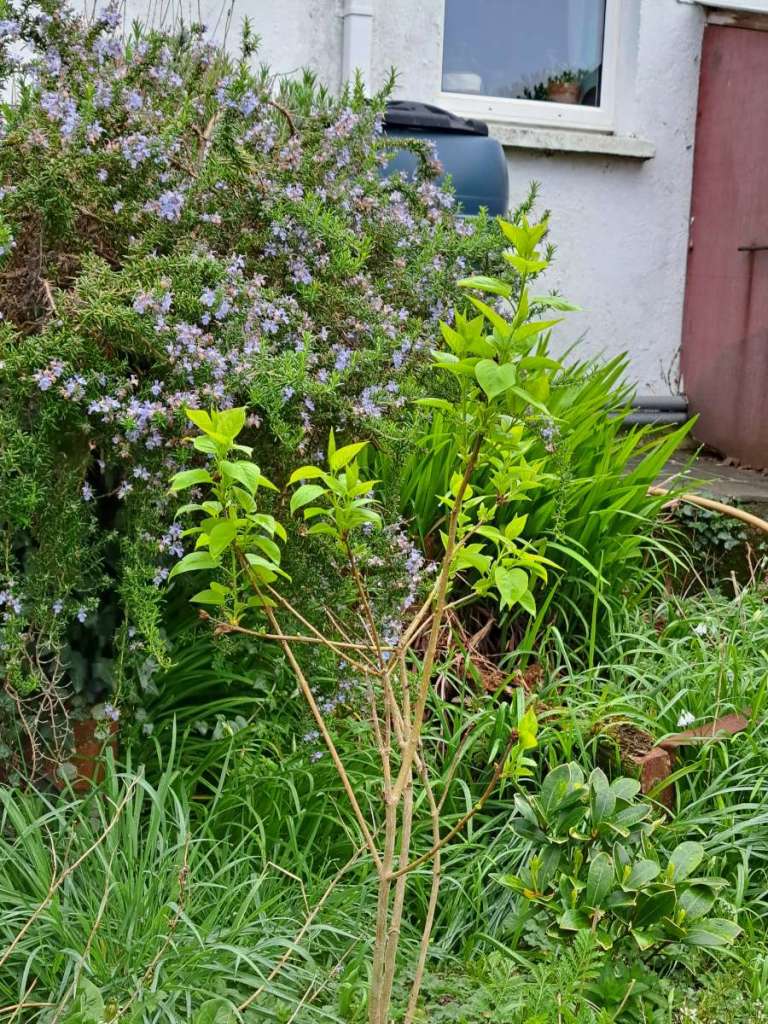
And as I look out to the garden I can see some beautiful shrubs that are flowering right now, the forsythia is a patch of yellow and then there is the Berberis Compacta fully decked in orange,  it’s beautiful to see even through my still blurred eyes, I’ve had cataract surgery last week and I still cannot see clearly.  The Azalea both the purple and white one are coming into flower too, and the Rosemary is one blur of purple and dark green.

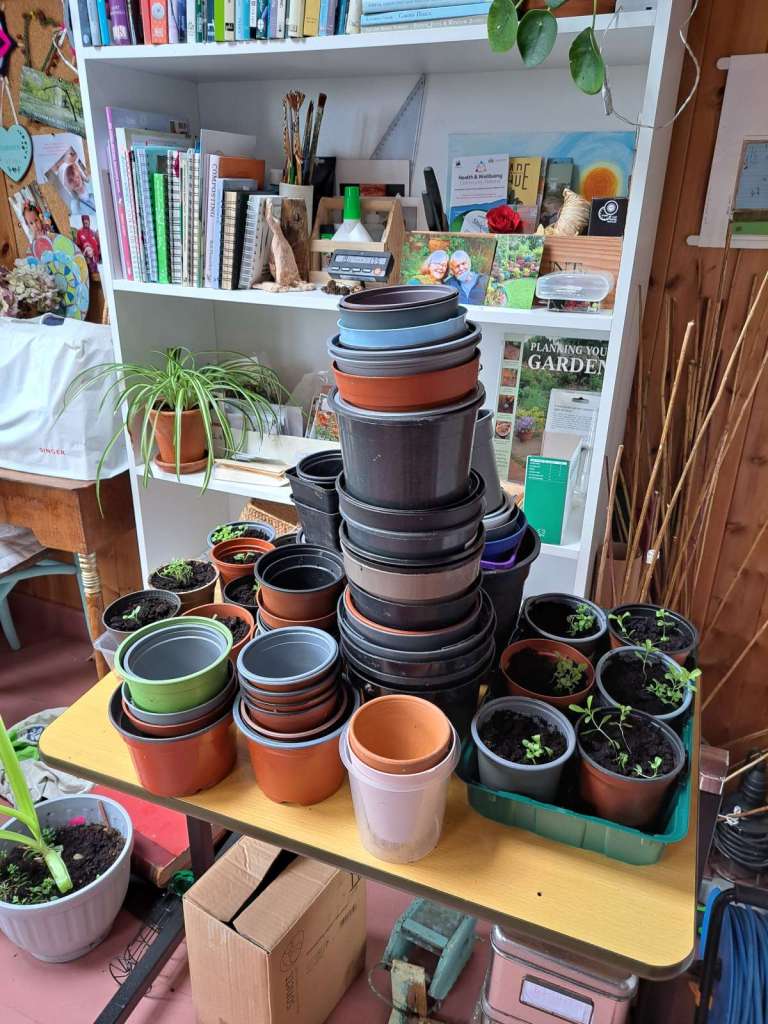
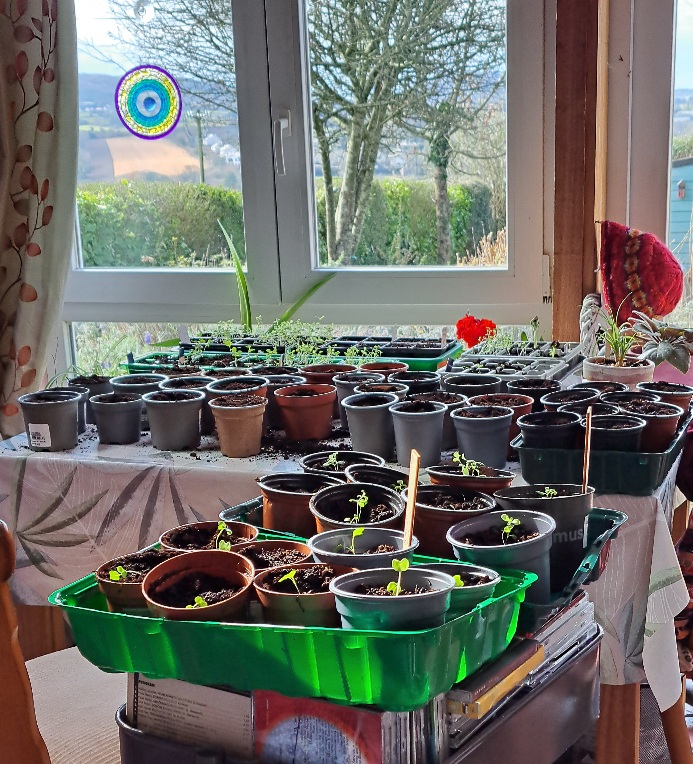
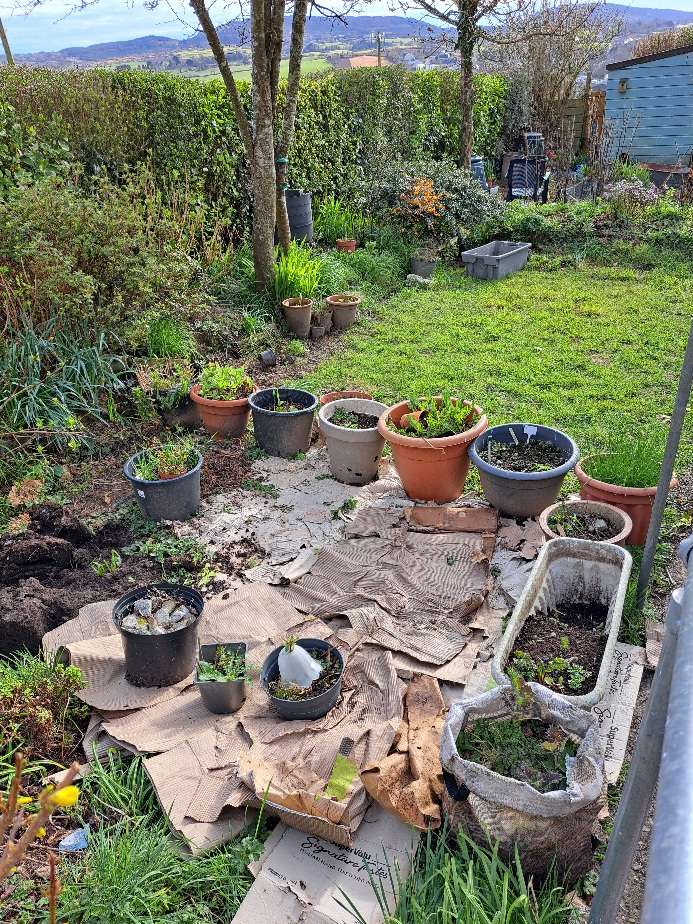
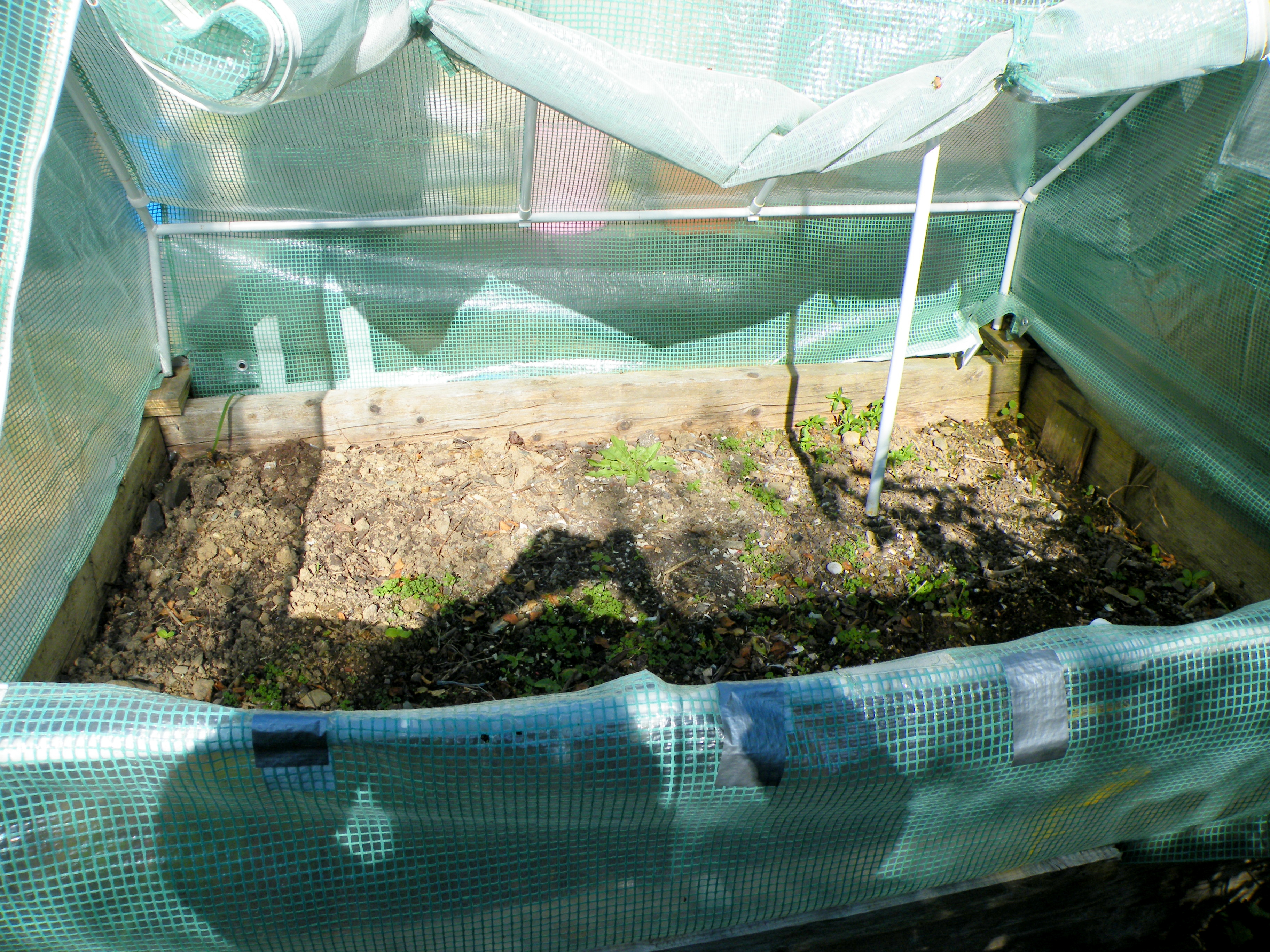
 I’ve been working with my seedlings this morning; I’ve been repotting some of them.  The room is filled with all sizes of pots, which I’m filling with soil, and I am planting seedlings like there is no tomorrow, I have got so many seeds coming on and this whole room is absolutely turned into a greenhouse.  I’m so happy with having this space and being able to get my young plants going.  I haven’t been able to set up the small plastic greenhouse in the garden yet but that’s the job that’s got to be done. I will then move all these young plants in there and get them to grow strong before I can put some of them out in the purposed plot, the soil needs to be prepared yet. The grass which I had covered with cardboard needs to be either dug or else I will just throw soil on top of it.  The soil for the potatoes is ready though, and they have been chitin here on the press, so weather allowing, they are next to go into the ground.  

Right now, the sky is gray and there’s a bit of wind, but my chestnut tree is starting to come into leaf, its buds are bursting.  The sky out there is filled with birds flying in all directions, seagulls and crows especially, they’re all happy to be alive I think, yes there is lots of activity, for one I have seen our resident blackbird couple eyeing the thick hedge which is where they made their nest before.  

 It does look like rain and so it probably will rain but there is a lot of inside work and that’s what I’m busy with at the moment.  I have 28 kale plants, they’re very small yet but that’s ok as they are only for use next winter, I sowed some extra to be able to share them with others, because that’s fun.  

A week later and now we are April!

Despite my limited vision at the moment I was able to plant my potatoes, which is great as it puts me ahead. Meanwhile the sun has been shining for days and there is a warm wind today, my washing has been dancing on the line all morning, a lovely sight to behold because I can now put my clotheshorse away for the summer (I hope). Young plants and seedlings are coming along great and I’ve sowed more. The garden has dried out in the meantime, mud has become hardened already. I now urgently need a gardener, that is, a person who can do some of the jobs I cannot manage. My grandson has advised me to do proper fencing around my new vegetable plot rather than just put pots around it. The idea is to keep the cats from doing their business in the soil where the vegetables are growing. But I might just settle for keeping an eye on it daily and using a shovel. Not decided yet, but note that I have five different cats, not my own, visiting the garden!

Project not finished, watch this space!

MY SOIL EXPERIMENT ENDED

I have written up my report on my soil experiment, as part of a course I took early in the year,  ‘CITIZEN SCIENCE: LIVING SOILS, GROWING FOOD’ with the university of Dundee and Grow Observatory.  Its a long enough read but I thought to include it anyway in this blog post as some people showed an interest in my results.  So here goes.
My question was: What will give a better crop? If I use compost from the garden compost bin, to improve both the fertility and the texture of my clay soil.  Or if I use a combination of leaf mould and organic seaweed liquid?
My hypothesis was: Using compost will improve clay soil, & may result in a better edible yield of produce.
Measurements: Yield of edible produce as weight (grams/ square meters), and seeing that I am also testing the effect the experiment has on my clay soil texture – my measurement will include testing soil texture before and after the experiment. I will also measure the Ph. and nutritional readings (nitrogen/potassium/phosphorus measured against the original texture readings/findings). I will use home testing equipment. For soil texture testing I will use the ‘Field Texture Grade classification chart’ after doing the Bolus test.
Variables: Varying effects of pests invading the plots differently, perhaps some plants dying as a result. So one of the variables will be competition from pests.

My procedure:
I plan to grow a total of 12 bean plants in each plot, as they will be planted 30cm apart with 60cm between I can fit those 12 plants in half of each raised bed and keep the other half as a control with nothing growing on it. The radish and spinach I will grow in between the bean plants, 4 of each. Dimensions of my raised bed are 1.20m by 2.20m so this will just about do it.
OBSERVATIONS BEFORE THE EXPERIMENT STARTS
The soil in both my plots smells good, perhaps a little sweeter in Plot 1 than in Plot 2. When I made a Bolus of the soil in each plot they were the same. The plots have a moisture content between 1.5 and 3 indicating that the soil is fairly dry.
Readings of soil nutrients before experiment:
Nitrogen: deficient in Plot 1 and depleted in Plot 2.
Phosphorus: deficient in Plot 1 and deficient in Plot 2.
Potash: adequate in Plot 1 and adequate in Plot 2.

There is a slight difference in the two plots, Plot 1 had a light reading of 1000 units while in Plot 2 the reading was 2000m – both plots were overshadowed by a tree, but differently. Plot two receives the evening sun, whereas Plot 1 receives the morning sun.
Moisture content was also different in the two plots, in plot 1 it was 2 units whereas in plot 2 it was 3.1 units. So plot 2 was wetter.
The PH was 7.5 in plot 1, and 7 in plot 2 – Meaning that the soil in both plots is quite alkaline.
The result of the bolus test showed that the soil in both beds, according to the ‘Field Texturing of Soils Table’, is a light clay, with a plastic bolus, smooth to touch. 35 to 40% of clay contend.
Beginning of experiment;
On the 8th of May my Plot 1 and Plot 2 were ready to have the allocated fertilizers added. It turned out to be a dry and warmer than usual summer here in West Cork. For some part of the summer there was a ban on watering the gardens, so plants did suffer, they easily bolted. Some things did not grow at all or very little.  Plot 1 was treated with compost from my home compost bin, and Plot 2 received leaf mould and would be given liquid seaweed compost on a regular basis.
I planted out my bean seedlings (Climbing French Beans – Cobra), on 22nd of May. The soil temperature was already between 13 and 15C. The air temperature was around 22C at noon. We had no precipitation for the week following planting, but I watered the garden with rain water once a day. Slugs were a slight problem so I put out beer in trays. I sowed the spinach (Spinach Matador) in trays. The following week we received 2.5mm rain.
On the sixth of June – no precipitation, watering by hand. The beans in Plot 1 started to grow and were doing ok. The beans in Plot 2 did not grow or do well. They received seaweed liquid feed once a week (2tops in 6ltr of water as recommended). I planted out the spinach seedlings. I threw organic slug pellets and picked off the slugs every evening as there was some slug damage. Still no rain but watering garden daily. Temperature 20C at noon. Some of the time overcast but warm. By the 12th of June Plot 2 beans were doing ok too but definitely behind Plot 1. Spinach bolted as soon as they were planted out. On 14th of June we had a storm and the plants received some storm damage. Temperature went down to 18C. By 21st of June the beans in Plot 1 were 82cm high but only 43cm in Plot 2. There had been no sun for 5 days. Still no rain. Ban on using water hose in garden. I used all grey water to keep beans and spinach watered. Slugs had disappeared. Moisture levels were 2 in Plot 1 and 2.5 in Plot 2. Temperature was still 18C and precipitation was still at nil.
One month later; on 21st of July, the results were as follows: Moisture in both plots did not even reach 1. Temperature reached close to 30C in the sun and 25.7 in the shade. Soil temperature reached 21C in plot 1 and 19C in plot 2. I found some slug damage in both plots.
Harvesting:
On 28th of August the temperature had dropped to 14C with precipitation of 25mm in 24hrs. I harvested overall 800gr of beans in plot 1 and 300gr in plot 2.
Readings of nutrients in the soil after harvesting:
Nitrogen: depleted in plot 1. Depleted in plot 2 and depleted in controls of both plots.
Phosphorus: depleted in plot 1 adequate in control of plot 1. Depleted in plot 2 and its control plot.
Potash: adequate in plot 1 but depleted in its control plot. Adequate in plot 2 but deficient in its control plot.
PH: 7 for plot 1 and 7.5 for its control plot. 7 for plot 2 and 4.5 for its control plot. (I cannot explain why there should be such a difference between the readings of Plot 2 in the Ph. of the control plot.)

To answer my experiment’s question regarding the soil texture:
I have come to the conclusion that my Hypothesis “using compost will improve clay soil, and may result in a greater yield” is true, I can say this because the yield of Plot 1 was 800gr, whereas the yield in Plot 2, which was 300gr, shows that Plot 2 produced 62.5% less in relation to Plot 1, which I think is significant.
As well as that, and all though the soil texture test of both Plot 1 and Plot 2 resulted in similar readings before the experiment (light clay), I did detect a slight improvement in the soil of Plot 1, and I would say that, using the ‘Field Texture of Soil Table, my soil now has perhaps only 30 to 35% of clay contend, instead of the 35-40% before the experiment – that is in Plot 1, which received the compost from the garden composter. It can now be categorised as ‘Silty Clay Loam’ instead of Light Clay.

And my question regarding the fertility of the soil:  Here my hypothesis was that the compost of the compost bin would improve the fertility of the soil versus using a combination of leaf mould and organic seaweed liquid.  And here I did not immediately see results because after harvest, both nitrogen and Phosphorus were found to be depleted in the soil of both plots.  Potash was found to be depleted in Plot 1 and deficient in Plot 2.  The produce was very poor in plot 2 as was some of the growth.  Growth and produce were better in Plot 1 but still the harvest was rather poor.   I think both plots are still very lacking in nutrients and need more manure/compost or leaf mould before I can come to a conclusion on fertility.

Comparison of nutrients before and after experiment.
The nitrogen contend of the soil in plot 1 was deficient at the start. But when I retested the soil after harvest the nitrogen contend of plot 1 was depleted.
The nitrogen contend of the soil in plot 2 was deficient at the start. When I retested the soil after harvest the nitrogen contend of plot 2 was depleted.
The phosphorus contend of the soil in plot 1 was deficient at the start. When I retested the soil after harvest the phosphorus contend of plot 1 was depleted.
The phosphorus contend of the soil in plot 2 was deficient at the start. When I retested to soil after harvest the phosphorus contend of plot 2 was depleted.
The potash contend of the soil in plot 1 was adequate at the start. When I retested the soil after harvest the potash contend of plot 1 was depleted.
The potash contend of the soil in plot 2 was adequate at the start. When I retested the soil after harvest the potash contend of plot 2 was deficient.

Variables noted:
The spinach totally bolted as soon as they were planted out, and for this reason I have left it out of the experiment results.
The slugs did about the same damage in both plots, but they did eat more leaves of my bean plants in Plot 2. I did find that, because of the leaf mould there was much less weed growth in Plot 2 than in Plot 1, it might have.
It was a warmer and dryer summer than is usual here, did this have an effect on the results of my experiment? Did I water enough?

My findings and final conclusions:
So the soil in both plots are after harvesting depleted in nitrogen, phosphorus and to a lesser extend in potash.  But the nutritional value of my soil was quite poor even before growing my beans (and I would have thought that bean would have improved the nitrogen in the soil).   It is therefore obvious that if I want a better crop I need to improve the nutritional value of my soil and using organic compost would be the wisest decision, and in addition it will improve texture of my light clay/silty clay loam soil.  I have now been offered horse manure, additionally I have purchased a different type of organic seaweed fertilizer having good percentages of the missing nutrients. And I plan to make use of the plentiful comfrey plants that grow in one of my raised beds, eggshells and coffee grounds are also going to help.  Some of my beds, those that don’t have winter vegetables growing on them, I will seed with green manure, all this to improve my soil.
I want to make a note that I did not add enough leaf mould to my Plot 2 and I wonder if this could have contributed to a poorer overall result in that Plot.
I think that this experiment has been a great learning curve. I would definitely take on board its findings, but perhaps with reservations. I do believe that I learnt a lot doing this, and it was very enjoyable, I also included my grandchildren in to the testing work, they loved it too.


Agnes Goyvaerts – Skibbereen – Co Cork.
DISTRACTED BY LIFE

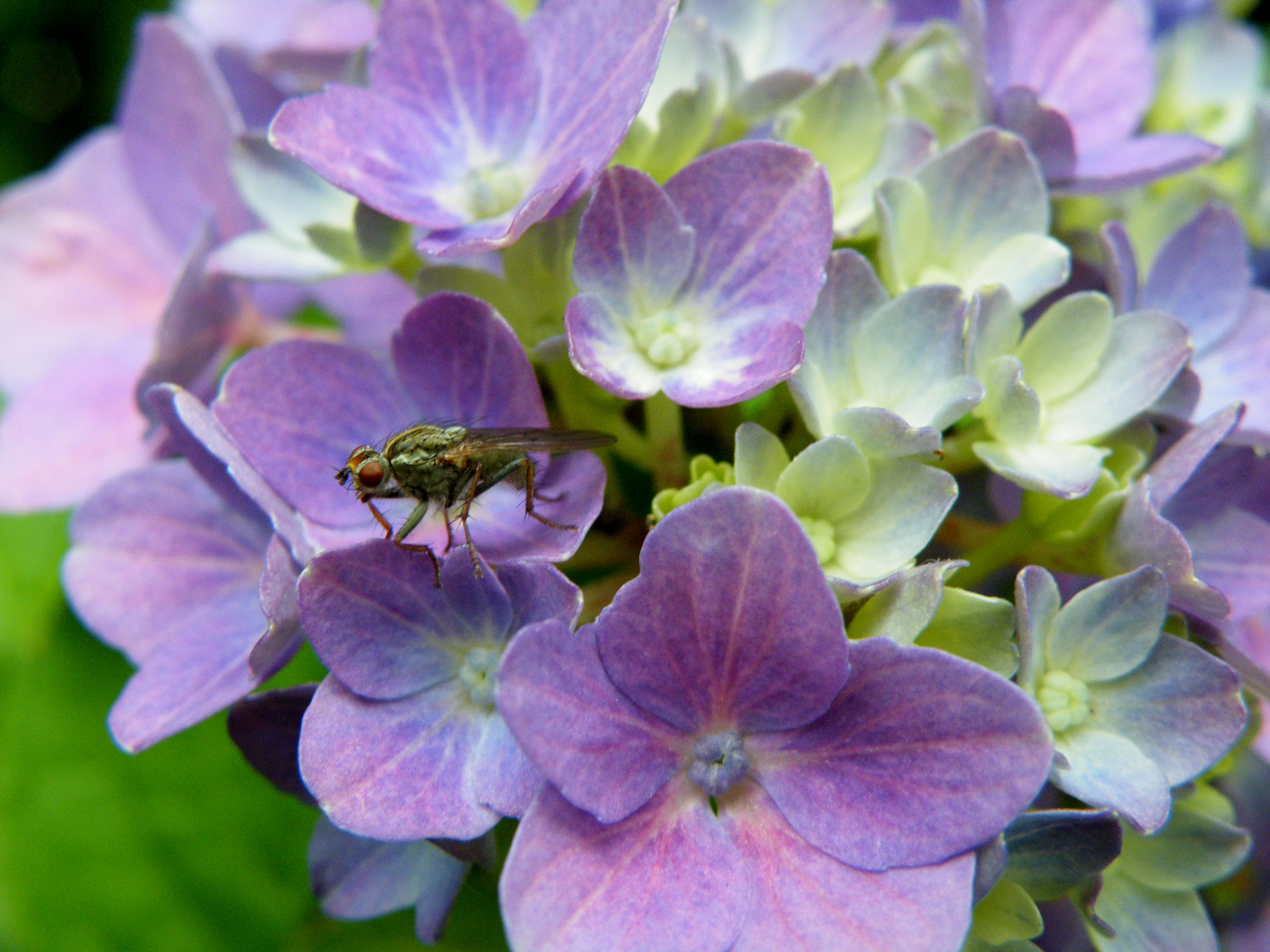
As it was an overcast but still very nice day, I decided to do some work in our own garden. I cleared one raised bed ready for growing some plants, but I am delighted with what is growing there already, there are plenty of herbs, such as rosemary, lemon balm, lavender, evening primrose, oca, oregano (two types), and of all things some Jerusalem artichokes have come up too. So I just took out some grass and some other stuff that was smothering those plants. Ian decided to come and work with me, so he cleared the path on his knees with a small little knife, no easy task to be sure.  Now and then we took a rest, either for tea or chat, or to admire the creatures flying or crawling around.  Meanwhile I took a few shots of them.

DSCF6426

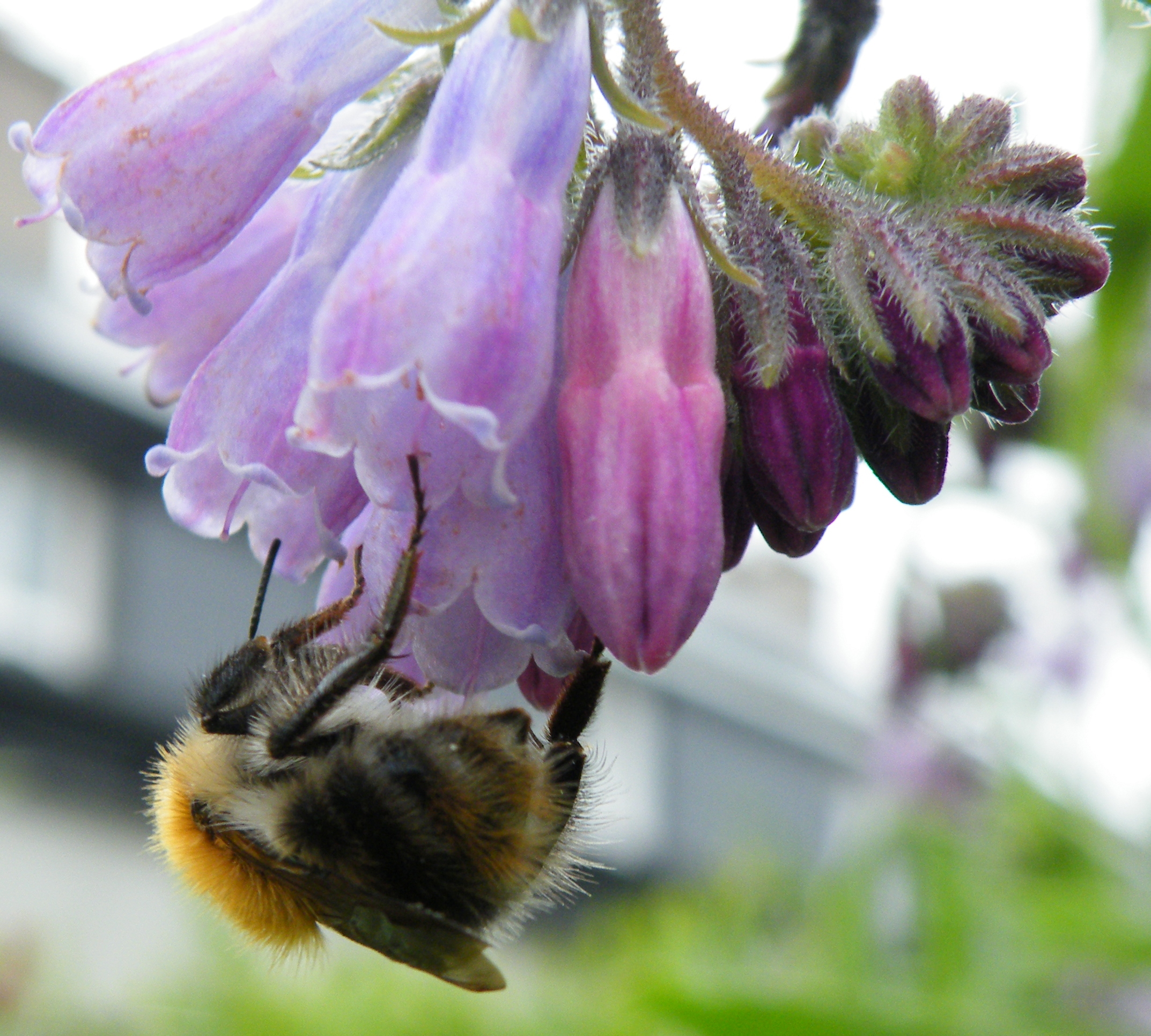
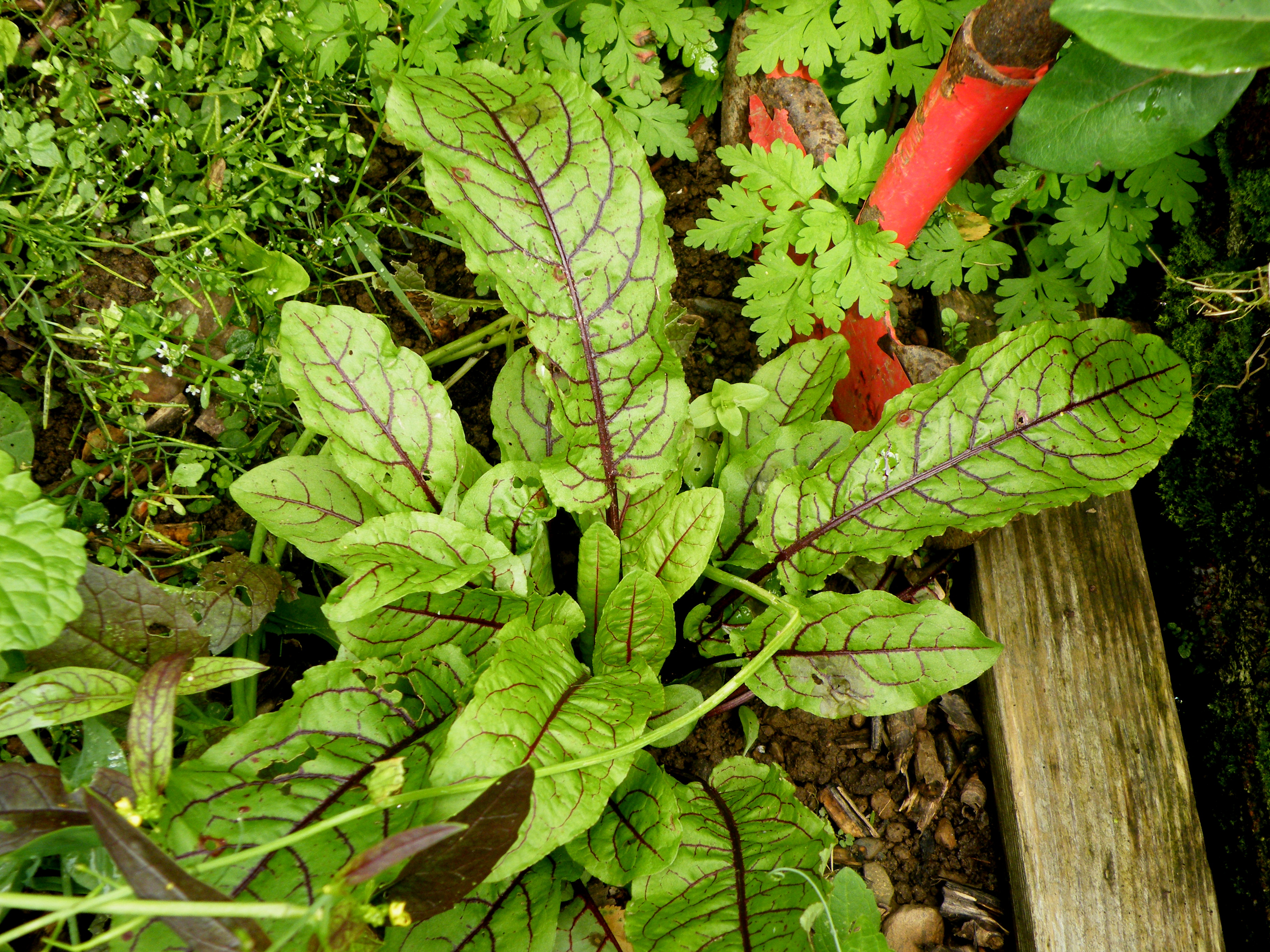
These are three wild plants that I am keeping my eye on very closely, number one is a huge thistle, it is almost in flower, I know that the seeds are what the gold finch feed on and that is why I want to keep it, to attract these birds and see how it goes.  The second one is our comfrey plant, it’s flourishing and what I am watching is the amount of insects that are using it, most of what I see are the bumblebees and I would love to see some honey bees on the comfrey too, of course.  The third plant is two years old, I grew it as a salad plant but it was so beautiful that I did not want to eat it, so I let it grow, and when we returned from Gozo it was so large and I recognised it as a plant you see a lot around here in the wild, a type of sorrel perhaps.  These three are on my watch list.

DSCF6424

DSCF6441
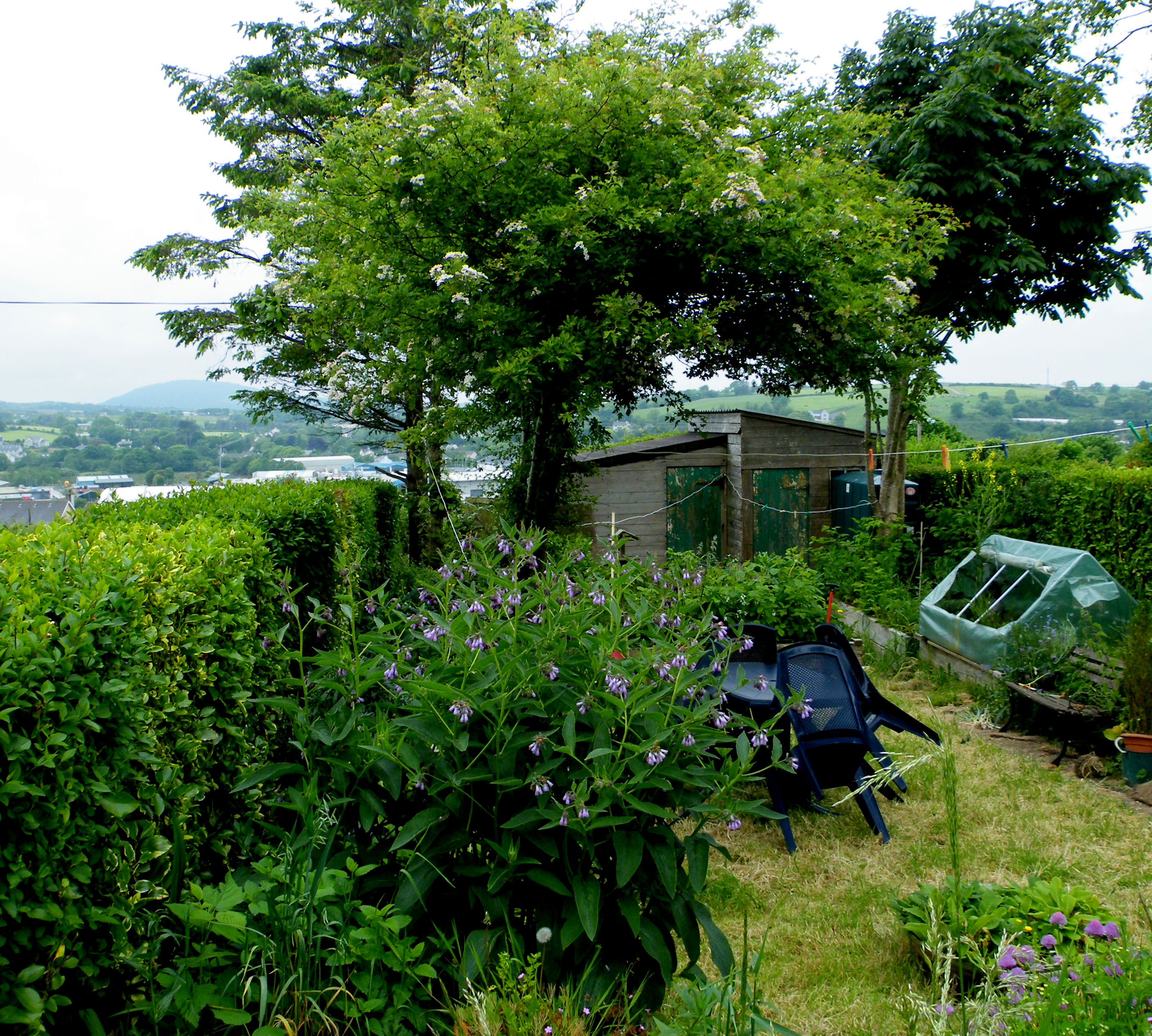
And this is a view of our garden, we have had the pleasure to sit under the hawthorn tree all week for our meals, in the dappled sunlight with the garden scents all around us and the birds singing, what a perfect summer weather, aware that for people in other lands, not as lucky just then because of rains and floods.

Always nice to appreciate what we have in the moment.

YOUNG TENDER SHOOTS AND COLOURS

I took a walk around the garden this mild spring afternoon. I went to see what vegetables are still growing, and what young tender shoots or flowers are hiding here and there, and of course they were. I came across a whole range of fresh young growth that shot up all of a sudden because of the sunshine in the past week.
The comfrey, tansy, lungwort, hypericum, foxglove, wild leeks, are all throwing out young shoots, some are near flowering. My winter garden did not produce as much as I had planned, partly because the slugs ate some of the produce, and partly because the rain and storms destroyed some of the vegetables, in fact the soil became too wet for anything to grow. But the Brussels sprouts are still growing strongly, small as they are, they are looking good enough. My white round radishes are doing well, as are the beetroots and the leeks. And the kale is still lasting, even if we ate from the plants regularly. One of my kale plants has grown over 1.50m and is looking fabulous, I am leaving it as an experiment, it is now growing new small leaves among the large old ones, I want to see what happens next.  The lavender plants are shooting up well, the grey green young leaves adding to the variety of colours now in the garden, as are the primroses and grape hyacinths, they are just about flowering, they too are bringing some very welcome colour to the garden.  And our little Korean fir tree is really doing well, ever since I put it outside again after Christmas it has been showing an abundance of shoots, leaves but also cones, beautiful.

In another week or so we shall be going away for a month, and so my garden will have to take care of itself, which I am sure it is very well capable of, I am already curious what I will find when we return, will there be a lot of wild plants, to be sure there will be, I remember from last year that the goose grass had overtaken the garden fast enough.  I will let it be, I’ll tell my grandchildren to come and take away the produce that is there though.  One job that I will try and fit in is to spread some leaf manure over the raised beds, I think the soil will benefit from it greatly and I have plenty of it.

And now soon for us it will be looking at the flora, the insects, the architecture, the folklore, the rocks, and the people of the island of Malta, a whole new experience awaits.
YOUNG GREEN IN GARDEN

EARLY AUTUMN PLANTING AND GARDEN JOBS

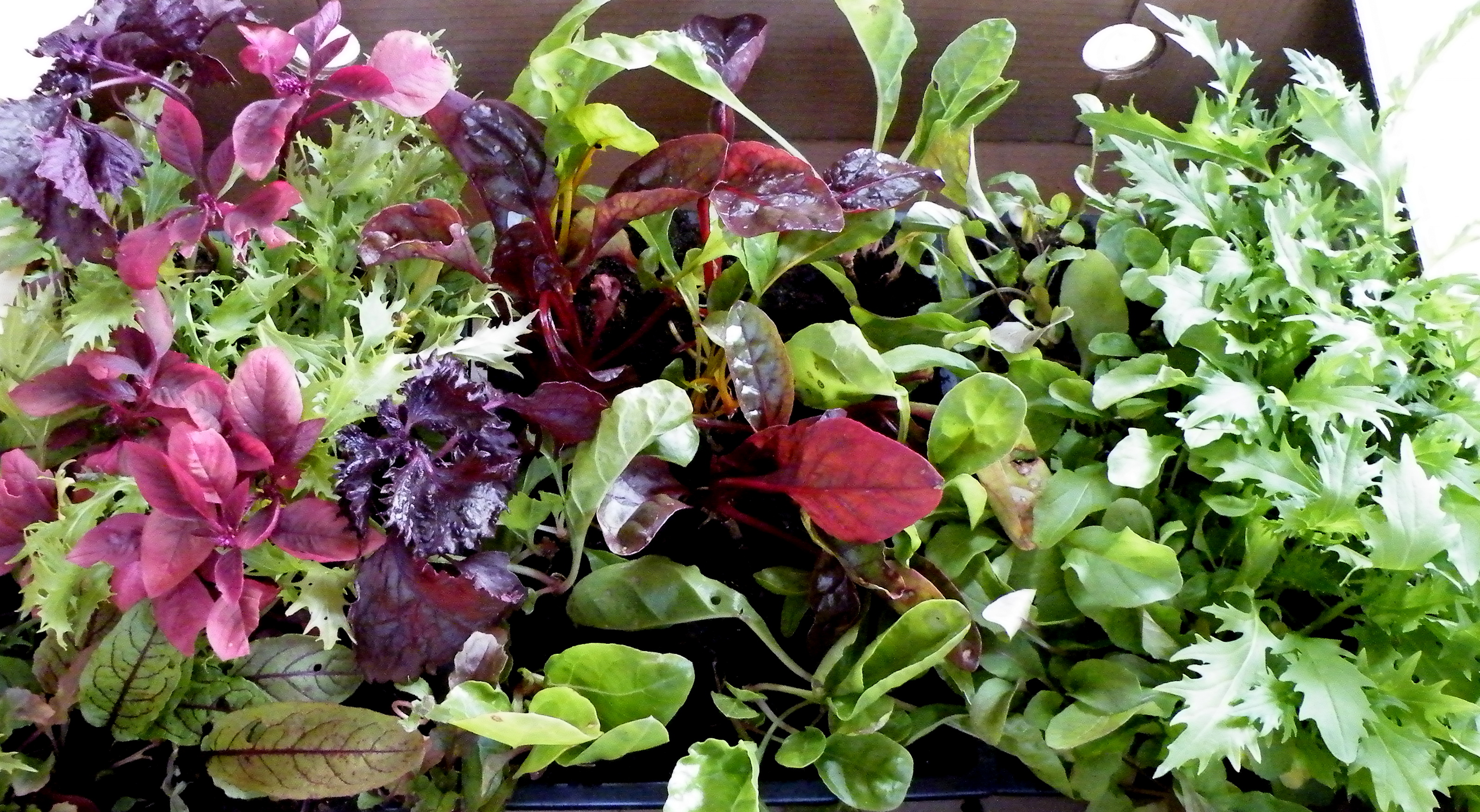
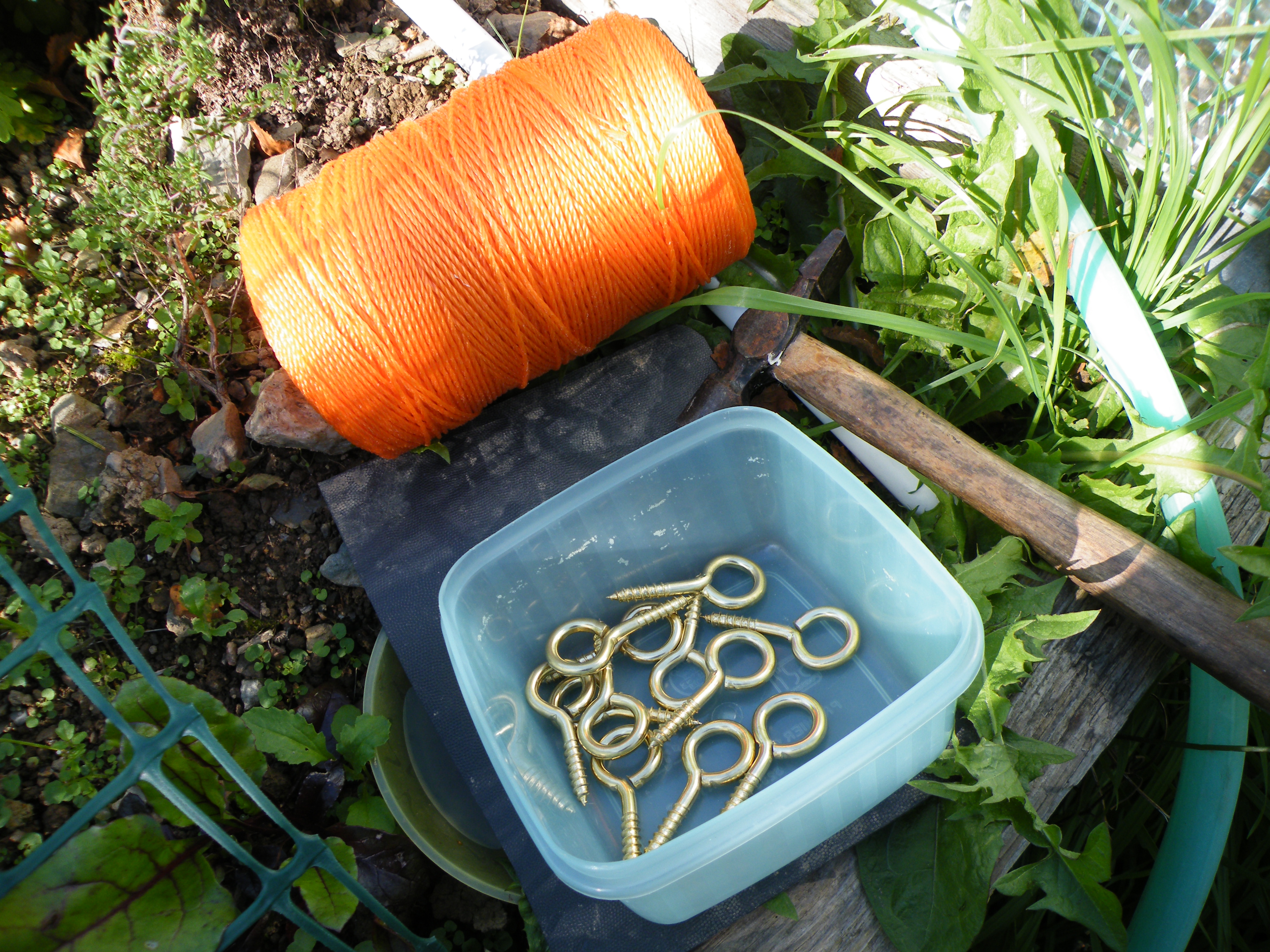
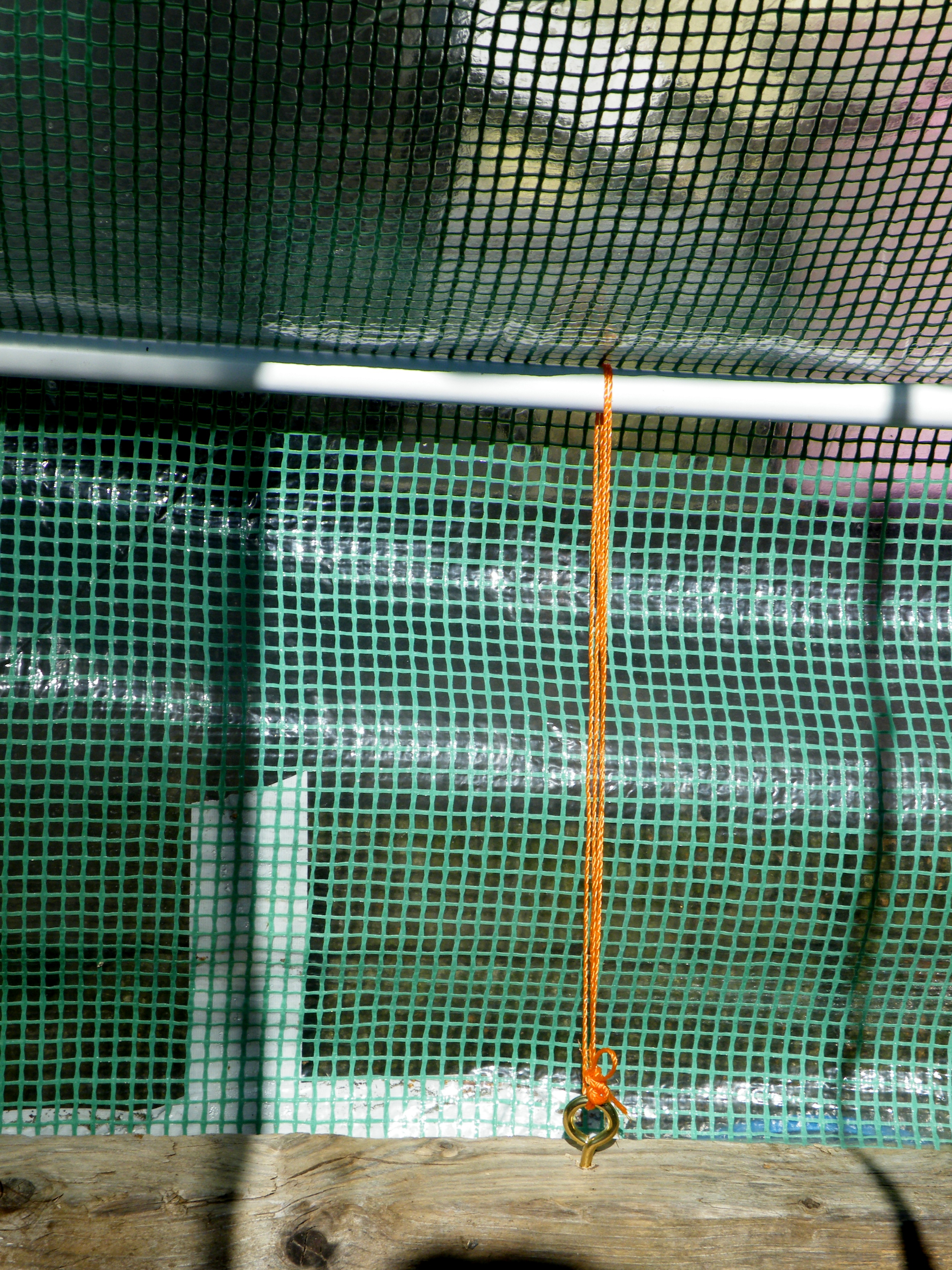
What a beautiful sunny day it was here in West Cork. A great day for the market and for buying some more plants for the winter plot. I have found that reddish salad leaves are less prone to slug attack, and they are hardy too, so got some of these, together with beet leaf and rocket.  Realising that it was high time that I made the cold frames ready to withstand high winds, I purchased twine and screws and made a start at securing the frames, the plastic is to follow.

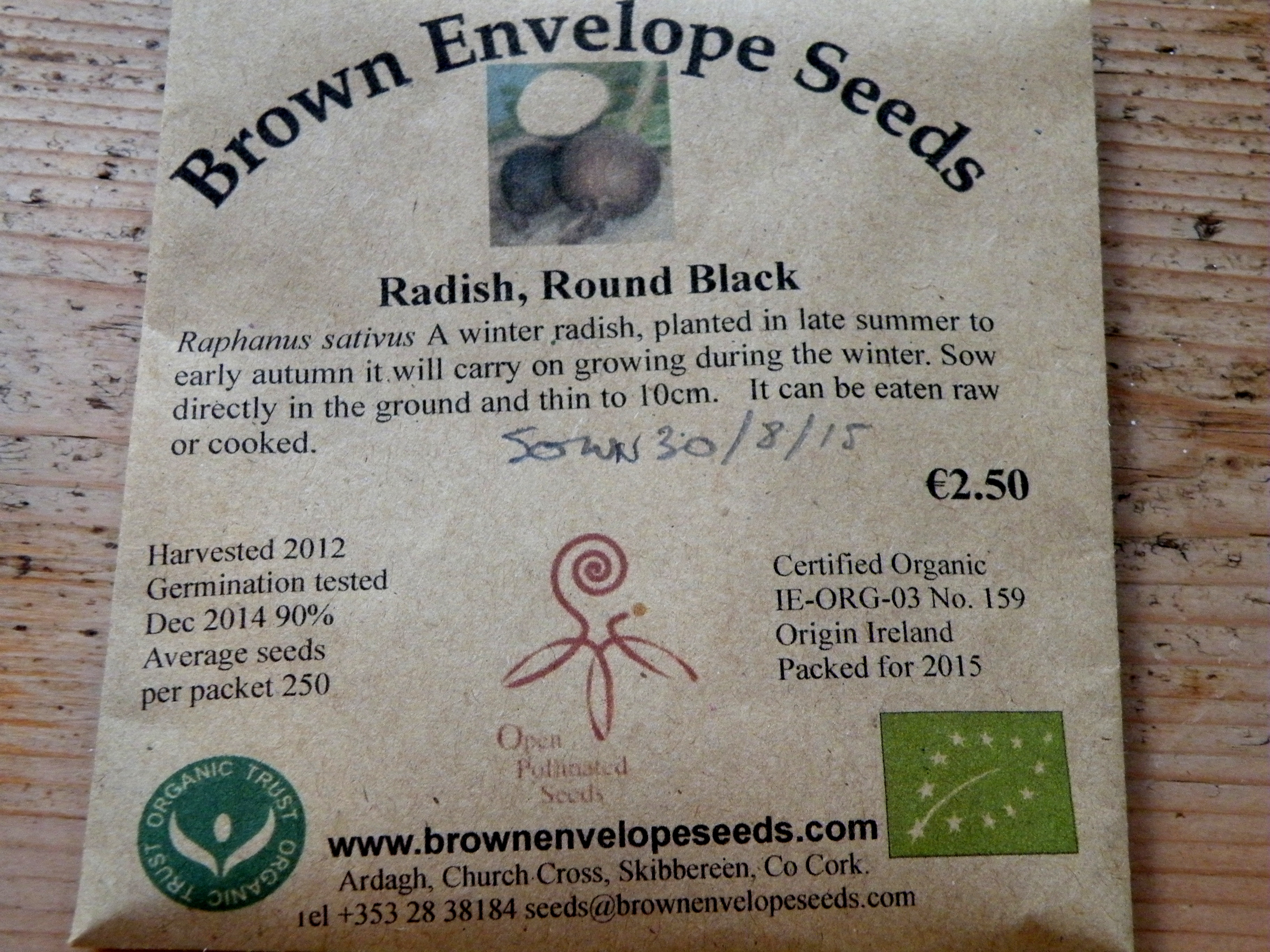
I also bought some seeds of the round black radish.  I have never grown these black radishes before.  I do remember making hutsepot long time ago in Belgium, but in that stew we would have used round white radishes with a slightly sharp taste. While checking out the black radish I read that they need a well manured soil and should not go short of water (never a problem in Ireland), they are fast growing and should be used while young and tender.  I just checked Pinterest for more uses and recipes of these radishes, and there are many, they can be used raw or cooked.  One recipe talks of a creamy black radish soup with rice cream, sounds good enough to me.  It is a good vegetable to explore as it can be grown here right through the winter, and that is my main interest at the moment with my garden, how to fill it with food for the winter months. It will be another one of my experiments.
DSCF9807

DSCF9811     DSCF9809

DSCF9812     DSCF9808

PERMACULTURE – A LEARNING CURVE

Two weeks ago I used this wheelbarrow. Today I found it totally overgrown with cleavers, or goosegrass like we call it. And so it is with quite a few other areas of the garden. During the last week or two growth has been fierce due to weather conditions, it has been very damp with temperatures between 15 and 17 degrees.
Last year I started to try and apply permaculture principles in the garden. My main reason was that I am very interested in foraging, in wild plants. I noticed that these plants, such as dandelions, nettles, or goosegrass would grow really well, while some vegetables were having difficulties. I thought that maybe mixing them all, letting them grow together so to say, would help keep pests at bay. So I read up on permaculture and found that it is all about getting a balance in the garden, or rather getting the ecosystem balanced. Therefore when during the early months of this year the dandelions started to grow well, I used a lot of them in our foods, same with nettles, and even goosegrass. But then I made a mistake, for which I am now paying, I let all these wild plants grow without disturbing them at all.  The goosegrass has totally taken over, I guess I did not use enough of it.  I now realise that I should have kept the upper hand and at least tamed the wild plants a little.
So today I made a start at clearing.
The other motivation to clearing up around the raised beds is the problem with the slugs and snails. Everyday now I gather them, but the supply keeps coming, and my plants are being attacked and eaten faster than I can replant them. This morning I discovered two mature broccoli plants, and one kale plant with leaves full of holes. In desperation I started to cut the hedges around the raised beds, and cleared away any leaves lying around, sure enough I filled a jar with the culprits in no time.
I went and googled permaculture and slug control and learnt a lot. It said in the article that it was no good transporting the slugs to another area, this only un-balances that ecosystem there, so I got to stop doing that. It gave quite a few good ideas to deal with this plague, one I liked is the use of beer, and tomorrow I will purchase a six pack and hope to have a lot of drunken slugs! Not sure which type of beer to use though 🙂 so will get the light beers I think. Some of the other options mentioned in the article, such as frogs, hedgehogs, nematodes, toads, or ducks etc… did not appeal to me, one other option though I liked, it is the encouragement of the carob beetle, a predator of slugs. It explained how to build a nest for these creatures, something I might try out at some stage as I quite like beetles.
One of the principles of permaculture is that one should just observe the garden, see what goes on, and take note.  I do that on a daily basis and have found that the beds that have herbs, such as oregano, lemon balm, rosemary, calendula, sage, and mint growing in them, have much less damage from said slugs and snails.  There is also one type of lettuce that survives every time, so that is the one that I should definitely sow next time round.  The broad beans remain untouched, they are also growing on the bed with garlic.

Its a learning curve, exciting and challenging – it can be very discouraging when so much of what you sow or plant gets eaten, but there has got to be a way around it.  I am sure to be getting on top of this particular problem.

DSCF8934

DSCF8930   DSCF8938

Goosegrass taking over part of the garden!

DSCF8940  DSCF8924

Snail and slug, two culprits which while I love them, I must rebalance the eco system of my garden.

DSCF8922   DSCF8920 - Copy

DSCF8917 - Copy

Some of the damage in the above photos, damage of mature plants!

DSCF8916 - Copy  DSCF8923

The type of lettuce the slugs don’t touch.  And around the beds clearing up is being done seriously now!