The past week or so has taken me through the history of citrus growth in Italy, this via Helena Attlee’s wonderful book which I’m reading. My senses are titillated by her words describing the scents and perfume of different lemons and oranges, their colours vibrant against a blue Mediterranean sky. Descriptions of use of these delicious fruits in local foods, drinks, candied skins, and marmalades bring the book to life. Helene brings one on a journey of the region back in time, and tells how the citrus industry took root there, something I did not know anything about, she tells how the Arabs first introduced the citrus trees to Italy. She covers the growth of them in Sicily and goes into some of the history of the Mafia there which is connected to what was a developing industry of growing citrus fruit and exporting it all over Europe and as far away as Russia.
Recently I caught a whiff of an orange blossom while in a garden centre in Cambridge, the scent was delicate, the flowers pale and beautiful.
One aspect of all I read has delighted me very much. It is the story of the essential oil of Nerola, an expensive oil that I once owned and the scent of which was most pleasant, lifting the senses totally. This oil is even now used as a principal ingredient in the manufacturing of modern perfumes. The Chinotto trees of Savona which produce a sour orange are used in the production of Nerola oil, it’s extracted from the citrus blossoms and fruit skins. Helena devotes a delightful chapter describing all of this.
I also learnt that the best marmalade ever is made from the organically grown oranges called tangelo, the flavour is supposed to be something else, it’s not available everywhere, but supposed to be exported to America, and available in London at Sloane Square under the name San Giuliano marmalade. I’d sure would like to try some one day.
Helene Attlee’s travelogue is exciting and written in a fluent, easy style. Oh and one other result from reading this book, I will never walk into a supermarket again and look at the display of citrus fruits in the same way, and that is a very pleasant result as I do not enjoy grocery shopping.
But honestly there is so much to read up on citrus fruits, the trees, industry, botany, cultivation and so on that it could keep one busy for a very long and pleasant time.


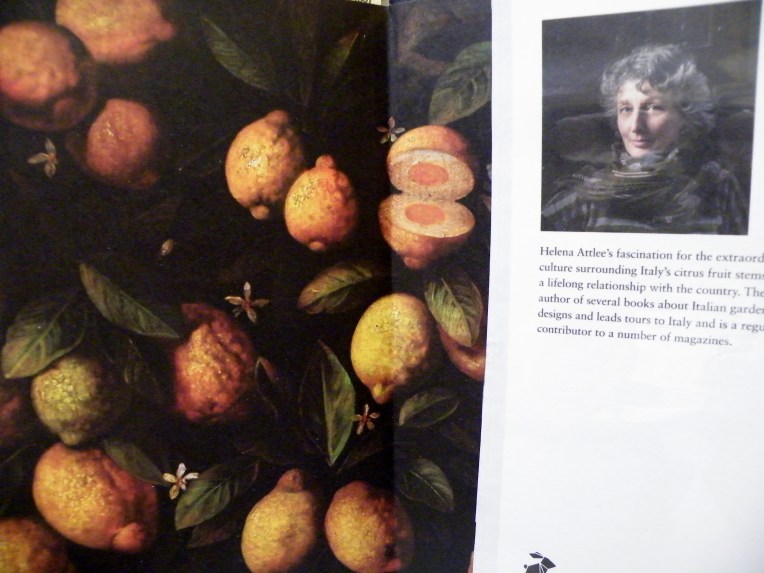
The inside of the cover from the book features Bartolomeo Bimbi’s painting of the many varieties of lemon grown in the garden of Cosimo de’ Medici, and a photo of the author.
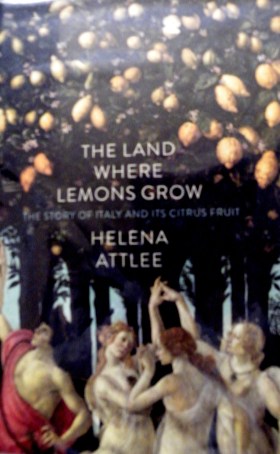 Cover of the book, available in the library system.
 agoyvaerts