MOLLY GALLIVAN’S COTTAGE

Molly Gallivan’s cottage is named after Molly, who lived in this cottage hundreds of years ago, she was a widow and mother with seven small children. And showing entrepreneur tendencies she came up with the idea to supplement her small income by opening a “Sibheen” (illegal pub) where she sold her home made “Poitin” that was locally known as “Molly’s Mountain Dew”

In 1840 a mountain road was built linking County Cork and County Kerry, which led from Glengarriff over the mountains to Kenmare and was called the Caha Pass. This road happens to pass Molly’s cottage and when more and more travellers and tourists took this road Molly saw another good way to increase her income. She set up her own cottage industry and started to sell home spun woollens and knitted Aran jumpers which her neighbours helped her to make while the local sheep farmers provided the wool. Such a resourceful woman was Molly.

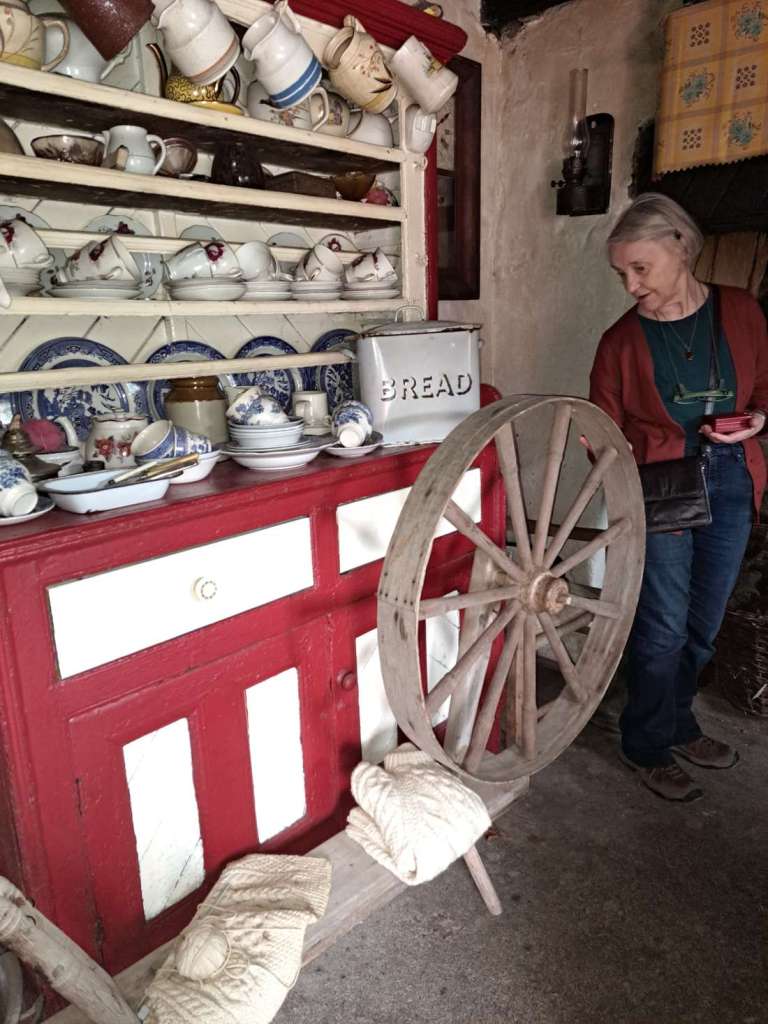
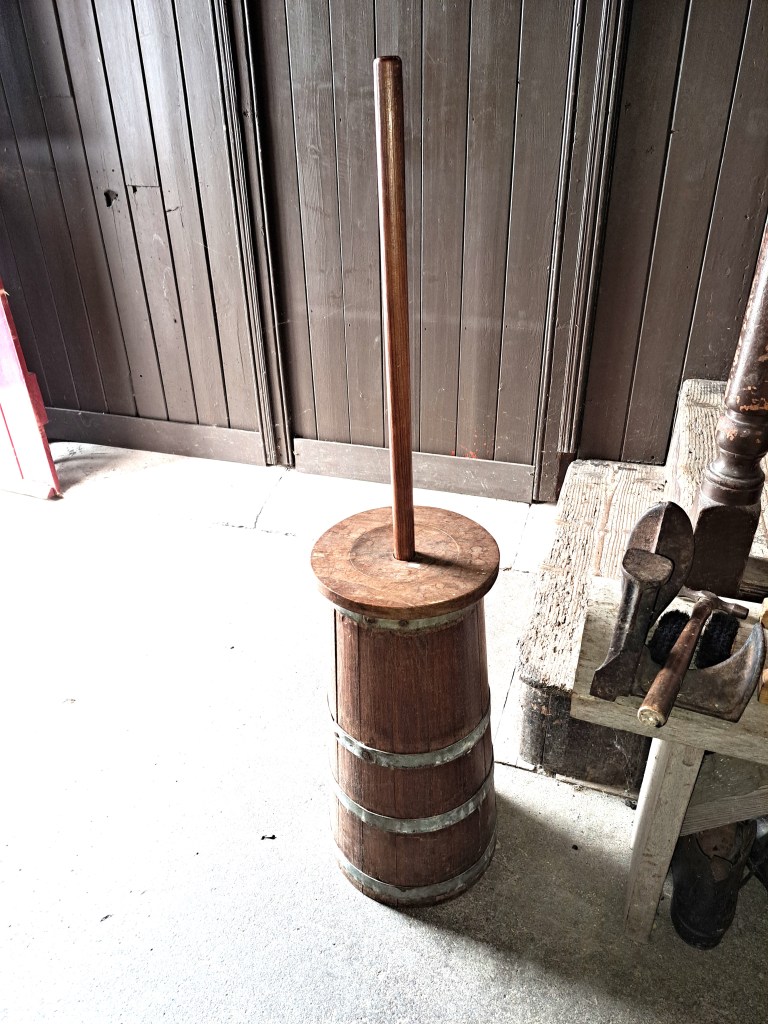
In the following photos are some of the lovely authentic items that Molly used to look after her family, a butter churn among them. In this kitchen traditional Irish scones are made till today, I’ve tasted them when I visited with my sister Josephine. We both find it interesting to see what utensils women would have used here less than one hundred years ago.
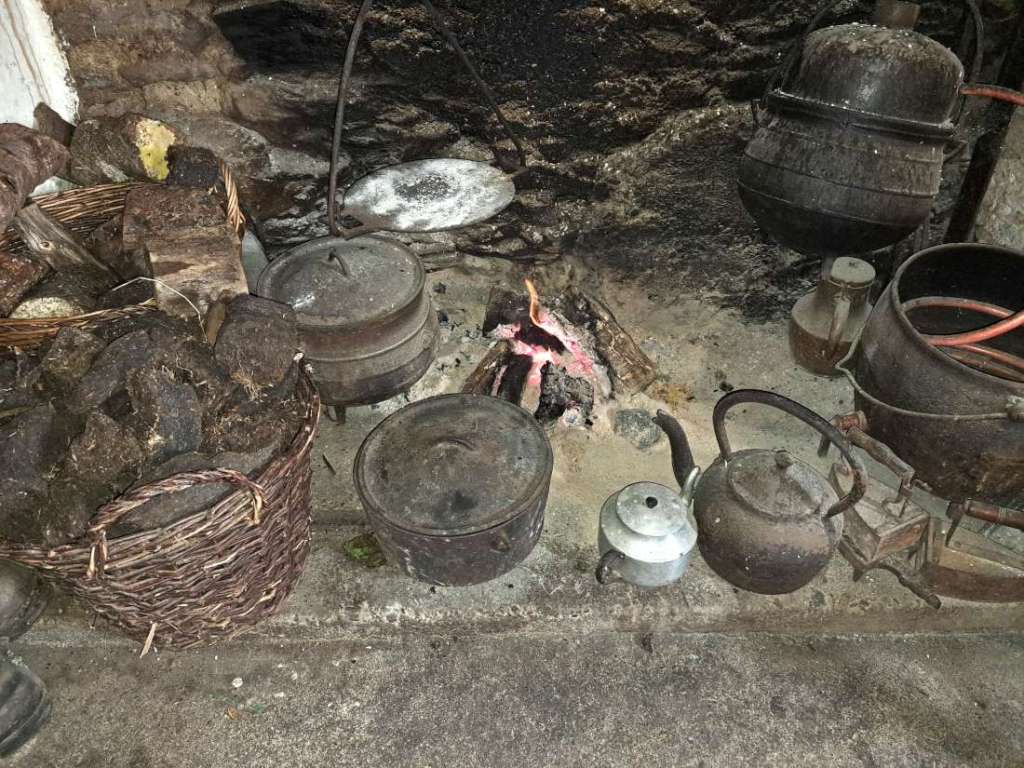
Looking at the heart there are several items, one of them is a shallow black pot in which a soda bread was made. The dough would be put in and the pot would be put in the fire and hot pieces of turf placed on top of the lid. The resulting bread tasted delicious. I see a flat round gridle too which was used in the making of gridle bread using rough flour, some maise flour, sour milk, bread soda and an egg. Here I found a video showing how: https://youtu.be/PpoTNWOKWtY There was always a large pot to boil the potatoes which were always popular in rural Ireland.

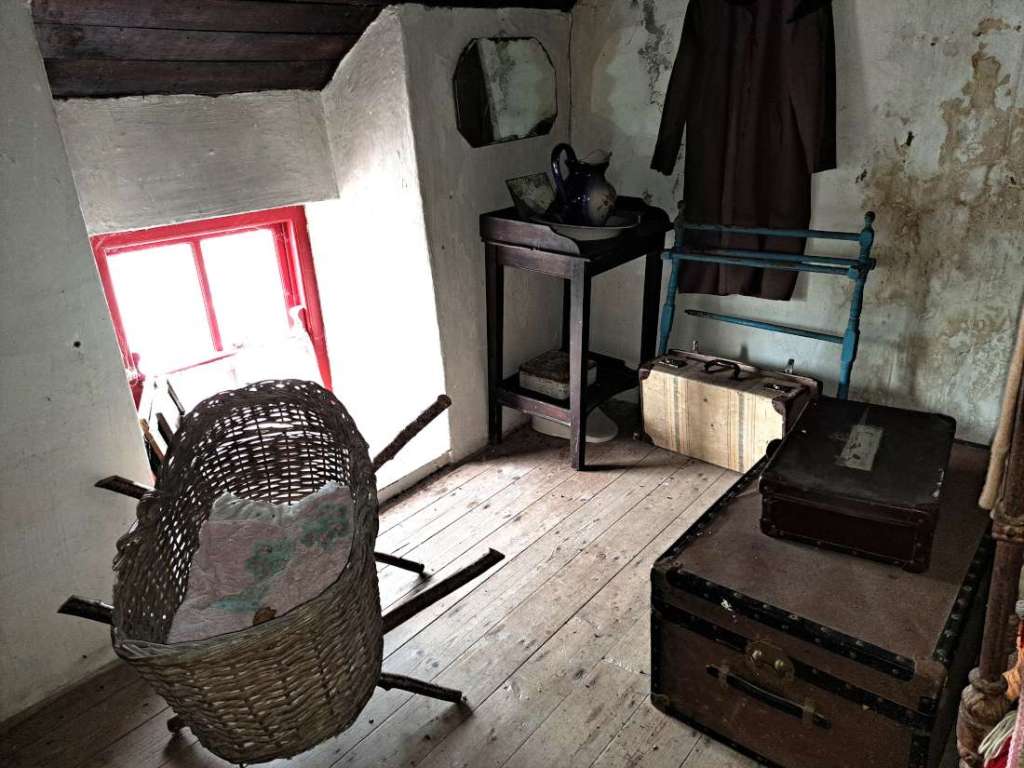
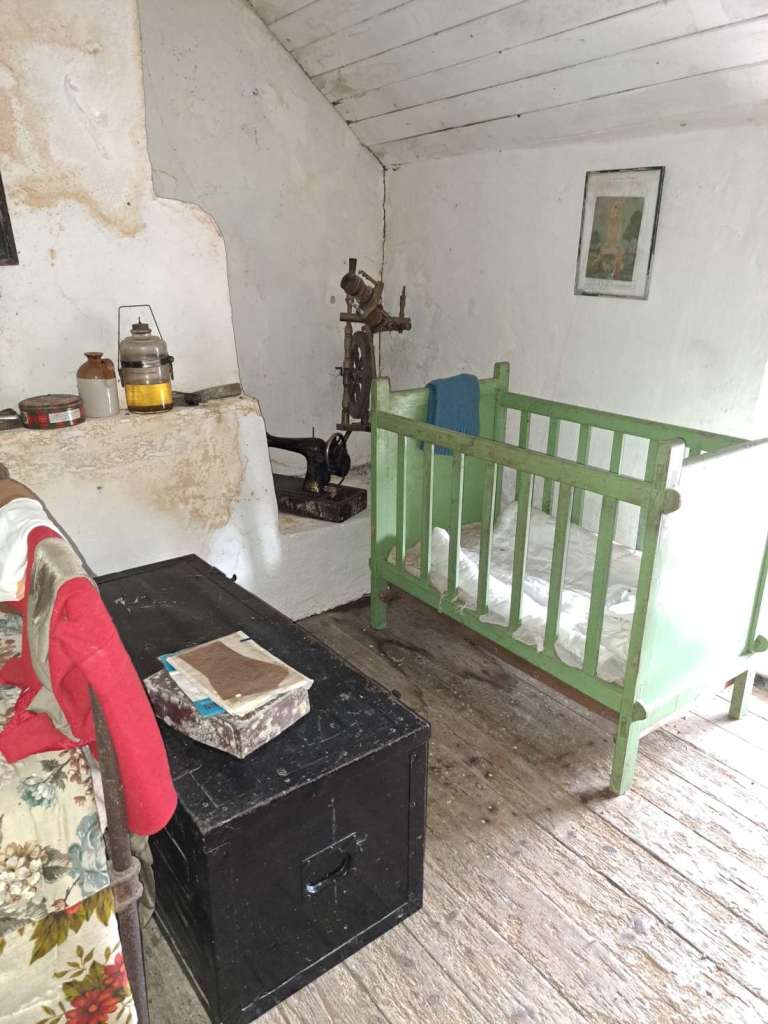
The upstairs in Molly’s cottage actually has two bedrooms and a bed also on the landing. The windows are tiny. There is a rustic cradle. I spot a small spinning wheel in the corner of one of the bedrooms. Electricity came to these areas only in the 1960ies. Her sewing machine would have been worked by hand, same as the spinning wheel and the loom. It was a simple life, but it cannot have been easy always.

We had a lovely cup of tea when we stopped by there during my sister’s visit. And of course we sampled the homemade scones. We also visited the shop area with the lovely selection of Irish woollen items and other Irish goods.
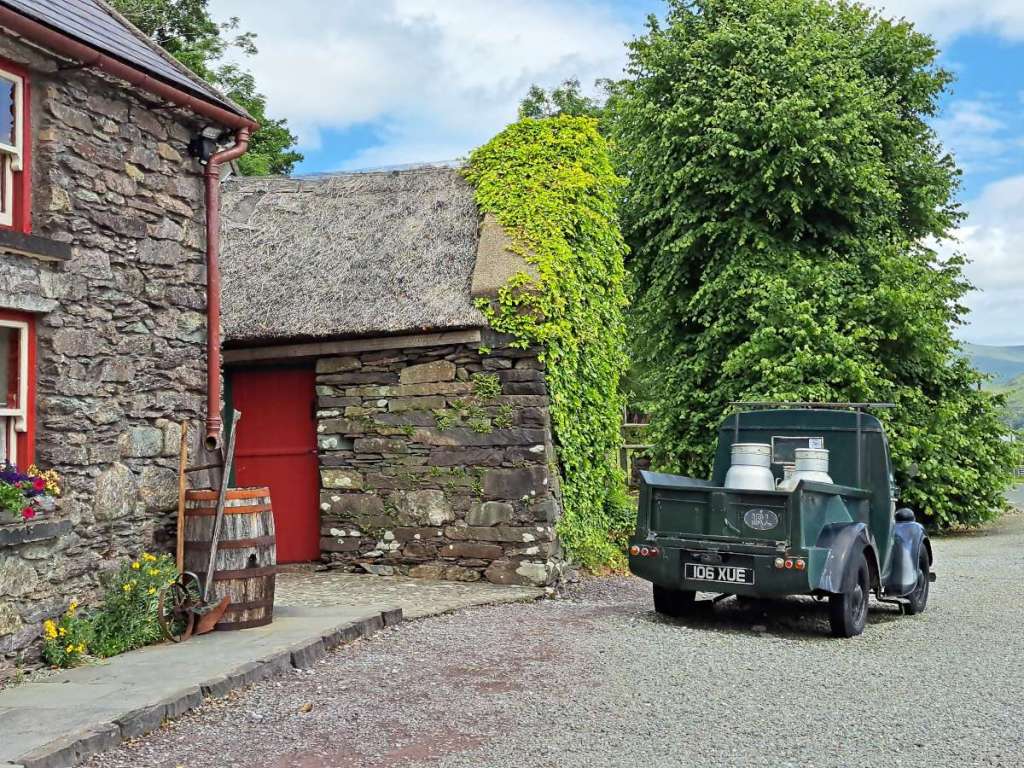
The cottage seen from the N71. Also some of the out-houses one of which is probably where Molly made her illegal “Poitin”, her mountain dew as it was called. The original cottage was only one story part of which can still be seen here in the photo.

I hope you enjoyed learning a little about Molly Gallivan’s life and her cottage. She must have been a great woman!

The cottage is found in Bonane in County Kerry. Bonane is situated in a valley between the Caha and the Shehy mountains and the sea. The cottage overlooks some of this valley. Bonane is know for its many ancient historical sites. Among the sites are pre-famine house ruins and field systems, bronze age copper mines and much more, fascinating stuff. Today Molly’s cottage and traditional farm depicts the lifestyle in the valley as it was during the early 1900s.

I include here the website of Molly Gallivan’s Cottage in case you would like more information on it. https://mollygallivans.com/the-molly-gallivans-experience/

I pass this place once a week and often stop for a cup of tea or a look around. I find the old utensils and the whole setting fascinating.

AN OLD MALTESE RECIPE BOOK

20180203_122426

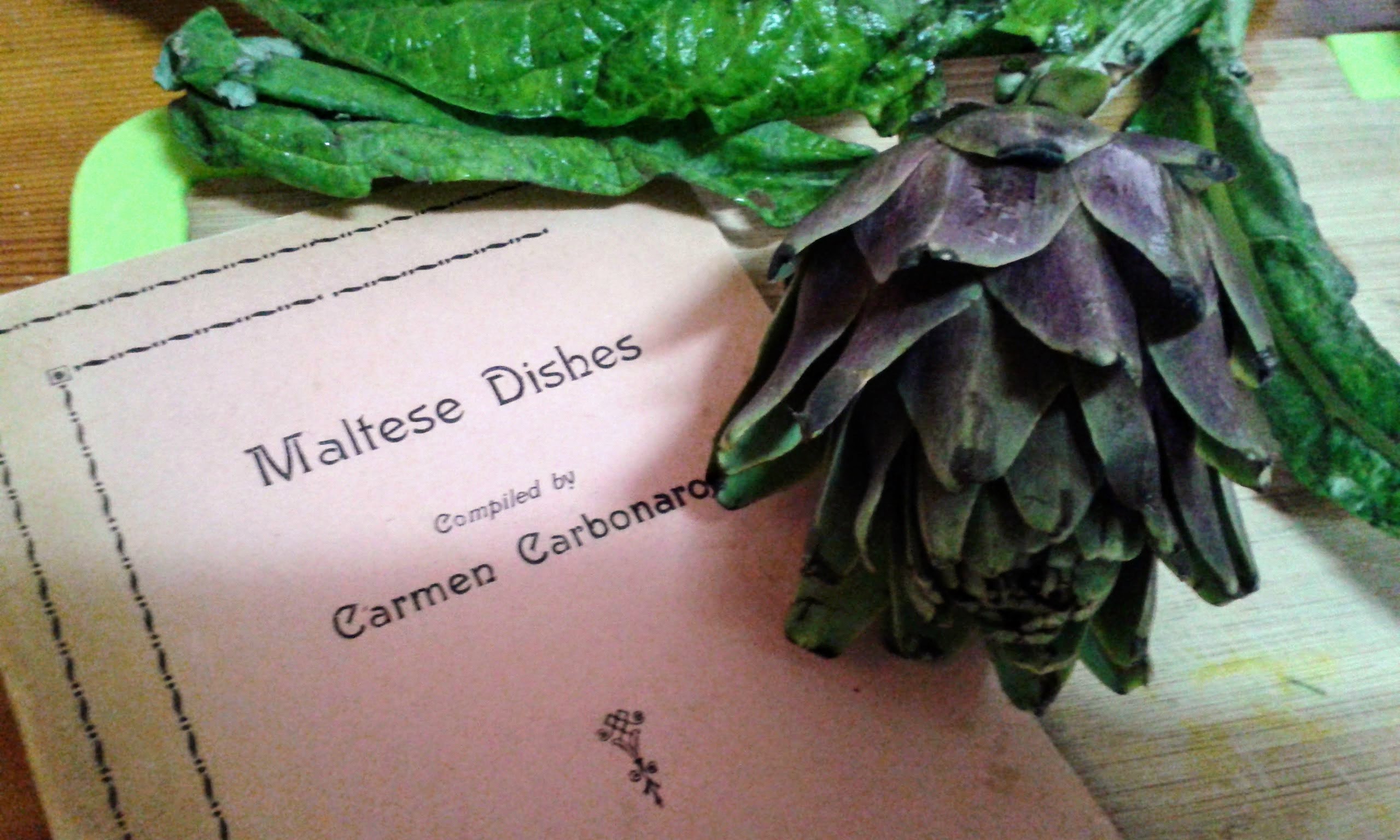
Today I found a very old recipe book in the library in Ghajnsielem. It dates back to 1958 and it was compiled by Carmen Carbonaro, it is called ‘Maltese Dishes’ and seeing that I cannot find copyright information I am going to use some of the information to share it here. It is a wonderful little book! Apart of the interesting recipes it has also got illustrated advertisings from the time period it was written in, fabulous bit of information for foodies and those interested in traditional facts of twentieth century Malta or Gozo.
Even before I got home and had a good look at it, the little book was the topic of conversation big time. I stopped at the organic vegetable shop in the village across from an ancient church with the nice baroque façade and on the pleasant Piazza Indipendenza. Doris, the young woman that owns the shop (Pomona) started to check the recipes, she told me that in the time of her grandmother people did not use butter in Gozo, only lard and this, she said was reflected in the recipes. In walked Charlie, one of her nice and regular customers and he added more information to the conversation, we had got on to vegetables, artichokes as a matter of fact, which is a vegetable that I have never cooked myself and was rather interested in and luck would have it that they are in season at the moment, so I bought some. I intend to try out the recipe on page 27 of the little book, there it gives the recipe for ‘Stuffed Boiled Artichokes’ or ‘Qaqocc mimli’ in Maltese. Among the ingredients I will need are Olives, Parsley, more Olives, Breadcrumbs, Anchovies and Chives. And of course globe Artichokes.

WHAAAAAAAAAAAAAT…… I have to ‘beat’ the artichokes it says!?! Beat them, but well that does not actually surprise me as Doris was telling me that in the ‘olden days’ they also used to ‘beat’ the calamari to tenderise them before cooking! What I am rather surprised of though is that at the end of the recipe it says to serve the artichokes when cool, with mayonnaise, and in those days that would have been home-made mayonnaise, the way we used to make it in Belgium last century. I guess that here it would be prepared using olive oil rather than corn oil like we did.
I cannot wait to try out this Artichoke recipe and, after making more marmalade from home grown bitter oranges today, I feel like a real Gozitan woman, getting into the spirit of this lovely island and enjoying it to the full.
Charlie, Doris and myself then got on to more about wild foods and how we can use the flowers of the artichoke to eat as well as the globe. The globe I presume is the flower bud. I glean so much local information from those two very pleasant people, I just love to shop there.

Other interesting recipes in the little book that I think might be worth trying out are:
• Chestnut soup (Imbuljuta)
• Ministra (a Maltese very delicious soup)
• Vegetable hot-pot (Kawiata)
• Timpana, a most popular dish on the Maltese menu it says.
• Rabbit stew and spaghetti (I have tried this out in a restaurant – very nice)
• Tunny fish stew
• Lampuki pie (a popular fish during August and September.
• Imqaret (date slices)
• Xkunvat – a special Maltese sweet.
• Marmurat, a sweet made with almonds
There are many more interesting looking recipes in the little book. At the end of it there is a menu for the week page, I had a look. Monday it says: Spaghetti, Meat Balls using the meat left over from Sunday dish, cheese and fruit. For Tuesday it says: Meat Soup. Meat from Soup (Buljut) with lemon juice and salad, Custard, Fruit. I won’t give the whole week but interestingly I read that on both Wednesday and Friday fish is recommended, I guess that in those days the church still had two fasting from meat days in the week. All the other days have meat on the menu.
Interesting too is that there are 24 different advertisements in the little booklet, the advertisements themselves are of interest if looking up dietary information of the time.
The little book was published by Empire Press in Malta. It sure is something to treasure. I’m going to have some culinary experiments with it in the next two weeks. I do look forward to learning and to tasty dishes.

20180203_122435