THE BATHOUSE – BAT CONSERVATION

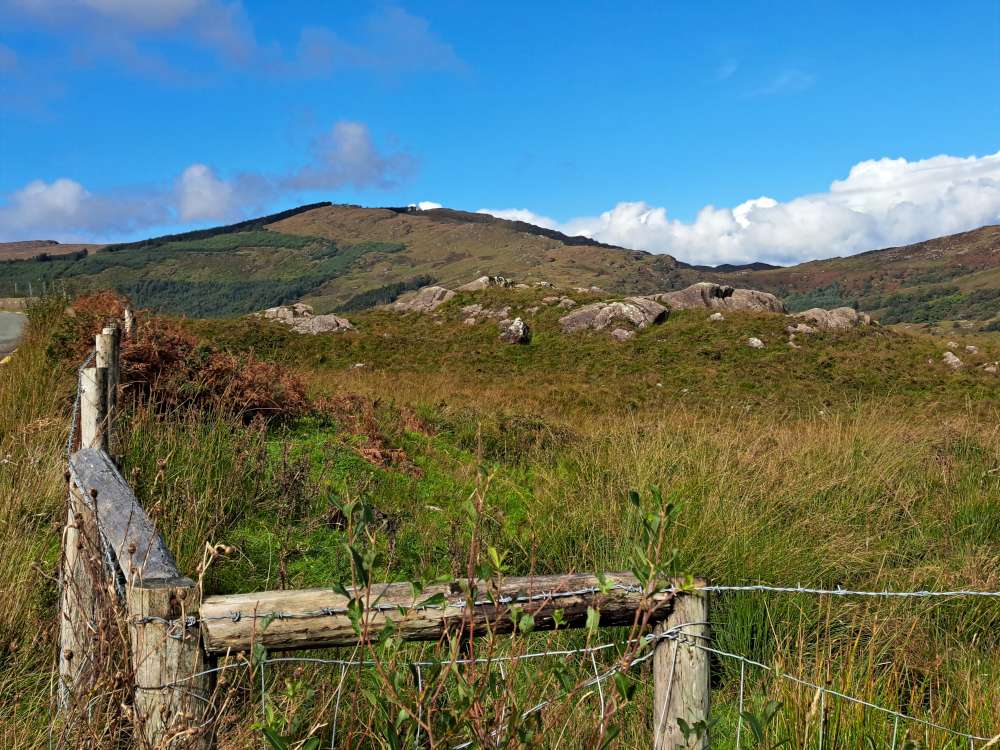
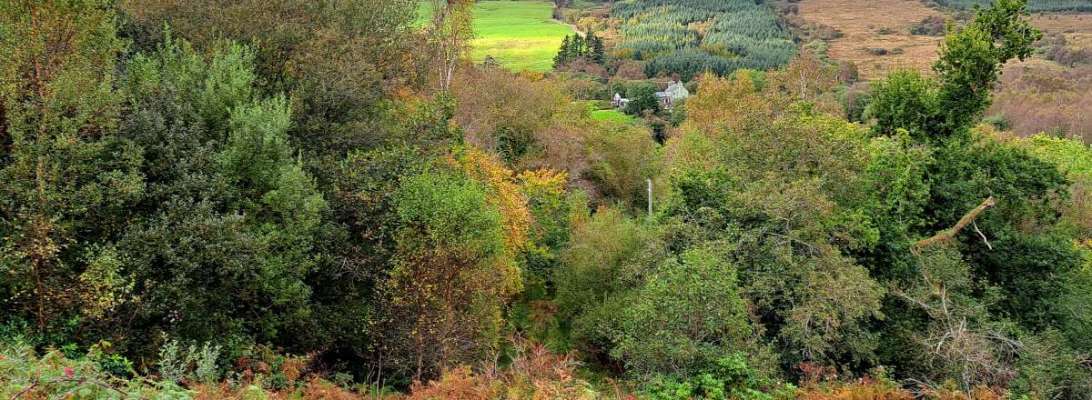
Along the road, somewhere in county Kerry I recently did a discovery. While on one of my journeys I stopped to take autumn photos and also to take a look at this cottage. I had often wondered while passing who would have lived there long ago, and why the people left, and where did they go, maybe across the sea to America as a lot of Irish people emigrated there in the late 19th or early 20th century. Anyway the house is boarded up but still looks in good repair. It is nestled among beech and other native trees, now beautifully coloured, and it looks out down the valley with hills in the distance. Some of the land is bog-like with a variety of grasses and sedges, some rocky outcrops and low bushes, and lots of bracken, beech and birch trees, a mixture of colour at this time of year.

To my surprise I found a notice fastened to the wall of this cottage, it happens to be a roosting place for bats, and in particular for the lesser horseshoe bat. An organisation covering both Ireland and England called the ‘Vincent Wildlife Trust’ has a long and successful history of establishing and managing reserves for rare bat species. It manages 37 sites in Ireland, England, and Wales, all of which are roosts of the greater or lesser horseshoe bat. In Ireland, the Trust manages 12 reserves for the lesser horseshoe bat. And so this cottage has been put to very good use.
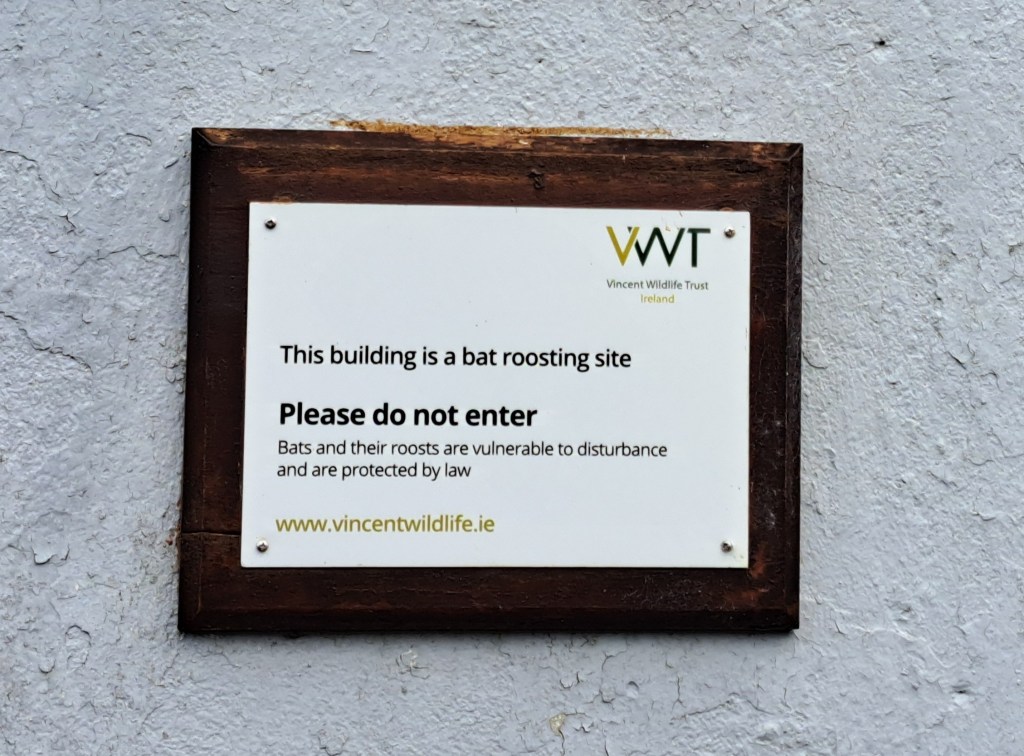
Website: Vincent Wildlife Trust Ireland | Managing Bat Reserves

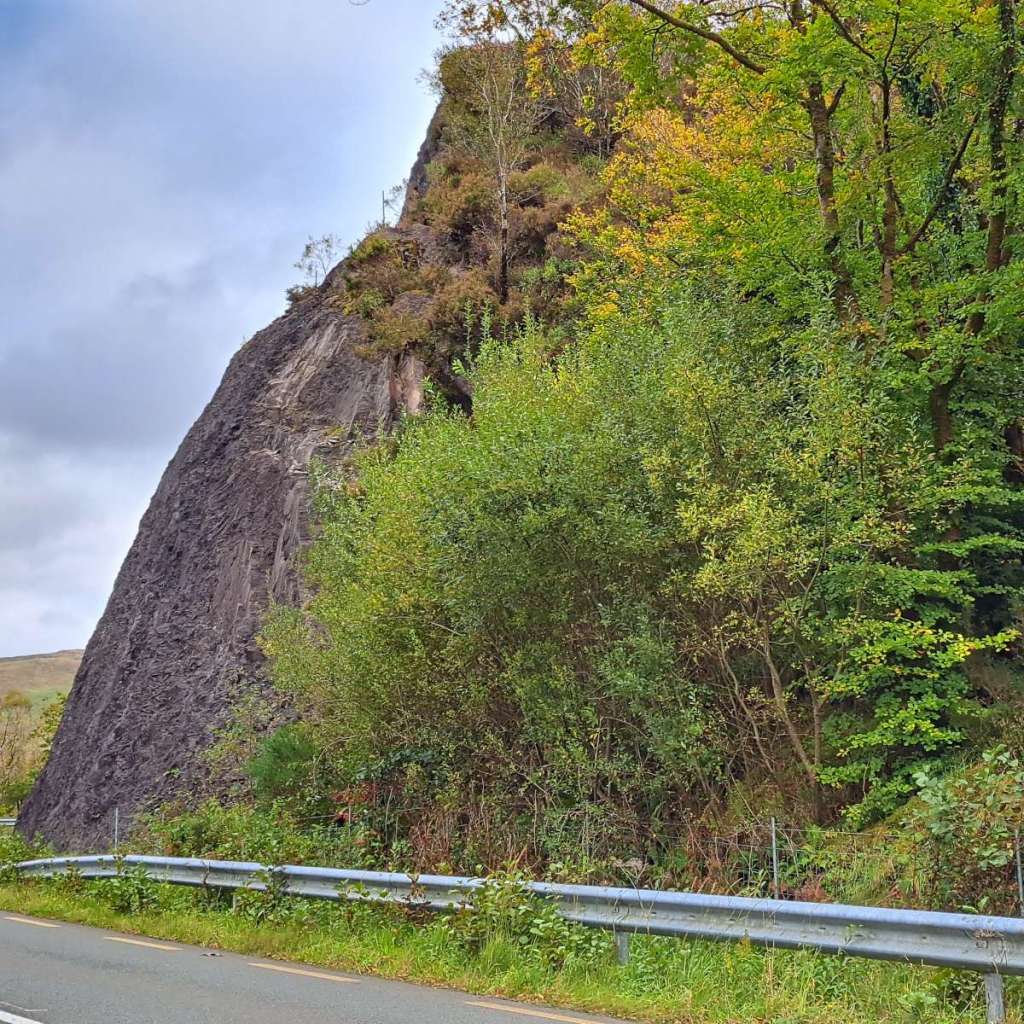
The beautiful surroundings and peaceful countryside is a great place to let the bats find their space and hopefully continue to survive.

The landscape during autumn
Futher reading: https://vwt-production.ams3.digitaloceanspaces.com/uploads/VWT-Ireland/Resources/Lesser-Horseshoe-Bat-Species-Action-Plan.pdf

It was a great discovery, seeing how much effort is put into conservation of native wildlife.

A DELIGHTFUL DISCOVERY

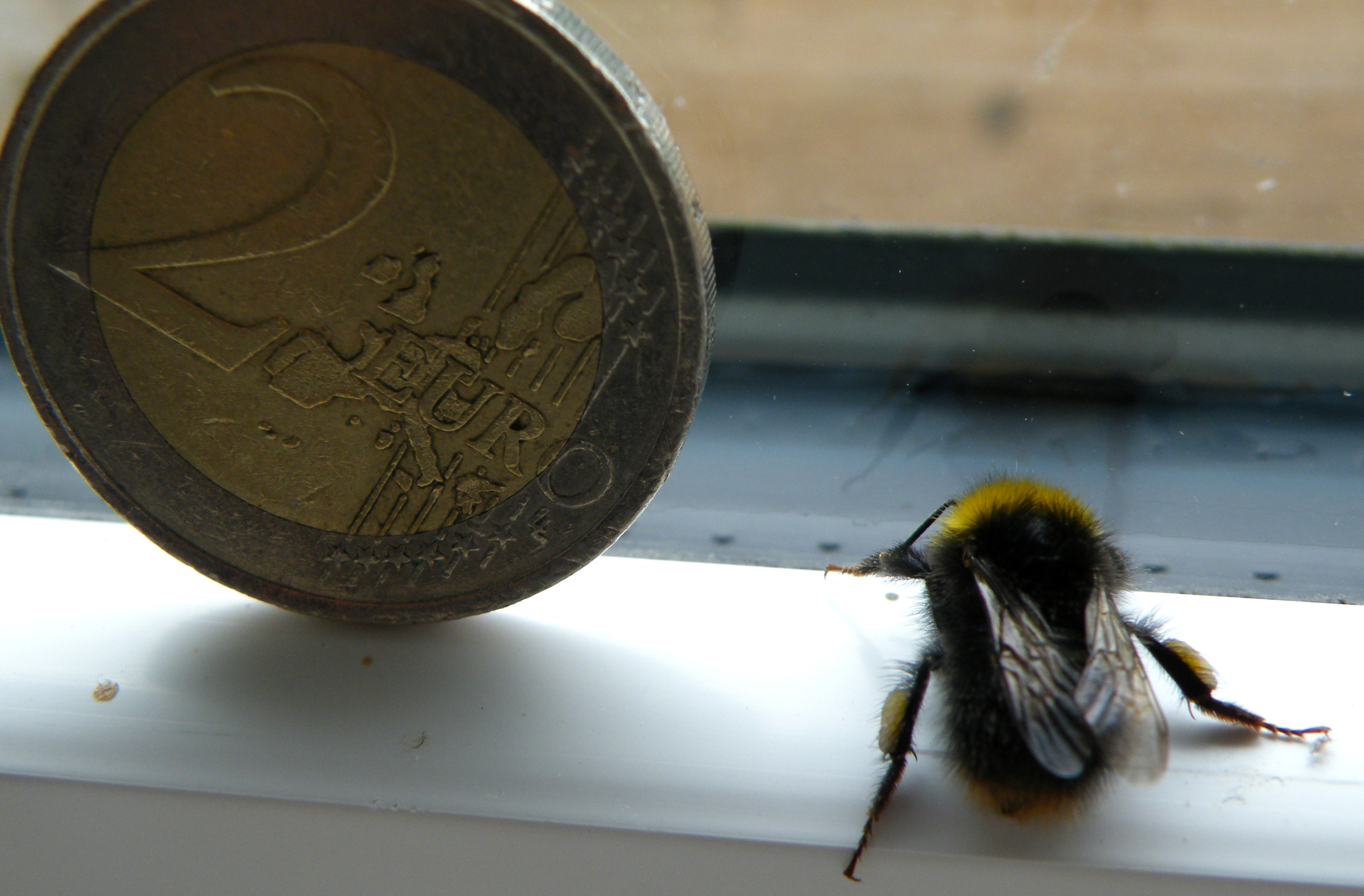
A bumblebee that was sitting on the bathroom window, not moving. I grabbed my camera to take some shots and then got out the honeypot and as soon as I touched the surrounding area of this beautiful insect it put out its proboscis and started to suck the honey with gusto, lovely to see this. It gave me another chance to take photos. I see this little bumblebee type in the garden a everyday, feeding or at least looking for nectar on the flowers of the large comfrey bush. They are very small in comparison to other bumblebees and move fast, never been able to take a photos until now. Just found out something else interesting, from observation, they do not go into the comfrey flowers, rather they bore a little hole in the tip of the flower petals and suck that way (I guess). I’d love to have a proper identification. I’ve looked at all sort of websites without any luck. Now I came across a blog post of a fellow blogger that looks very interesting, it is at https://standingoutinmyfield.wordpress.com/2017/06/29/cheat-guide-to-the-irish-bumblebees/
Could it be a young male B.Lapidarius I wonder?  And no it is not!  I have since learnt from a very reliable source, one of my fellow bloggers who is an ecologist, see her blog at https://murtaghsmeadow.wordpress.com/ that our little bumblebee is a bombus pratorum, or early bumblebee worker.  It is not a male because males do not collect pollen and in the photo we can see lots of pollen on its legs.  Only the queens and the workers collect pollen, the males do visit the flowers for nectar though (Murtagh’s Meadow).
DSCF2389

DSCF2383

DSCF2388

Just adding two more photos of other bumblebees from the garden.

20180610_175555

This one is also small but it has two bands of yellow and a white bum, so different from the previous bumblebee.

20180523_174945

And this is a large one orange top, a lovely one.  Must get better photos though.

I would also like to pass on recommended reading:  Dave Goulson’s book – A sting in the tale –

A SENSE OF WONDER – INTENSE JOY IN NATURE

DSCF1538

I just finished reading Michael McCarthy’s book “The Moth Snowstorm” in which he describes and talks about the decline in biodiversity of birds, moths, butterflies, and other creatures worldwide but especially in his own Britain.  He gives examples of his own experiences and that of other nature lovers, where they have witnessed this decline.

His emphasis, though, is on the intense joy that the natural world can and does bring to humankind.  The book is also part memoir, his reasoning about wildlife decline is interspersed with his own memories, and of how his childhood trauma played a role in his discovery and his passion for the natural world, the joy that nature stirs inside us humans.  And this resonated with me so well, I too developed this passion at an early age, not perhaps through childhood trauma, I’m not sure why.  The point that McCarthy makes is that this is something very innate in us, that we have developed this over the thousands of years of life when our ancestors were hunter gatherers, living lives in very close contact with nature.  This joy, I used to think of it as my very own when I was still a young woman until I discovered that it was just out there for anyone to tap into; watching a beautiful sunset, the opening of a beautiful flower, seeing a marvellous butterfly, listening to the dawn chorus, or indeed the sound of the cuckoo in early spring, all of these scents, sounds, observations, experiencing the natural world with our senses can bring intense joy into our lives, the natural world is very good for us, essential even, and studies have showed that too now, scientists agree on this, worldwide there is a trend from professionals to advise walks in nature for mental and physical well being and health, happiness even.

This book also highlights the destruction of our planet which has been going on for over one hundred years and he gives many details of this – but it never becomes a depressing read as McCarthy always bring us back to this joy that nature gives us and shows why he believes we are wired for this and how it will be the best resource for survival in that when more and more people realise this they will unite to save the planet starting with saving its biodiversity, its birds, its animals, its insects, and all the wonderful creatures.

So once again I came to realise that it is not childish or silly to be totally blown away or inspired by the discovery of say a moth, a spider, a butterfly, the sound of the robin or blackbird early in the morning, the first signs of spring, or the sun throwing its first rays of light over the horizon.  All these intense pleasures are deeply ingrained in our beings and if tuned into them they can move us and bring total peace of mind and happiness.

I would love to hear what you feel about this, is having a sense of wonder about the natural world an inspiration in your life?