On this first Sunday morning of the New Year I decided to visit the small seaside village of Union Hall in West Cork. It lies just 15 minutes drive from where we live and though it had frozen during the night, the sun was pouring over the land warming and beautifying everything. I drove past Rineen Forest which is located on an inlet of the North Atlantic Ocean, on the eastern side of the townland of Castlehaven. I’ve often walked in this forest together with my grandchildren and family. It is a great stretch of interesting trees and contains the remains of a lime kiln. The birds too are forever singing and there is a wealth of wild plants, a lovely place. But I was on my way down to Union Hall a further five minutes’ drive along a steep and winding road.
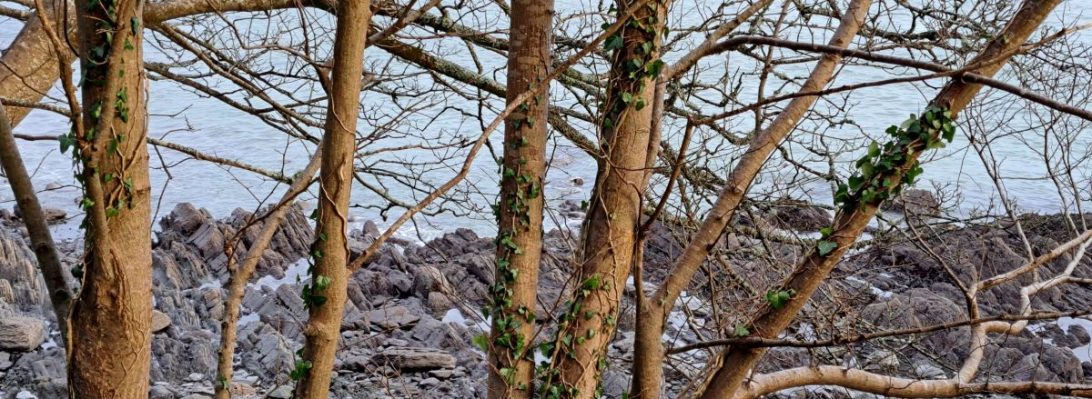
Union Hall, is a small fishing village, it is very scenic and peaceful there. I love walking along the seashore, especially to see the activity of the seabirds and the many lichen on the stone walls. The road leads out of the village and onto the pier where there is a colourful variety of fishing nets, lobster pods and fishing boats. I chose the place for a silent walk as I wanted to start the year with a clear head. Locals did greet me and I did exchange a few words with other walkers and their dogs. An occasional cry from the seagulls and other seabirds resounded over the water. My breathing deepened from the sheer tranquillity and the refreshing sea air. A calm descended over me like only a connection with nature can do.
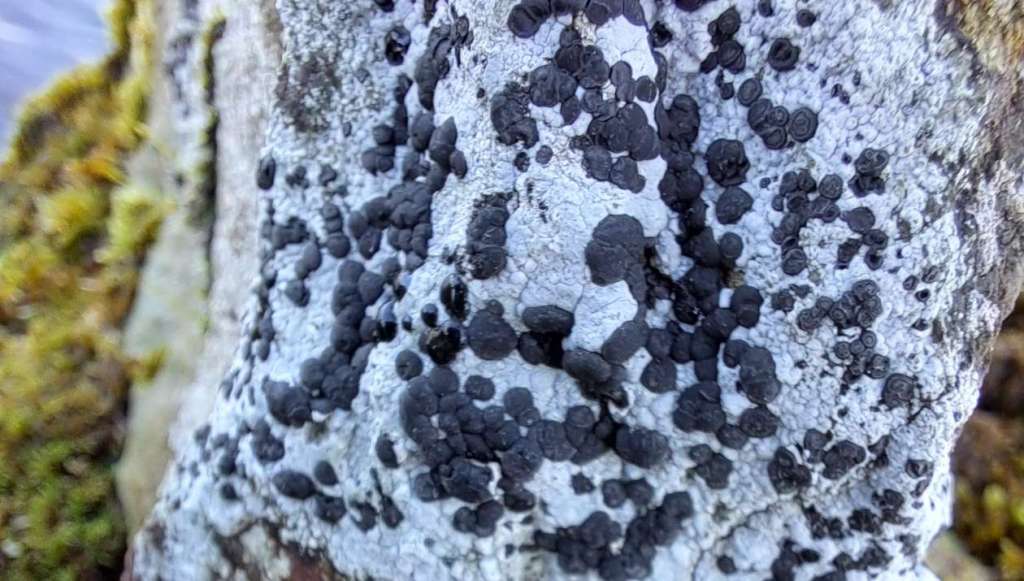
Over Christmas I obtained a little book on lichens, mainly about lichens of the National Forest in Glengarriff, but visiting that forest is for another time. Reading through it did heighten my already interest in the lichen of the area here and I naturally took some photos of those I found while on my walk. Lichens are fascinating, they are neither plants nor animals, they are living things that live in symbiosis with fungi. They are often very beautiful and intriguing. I’ll learn more about them this coming year I think.
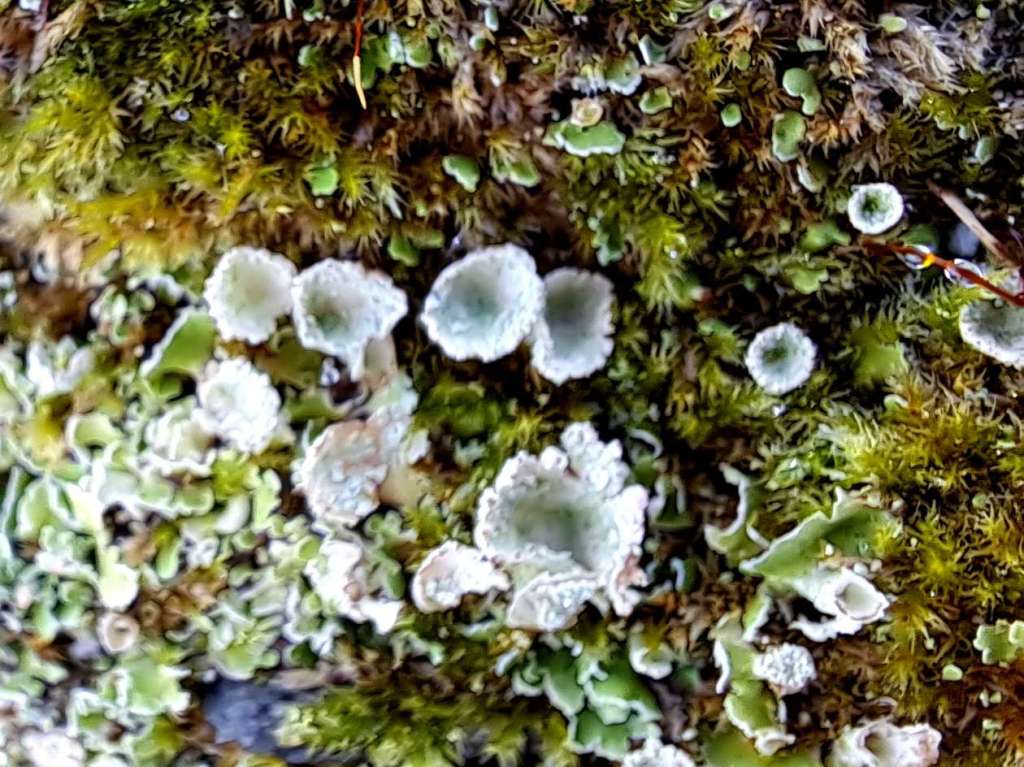
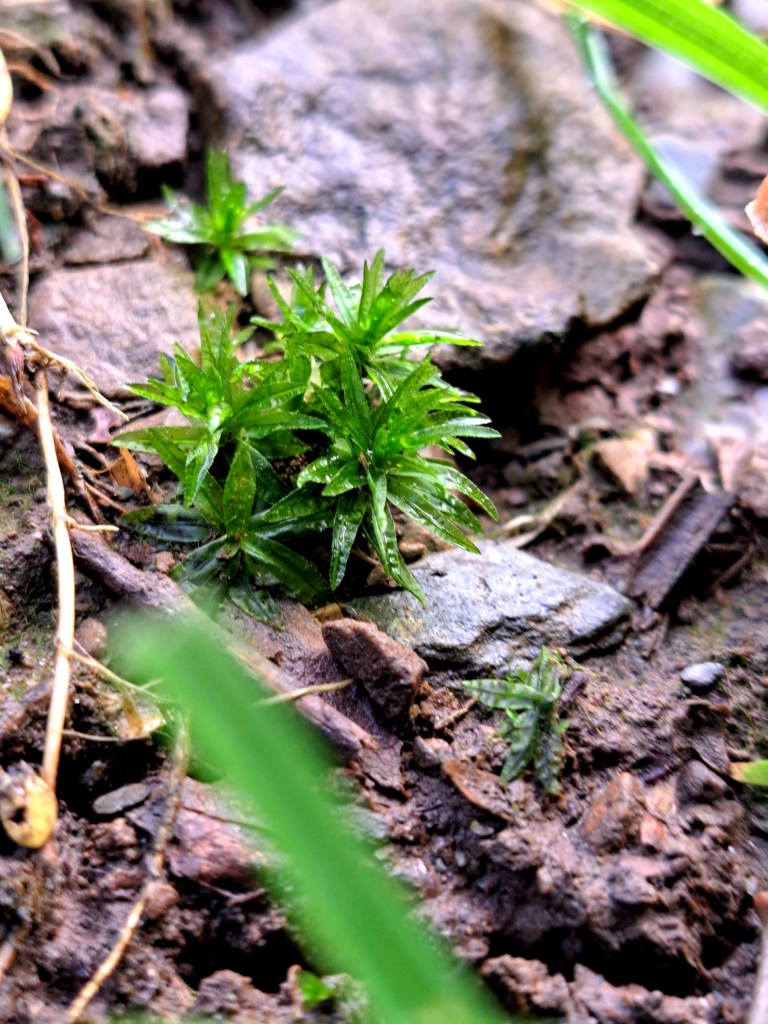
lichen or mossRosehips
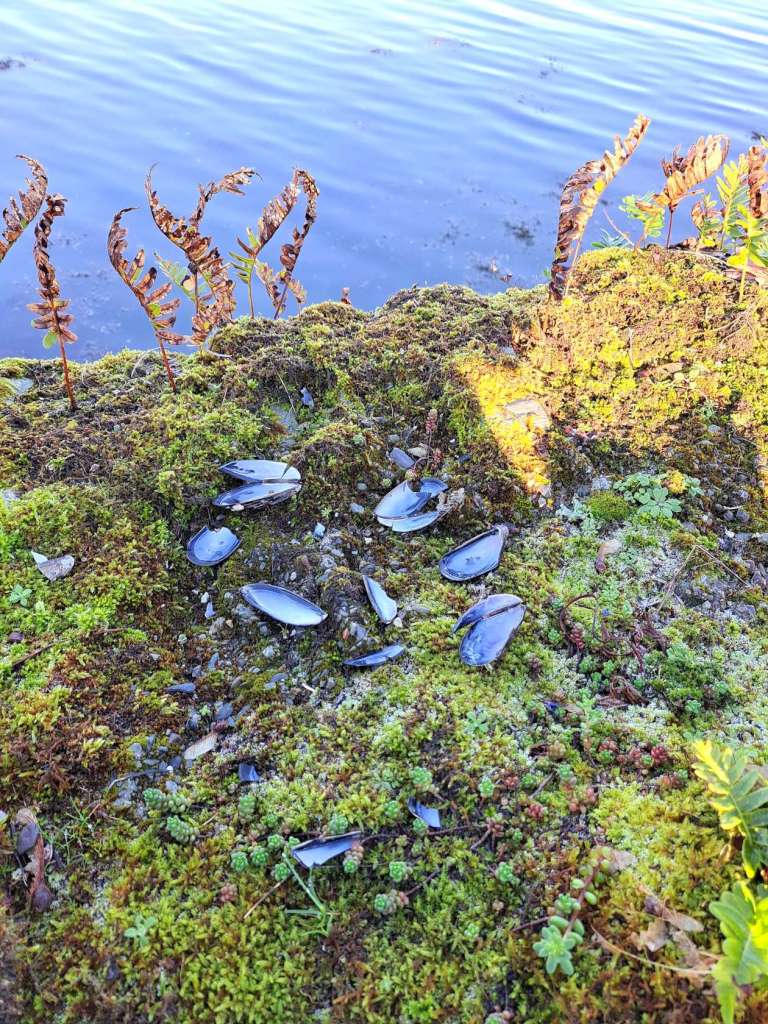
In the photo above are the mussel shells, the remains from meals of seabirds, mainly seagulls who drop those on the sea walls to break open feast on the contents.
Dapper daisies after a frosty nightGorse flowering
Interesting looking old stone building, some sort of store no doubt. Much more to discover about this little place!
All is calm in our little town on this Christmas Eve, the only sounds in our street are the wind howling and the odd car passing. It seems that people are all heading towards home, the shops are slowly closing and town is emptying. There is always a nice buzz in Skibbereen around this time of year. Traditionally young people who would have emigrated to America or the UK would try and get home for the festivities, these days it is students and those that made it overseas that return, it’s always a great time for rejoicing and that is palpable in the streets and shops as old friends and families gather. People seem cheerful. Nice!
But I did not mean to write about this. For me Christmas or Solstice time is special too but in other ways. I feel myself pulled deeper into nature, my wish is to go for a long walk and take note of all that is happening, and so much is happening underneath all the rest that nature is supposed to be taking at this time. Around me I not only see daffodils shooting up, but all sort of buds are getting bigger by the day. A myriad of small young plants are covering the ground where there are patches not covered by fallen leaves.
A fine Irish mist is making everything wet and glistening, as a result the colours of the tree trunks in our garden are not dull, they are bright and beautiful. This time of year is special, I read the old stories of animals being able to converse with each other in language on Christmas Eve, that somehow always stuck with me! These are the darkest days, midwinter, we celebrate the solstice and look forward to the light returning, the brighter and longer days, new life and renewed energy in nature and in humans. Christmas too is about new life, the birth of Christus, bringing light into the world. It is a beautiful time, hopefully a time of peace for all.
Here in our little house, Ian is working on writing his book, we just had lunch and some real Flemish marzipan that my sister Josephine sent us from Lier. Everything is peaceful, I’m listening to baroque music on rtbf Musiq3. Work is done, our garden birds are fed, and I’m enjoying writing my blog post and wondering how all my WordPress friends and followers are celebrating this time of year. Soon it will be 2024 and I hope that it will be a year full of blessing for you all.
‘Every gardener know that under the cloak of winter lies a miracle, a seed waiting to sprout, a bulb opening to the light, a bud straining to unfurl. And the anticipation nurtures our dream’ B.Winkler
‘What good is the warmth of summer, without the cold of winter to give it sweetness’ John Steinbeck
‘Don’t think the garden loses its ecstasy in winter. It’s quiet, but the roots are down there riotous’ RUMI
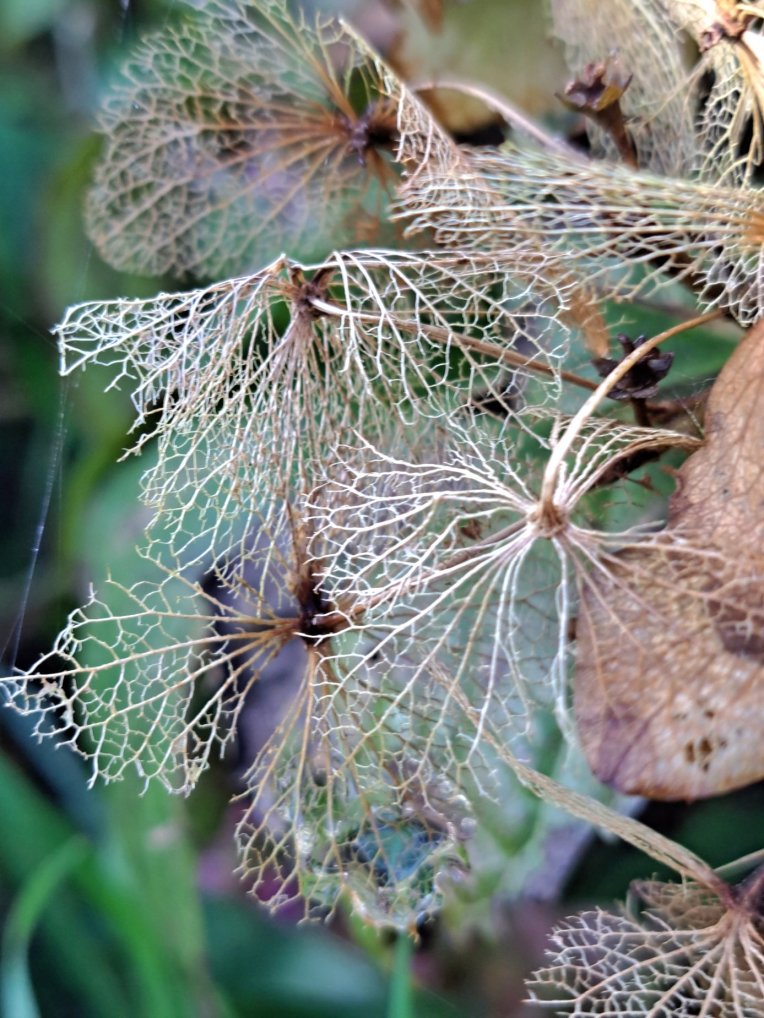
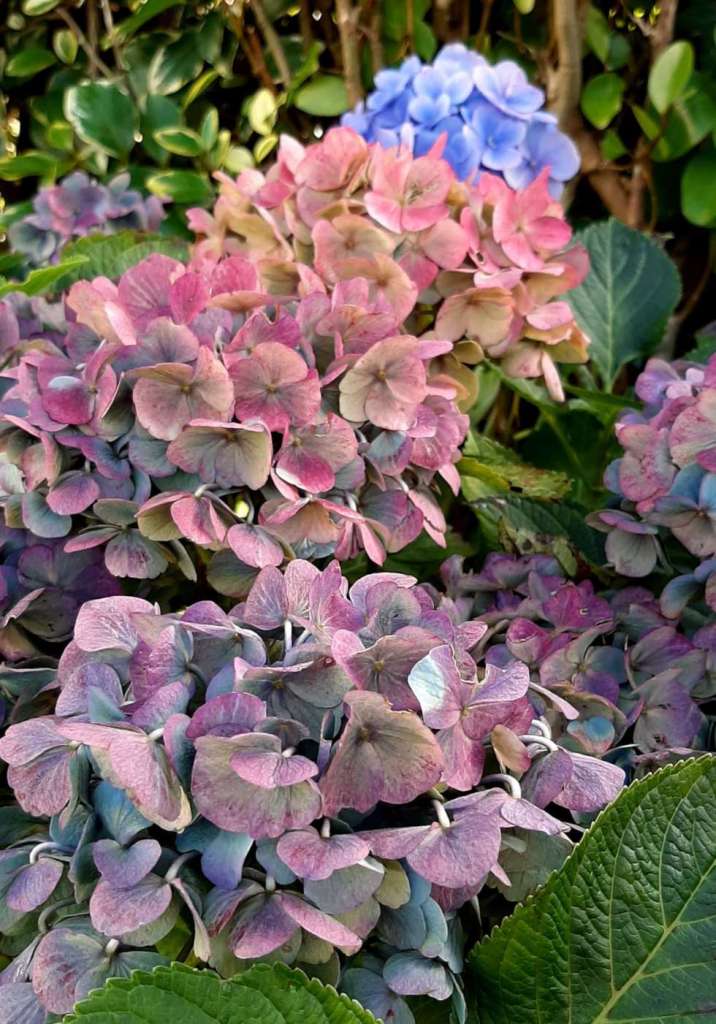
Lacework of the hydrangea flowers.
‘In seed time learn, in harvest teach, in winter enjoy’ WILLIAN BLAKE
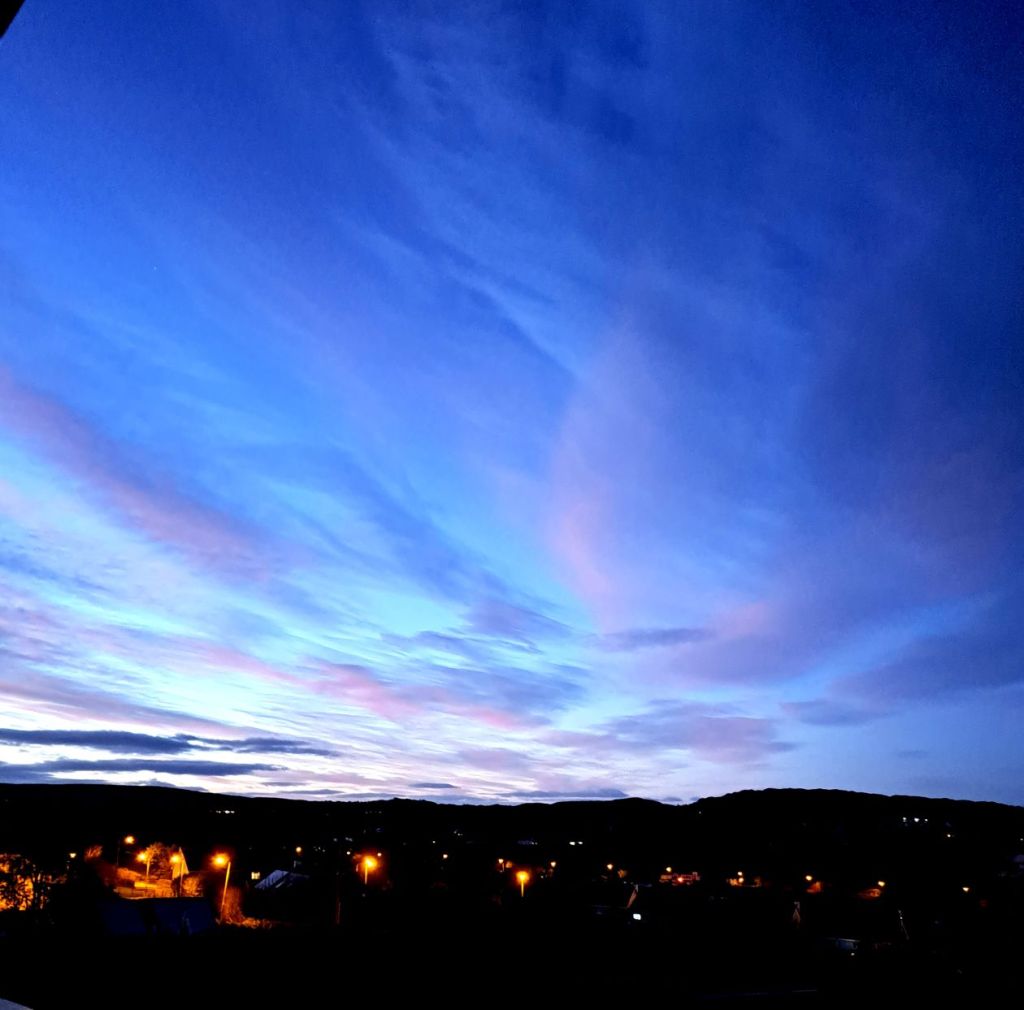
Totally enjoying a beautiful winter, the sky, the plants, seedheads, and all the little miracles that manifest during this time of year are a joy to behold. Winter is a time for reflection and restoration in nature and in ourselves.
Wishing everyone a peaceful and beautiful Christmas and mid-winter time, may peaceful blessings be upon you all.
The wonders we discover in an November garden, the colours, the textures, the unexpected plants, the fungi, or still the odd insect flying around, and sucking nectar from the autumn flowers which still embellish the dying remains of summer growth. The grass has grown wild and is drenched constantly from the rains. The leaves decomposing already and covering both the path and the beds their colours dark and shiny in a golden sunshine.
Over the past summer I’ve added a few more shrubs which have taken on well, each moulding to their surroundings and looking now as if they have grown there for ever. The days are drawing in, there is at times a chill in the air, and the scent of cinnamon and baked apples coming out of the kitchen is wonderful. How I love autumn!
On the days when it is stormy, when the rain lashes down I’m inside, cosy, doing stuff one does when it’s too wet to be out there. There are still flower pots to wash and some tools to clean up and put away. Thinking of next spring, I’ve planted tulips and crocuses in containers and have put those in up-side-down plastic boxes so they won’t rot from the rain. The gladiola bulbs are still in the ground, I’ll pick those out before the first frost. My Lemon Vervain who’s survived the last three winters outside and which did very well in the tunnel during the summer is now well wrapped up in bubble wrap. The tea is rather refreshing especially with a little dash of local honey.
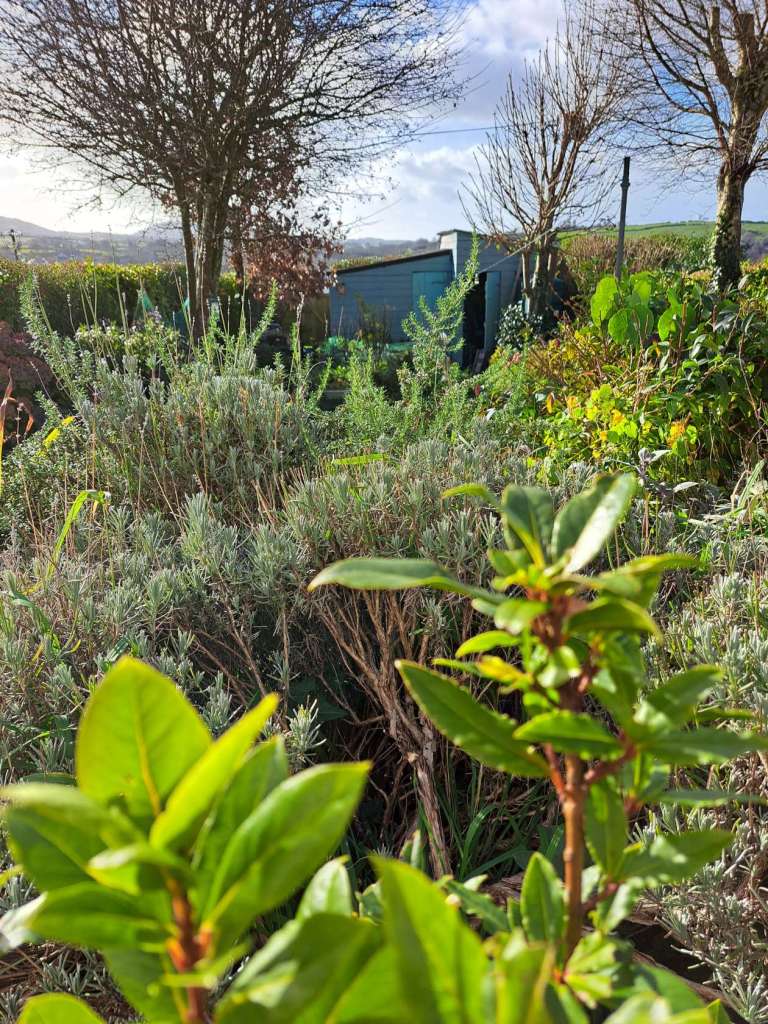
It’s amazing, and yet not surprising seeing we have a subtropical climate, that the whole garden is still very green and next year’s perennials are looking so good, especially the Foxgloves and the Sweet Williams. Also the oregano grows right through the winter, at least it does not die down.
These are the stems of the Golden Rod plant, I harvested them and realised that I love their colours and they are quite strong too, so I brought them inside and will use them in some craft or art project.
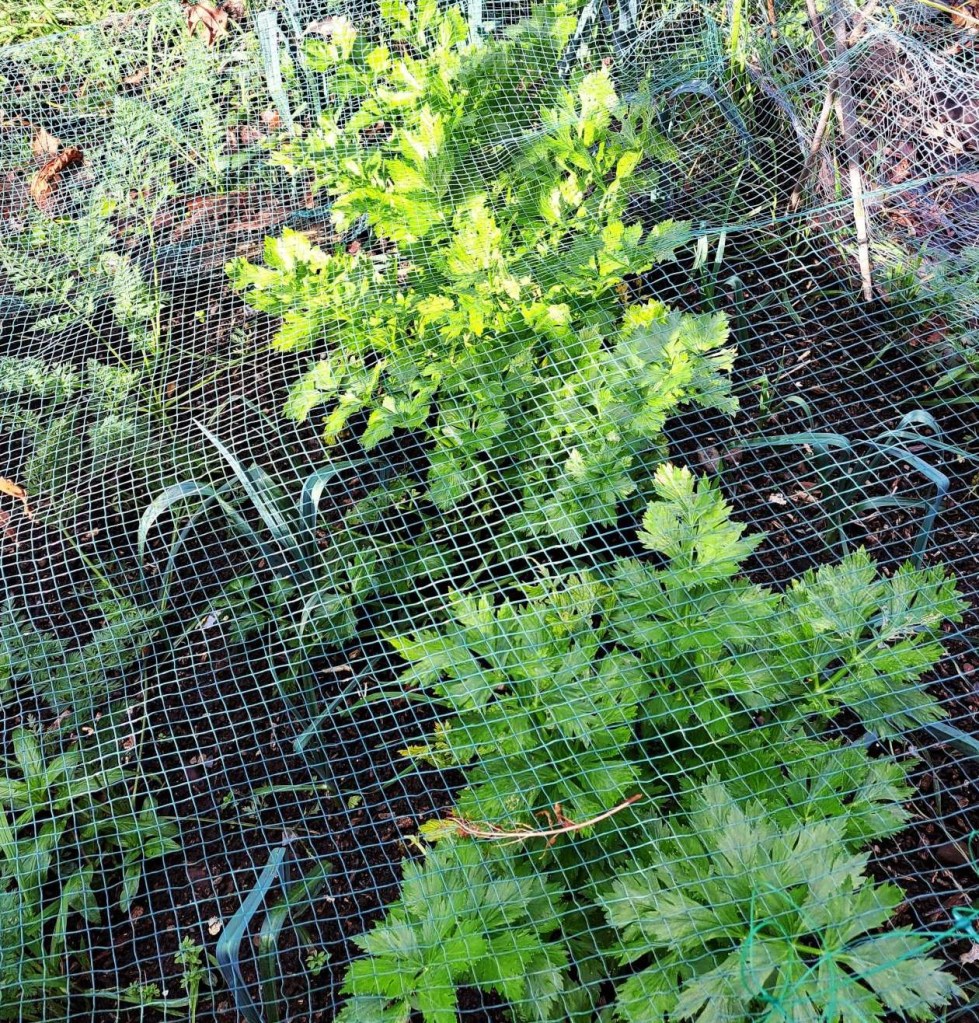
Vegetables are growing right among all the shrubs and plants, celery, carrots, leeks, kale and still some beetroot and parsley, lots of winter stews on the way… Lately though I’ve bought a nice Lebanese cooking book, and I’m following traditional Persian and Palestinian dishes on Facebook groups. I am very intrigued by their colourful dishes, their lovely spices and this coming winter I’ll experiment.
I hope that you enjoyed this little stroll through my garden. I also hope that everyone is doing ok and not affected by wars or climate disasters. I wish a blessing on each and everyone. All my love.
Some weeks ago now I had the opportunity to visit my native country again for a short time. So it was with delight that I departed from Dublin airport to arrive to the welcome of my dear sister Josephine in Brussel. It had been many years, since before covid, that I had been back. Her son-in-law Emile drove us home to Lier which is where my sister lives. This medieval town has special significance for our family as some of our ancestors used to walk its cobblestoned streets. It is no wonder then that when walking in Lier I get a strong feeling of its history, I love it. Our great grandfather was a cattle merchant there, I can see him doing deals with other folk, inspecting, selling and buying cattle. I looked for the Veemarkt, the historical cattle market area of the town, and found it, but that is for further explorations.
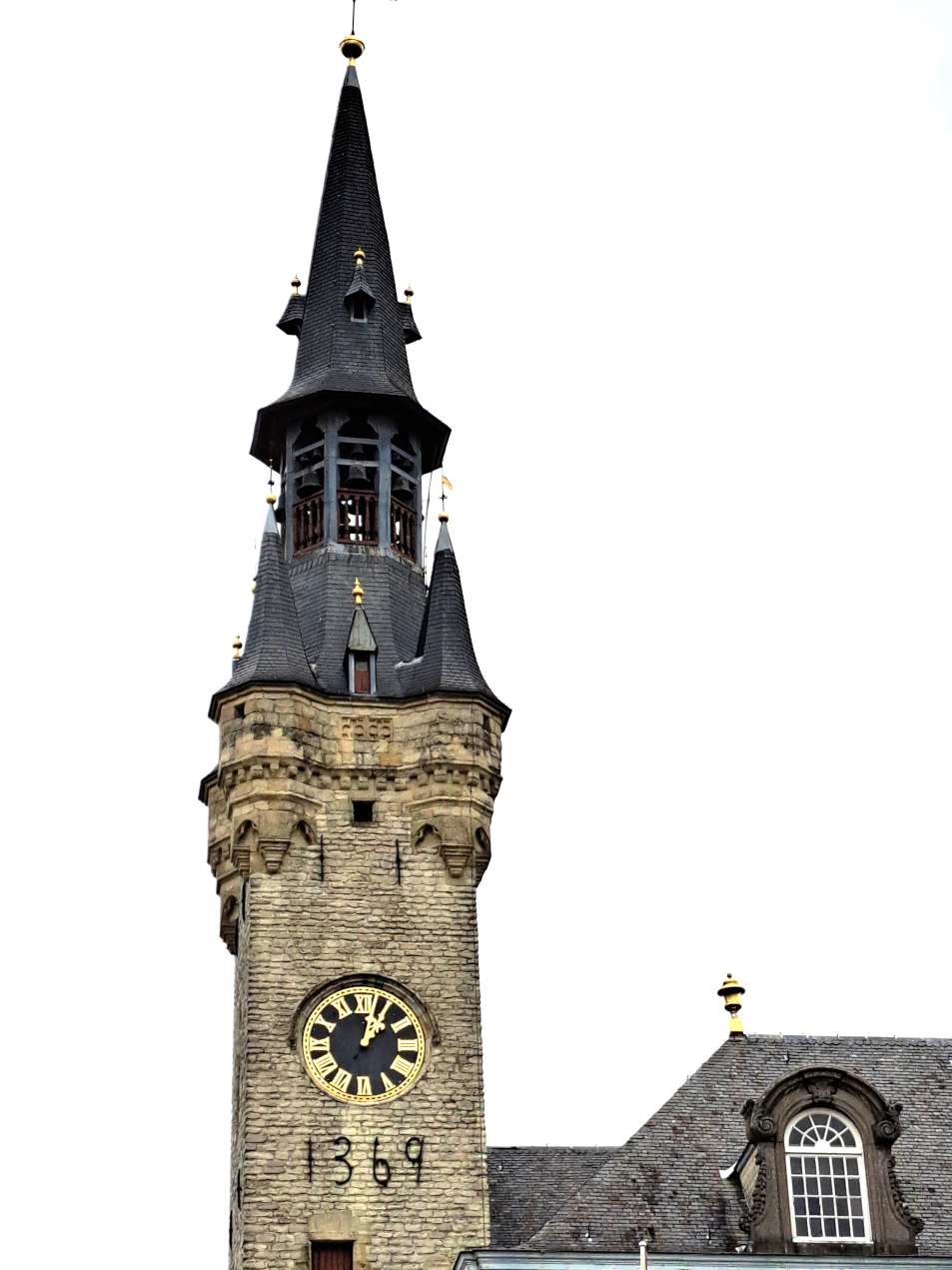
I would like to say a little about the townhall with its belfry. During the 14th century Lier had a thriving textile industry and in 1367 a Cloth Hall was built. This stood at the site of the present town hall. The beautiful belfry adjacent to the hall was built earlier, a bell in the tower was used to warn the town’s people of any danger, but also it contained the charters. It housed, and still does, a carillon with 23 bells which ring out regularly over the town square. In 1418 the function of the cloth hall was moved to the nearby guild hall of the butchers, the cloth hall became the present town hall, its extensive restoration was completed in the 18th century. A beautiful oak stairway, incredible ceiling paintings, and beautiful interior was designed and can be admired today. The present building is finished in Brabantic rococo style.
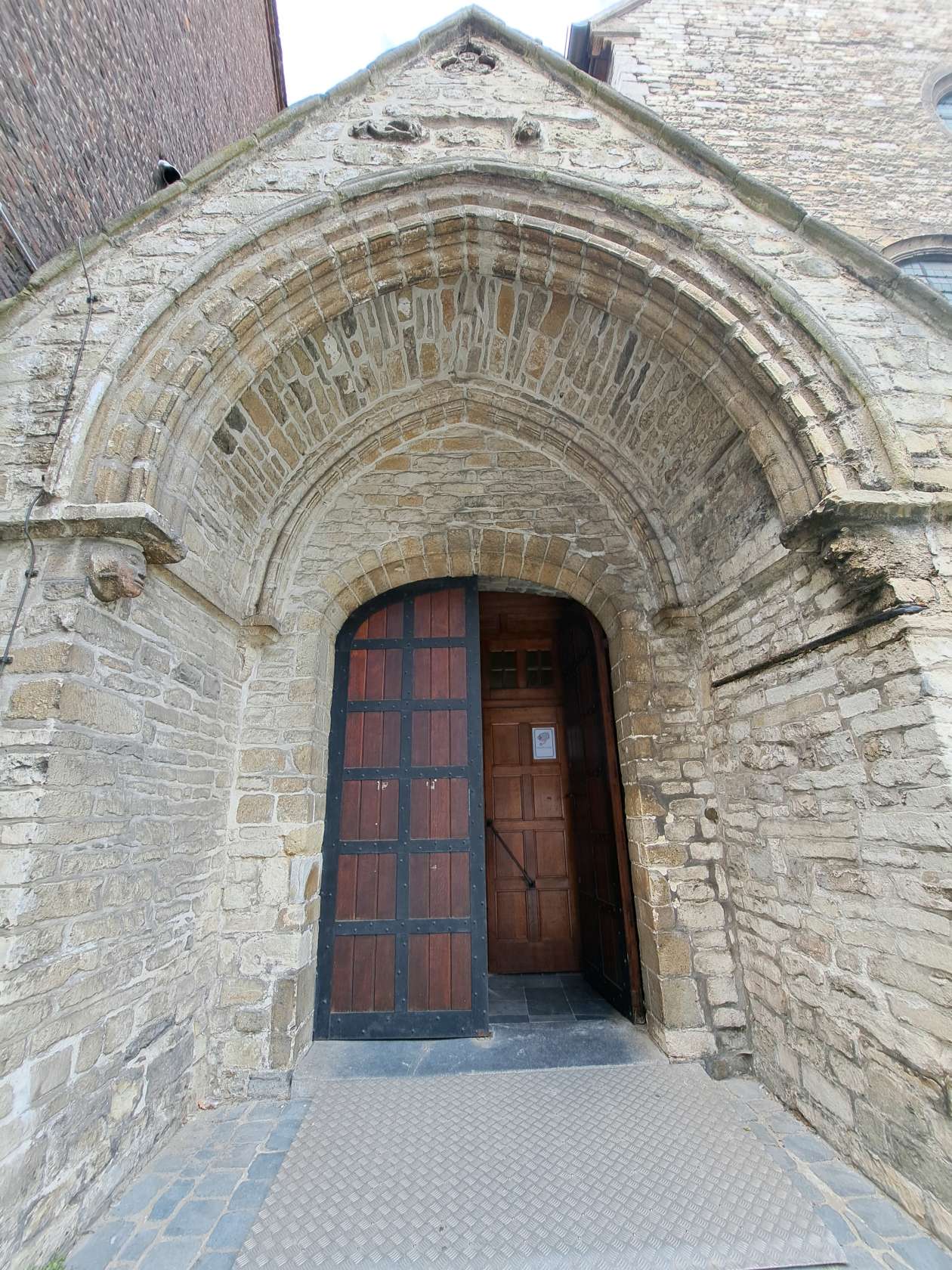
This is a story, according to folklore, about saint Gommarus, the patron saint of Lier. In the 8th century this big landowner and son of a lord became a hermit after he had served some time in the military. The town of Lier is said to have grown up around his hermitage. Gommarus is said to have saved a tree from death by tying his belt around it after it had been chopped. The tree lived. Subsequently miracles happened and saint Gommarus is since said to be protecting folks from fractures. The interesting Romanesque St.Pieter’s chapel (see photos below), built ca.1225, stands on the site of a wooden prayer room where saint Gommarus used to pray. The present chapel has undergone extensive restorations. It is situated in a very old part of the town.
Lace in Lier is not bobbin lace, it was and is still made using a small crochet needle making chain stitches in various thicknesses of cotton that are embroidered on tule, which is stretched onto an embroidery frame. I found these pieces in one of the museums, I thought it to be beautiful work.
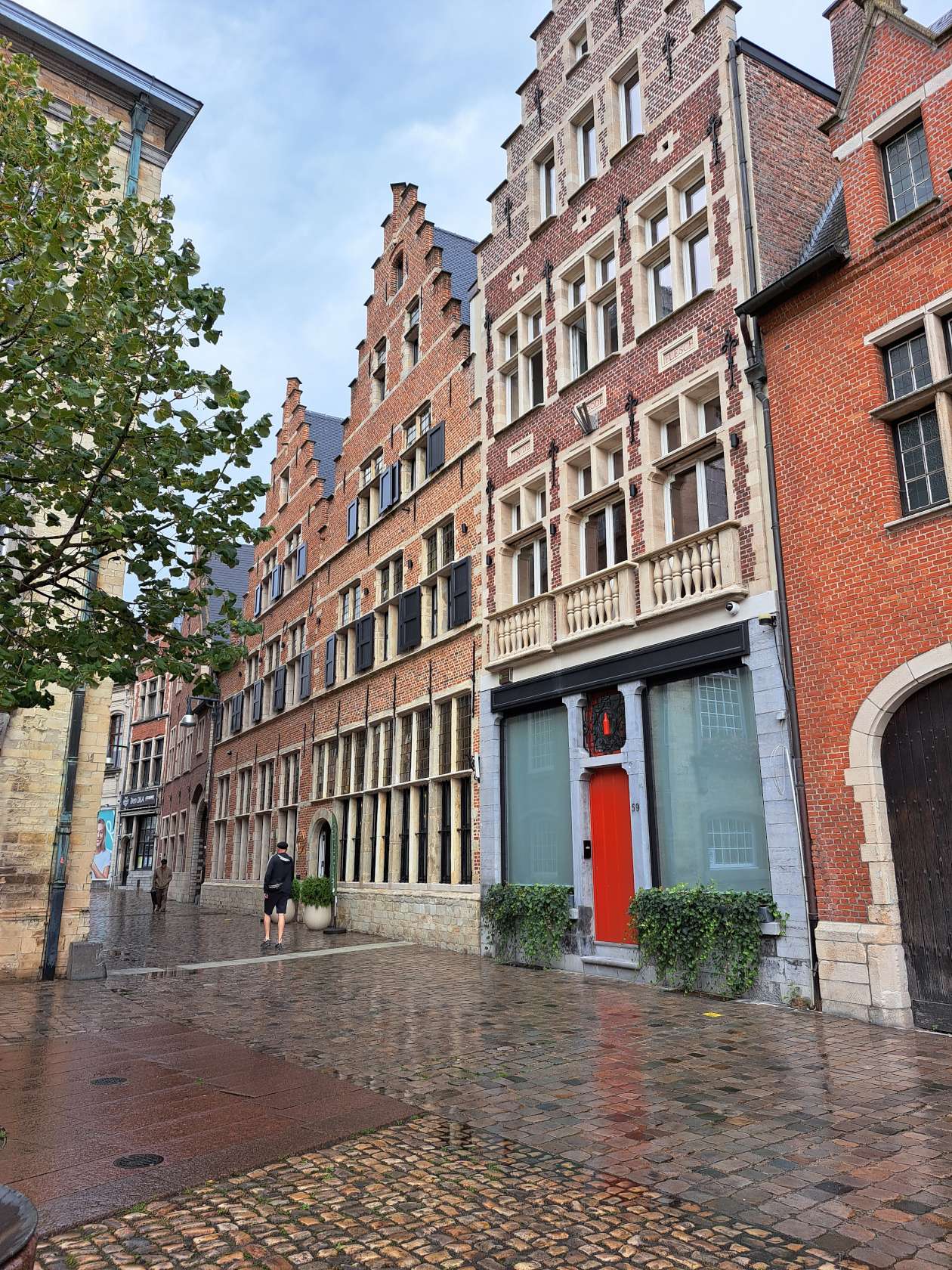
Some more beautiful facades of the town square and on the far left is what was the guild hall of the butchers (vleeshuis).
In 1383 a start was made with putting down cobblestones on the huge market place, these are called ‘kinderkopjes’ in Lier, meaning little heads of children! On the right is a photo of the St.Jacob’s chapel which was extensively damaged during WI but rebuilt.
Below some photos of the beguinage, which at the moment is being restored in several places. It is a place which is so peaceful and has beautiful corners. It’s great to read up on the history of it.
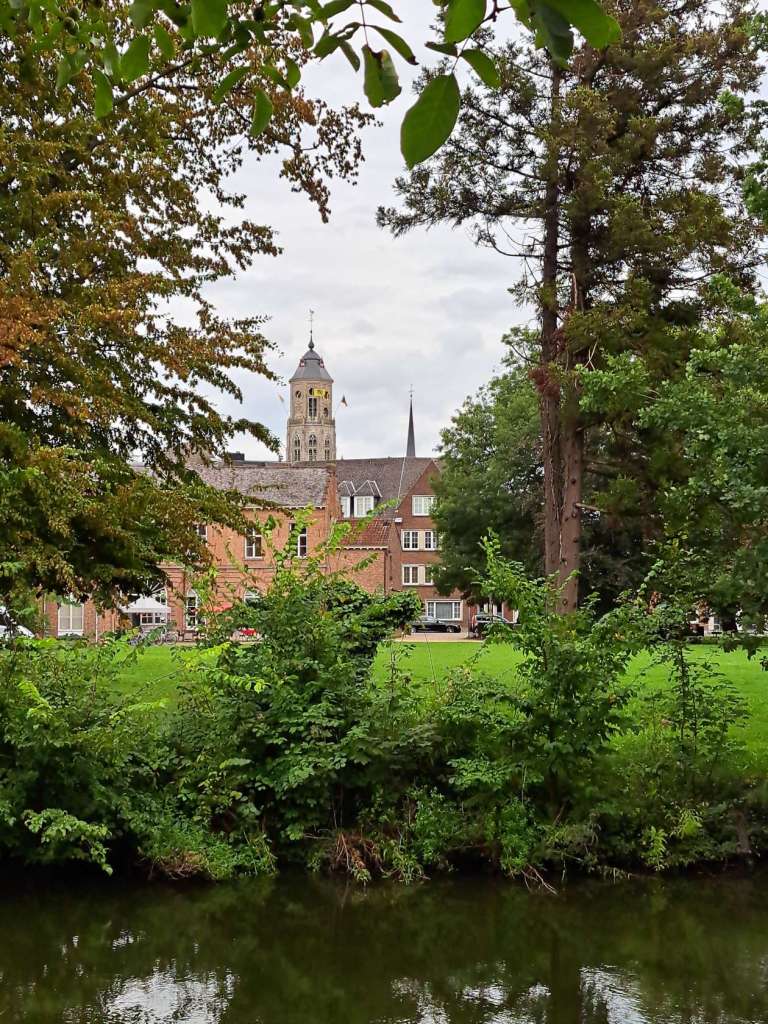
The river Nete flows through Lier, and Lier has some wonderful greenery circling the town, this is the area of the Vests, where the original town walls were, they have been made into lovely walks. We saw a red squirel there!
Left is one of the remaining historical gates of the town which gave entry to the area lying within the town walls. This one is called the gevangenispoort, meaning the jail gate, this because at some time in the past it was used as a jail. Right is the famous Zimmer toren which is such a wonder in itself.
We had such a nice time, reminiscing and looking up history and taking photos, and of course all this while have plenty of stops for coffee and confectionery!
Here is a paling schuit, a type of fishing boat which was used to fish for eels.
And here is a photo of our great grandfather, a Lierenaar. And my sister Josephine who is wearing her sensible shoes in order to have an easy journey over the cobblestones! We only had rain on the first day. It was a short visit but it was brilliant! And I have a lot more to say about Lier. The day that I had to travel again came too soon!
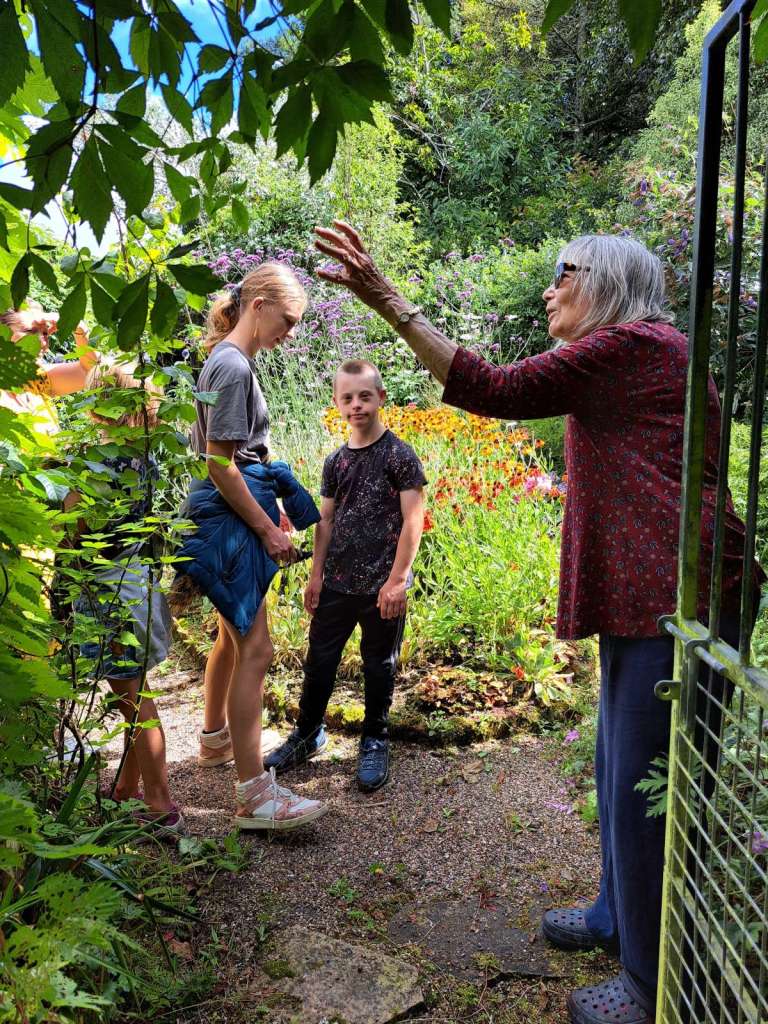
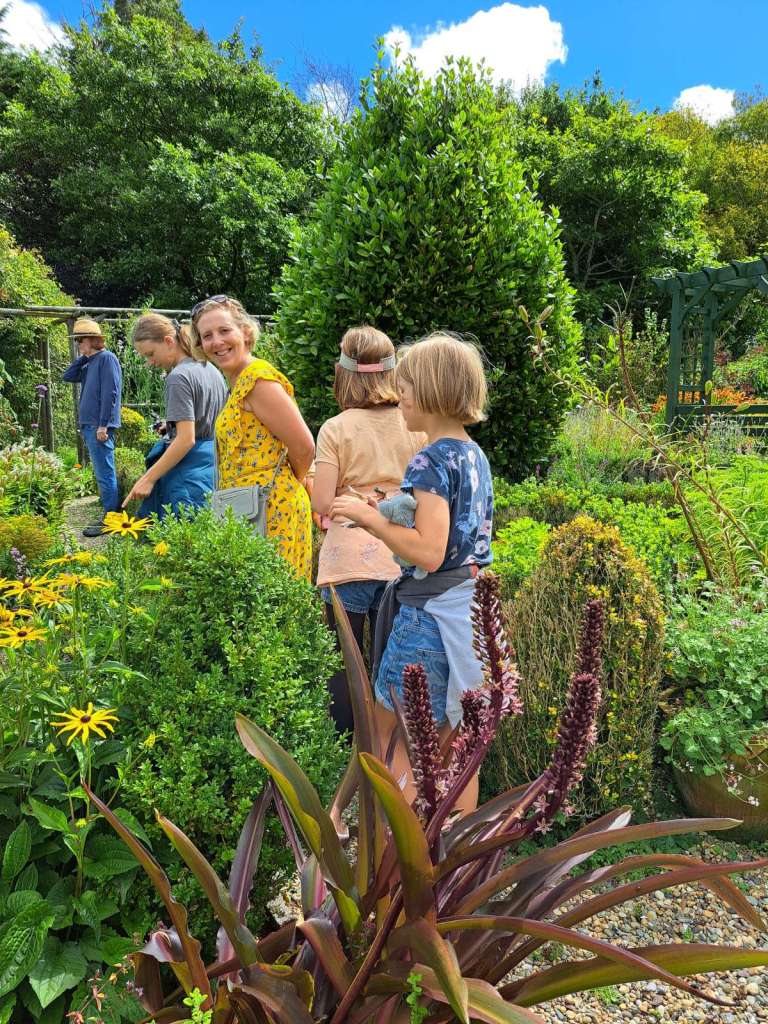
One of the most fine and inspiring gardens on the West Cork Garden Trail is situated near Dunmanway. It is the Aultaghreagh Cottage Garden which is beautifully created by Christine and Leslie Wilson who were in turn inspired by plantsman Christopher Lloyd of Dixter in East Sussex. As part of our children’s summer holiday activities my daughter and I decided that we would visit this garden and make a nice day out of it. We were not to be disappointed, and even the weather was with us, we enjoyed beautiful sunshine! And we were greatly inspired by our garden visit.
In his day Christopher Lloyd liked colour contrasts, he liked blocks of colour intermixed with foliage, and I saw this reflected in Christina and Leslie’s planting, their perennial borders were colourful and vibrant. Coincidently this very year I myself was looking for ideas to improve our borders and I was sure to find that here.
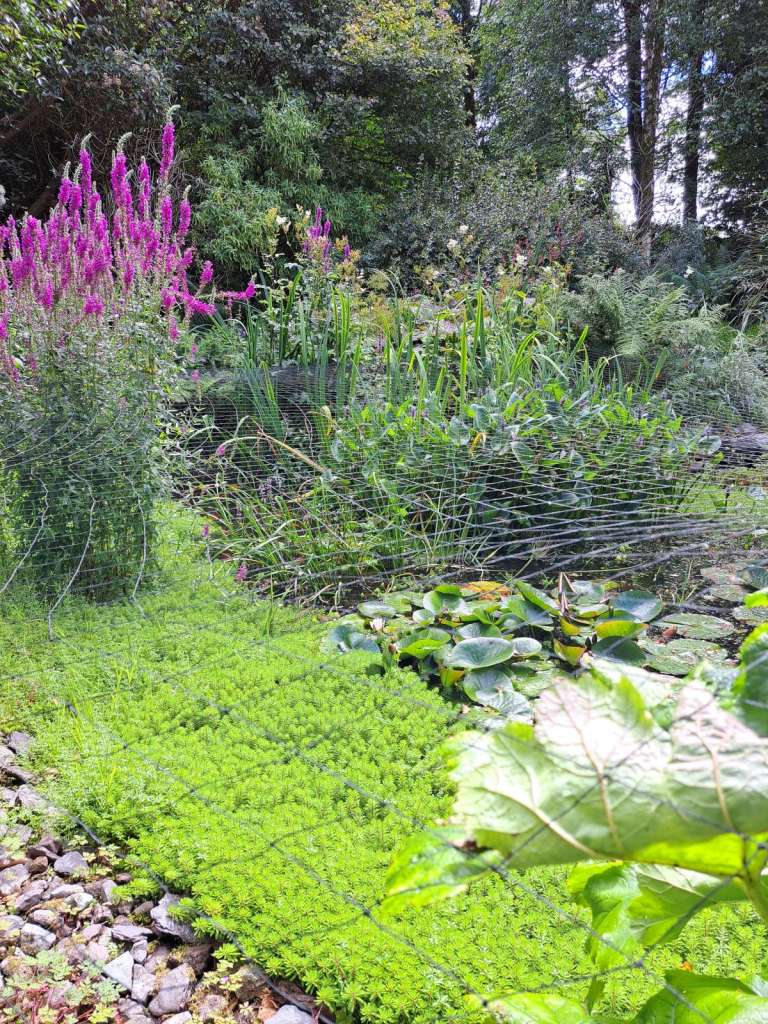
As we walked past rhododendrons, azalea’s and other acid loving shrubs we came to a secluded area surrounded with lush trees and we found a pond there where gold fish were swimming and water lilies abounded as well as other water loving plants.
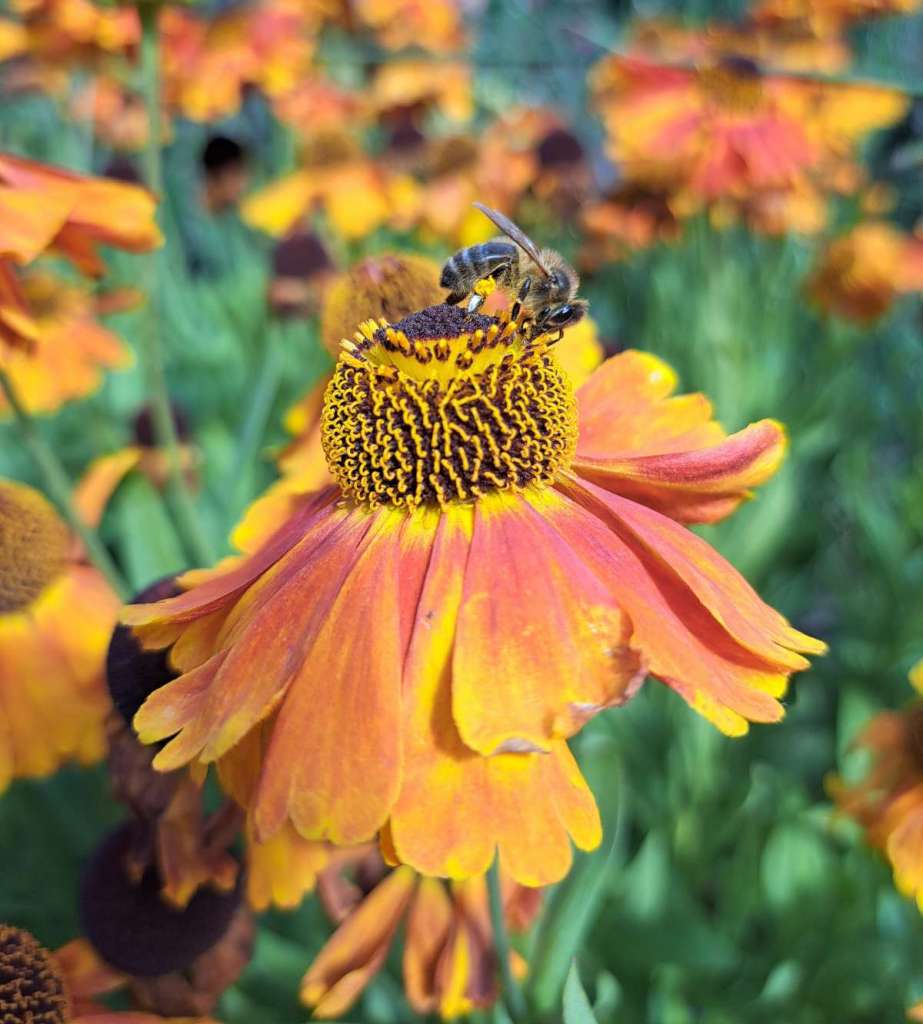
Beautiful flowers were visited by so many butterflies and other pollinators, a sight to behold. One of my granddaughters was able to capture a bumblebee.
To grow plants for all year round interest takes good planning and is so worth it.
After walking around the gardens with Christine and Leslie as our guides, we sat and had tea and cake, we heard the story of how they created the gardens from a bleak wide open field, they planted a lot of trees to start off with and added features bit by bit, it must have been hard work and the result is really very interesting. From the magical walled garden to the pond area, the many different sections each gave us another special feel of being close to nature. I loved seeing all the pots with day-lilies, now finished flowering and waiting to be brought into the tunnel for the winter season. We were given many tips and got answers to our many questions. We saw how much vegetables, berries and other fruit were grown, this too was inspiring.
One of Christopher Lloyd’s philosophical sayings was ‘My mother and I like plants to look like they are enjoying themselves’ and I think that’s got to be the thing that makes a garden sing! And this garden was singing all the way! We went away having enjoyed a lovely and inspiring afternoon.
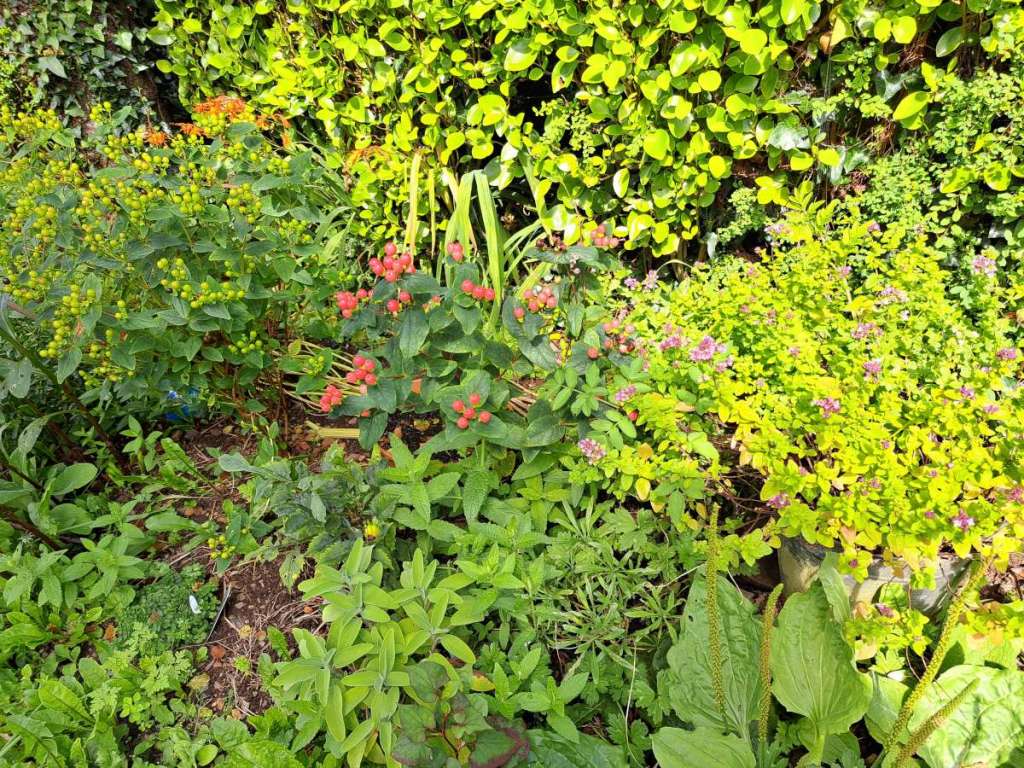
This is what I choose to call our garden at this moment, a sub-tropical wilderness. It all happened in a week or so of soft rain during the beginning of July, come to think of it there was an awful lot of rain, both soft and heavy! There were some warm days and some less warm but overall the climate was conducive to rapid growth resulting in our present wilderness. It did not help that I tripped and fell and was out of action for over a week.
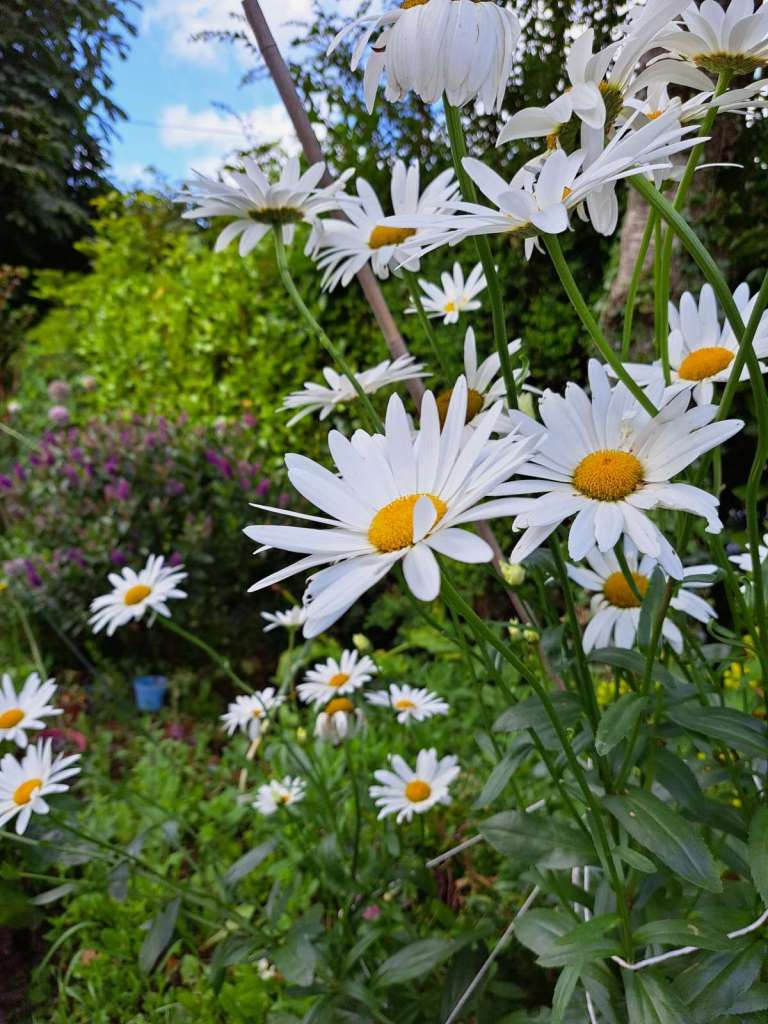
All the same there are lovely surprises to be discovered among all this wild growth. The most beautifully coloured hydrangeas have not been affected by the wet weather, whereas the lavender this summer disappeared rather too fast, they got destroyed. The shasta daisies held out beautifully despite all the wind, I did tie them to bamboo sticks though.
The lush growth is itself really lovely to experience and I’ve learnt to embrace it and not worry about the neatness that most of us expect in our gardens. I’ve learnt that such wilderness is very beneficial for our pollinators which at present is so important, I’m happy to say that our garden was absolutely brimming with all sorts of insects and butterflies during the past summery days.
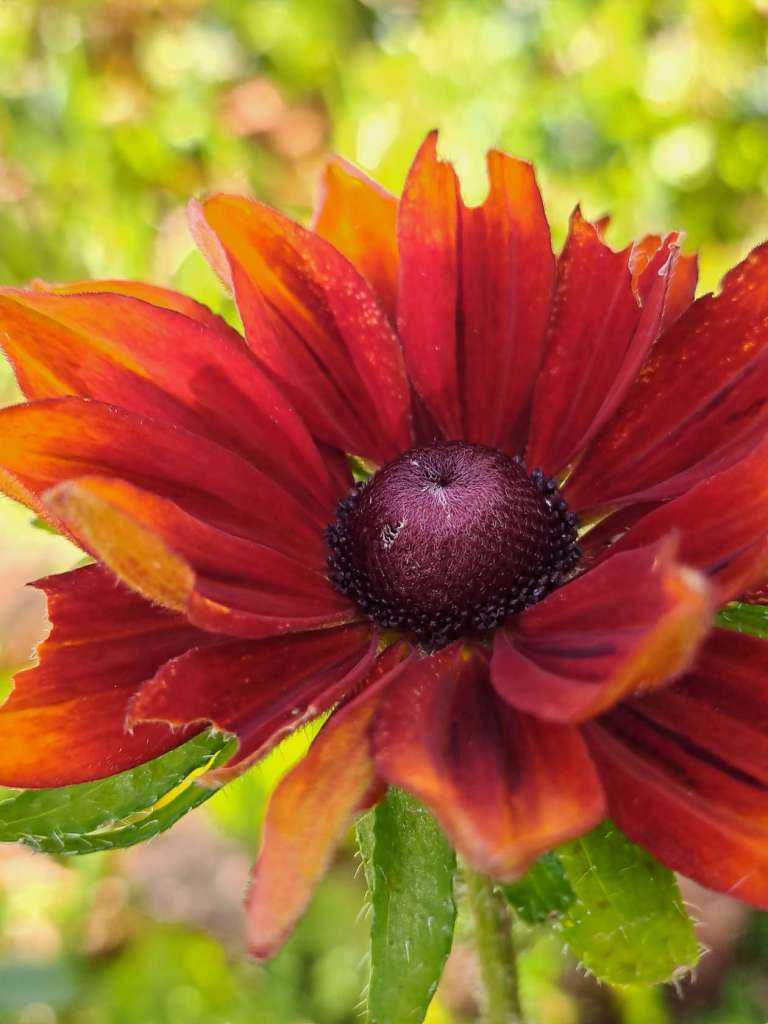
Of all the flowers that I sowed the lobelias did best of all and are still in full bloom. Some of the self seeding flowers like the marigolds also did well. And I’ve got rudbeckias coming on. First year using a small greenhouse and I have found it very beneficial for all sorts of plants and seedlings. The tomato plants did not do well despite looking up information and trying to follow it, they became affected with some sort of fungus and I have no harvest. The potatoes on the other hand did fantastically well, we are still eating them.
First time growing gladioli, I find them such majestic flowers, and the colours are wonderful! Seeing that it’s becoming late summer, I’ve been drying several different herbs and saving lots of seeds.
I took a soil sample and tested for pH, I’m pleased that it is 7.0 to 7.5 which is ideal for growing vegetables and flowers alike. Though I did nothing to the soil around our hydrangeas the colours are changing, more purple and deep red which I love. I’ve also looked up our regional growing zone and see that it is 9a, it is always good to know what zone one is in, especially when planning new purchases.
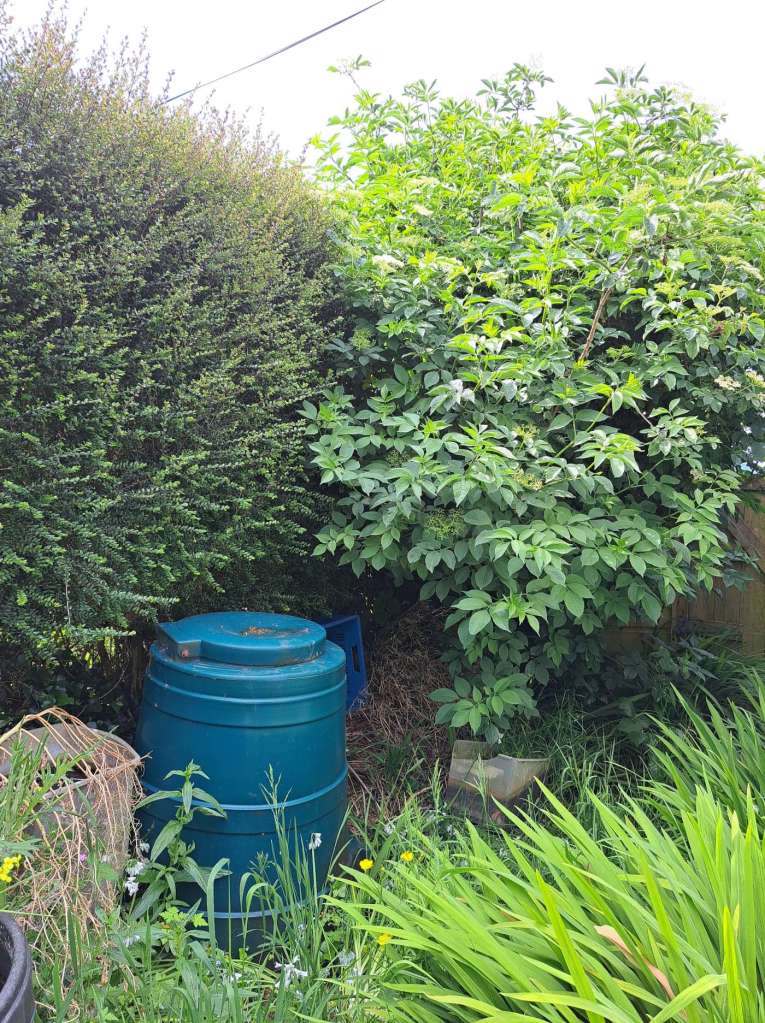
Somewhere in the dark back of this last photo is our back gate… it’s not surprising then that my most urgent job tomorrow will be to cut down some of this elderberry tree at the very back of the garden, we cannot get to the gate anymore because of growth! I was hoping to save some of the berries but will have to cut some down before they are ripe. That area is also full of montbretias which of course are very good at self propagation. I love to see these grow for their bright orange colour and fresh green leaves, and they are so easy and hardy, totally taking care of themselves. For the next week or so I’ll also be planting out some leeks, kale, kohl rabi, and celery, but first I’ll have to make space for them.
Here in West Cork it is 16 degrees Celsius at present, and raining, no sun. I hope that wherever you are the weather is bearable and good for your gardens and your health.
This summer is moving along nicely, after a rather cold spring with lots of icy eastern winds. Today I’m sitting under our hawthorn tree thinking of writing another blog post which I feel is long overdue. I want to write about where I am at this moment, what is inspiring me and how I’m filling my days.
Right at the beginning of spring I felt the desire to work with a greenhouse in order to grow more and better plants in this unpredictable climate, and soon after longing for it I started looking at different designs, and ordered our present tunnel, Ian treated me to it. It is a small tunnel but then we have a small garden. I’ve never looked back.
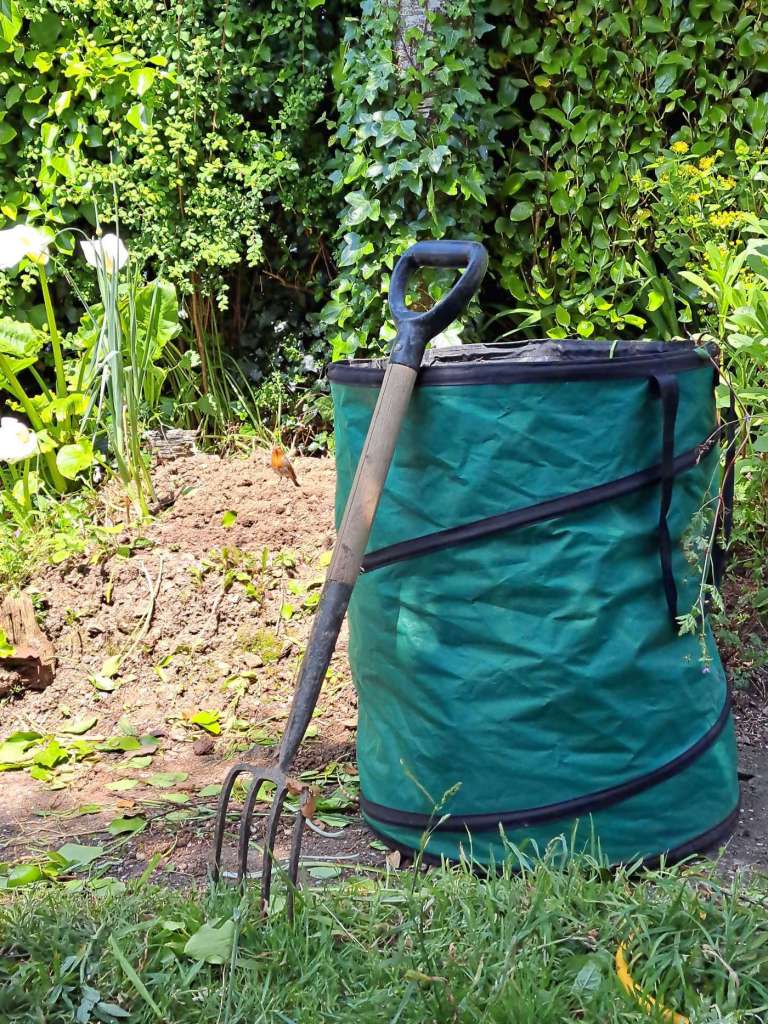
I’m growing more vegetables this year, I’m not leaving things up to my intuition like I usually do or did, this year I’m actually reading up in gardening books and on the web what are the best ways to grow certain crops, and most important, how can I improve my soil, or at least help it to keep fertile. Up to now I’ve always collected my garden waste and thrown it into a corner at the end of the garden, but not anymore. I realise that I need to put nutrients back into the soil. Ok if there are some wild plants among them that I don’t want to regrow necessarily, if they are in seed, then they go into the compost barrel, but all other green waste stays on the soil where it grew, it’s a good mulch and it kept the soil moist during the driest weeks earlier in the summer. I’m also keeping a good garden journal this year, noting everything I sow and grow and how it is doing and other notes on how I can improve their growth in future years. It’s useful!
My interest in gardening lies not alone in beautifying my surroundings, or in growing vegetables, I also like to experiment, not only with growth but also with the soil, with the sort of pollinators that are visiting, and with the changes to our trees and other long standing growth, such as what type of wild plants keep germinating and growing to maturity, as that changes over time. For a few years I had Evening Primrose and Mullein growing and self-seeding, now they are gone. But the pale Hedge Woundwort has been a loyal wild flower all over the garden for decades, as has the Herb Robin. I practise polyculture.
Now and then I take test of the soil to see if there is anything lacking and usually there is. I have tried to rectify this over the years with seaweed fertilizer. I garden totally organic! I find this testing immensely interesting and am learning more every day. Listening to podcasts or webinars that discuss the important of soil building and organic growing and so on keeps me fired up.
At this time there is also the produce collecting, the use or storing of same. Delicious dishes are being produced in my kitchen, I enjoy all the cooking of the fresh produce. There is the herb collecting and drying, I grow a huge collection of different herbs, many of which I dry for winter use. Teas also, like Hawthorn, Lemon Balm and Lemon Vervain, Mint etc… Collecting seeds for future use or for swapping and sharing will be the next step as the summer moves along.
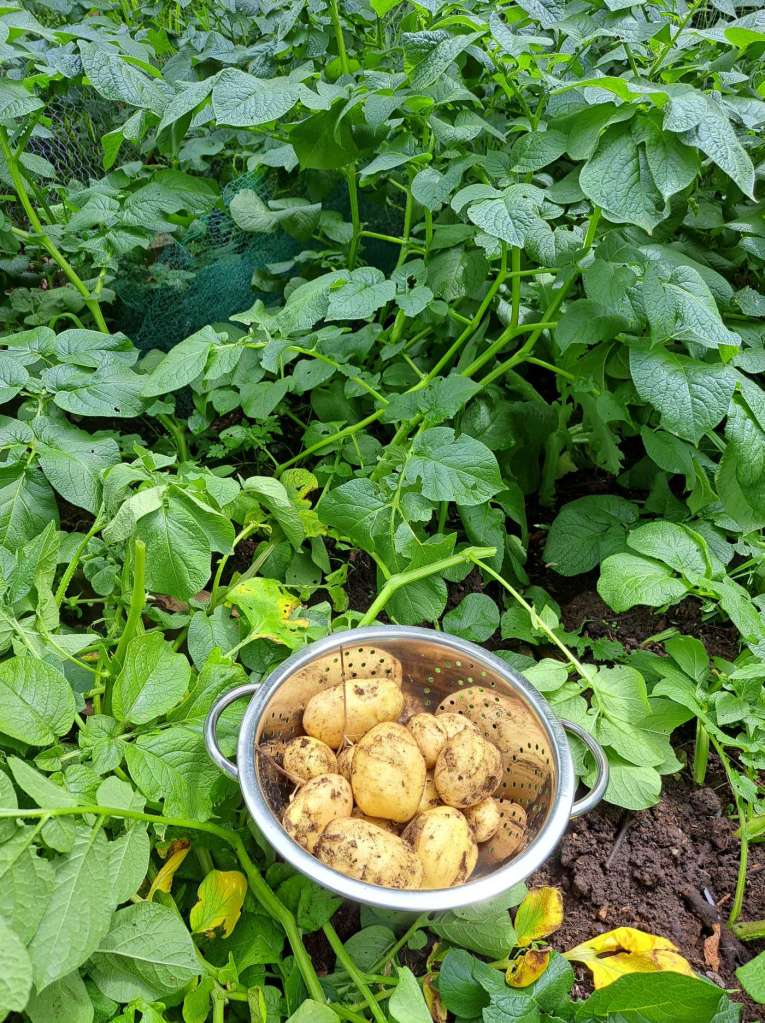
The big experiment this season is growing my own potatoes. Early in the year I bought Mirabella seed potato in one of our local garden centres. These seeds are blight resistant and organic. So I dug up all the grasses from a patch at the back of the garden and after chitting the seed potatoes, planted them out. They grew fantastically well. I had 22 plants! Only to discover that they were early potatoes that do not store well, my idea was to have potatoes over the winter as we are not big potato eaters. I’ve dug up some to date and they are nice, but they will probably be gone by the winter time. Note so self: Next year… check that out better. To lift up a crop of potatoes from the soil is like witnessing a miracle over and over again, I find it both fascinating and exciting and I love it.
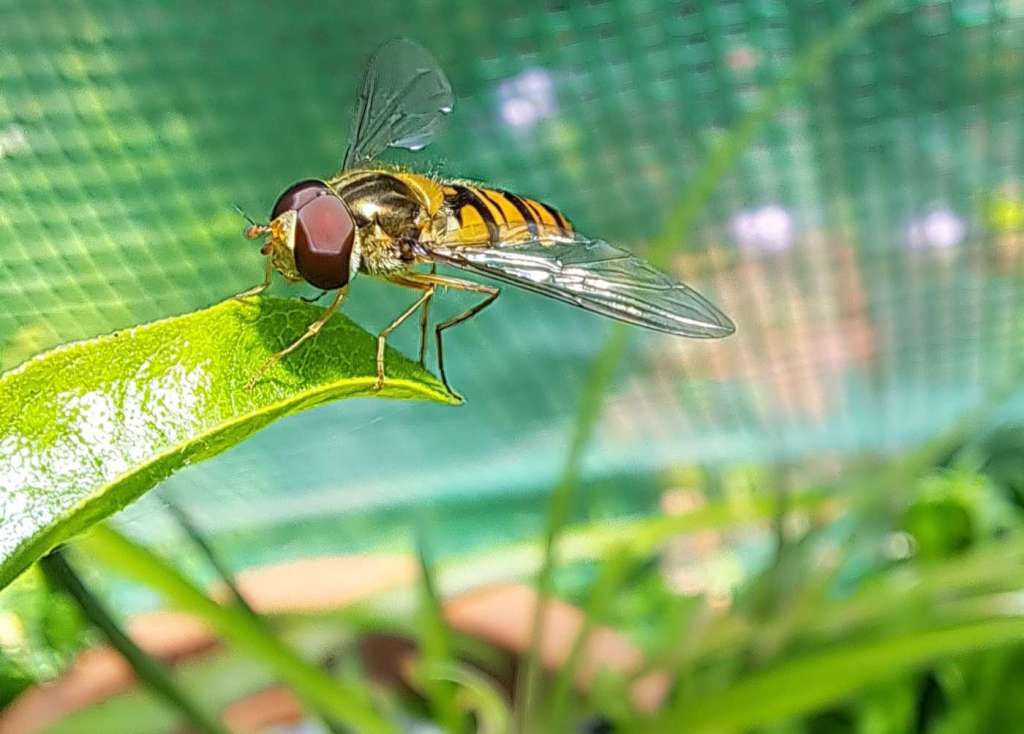
I’m aware of the decline in biodiversity and as much as possible I attend and take part in local groups that are concerned about this and try to enlighten the public about all the various aspects of avoiding and helping to minimize this current worldwide problem. The environment and biodiversity is high priority on my agenda, and while I can only attend a certain amount of activity or meetings, I like to give priority to this important current problem. I take photos of pollinators and share them, we need them more than we know. Knowing which plants attract pollinators and cultivating those also is of importance.
All in all nature in general, in all its beauty and interest is enhancing and making my life fascinating. Every day I learn and discover more, it lights up my days and keeps my brain sharp with doing more and more research. What a blessing. There is today a huge amount of information online and in up to date books both about the beauty, the interest, and the problems currently present in the environment, with biodiversity, with the ecology, in farming practises, and in nature connectedness. It is a never ending nature study!
Fortunately many people are very well aware of all this and much is being done, but much more needs doing worldwide.
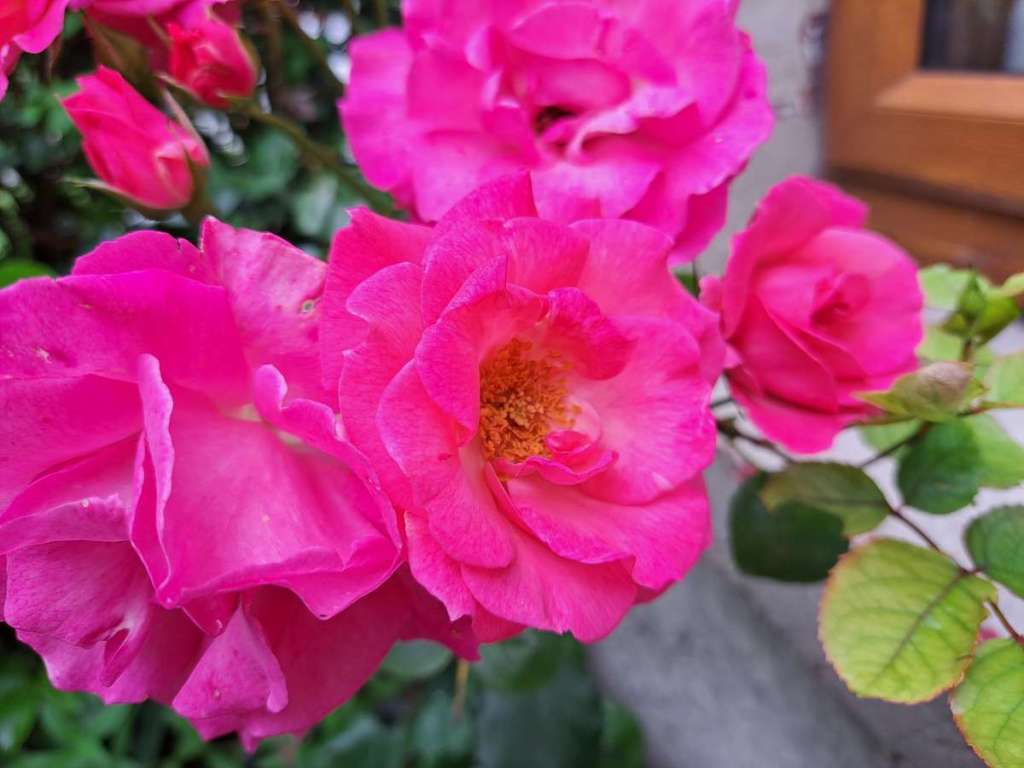
Nature is at its very best right now. The month of May is usually the most beautiful in Ireland I think. Insects abound, flowers are lush and beautiful and still so full of energy, deep colour and vibrancy. And the trees are mighty in their greenery, strong and filling up with juice taken from infrequent spring showers. I feel it, their strenght, when I sit on the bench under our enormous hawthorn tree. I take time there, every single day. It’s one of the best restoring pills nature has to offer.


































































 agoyvaerts