ROCKS AND FOSSILS ~ A FASCINATION

Stones…..over the years I have gathered a huge collection of rock samples, of stones. I’ve had an interest in stones, in rocks and fossils ever since I can remember. I’ve always had this connection with the earth , and to me a stone was never a dead thing, no, rocks are alive, definitely in the sense that they evolve, they change, over millennia they change, and what is a millennia in context with the unfathomable, expansive, and the immense timescale of the cosmos. And so, yes, I think rocks are alive. And I’ve always had this affinity with rocks, but also with sand, and what other is sand than tiny pieces of rock, and what does sand do under pressure and given time but change into rock.

I was, for a large part when I was young, living in that part of Antwerp where sand had been dredged up from the river Schelde, this sand that we had in our gardens and everywhere else, was sea sand, and it was full of pieces of shell and other sea creatures. In a way it was like living on the beach. One day while on a walk with my family I happen to see something curious, I picked it up and identified it as a fossil, a fossil of a conch or some type of sea shell. I was eleven years old. It was the start!

And yet I did not end up studying geology, but in later life I did do a geology course with Tel-Aviv University and I loved it. At the time we were living in Gozo and all my research was done on the geology of the Maltese islands. I’m retaking this course in September but doing my research around West Cork. That’s the plan.

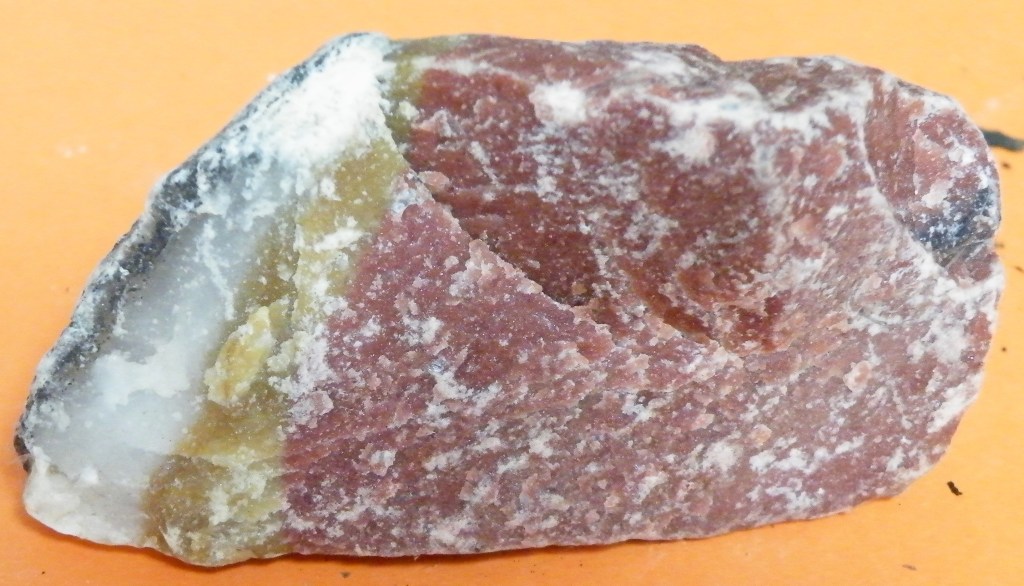
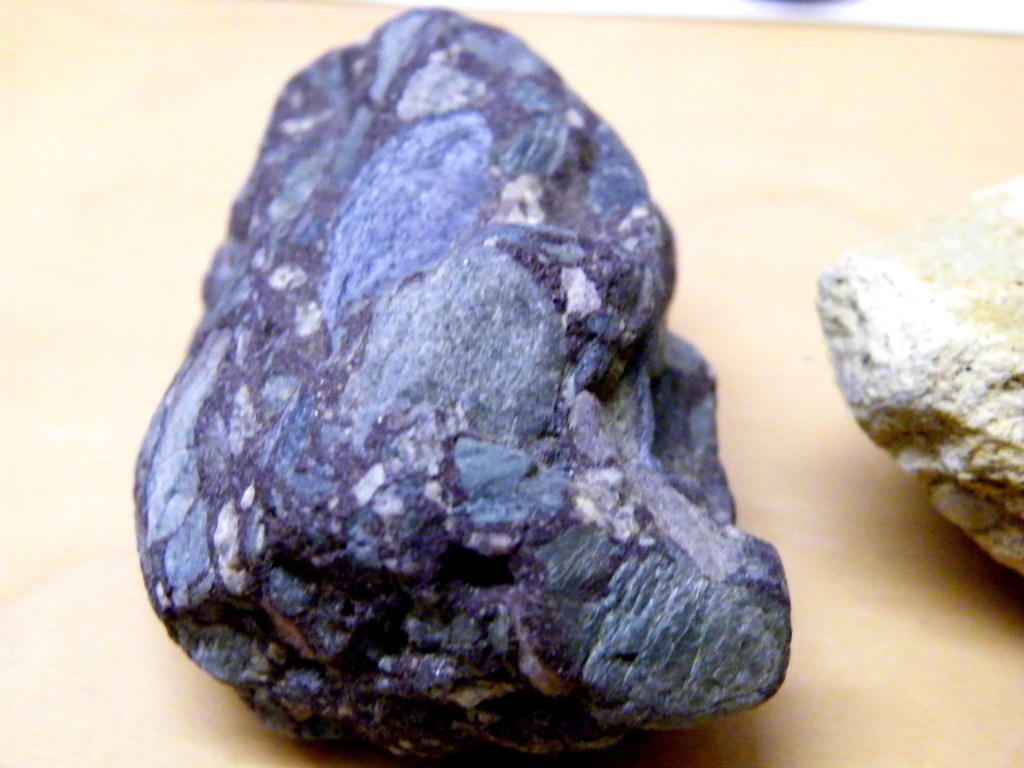
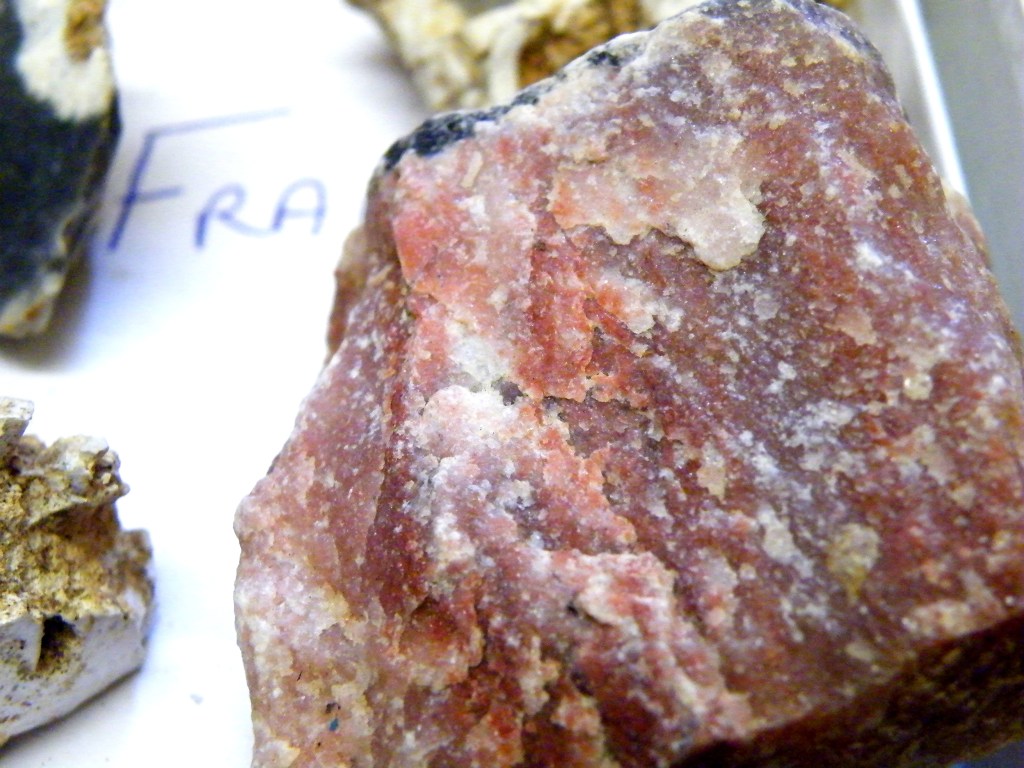
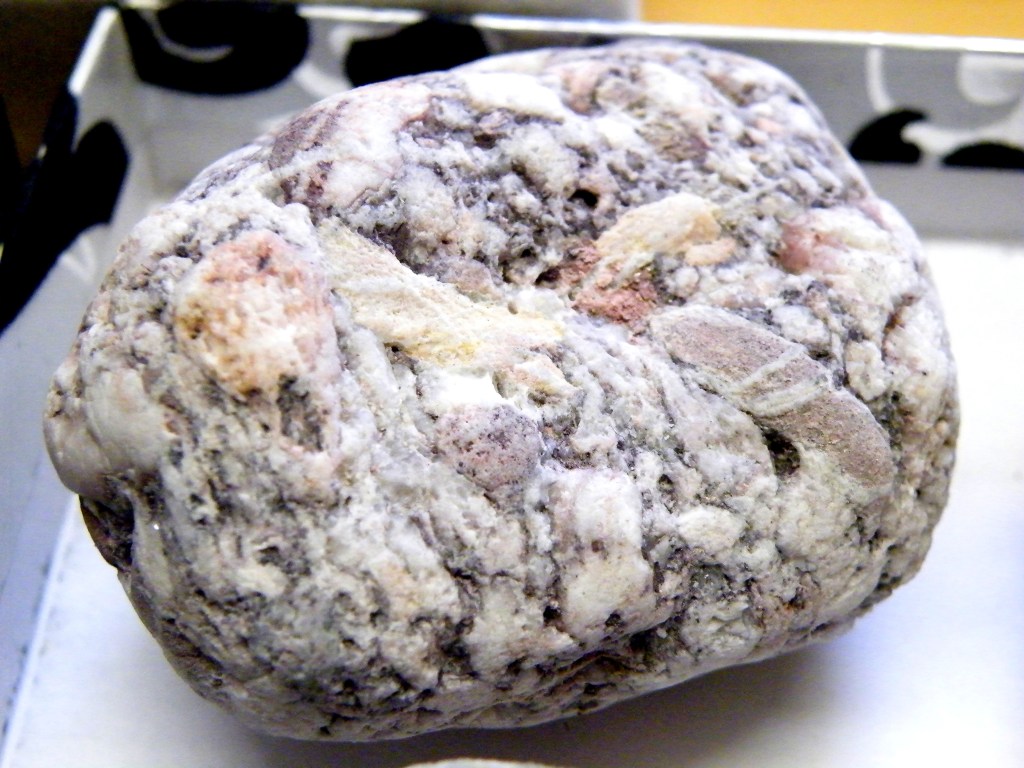
I always said that I would label all my rock samples when I retired, but to date, and after several years, this has not happened, that is until a few days ago when I had to move all the samples out of an old glass press in order to redecorate the living room. So, they are all spread out in the conservatory and now demand my attention totally. Some of my smaller samples I brought back from India, Mauritius, New England, Spain, Gozo, France, Uk, Portugal and Naxos. And of course I have some very interesting samples of Ireland itself. Among my many samples are limestone, basalt, quartz, marble, malachite, soapstone, etc.

A little sample of copper ore in quartz, from the ancient disused copper mines in Ballydehob.
Not too sure if this is actually weathered corral or rock?

Over a life time I found more fossils too, and I found crystals, as it’s not only rocks I’m interested in. It is a fascinating subject to be sure and there’s always plenty of rocks and fossils around. When we were in Gozo, I found the most beautiful citrine crystals, but I left them where I found them, like wild plants I don’t think I should indiscriminately just take away natural treasures from wherever I go. But I always take photos of course.

Our earth sure is a fascinating place and I mean to enjoy another bit of what it has to offer so freely, for us to admire and examine, study and enjoy.

Part of the collection of samples

AN ADVENTURE IN BEAUTY

“When you regain a sense of your life as a journey of discovery, you return to rhythm with yourself. When you take the time to travel with reverence, a richer life unfolds before you. Moments of beauty begin to braid your days. When your mind becomes more acquainted with reverence, the light, grace and elegance of beauty find you more frequently. When the destination becomes gracious, the journey becomes an adventure of beauty”. John O’Donoghue
Excerpt from his books, Beauty.

A very simple walk but nevertheless full of little beauties that lift the heart. A view on to the pastoral landscape beyond the hedgerow and seen through the presently opening hawthorn bush.
One of the impressive treasures on this walk is the stone wall, Ireland has a great reputation for building beautiful stone walls and this is a good example. Seeing that I am trying to learn a lot about and become really familiar with the rocks and geology of the area, I took a keen interest in all this rock.

And so this walk, while very easy and on flat ground was a delight, it took me 50 minutes from where I had parked my car on the other side of town to when I returned, and by that time my head was cleared, and I felt happy with my small discoveries. Along this road I also came across many other wild flowers, and another garden escape was the tree mallow which I did not quite expect to grow here but had seen very many growing in Gozo. Further along this road there is a large area of wild garlic plants growing, I saw them there last year. It is amazing what is found along the roadside and hedgerow, for example, if this road is followed for quite a few miles there are large patches of wild roses, some dark red and beautiful, I used to take this road to work (it eventually leads to Bantry where I worked in the library) during June/July when these roses would be in bloom, it sure was lovely. I had three or four different roads that I could take to work and used to vary them according to what plants were in flower as every road had some difference in habitat and hence in plant growth.

I’m calling this walk the stone wall walk, my sister Josefine who is coming to Ireland in the summer will be walking with me, I sure look forward to this, even when I am normally a solitary walker.

A SENSE OF PLACE

My walking routine is so much more than an exercise regime ordered by my doctor. It is one of many things. It is an hankering after times past – times we spent in Gozo where it felt so good to walk everywhere and everyday, taking in the delightful scents and stunning sights of a Mediterranean land- or townscape. So my current walks here are a looking back in a sense, and a remembering of very positive energy which in itself is energising my today.

But it is more than that; it is a grounding of myself in this Irish West Cork landscape. For years I had felt restless here, discontented even, I wanted to travel and I did not feel as if I even belonged here, this landscape, this town and people – however beautiful and friendly, had totally lost its appeal for me and I often felt a stranger. And this despite there being a thriving Art Centre here and my contentedness about all my travels to India.

So when we returned from Gozo in spring 2018 I decided to do something about this, I could not continue the way I was. I started to look at this place with fresh eyes. Discovering new aspects of this town and area, nature and vernacular architecture, people, and I studied the map carefully to know all the hills, the rivers and the surrounding area, keeping in mind the four cardinal directions to orientate me precisely. And I walk, I walk everywhere and my body is feeling so grateful, I feel fitter for it in my every movement. My mind smiles and I’m constantly making plans to explore even more places in the vicinity, little walks and big walks. I have plans to visit and explore surrounding villages too, just as I did in Gozo.

And all this is giving me a sense of belonging and of feeling good in this space on earth, many is the time when I have felt very isolated here in West Cork, cut off from the rest of Europe and the world. I did not like this feeling and then I would hanker to go back, to return to Belgium, even after all these years. But I know that I am here to stay, and so I need to ground myself as much as I can, and I think that I now have found the way to do this – finally – after many years I am beginning to find a sense of place, a sense of belonging.

Yesterday’s walk was not long, it was in open space on the ring road around the town. It opens up views of the town and the hills behind it and shows the river Ilen upstream going off to its source, and downstream flowing into the town. These are good views. And while a constant flow of traffic does not make this walk particularly peaceful, it is nevertheless a walk I love. Many spring blossoms grace the shrubs and many wild flowers grow along the edge of the roadside. Fine stone walls have been built along some of this road, in local rock, shale, in slate-blue colour, with the odd bit of striking white quartz here and there, beautiful.

As I look towards the town centre, my eyes casting over a wide area of marshy ground, I notice works are still ongoing, the building of flood protecting walls. Skibbereen was built on marshland which makes the town prone to flooding. The town centre lies in a long valley, open to the West and North, and protected from the Atlantic Ocean by hills to the South and South-east.

I do believe that in every place on this wonderful earth of ours there are many interesting and exciting things to discover. Finding out about the place we live does give us a sense of belonging.

I would love to hear about your experiences and feelings about your sense of place or your sense of belonging. I would find it to be most interesting.

Along the river Ilen as it enters the town of Skibbereen
Ribes sanguineum in flower along the river Ilen
Looking downriver as the Ilen enters the town of Skibbereen
Looking upriver

WINTER GARDEN

taking stock of garden winter 2018

Beginning of January, and even though the days are still quite dark, there is a change to be noticed and it does the soul good.  The mist and heavy clouded days have left us for the last few days, and though we have still not seen any sunshine, there seems to be more light in the sky.  It is good, I think that one could learn to live without any sunshine, though it is hard to get used to it – it seems to be here to stay!

This morning I went into the garden and took stock of what is happening, and there is lots!  There are the strong rigid and juicy looking leeks, the bright red and colourful chard, the celery and the cropping cabbages.  There are also the many different herbs which are flourishing right now, oregano, thyme, lavender, sage, feverfew, dandelion, mullein, broad leaved parsley, three-cornered wild leeks, young cleavers, and even some young and tender nettles.  It’s a very mild winter here, though we had very much rain during October, November and part of December.  The temperature has not gone much below 10 or 11C and the soil temperature has only just now reached 10C whereas it kept to a steady 12 to 15C before Christmas.

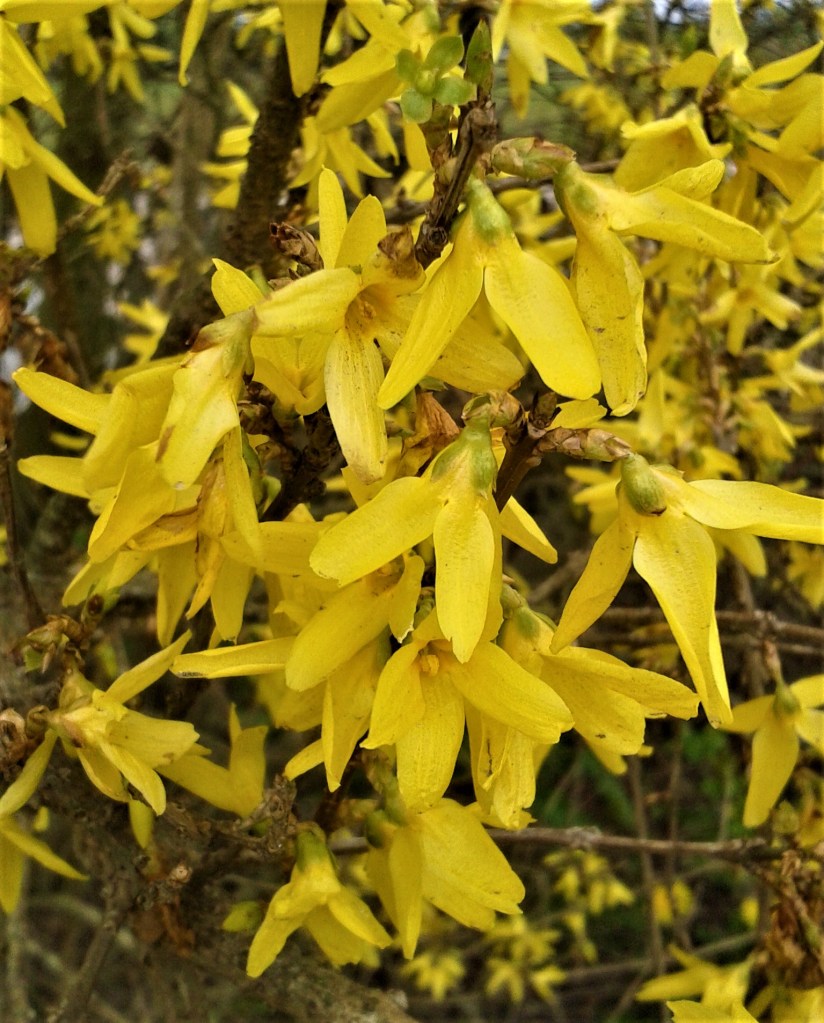
The days for planning my garden for the next season are now, that is always very enjoyable.  This year my plan it to grow many more flowers, wild and cultivated, so that as many as possible insects will have food.   For ourselves I plan to grow some flowering shrubs that will cheer us during winter.  Bright yellow Forsythia comes to mind, but more research is wanted.

What I take away from this winter is that there are certain vegetables that will grow easily and that we eat every day, these would be leeks, kale, chard, and herbs, these I will grow again and more plentiful next winter.

I wish those of us who garden a great season and much fun and happiness in their garden! 🙂


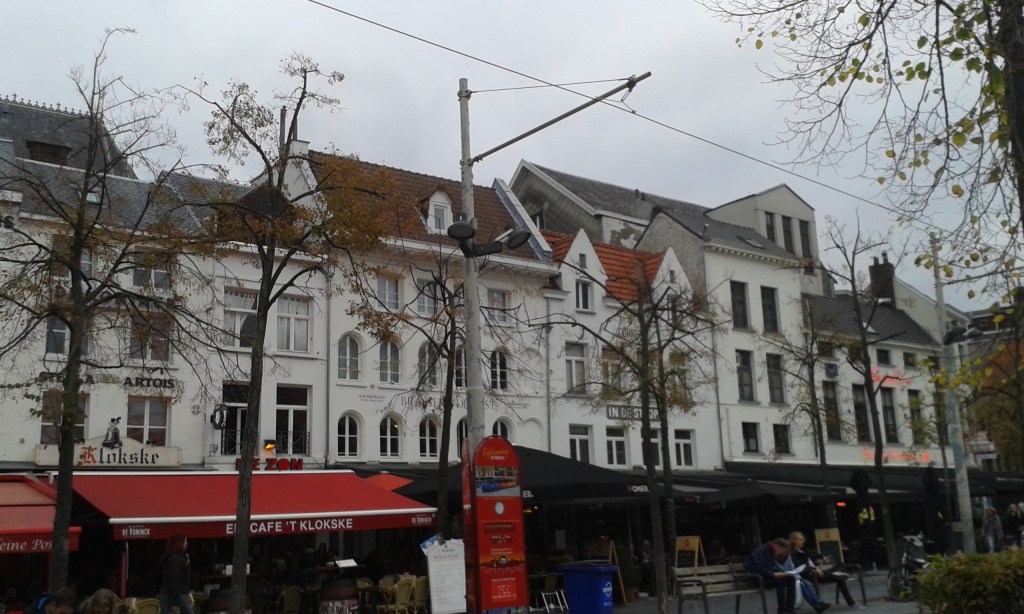
SHORT WALK IN ANTWERP

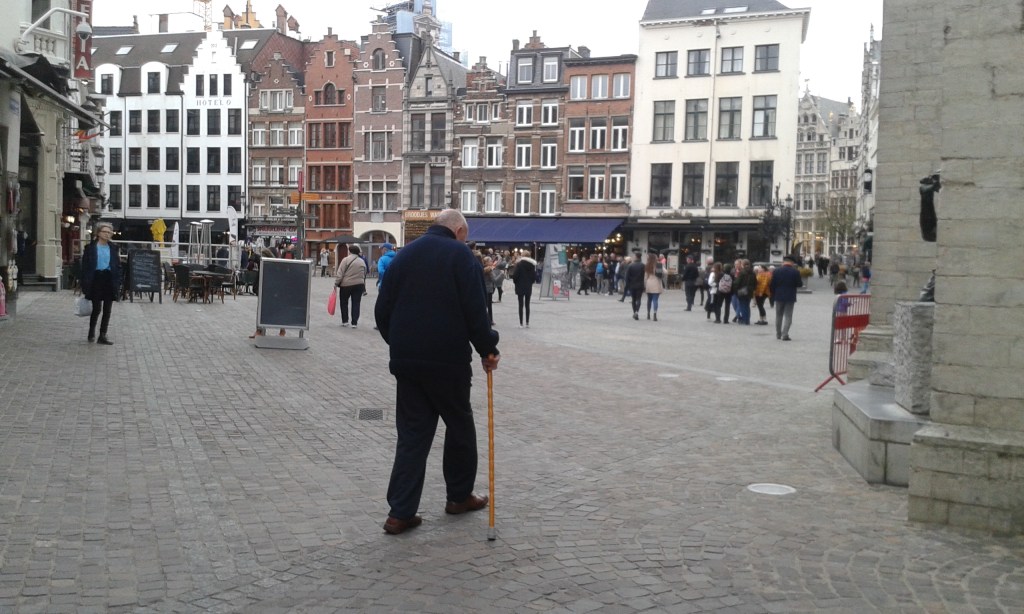
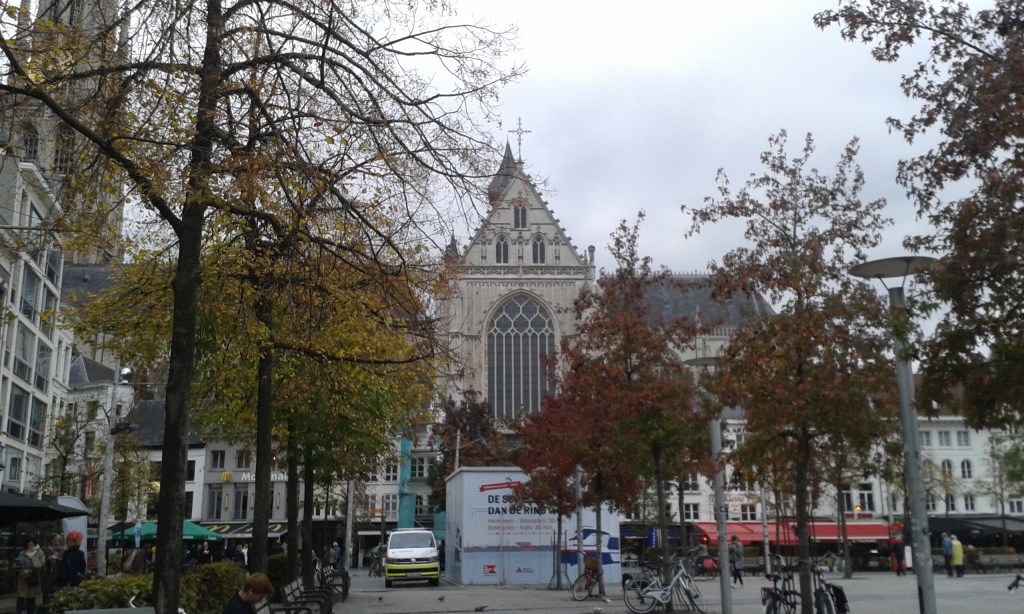
View toward the cathedral from the Groenplaats.
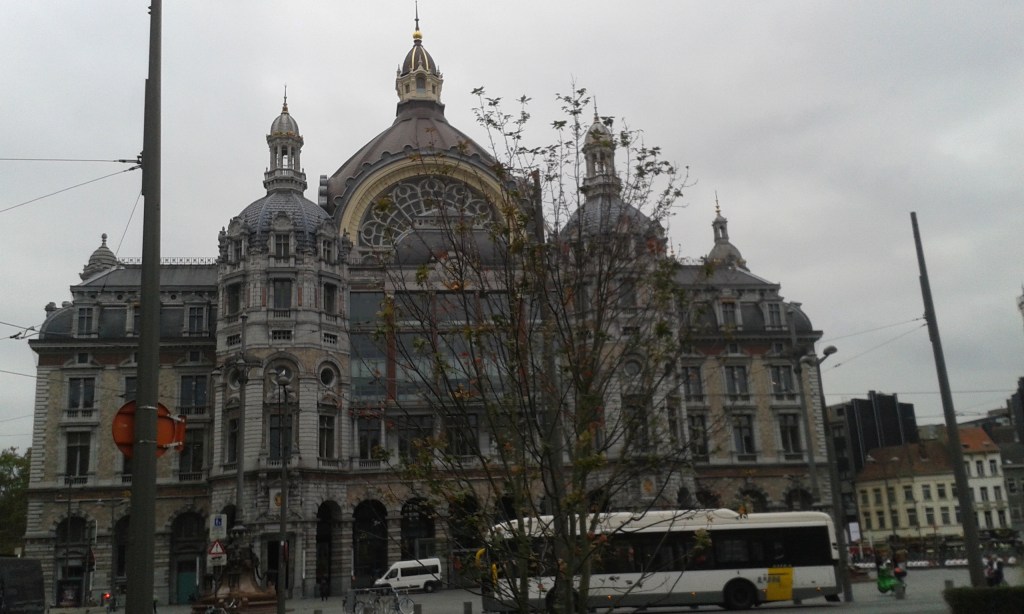
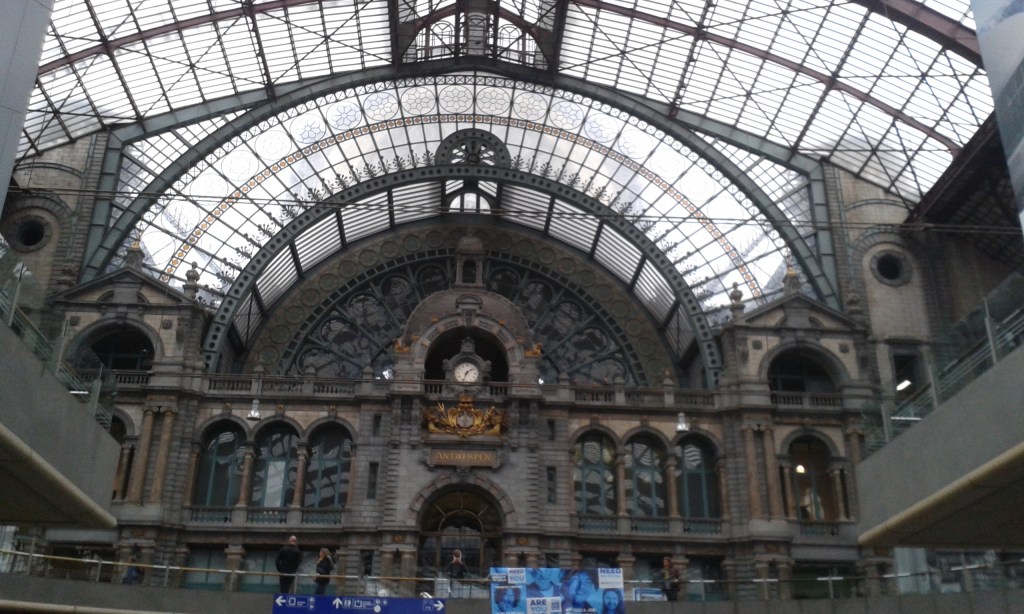
The Central station is an amazing building, constructed between 1895 and 1905, designed by Louis Delacenserie and Jan Van Asperen.
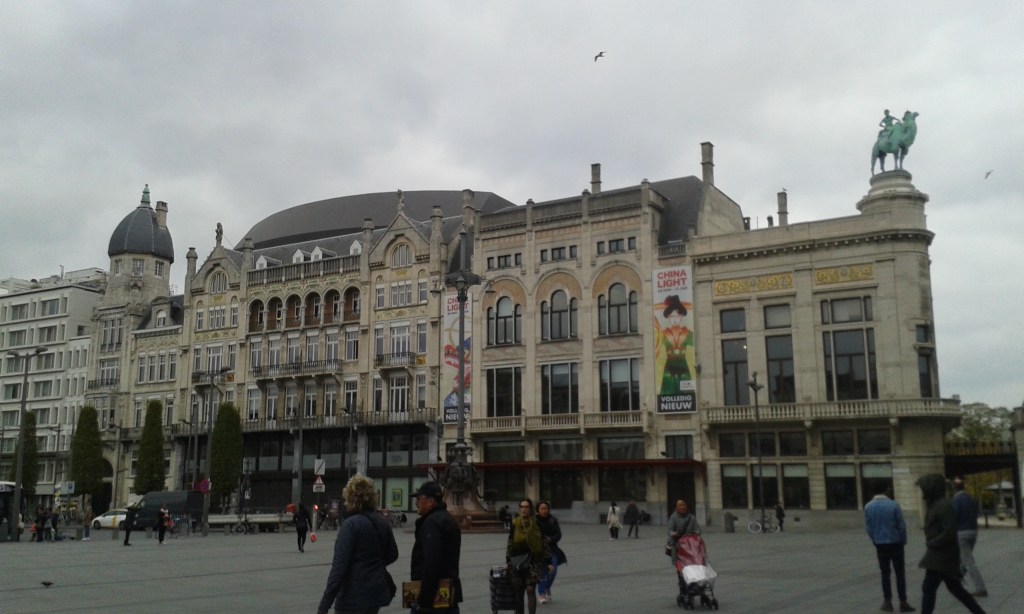
Touristic area, part of the Groenplaats

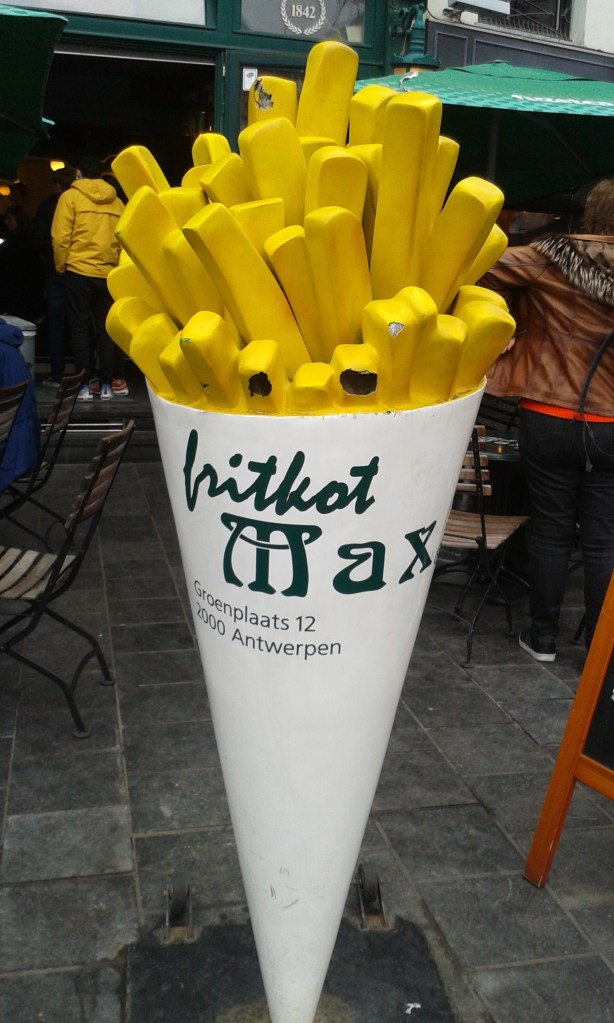
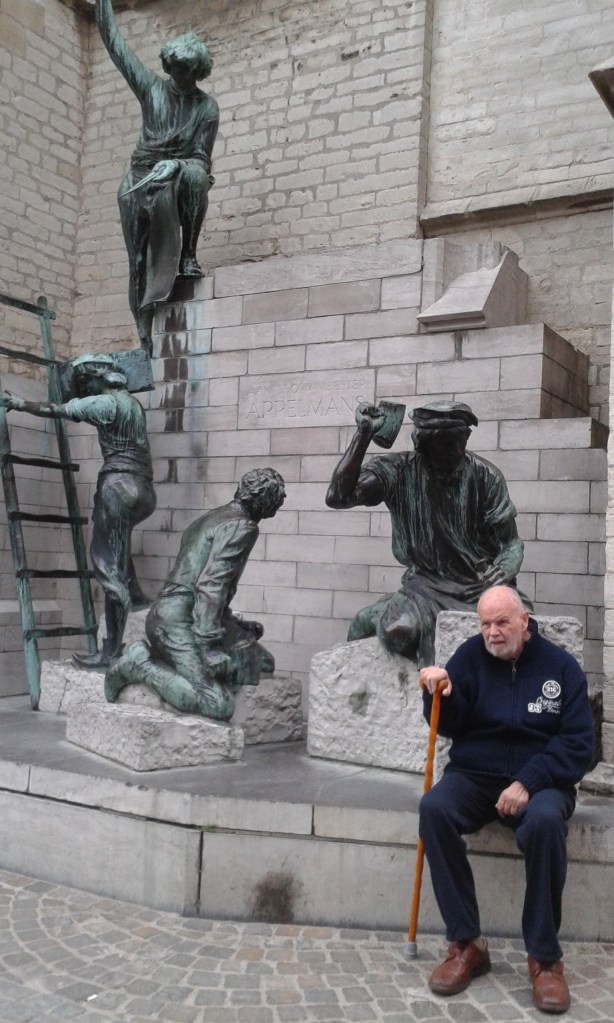
We were in Antwerp for a few hours only, Ian wanted to see the area around the cathedral, and I wanted to see the Lace shops in the same area. We had some lunch too 😃 Flemish food obviously! I love going back to Antwerp, eventough we mainly stay in Lier, which is not very far away, only a short train journey.

HENHAM REVISITED

2018-10-15 16.49.05

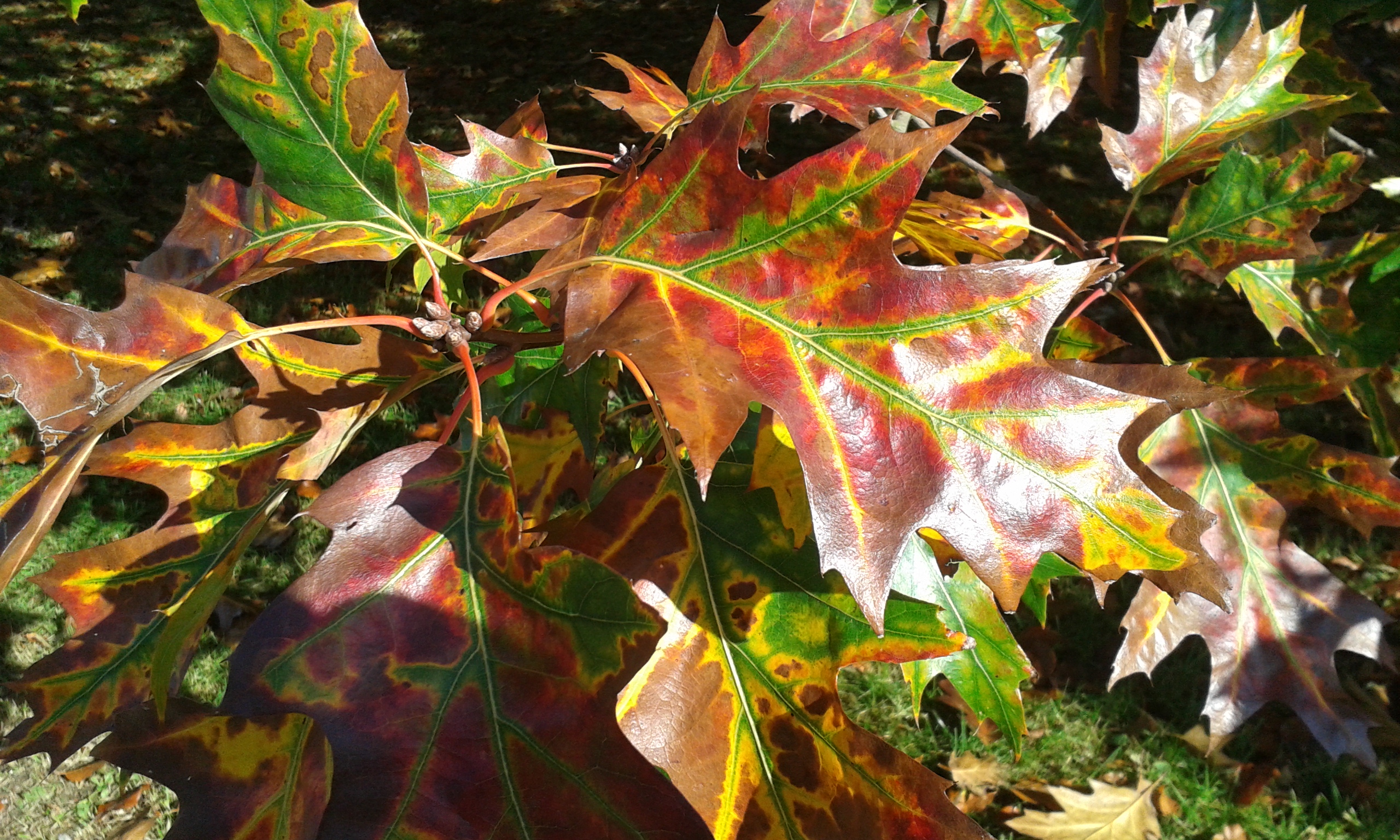
Autumn can conjure up a variety of different colours and heart warming scenes, and this past October has been more mellow and beautiful than most. And a lovely golden sunshine has illuminated everything that it has touched.

2018-10-16 12.38.37

We have been staying in the ancient stables of the parsonage in the village of Henham in Essex. The cottage is lying next to a fine church built with use of flint stone. A fine square tower rises against the blue sky, and surrounding, the magnificent trees shed their leaves over ancient graves. Ugly gargoyles feature here and there, some almost completely erased.

The trees are most lovely this time of year, colours varying from deep dark red to pale yellow , gold, ochre, or sepia, a beautiful pallet. But it’s not only the colours that are like velvet to the eye, it is the shape and size of the ancient trees that attract the attention.

The architecture found in this village has always fascinated me, the thatched roofs, the variety of cottage styles, the village green, all make for a picture card scene. But that is only me romanticising because this village is also a vibrant and dynamic community and that has perhaps got to be of more importance for the people living here.


MY SOIL EXPERIMENT ENDED

I have written up my report on my soil experiment, as part of a course I took early in the year,  ‘CITIZEN SCIENCE: LIVING SOILS, GROWING FOOD’ with the university of Dundee and Grow Observatory.  Its a long enough read but I thought to include it anyway in this blog post as some people showed an interest in my results.  So here goes.
My question was: What will give a better crop? If I use compost from the garden compost bin, to improve both the fertility and the texture of my clay soil.  Or if I use a combination of leaf mould and organic seaweed liquid?
My hypothesis was: Using compost will improve clay soil, & may result in a better edible yield of produce.
Measurements: Yield of edible produce as weight (grams/ square meters), and seeing that I am also testing the effect the experiment has on my clay soil texture – my measurement will include testing soil texture before and after the experiment. I will also measure the Ph. and nutritional readings (nitrogen/potassium/phosphorus measured against the original texture readings/findings). I will use home testing equipment. For soil texture testing I will use the ‘Field Texture Grade classification chart’ after doing the Bolus test.
Variables: Varying effects of pests invading the plots differently, perhaps some plants dying as a result. So one of the variables will be competition from pests.

My procedure:
I plan to grow a total of 12 bean plants in each plot, as they will be planted 30cm apart with 60cm between I can fit those 12 plants in half of each raised bed and keep the other half as a control with nothing growing on it. The radish and spinach I will grow in between the bean plants, 4 of each. Dimensions of my raised bed are 1.20m by 2.20m so this will just about do it.
OBSERVATIONS BEFORE THE EXPERIMENT STARTS
The soil in both my plots smells good, perhaps a little sweeter in Plot 1 than in Plot 2. When I made a Bolus of the soil in each plot they were the same. The plots have a moisture content between 1.5 and 3 indicating that the soil is fairly dry.
Readings of soil nutrients before experiment:
Nitrogen: deficient in Plot 1 and depleted in Plot 2.
Phosphorus: deficient in Plot 1 and deficient in Plot 2.
Potash: adequate in Plot 1 and adequate in Plot 2.

There is a slight difference in the two plots, Plot 1 had a light reading of 1000 units while in Plot 2 the reading was 2000m – both plots were overshadowed by a tree, but differently. Plot two receives the evening sun, whereas Plot 1 receives the morning sun.
Moisture content was also different in the two plots, in plot 1 it was 2 units whereas in plot 2 it was 3.1 units. So plot 2 was wetter.
The PH was 7.5 in plot 1, and 7 in plot 2 – Meaning that the soil in both plots is quite alkaline.
The result of the bolus test showed that the soil in both beds, according to the ‘Field Texturing of Soils Table’, is a light clay, with a plastic bolus, smooth to touch. 35 to 40% of clay contend.
Beginning of experiment;
On the 8th of May my Plot 1 and Plot 2 were ready to have the allocated fertilizers added. It turned out to be a dry and warmer than usual summer here in West Cork. For some part of the summer there was a ban on watering the gardens, so plants did suffer, they easily bolted. Some things did not grow at all or very little.  Plot 1 was treated with compost from my home compost bin, and Plot 2 received leaf mould and would be given liquid seaweed compost on a regular basis.
I planted out my bean seedlings (Climbing French Beans – Cobra), on 22nd of May. The soil temperature was already between 13 and 15C. The air temperature was around 22C at noon. We had no precipitation for the week following planting, but I watered the garden with rain water once a day. Slugs were a slight problem so I put out beer in trays. I sowed the spinach (Spinach Matador) in trays. The following week we received 2.5mm rain.
On the sixth of June – no precipitation, watering by hand. The beans in Plot 1 started to grow and were doing ok. The beans in Plot 2 did not grow or do well. They received seaweed liquid feed once a week (2tops in 6ltr of water as recommended). I planted out the spinach seedlings. I threw organic slug pellets and picked off the slugs every evening as there was some slug damage. Still no rain but watering garden daily. Temperature 20C at noon. Some of the time overcast but warm. By the 12th of June Plot 2 beans were doing ok too but definitely behind Plot 1. Spinach bolted as soon as they were planted out. On 14th of June we had a storm and the plants received some storm damage. Temperature went down to 18C. By 21st of June the beans in Plot 1 were 82cm high but only 43cm in Plot 2. There had been no sun for 5 days. Still no rain. Ban on using water hose in garden. I used all grey water to keep beans and spinach watered. Slugs had disappeared. Moisture levels were 2 in Plot 1 and 2.5 in Plot 2. Temperature was still 18C and precipitation was still at nil.
One month later; on 21st of July, the results were as follows: Moisture in both plots did not even reach 1. Temperature reached close to 30C in the sun and 25.7 in the shade. Soil temperature reached 21C in plot 1 and 19C in plot 2. I found some slug damage in both plots.
Harvesting:
On 28th of August the temperature had dropped to 14C with precipitation of 25mm in 24hrs. I harvested overall 800gr of beans in plot 1 and 300gr in plot 2.
Readings of nutrients in the soil after harvesting:
Nitrogen: depleted in plot 1. Depleted in plot 2 and depleted in controls of both plots.
Phosphorus: depleted in plot 1 adequate in control of plot 1. Depleted in plot 2 and its control plot.
Potash: adequate in plot 1 but depleted in its control plot. Adequate in plot 2 but deficient in its control plot.
PH: 7 for plot 1 and 7.5 for its control plot. 7 for plot 2 and 4.5 for its control plot. (I cannot explain why there should be such a difference between the readings of Plot 2 in the Ph. of the control plot.)

To answer my experiment’s question regarding the soil texture:
I have come to the conclusion that my Hypothesis “using compost will improve clay soil, and may result in a greater yield” is true, I can say this because the yield of Plot 1 was 800gr, whereas the yield in Plot 2, which was 300gr, shows that Plot 2 produced 62.5% less in relation to Plot 1, which I think is significant.
As well as that, and all though the soil texture test of both Plot 1 and Plot 2 resulted in similar readings before the experiment (light clay), I did detect a slight improvement in the soil of Plot 1, and I would say that, using the ‘Field Texture of Soil Table, my soil now has perhaps only 30 to 35% of clay contend, instead of the 35-40% before the experiment – that is in Plot 1, which received the compost from the garden composter. It can now be categorised as ‘Silty Clay Loam’ instead of Light Clay.

And my question regarding the fertility of the soil:  Here my hypothesis was that the compost of the compost bin would improve the fertility of the soil versus using a combination of leaf mould and organic seaweed liquid.  And here I did not immediately see results because after harvest, both nitrogen and Phosphorus were found to be depleted in the soil of both plots.  Potash was found to be depleted in Plot 1 and deficient in Plot 2.  The produce was very poor in plot 2 as was some of the growth.  Growth and produce were better in Plot 1 but still the harvest was rather poor.   I think both plots are still very lacking in nutrients and need more manure/compost or leaf mould before I can come to a conclusion on fertility.

Comparison of nutrients before and after experiment.
The nitrogen contend of the soil in plot 1 was deficient at the start. But when I retested the soil after harvest the nitrogen contend of plot 1 was depleted.
The nitrogen contend of the soil in plot 2 was deficient at the start. When I retested the soil after harvest the nitrogen contend of plot 2 was depleted.
The phosphorus contend of the soil in plot 1 was deficient at the start. When I retested the soil after harvest the phosphorus contend of plot 1 was depleted.
The phosphorus contend of the soil in plot 2 was deficient at the start. When I retested to soil after harvest the phosphorus contend of plot 2 was depleted.
The potash contend of the soil in plot 1 was adequate at the start. When I retested the soil after harvest the potash contend of plot 1 was depleted.
The potash contend of the soil in plot 2 was adequate at the start. When I retested the soil after harvest the potash contend of plot 2 was deficient.

Variables noted:
The spinach totally bolted as soon as they were planted out, and for this reason I have left it out of the experiment results.
The slugs did about the same damage in both plots, but they did eat more leaves of my bean plants in Plot 2. I did find that, because of the leaf mould there was much less weed growth in Plot 2 than in Plot 1, it might have.
It was a warmer and dryer summer than is usual here, did this have an effect on the results of my experiment? Did I water enough?

My findings and final conclusions:
So the soil in both plots are after harvesting depleted in nitrogen, phosphorus and to a lesser extend in potash.  But the nutritional value of my soil was quite poor even before growing my beans (and I would have thought that bean would have improved the nitrogen in the soil).   It is therefore obvious that if I want a better crop I need to improve the nutritional value of my soil and using organic compost would be the wisest decision, and in addition it will improve texture of my light clay/silty clay loam soil.  I have now been offered horse manure, additionally I have purchased a different type of organic seaweed fertilizer having good percentages of the missing nutrients. And I plan to make use of the plentiful comfrey plants that grow in one of my raised beds, eggshells and coffee grounds are also going to help.  Some of my beds, those that don’t have winter vegetables growing on them, I will seed with green manure, all this to improve my soil.
I want to make a note that I did not add enough leaf mould to my Plot 2 and I wonder if this could have contributed to a poorer overall result in that Plot.
I think that this experiment has been a great learning curve. I would definitely take on board its findings, but perhaps with reservations. I do believe that I learnt a lot doing this, and it was very enjoyable, I also included my grandchildren in to the testing work, they loved it too.


Agnes Goyvaerts – Skibbereen – Co Cork.
COMING HOME

‘Coming Home’ is the name of a special, and I would say, a poignant exhibition which has been running all summer in the Art Centre in Skibbereen town.  It aims to commemorate and indeed give value and respect to all the many Irish who died during one of the biggest calamities that hit this land.  ‘The Great Hunger’ (1845-52) it has been called, and it was a famine that was unprecedented in its destruction, indeed it was the worst demographic catastrophe of nineteenth century Europe.  Several million people died or were transported to Australia or Canada, or emigrated to a variety of countries.  There is so much history behind this present exhibition, and the talks, lectures and performances that have been laid on as part of this exhibition.  How moving this has been, and how healthy – not to dwell on the past to remember it with bitterness, but to appreciate and respect those that suffered during that period in Irish history.  Myself as a foreigner I never realised what an effect this famine has had on the present Irish generations, but in a way it has, and that is why it has been so good to bring the hurt and hidden sadness’s from generations past into the open, and to look at this on a nationwide basis.  People are then able to let it go, and to have renewed energy and I think that is what will happen.  This exhibition brought people back from many countries to experience, up to a point, what it would have been for their ancestors.  I went to it early in the summer, and though I am not a very emotional person, I am very sensitive and I could literally feel the emotions around me, I was very moved, but also very happy as it felt like a cleansing for the people who are the survivors and perhaps are living with memories from ancestors that faced starvation, and or, the coffin ships to travel to far off countries in order to survive.

I was speechless walking out of the Art Centre that day.


I would like to dedicate this blog post to my friend Rowena, who is a survivor of ancestors that suffered the workhouse in Ireland, and were transported to Australia.