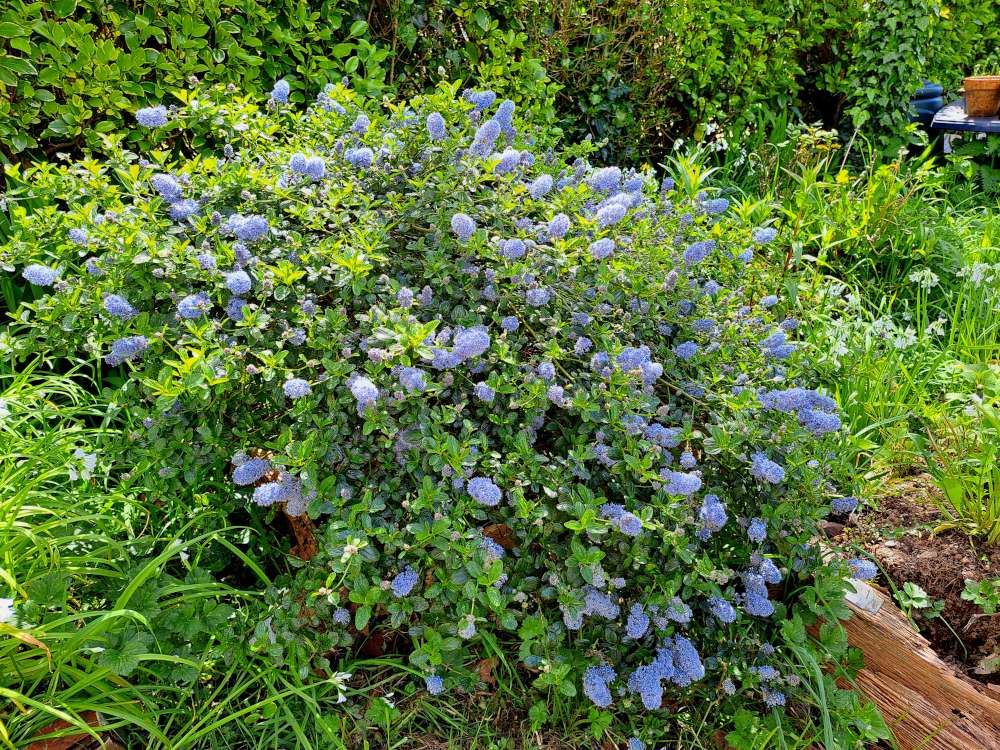
In our wild garden, and wild it is at the moment, I’m finding that everything is green, beautiful shades of green, but yet there are some colours to be seen too. I haven’t had much time, and less inclination to garden in the past few months and now everything has overgrown. But it’s beautiful, and there has been a lovely crop of very yellow buttercups in what is now a small meadow rather than a small lawn, I’ve really enjoyed that sight. The Californian lilac has also flowered in a pale blue. And the wild foxgloves that self-seed every year are in full bloom, a beautiful shade of pink.
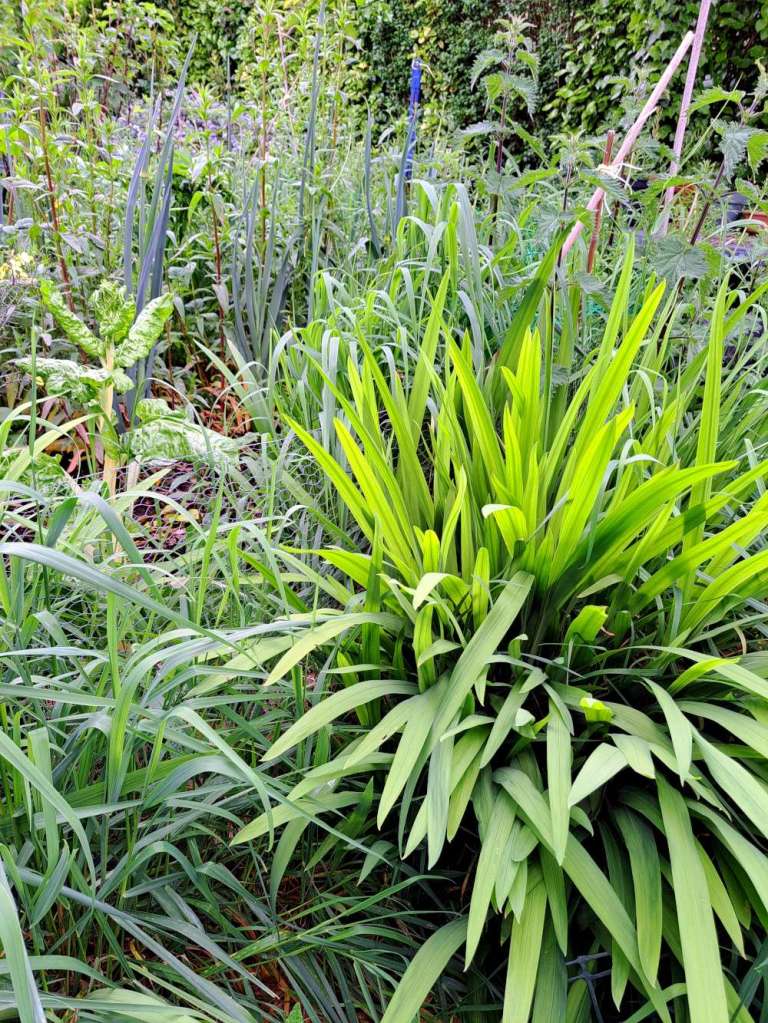
I like the garden to be lush, and to have secluded spaces where I can sit on the old bench, or totally in the back under the oak tree and surrounded by nettles and foliage of montbretia foliage not yet flowering, protected by the sheds from the cooling wind. I often pick this spot for breakfast on fine days, the sun is only just hitting that spot then and it’s a lovely light. The old bench under the hawthorn tree is another one of my favourites, but I have to watch it as it is the domain of the sparrows and there are often droppings from above, not so nice in my tea.
I am not seeing many pollinators in the garden this year yet, probably because the weather has been rather unpredictable, I’m hoping they’ll come soon. I’ve seldom seen the garden so lush, or else my memory is failing me (which I doubt}. The month of May is of course the most beautiful month in Ireland, and often one of the warmest, not so this May, in fact I’ve had to light the stove today. Probably June will be better.
I’ll let you have a stroll through our garden for now. Enjoy!
Bright beauty of buttercups (Ranunculus)
Foxgloves (digitalis purpurea)
Californian lilac (Ceanonthus)
I hope to be back to my regular blog contributions, there is a lot of material which I can develop and plenty of photos to go with it. As I get used to the changes in my life I’ll get inspired again to share some of the beauty of Ireland, and of my past and future travels. And I look forward to interacting again with the blogs of all my friends and followers.
Currently it is the time to take stock and make plans for this coming growing season. I have done a little of that, and I’ve also gone through my last years garden journal to check on what did well and what is just not suited to our type of garden soil, the amount of light and the temperature, and I’ve made a few notes on that. While I was checking all the beds, seeing what is growing well during the winter months, I noticed that herbs and some wild plans do very well during the winter in this area – it being the SW of Ireland. Our climate here is influenced by the gulfstream, this makes our winters mild, usually we only get a little night frost, and this seldom harsher than minus 3 or 4. The plant hardiness zone in this oceanic climate is around 9. So today on the fourth of February I took some photos of what is growing right now, what I can use from our garden. And there is quite a lot.
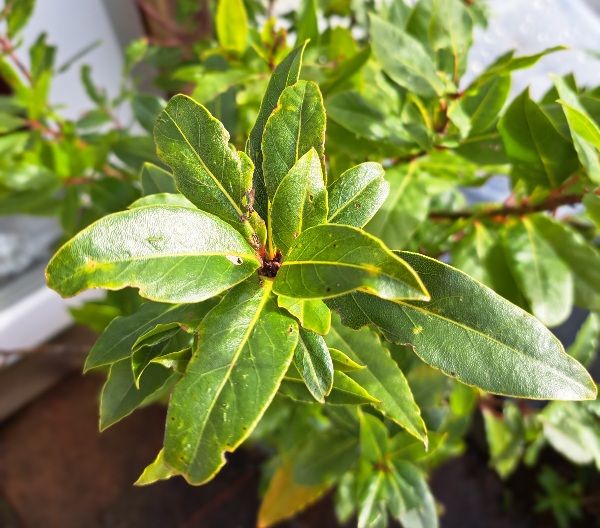
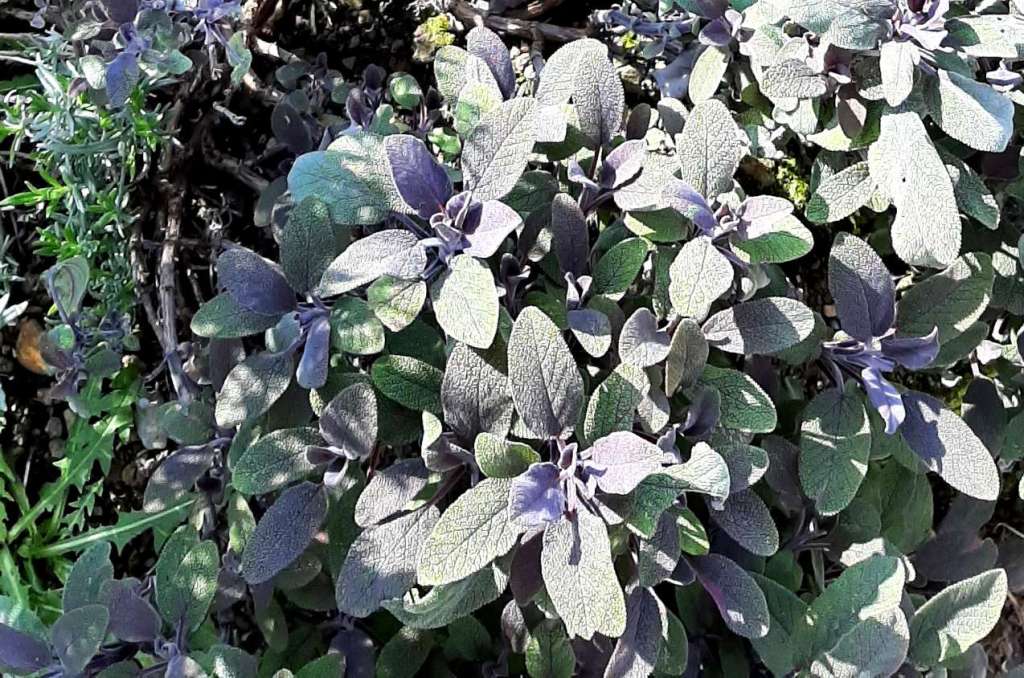
There are some large and strong lavender and rosemary plants, they are getting old now and a little woody, but still flowers profusely. Normally the rosemary blooms in the winter, beautiful pale blue flowers. I find that rosemary grows extremely well and fast here. The lavender sometimes blooms twice a year and gives a generous crop. Some years ago I planted a sage bush and it soon almost took over the plot, definitely overshadowing the oregano at the moment, again this plant gives beautiful darker blue flowers on spikes, which turn a rusty colour in the fall. Our oregano plants almost disappear during the winter, only a few leaves remaining, but they come up wonderfully well once the sun warms the soil. What does disappear are the different types of mint, the chives, and the lavas, but they also return with the warmer weather. The bay leaf plant grows in a pot, it is slow growing which suits me, I use it all the time. Curly parsley is another herb that stays green all winter. My French tarragon I’ve had to overwinter inside where it is doing ok. I have always loved growing herbs, because of their scent and of course because of their culinary uses. I like to cook with them. Other herbal plants in our garden, like the dandelion, three cornered leeks, borage, feverfew, shepherd’s purse, cleavers, and nettles, just appear and I only use some of them in my cooking, others like the feverfew for example I just like the idea of them being medicinal herbs, but because I don’t know enough about them – I do not use them. Nettles, cleavers, three cornered leeks, ransom, and dandelion I do use, but not for their flavour, more for their vitamin and mineral content.
Rosemary, a lovely cooking ingredientAnd decorative tooLavenderThis bush is twelve years old and still flowering stronglyBayleaf SageThymeSheperd’s purseVariegated OreganoBorageOreganoCleaversDandelionFeverfewThree cornered leekChivesCilantro and limeGingered Sweet potato and coconut stew
I enjoyed telling about my herbs and wild plants, I hope you enjoyed reading about them. Today I cooked a Gingered Sweet Potato and coconut stew with lots of cilantro (which does not do well during the winter here – at least not outside!)
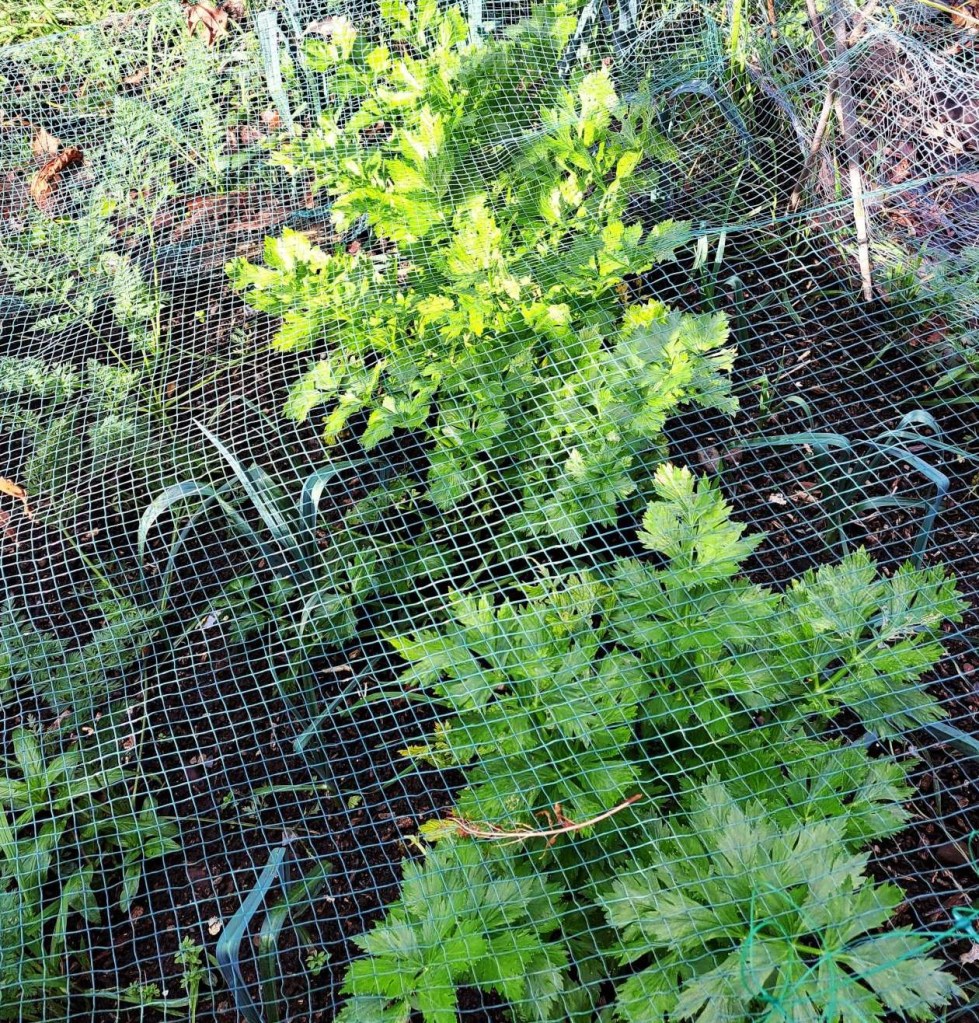
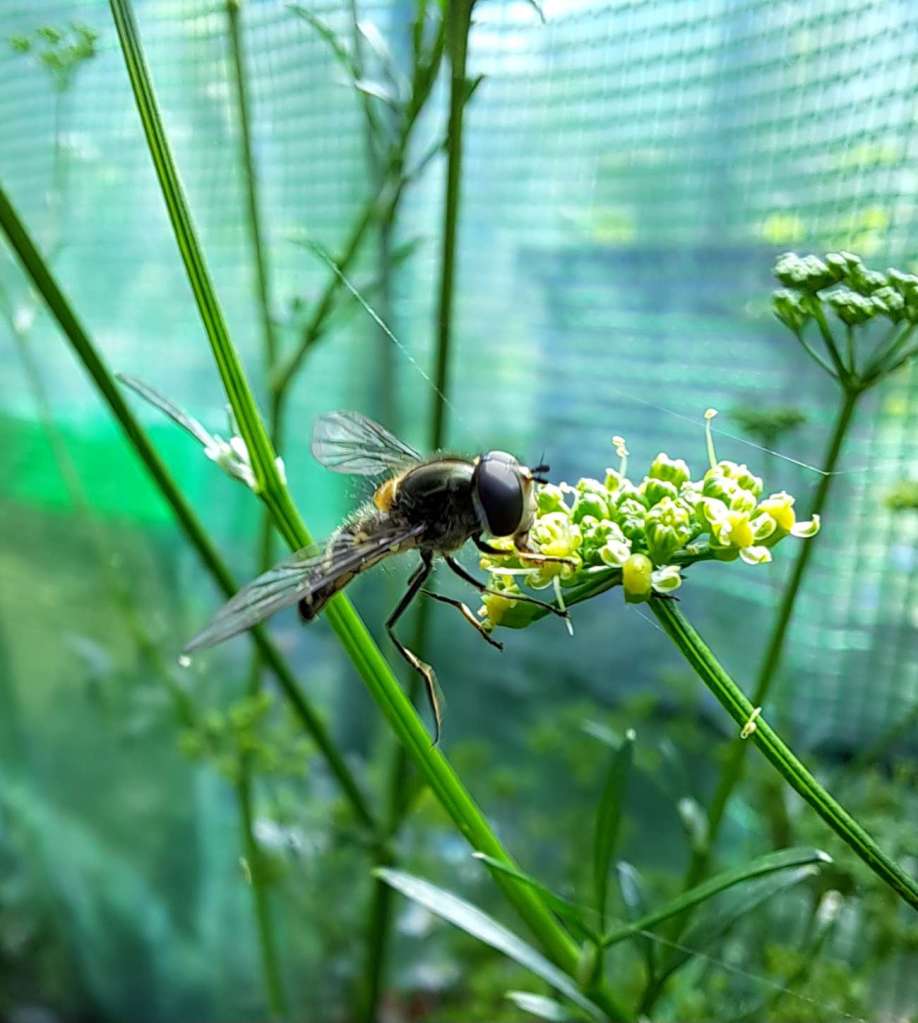
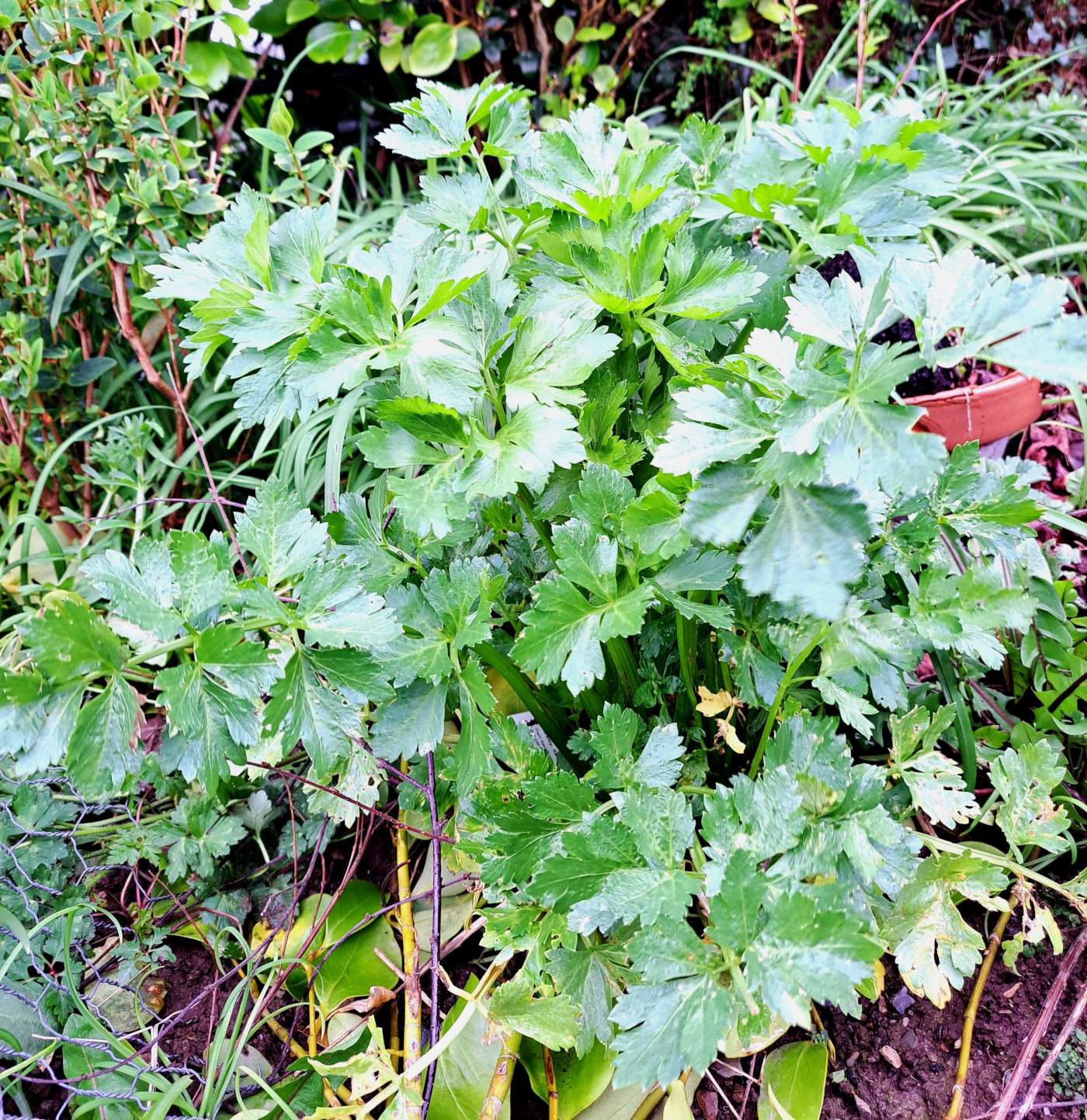
I saw a program recently where herbs were used in a border, and left to flower and bloom. It gave me an idea, I’ve tried it before with both celery and coriander plants, but I grew them in pots. I am now going try growing them in-between other flowering plants in my borders. I guess coriander is native to the Mediterranean. Celery, though, is definitely native to Ireland, there are still uncultivated wild celery plants growing on Irish soil. Their flowers are umbelliferous, lovely light delicate flowers which will definitely add interest to my border.
When I’m reading, thinking, talking, or writing about plants, their origins, their uses, their benefits, and their beauty, and how many of them travelled from faraway places, then I’m as happy and interested as can be. So much to read and learn about them.
‘Every gardener know that under the cloak of winter lies a miracle, a seed waiting to sprout, a bulb opening to the light, a bud straining to unfurl. And the anticipation nurtures our dream’ B.Winkler
‘What good is the warmth of summer, without the cold of winter to give it sweetness’ John Steinbeck
‘Don’t think the garden loses its ecstasy in winter. It’s quiet, but the roots are down there riotous’ RUMI
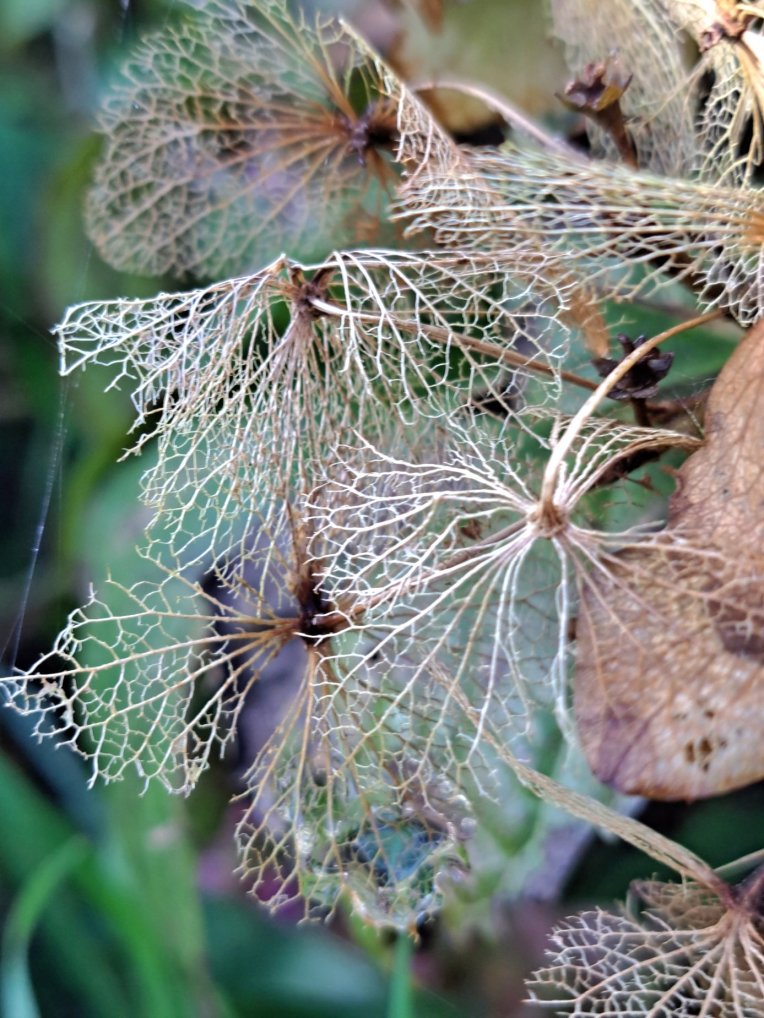
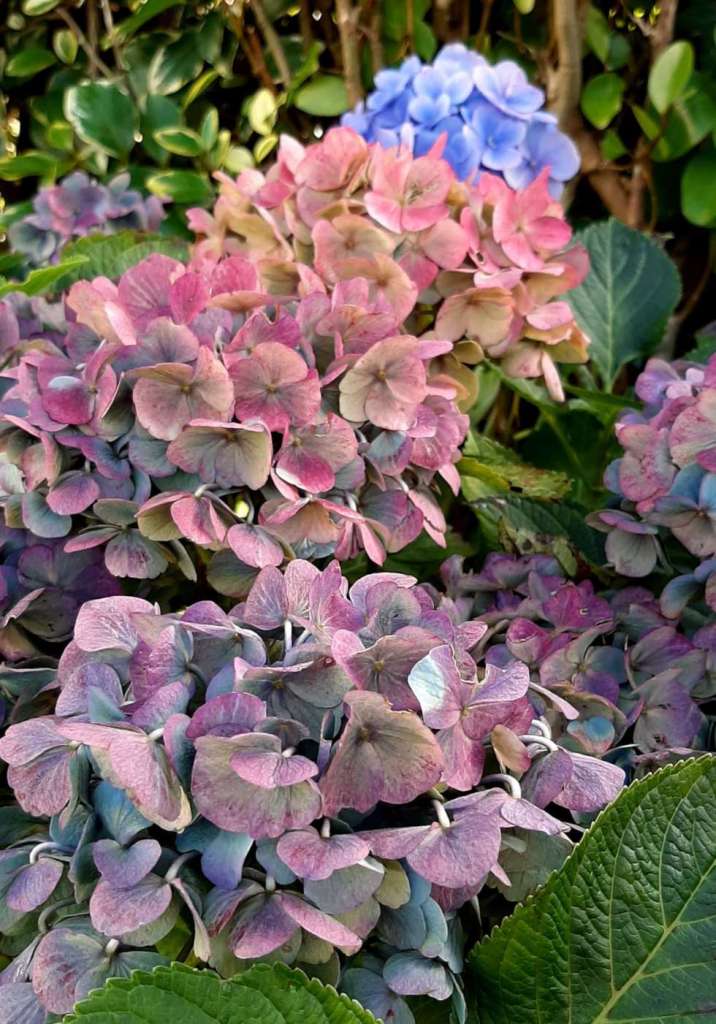
Lacework of the hydrangea flowers.
‘In seed time learn, in harvest teach, in winter enjoy’ WILLIAN BLAKE
Totally enjoying a beautiful winter, the sky, the plants, seedheads, and all the little miracles that manifest during this time of year are a joy to behold. Winter is a time for reflection and restoration in nature and in ourselves.
Wishing everyone a peaceful and beautiful Christmas and mid-winter time, may peaceful blessings be upon you all.
The wonders we discover in an November garden, the colours, the textures, the unexpected plants, the fungi, or still the odd insect flying around, and sucking nectar from the autumn flowers which still embellish the dying remains of summer growth. The grass has grown wild and is drenched constantly from the rains. The leaves decomposing already and covering both the path and the beds their colours dark and shiny in a golden sunshine.
Over the past summer I’ve added a few more shrubs which have taken on well, each moulding to their surroundings and looking now as if they have grown there for ever. The days are drawing in, there is at times a chill in the air, and the scent of cinnamon and baked apples coming out of the kitchen is wonderful. How I love autumn!
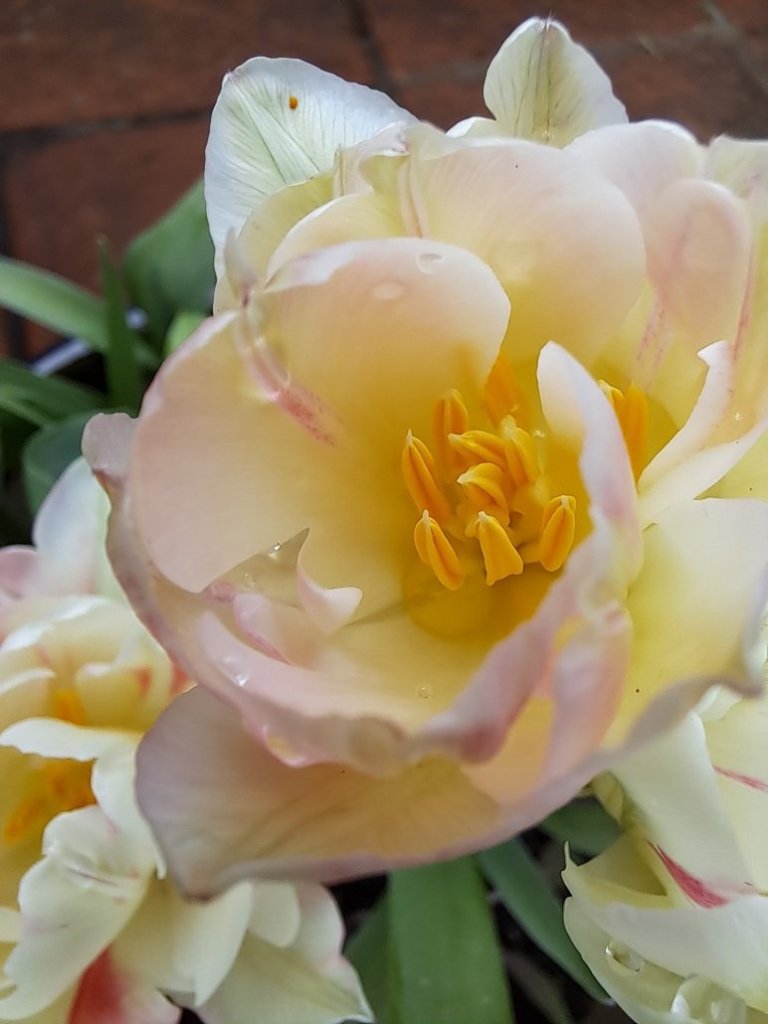
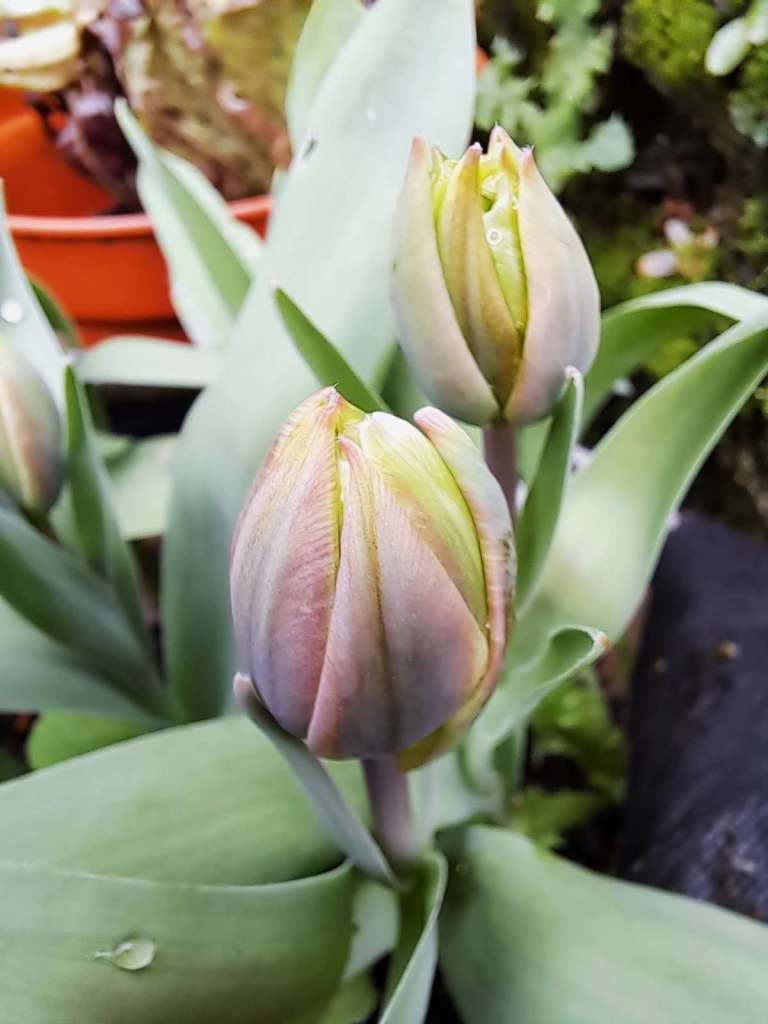
On the days when it is stormy, when the rain lashes down I’m inside, cosy, doing stuff one does when it’s too wet to be out there. There are still flower pots to wash and some tools to clean up and put away. Thinking of next spring, I’ve planted tulips and crocuses in containers and have put those in up-side-down plastic boxes so they won’t rot from the rain. The gladiola bulbs are still in the ground, I’ll pick those out before the first frost. My Lemon Vervain who’s survived the last three winters outside and which did very well in the tunnel during the summer is now well wrapped up in bubble wrap. The tea is rather refreshing especially with a little dash of local honey.
It’s amazing, and yet not surprising seeing we have a subtropical climate, that the whole garden is still very green and next year’s perennials are looking so good, especially the Foxgloves and the Sweet Williams. Also the oregano grows right through the winter, at least it does not die down.
These are the stems of the Golden Rod plant, I harvested them and realised that I love their colours and they are quite strong too, so I brought them inside and will use them in some craft or art project.
Vegetables are growing right among all the shrubs and plants, celery, carrots, leeks, kale and still some beetroot and parsley, lots of winter stews on the way… Lately though I’ve bought a nice Lebanese cooking book, and I’m following traditional Persian and Palestinian dishes on Facebook groups. I am very intrigued by their colourful dishes, their lovely spices and this coming winter I’ll experiment.
I hope that you enjoyed this little stroll through my garden. I also hope that everyone is doing ok and not affected by wars or climate disasters. I wish a blessing on each and everyone. All my love.
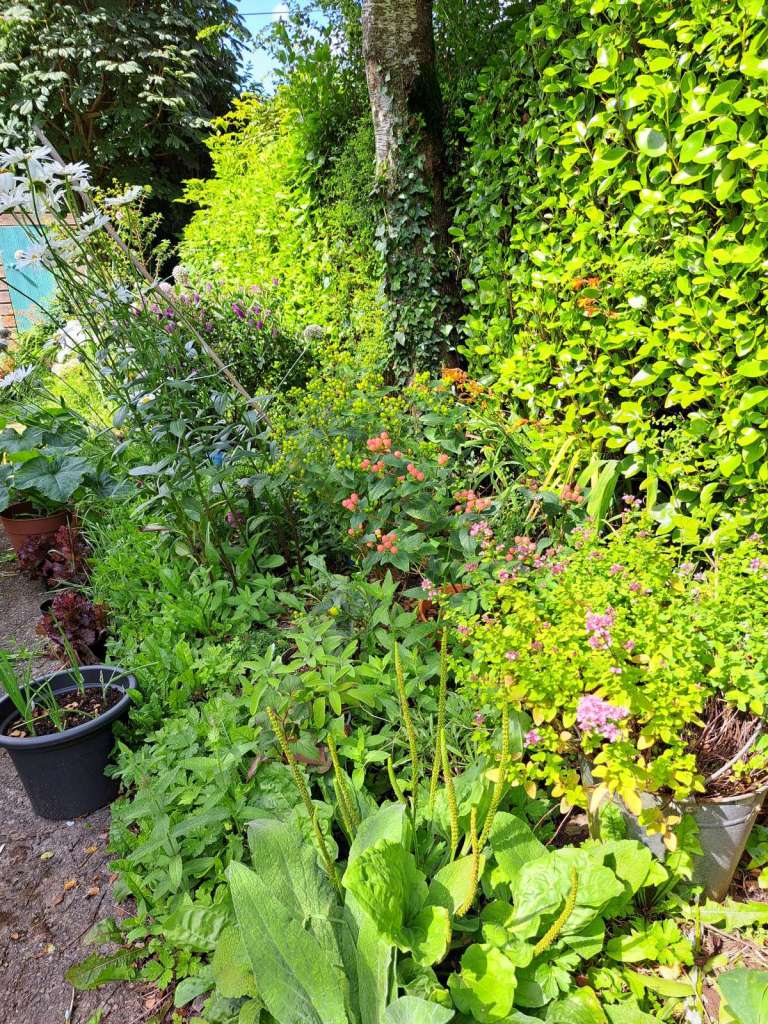
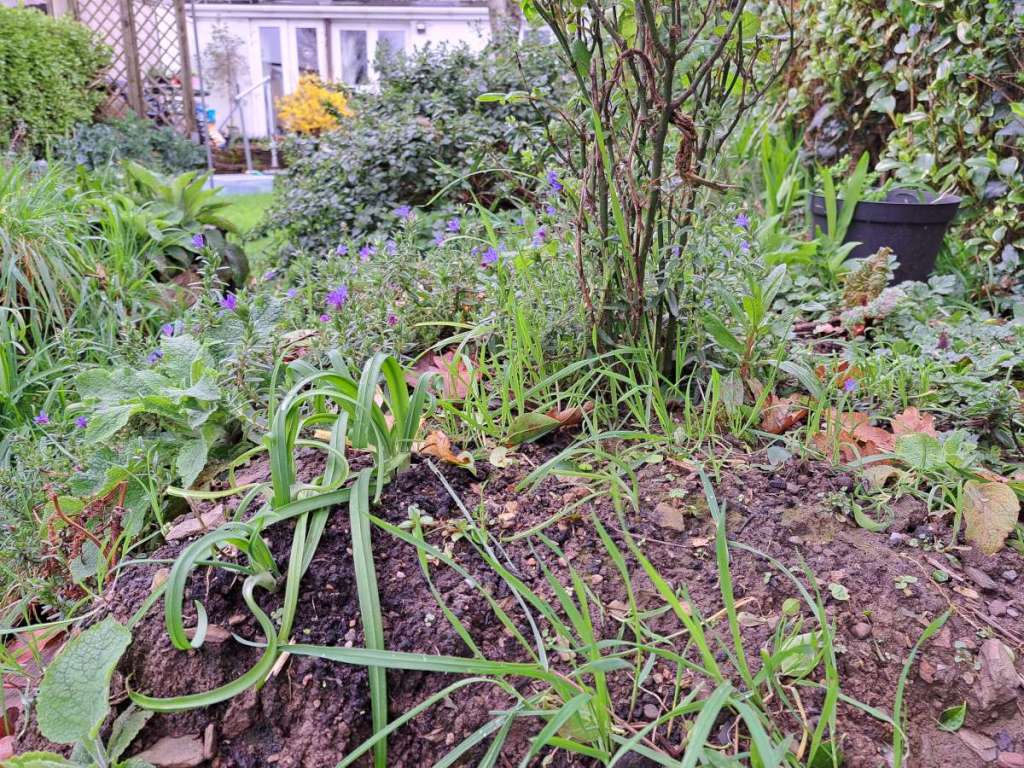
This is what I choose to call our garden at this moment, a sub-tropical wilderness. It all happened in a week or so of soft rain during the beginning of July, come to think of it there was an awful lot of rain, both soft and heavy! There were some warm days and some less warm but overall the climate was conducive to rapid growth resulting in our present wilderness. It did not help that I tripped and fell and was out of action for over a week.
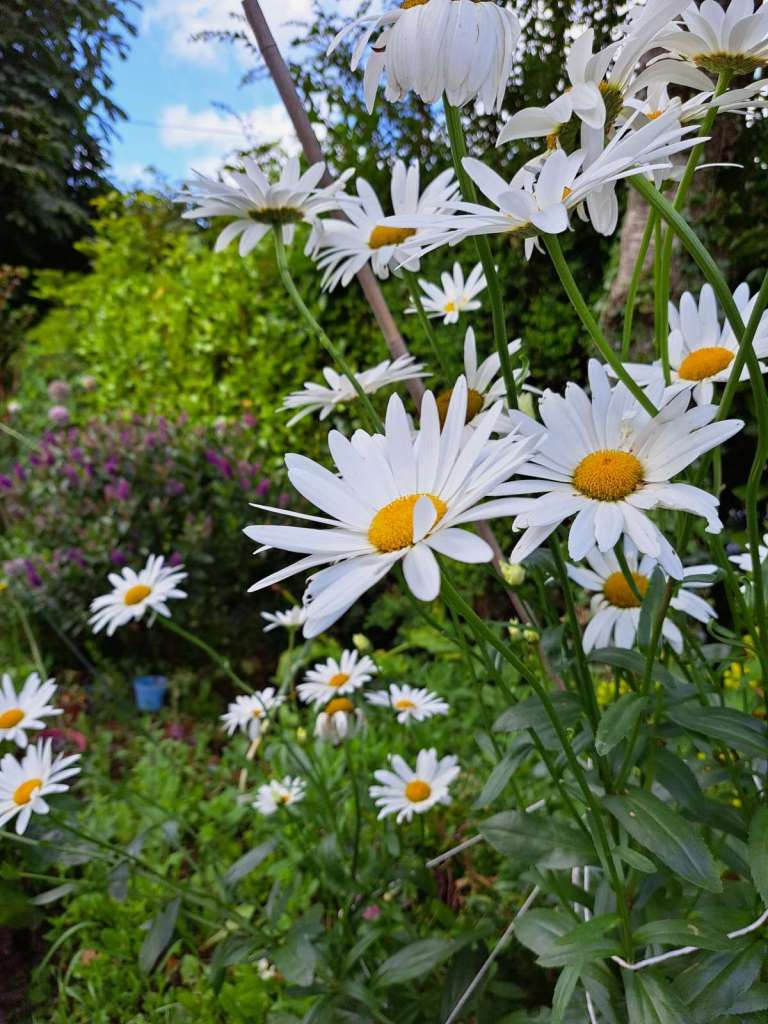
All the same there are lovely surprises to be discovered among all this wild growth. The most beautifully coloured hydrangeas have not been affected by the wet weather, whereas the lavender this summer disappeared rather too fast, they got destroyed. The shasta daisies held out beautifully despite all the wind, I did tie them to bamboo sticks though.
The lush growth is itself really lovely to experience and I’ve learnt to embrace it and not worry about the neatness that most of us expect in our gardens. I’ve learnt that such wilderness is very beneficial for our pollinators which at present is so important, I’m happy to say that our garden was absolutely brimming with all sorts of insects and butterflies during the past summery days.
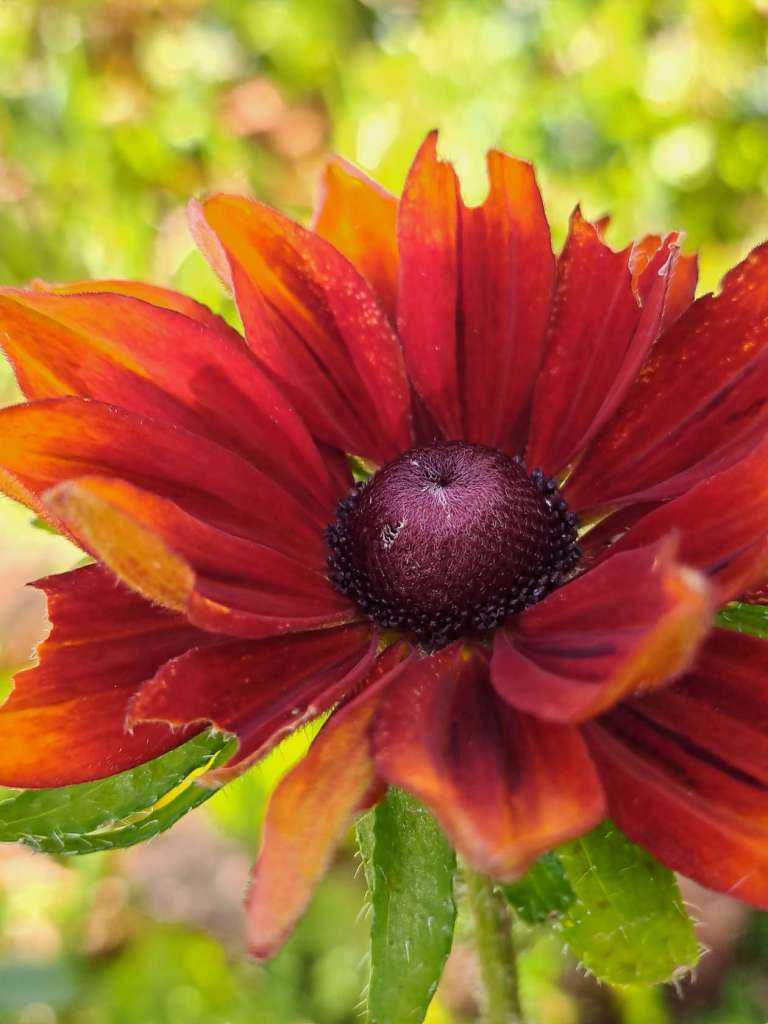
Of all the flowers that I sowed the lobelias did best of all and are still in full bloom. Some of the self seeding flowers like the marigolds also did well. And I’ve got rudbeckias coming on. First year using a small greenhouse and I have found it very beneficial for all sorts of plants and seedlings. The tomato plants did not do well despite looking up information and trying to follow it, they became affected with some sort of fungus and I have no harvest. The potatoes on the other hand did fantastically well, we are still eating them.
First time growing gladioli, I find them such majestic flowers, and the colours are wonderful! Seeing that it’s becoming late summer, I’ve been drying several different herbs and saving lots of seeds.
I took a soil sample and tested for pH, I’m pleased that it is 7.0 to 7.5 which is ideal for growing vegetables and flowers alike. Though I did nothing to the soil around our hydrangeas the colours are changing, more purple and deep red which I love. I’ve also looked up our regional growing zone and see that it is 9a, it is always good to know what zone one is in, especially when planning new purchases.
Somewhere in the dark back of this last photo is our back gate… it’s not surprising then that my most urgent job tomorrow will be to cut down some of this elderberry tree at the very back of the garden, we cannot get to the gate anymore because of growth! I was hoping to save some of the berries but will have to cut some down before they are ripe. That area is also full of montbretias which of course are very good at self propagation. I love to see these grow for their bright orange colour and fresh green leaves, and they are so easy and hardy, totally taking care of themselves. For the next week or so I’ll also be planting out some leeks, kale, kohl rabi, and celery, but first I’ll have to make space for them.
Here in West Cork it is 16 degrees Celsius at present, and raining, no sun. I hope that wherever you are the weather is bearable and good for your gardens and your health.
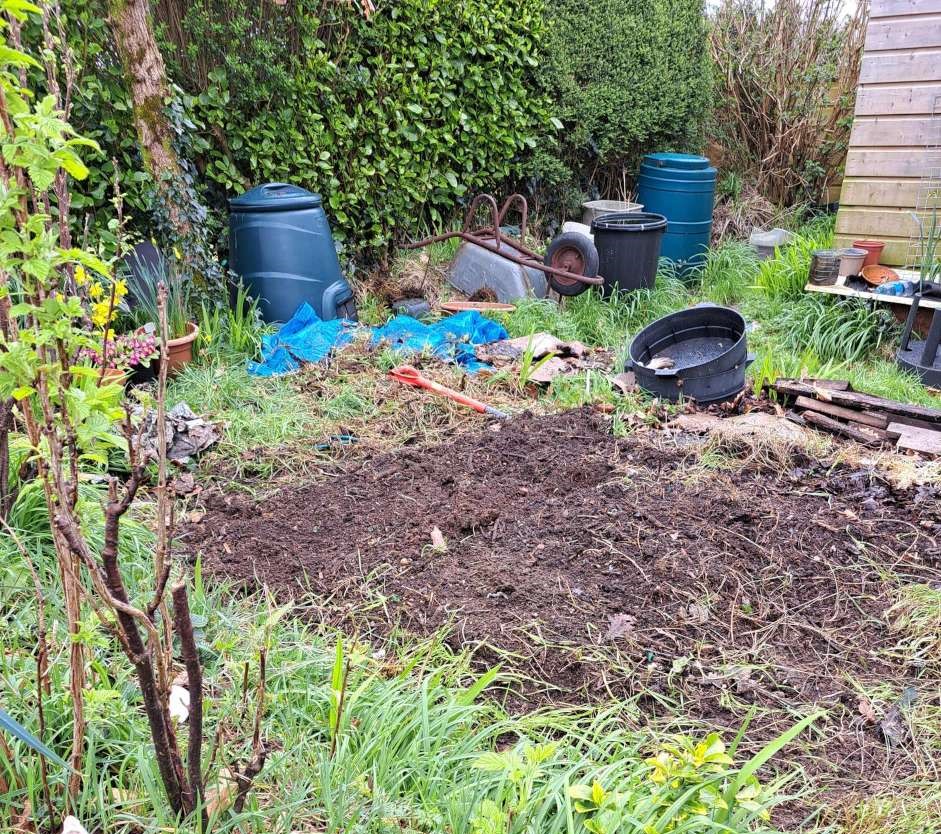
It is nearing the end of March and though the weather is still quite wet, it is time to put some of the plans that I have made for the garden into action. The frost is gone and the temperature is now around 18 degrees. The soil temperature was 11 degrees Celsius today. However, the soil is still very wet. I’ve been working at the back of the garden taking roots out of the soil, roots from ivy, black currant, and nettles from a patch where I want to grow our potatoes this season. It’s hard but rewarding work and I just love working with the soil, feeling it and finding little creatures in it, even the colours of different soil is interesting. The plot that I’m currently working in has always been used to dispose of organic matter, and it has benefited this soil very much, its colour is more brown than the surrounding black. Originally our soil was mostly clay but over the years I’ve been changing it to loam by using lots of composted garden and kitchen refuse. So anyway, my plans for this year include introducing some of my favourite perennials and annuals, some of these I will be sowing and some I am buying. We do have two excellent garden centres here in the town, I can get anything I want. Talking about anything I want… one of my dearest wishes for many years is to get a small green house, think of what I could grow off season…
This is only the start of getting the plot ready, lots more work to be done.
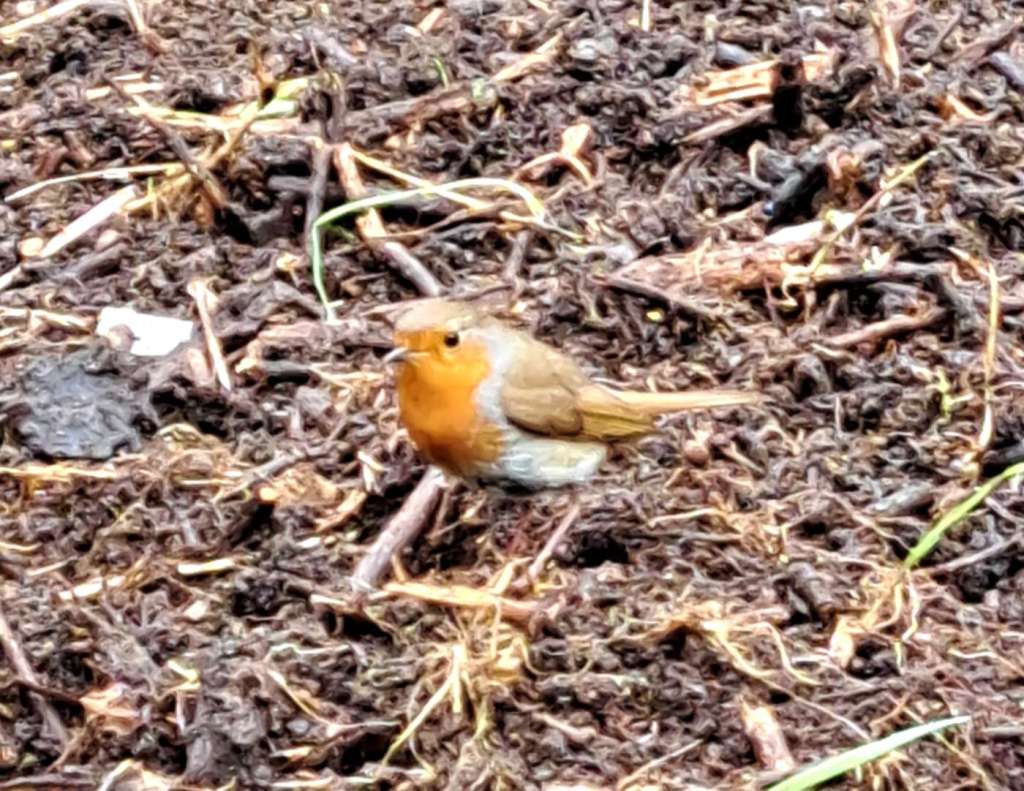
During the winter I covered the patch that I planned to use for the potatoes with canvas, it did make a difference when I uncovered it yesterday, a lot of the grass had wilted. Two robins where looking for grubs in the newly disturbed soil, they are so lovely and not a bit afraid of us humans.
Some of the vegetables that are currently growing still and ready for eating.
And some of the flowers that are heralding spring, they seem to brave the wind and rain so easily!
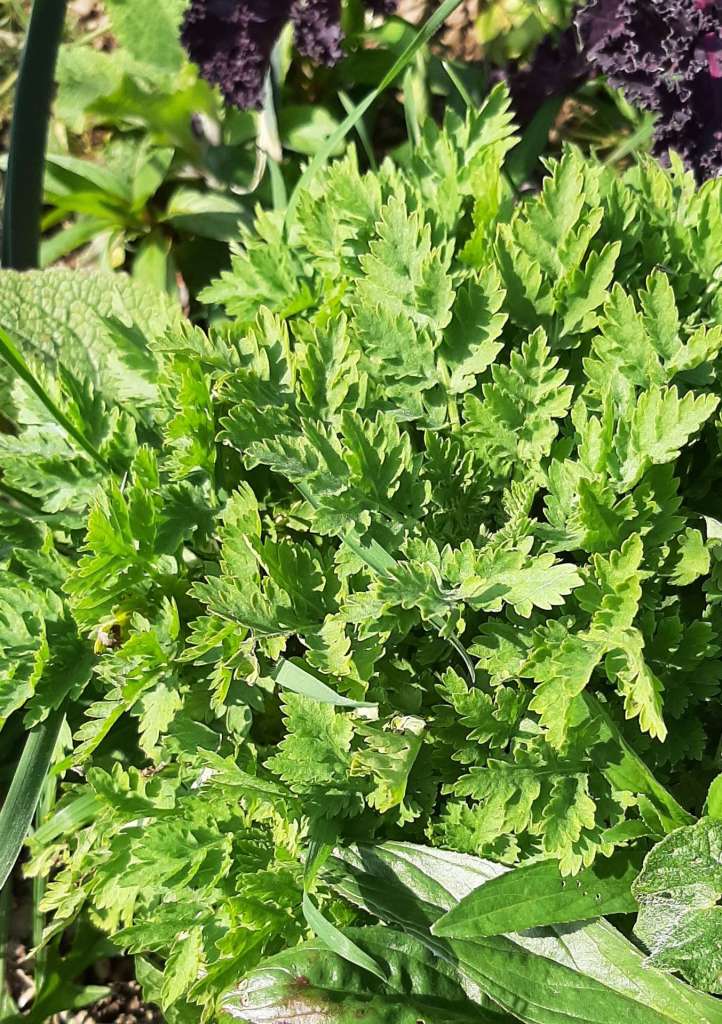
FeverfewDandelionNettle and CleaversWild violets and ramsoneBorage
And these above are some of my more wild plants which I treasure too, some for cooking, and some for the enjoyment of the flowers when they show later in the summer. They all grow so easy and start to grow very early in the year, such a joy, so green and healthy looking. In fact most of these plants overwinter here as the climate is mild, we did get some frost, even a little snow, but mostly temperatures are a few degrees above zero during the night and in the day they vary between 8 and 10 Celcius.
During the past three years I’ve added several shrubs to my collection, and this year I’m thinking of buying a Mahony shrub, I see them growing in tubs around the town and love them. Their honey scented yellow flowers are beautiful and also flowering early in the year. The leaves turn a lovely colour in autumn. Inside I’m starting a Ribes plant from a cutting, and I’ve got a Skimmia sapling still sitting on the kitchen window-sill ready to plant out soon, it is a male plant so I will be looking for a female to join it, it is the female plant that develops the deep red berries. I have sweet pea seedlings on my bedroom window-sill, a bit too soon those plant out. It’s time to sow a selection of summer flowering annuals inside, but the marigolds I’ll be sowing outside during the next week, they thrive very well in our garden. I’m also setting a myriad of gladiola bulbs.
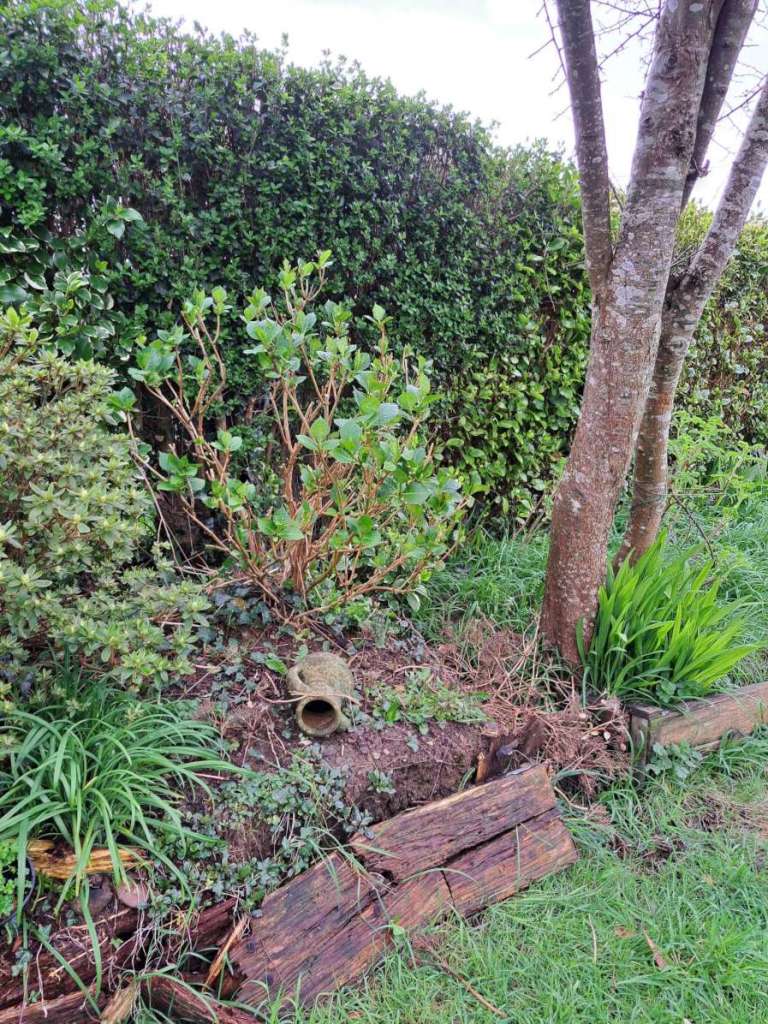
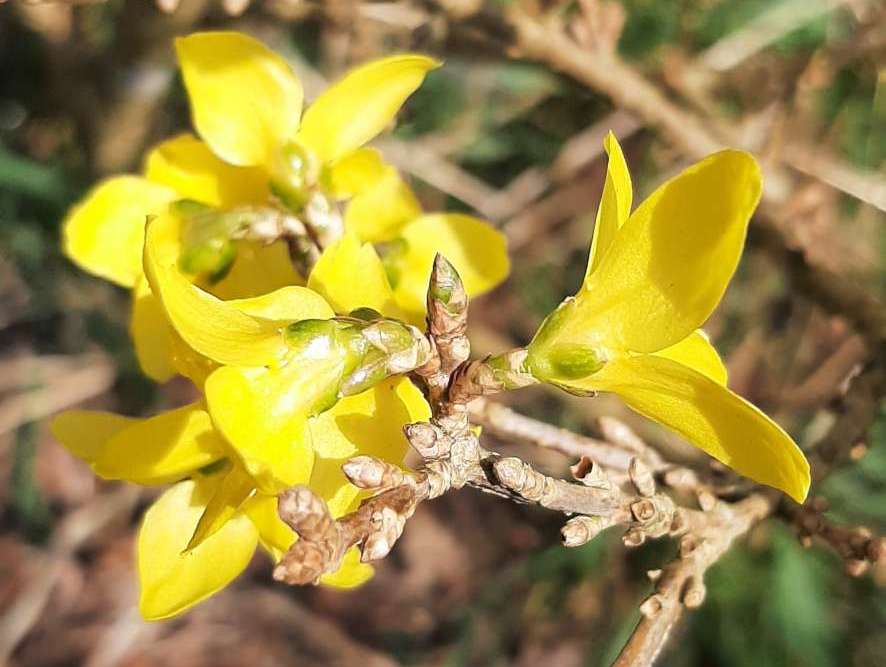
Rose grow real well hereHydrangea ready for the seasonTiny solitary beeMy plan for 2023While digging I disturbed this centipedeYears ago I planted this Forsythia so that we would have some colour early in spring, this year is the first time that it blooms so lovely!
I am not your regular gardener, though I love the physical work that gardening involves, mostly I like to experiment and I like to see what comes growing into my garden without me planting it, I like the element of surprise and discovery. I like taking note of what my soil needs and so testing the soil, taking its temperature, making note of how much light a certain plot receives, how acid the soil is, and much more. I also like to propagate plants, grow from cuttings etc… It’s something I’ve done all my life. And I like to provide fresh vegetables for my family… well, my husband and myself that is, I love cooking with fresh produce that I’ve just plucked from the garden whether it’s wild or cultivated, a combination is great. Right now the wild plants that are plentiful are three cornered leeks, succulent tops of cleavers, young dandelion leaves and tender nettle leaves. The earth gives abundantly!
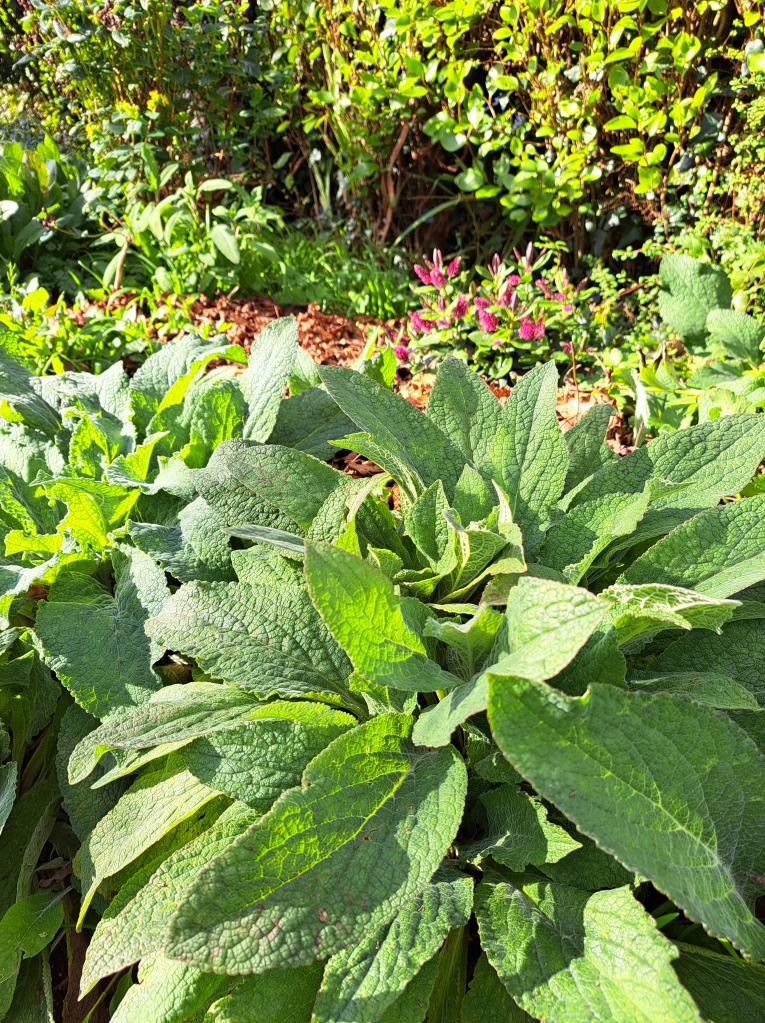
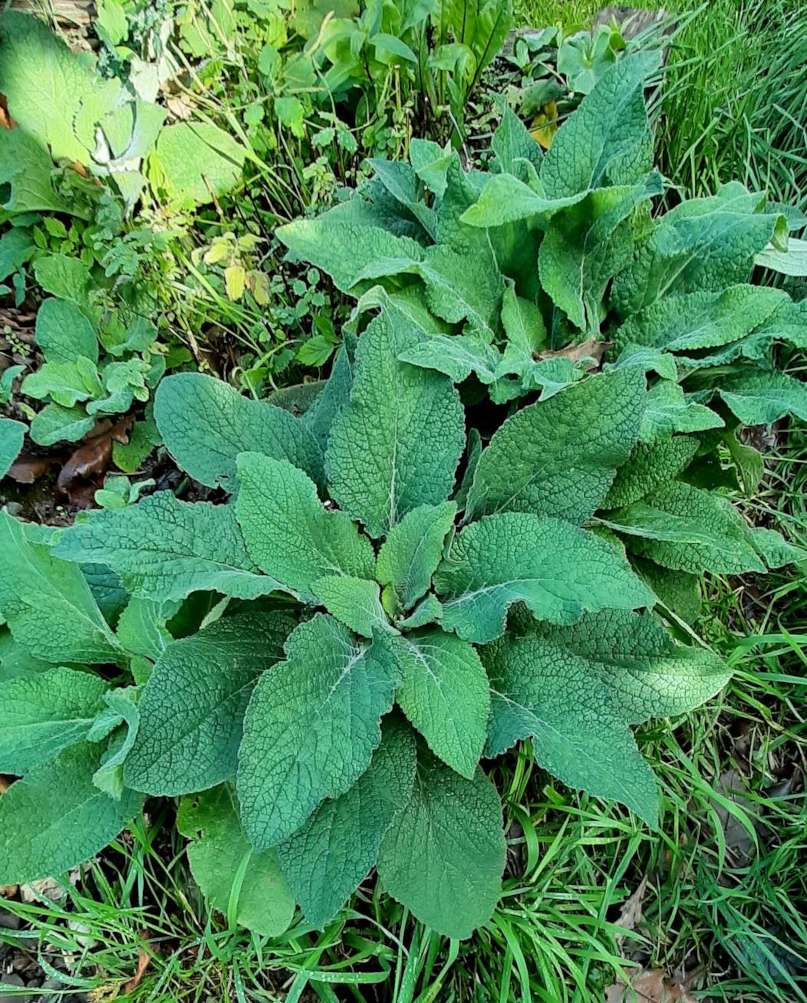
It’s that time of year when work starts seriously in our gardens. But the first outdoor job for me is to walk among my plants, see what is growing, analyse and decide what to leave and what to move or remove. And that’s what I have been doing during the week. Lots of delightful discoveries came my way. Many self-seeding plants had already come up during last autumn and survived our mild winter, others are still only appearing, delicately but vigorously. Foxgloves for example have self-seeded last autumn and have shown strong leaves even after the frosty nights. The garden is full of them, I’ve moved some of the young plants to other areas as they packed out the vegetable beds, but many I left where they came growing because of the beautiful natural arrangement they made. The base leaves of the foxgloves are very nice, very symmetrical, so satisfying for the eye. At this time of the year the leaves look fresh and vibrant.
BorageFeverfewFoxgloves
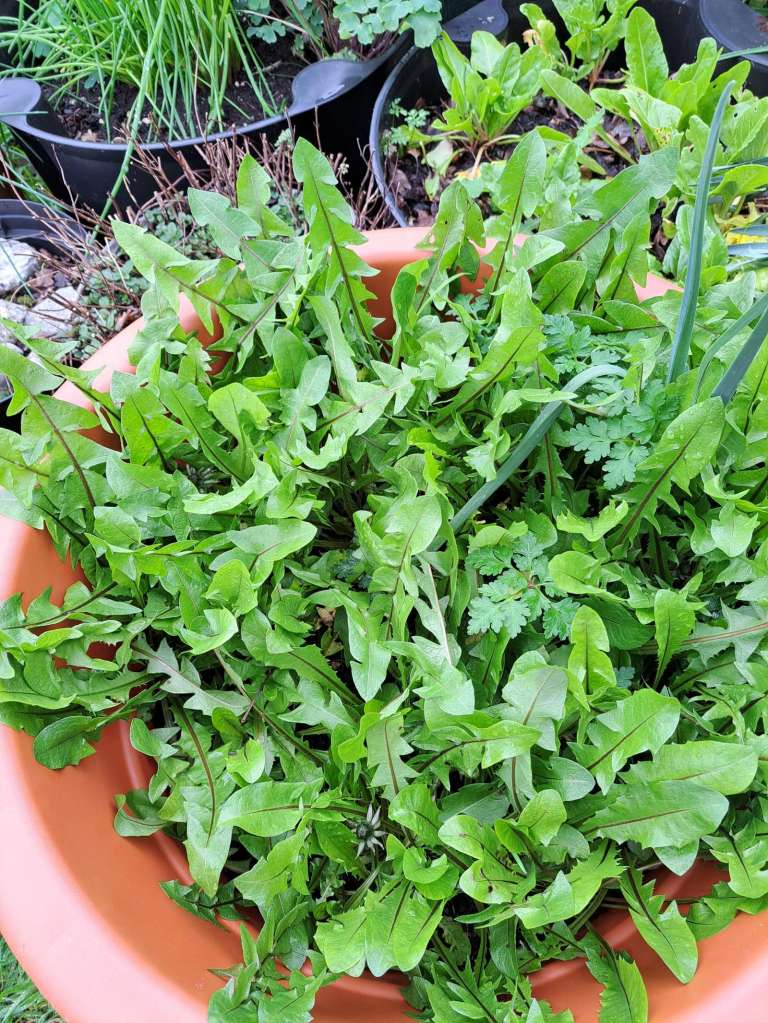
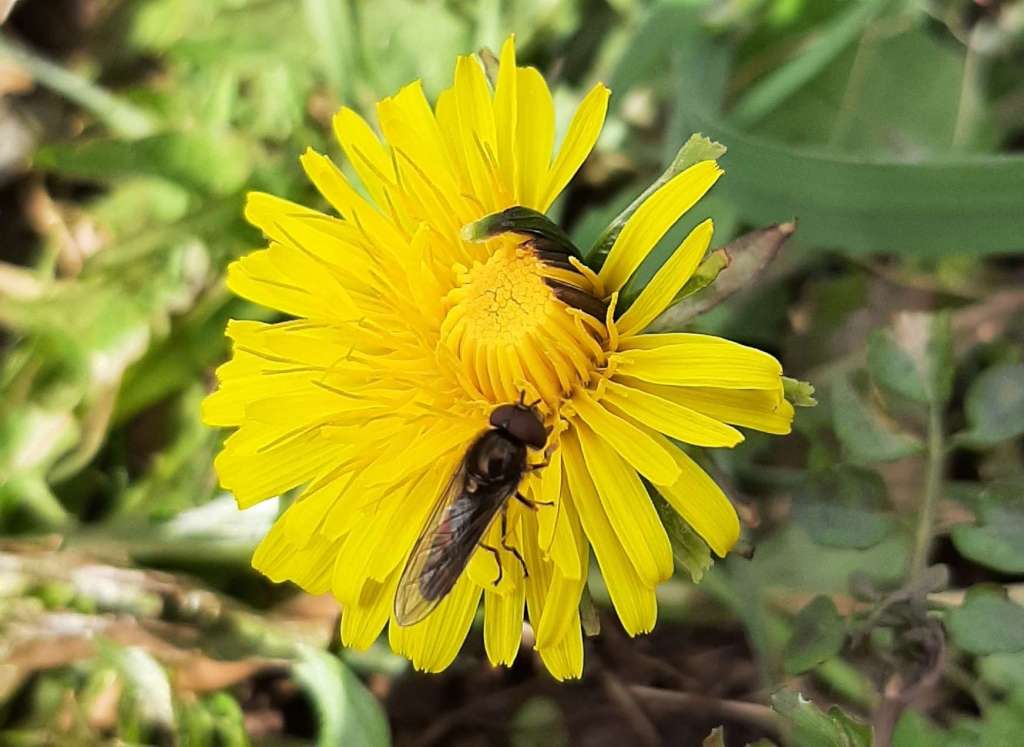
Three-cornered Leek is another wild plant that is flourishing right now, loads of it, and even while I use it in cooking, it has overgrown some of the vegetable beds so a decision has been made to eradicate a lot of it by pulling the little bulbs from the soil. Many Dandelions are now in flower and feeding the pollinators. Most of these bright yellow flowers will stay, some to be used in salads later. Young nettles are starting to make an appearance too, I picked some for tea, some I removed but others I will let grow as they are an amazing food filled with minerals both for humans and plants. Borage and Feverfew are growing nicely, and the comfrey (for compost) are all appearing healthy and robust, in fact the Borage is coming into flower already.
Early dandelionsThree-cornered-leeksKale and spinach
Most of my herbs are starting to look healthy but apart from Sage, Rosemary, Bay leaf and Mallow they are still to tender and young to use in the kitchen. My Lemon Verbena died during the winter, I should have grown this plant in a pot and taken it inside as it is not frost-proof, I now realise. It makes a wonderful tea so I will buy a new plant and pot it up.
CalendulaSage
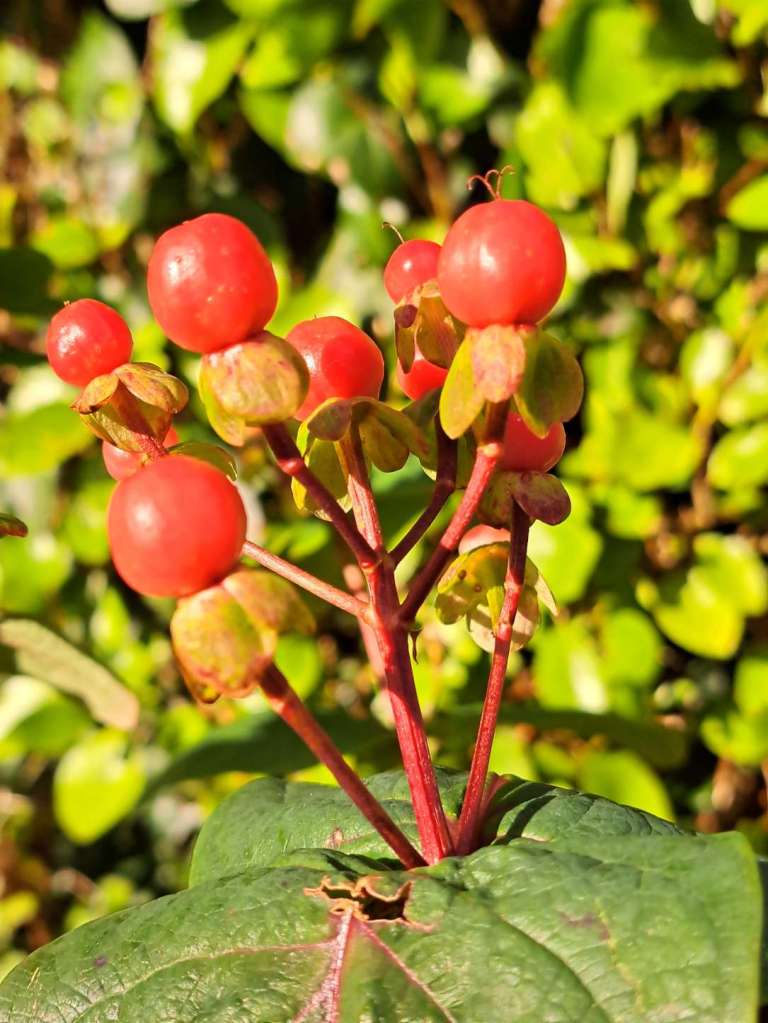
All the flowering shrubs are starting to look more vibrant now, some, like the white Azalea, the Daphne, and the Californian Lilac are already in bud and the Viburnum is fully in flower and spreading its scent over the patio, wonderful! I was looking for signs of the Houttuynia but could not see any yet. The Hypericum on the other hand is showing strong signs of life and even the Spiraea is carefully starting to show some leaves. Our Forsythia is finally giving us some lovely flowers but our Camellia has not flowered for several years, it needs attention. Then there are the perennials some of which I bought, some I sowed last year. Here Erysimum is a wonderful plant, it has been flowering from early spring last year until well in the winter and already it has started to flower again. I think we used to call this plant a wallflower. The small blue flowers of the Lithodora have flowered most of the winter, this is a wonderful border perennial. Marigolds are self-seeded in our garden and are always around, I use the petals and I love their bright and cheerful colours. I also found quite a few young Herb Robin and Willow herb plants, some of those I leave as they are rather nice and very good for the pollinators. One of the plants in our garden that attracts most pollinators, bees, bumblebees, hoverflies and others is the white little flower of the oregano plant. Different spring bulbs are flowering too giving plenty of cheer in the awakening garden.
LithordoraErysimumViburnumOur white flowering AzaleaSome rotting wood for the insects
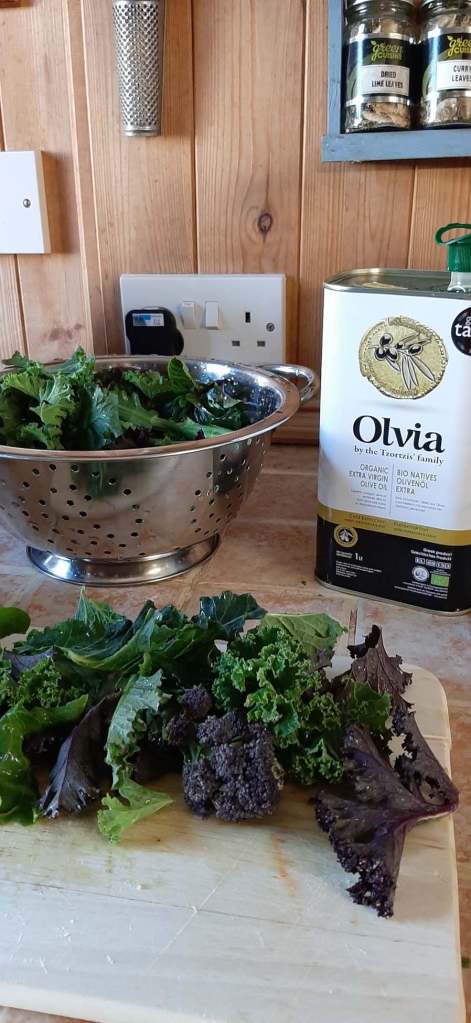
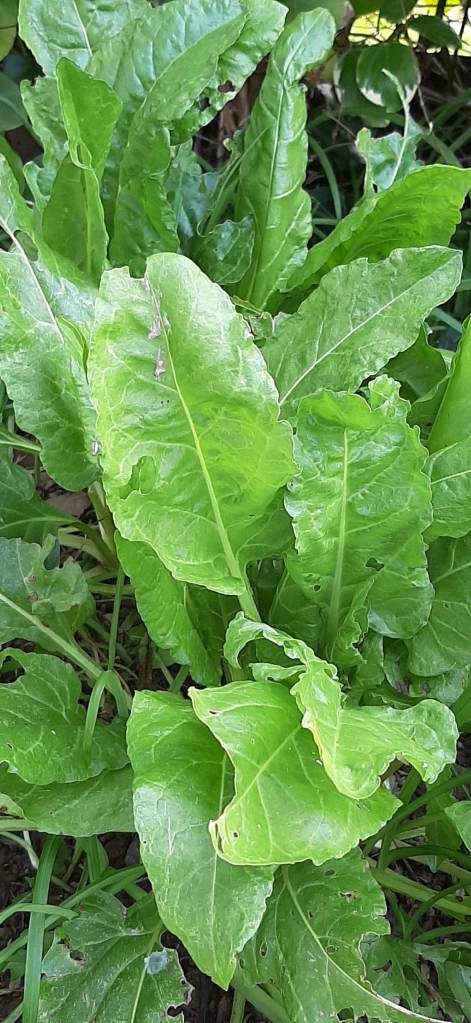
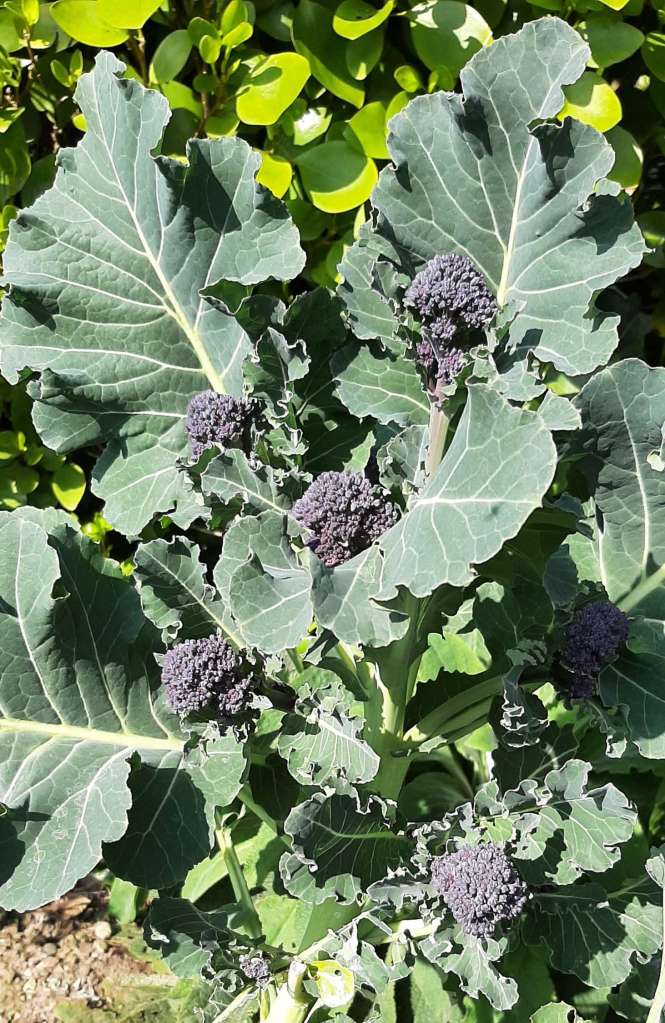
And among all these there are still last autumn’s Leeks, Kale, Broccoli and Spinach to be found, we are eating from those.
She-shedSpinachLeeksBroccoli
Now it is a case of finding space for our potatoes which are presently chitting inside. Other vegetables have been sown and are sprouting well. The abundance of plants, wild and cultured is welcome and amazing, and lording it over it all our Hawthorn, Birch, Chestnut and Oak trees are filled with the sound of finches, sparrows, black birds, a wren, a robin and a dunnock singing, chattering and mate calling… our wild garden… it is a wonderful place to work in or sit with a cup of tea taking a rest, admiring all this growth.
Our potatoes chittingCaterpillar of cabbage white butterflyNice finds in the undergrowth
No matter how small, our gardens can be an oasis of rest and replenishment of our energy, and giving us solace for our souls.
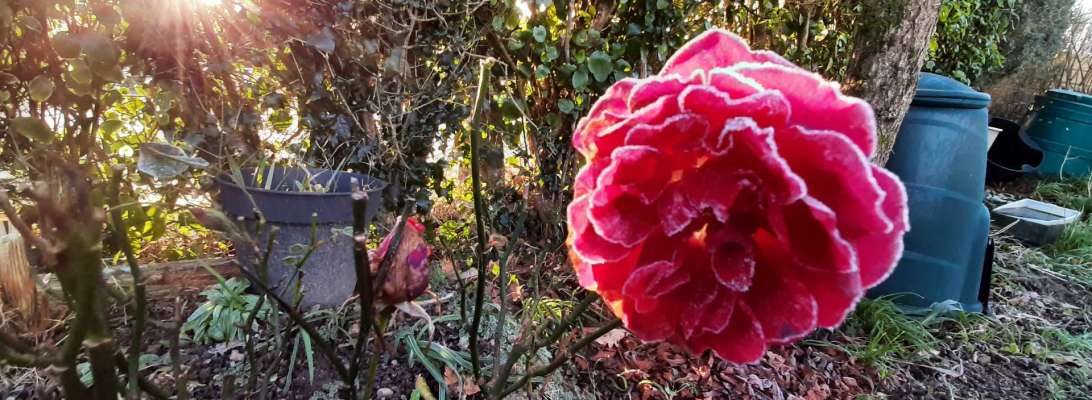
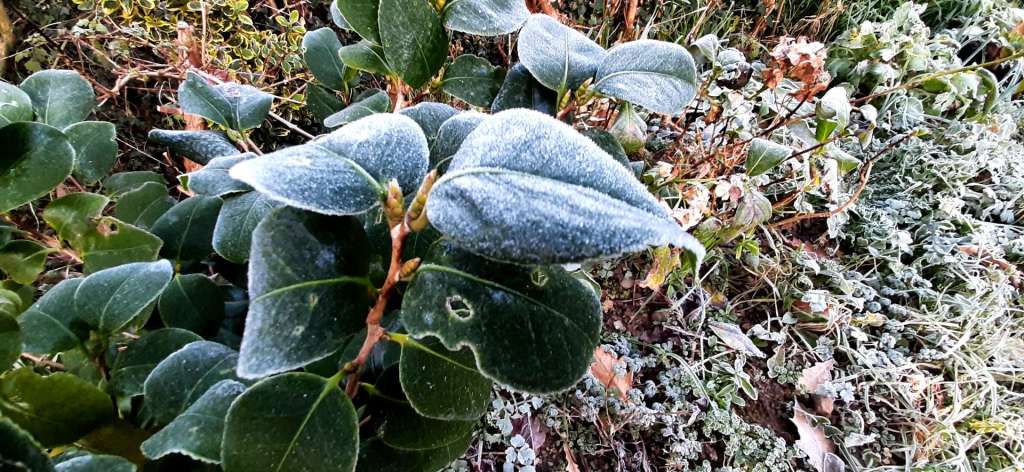
Early one morning about a week ago there had been a night frost. Everything in the garden looked sugar-coated until the first rays of the sun touched the plants. I took my chance to go out and enjoy all the beauty while shooting some pictures to share here, an enjoyable activity first thing in the day ! We have had a few small roses flowering since summer, this bush was a potted plant we received as a gift and I eventually transplanted it into the garden. It is doing very well. The young camellia bush does not seem to have large buds yet, but then it is only January. It only gave us one flower last year so I am hoping that in another few weeks we will get a nice display.
Young Camellia plant
The morning sun is already peeking through the hedge
A good supply of fresh dandelion leaves has been growing all winter, they are getting ready for our salad bowl!The hydrangea flowers never cease to give plenty of pleasure. They will soon be ready for pruning
Morning sun lighting up the background of these young foxgloves plants
Huge garlic plantsDeepfrozen three-cornered-leeksAs the sun melts the frost, the consistency of the ice changesEarly sunshine, like evening sun, has this special quality I always think and is more beautiful. And of course can look great in a photo.
Iced grass blades, and a look down the garden
Somewhere in the back of the garden I discovered this beautiful summer flower, still in full bloom and beautifully covered in crystals.
My thoughts at this time of the year turn to plans for next season’s growth, and this year I am going to revert back to what I did a few years ago – letting the wild plants do what they want to do – grow. I’ve made a list of over 38 herb and wild plants, some of which I use for food, that are growing now in our garden. And another list of a few that I need to buy at the market.
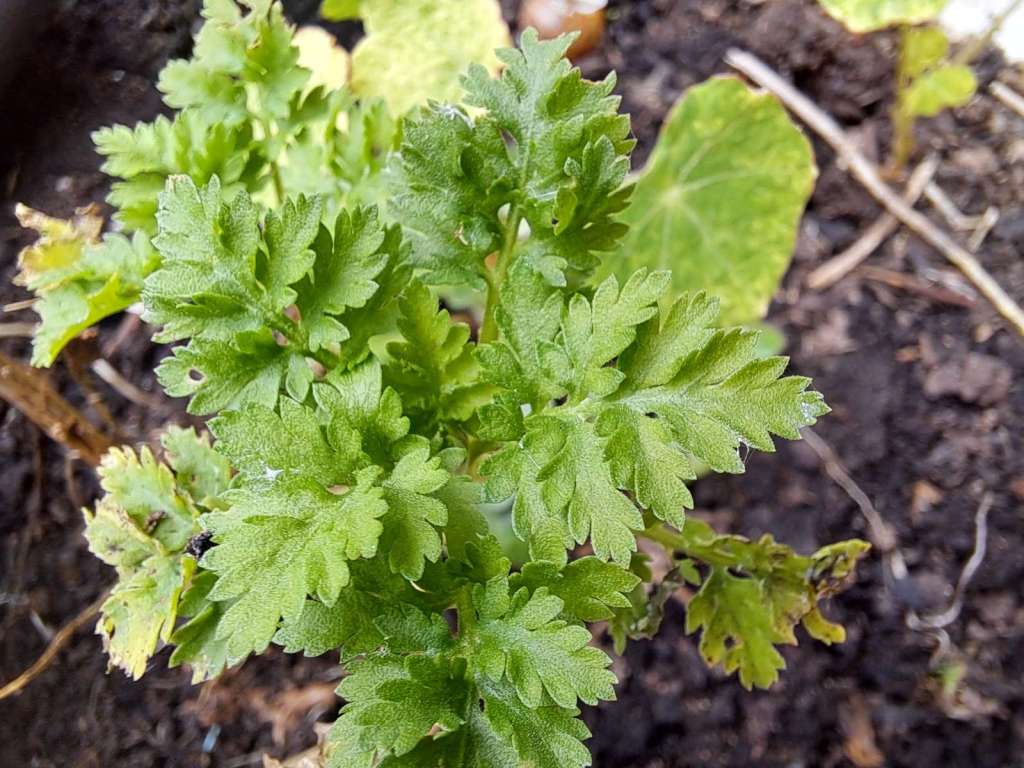
Plants already established are: Feverfew, Borage, Nettles, Mint (3 different types), Rosemary, Bay leaf, Lavender, Sage, Oregano, Thyme, Herb Robin, Dandelion, St. John’s wort, Lemon balm, Plantain, Sow-thistle, Tansy, Three-cornered-leeks, violet, comfrey, Lemon Verbena, Mallow, Rue, Cleavers, Wild Rose, Nasturtium, Willow herb, Calendula, Solidago, Shepherd’s Purse, Clover, Purple Loosestrife, Ivy, Dock, Mullein, Groundsel, and wild garlic. Quite a few of these self-seed every year, and some of course are perennials.
And those that I want to buy are: Yarrow, Fennel, Parsley and Evening primrose.
Most likely we will be seeing some of the larger purple Thistles which are good when they come into seed as they attract and feed Gold finches.
It is a time to get very excited about seeing all the wild plants and the herbs doing so well despite it being winter. I am looking forward very much to enjoying them all once spring starts, but for the moment I let them be dormant and let them enjoy their winter rest.
So how is your garden doing my dear readers? I will be most interested in reading your comments.




























































 agoyvaerts