A FINE HOSTEL IN WEST CORK

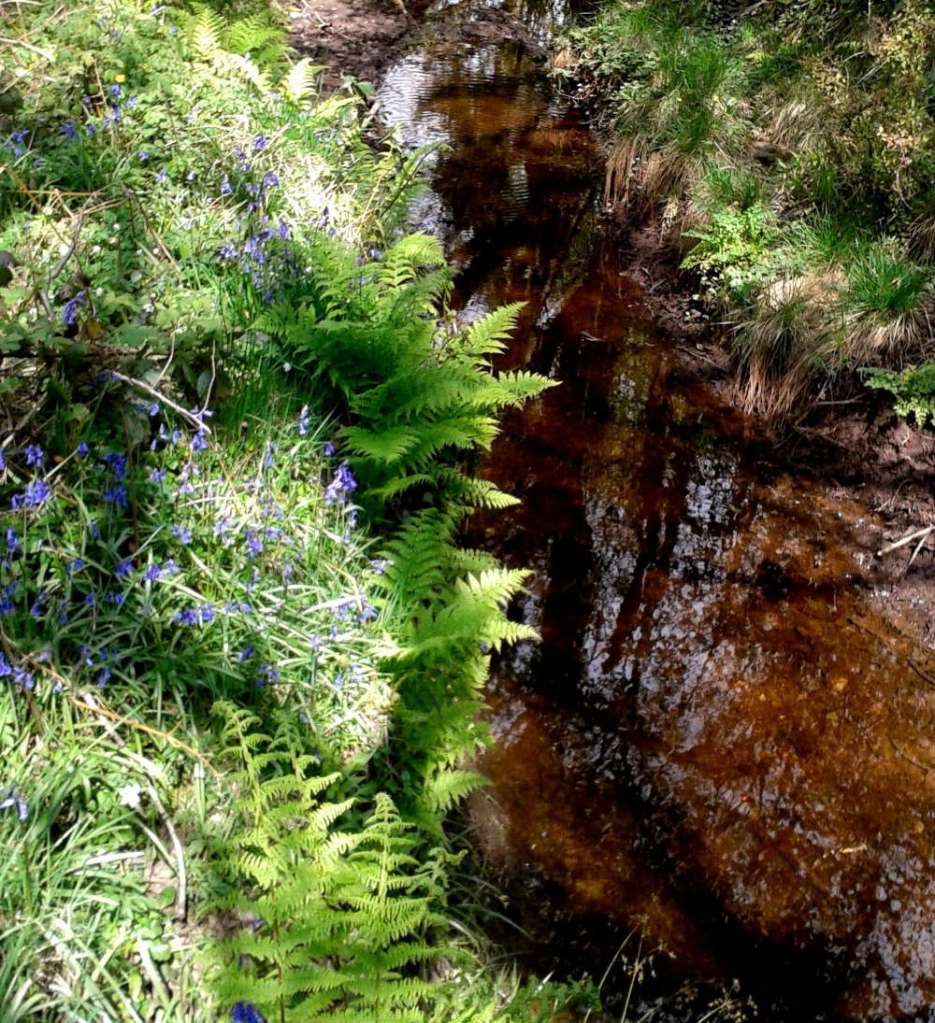
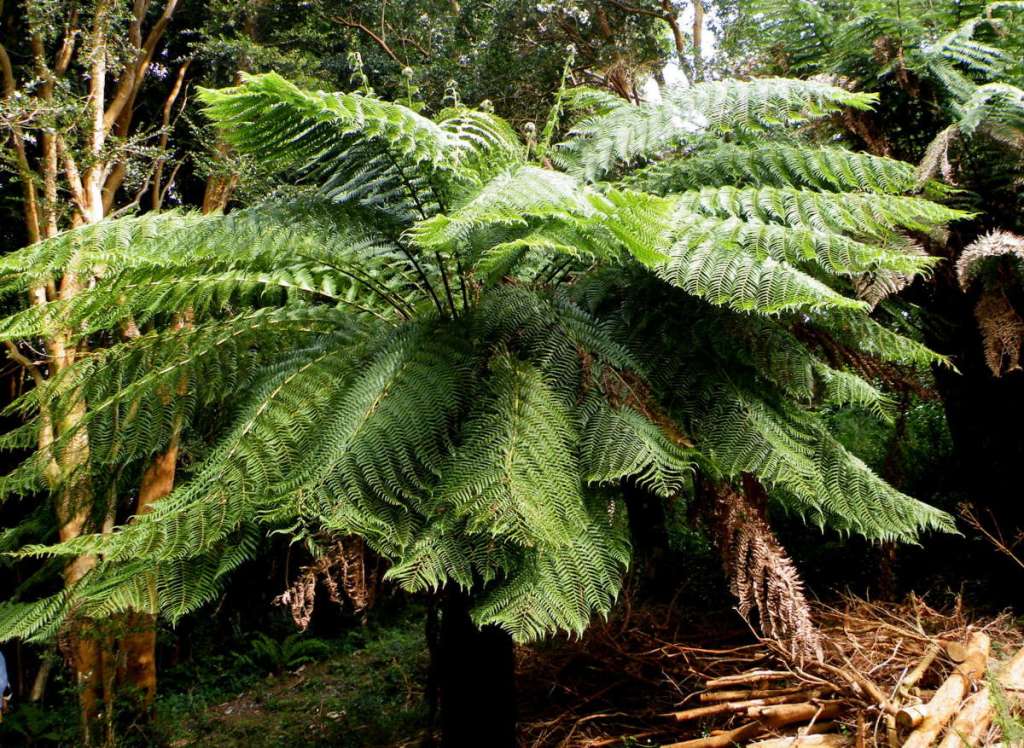
Some days ago I took the notion to spend a few days in Glengarriff in West Cork. Glengarriff is a peaceful village lying in a lush valley surrounded to the south and east by the Caha and Shehy mountain ranges and to the west by the Bantry Bay. Its climate is subtropical and this is seen in the lush plant growth, home to several rare plants and trees, like the Strawberry tree (Arbutus unedo) and the royal Fern (Osmunda regalis) for example. Close by are the Italian gardens, situated on a small island better known as Illnacullin island, a beautiful place to visit.

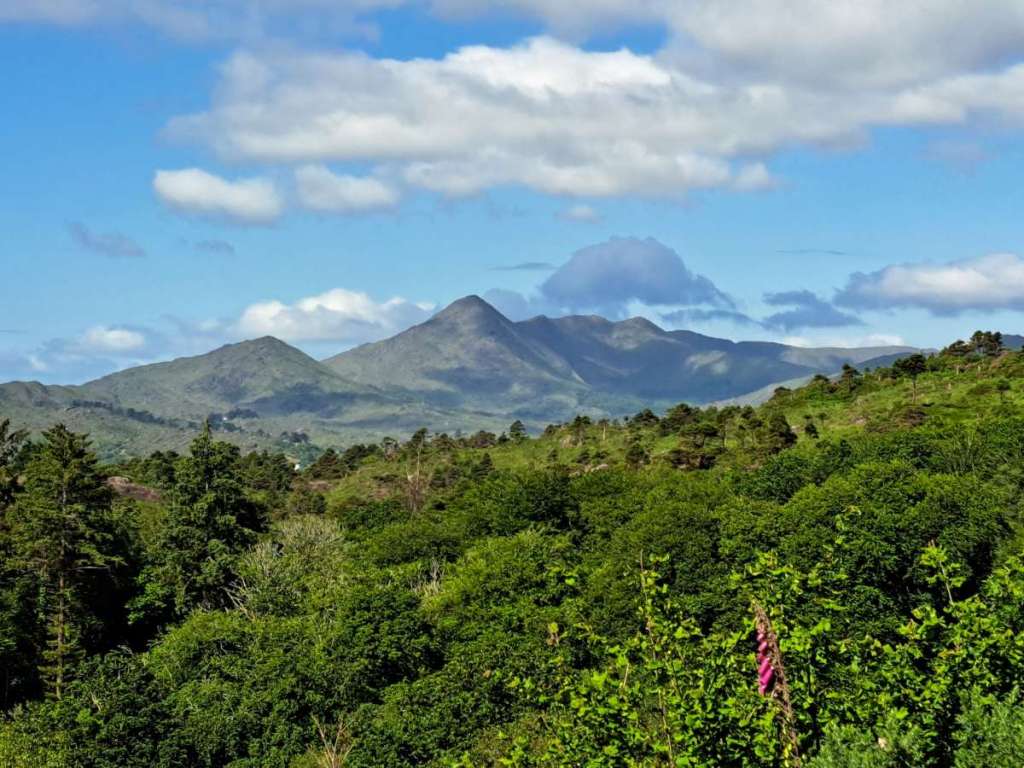
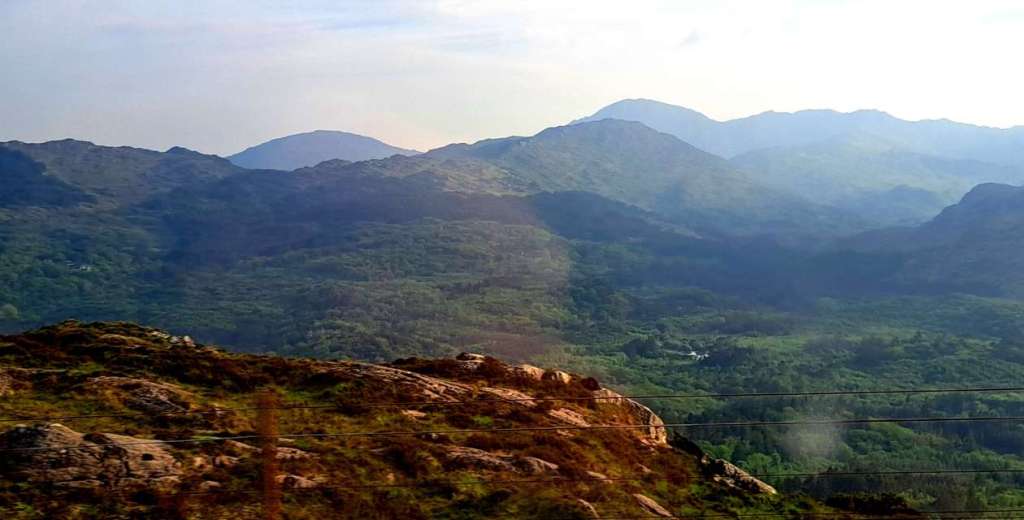
Sugar mountain and Shrone hill, part of the Caha mountains in which glacial valley Glengarriff lies.

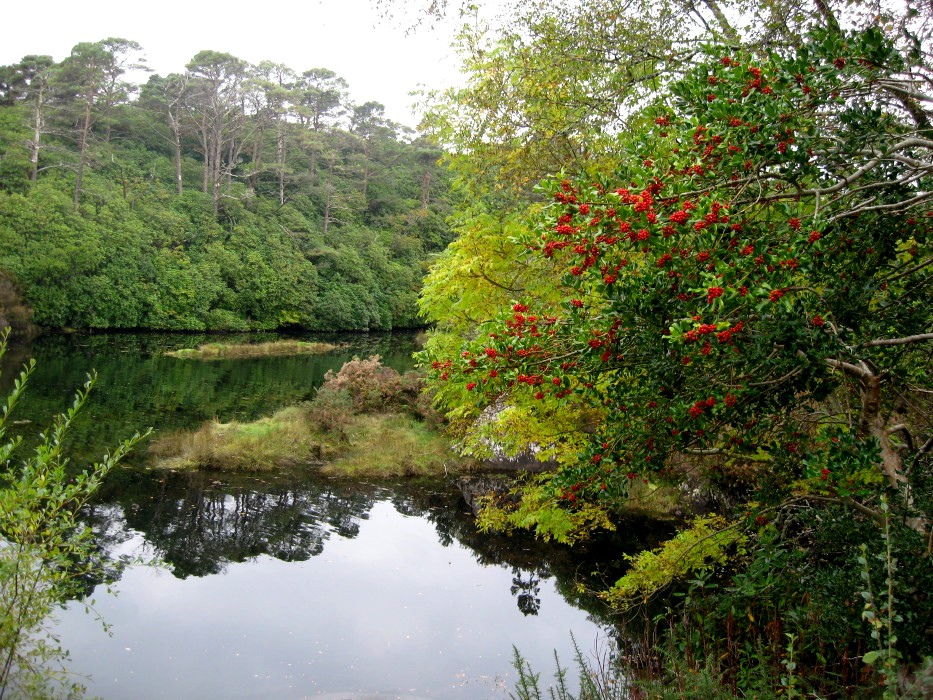
The Blue Pool, accessible right from the village

I think that most of all Glengarriff is a place where you can relax and unwind, but also a place where, in the village itself, people congregate in and outside of pubs and eateries, and so a lovely ambience resides. I often travel through this little village, I always stop to soak up what Glengarriff really is, a place of beauty, of peace. Even the scent is full of fragrance, the fragrance of fresh air, of oxygen. Very restorative!

Early spring in the village 2025

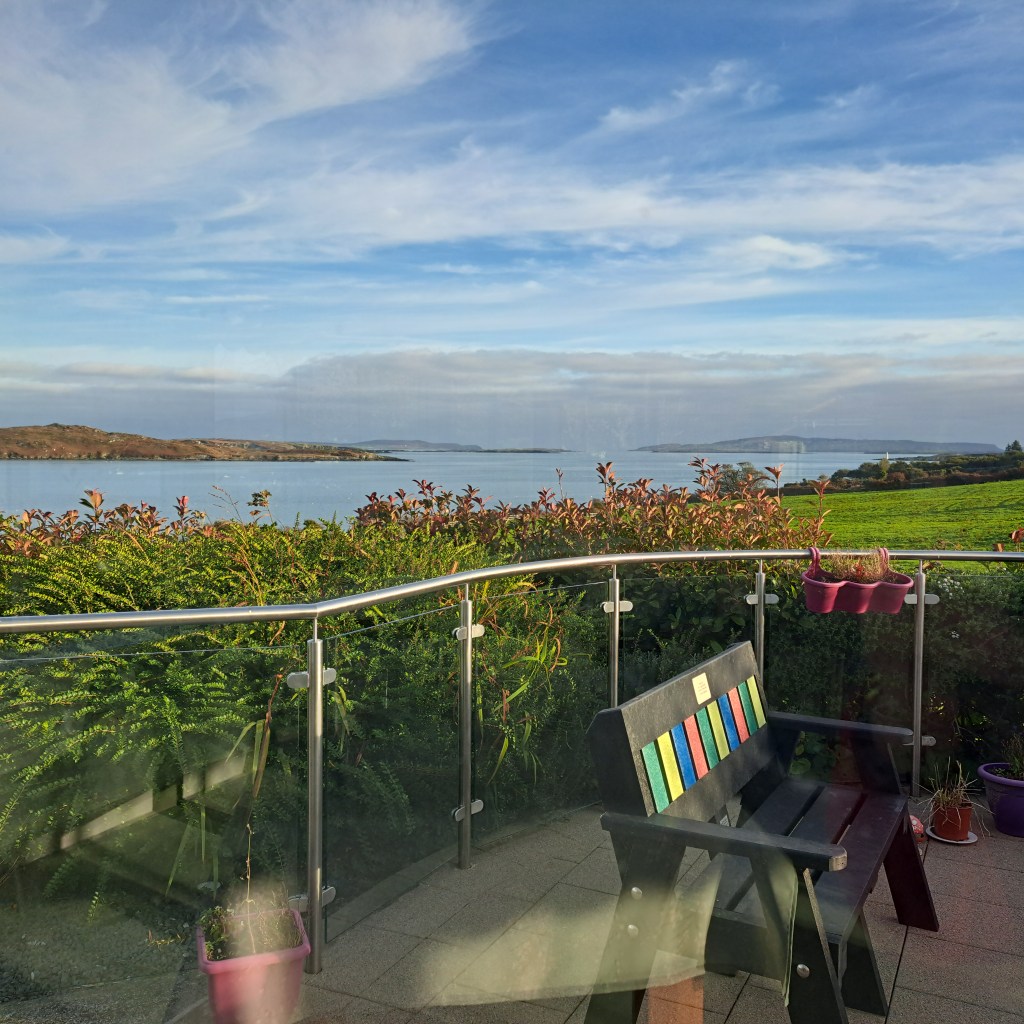
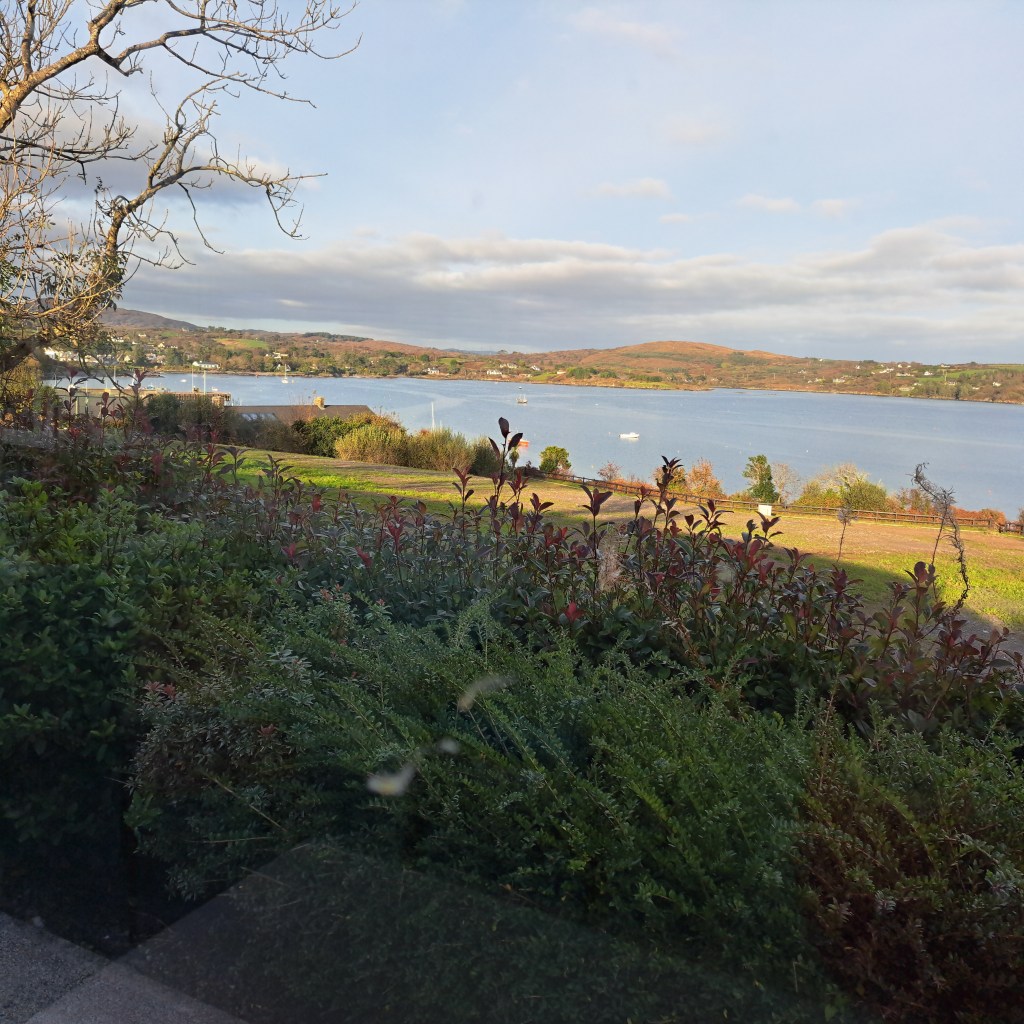
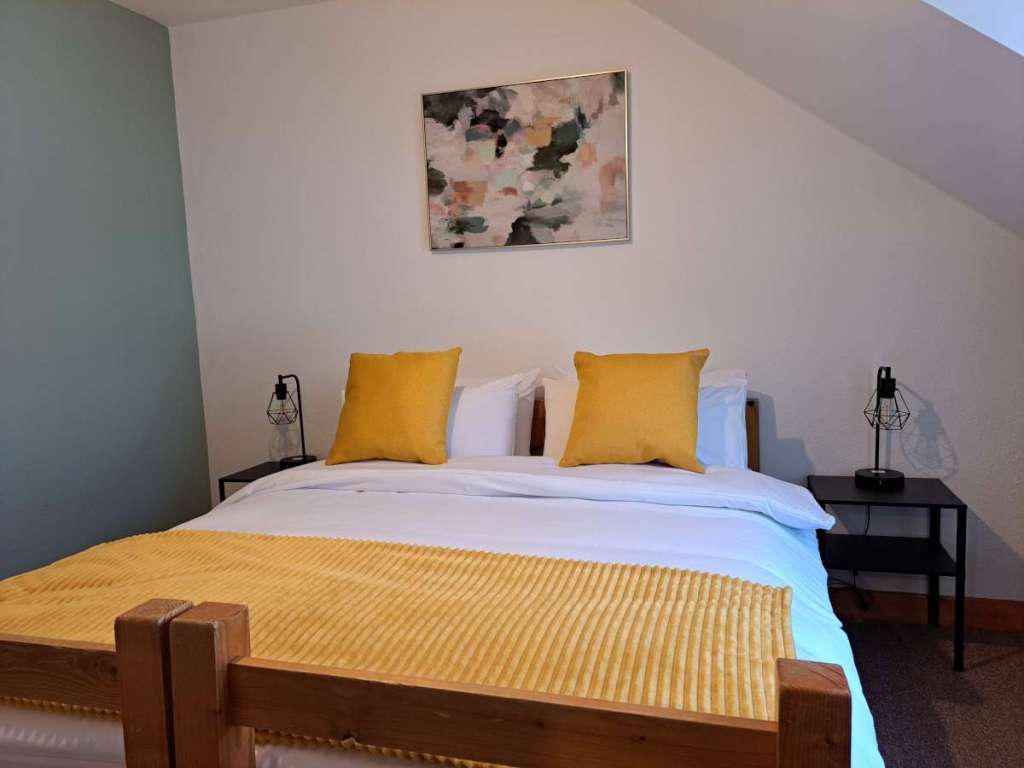
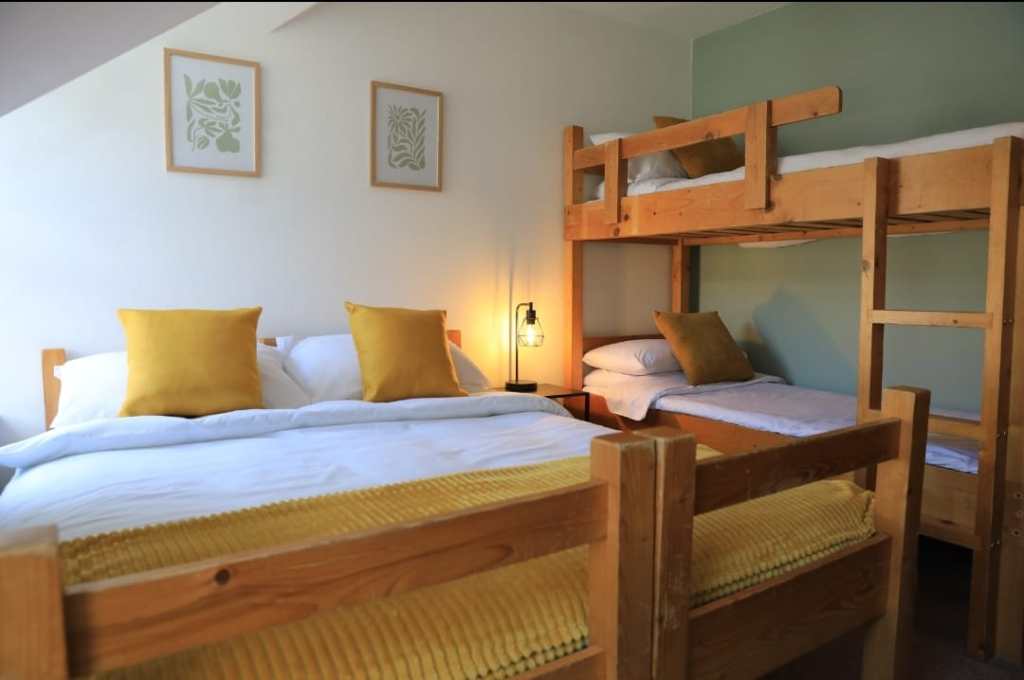
Why am I writing about Glengarriff? First of all I love the place and have spent time there, and secondly because of where I stayed. I like to put the Glengarriff Hostel on the map because it is an amazing place. I’ve always loved and travelled using hostels, and this is one of the best. What a nice way to travel and meet new places and people in a way that is adventurous and affordable. Glengarriff Hostel has a mixed dorm, a female dorm, family and private rooms. A comfortable sitting room and a great kitchen with a terrace looking out towards the Blue Pool and Shrone hill. Find out more on https://glenhostel.ie/

The Hostel with Shrone hill behind it

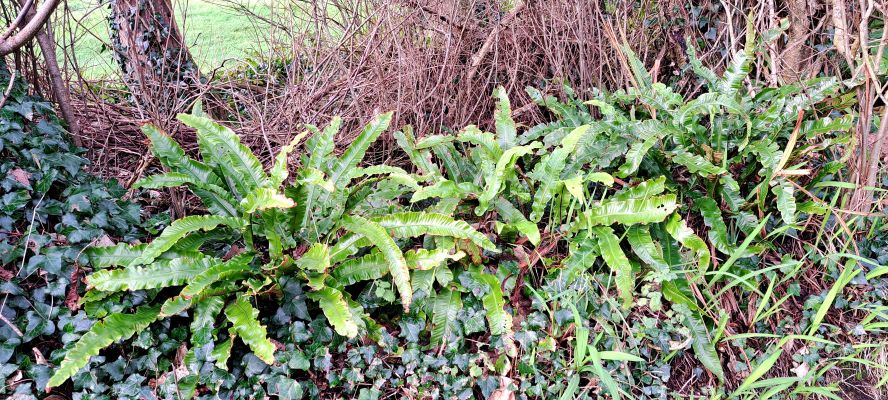
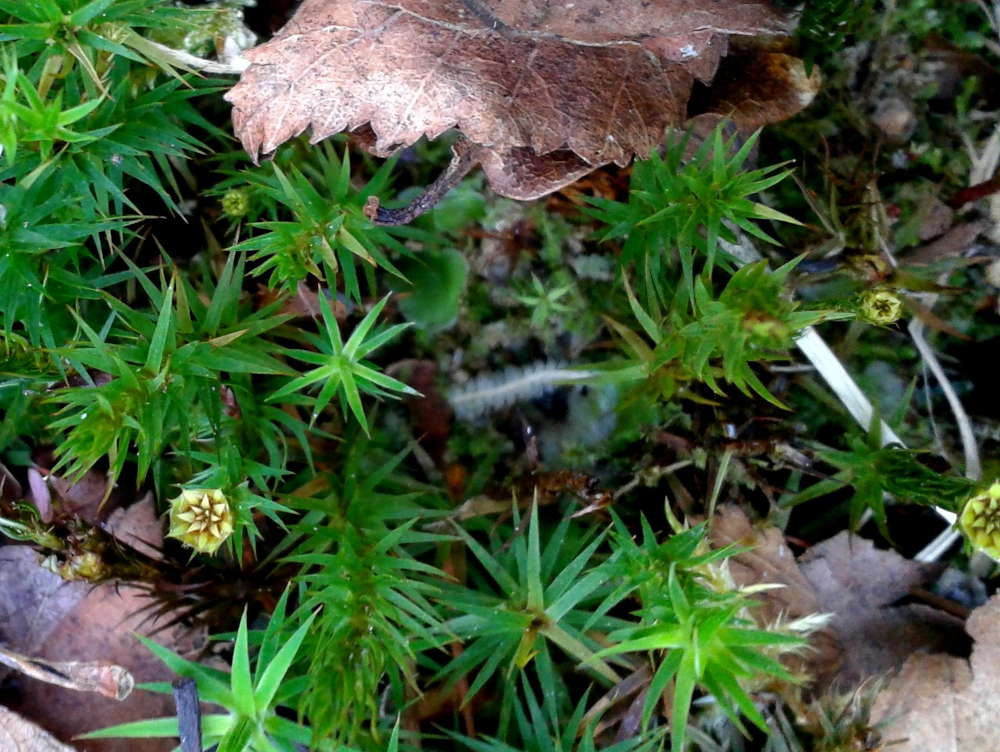
One of my favourite things about Glengarriff is the Nature Reserve which is just a stone’s throw away from the village on the Kenmare road. This is an original Oak forest, lined with pathways and walking trails, both long and short. Very interesting are the lichens, the mosses and the polypody ferns found here. The Glengarriff river runs through this forest. Both this reserve and the surrounding area is a wonderful place for hikers, hill walkers and for those interested in geology, botany and nature in general. People who like the sea can also live it up in Glengarriff, there are boat trips, fishing, and swimming.

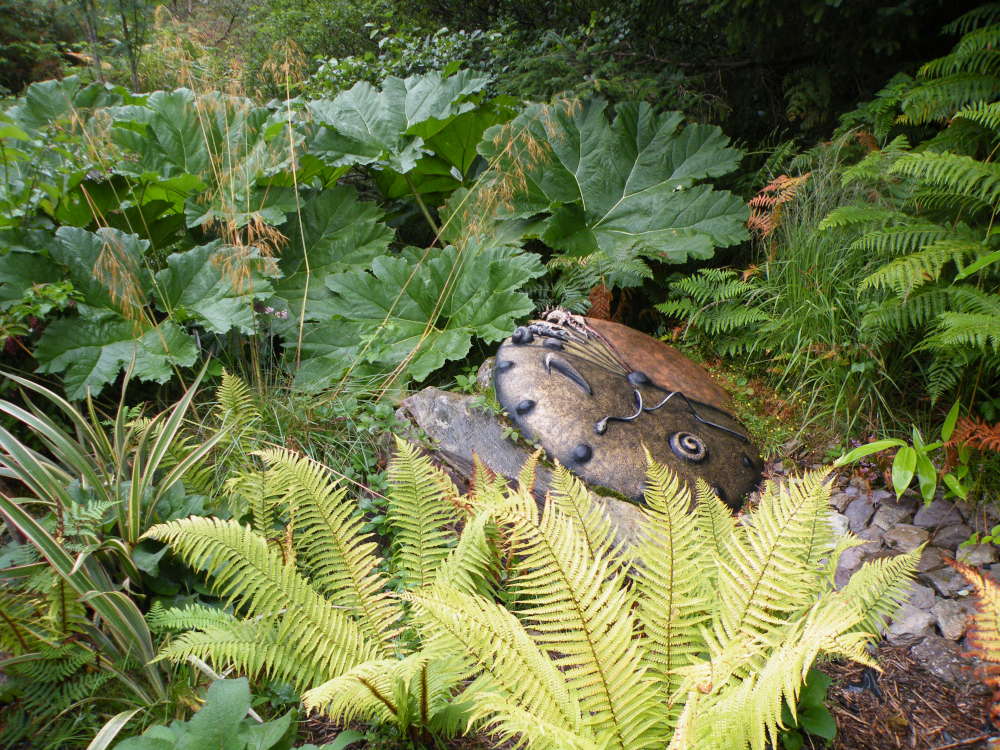
For the horticulturist there are several gardens to visit with interesting and sub-tropical species. Springing to mind are The Bamboo Gardens, The Ewe Experience, Garnish island. And Ardnatrush gardens which are my favourite, this is the garden developed by botanist Ellen Hutchins and where she did research into seaweeds among other things. Here are some photos I took there at my last visit.

Following is a link to a website about Ellen Hutchins:

And some links to other gardens in Glengarriff to visit.

https://bamboo-park.com/

https://www.theewe.com/

https://heritageireland.ie/places-to-visit/ilnacullin-garinish-island/

Glengarriff is easily reached by bus from Cork, via Bantry and from Killarney via Kenmare.

I’ve enjoyed looking up some websites for information, but basically I’m quite familiar with the gardens, the botany and the interesting things about Glengarriff. It is the place where in 1965 my family emigrated to from Antwerp in Belgium. Us eleven children have since dispersed all over Ireland and Belgium too, with a huge number of descendants.

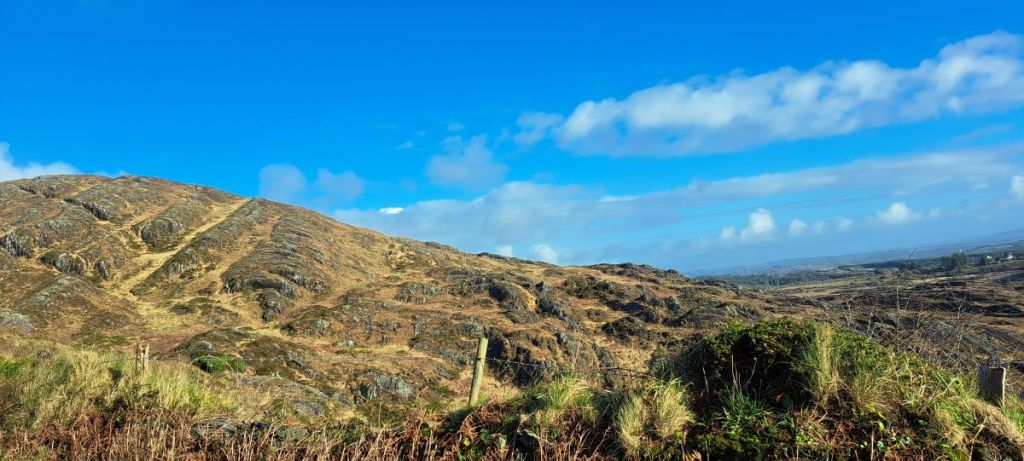
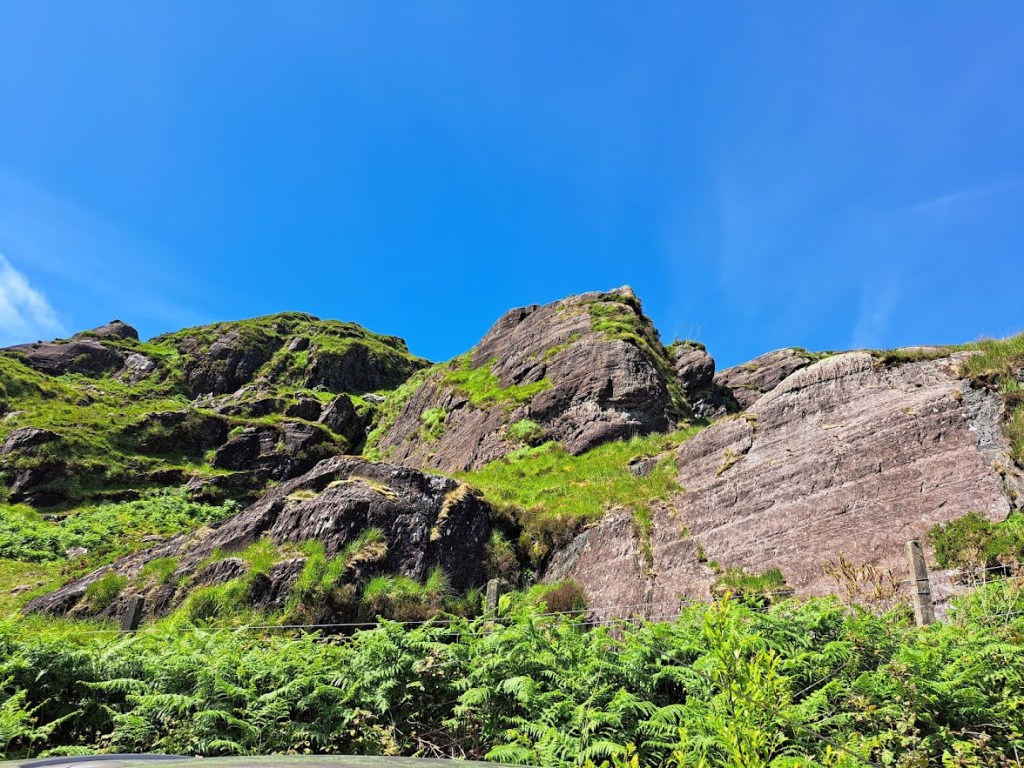
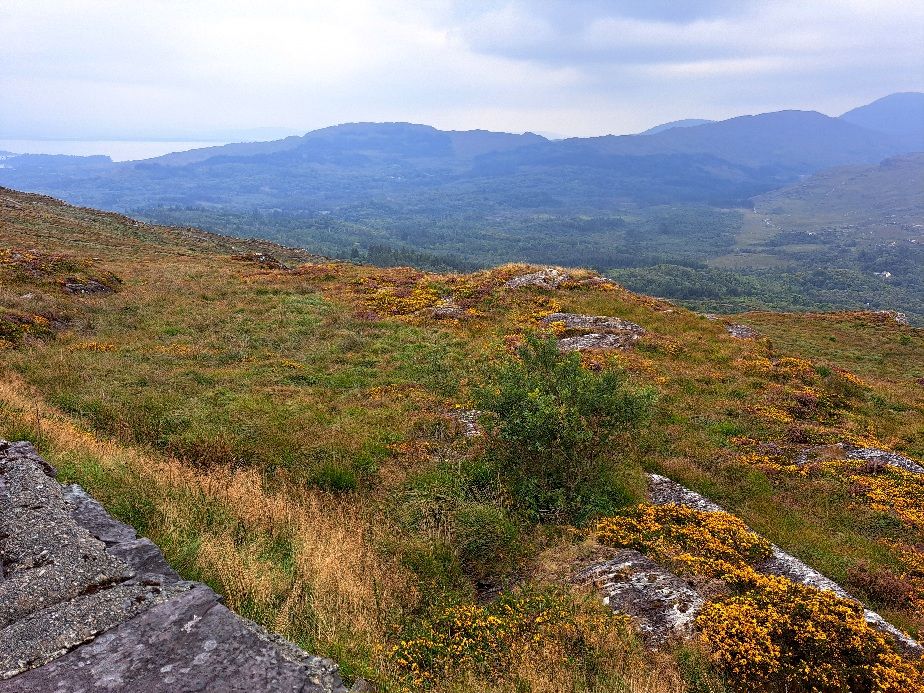
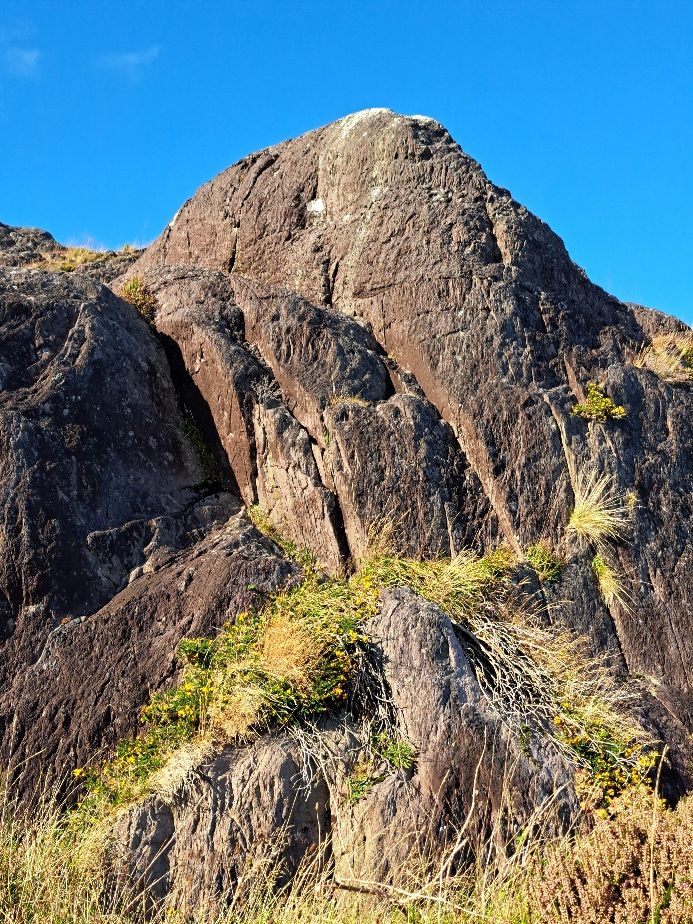
The surrounding mountains are a great place for the geologist.

MOLLY GALLIVAN’S COTTAGE

Molly Gallivan’s cottage is named after Molly, who lived in this cottage hundreds of years ago, she was a widow and mother with seven small children. And showing entrepreneur tendencies she came up with the idea to supplement her small income by opening a “Sibheen” (illegal pub) where she sold her home made “Poitin” that was locally known as “Molly’s Mountain Dew”

In 1840 a mountain road was built linking County Cork and County Kerry, which led from Glengarriff over the mountains to Kenmare and was called the Caha Pass. This road happens to pass Molly’s cottage and when more and more travellers and tourists took this road Molly saw another good way to increase her income. She set up her own cottage industry and started to sell home spun woollens and knitted Aran jumpers which her neighbours helped her to make while the local sheep farmers provided the wool. Such a resourceful woman was Molly.

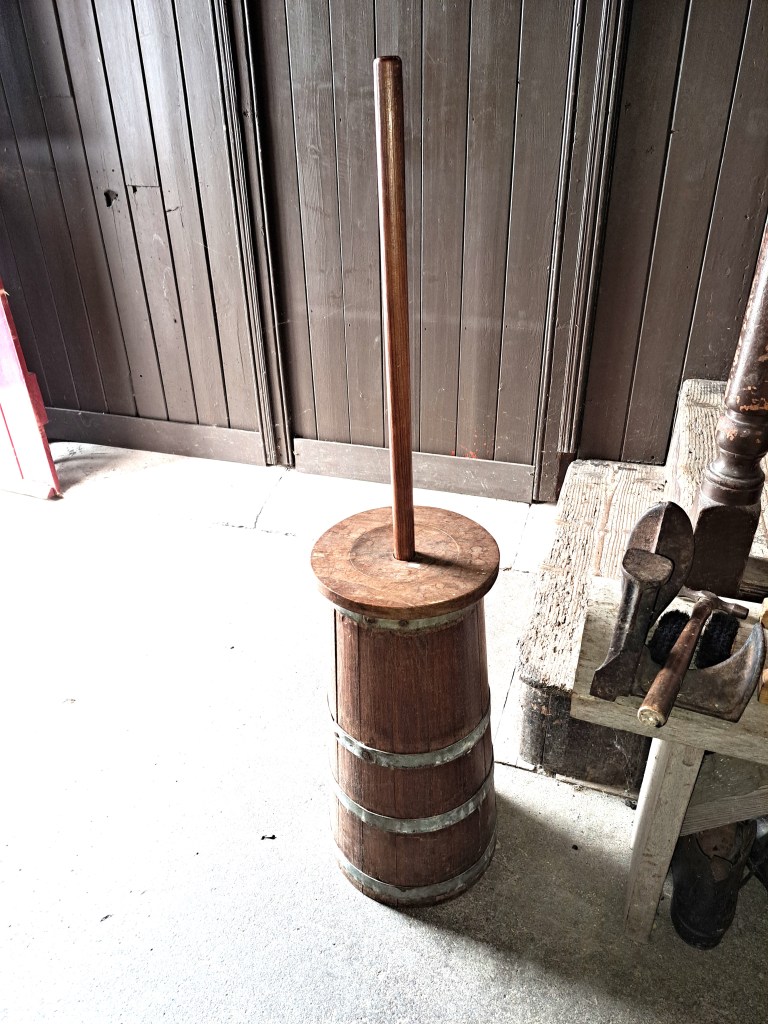
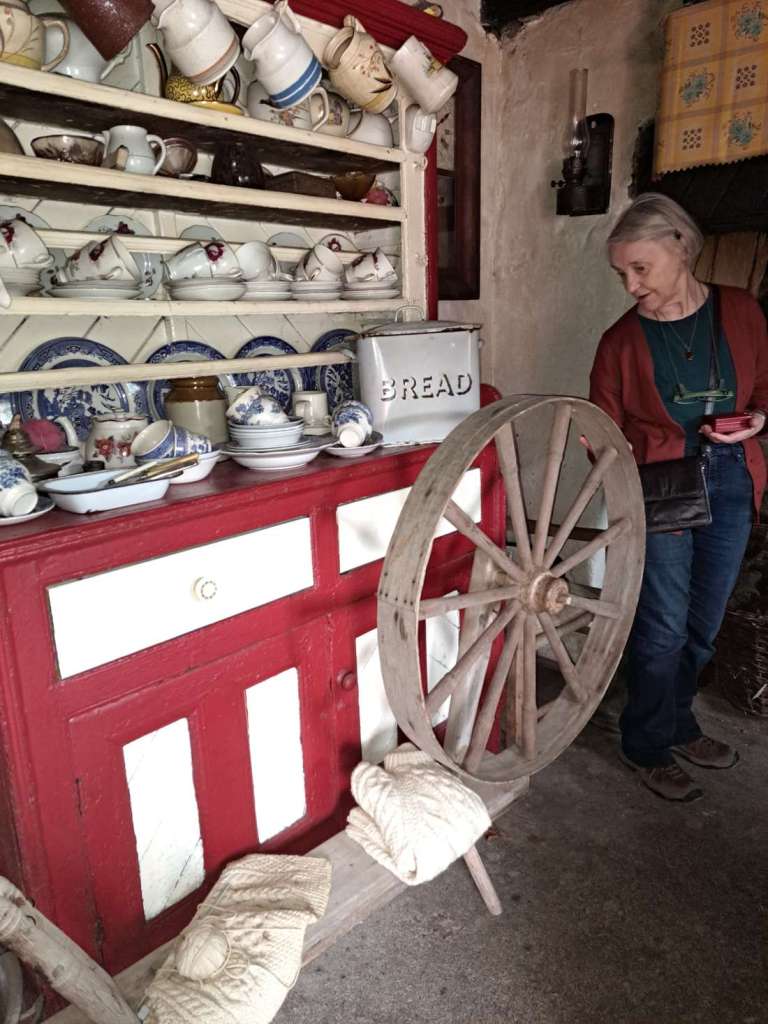
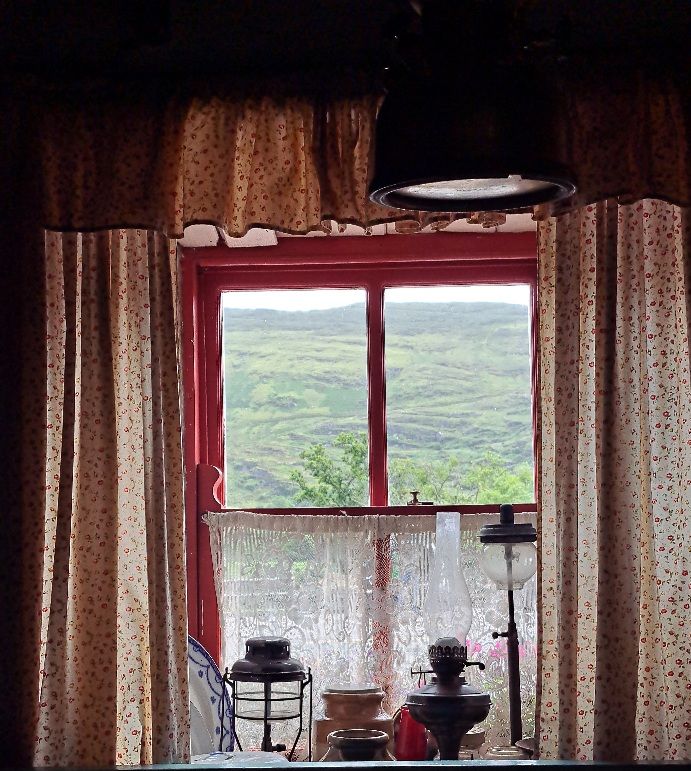
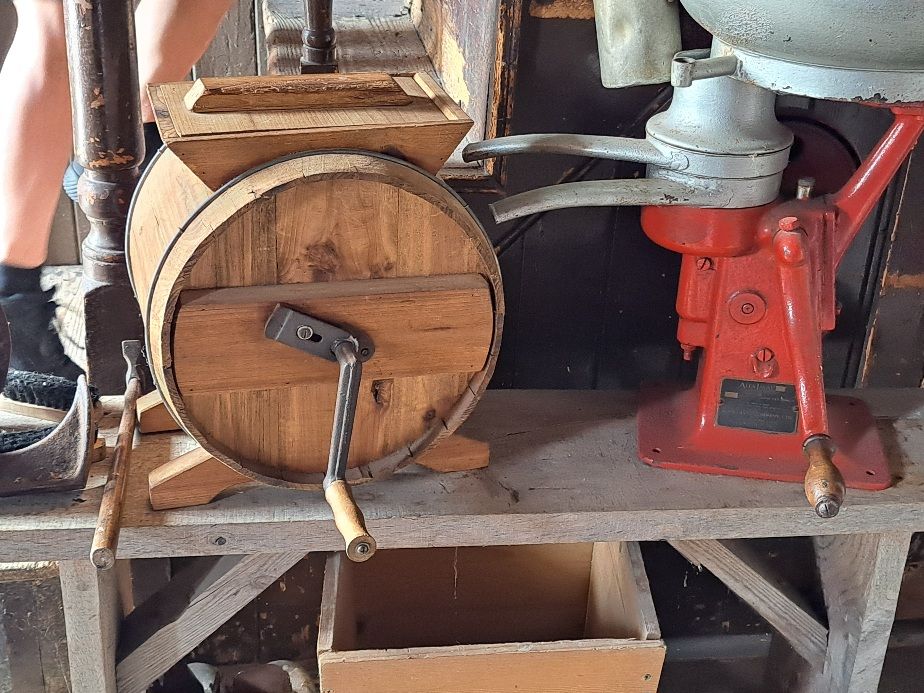
In the following photos are some of the lovely authentic items that Molly used to look after her family, a butter churn among them. In this kitchen traditional Irish scones are made till today, I’ve tasted them when I visited with my sister Josephine. We both find it interesting to see what utensils women would have used here less than one hundred years ago.

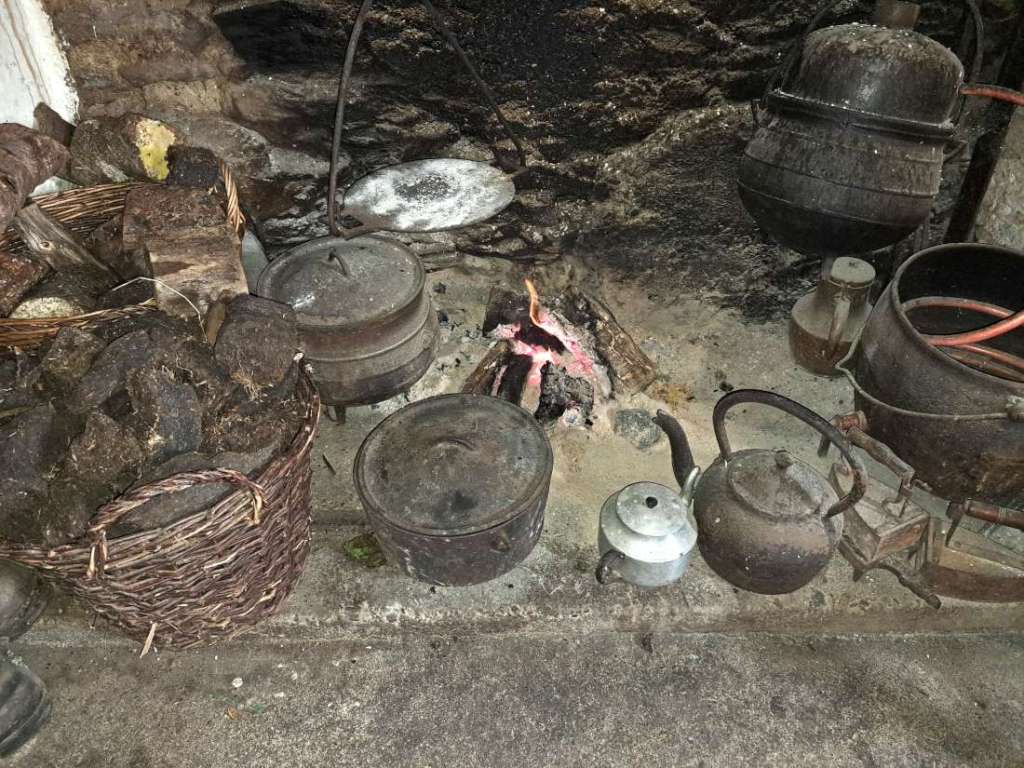
Looking at the heart there are several items, one of them is a shallow black pot in which a soda bread was made. The dough would be put in and the pot would be put in the fire and hot pieces of turf placed on top of the lid. The resulting bread tasted delicious. I see a flat round gridle too which was used in the making of gridle bread using rough flour, some maise flour, sour milk, bread soda and an egg. Here I found a video showing how: https://youtu.be/PpoTNWOKWtY There was always a large pot to boil the potatoes which were always popular in rural Ireland.

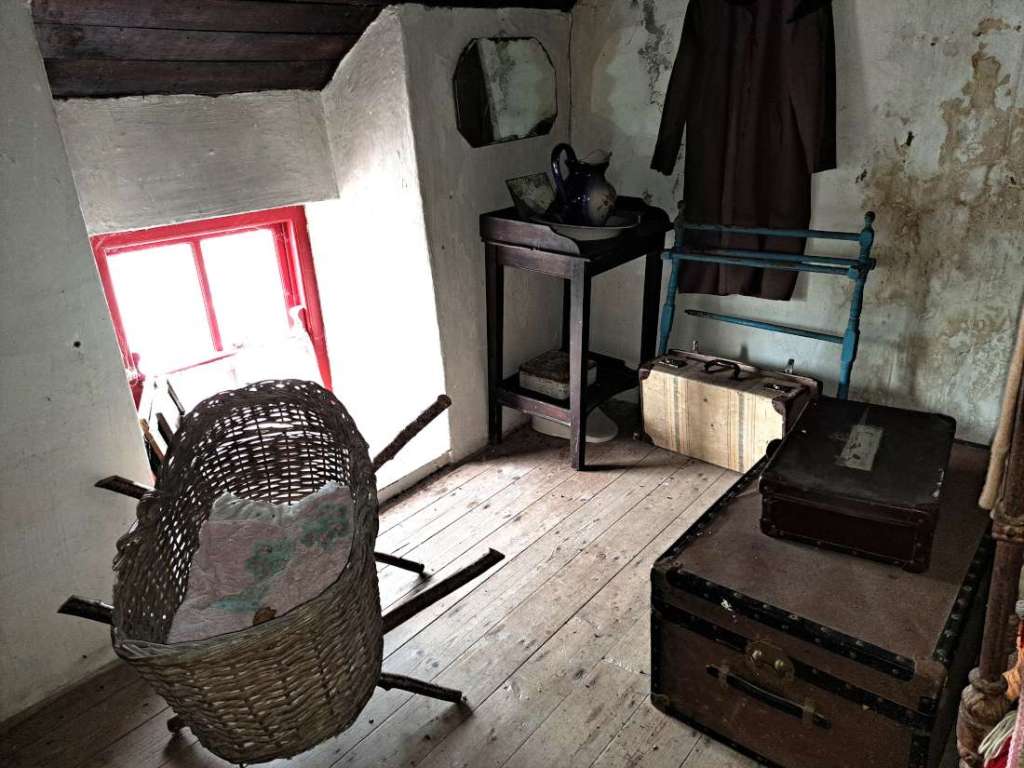
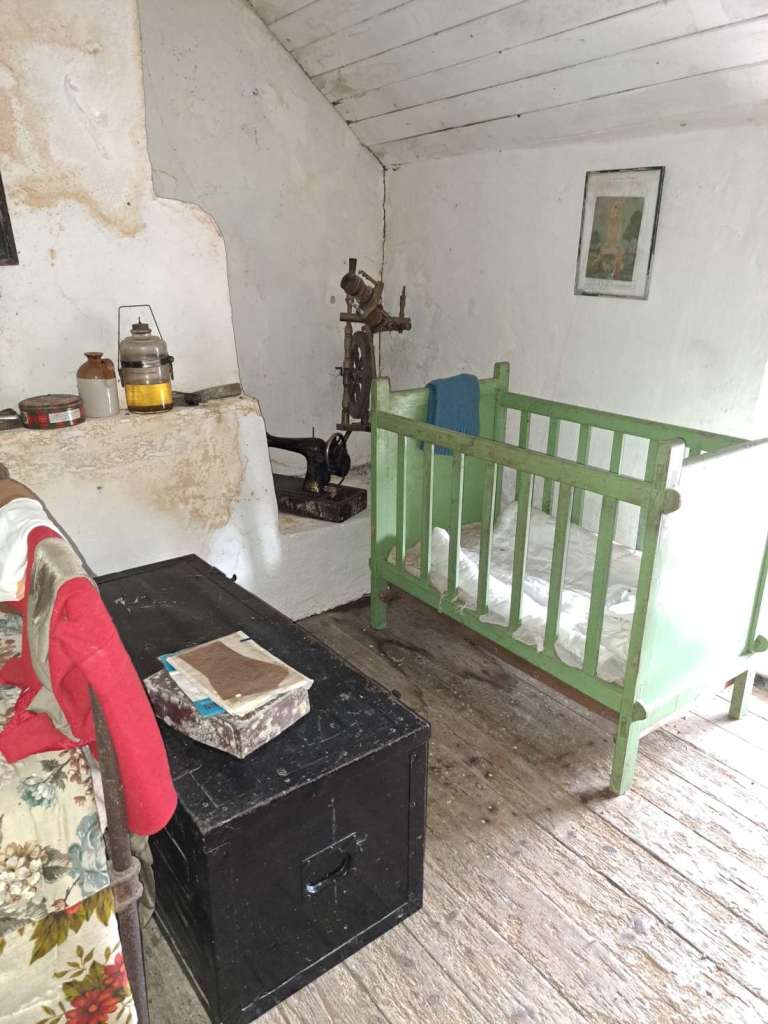
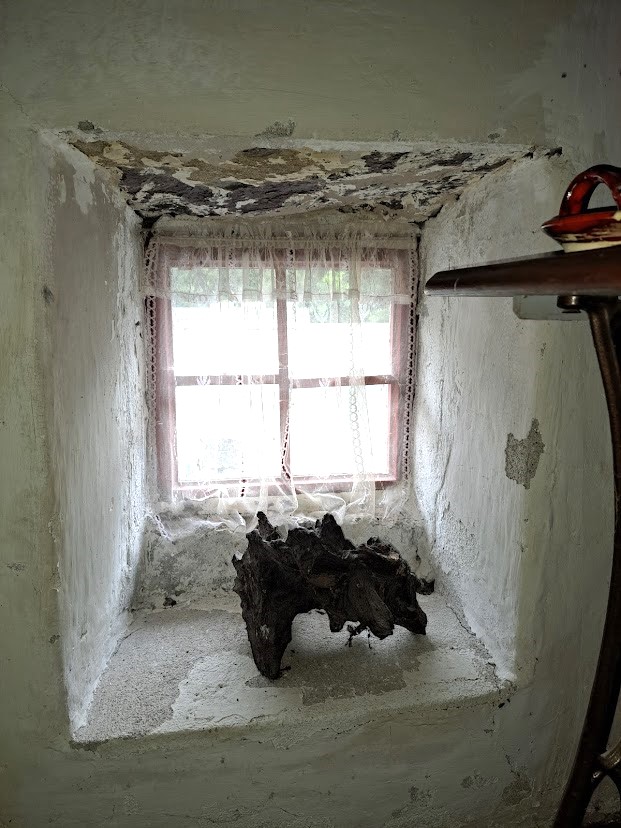
The upstairs in Molly’s cottage actually has two bedrooms and a bed also on the landing. The windows are tiny. There is a rustic cradle. I spot a small spinning wheel in the corner of one of the bedrooms. Electricity came to these areas only in the 1960ies. Her sewing machine would have been worked by hand, same as the spinning wheel and the loom. It was a simple life, but it cannot have been easy always.

We had a lovely cup of tea when we stopped by there during my sister’s visit. And of course we sampled the homemade scones. We also visited the shop area with the lovely selection of Irish woollen items and other Irish goods.

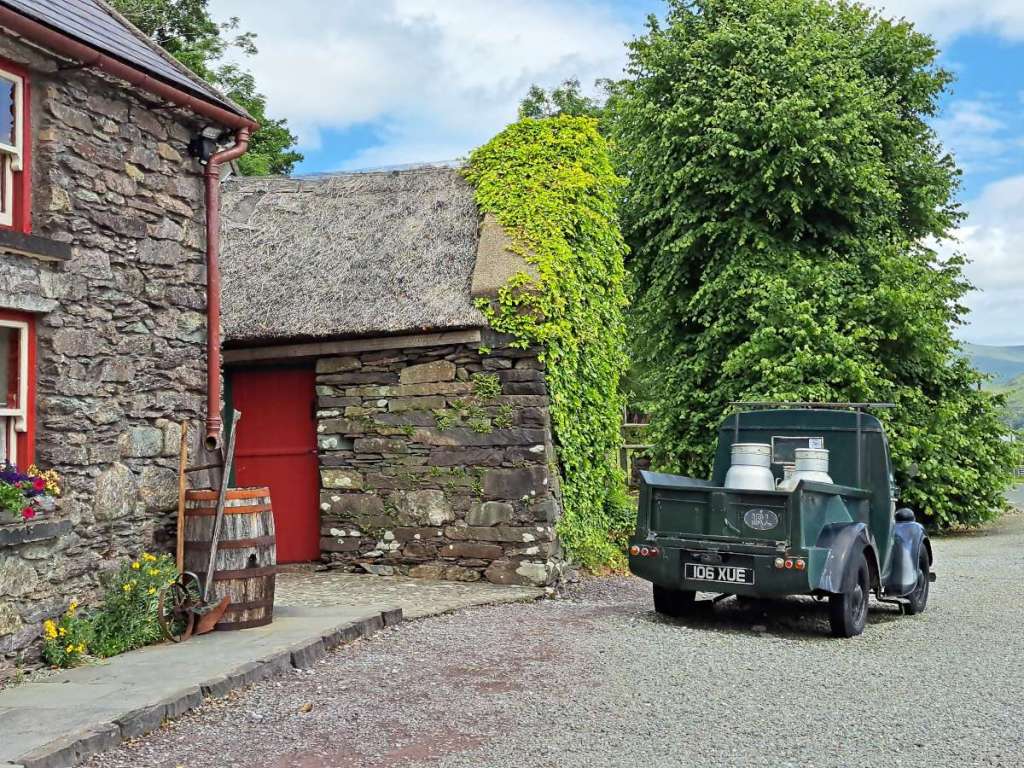
The cottage seen from the N71. Also some of the out-houses one of which is probably where Molly made her illegal “Poitin”, her mountain dew as it was called. The original cottage was only one story part of which can still be seen here in the photo.

I hope you enjoyed learning a little about Molly Gallivan’s life and her cottage. She must have been a great woman!

The cottage is found in Bonane in County Kerry. Bonane is situated in a valley between the Caha and the Shehy mountains and the sea. The cottage overlooks some of this valley. Bonane is know for its many ancient historical sites. Among the sites are pre-famine house ruins and field systems, bronze age copper mines and much more, fascinating stuff. Today Molly’s cottage and traditional farm depicts the lifestyle in the valley as it was during the early 1900s.

I include here the website of Molly Gallivan’s Cottage in case you would like more information on it. https://mollygallivans.com/the-molly-gallivans-experience/

I pass this place once a week and often stop for a cup of tea or a look around. I find the old utensils and the whole setting fascinating.

A JOURNEY FULL OF INTEREST

This photo shows the road over the Caha Pass going down into Bonane with a beautiful view of the Macgillycuddy Reeks in Killarney in the distance, among them is Carrantuohill, the highest mountain in Ireland at 1038m. It gets climbed often, recently my sister, brother and other members of the family enjoyed getting to the top. I took this photo and had waited all summer for the right moment to get a clear view of those mountains, it was already deep into September when I got the right conditions, it shows how the land had already started to get a rusty colour, beautiful!

The landscape has been sometimes dark and mysterious lately, this photo I took the day after a large storm sent torrents of rain down the mountains. It made for a most beautiful journey.

Because of the large amount of rain that fell Barley lake (situated in the Caha mountains) could be seen from the tunnel road quite clearly, while I was literally driving through the clouds. Lots of waterfalls everywhere. Beautiful!

The sky is often quite spectacular to watch. In Ireland neither the rain, nor the sun are ever far away and the clouds are ever present in fascinating forms.

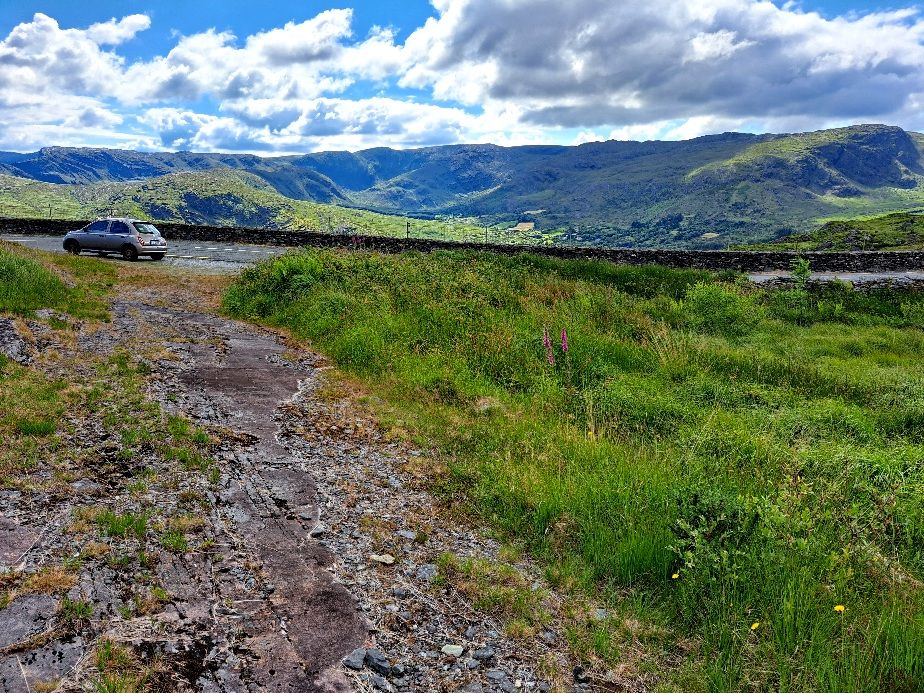
On better days, a roadside picnic with a lovely view over the valley below is a must stop for me. The quietness, even if this is a main mountain road, is so very peaceful.

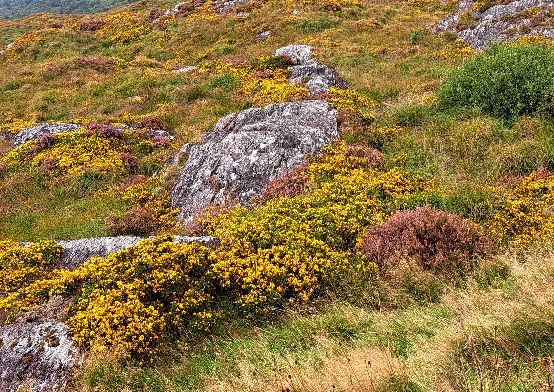
Some more photos of last months journeys to Kenmare. The landscape is changing its colours fast. I often climb up some of the rocks and find all sorts of interest. The flora is mainly brown sedges now and some of the young gorse plants that were still flowering, and the end of the heathers, also the beautiful seedheads of the bog asphodel, a lovely bright orange!

There are plenty of places where I can stop and look at the views or whatever else I want to find. Lower down in the valleys there is a lot more plant growth. Higher up the rocks are a huge fascination of mine.

On this journey there are, in their natural environment, still a lot of old barns and cottages, these are still in use and have been beautifully restored, though some are left as interesting ruins. The traditional cottage of this area of Ireland is a small stone-built house, two windows with a door in the middle, I think two up and two down they call it in vernacular architecture. Here in this photo gallery is one of those traditional cottages, well restored and used, it’s on the road down into the valley of Bonane on the way to Kenmare. It’s very nice to have a stop there and my sister Josephine and I had tea and traditional scones there last summer, but about this place which by the way is called Molly Gallivan’s cottage (after the original owner) I will tell in another blog to come. Visiting places like this goes back a long way in our family.

And as you can see from my photos there is so much a journey of a mere 71km can provide, even on a weekly basis. There is never ending interest, what with the changing seasons. And the sheer amount of interesting facets one comes across on such a journey make it certainly very enjoyable. Wow!

JOURNEY THOUGH THE CAHA MOUNTAINS

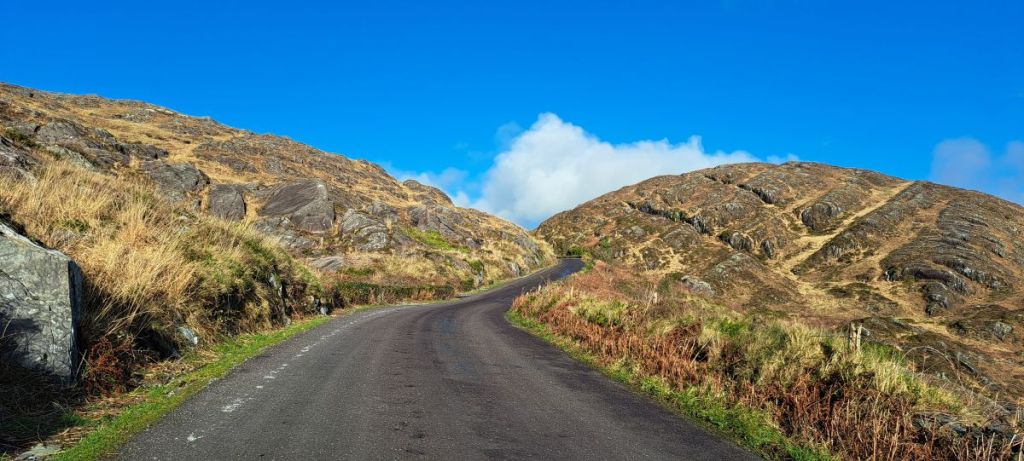
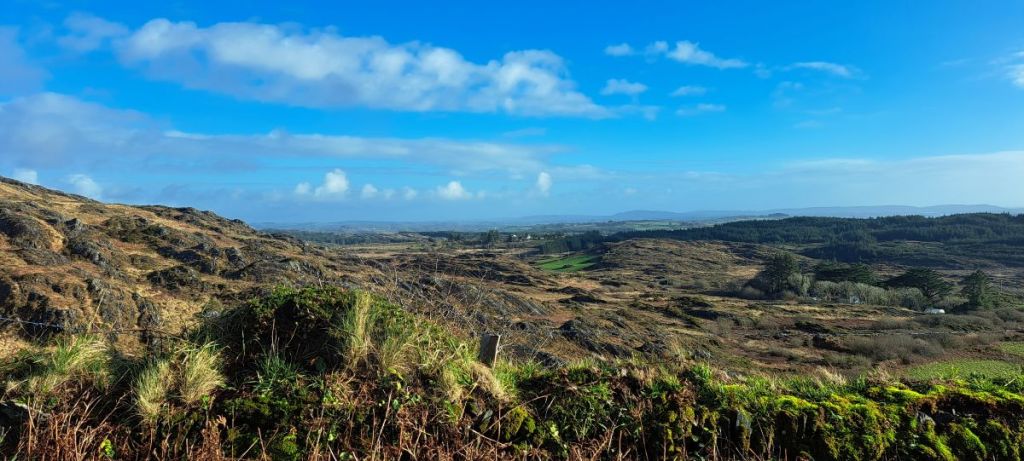
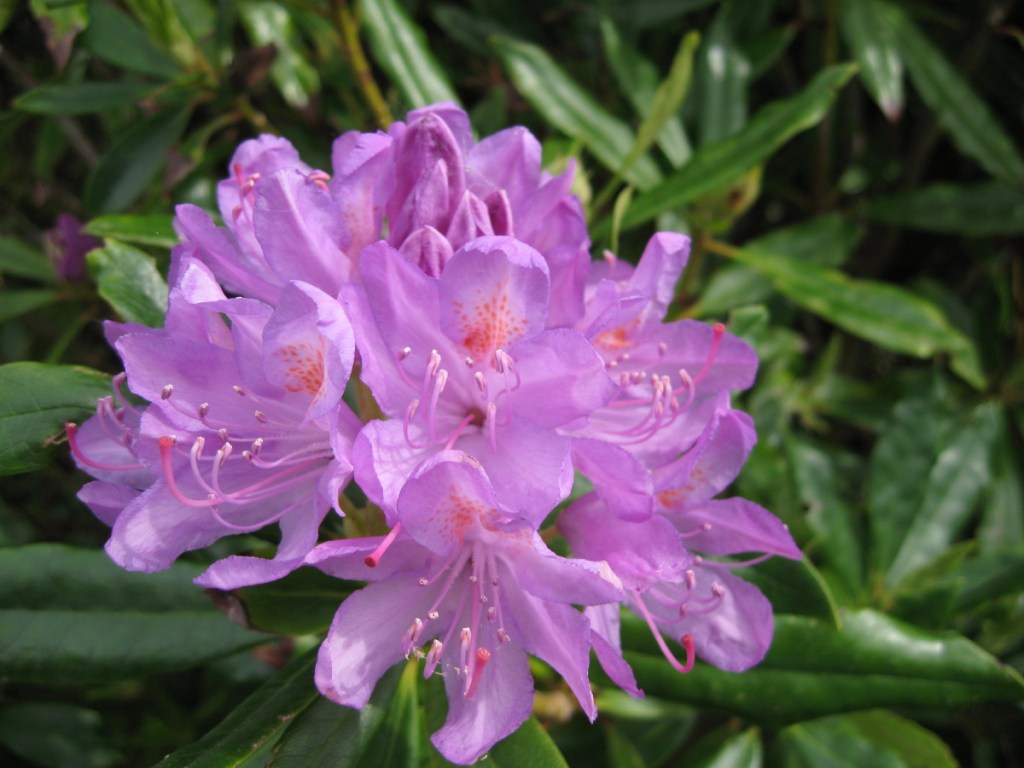
These days I enjoy a weekly journey through the Caha mountains on my way to see my husband Ian in Kenmare. It is a most beautiful journey, not only along the Bantry Bay towards sub-tropic Glengarriff where at the moment the rhododendrons are still in full flower, but following the N71 up to and through the tunnel separating county Cork and county Kerry.

Looking into a most beautiful glacial valley.
Sugarloaf Mountain in the distance.
Rododendrons alongside the road.
Looking back towards the bay.
Bonane which I come to once through the tunnels. This is in Co Kerry now.
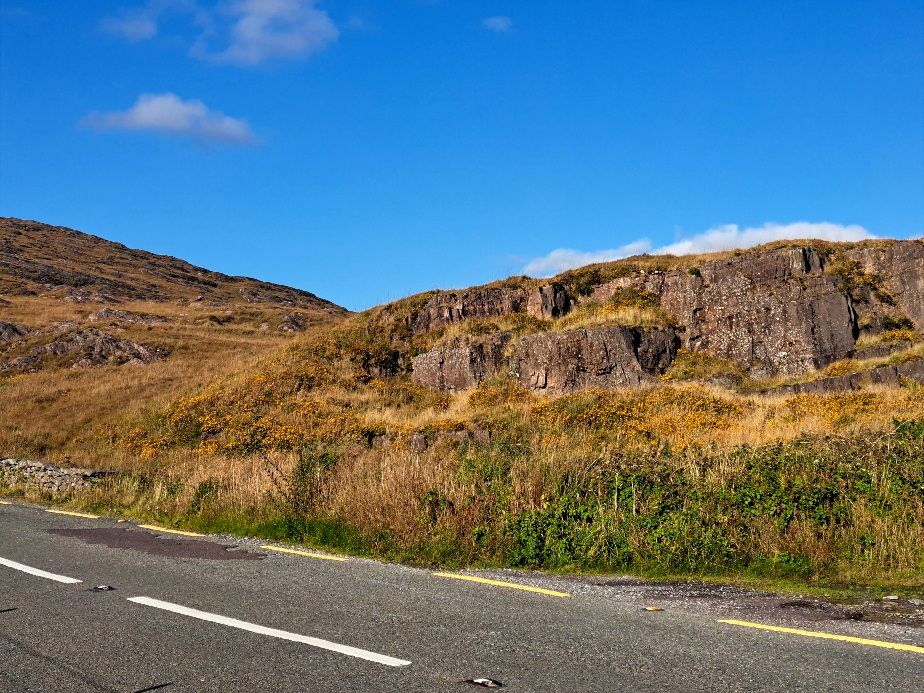
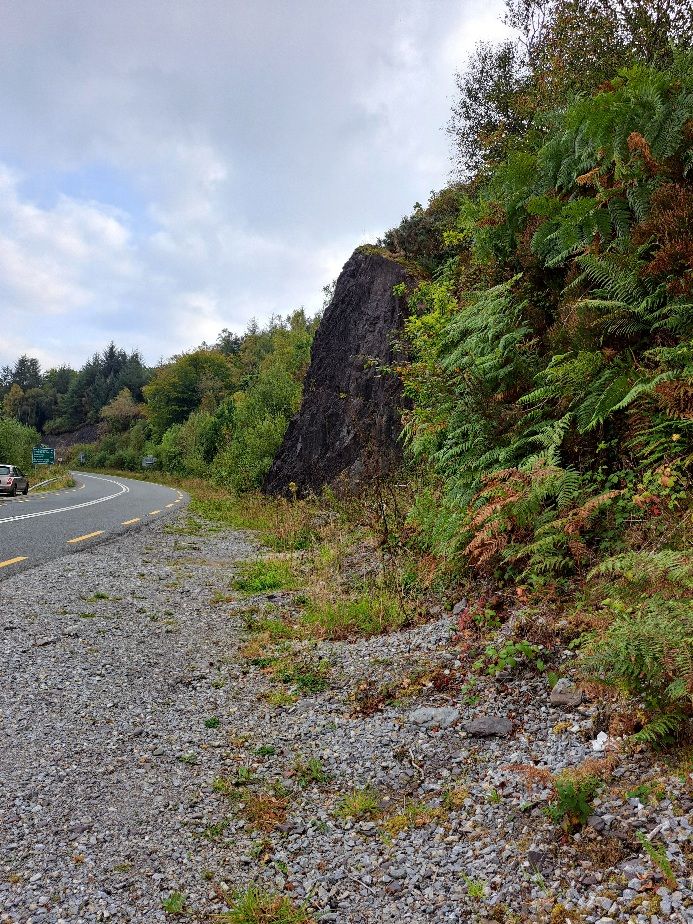
The interesting rock formations along the road.
The Glenn valley.

It is such a lovely journey.  I do it once a week. My dear husband Ian is now resident in a nursing home in Kenmare.  It’s about 74km from here.  It’s a different way of life for us both, but we are adjusting and making the best of what life offers.

TAKING TIME OUT

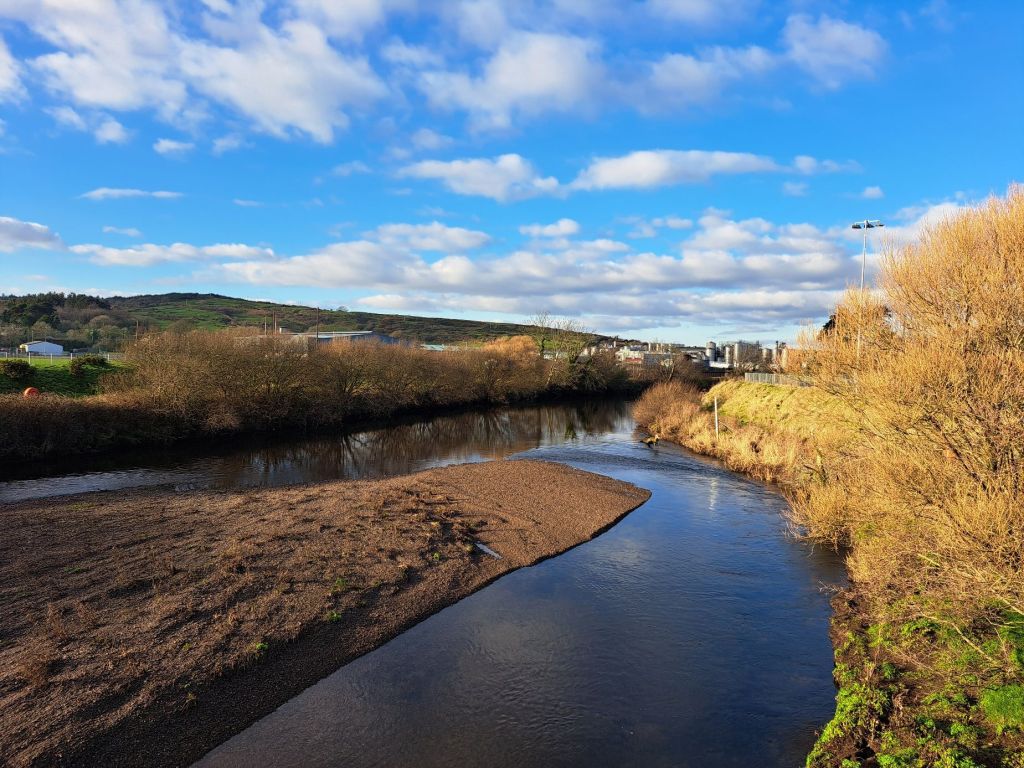
Nice walk along the N71 surrounding Skibbereen town. River Illen flows through the town and has many different faces, this time a faint reflexion of the blue sky and some light white clouds.

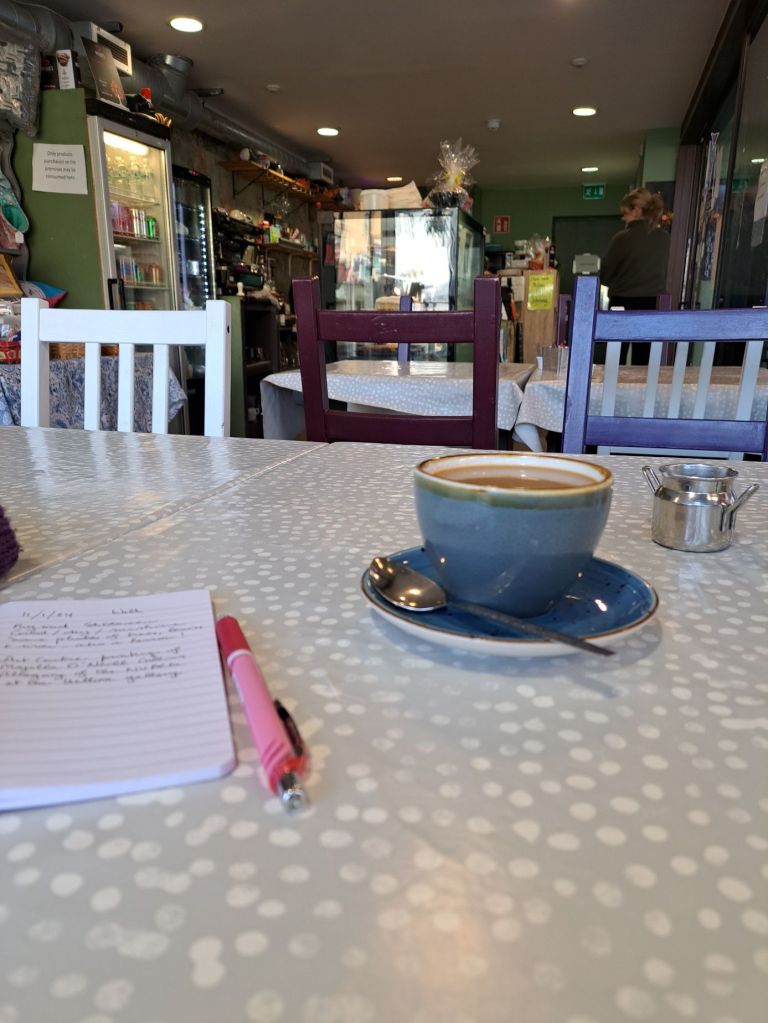
In the Uillinn Gallery I had a preview of Majella O’Neill Collins’ paintings which I think quite interesting, this time her paintings imagine the journey of the MV Alta, a merchant ship that was abandoned at sea in 2018, it washed ashore in West Cork during a storm in 2020. The wreckage is still there. I did get the distinct feeling that ships or a ship and the sea were her theme. Enjoyed some of her vibrant work. Her exhibition opens next Saturday.

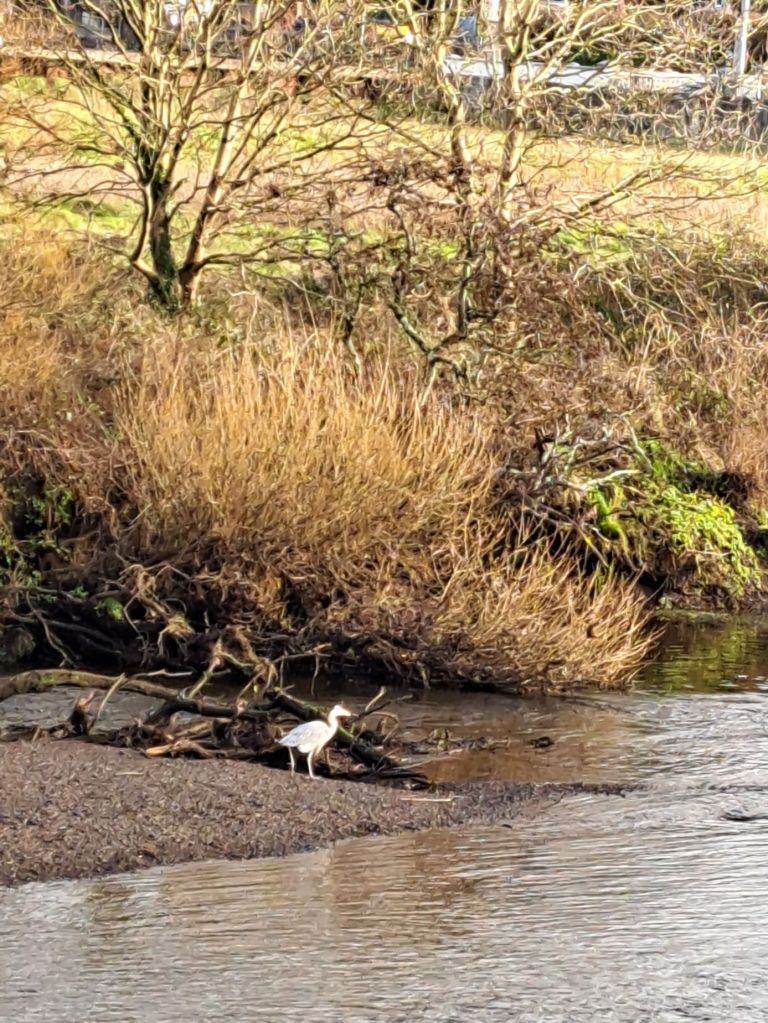
I was lucky enough to see a heron!

Love these pines against the blue winter sky. Birds have started singing!

Taking time out will be snippets of my walks and indeed of my time out

SILENT NATURE WALK ON SUNNY SUNDAY MORNING IN JANUARY

On this first Sunday morning of the New Year I decided to visit the small seaside village of Union Hall in West Cork. It lies just 15 minutes drive from where we live and though it had frozen during the night, the sun was pouring over the land warming and beautifying everything.  I drove past Rineen Forest which is located on an inlet of the North Atlantic Ocean, on the eastern side of the townland of Castlehaven.  I’ve often walked in this forest together with my grandchildren and family.  It is a great stretch of interesting trees and contains the remains of a lime kiln.  The birds too are forever singing and there is a wealth of wild plants, a lovely place. But I was on my way down to Union Hall a further five minutes’ drive along a steep and winding road. 

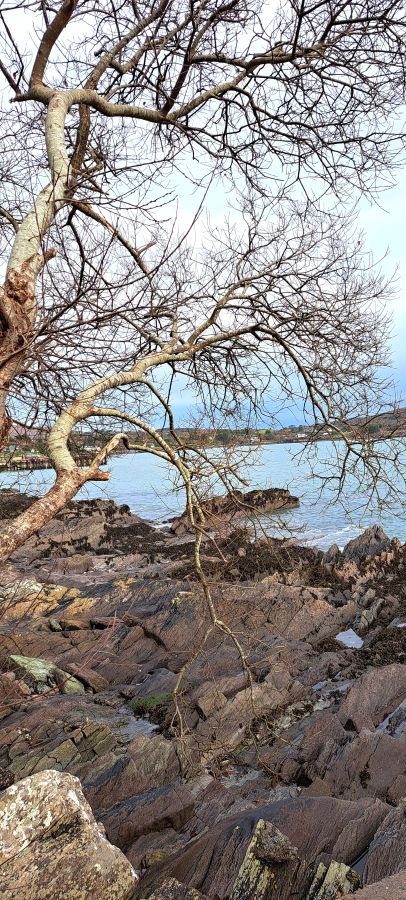
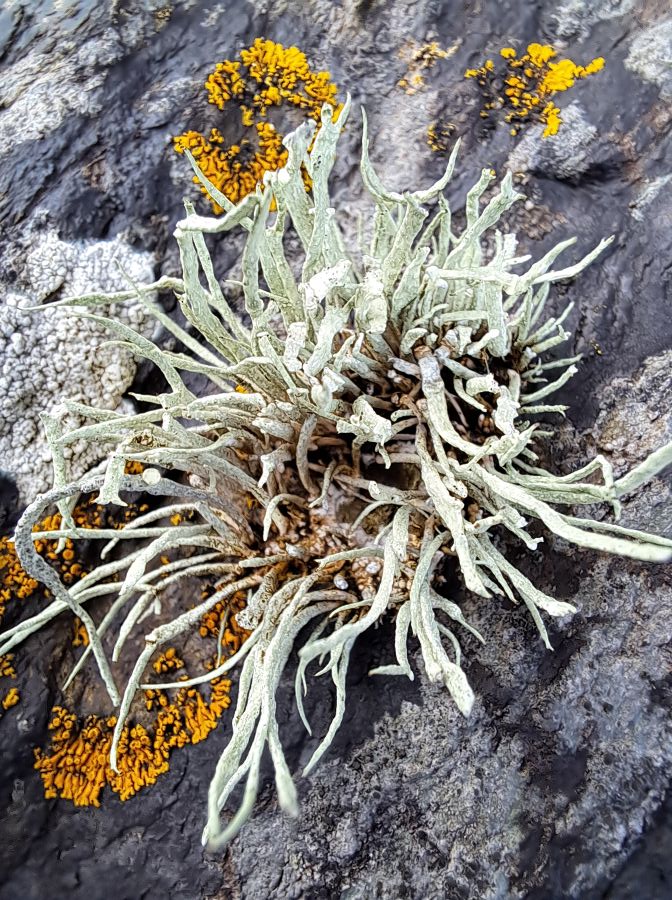
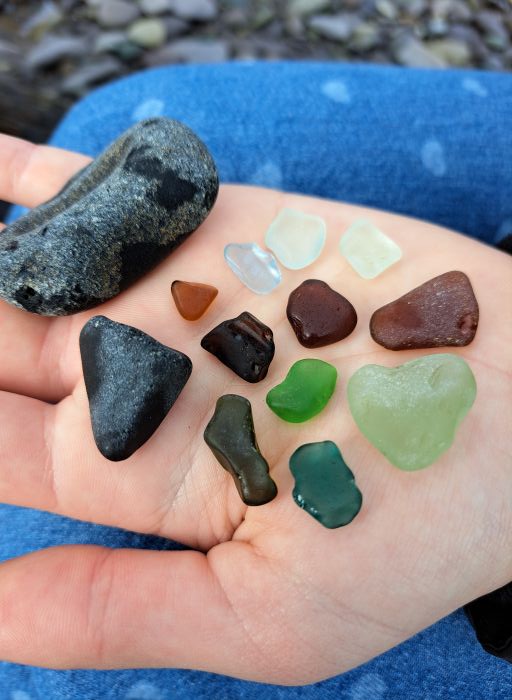
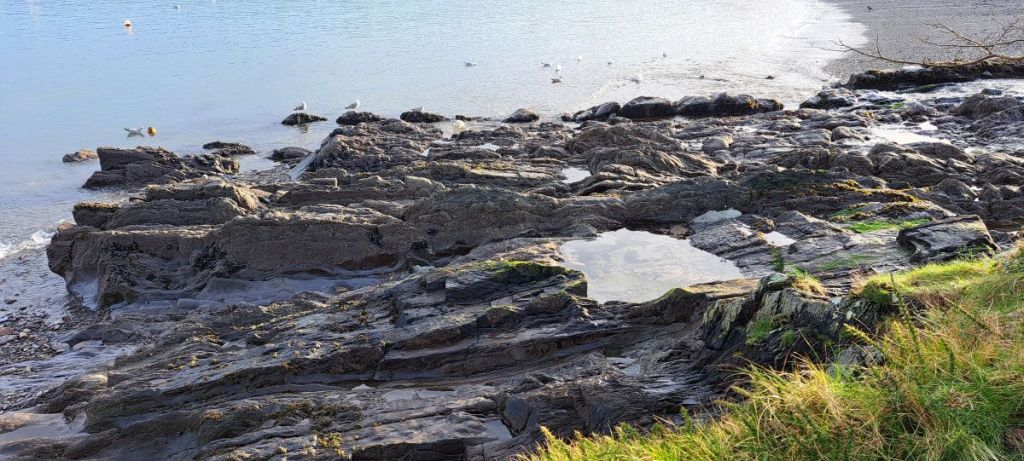
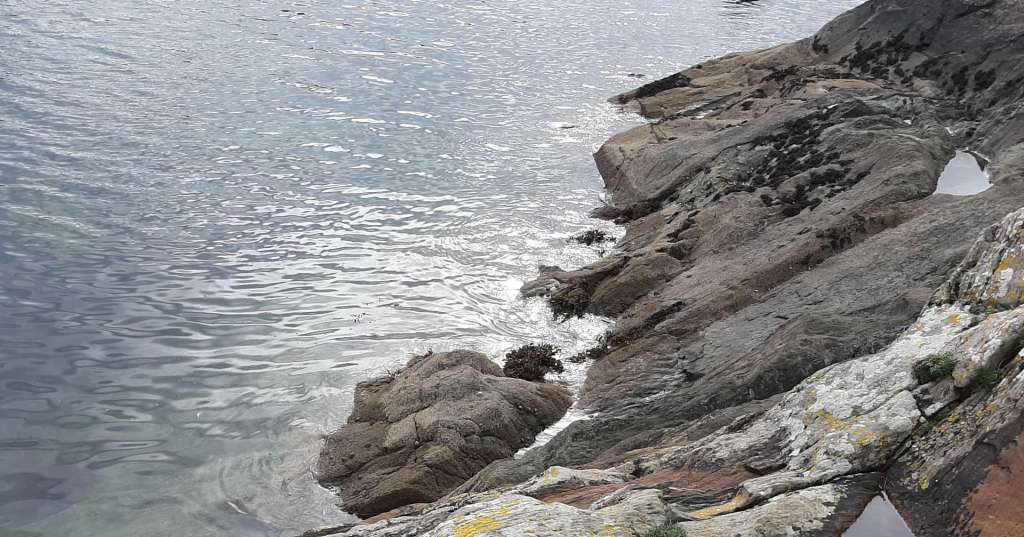
Union Hall, is a small fishing village, it is very scenic and peaceful there. I love walking along the seashore, especially to see the activity of the seabirds and the many lichen on the stone walls.  The road leads out of the village and onto the pier where there is a colourful variety of fishing nets, lobster pods and fishing boats.  I chose the place for a silent walk as I wanted to start the year with a clear head.  Locals did greet me and I did exchange a few words with other walkers and their dogs.  An occasional cry from the seagulls and other seabirds resounded over the water.  My breathing deepened from the sheer tranquillity and the refreshing sea air.  A calm descended over me like only a connection with nature can do.
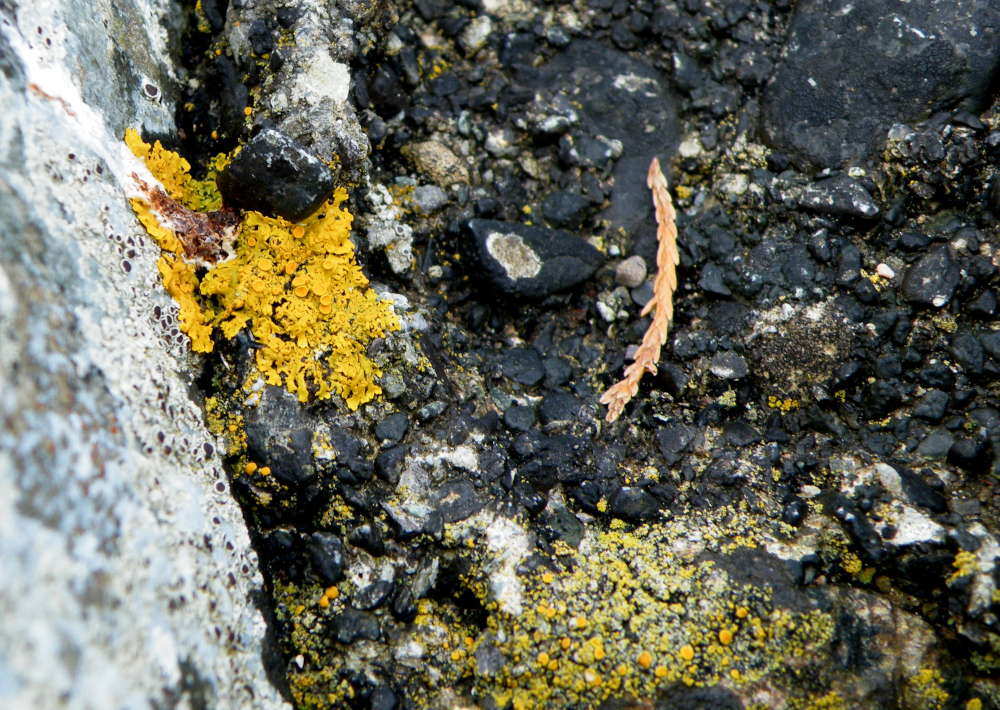
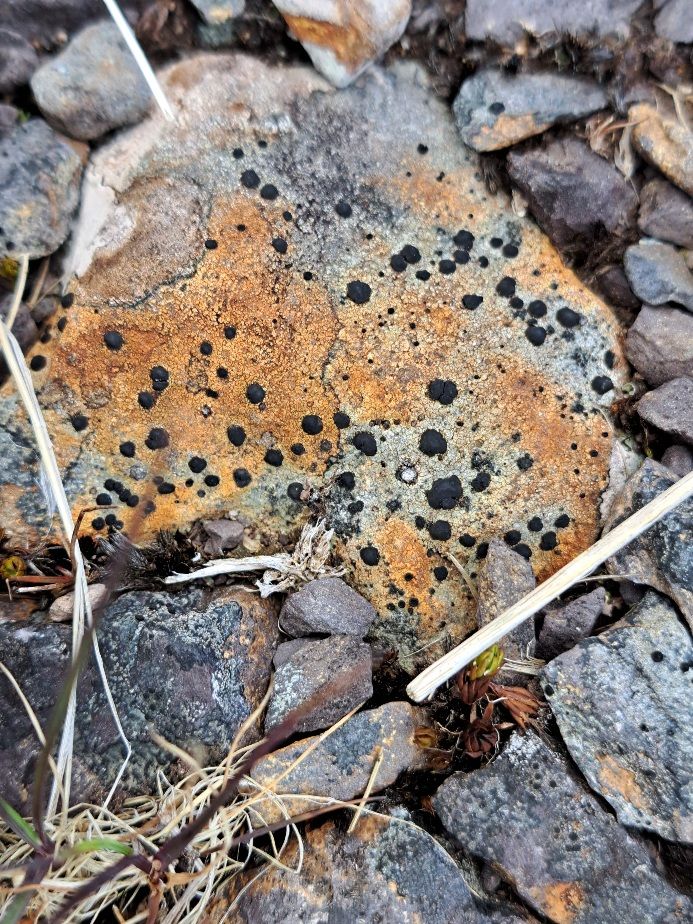
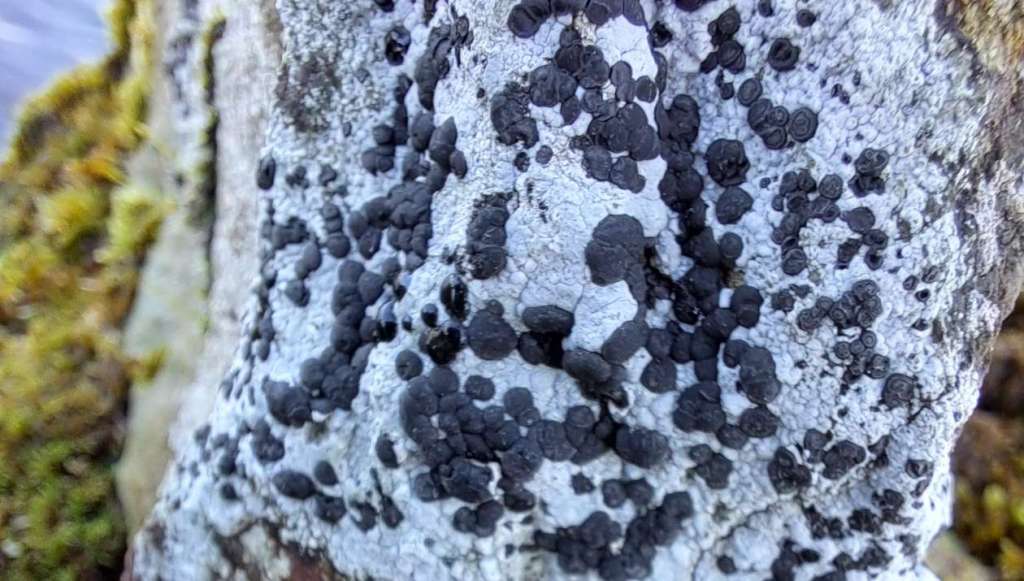
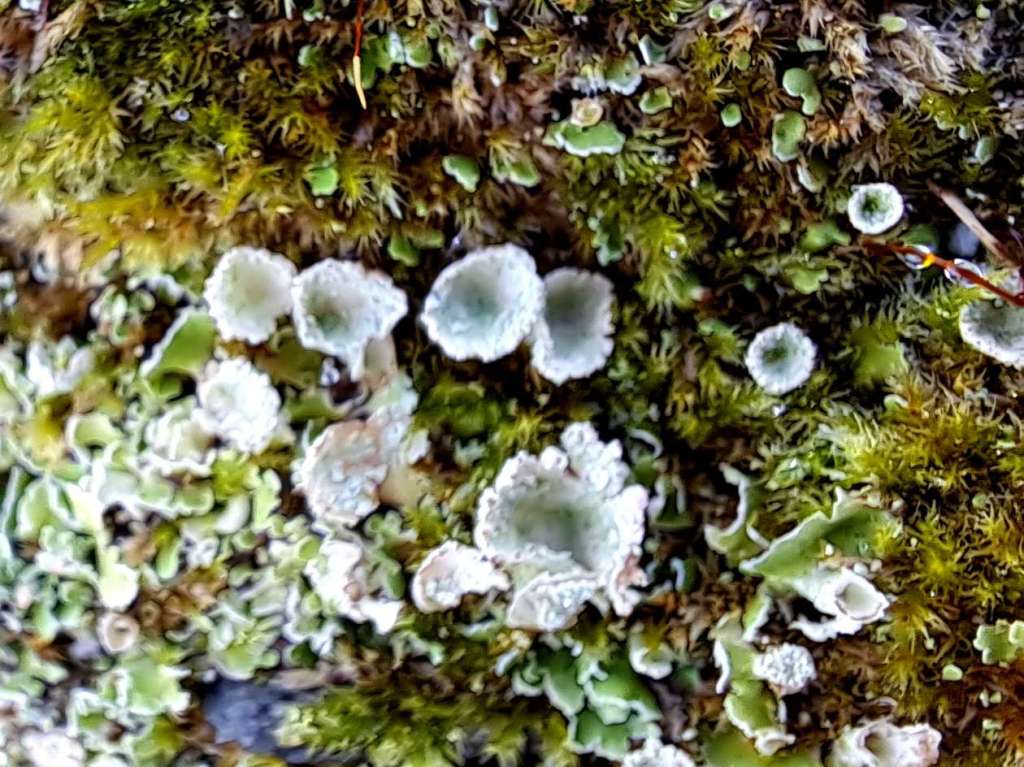
Over Christmas I obtained a little book on lichens, mainly about lichens of the National Forest in Glengarriff, but visiting that forest is for another time.  Reading through it did heighten my already interest in the lichen of the area here and I naturally took some photos of those I found while on my walk.  Lichens are fascinating, they are neither plants nor animals, they are living things that live in symbiosis with fungi. They are often very beautiful and intriguing.  I’ll learn more about them this coming year I think. 

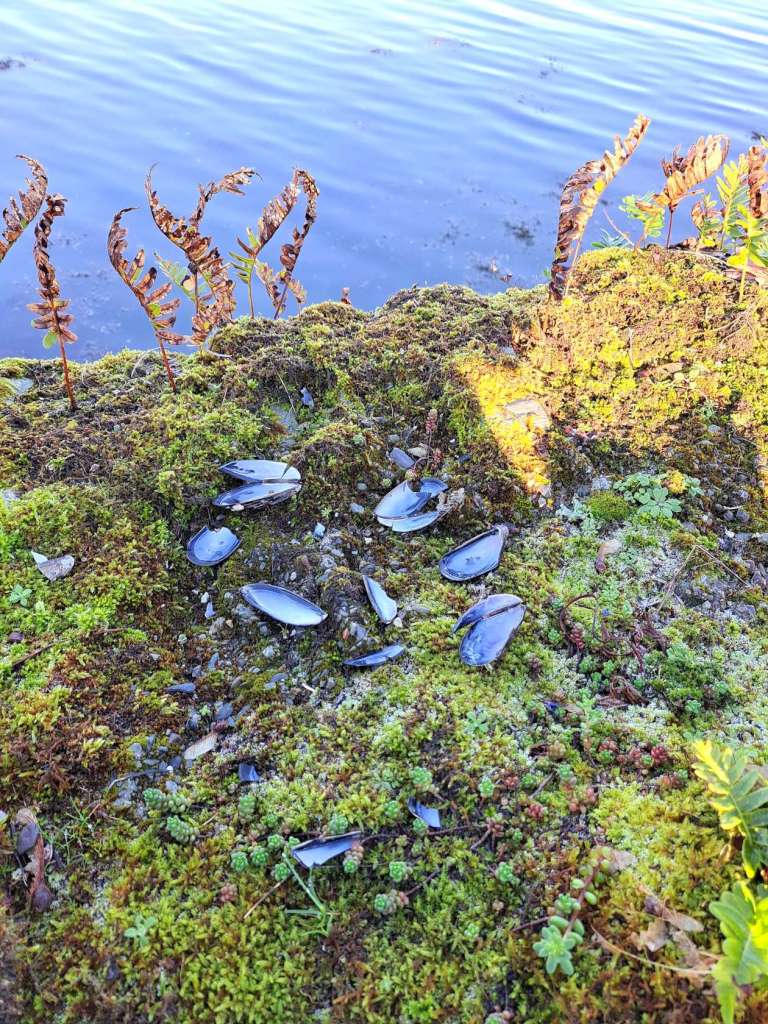
In the photo above are the mussel shells, the remains from meals of seabirds, mainly seagulls who drop those on the sea walls to break open feast on the contents.

Interesting looking old stone building, some sort of store no doubt. Much more to discover about this little place! 

AN ANCIENT FRIaRY IN KILLARNEY

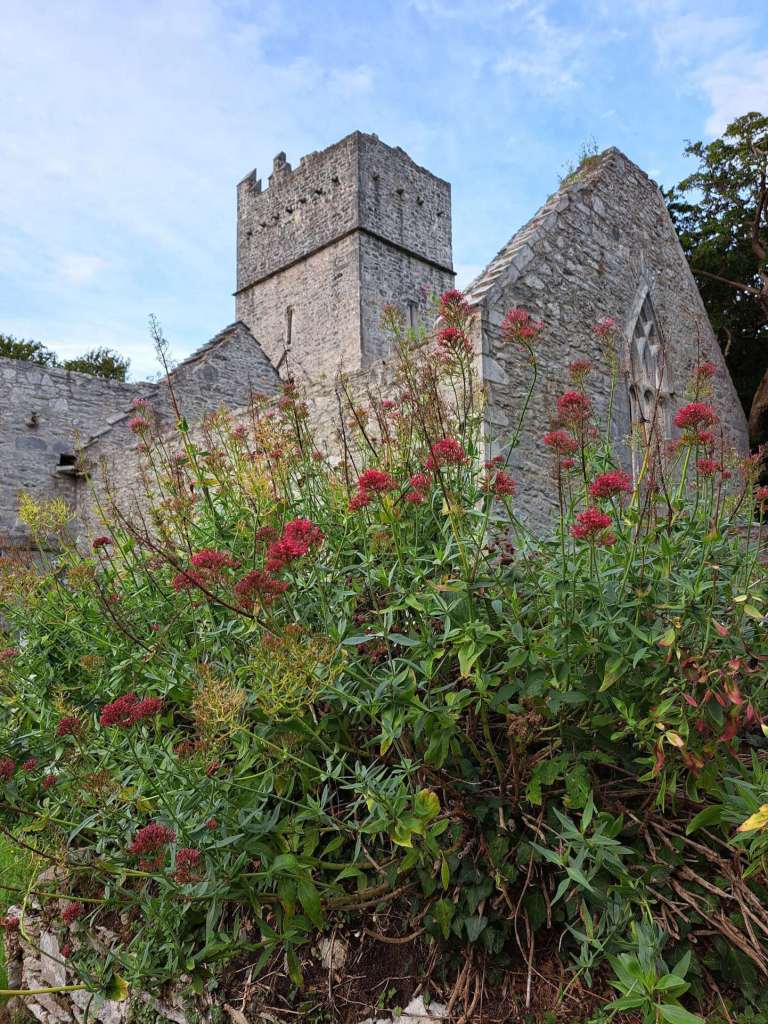
Muckross Abbey, Killarney

It is with great enthusiasm that on this very wet November morning I finally sit down to write another blog post.  Life is busy and it travels very fast.  Lots of nice things have happened during the summer and the beginning of autumn.  It has been a most beautiful, warm and sunny summer season here in West Cork, very enjoyable to have door and windows open and to practically live outside, this I adore!  We have had good days and bad, one of those was Ian’s fall, but he has healed well and is back in good form now.  He has been busy designing and making a glorified Zimmer frame which will help him not to have another fall.

 I have attended a short course about biodiversity in West Cork run by WILD WORK and facilitated by SECAD, which I thoroughly enjoyed and learnt from.  It was run locally in a most beautiful natural setting, there was also an online part to it.

But right now I would like to share some photos and chat about a visit to a Franciscan friary which my daughter and I visited during September.  We were on a rare outing; in fact, we had been given the chance to go away for a weekend while Ian’s daughter Anna and her partner came over to be with him.  To say that I enjoyed that weekend is an understatement, and it did me the world of good.  My daughter Tjorven’s company was lovely as always. 
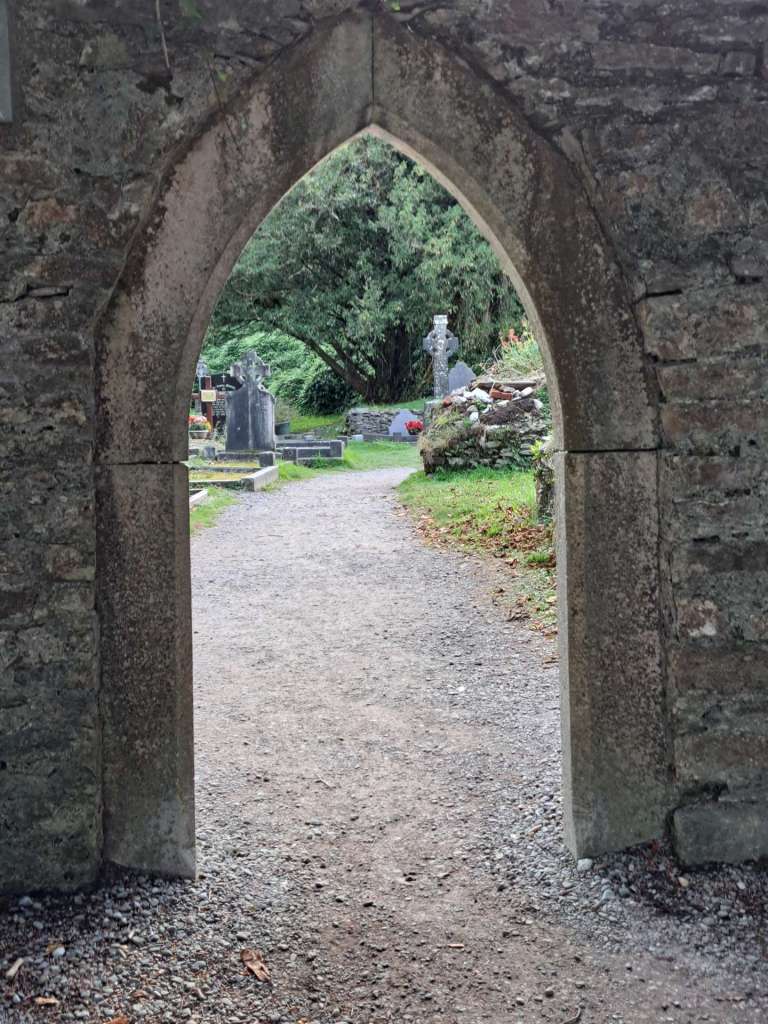
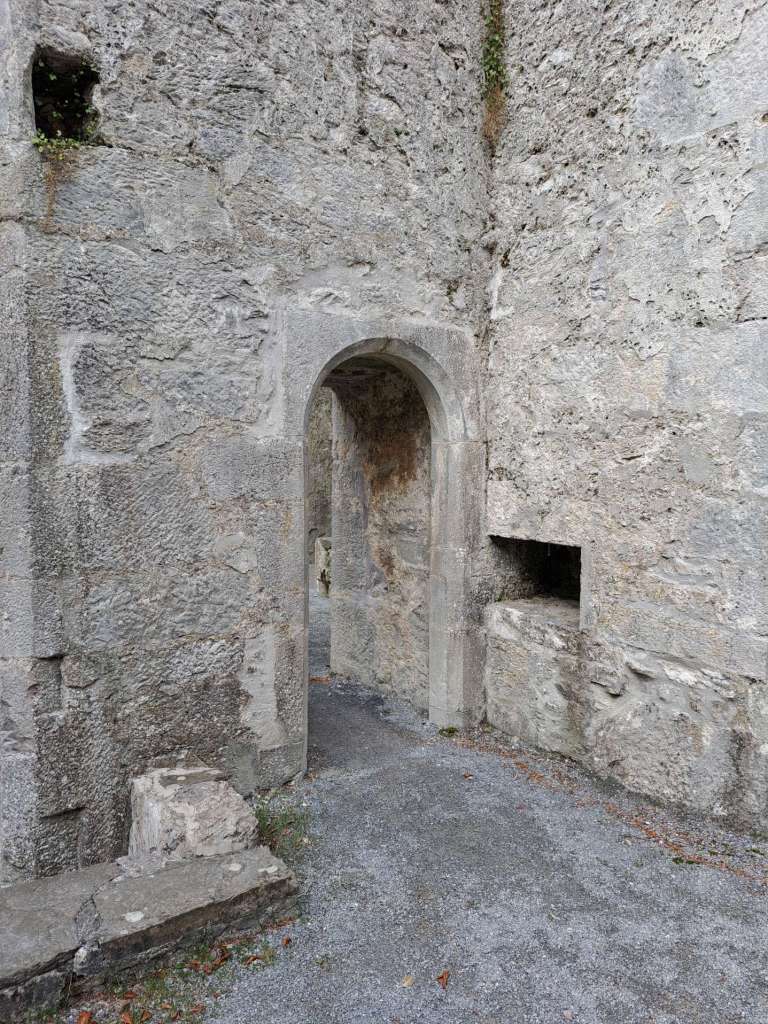
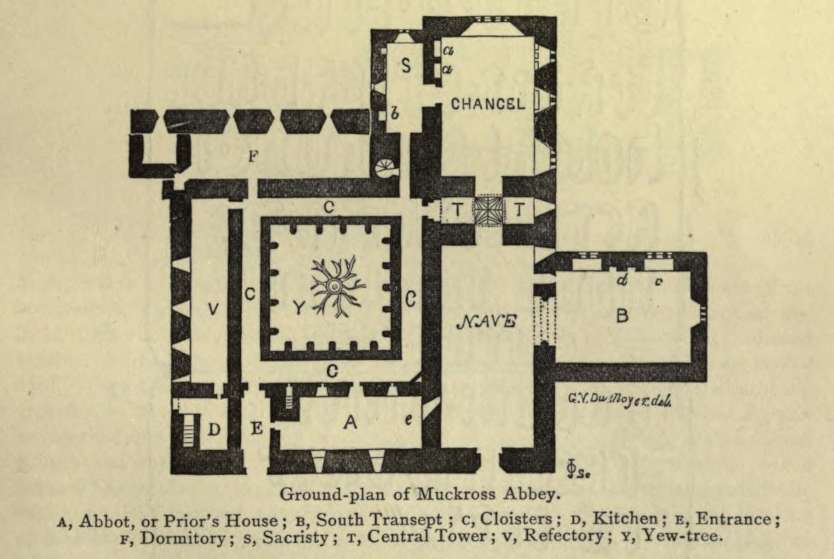
So, we visited the interesting Muckross Abbey in Killarney which according to the Annals of the Four Masters was founded in 1448 as a Franciscan friary.  It is situated on the site of an earlier monastery which was built by a Saint Fionan in the 6th century.  It’s remarkable that the site is still so well preserved keeping in mind its turbulent past, but with many repairs and restructuring it stands well preserved today.  The building style is Hiberno Romanesque.  In the embrasures of eight of the windows of the dormitory are fragments of wall paintings, this is not very noticeable, and I regret that I did not see this, only read about it later. 

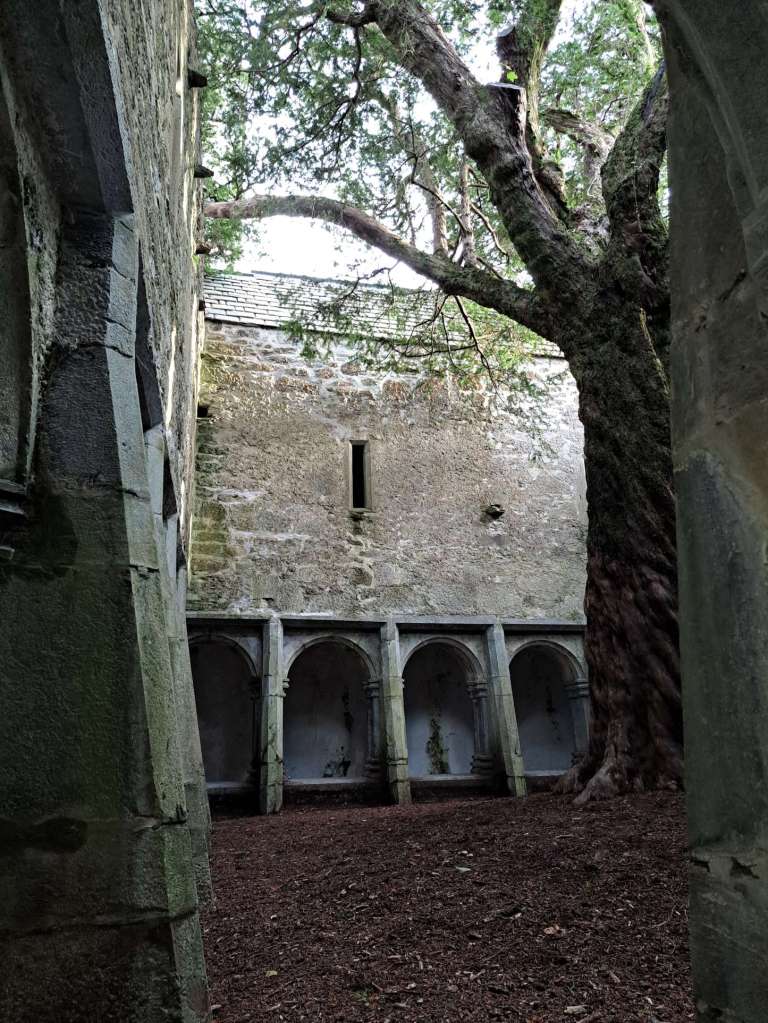
In the middle of the courtyard which is surrounded by a vaulted cloister stands a magnificent ancient Yew tree.  It is thought to be as old as the abbey itself.  Surrounding the abbey is an old graveyard and yew, beech and other native trees. The church of the abbey also contains some tombs, one of them seems to have a rusted handle!

We visited in the late evening and the place gave us that special feel that goes with observing ruins, thinking about the life the monks will have led, the stillness of the peaceful and natural surroundings felt by us now, and yet knowing what violent encounters those monks would have had over time, being driven out, returning and rebuilding, to be finally driven out in 1652 by Cromwellian forces. 

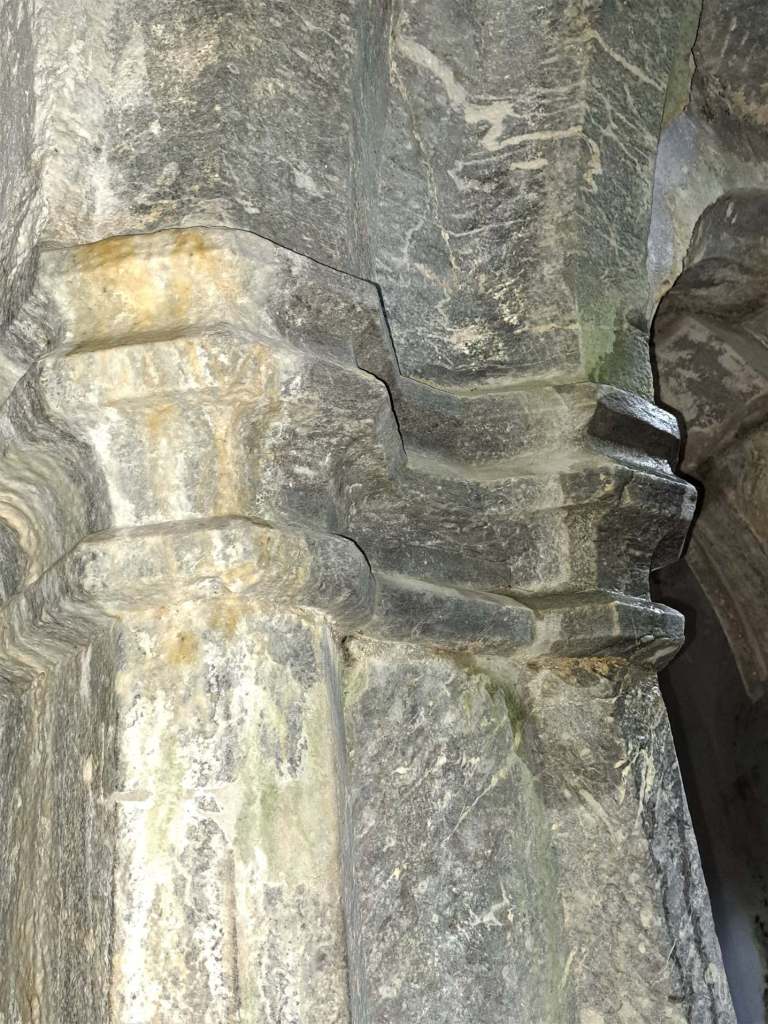
This was just one of our exploits during out visit to Killarney, it was well worth spending the time there, but more of that in another blog post. Here follow some photos that speak for themeselves.

The ancient tree in the middle of the courtyard.

Muckross abbey lies peaceful in its natural surroundings, a beautiful memorial of the monks who spent their lives there.

AN AUTUMN DRIVE IN OUR NEIGHBORHOOD

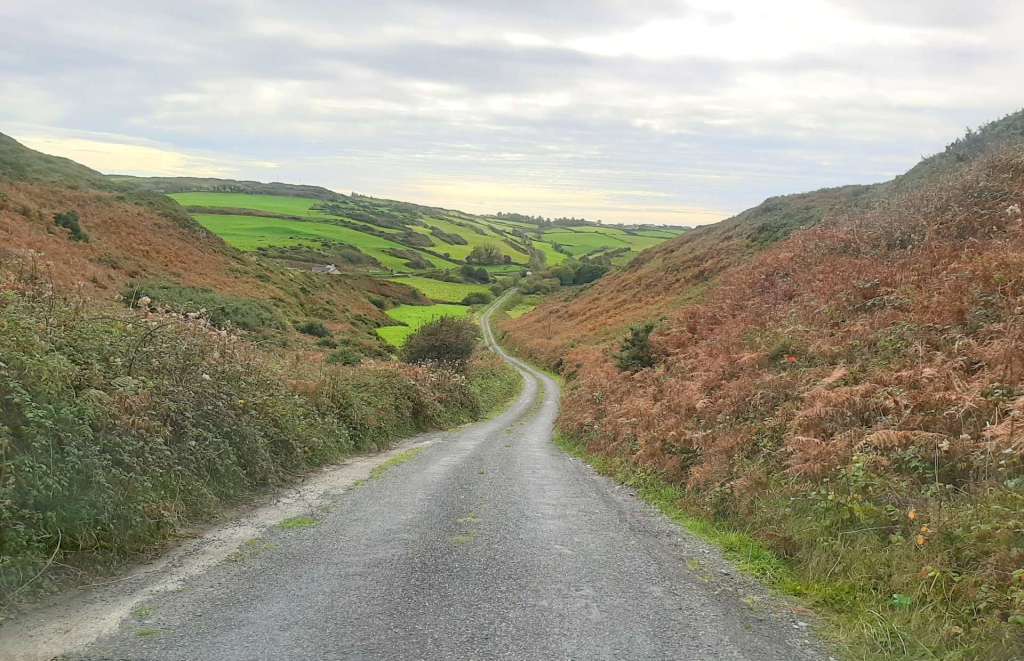
A week or so ago we took a drive along the road taking us over Lick Hill and further along towards Ballyalla lake and Trabano Cove. It was a pleasant drive and it was something that I wanted to do for a while, mainly because it’s rather trilling to know that the Atlantic Ocean lies a little way beyond this hill.

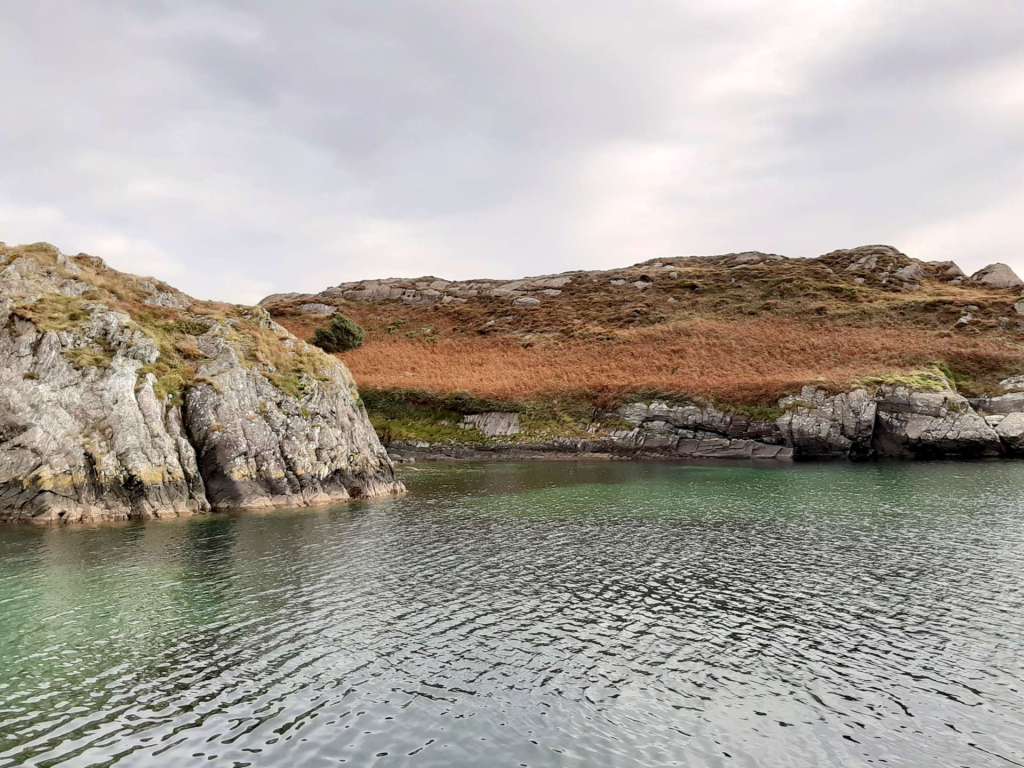
A few kilometres further we reached Trabano Cove, to the right we could see Bullock island which lies at the entrance where Loch Ine enters the ocean via the rapids. Loch Ine is a Marine Nature Reserve.
People enjoying the kayaking or swimming in the cove.
The young people set off on a kayak spin towards Loch Ine.

I have been looking up more information on the hills surrounding the town of Skibbereen. I found some interesting facts about Lick Hill but that is for another blog post, I will do a bit more work on this. While it is recommended that we travel no further than 5km from our homes for the next six weeks, I am taking even more interest in my immediate surroundings. Might as well.

LATE SUMMER COLOURS

In the hedgerows the colours of the heathers and other wild flowers are adding spice to the landscape.
Finally my Mexican Tarragon is flowering. The leaves are very fragrant and it’s a lovely plant.
A collage of the colours of our garden at present, and a late small tortoiseshell butterfly.