FIRST DAY OF SPRING

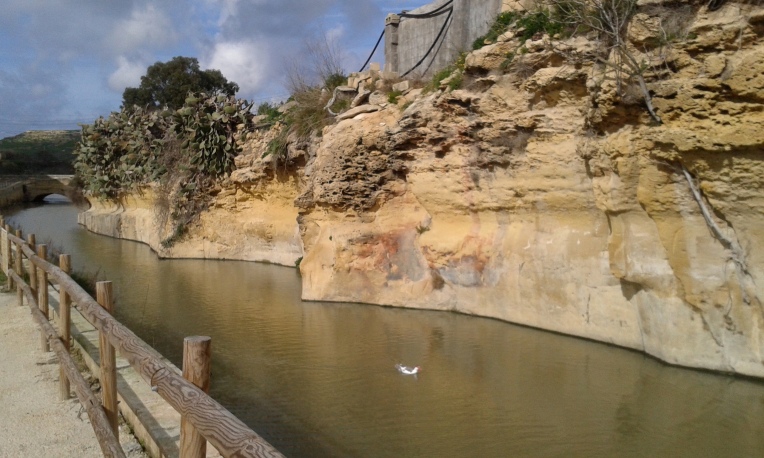
This morning we awoke to another beautiful day, it was warm and sunny, with a fresh breeze. After a long breakfast with Ian my legs could not wait to get going again, a nice walk around the areas of Victoria which I did not get to see yet was in order. I had actually not planned anything in particular, but had to do some shopping on the way home, so I decided to go direction Xaghra, this walk would take you up a steep hill, but it looks interesting. However when I reached the bridge just before the hill I noticed some water fowl, some ducks among which I thought were a few Muscovy ducks, red head, interesting looking.  So I decided to follow the ducks, under the bridge they went away from the reservoir and into a river or is it a watery storm drain, I am not sure.  The one side is very smooth and is dug out in the limestone, with what seems blue clay toward the bottom, the other side is a path, and that is the path I decided to follow, along with the water fowl.  A class of school children were walking ahead of me but otherwise it was a very quiet place with lots of fresh greenery along the path’s borders.  I found, a little yellow flower, which at the moment is flowering all over Gozo, it is the creeping wood sorrel.  On the water side there were castor oil plants with their beautiful red leaves and dark red seeds.  Some borage gave splashed of bright blue, and the prickly pear cacti, tall and impressive made good fencing.  The path was smooth to walk on, and flat which I took note of because it would be an ideal walk for Ian too.  Toward the end of the path there are two very large eucalyptus trees, the ground at this moment is covered with the halve circle leaves, and some seed capsules that came down with the last high winds were lying around too.  I smelled them to see if I should take some home as they are good against colds (not for internal consumption though).  And then all of a sudden I was on the main road to Xaghra and turned again toward the centre of town.  Here along the road I found goosegrass growing, it is a plant that I have used before, stewed in soups.  It is great to see so much greenery around the place, when we first arrived in autumn everything was brown and dried out.

Signs of spring are everywhere, it promises to be a beautiful summer!

20170201_132357

20170201_132423

THE AZURE WINDOW

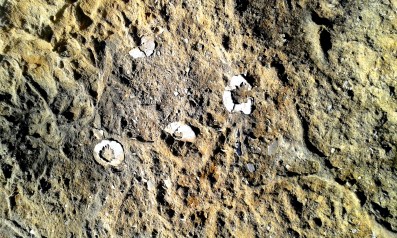
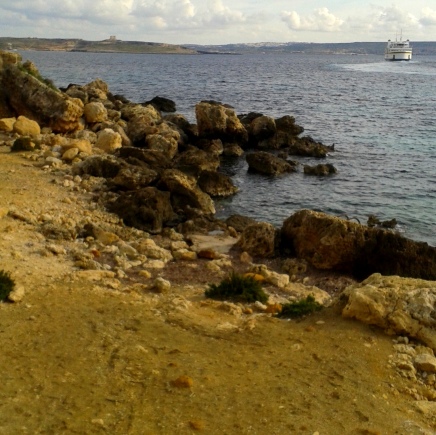
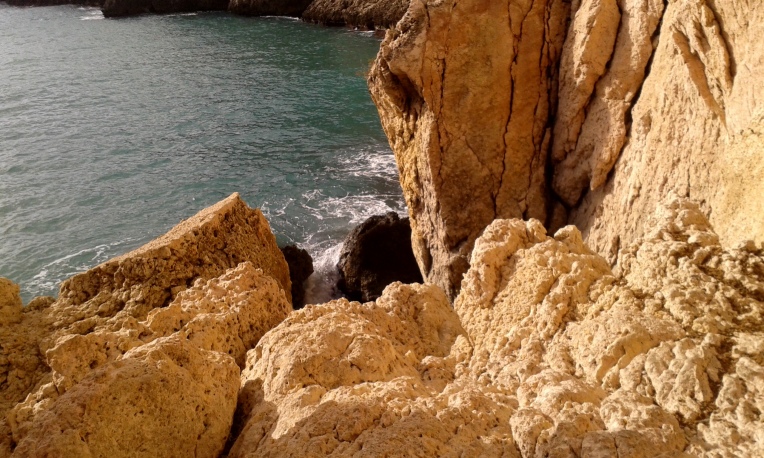
On a most beautiful late January day, today, with the sun pouring over the island, and not a breeze to be felt, there was nothing better to do than to take the bus to the Azure Window at Dwejra on the West coast of Gozo. Quite a few tourist were there with us, many Chinese in fact and I also heard some Northern Irish accents. Everyone was soaking up the sun, and unlike us, who are still wearing socks and woollies, I saw women in sandals, in bare arms and very light clothing, some were working on their tan in fact, others were taking selfies or photos like myself. The ambience was pleasant and the views breath-taking. We had been there before, I was very impressed with the amount of fossils under our feet in the rocks. Rocks are very much eroded here making for all sorts of strange and interesting shapes. The rock pools too had mirror-clear water standing in them. The sea and sky were both so very blue!
The Azure Window is special, very nice to see time and time again.  The inland sea too is a place where it is so nice to sit and see the little boats come and go

One sweet girl asked us if we would like our photo taken together, we said yes as this does not happen very often, the result was good. We took coffee in the only café that was open, and just soaked up the sun.
What a most beautiful day it was, and for a while we could forget about all the world events that has kept our minds so busy this past week.
20170131_135750

20170131_140618

20170131_140201

20170131_142018

20170131_140252

MGARR HARBOUR MUSINGS

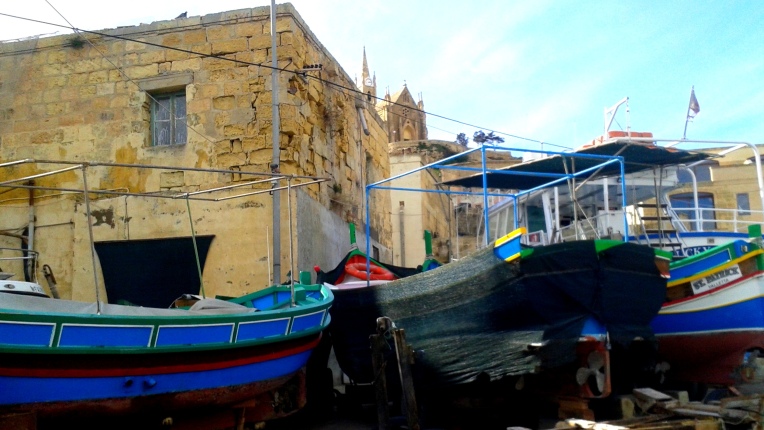
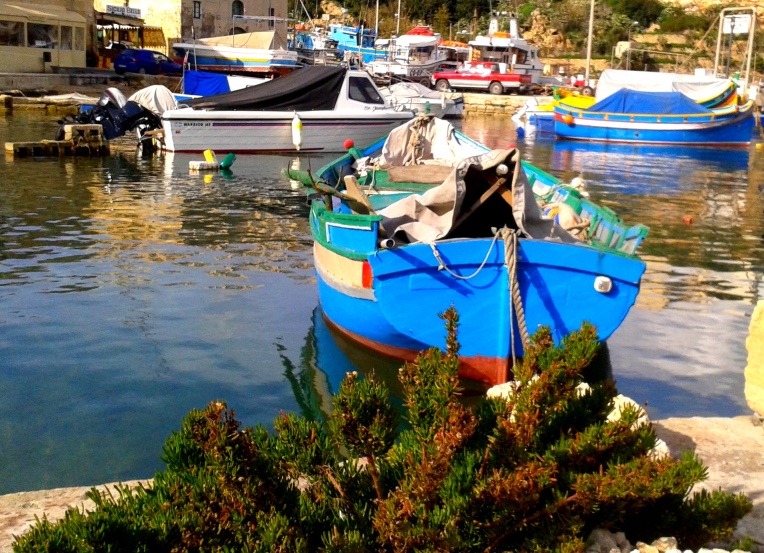
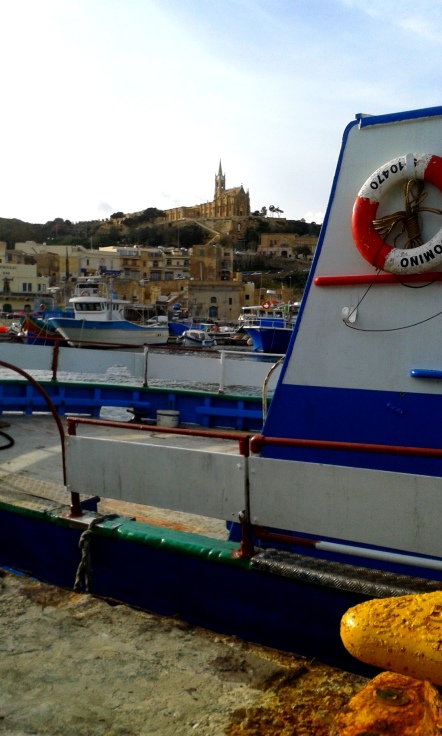
Yesterday we had took a lovely walk around the harbour of Mgarr here on Gozo. It is the first village that you get to see when you arrive on the island because the ferry docks here. I love this fishing village as it is overshadowed by beautiful rock formations, plenty of lovely greenery and wild flowers too right now, and colourful fishing boats, besides yachts and ferries of all sorts to enable visitors to visit some of the other smaller islands and take a cruise around Gozo.

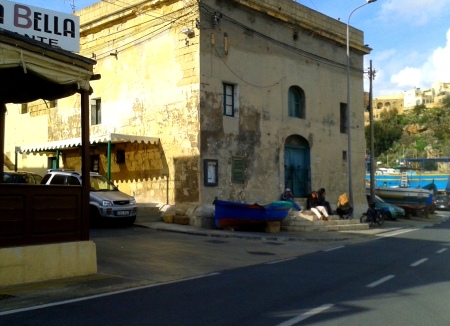
Yesterday it was quiet, or else it was the quiet time of the day (which runs from 12:30 until 16:00hrs. Some men were sitting on the stairs of a lovely old building, reading the newspaper and chatting. The ferry station was busy whenever the ferry was due to arrive or to leave.

We took coffee at a kiosk right down by the water and sat for a long time watching the few activities taking place, and enjoying the sun. It is a quiet place during winter, a peaceful place. We then walked along the original part of the harbour where the first ferries from mainland Malta used to arrive long ago at the time when the harbour was still undeep, and walked along the promenade, which for both of us had plenty to offer, Ian loves looking at the sea and the boats, while I looked upwards direction Ghajnsielem at all the wonderful rock formations, the plants, and even the few farms where I saw tomatoes ripening in the sun, and that during January!

We spent the rest of the afternoon just walking, resting, enjoying the sunshine and taking in the peace and quiet of this lovely little harbour, and it wasn’t even cold.

20170127_143144

20170127_141150

20170127_141051

20170127_140839

20170127_145233

20170127_151731

BITTER ORANGES OF GOZO

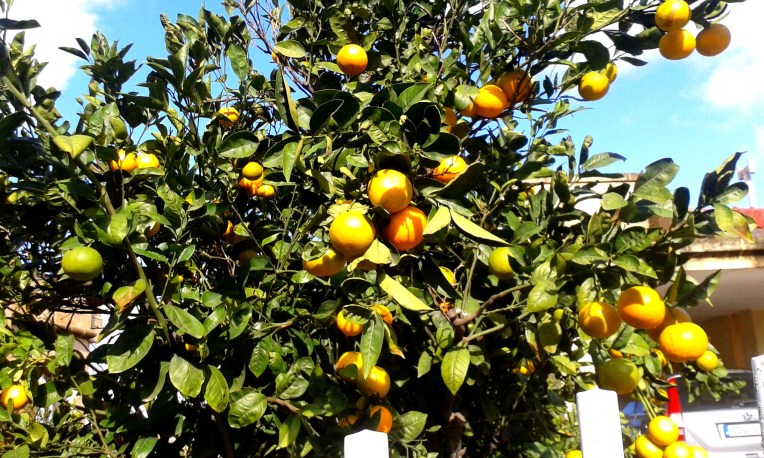
Last week I tried something new, like many Gozitans I made use of the Seville bitter oranges which are grown locally to make marmelade, something I had never been interested before. But the scent and colour of the fresh bright orange fruit on the trees locally made me want to try my hand at making marmelade, but besides, one of my new Gozitan friends, Tessie, brought us three kilos of organically grown oranges fresh from the tree, and she also gave me a recipe to make this delicious bitter jam. So, full of enthusiasm last Monday I gathered the stuff that I needed to start. Fine brown sugar, weighing scales (which the flat does not have but Tessie brought, lemons, also brought by my friend from her own tree. The pictures will tell of how I faced some challenges due to the fact that the flat did not have the right pot for cooking marmelade, but I managed with a pan that has a thick bottom. I ended up with so many pots and we shared most of them out to friends and neighbours because we ourselves only eat a little of marmelade. I tasted it and it was very much to my liking, bitter, tangy, with a sweet after taste, but everything in balance. Yes the recipe was good and simple too. It was interesting to see the fruit preserved in this way, and to see the process of getting it from the tree into the jars. Taking part in a little bit of tradition here which I surely enjoyed.

20161120_130654

This type of orange has very many pips in it, these pips are used, cooked for a little while and the juice strained and used in the marmelade as pectin.

Above, here I had to weigh all the sugar into lots of 500gr and use the pan six times filled with 6 lots of fruit all measured out.  The large pot I had being very thin almost burned immediately so I transferred it this way, it took a long time, most of the day to do it this way but it worked and all the marmelade succeeded I am happy to say.

2017-01-25-19-44-54Apart from a lovely taste, I like this marmelade for its bright colour, only fruit and sugar used, nothing else. mouth-watering.

COLOURFUL PERIPHERY OF VICTORIA

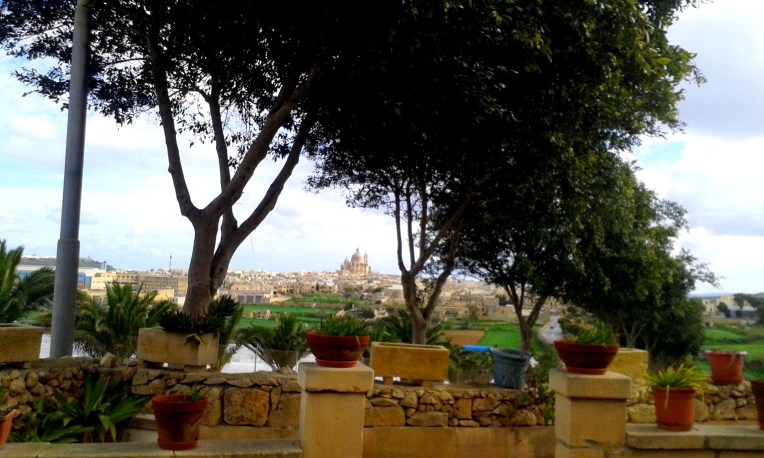
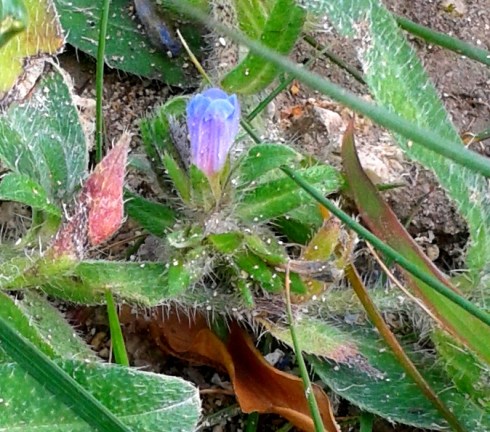
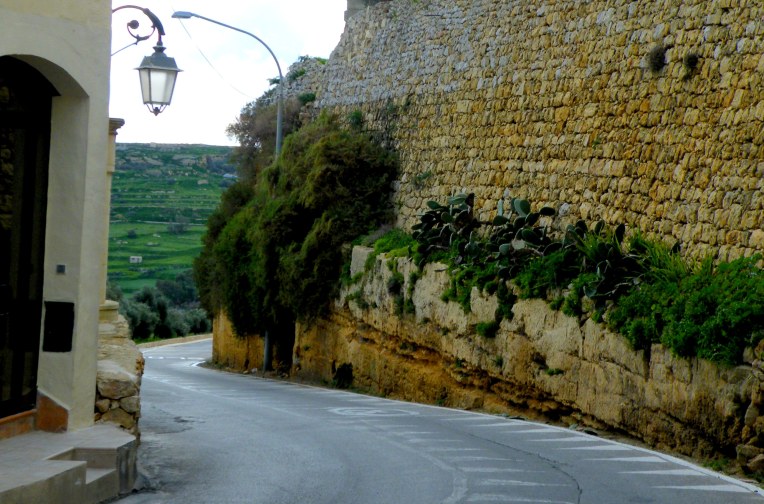
A walk to the outskirts of this historical town treats me to wonderful views of the surrounding villages and countryside, places like Sannat, Xewkija and Xaghra can be seen easily, and in between the villages there is a wealth of greenery and meadows full of yellow flowers. It was a cold day, a slight breeze made me put on my hat, but for walking it was excellent weather. I had been to the library, where the librarians were freezing, obviously because their job demands deskwork, it is a fairly small library here but the librarians are very helpful and friendly. The book stock, although some of it is old enough, is very interesting to me for my chosen subject while we are here. So after that visit I decided to head off on the nearest street and see where it would bring me. Interestingly it turned out to be a different area from most of what I have seen of Victoria because up to now I have just hung out in the oldest part of town, here it is very residential. The whole town of Victoria is very residential, a pleasant town to live in I can say from experience, very friendly, always something happening and buzzing with people, yet quiet and peaceful, you feel safe here. It is historic, and beautiful in its limestone buildings.  Here a few photos of today’s walk.
2017-01-17-13-20-57

2017-01-17-13-13-23-copy

Looking towards Xewkija, I could easily have walked there if I wanted to, so close to here.


2017-01-17-13-21-12                             A beautiful little flower on a patch along the road.

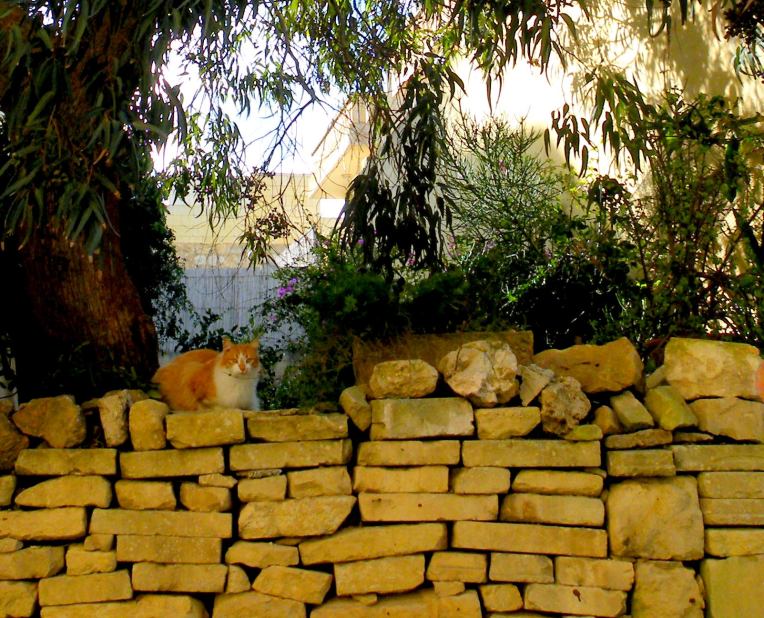
2017-01-17-13-15-52-copy                                  Cats meet you all over Gozo

2017-01-17-13-17-49-copy

2017-01-17-13-18-48-copy

A VILLAGE WHICH LIES STILL AND TRANQUIL.

Zebbug is a village in an elevated area on the North coast of Gozo. It was a Wednesday morning when I visited, everything was quiet, I saw no one when I got off the bus and I was the only person riding on the bus too. So tranquil was this place, everything was shut, that is except the church for which I headed, crossing over a large empty square I reached the steps leading up to an impressive Baroque façade of the village church, I was on a mission, to go and see the beautiful interior which is made up mainly of locally quarried brown Onyx stone, and the book where I read about it did not let me down, I was very impressed and delighted to be able to see this, and to touch this semi-precious stone. I found myself looking at the altar, the confession chair, the pillars, holy water container, a statue, the chairs for the priests, everything made out of Onyx stone, it looked amazing. Yet again I am finding that the ‘stones’ or rocks found on Gozo are very pleasing to the eye!

So I walked on along one of the streets and took in all that was to see, soon I got glimpses of the sea and the beautiful green agricultural landscape along the coast, I found it interesting to see lots of fields like patchwork, the land was being worked by some farmers I noticed. I read that Zebbug derives its name from the Maltese word referring to the Olive tree. The village is also known for its lace making, its weaving and its woollen blankets, but I did not see any of this when I went, no shops were open. The village was quiet, there was a vegetable van driving around, I bought a very tasty orange from him, a few people were gathered around this van buying stuff. There was also a gas delivery truck driving around blowing the horn at intervals as is done here in Gozo. It was when I saw a bread van that I decided to check out if it carried ‘Ghazziela’ I had read about it and had to see one, it’s a biscuit in the shape of the ‘M’ for mother Mary, tradition is to hang it behind the door of your house in order to protect the place from storms and lightning. These biscuits are blessed after they are baked. Of course the bread van lady did not have them, they are not for eating! However, a kind lady standing beside me and hearing me ask for the Ghazziela offered to have a look for some in her house, she did come out with two of them and gave them to me, we had a chat after that and she and her sister really made the visit to Zebbug a very memorial one, so kind and helpful people are, I am experiencing this all the time, it warms the heart. The kindness of these two ladies will not be in vain, it has touched me and showed me once again that people have such good hearts, humankind is not a failure, if we let our hearts speak then kindness has no bounds, it made me happy to mull over these thoughts on my way home.

I took many photos, some of which I will share here, but there is still much more beauty to find in this tranquil  village, I’m so glad that I went there.

The two Ghazziela gifts I received from the kind ladies, and on the right this is the inside of a Prickly Pear cactus leaf, people use this material in making jewellery.

dscf9376

A street leading towards the blue water, and butternut squash drying in the sun.

These four photos are of the village church and its Onyx interior.

I saw grapes hanging over the wall in a village street, and little country lanes lead out from the village to the pastoral land below in the valley.

dscf9316

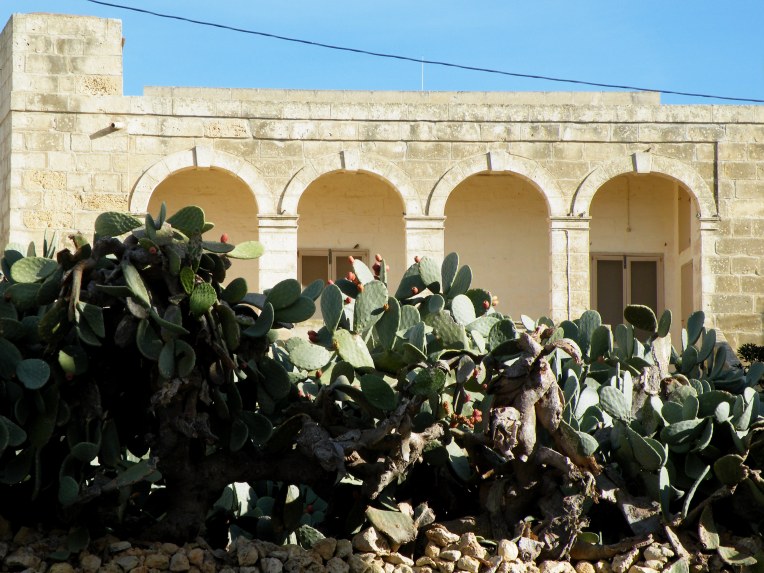
This village has its fair share of arches which I love so much, I hope that they can always be preserved.

dscf9417

Greenery looks so nice against the limestone walls.

dscf9333

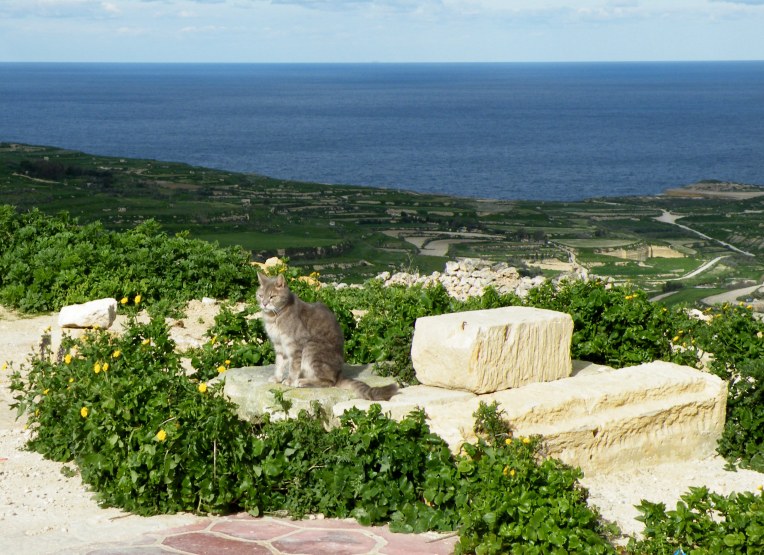
This cat did not have to say much for herself, she was just soaking up the few rays of sunshine on this winter day.  You are never short of cats on Gozo, and they are beautifully coloured animals.

DELIGHTFUL CLIFFS

20161221_134109

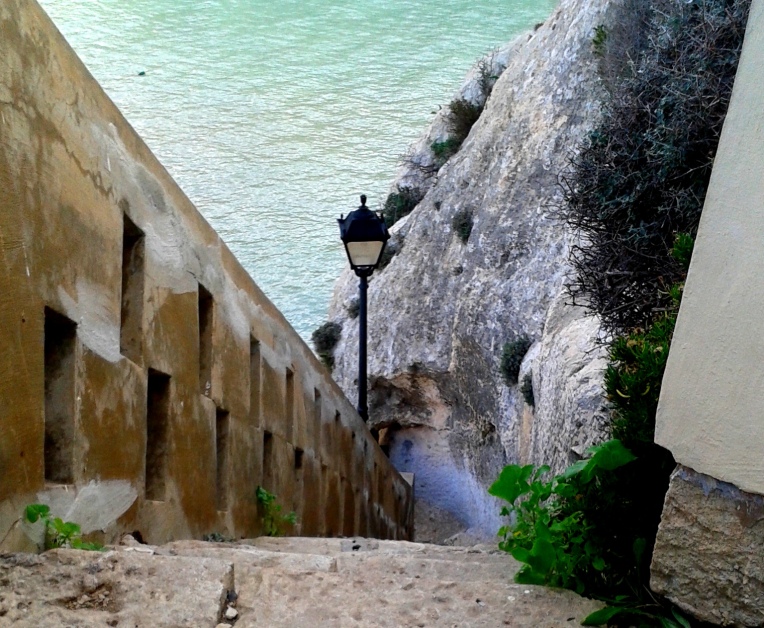
Xlendi, is a village on the South-West coast of Gozo, it is surrounded by steep cliffs to one side, they look very impressive from every angle.  One can climb them via stairs that lead one to the Caroline cave, this walk gives lovely views over the bay, the clear water, sometimes blue, sometimes green.  It is of great interest to people that are interested in the rocks and flora that grows in the crevices.  Beautiful!  So one day we walked, or rather climbed this delightful hike and I like to share some of what we found.

20161221_134732The limestone rocks along the walk. 20161221_135022The rocks are amazing, full of fossils, beautifully light in colour.

And finally one goes down to the Caroline Cave where the water laps against the weathered rocks.

Some of the flora along the walk, amazing how the plants grow out of the crevices of the rocks, and look so healthy and fresh!

Back down at the sea front. Xlendi is actually a fishing village, though a lot of it’s income these days comes from tourism too.  We always love going to Xlendi, it was the first place we stayed in last spring, we get there by bus in about five minutes from here and because there are more and other beautiful cliff walks to be found there we never get bored, always we come across something new, a plant, an insect, always something interesting to see.  I also love the trees in the square, there are some old Tamarisk trees, which look like old men riddled with arthritis, but they are beautiful too.

20161221_155655

I guess I will never, no matter how small the island of Gozo is, find at a loss of what to go and explore, so much to see and do, in fact a great place to live.


BOBBIN LACE MAKING ON GOZO

Last spring while we were visiting Gozo I discovered that there is a tradition of bobbin lace on the Maltese islands that is similar to our Flemish bobbin lace, and it was then that I made the decision that if we would find a flat and come here for the winter, I would join a lace making class. Some forty years ago I acquired a lace pillow and bobbins from a friend, I even learnt a little on how to use the bobbins, but alas life got in the way and I never really took it up as a hobby, still I did keep the pillow and the bobbins to this day, the pillow is back in Ireland, the bobbins I brought with me.

Here the people use an oblong type of pillow mostly, while ours is round. When we arrived here beginning of October I set out to find a class as planned, but soon realised that I was too late and all classes had been filled. While I was disappointed I just got on with my other interests and while walking, some weeks later, through the narrow streets of Rabat (the old part of Victoria)  I happen to see a woman sitting in her doorway and doing her lace, so I got chatting with her, she was called Victorina and she offered to talk to her teacher and ask if I could join her class, without further ado I spoke with her teacher, was accepted, bought my supplies and joined the class as a total beginner. I immediately found it a very peaceful activity and enjoyed it. Soon, after a few weeks the pattern became a little more difficult and concentration is needed very much. Last week I even had difficulty getting to grips with the complicated arrangement of stitches and design, but after undoing my work twice I got it – that is what is necessary in lace making, you got to ‘get’ it and then it is a piece of cake. Tying the weavers knot caused me some problems too, but after lots of practice, now I also got to grips with it. All in all it is good exercise for the brain as well as the hands and I love it.  I am enjoying very much the interaction with Gozitan women, though a lot of Malti is spoken, of which I love the sound, they are very encouraging and talk to me in English, I feel included among them.

Here is an 82 year old Gozitan woman who sits doing her lace, selling some of her work to tourists, her work is exquisite.

A little bit about the history of lace making in the Maltese islands.

During the sixteenth century, bobbin lace was brought to the Maltese islands it is believed to have been by the Knights of St.John, who had become familiar with it either in Flanders or Italy where beautiful bobbin lace was already being produced.  The Knights had learnt to use lace in the embellishment of their garments.  Bobbin lace became an import from Northern Europe, but soon the women of Malta and Gozo started to weave their own lace, a century later their lace had become the envy of the Italians and the Belgians.  On and off through the centuries lace making had its ups and downs, various people encouraged the making of it along the way.  Apparently around 1864 the Gozitan lace took a different turn from the Maltese lace, I read that it was based on a model of Genoese lace and that two Gozitan sisters copied the style and made it their own, so the Gozitan lace was probably based on lace from Genoa but the sisters then developed their own patterns and the lace produced as a result became Gozitan lace as we see it today.  According to one source Gozitan lace has more swirls in its design than the Genoese lace.

Lace making became more important as a means of helping to make a living during the 1860ies when many Gozitans suffered from poverty.  Lace was made at this time mainly in the home and by the family, mother and daughters would work together.  The lace produced then became used to barter for food.  Eventually lace making industries were set up by a parish priest,  Dun Guzepp Diacono.  These were set up in Xaghra and Victoria, which lie close together though they are different towns.  In these industrial houses classes in lace making were taught and more patterns were developed as time went by.  Lace in today’s economy of Gozo is mainly produced for the thriving tourist industry.  The lace is very beautiful and is mostly still produced by hand.  There is a lot more to say about Gozitan lace and its history and its modern economic value and use, I only wanted to give a little  information on it here. What most of the people here say when talking about the future of lace making, is that they are worried that it is a dying art as not many young people are taking it up.  At the same time it is being taught in the university as a two year course.  I do think it has a future, it is too beautiful an art to be lost and the Gozitans are actually very proud of their lace making.

Some examples of lace, and lace making here on Gozo.  To me what lace reminds me of is the intricate embellishments in the architecture of their cathedrals, it also reminds me of the beautiful honey coloured limestone when it has been eroded and is full of holes, a very lacy effect.

The Gozitans themselves also love lace and when I walk through any of the towns I constantly see lace being used to hang in front of doors presumably to keep flies out.  These curtain are nowadays often machine made though, like in the photos I put together in a collage.

blog-about-lace-in-gozo

Some preparations and off to my first class where I was taught the cloth stitch in three different ways.  The linnen tread that we are using is Irish, believe it or not, it has been imported from Ireland.  It is a very strong and lovely tread to work with.

Some pictures of my first works, it is very easy to make a mistake by forgetting a stitch and only discovering a bit later and having to undo many stitches, and while that is pleasant enough work to do too, it does mess up the tread and makes it fluffy, so I try and concentrate real good.

My latest works, the patterns are getting just a little more complicated but also more interesting, what is interesting is how some basic stitches can be used to make an intricate pattern, and I am only in the very beginning right now.  Thursday is my next class and then we are packing up for Christmas.  I am already looking forward to starting up again in the new year.  I hope that before we return to Ireland I will be able to work away on my own and follow a pattern with ease.  There are, of course, some very good YouTube videos and websites to learn more about bobbin lace.

To help me in some of my research on the history I read this interesting work:  “Bobbin lace. it’s economic and social role on Gozo”  by Adrienne Foster and I also read a WordPress article at https://vassallohistory.wordpress.com/maltese-crafts/comment-page-1/#comment-14763, and I spoke with a variety of Gozitan lace makers and sellers over the months that I have been living here.

Last but not least I would like to show an example of Irish Carrickmacross lace which my sister Maria, who died of cancer when she was just 50, used to make, it is a very intricate lace embroidered on fine netting, I guess not easy to do.  Below are examples of what Maria made.  This is a totally different type of lace in comparison to Gozitan lace of course.


ROCK FORMATIONS OF GOZO

The Maltese islands, what a hold you have come to have over me! It all started at the airport last spring when we arrived on a sweltering hot night and I could sense a scent that I was not used to, at the time I did not take too much notice but later I remembered it and I got to know what it was that I could smell. It was the scent of limestone! I know this sounds a little unbelievable or impossible, but I swear by it myself. It was the start of my love affair with these islands, and it’s not only the scent – because of course that was only the first impression, later other scents took over, a variety of flowers for example.

In the light of day though, it was not the scent either that made me love this place so much, it is the limestone, the honey coloured limestone which surrounds me here, I breathe it, I see it with my eyes constantly because the houses and other buildings are all built in it, and it is so very pleasing to the eye. In fact I think it feeds one’s soul, no I am sure of it.

So after spending a month on Malta and a month on Ghawdex (Gozo) we went back to Ireland for the summer, and on the first of October we were back, we rented a flat from a very nice man, this in the heart of Ir -Rabat (Victoria). I am totally relaxed here, I probably absorb the calcium from the limestone and this is exactly what I need. (I was born and raised in the Kempen and Antwerp, a sandstone area, sandstone has its origins in quartz rock, it contains silicon. But what this has to do with the limestone here actually is nothing, it is just that I seem to be sensitive to what soil or rocks I am living on and this limestone suits me so very much, I feel happy and relaxed here. It is also the beauty of this rock type all around me, wherever I look I see the stone, and in the evening sun the stone turns to pure gold.  I cannot get enough of it.

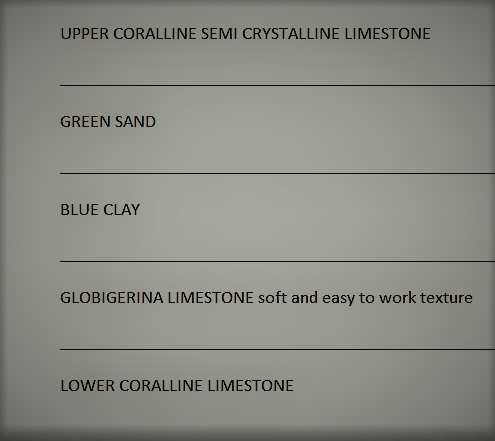
So I am trying to educate myself a little in the geology of the Maltese islands, I took out some books from the library and did out a table of the different layers of rock that are to be found here.

geological-chart

The lower Globigerina limestone is the stone that is mainly used as a building material, they call it Franka on Gozo.  This stone is made up of a fine grain and is easily workable.  It is a most beautiful stone to look at and it makes the houses, churches and buildings on Gozo very attractive. It is an easy medium to carve and this is done with great skill here.

Because this stone is soft it erodes easily too over the years.  Very often fossils can be seen plainly, mainly planktonic fossils.

I am not well up in geology, therefore I cannot talk freely as I would like to do about the rock formations, but I am learning.

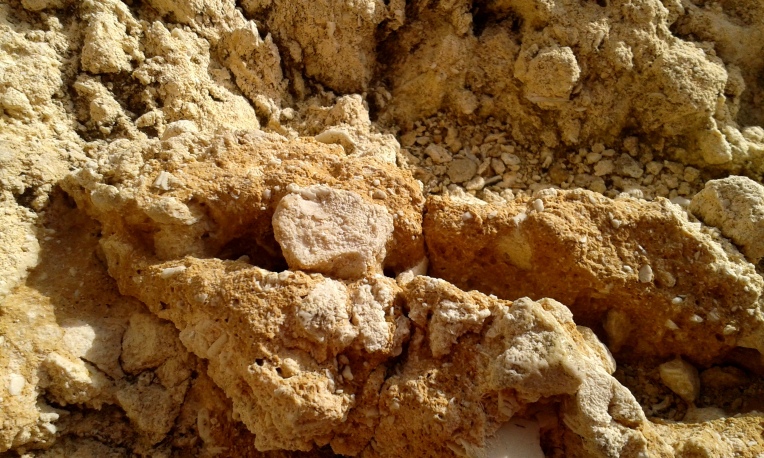
More examples of limestone, and carvings.  Below are examples of the limestone found at the cliffs at Xlendi, magnificent to look at.

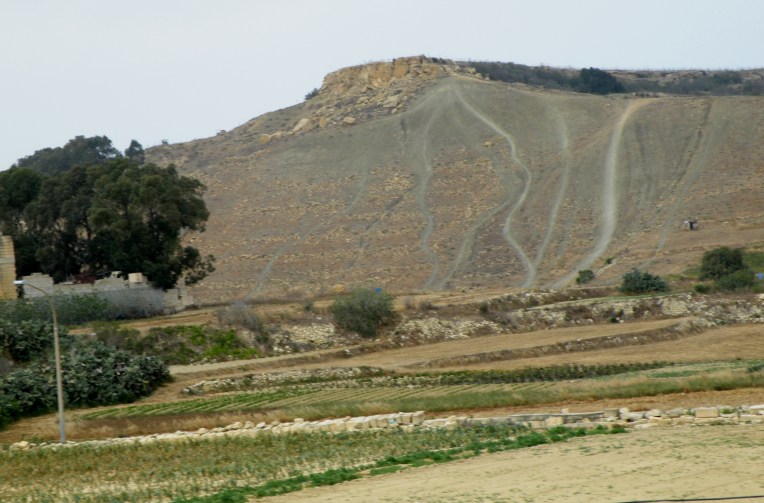
Then  (below) there is an example of the blue clay rock formation, it overlies the Globigerina Limestone formation and erodes easily.

dscf5258


The two books that I used for information, I took them out from the library and was glad to have found them.

Alas this is my incomplete discussion on the rock formations of Gozo.  There is so much more to say about these rocks.