MOLLY GALLIVAN’S COTTAGE

Molly Gallivan’s cottage is named after Molly, who lived in this cottage hundreds of years ago, she was a widow and mother with seven small children. And showing entrepreneur tendencies she came up with the idea to supplement her small income by opening a “Sibheen” (illegal pub) where she sold her home made “Poitin” that was locally known as “Molly’s Mountain Dew”

In 1840 a mountain road was built linking County Cork and County Kerry, which led from Glengarriff over the mountains to Kenmare and was called the Caha Pass. This road happens to pass Molly’s cottage and when more and more travellers and tourists took this road Molly saw another good way to increase her income. She set up her own cottage industry and started to sell home spun woollens and knitted Aran jumpers which her neighbours helped her to make while the local sheep farmers provided the wool. Such a resourceful woman was Molly.

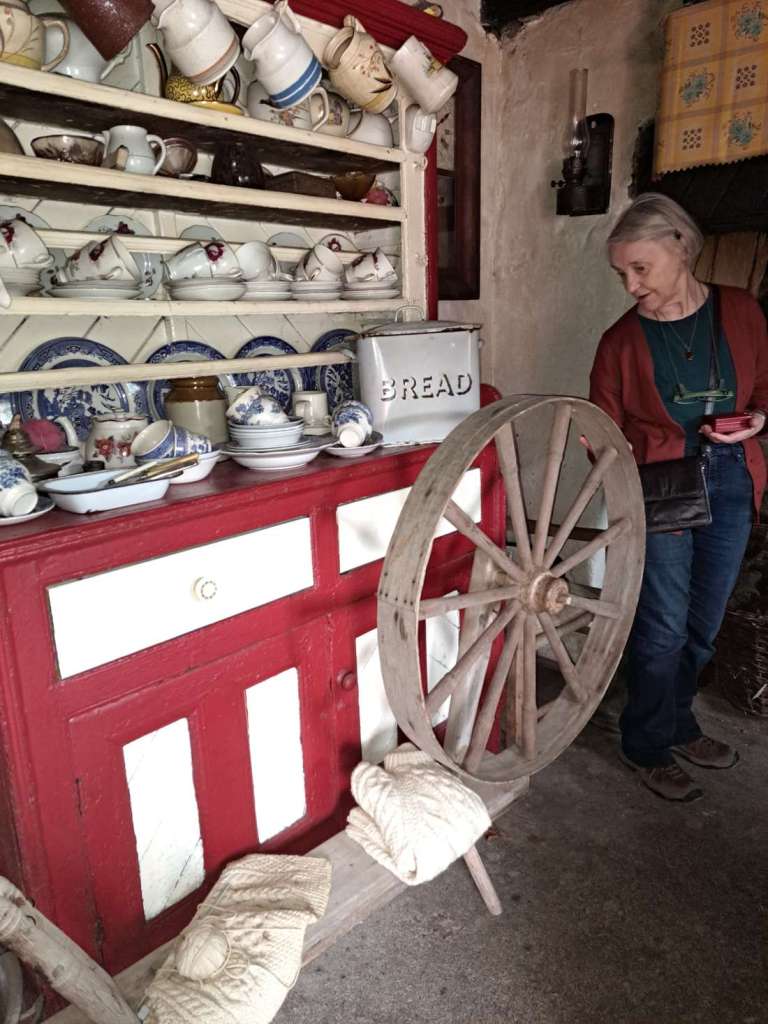
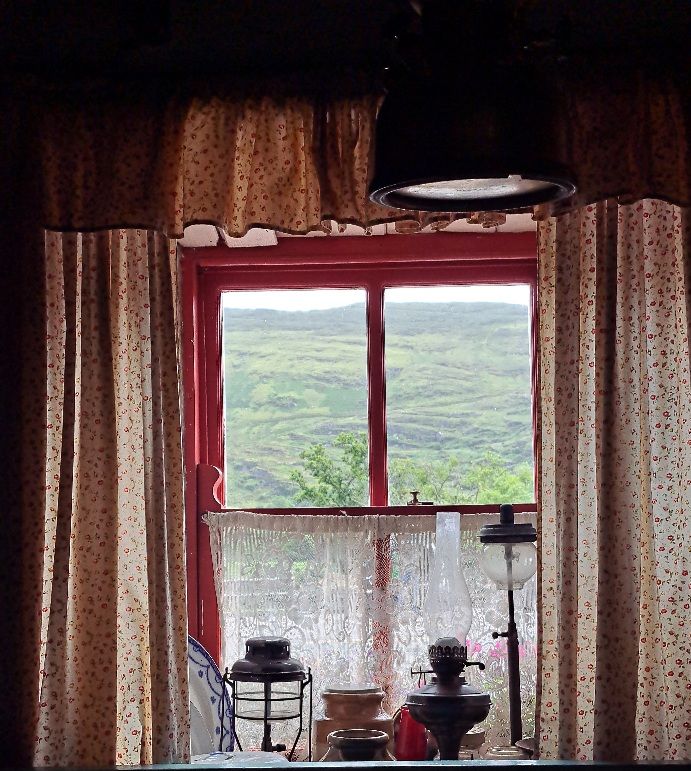
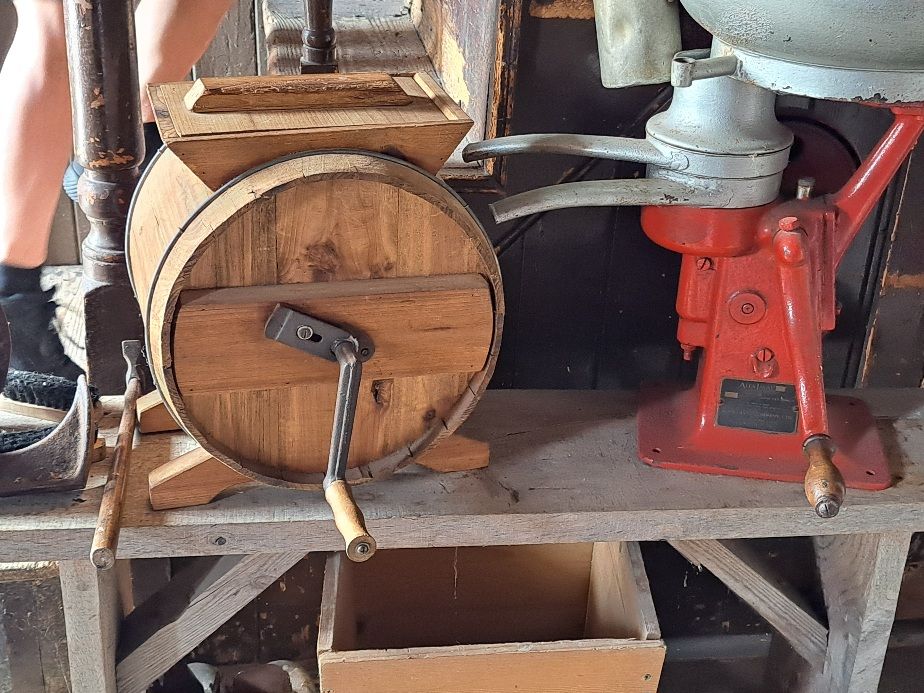
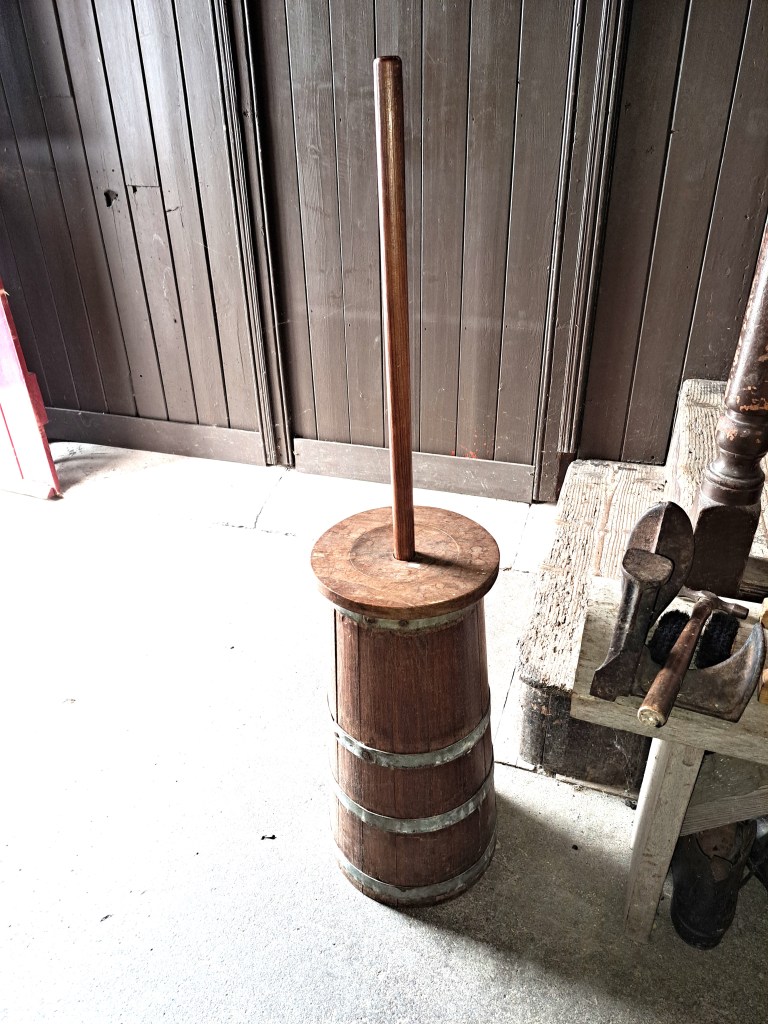
In the following photos are some of the lovely authentic items that Molly used to look after her family, a butter churn among them. In this kitchen traditional Irish scones are made till today, I’ve tasted them when I visited with my sister Josephine. We both find it interesting to see what utensils women would have used here less than one hundred years ago.
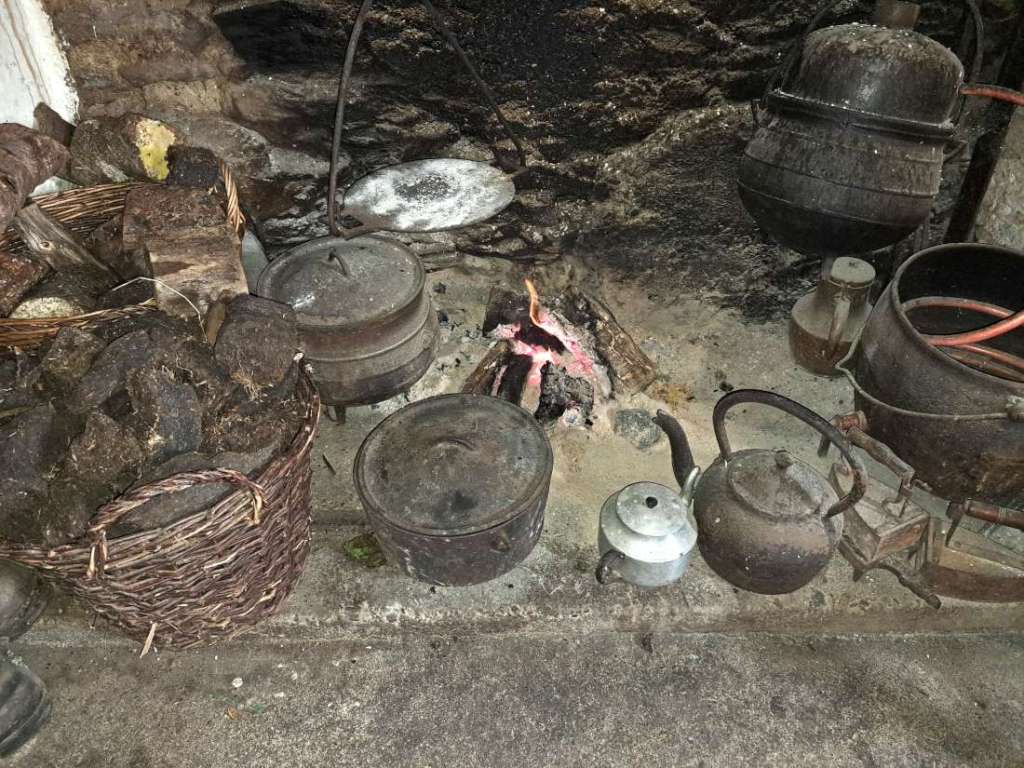
Looking at the heart there are several items, one of them is a shallow black pot in which a soda bread was made. The dough would be put in and the pot would be put in the fire and hot pieces of turf placed on top of the lid. The resulting bread tasted delicious. I see a flat round gridle too which was used in the making of gridle bread using rough flour, some maise flour, sour milk, bread soda and an egg. Here I found a video showing how: https://youtu.be/PpoTNWOKWtY There was always a large pot to boil the potatoes which were always popular in rural Ireland.

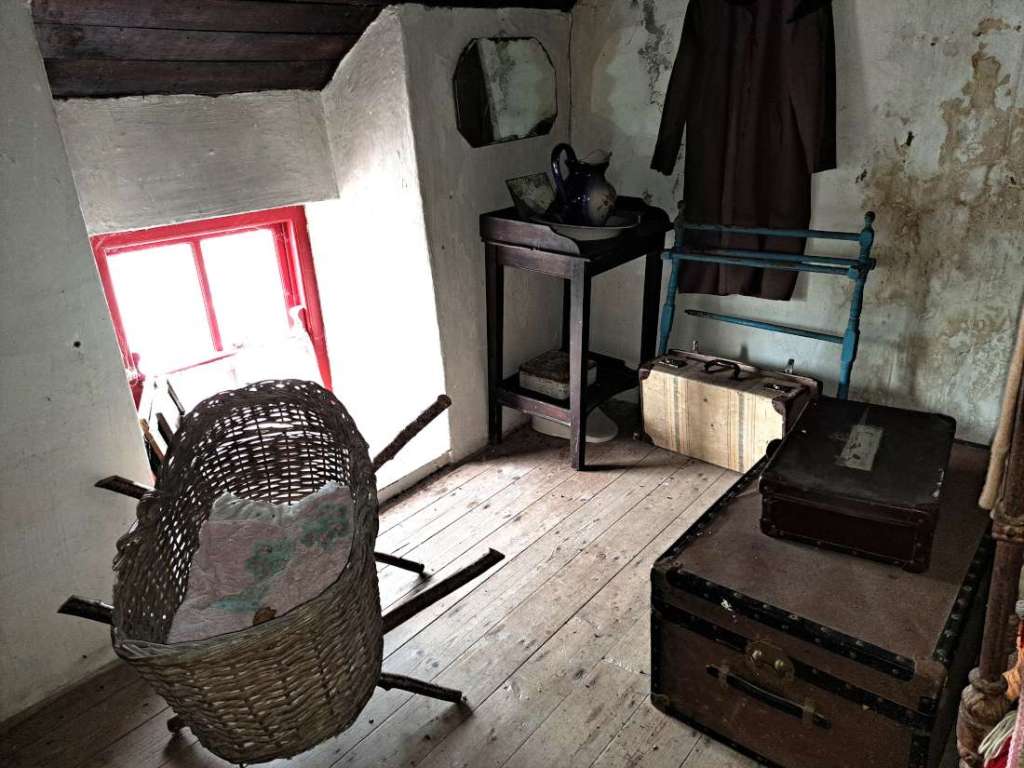
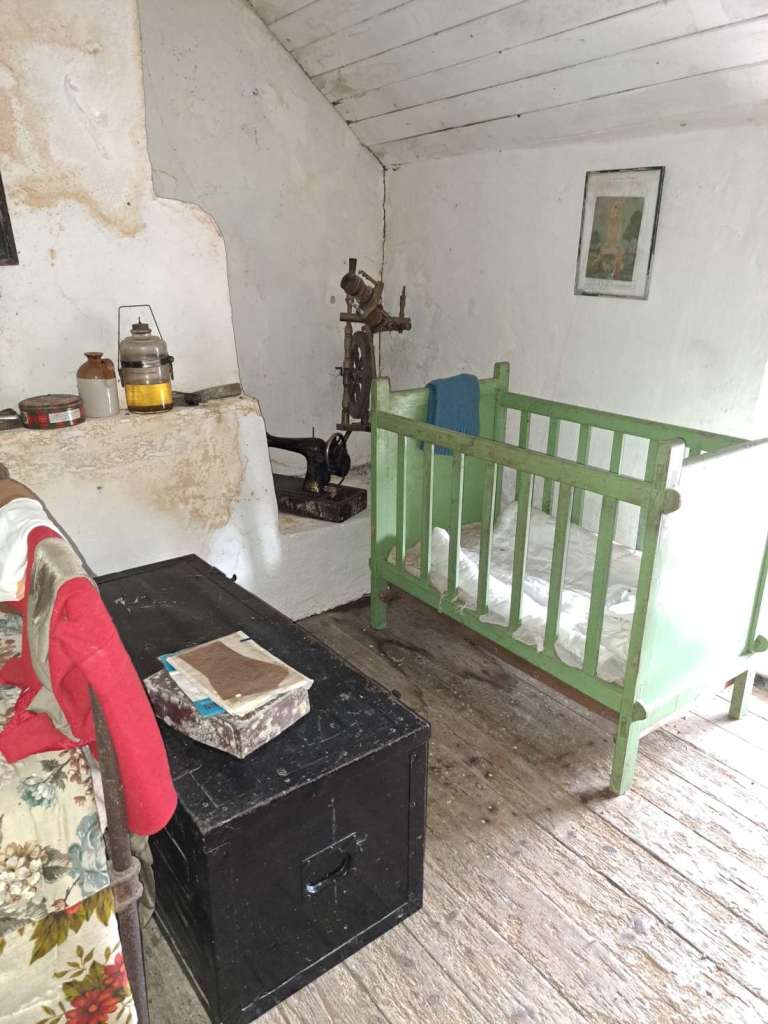
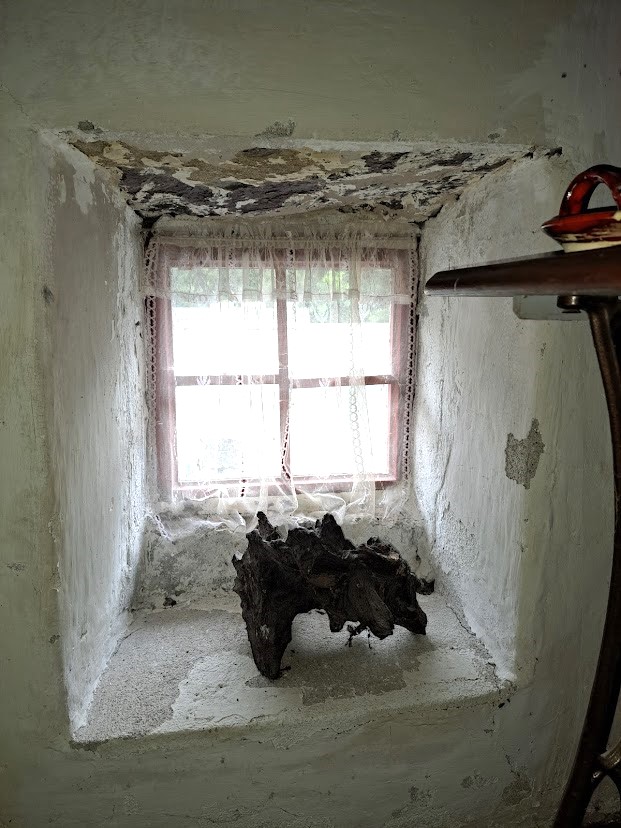
The upstairs in Molly’s cottage actually has two bedrooms and a bed also on the landing. The windows are tiny. There is a rustic cradle. I spot a small spinning wheel in the corner of one of the bedrooms. Electricity came to these areas only in the 1960ies. Her sewing machine would have been worked by hand, same as the spinning wheel and the loom. It was a simple life, but it cannot have been easy always.

We had a lovely cup of tea when we stopped by there during my sister’s visit. And of course we sampled the homemade scones. We also visited the shop area with the lovely selection of Irish woollen items and other Irish goods.
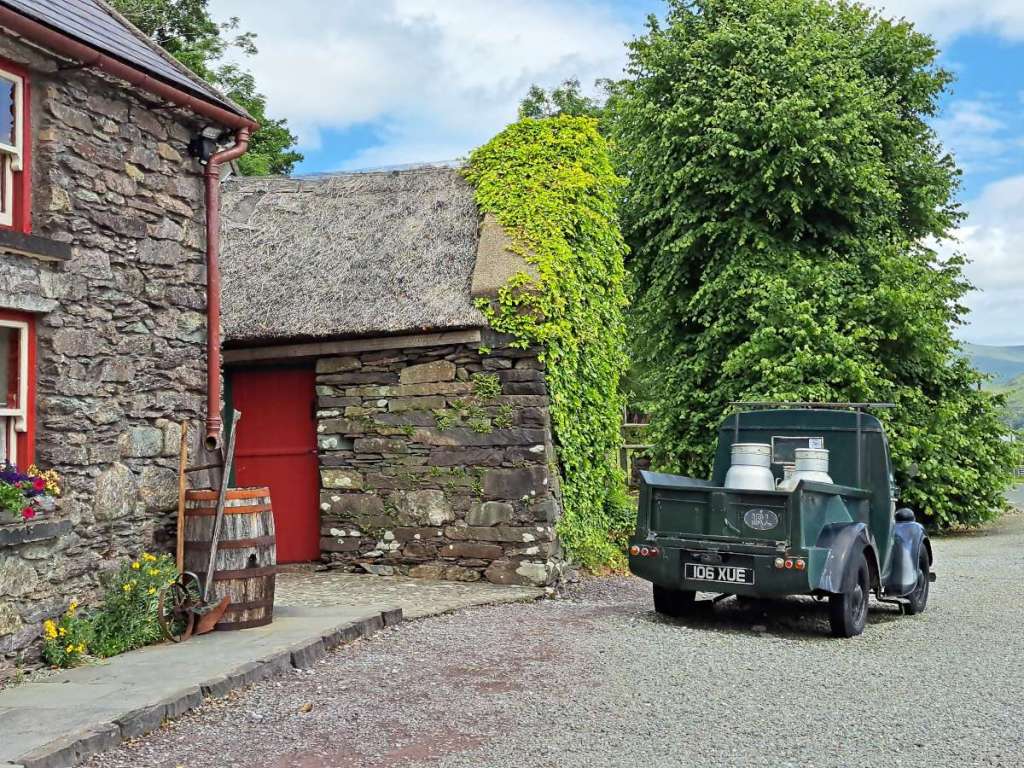
The cottage seen from the N71. Also some of the out-houses one of which is probably where Molly made her illegal “Poitin”, her mountain dew as it was called. The original cottage was only one story part of which can still be seen here in the photo.

I hope you enjoyed learning a little about Molly Gallivan’s life and her cottage. She must have been a great woman!

The cottage is found in Bonane in County Kerry. Bonane is situated in a valley between the Caha and the Shehy mountains and the sea. The cottage overlooks some of this valley. Bonane is know for its many ancient historical sites. Among the sites are pre-famine house ruins and field systems, bronze age copper mines and much more, fascinating stuff. Today Molly’s cottage and traditional farm depicts the lifestyle in the valley as it was during the early 1900s.

I include here the website of Molly Gallivan’s Cottage in case you would like more information on it. https://mollygallivans.com/the-molly-gallivans-experience/

I pass this place once a week and often stop for a cup of tea or a look around. I find the old utensils and the whole setting fascinating.

A JOURNEY FULL OF INTEREST

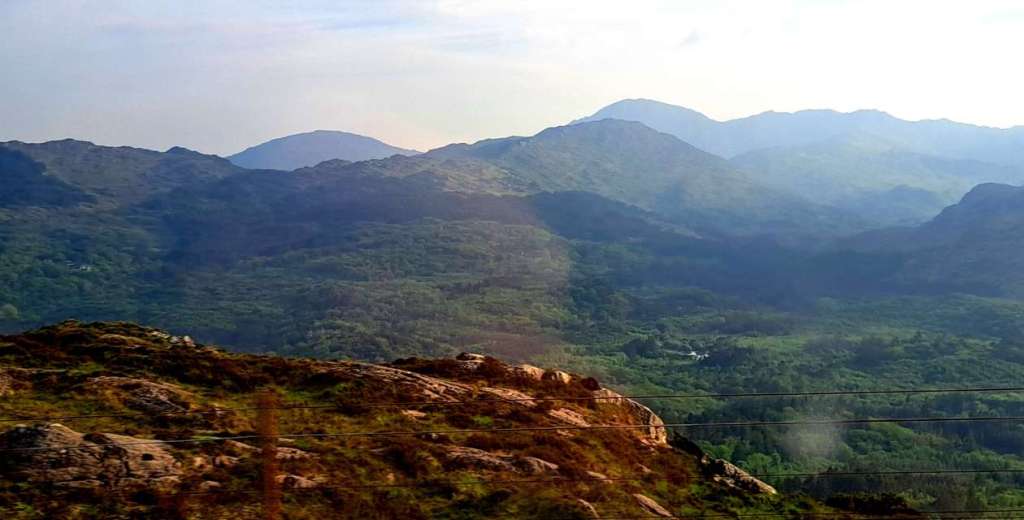
This photo shows the road over the Caha Pass going down into Bonane with a beautiful view of the Macgillycuddy Reeks in Killarney in the distance, among them is Carrantuohill, the highest mountain in Ireland at 1038m. It gets climbed often, recently my sister, brother and other members of the family enjoyed getting to the top. I took this photo and had waited all summer for the right moment to get a clear view of those mountains, it was already deep into September when I got the right conditions, it shows how the land had already started to get a rusty colour, beautiful!

The landscape has been sometimes dark and mysterious lately, this photo I took the day after a large storm sent torrents of rain down the mountains. It made for a most beautiful journey.

Because of the large amount of rain that fell Barley lake (situated in the Caha mountains) could be seen from the tunnel road quite clearly, while I was literally driving through the clouds. Lots of waterfalls everywhere. Beautiful!

The sky is often quite spectacular to watch. In Ireland neither the rain, nor the sun are ever far away and the clouds are ever present in fascinating forms.

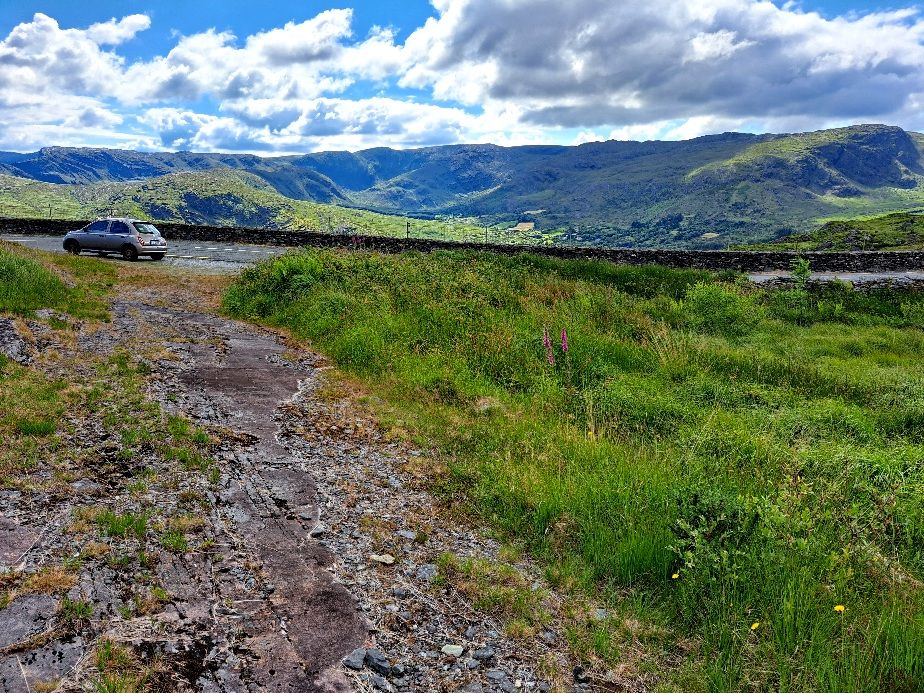
On better days, a roadside picnic with a lovely view over the valley below is a must stop for me. The quietness, even if this is a main mountain road, is so very peaceful.

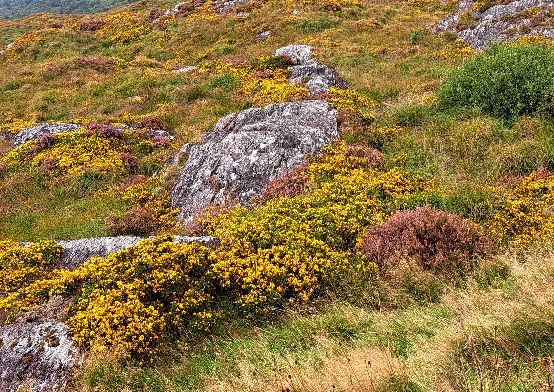
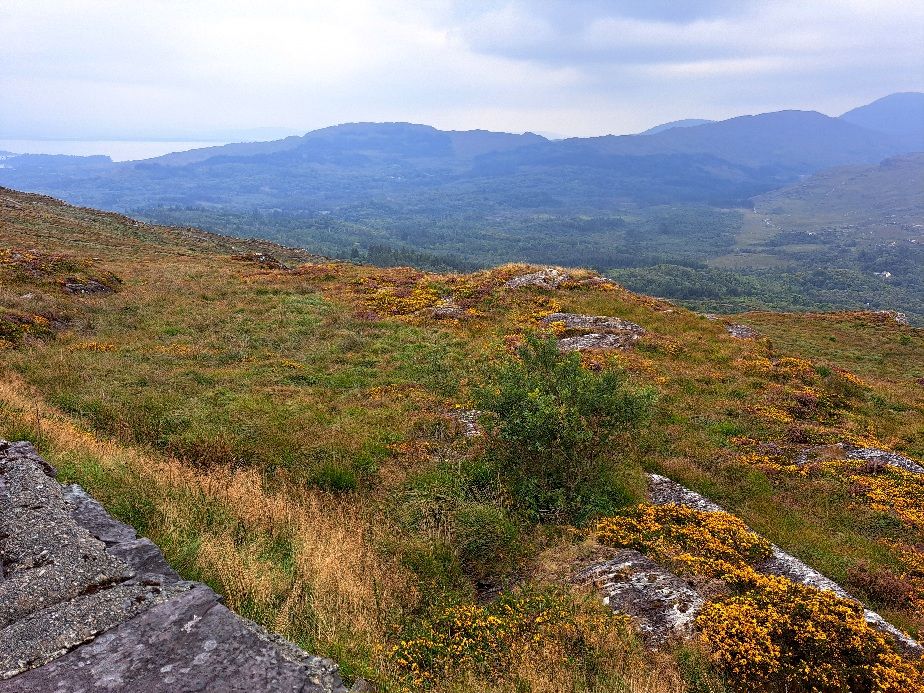
Some more photos of last months journeys to Kenmare. The landscape is changing its colours fast. I often climb up some of the rocks and find all sorts of interest. The flora is mainly brown sedges now and some of the young gorse plants that were still flowering, and the end of the heathers, also the beautiful seedheads of the bog asphodel, a lovely bright orange!

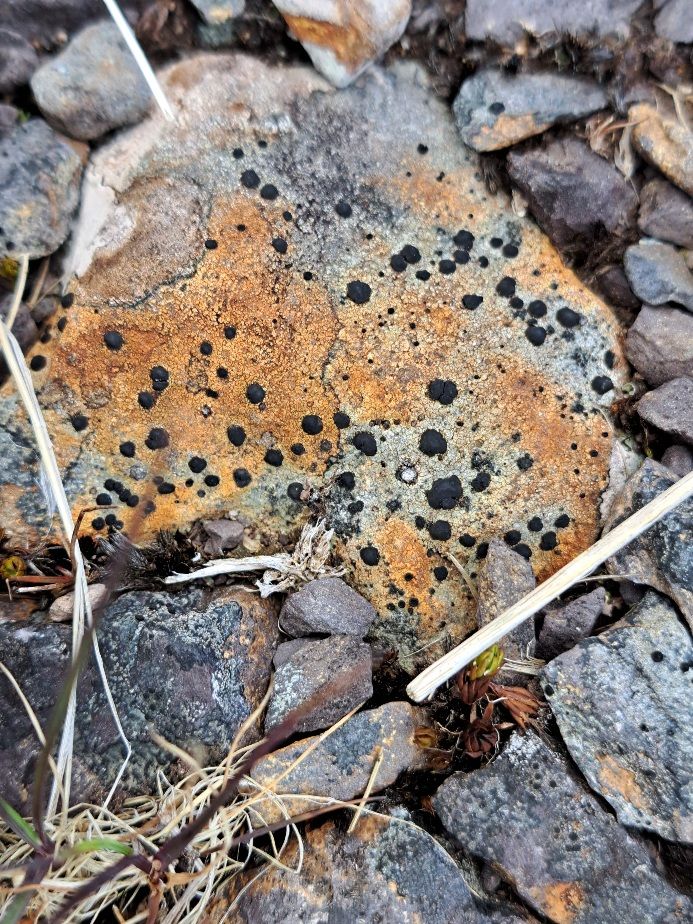
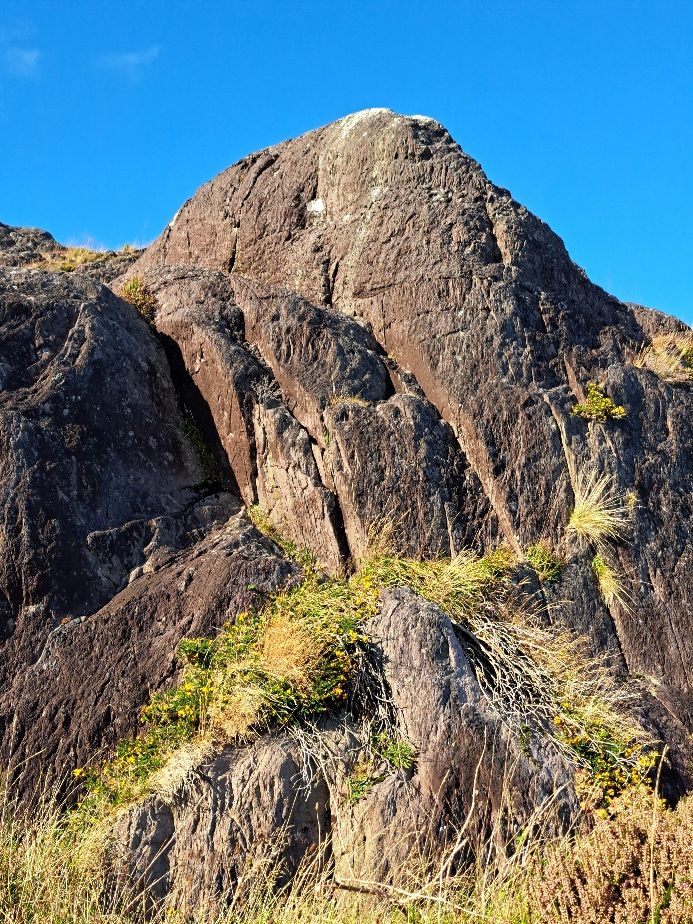
There are plenty of places where I can stop and look at the views or whatever else I want to find. Lower down in the valleys there is a lot more plant growth. Higher up the rocks are a huge fascination of mine.

On this journey there are, in their natural environment, still a lot of old barns and cottages, these are still in use and have been beautifully restored, though some are left as interesting ruins. The traditional cottage of this area of Ireland is a small stone-built house, two windows with a door in the middle, I think two up and two down they call it in vernacular architecture. Here in this photo gallery is one of those traditional cottages, well restored and used, it’s on the road down into the valley of Bonane on the way to Kenmare. It’s very nice to have a stop there and my sister Josephine and I had tea and traditional scones there last summer, but about this place which by the way is called Molly Gallivan’s cottage (after the original owner) I will tell in another blog to come. Visiting places like this goes back a long way in our family.

And as you can see from my photos there is so much a journey of a mere 71km can provide, even on a weekly basis. There is never ending interest, what with the changing seasons. And the sheer amount of interesting facets one comes across on such a journey make it certainly very enjoyable. Wow!

OCTOBER SUNSHINE

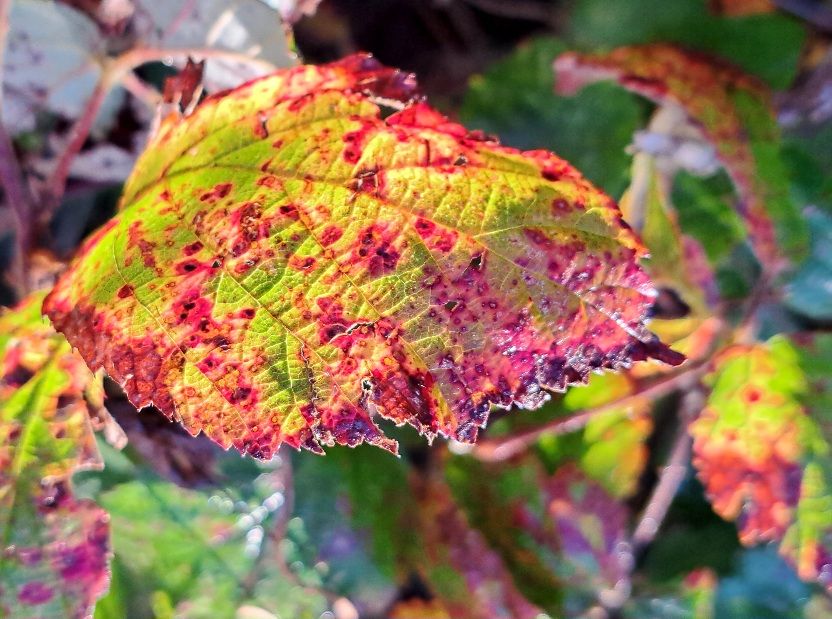
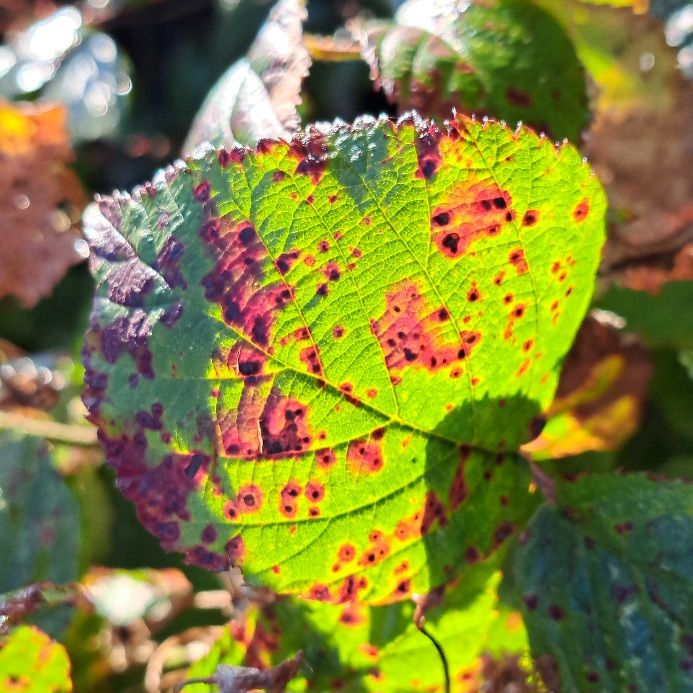
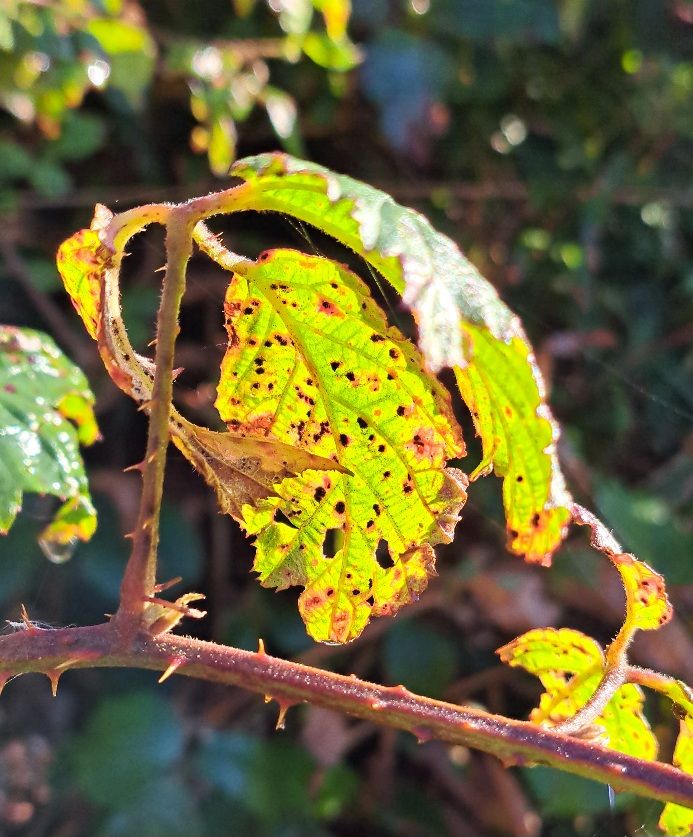
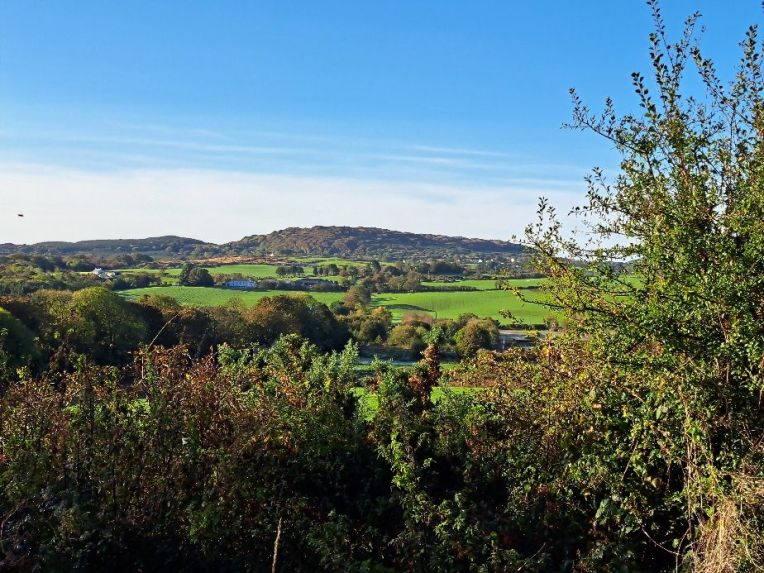
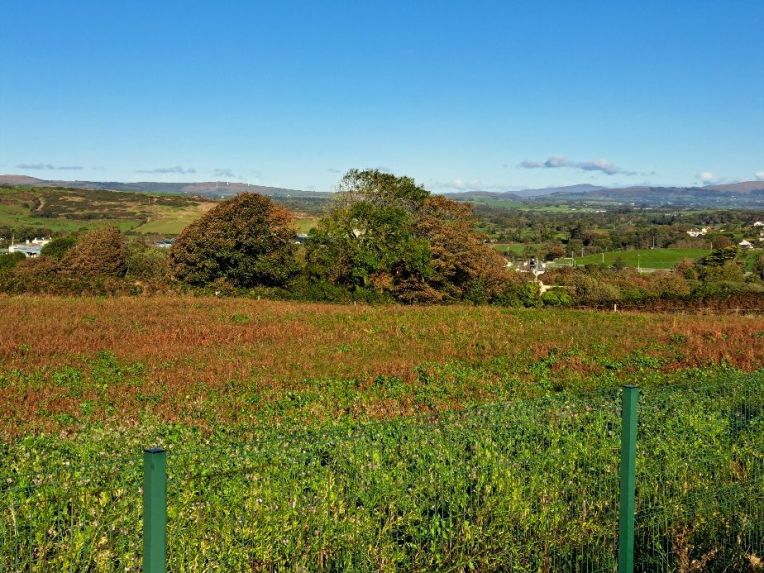
What a most beautiful autumn sunshine at the moment here in West Cork. After an incredible display of the Aurora Borealis last night, we woke up to a little bit white frost, nature has had a lot to offer this morning which I discovered during a much desired walk on the path to Russagh Mill. It’s one of my favourite walks, this path overlooks a long valley, still lush and green in the distance. Closer by I especially noticed the sunlight on the blackberry leaves lighting up their earthy colourings.

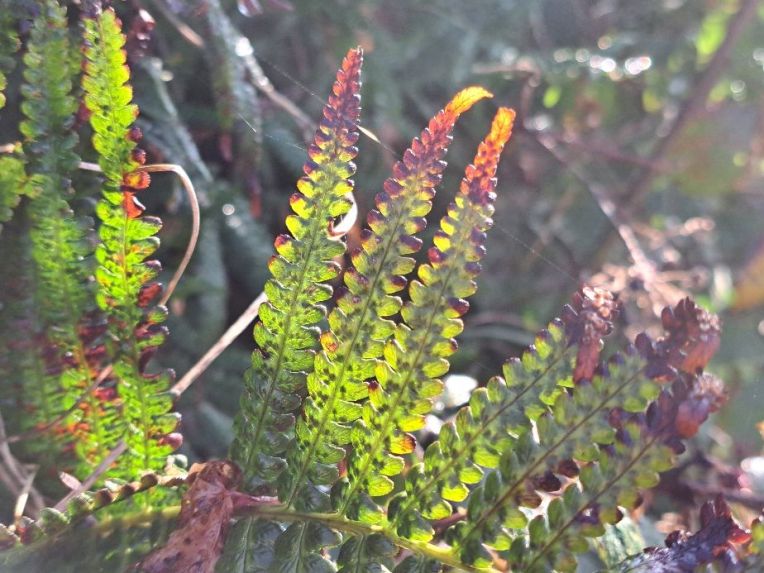
This walk also has many shaded areas with lots of ferns. The shade is created by the trees, mainly ash, willow, hawthorn, and other species too. In fact I discovered a new tree which had escaped my notice in the past. When I looked it up on my phone it turned out to be a White Willow (Salix alba), one of its common names is Golden Willow, I like that! A fact I’d like to share about this tree is that “Its inner bark – raw or cooked can be dried, ground into a powder and added to cereal flour, then used in making bread etc. It has a very bitter flavour, especially when fresh, and it is used as famine food when all else fails. The leaves and young shoots are not very palatable and used only in times of scarcity. The leaves can also be used as a tea substitute.” My Flora Incognita got this information from Wikipedia as far as I know, so that is my source of my information I want to acknowledge. I wonder if this tree was every used during the potato famine here in Ireland. Below is a photo of the said tree.

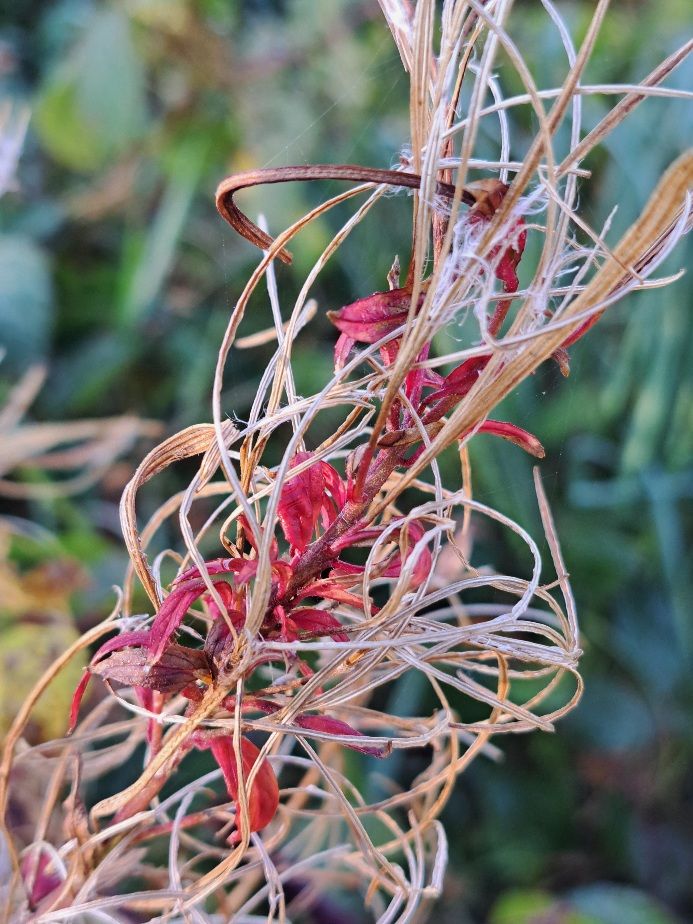
Below are the seedhead of Willow Herb, Hawthorn berries, Fern, and a late flower in the hedgerow.

Blue sky during these autumn months is very welcome.

This last photo is on another part of my walk. The farmer here was growing a plant of the legume family with lilac flowers and thick looking seed pods, there is a whole field of it here, and further along there grows a lot of Dock, now in seed. What caught my attention here was the several dozen of birds fluttering and flying around all at the same time, and definitely looking as if they had a mission in common. I whipped out my phone and checked the evolving picture before me with my Merlin app and to my delight these birds came up as Eurasian Linnets (Linaria cannabina) I was so impressed as I had not seen those before here, and so many of them together. They belong to the Finch family. Apparently they are fond of flax seeds, hence their name. The male’s colouring is beautiful during the breeding season, lots of red.

Well, that walk was so nice, and finally I’ve taken the time to write about it. I’ve missed my blog writing very much and I want to be back to it regularly. So much to research and write about. I’m still driving to Kenmare every week to see Ian, I travel through the Caha mountains and I love it, the beauty of that journey is a weekly joy. Every week something new and interesting to notice and discover. And after seeing Ian, enjoying a nice cup of tea and chat together, the journey back, very often I stop to look at a view or a rock or plant. It’s so dead quiet up in those mountains, even when I’m on a main road there are whole period of quiet. I’ll tell you more about that soon. Meanwhile, much love.

JOURNEY THOUGH THE CAHA MOUNTAINS

These days I enjoy a weekly journey through the Caha mountains on my way to see my husband Ian in Kenmare. It is a most beautiful journey, not only along the Bantry Bay towards sub-tropic Glengarriff where at the moment the rhododendrons are still in full flower, but following the N71 up to and through the tunnel separating county Cork and county Kerry.

Looking into a most beautiful glacial valley.
Sugarloaf Mountain in the distance.
Rododendrons alongside the road.
Looking back towards the bay.
Bonane which I come to once through the tunnels. This is in Co Kerry now.
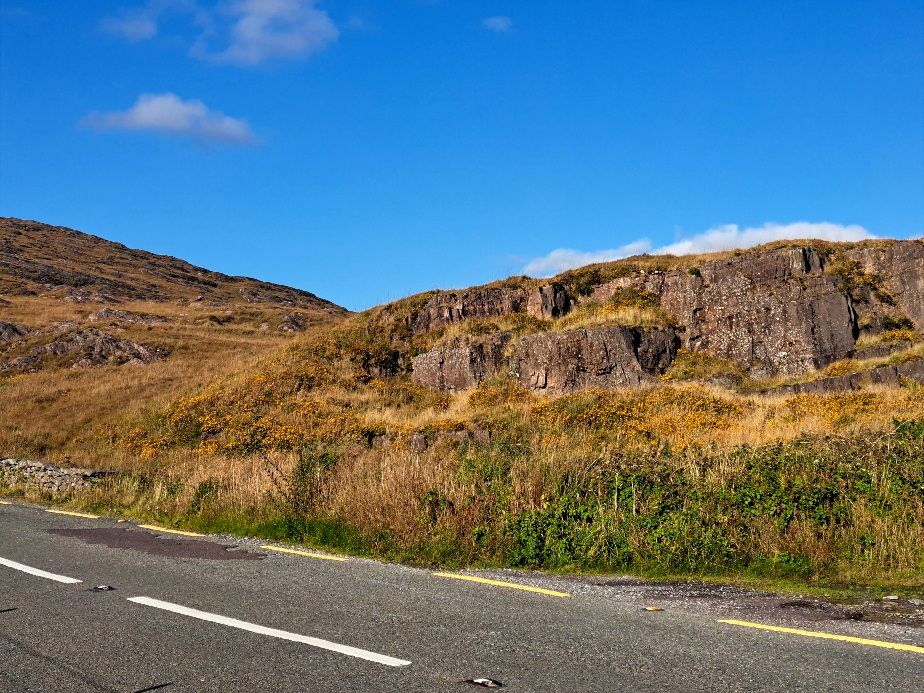
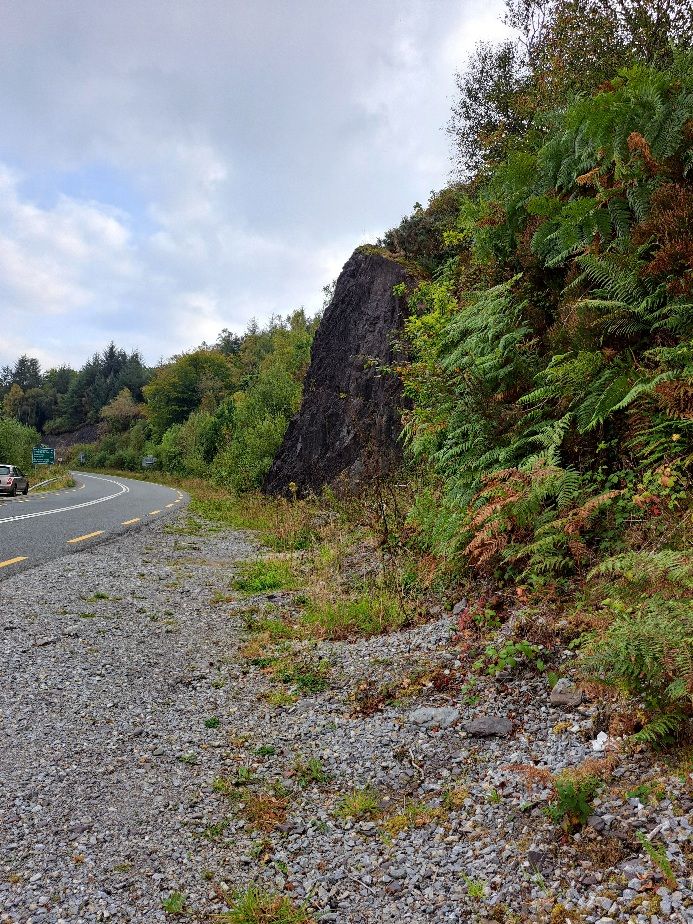
The interesting rock formations along the road.
The Glenn valley.

It is such a lovely journey.  I do it once a week. My dear husband Ian is now resident in a nursing home in Kenmare.  It’s about 74km from here.  It’s a different way of life for us both, but we are adjusting and making the best of what life offers.

WHEN EVERYTHING IS SHADES OF GREEN, an update

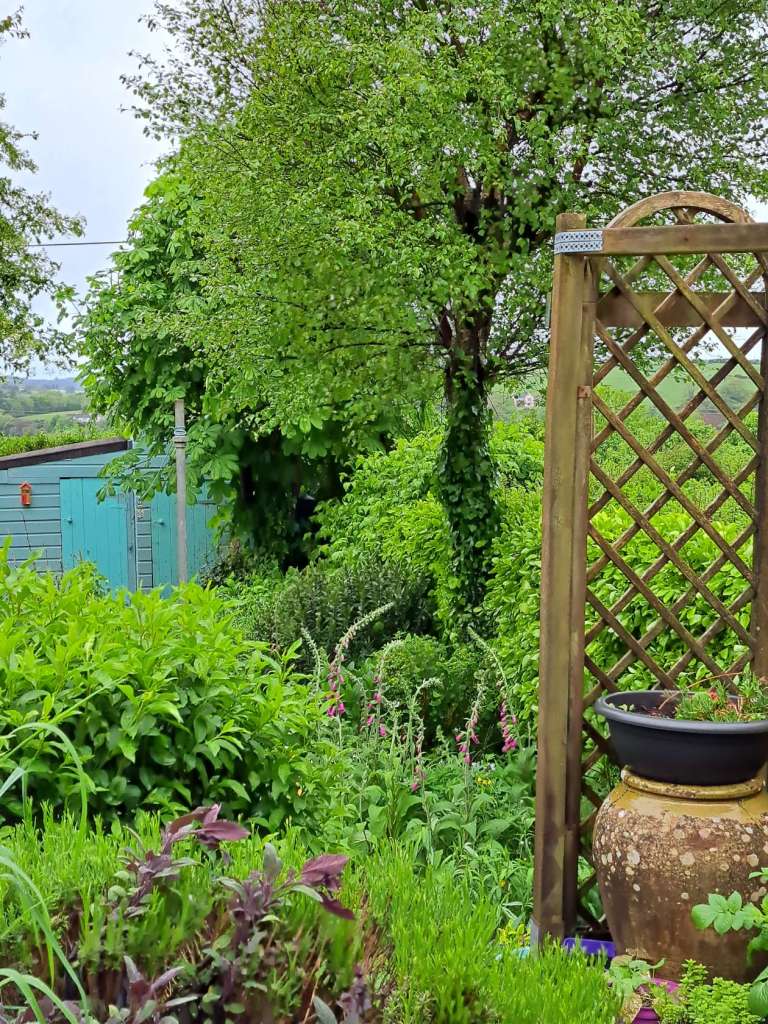
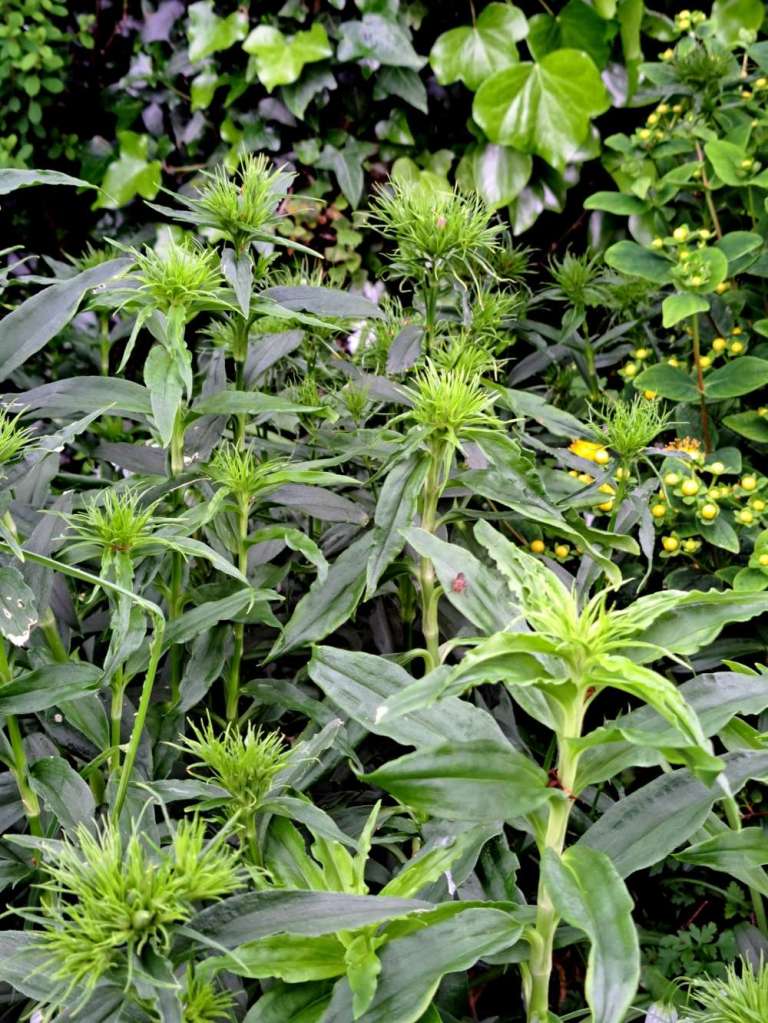
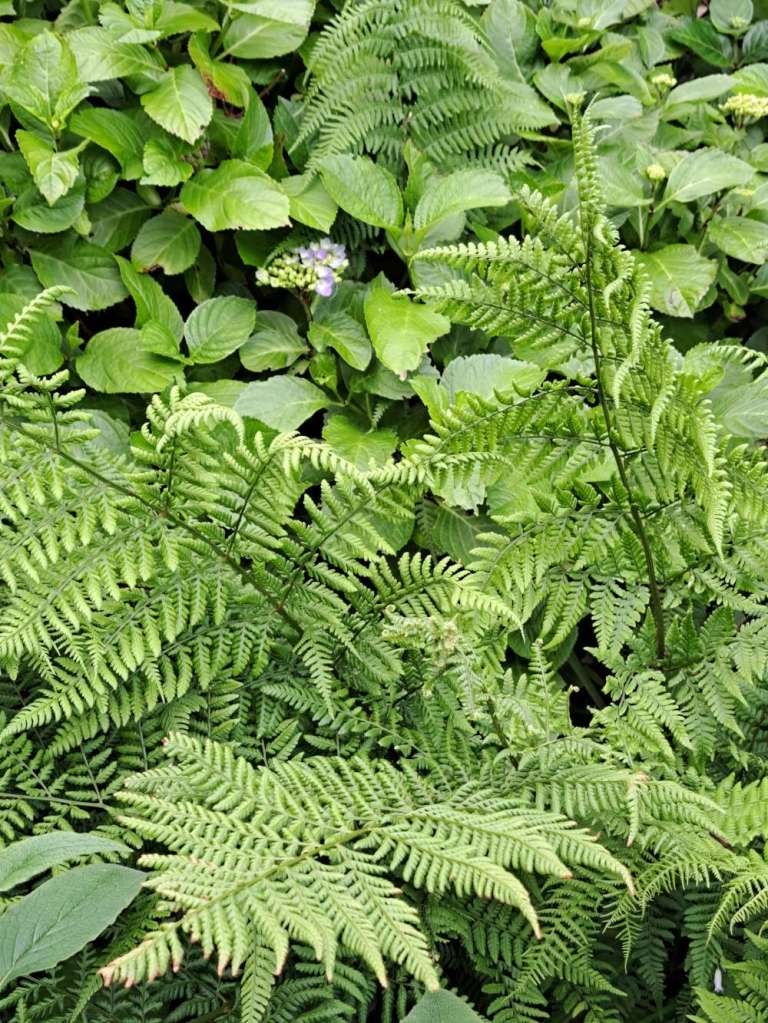
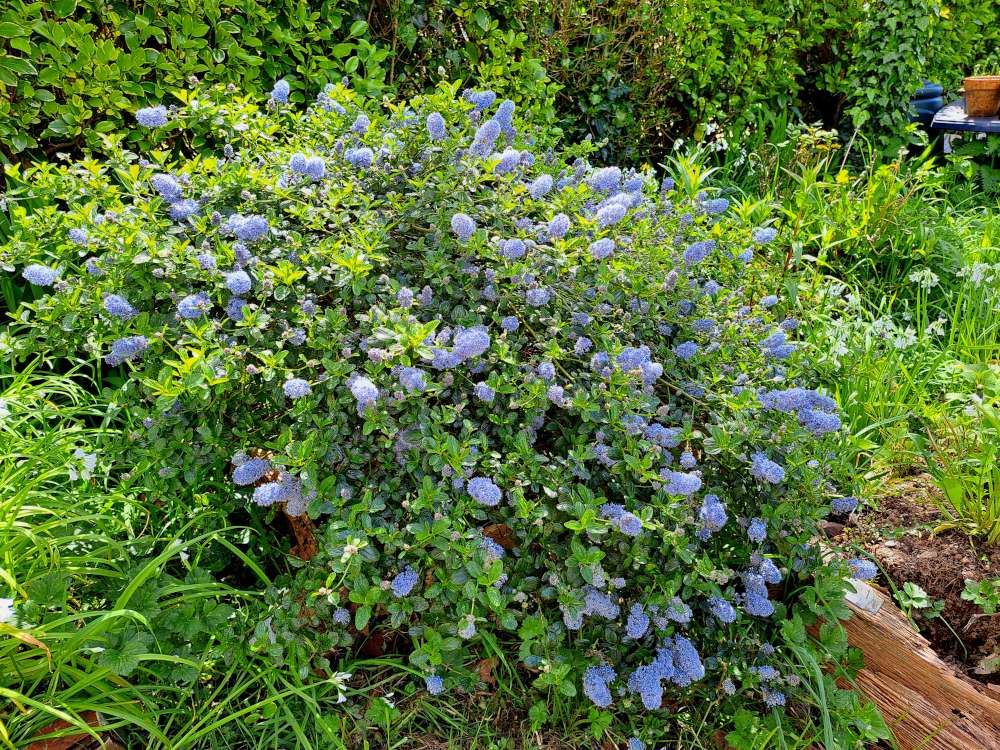
In our wild garden, and wild it is at the moment, I’m finding that everything is green, beautiful shades of green, but yet there are some colours to be seen too. I haven’t had much time, and less inclination to garden in the past few months and now everything has overgrown. But it’s beautiful, and there has been a lovely crop of very yellow buttercups in what is now a small meadow rather than a small lawn, I’ve really enjoyed that sight. The Californian lilac has also flowered in a pale blue. And the wild foxgloves that self-seed every year are in full bloom, a beautiful shade of pink.

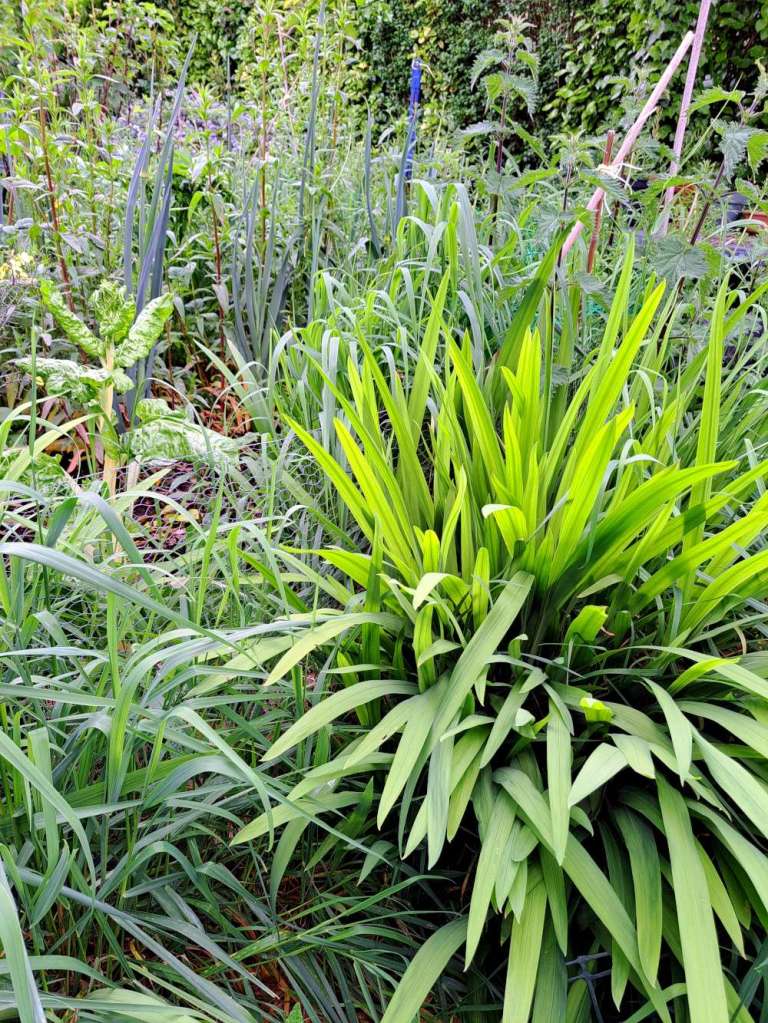
I like the garden to be lush, and to have secluded spaces where I can sit on the old bench, or totally in the back under the oak tree and surrounded by nettles and foliage of montbretia foliage not yet flowering, protected by the sheds from the cooling wind. I often pick this spot for breakfast on fine days, the sun is only just hitting that spot then and it’s a lovely light. The old bench under the hawthorn tree is another one of my favourites, but I have to watch it as it is the domain of the sparrows and there are often droppings from above, not so nice in my tea.

I am not seeing many pollinators in the garden this year yet, probably because the weather has been rather unpredictable, I’m hoping they’ll come soon. I’ve seldom seen the garden so lush, or else my memory is failing me (which I doubt}. The month of May is of course the most beautiful month in Ireland, and often one of the warmest, not so this May, in fact I’ve had to light the stove today. Probably June will be better.

I’ll let you have a stroll through our garden for now. Enjoy!

Bright beauty of buttercups (Ranunculus)

Foxgloves (digitalis purpurea)

Californian lilac (Ceanonthus)

I hope to be back to my regular blog contributions, there is a lot of material which I can develop and plenty of photos to go with it. As I get used to the changes in my life I’ll get inspired again to share some of the beauty of Ireland, and of my past and future travels. And I look forward to interacting again with the blogs of all my friends and followers.

OVERWINTERING HERBS IN WEST CORK

Rosemary – this plant is three years old

Currently it is the time to take stock and make plans for this coming growing season. I have done a little of that, and I’ve also gone through my last years garden journal to check on what did well and what is just not suited to our type of garden soil, the amount of light and the temperature, and I’ve made a few notes on that. While I was checking all the beds, seeing what is growing well during the winter months, I noticed that herbs and some wild plans do very well during the winter in this area – it being the SW of Ireland. Our climate here is influenced by the gulfstream, this makes our winters mild, usually we only get a little night frost, and this seldom harsher than minus 3 or 4. The plant hardiness zone in this oceanic climate is around 9. So today on the fourth of February I took some photos of what is growing right now, what I can use from our garden. And there is quite a lot.

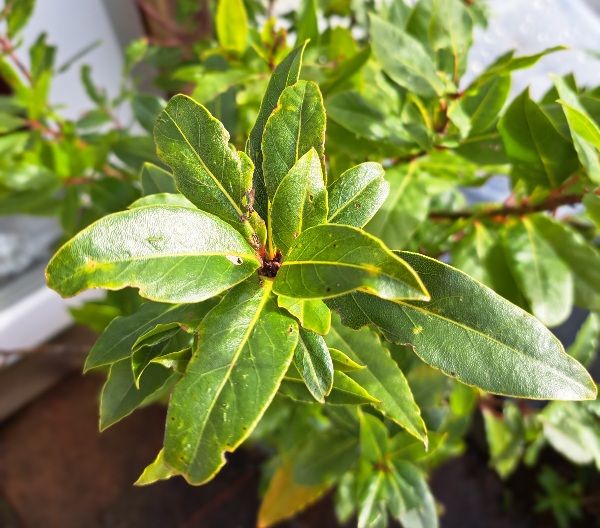
There are some large and strong lavender and rosemary plants, they are getting old now and a little woody, but still flowers profusely. Normally the rosemary blooms in the winter, beautiful pale blue flowers. I find that rosemary grows extremely well and fast here. The lavender sometimes blooms twice a year and gives a generous crop. Some years ago I planted a sage bush and it soon almost took over the plot, definitely overshadowing the oregano at the moment, again this plant gives beautiful darker blue flowers on spikes, which turn a rusty colour in the fall. Our oregano plants almost disappear during the winter, only a few leaves remaining, but they come up wonderfully well once the sun warms the soil. What does disappear are the different types of mint, the chives, and the lavas, but they also return with the warmer weather. The bay leaf plant grows in a pot, it is slow growing which suits me, I use it all the time. Curly parsley is another herb that stays green all winter. My French tarragon I’ve had to overwinter inside where it is doing ok. I have always loved growing herbs, because of their scent and of course because of their culinary uses. I like to cook with them. Other herbal plants in our garden, like the dandelion, three cornered leeks, borage, feverfew, shepherd’s purse, cleavers, and nettles, just appear and I only use some of them in my cooking, others like the feverfew for example I just like the idea of them being medicinal herbs, but because I don’t know enough about them – I do not use them. Nettles, cleavers, three cornered leeks, ransom, and dandelion I do use, but not for their flavour, more for their vitamin and mineral content. 

I enjoyed telling about my herbs and wild plants, I hope you enjoyed reading about them. Today I cooked a Gingered Sweet Potato and coconut stew with lots of cilantro (which does not do well during the winter here – at least not outside!) 

I saw a program recently where herbs were used in a border, and left to flower and bloom. It gave me an idea, I’ve tried it before with both celery and coriander plants, but I grew them in pots. I am now going try growing them in-between other flowering plants in my borders. I guess coriander is native to the Mediterranean. Celery, though, is definitely native to Ireland, there are still uncultivated wild celery plants growing on Irish soil. Their flowers are umbelliferous, lovely light delicate flowers which will definitely add interest to my border. 

When I’m reading, thinking, talking, or writing about plants, their origins, their uses, their benefits, and their beauty, and how many of them travelled from faraway places, then I’m as happy and interested as can be. So much to read and learn about them.

THE STORY OF THE KALANCHOE PLANT

The story of the Kalanchoe blossfeldiana is a nice one, at least in our household it is. Over the years I was often given one of these plants, and that in a variety of colours, red, white, yellow and rose mainly, but one year I received one with orange flowers, a real beauty!  In fact they were all beauties.  They fitted in alright with my other houseplants but I soon realised that the kalanchoe has something special, a strong will of its own, it grows how it wants, and rightly so.  After it has finished flowering for the first time, I cut away all the large leaves.  It then goes into its dormant period for a while.  Eventually it starts to grow again and quickly show flower buds, they take long before they bloom open.  The leaves it now produces are a lot smaller, growing into lovely rosette patterns.  The stems grow of course depending on the light source.  I leave my Kalanchoes (5) outside all summer but protect them from too much rain.  I take them in during the autumn as they are not frost tolerant.  I love seeing them coming into flower year after year.  At times the colours of the flowers change, for example, my orange one never became orange again. As the years go by they are inclined to grow into very individual and interesting shapes.

Kalanchoe is actually a genus of around 125 species of tropical, succulent flowering plants.  They are native to Madagascar and tropical Africa.  I was surprised to read that the plant we call ‘mother of thousands’ is also a type of kalanchoe. 

Although the genus kalanchoe was first described in 1763 by the French botanist Michel Adamson, it only became generally available and was commercialized in the 20th century after botanist Robert Blossfeld brought it to Germany and Paris.  He found it growing in the cool region of the Tsarantanana Mountains in Madagascar.  I know it to be a very adaptable plant.

Of interest is that Kalanchoe plants belong to the stonecrop (Crassulaceae) family. 

The plant has been used in folk medicine, but is also studied in scientific circles.  Co-incidentally a friend of ours in Tamil Nadu (South India) sent me a photo only recently of a flowering Bryophyllum Pinnatum which is also classed a subgenus within the genus kalanchoe.  Bryophyllum is a group of plant species also of the family Crassulaceae and is native to Madagascar.  Apparently these plants are used not only against kidney stones but in folk medicine are known to have anti-inflammatory, anti-oxidant and anti-histamine properties, also used for cancer treatment.  Especially mentioned were the Kane and Kurichiyar Tribal Communities of Kerala.  In Ethiopia this genus of plants is or was used for wound healing or tooth ache.  In the Philippines as a muscle relaxant.  For cats and dogs the Kalanchoe plant is toxic by the way. 

A little clarification about Kalanchoe plant classification: 

Crassulaceae is the family

Kalanchoe is the genus

Bryophyllum is the section or subgenus

Kalanchoe blossfeld is the species (and that is the species in the photos above and below).

The kalanchoe plant is known as a symbol of persistence and eternal love. In China where it is also a popular plant it is favoured at the New Year for its connection to prosperity.

TAKING TIME OUT

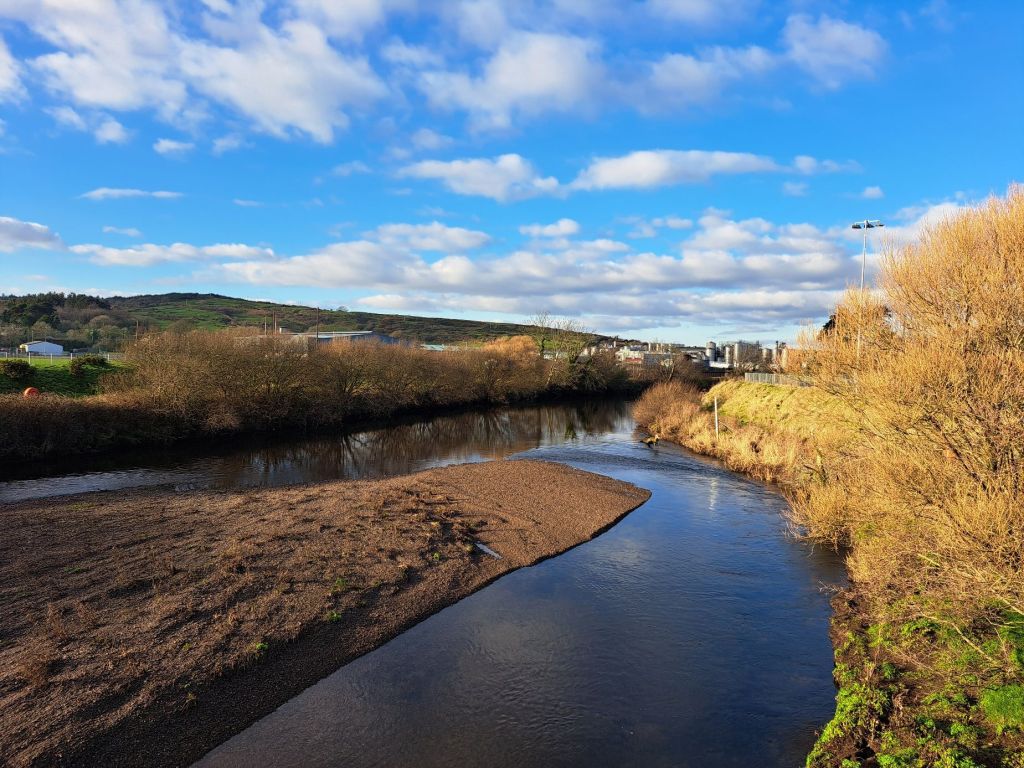
Nice walk along the N71 surrounding Skibbereen town. River Illen flows through the town and has many different faces, this time a faint reflexion of the blue sky and some light white clouds.

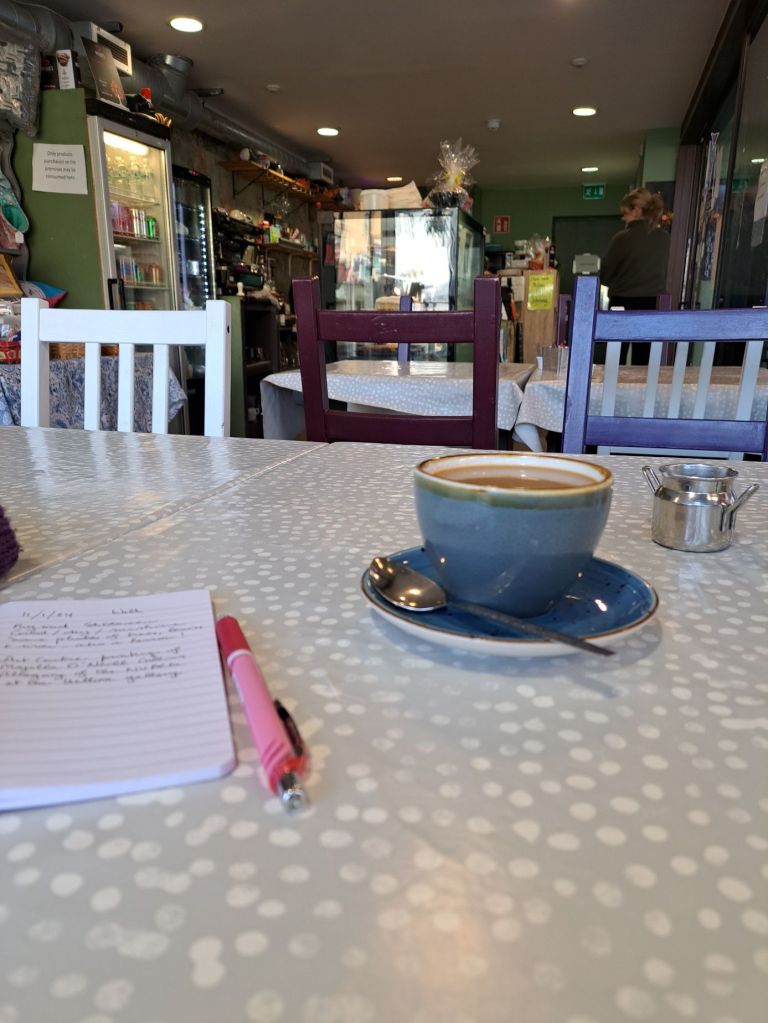
In the Uillinn Gallery I had a preview of Majella O’Neill Collins’ paintings which I think quite interesting, this time her paintings imagine the journey of the MV Alta, a merchant ship that was abandoned at sea in 2018, it washed ashore in West Cork during a storm in 2020. The wreckage is still there. I did get the distinct feeling that ships or a ship and the sea were her theme. Enjoyed some of her vibrant work. Her exhibition opens next Saturday.

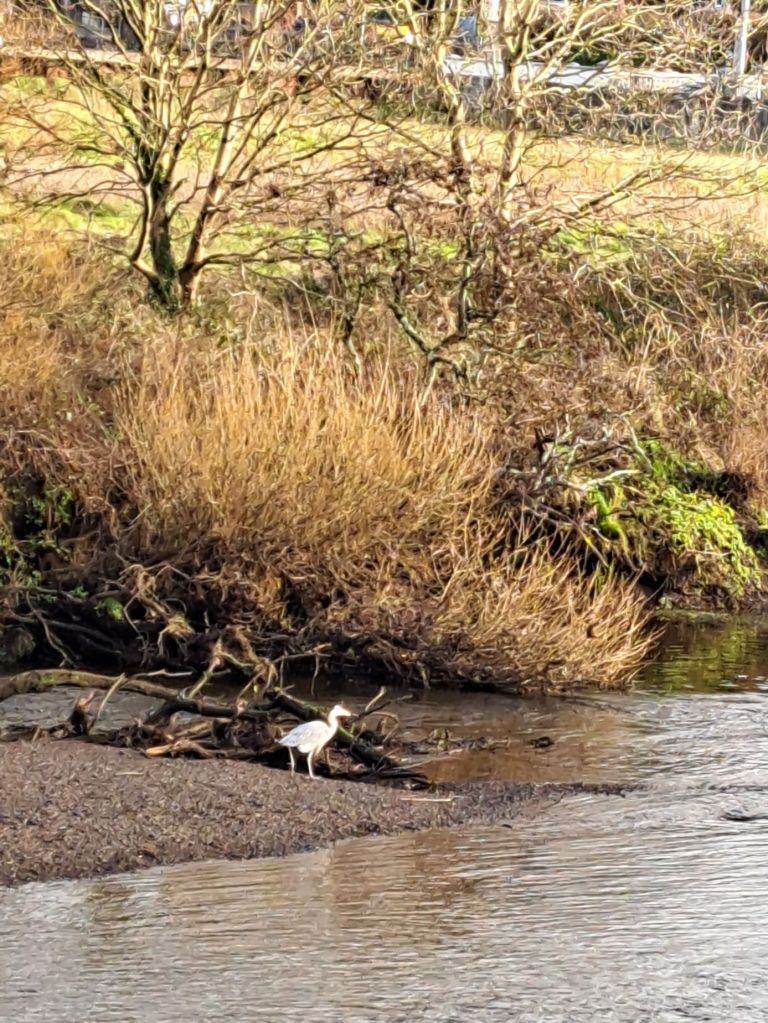
I was lucky enough to see a heron!

Love these pines against the blue winter sky. Birds have started singing!

Taking time out will be snippets of my walks and indeed of my time out