EXPLORING VILLAGE LIFE

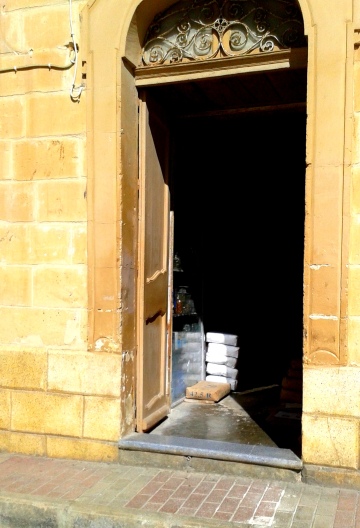
It is wonderful here in Gozo and we are enjoying life to the full, grateful for blessings. We are here now a week and a half, our second weekend already! The first week or so I was very busy with sourcing shops locally. In doing so I have started to explore the village where we live at this moment, Ghajnsielem. It takes me about 15 to 20 minutes to walk to the shops depending on how often I stop to admire something or to take a photo. At first, and because I went shopping during the closing hours (12 to 4pm) I thought that there were no shops at all except one supermarket on the main road between Mgarr and Victoria. But then I went to the village after four o’clock and discovered a bakery, a hardware store, a green grocer, and a small food shop, also several cafés. The fact is that generally there is nothing advertising that it is a shop, and when the door is closed you cannot see that it is a shop. Here is an example of the hardware store, it is one long narrow room filled with glass jars containing screws and nails and what have you, a delight to go hunting for something you need, and to be sure to find it!
20171014_111451But I’ll tell you a little more about this village.
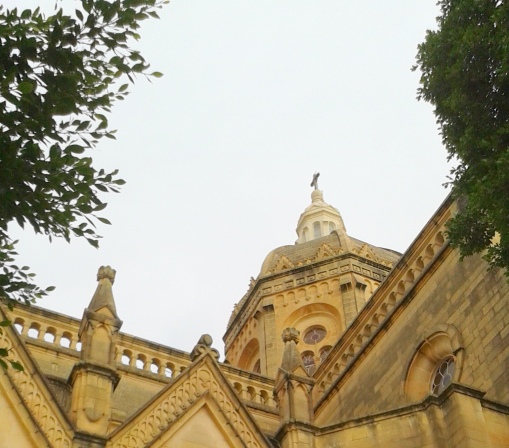
It has a population of 3000 souls, there are several churches, the main one is in a neo-gothic style, rather impressive and amazing inside. Another older church is much smaller, was built mostly by voluntary labour of the farmers around the area and I fancy this one much more, it has simple architecture, and it has many steps leading up to it.

20171011_093736

This is a photo of one of the squares in the village, I really like this square, people go and sit outside in the evening enjoying each other’s company, it is found in the oldest part of the village. There is a butcher shop in this square and a young woman who grows her own organic vegetables and sells a number of other products like gram flour and sesame seeds and so on… she has told me how to cook rabbit the Maltese way because I ordered some at the butchers, I like to cook at least some of the local dishes.  I’m getting to know some people and finding so many friendly and helpful folks, making me feel at home.
But there are several other squares in this village, all with plenty of benches, important for Ian, but also nice to just sit and take in the atmosphere. Beautiful trees and flowers are also in plentiful supply in these squares.
There is also the huge Band club café where a coffee only costs 50cent. This is sort of the hub of the village where young and old gathers and where the local band holds its practice.

I like to walk through the narrow streets and the squares, there is a special atmosphere and often I find some beautiful features in the vernacular architecture using local limestone. Old doorways are also always a joy to admire and take photos of, they are so picturesque that I always feel I want to paint them, well this time I brought my watercolours and we’ll see how it goes. There is a lot to explore yet around here, I read that remains of a prehistoric temple complex are to be found within the limits of Ghajnsielem, but they have almost been destroyed by road building, but what does remain are two groups of megaliths, they were probably originally part of the same structure, can’t wait to plan a walk out there to go and see what I find.

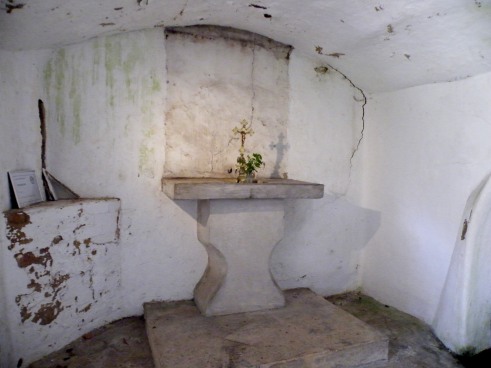
These are photos of an old washing place, the source of the water is an ancient well and women used to communally do their washing here. The rest of the village would have been built around this area. The above photos are of a reconstruction of the original washing place, a shame that the original one got destroyed but at least the original well is still there and the water is still running! There is a story attached to this well. Long ago when the village was only starting to be formed a local farmer named Anglu Crech used to take his sheep and goats to this spring every single day, and because the sun was so hot he would take shelter under the surrounding trees and say his prayers. Well one day while doing this he saw an apparition of what he thought was Mother Mary who invited him to raise a statue close by and this the farmer, together with his friends, achieved and they would gather there in prayer, and eventually a church was built close by. It’s nice to learn something more about the places we stay, it makes it so interesting, it is the small church I was talking about above.
20171014_111155

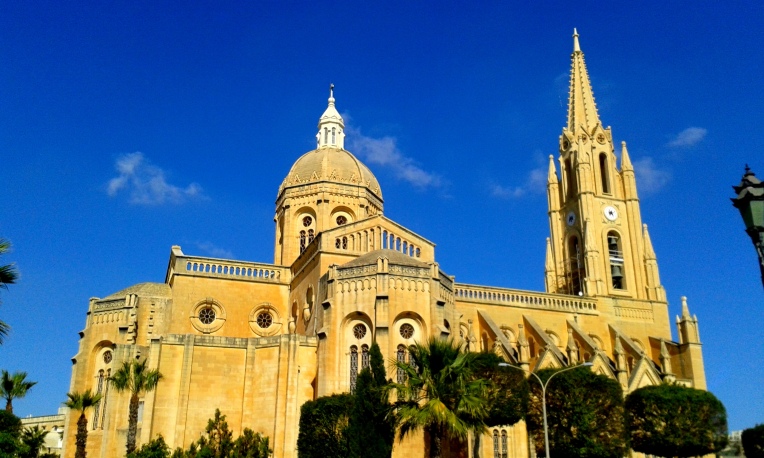
This photo is the neo-gothic church, I took it today and include it to show the blue sky and the way the sun shows off the honey coloured limestone which is most commonly used as building stone here and sourced locally. I have not messed around with this photo, the colours are real.
Close by is the library which is so small that I won’t have a problem reading those books that I fancy. I found some there on the history of the village, to my delight. Most of the books are for children and just like at home there was a class of them in there yesterday, all excited about getting their books. I was laughing as one little girl was told she could not take that many books because she had still some out… she went over to the table and found the books, just like what we often came across back home when I was still working in the library, I did not need to know Maltese to understand what was going on!
20171012_165049

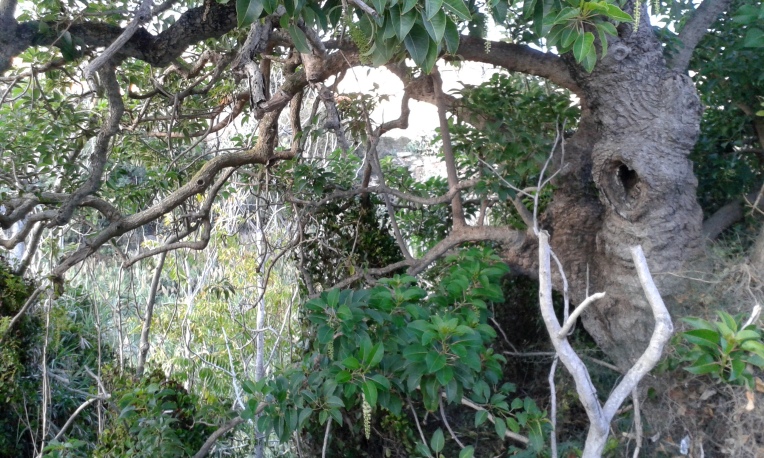
Also along the main road between Mgarr and Victoria, are some beautiful trees. It is an alternative route to the village from where we live and even though it is uphill all the way I like it because of the interesting plants and rocks along the way. So shopping is no hardship even without the car and as it is always nice outside the walking is a pleasure.
20171005_162258

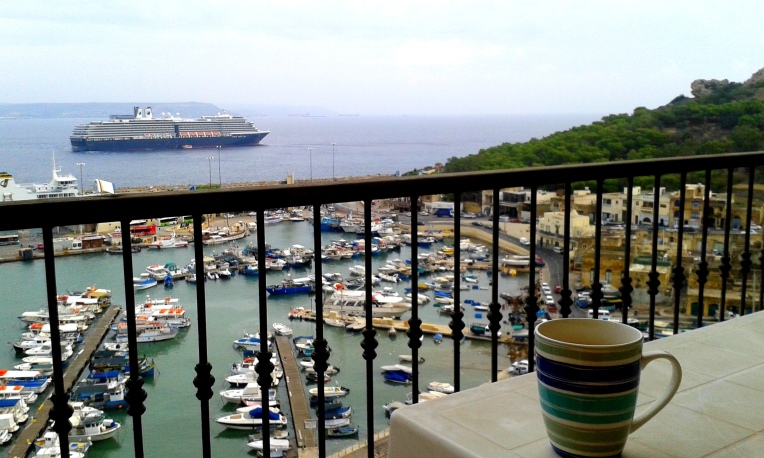
This is the view from our balcony, mostly in the day it is almost too warm to sit here, but in the morning and evening it is lovely. At night the view too is great with the lights of Malta and Comino in the distance. The ferries come and go every 45 minutes and there is always plenty of life to observe. There are little fishing boats at the marina, typically Maltese – at the moment they go out fishing for Lampuki, a fish locally used in traditional dishes. This fish migrates past the Maltese islands during the autumn so it is then that you can find it everywhere and it is very popular here.
DSCF3371

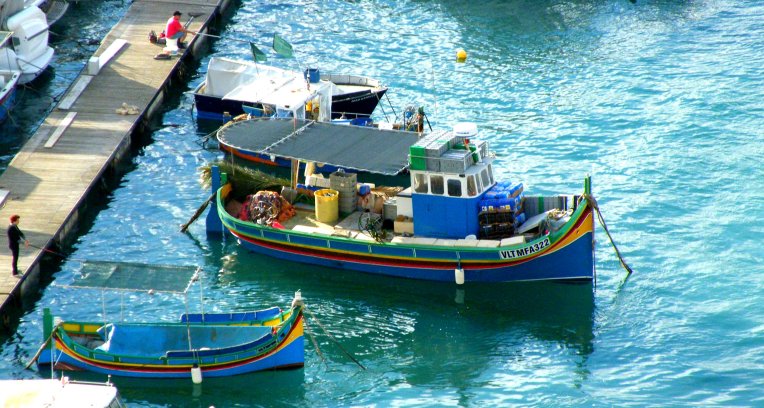
One of the Luzzu boats, original Maltese fishing boats, they go out early in the morning or at night to try and get their catch.  We used to see very many of them while staying in Marsaxlokk, Malta.  Very colourful boats, and usually having an eye painted on its bow, said to protect the boat and those in it.

So this is only the beginning of another winter’s stay in Gozo and there will be plenty to discover and learn and write about, it seems that in order to experience a place fully I have to write about it, then it becomes more real for me.  It is always very exciting though and no matter how many times I walk the same road, there is always something new to find and see or experience.  Awesome!  I hope that you all enjoy coming along with me on my journeys.
THE BEAUTY THAT IS GOZO

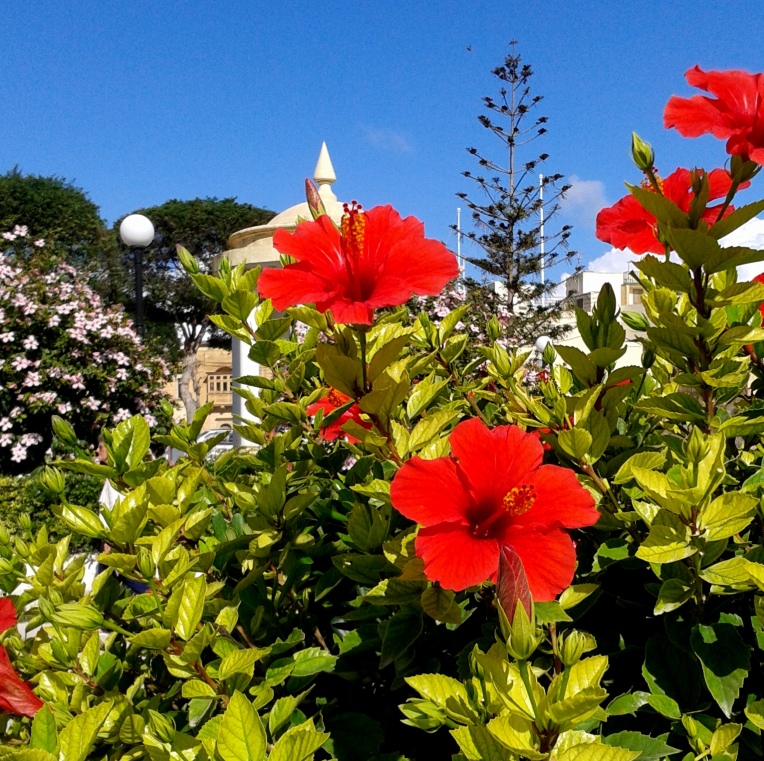
It is hard to believe that it’s nearly a week ago that we arrived in Gozo again. This time we are staying in a village, Ghajnsielem it is called, which lies on the East coast of Gozo and right at the little harbour of Mgarr which is where the ferries from Malta and Comino arrive, and where many boats of all sizes are anchored in the marina. Our flat is at the outskirts of Ghajnsielem and we overlook this harbour from a height which is very pleasant indeed. I am fascinated with the rock that our building is situated on, a beautiful rock, limestone. On my way to the village centre to fetch some groceries or go to the Post Office or such-like, I walk past lovely limestone buildings, old and new. The traditional, beautiful Maltese/Gozitan balconies can be seen in wood or stone along the way, a pleasure to the eye as always. Then you come to the neo-gothic parish church which rises up toward a blue sky, it’s eye catching! Surrounding the church are a variety of green and tree filled areas and an interesting Band club café where it’s nice to sit outside and observe village life while sipping a nice coffee or a cool drink. This morning I discovered where the library was. People all along the way were greeting me with either a bongu or a good morning! I’m starting to feel quite at home in this village.
20171010_104457

20171004_141150

FLINT STONE AND PILGRIMAGE

To say that England has a lot to offer in terms of history, interest, and beauty surely is an understatement. We have been here in Norfolk now for several days, while it is mainly as a family visit, the family has generously shown us around the area, and we took a great, long walk along the salt marshes at Burnham Overy Staithe. How nice to get to see this and get acquainted with a variety of the birds and plants found in this habitat.  I did hear a curlew, nice to hear as in Ireland they are heard less and less.

One of the main noticeable find here though are the what the houses are all built with lots of flint stones on their facades, no even all over the walls of the houses, I had never seen anything like it before and am fascinated. Flint is a very hard stone and those walls much be so strong and well able to endure the winds and weather in those areas. It is great to see locally sourced rock used as a building material. More information about the use of flint in Norfolk can be found here: http://belongathoughton.com/introduction-norfolks-natural-heritage/gallery ids=”13797,13790,13784,13792″ type=”rectangular”]

We took Ian’s grandchild and daughters on a steam train ride from Wells to Walsingham, the ride took us along many different wild shrubs and the berries were plentiful, among them hawthorn and rosehips. The birds will have plenty of food this winter!  The train ride was quaint, lots of time to take in all we saw along the track.

The flowing fields along the railway track were beautiful to watch.  Skies were also very  interesting.

We had cream tea in a teashop at a place which is dedicated to the virgin Mary in memory of her visitation by the angel Gabriel.  A pilgrimage from London to this village goes back a very long way.  There is a well there with waters that are said to cure people.  Mostly the place is very peaceful and beautifully laid out with lovely trees and flower beds.  In mediaval time pilgrimage was very popular but people had to go a long way and the road was often not very safe.  Today many people will visit places like these to get in touch with themselves and meditate on the meaning of their life.

DSCF3084

The history of Pilgrimage


LIFE MOVES ALONG

Summer has come to an end. We are not ungrateful, we had a gently warm summer with enough moist to keep land and animal happy, so, looking at some other countries where people endured hardship because of the weather we have every reason to be happy. Today is dark, windy and very wet. It is time for us to go I think and that is what will happen in the week to come, all going well.

Reflecting on the summer months for a moment, for me personally it was wonderful because of all the activities with my daughter and grandchildren, we went for many walks and explored a variety of wonderful gardens around West Cork. At home also spending a peaceful time with Ian and enjoying many long conversations and discussions on everything under the sun, for some of these my sister Josefine was a part and a great input that was. There were the Art Exhibitions and the Art Festival, also the Historical Festival here in Skibbereen, and the Ellen Hutchins Festival in Glengarriff with an amazing walk in the grounds of her estate, all of which I enjoyed to the full. I’m sorry that I had to miss the Literary Festival in Bantry!   I am also very happy because I was able to connect with all of my siblings (8left), this is something that is both important to me and very dear to my heart.

So I leave some images for everyone to enjoy. As I will be travelling in the next week or so I will again miss checking out all blog entries of my lovely friends and followers , but I hope to catch up soon. It has been a bit hectic around here. Meanwhile I would like to thank each and everyone for your encouraging support of my blog. Take care and be blessed.
20170915_103734

Bantry Bay with the Caha mountains in the distance.

20170921_095012

There was a lot of magic in the garden this summer, the sun on a dew drop early in the morning creating diamonds was just one such moments that creates a feeling of wonderment.

20170915_124559

20170917_115014

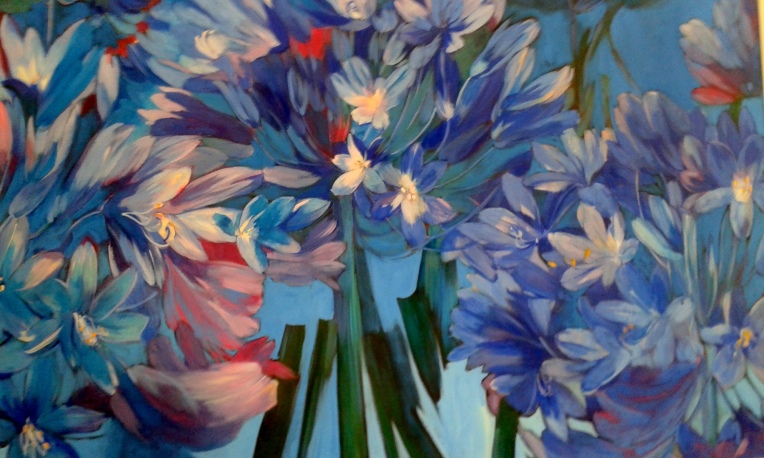
One of the amazingly beautiful paintings of Maurice Henderson, his works of flowers and his blues especially I love.  We attended a celebration of his life recently after he passed during the summer.

And of course there are always lots of wonderful discoveries in and around the garden.

THE NIGHTS ARE DRAWING IN

I cannot believe that yet another week has passed by! Cooler now and the leaves are turning multi-coloured, while some are twirling lazily off the trees, and covering the front garden with a brown rustling carpet of glorious scented autumn!

I’ve been busy over the last few days and I know that I have quite a bit to catch up with – blog entries of friends that I follow, eventually I will get to read all. The reason why I got so busy is that I started an online course with FutureLearn, this time with Trinity College in Dublin. The course is called ‘Achieving Sustainable Development’ and it takes us through four of the 17 UN development goals. As a start we examined goal 16 which aims for the elimination of all violence as a basic for the establishment of sustainable development. Both physical violence, structural violence (embedded in social structures of inequality), and cultural violence (where traditions condone direct or structural violence. So covering the whole area of peacebuilding and peacekeeping. I found this very interesting because I run around (like so many of us)trying to work out how we can help to bring about world peace. The way that this course works is, it gives a video of an interview, in this particular first week different professors were interviewed on conflicts in Kosovo, Sri Lanka, Northern Ireland, and Colombia. Links are provided to other reading material (lots of it), and then we students write our thoughts on what we learnt, there are students from all over the world taking part which of course makes for an interesting dialogue. It is so thought provoking! Tomorrow is week 2 and we will be looking at SDG 3 ‘Challenges to Health’. I’m looking forward to it.

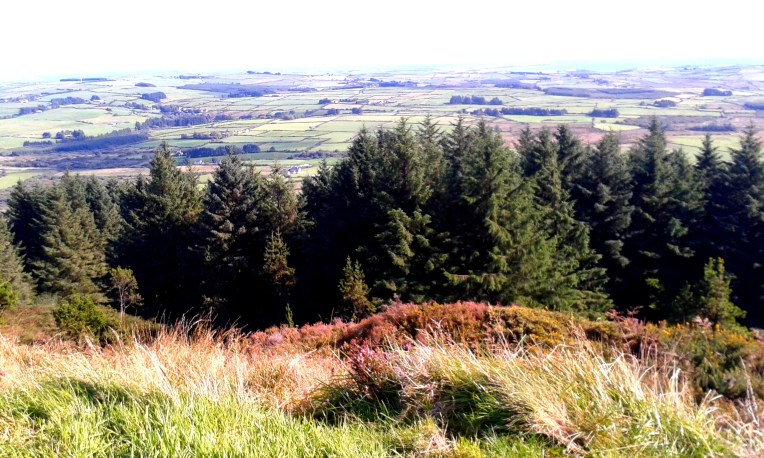
And at the same time it is only another eleven days before we leave to return to Gozo, after a visit to Norfolk to see Ian’s family first. I’m totally packed and organised, all that remains for us to do is see family and friends and that is always a pleasure. Two days ago my daughter, and the children took me to climb a hill overlooking much of the area here, we saw the sea and the patched fields and meadows. It was beautiful – though the climb nearly killed me. I will share some photos with you all.  In a way it is a sort of farewell to the area here – for the time being.
20170914_154151

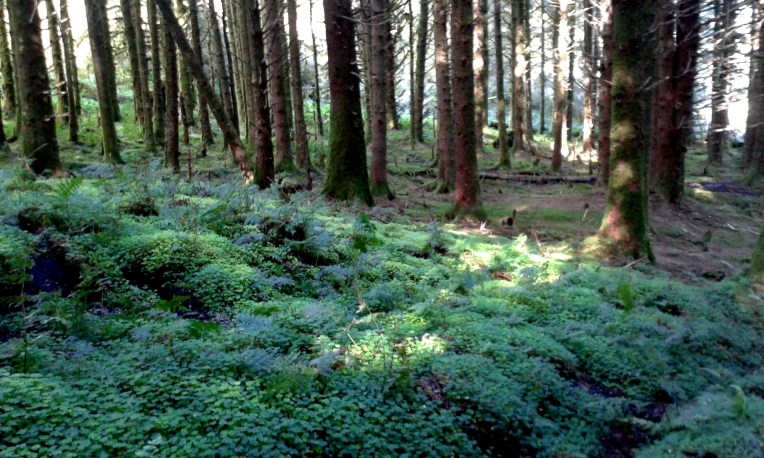
An ancient stone wall covered in moss, everything was covered in moss, the trees, walls, ground, different types of mosses, very nice and green.
20170914_160659


20170914_153634
As we came above the tree level it became quite windy, the kids were running up and down like mountain goats, exploring and discovering creatures and all sort of things growing. Ferns, heathers, mosses, fungi, and they even brought me clear water from a little stream to show how fresh and clean it looked.

20170914_154154

The view was spectacular once we were on top of the hill where a lone cross was keeping watch.

So beautiful.  One thing puzzled me and that is the higher we went to more wet the soil became, I think that the soil is peat as it was pure black in colour.  Walking down was actually harder in a way than climbing up, we were all ready for a nice cup of tea.  Luckily the weather was sunny and quite beautiful really.

After all of that, the cobwebs were out of our hair, that is for sure.


AUTUMN AT GLEBE GARDENS

A visit to Glebe Gardens in Baltimore, West Cork, was on the agenda for a while and finally some days ago we took the opportunity to celebrate my daughter’s birthday with a delicious cup of coffee and cake, and a lovely walk through the flower gardens, the woodland, herbaceous borders, and the vegetable plots. This 5 acre garden is bordering on the sea where the Ilen river enters Roaring water Bay. Vegetables for use in the restaurant are grown organically in the gardens. Because of the vicinity being so close to the sea there is a mild micro climate which makes everything grow very lush. There are again to be found a number of sub-tropical plants, with palm trees and exotic rhododendrons among them. When you walk through the woodland and over the little bridge you come to an open grassland where there is an amphitheatre where music and other entertainment is put on regularly.  I’ve not been to anything yet but again it is on the agenda. There is an orchard and we saw several varieties of apples ready to eat and fallen from the trees too. Grapes were a plenty in the tunnel, different varieties of tomatoes and cucumbers too.

I only took a few photos as I was wearing my grandmother hat, but still got quite a collection which made it hard to pick some for my blog! (Much as I would like I never put photos of my grandchildren on internet, it is an agreement between my daughter and I).  What the children really enjoyed was the goats and chickens, finding apples in the orchard, and the open space of grassland where they spontaneously started dancing.

It is a garden offering not only beauty but also peace and tranquillity.


20170826_162351There are benches where one can have some time to relax in beautiful surroundings!  My partner and I enjoying very much.

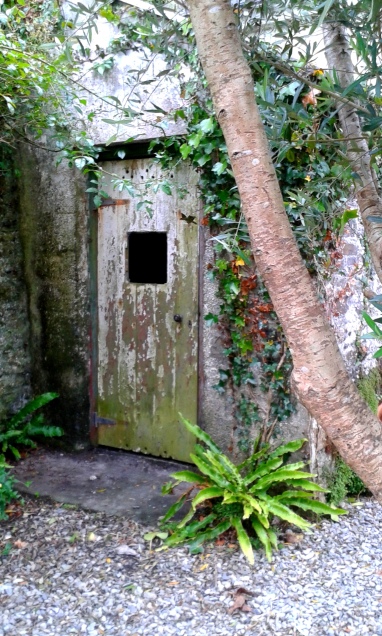
20170826_165409This old but lovely doorway – to goodness knows where, I could not resist taking a photo of, thought it looked so lovely what with the fern growing around it too.

20170826_162640

If you enjoyed my photos then you might like to look up more information on the Glebe itself.  When on holidays in this area it is a wonderful place to visit and have lunch or coffee, a walk in the gardens, and maybe go and enjoy some open air night time entertainment.  Here is a website:

http://www.glebegardens.com/the-garden/


THE ABORETUM AT ARDNAGASHEL

DSCF2660
The second part of the guided tour of which I took part, it being part of the Heritage Week, was last Saturday’s visit to Ellen Hutchins gardens at Ardnagashel. Though quite overgrown, and in the sub-tropical climate of Glengarriff, in the South West of Ireland, a very lush garden, we did see a great variety of trees.  Many of them quite new to me.  Walking under their expansive canopies one becomes aware of the magnificence of their beings, our heads were constantly held high and apart from the sounds of wow and oh, the explanations of our guide, and the whispering of the leaves, the forest was quiet – the trees majestic!

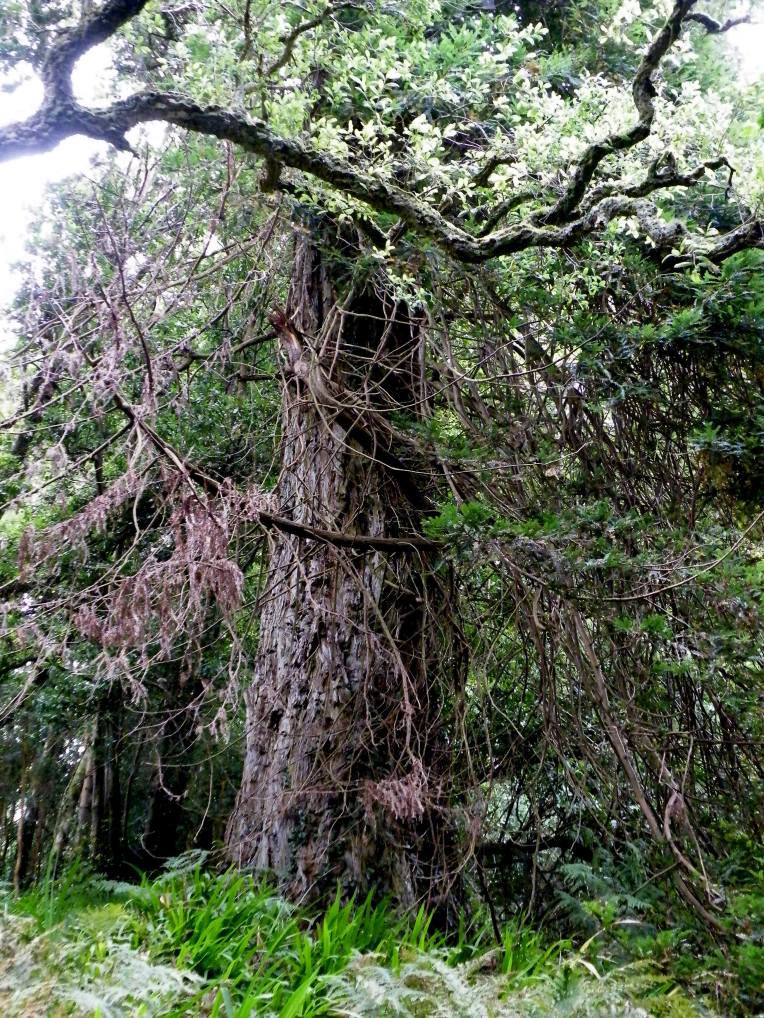
One of the most impressive species in the gardens is this extraordinary large Cryptomeria japonica elegans or the Japanese red Cedar.  Its feathery leaves are so delicate.  The red brown bark peels in vertical strips, as can be seen in the photo below.  It is said that the wood is very scented and used in manufacturing of light furniture.

These are photos of the cork tree (Cuercus suber) these trees give us the cork which is used in so very many different ways.  The small tree in the middle bottom photo has actually died from the frost one year, but the large one that is standing between many other species survives and has grown very big.  Actually cork is a renewable source as when the cork is taken from the trunk it will regrow.  It is harvested about every ten years.

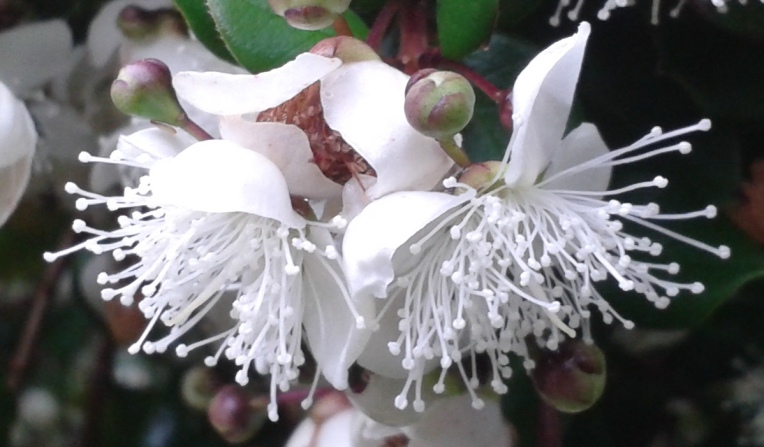
This is the Myrtus apiculate, closely related to the Myrtle tree.  It was introduced as a decorative tree but it soon became a very fast growing invasive weed.  The wood looks nice and is put to use when cut down for a variety of fencing and a little bridge was made out of it too.  It is not native to Ireland.  It gets beautiful white flowers.  Below is a photo.

Myrtus apiculata

This tree has had its roots growing on its trunk, the reason why is because the soil around it was so crowded apparently by the suffocating growth of the Myrtus trees that there was no space for its roots to grow underground (we were told by our guide).

A variety of interesting looking trees of which I am not sure what they are exactly.

DSCF2732

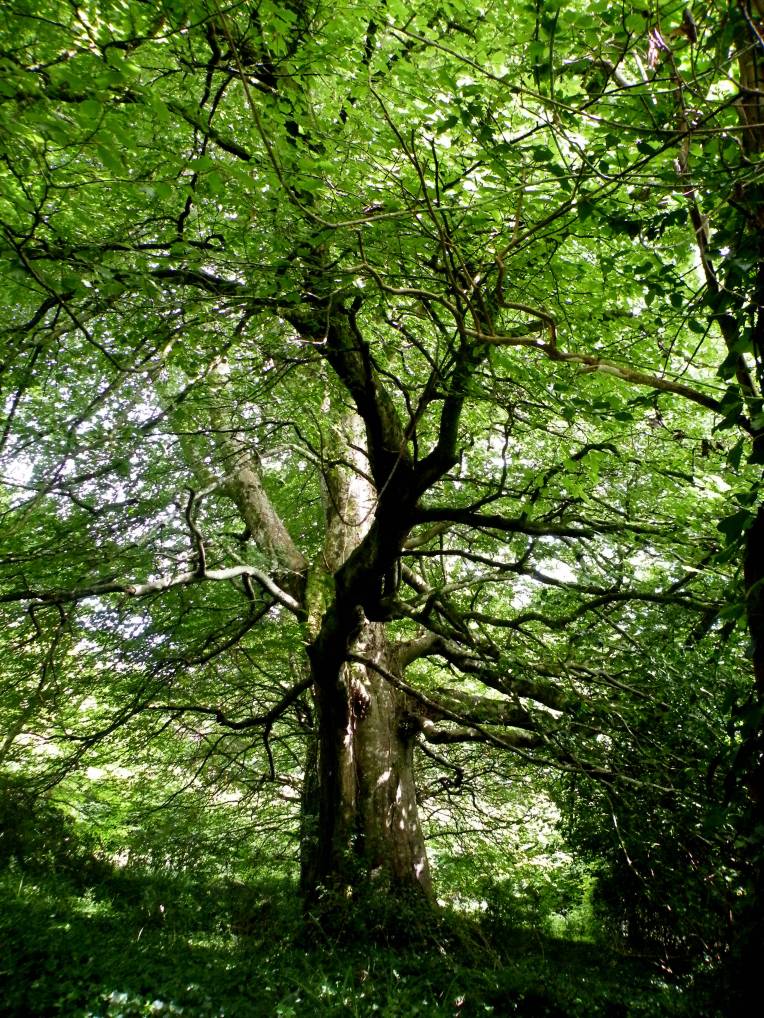
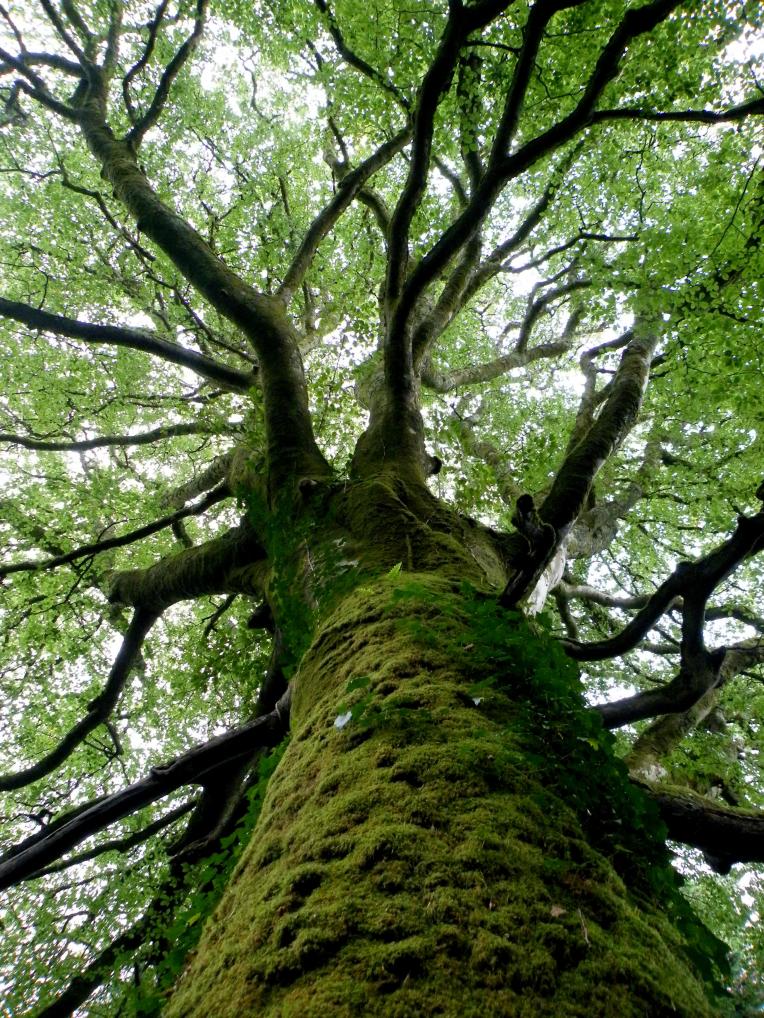
One of my favourites, again I do not know what its name is.  A trunk covered in moss!

Ferns were everywhere, including a few tree ferns (Dicksonia Antartica).  Ferns even growing on the branch of this large tree.

Rhododendrons grow very well in this part of the world, often giving a lovely display of purple along the roads of Counties Cork and Kerry.  But in Glengarriff one is able to grow quite exotic types of Rhododendrons, from the regions of the Himalayans.  Very large leaves (as my brothers is showing) and most beautiful flowers, whites or delicate pinks, among other colours.  Some of these types bloom already in January.  Besides Rhododendrons there are a variety of Magnolias, Ammonias, Camellias and Acacias growing in this garden.

Three other fabulous species.  The top left is a Griselinia Littoralis.  The one underneath I thought is the Cypressus macrocarpa.  The trunks of trees on the right I cannot identify – ideally I will visit this garden again and become more familiar with all the trees, something to look forward to I think.

Sequoia Sempervirens - Coast Redwood

This tree, again if I am right, is the Sequoia sempervirens (Coast Redwood tree), it was pointed out to us that it was growing here. A tree of the Cypress family.  It is an endangered species.

A beautiful and interesting walk it was, wetting our appetite for more that is for sure.  This garden also contains the Davidia involucrate or Handkerchief tree but I did not see it this time.  It has plenty of Vagus Silvatica (common Beechtrees) growing too.  As I already mentioned the climate in this part of Ireland is sub-tropical, very mild and wet winters, mild summers.  This garden is lying along the coast of the Bantry Bay.

20170819_164128

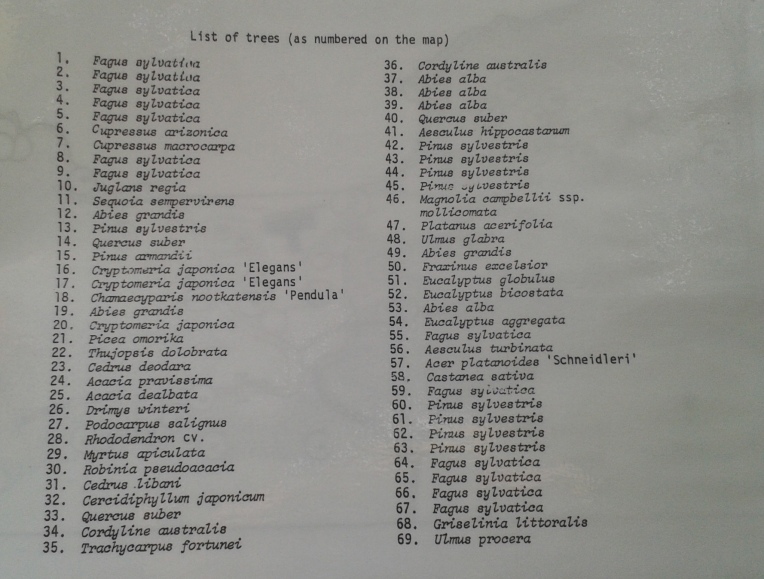
This is a list of the trees found in the garden.  The list was compiled by John Bevan and can be found here:  John Bevan’s article

And here is a link to the WordPress site of Ellen Hutchins (Botanist) and the Ardnagashel Estate.  There is a lot to explore on the following blog link, I hope you enjoy as much as I did to explore this rich heritage.

Ellen Hutchins – Ardnagashel Estate


SEAWEEDS OF THE IRISH COAST

Yesterday saw a whole bunch of us interested folks going to explore the arboretum at Ardnagashel in Glengarriff, West Cork, but apart from admiring the wonderful trees we also received lots of information on the seaweeds and lichens along this stretch of coast. Ardnagashel was established by the Hutchins family and it was as part of the Heritage Week of Ireland that these activities took place, in memory of Ellen Hutchins (1785-1815)who was a remarkable Irish Botanist. The talks on the lichens and seaweeds were given by Howard Fox, who is the State Botanist (National Botanic Gardens) and by Maria Cullen. This ‘life’ introduction to the seaweeds and the lichens of the coast of Bantry Bay was so very interesting. a true first introduction in this field for me. Later in the afternoon Madeline Hutchins (Ellen’s great great grand niece) took us through the forested area of this garden and introduced us to some wonderful trees, among them an enormous Japanese Cedar (Cryptomeria japonica). But more about the trees in another blog.  Now to concentrate on the seaweed for a start.  There is so much information that I took in yesterday and research I want to do on this that I feel delighted (because it’s right here at my doorstep), but I am also a bit overwhelmed because so far in my life I have been concentrating on enlarging my knowledge about wild plants, flowers, insects and spiders of Ireland.  Now this is taking it one step further with looking at lichens and seaweeds.  There are no days enough in the week to enjoy all this abundance of nature, and to do the research.  Needless to say I am a huge amateur in all this. (an enthusiastic one).
DSCF2684
So we learnt that there are three types of seaweeds and they are divided by their colour. These are the greens, reds, and brown seaweeds. There are about 10 000 species.  This particular species is called Fucus serratus L.  (Serrated wrack).  This seaweed is used commercially in the manufacturing of cosmetics and seaweed baths.

Photo on left is Knotted or Egg Wrack (Ascophylum nodosum) with another seaweed growing parasitically (it gets its sugar from the Knotted Wrack) on it, it is called Polysiphonia lanosa. Maria Cullen (right photo) told us to nibble some of the parasite and to me it tasted only like….sea water!  Maria gave us great demonstrations of a variety of seaweeds which she picked straight from the sea there.

Duileasc (Palmaria palmata) a red seaweed, and Nori (Porphyra tenera) and another one of the Wrack seaweeds (Fucus) .

Top right photo is a calcareous red seaweed, Howard is here showing and telling us about the Sea Spaghetti (Himanthalia elongata).  The book I am giving attention to on the right is an excellent cookbook with lots of information on the edible seaweeds.  I bought it for my son-in-law once and he was very pleased with it.

DSCF2696The coast of Bantry Bay is rich in seaweeds, and it’s beautiful too.

Nori seaweed, Laver (Porphyra tenera) in the top left photo is paper thin and edible, much used in countries like Japan of course.  The green seaweed is sea lettuce (Ulva lactuca).  The book on seaweeds looks real interesting and essential if seaweed foraging and identification is taken seriously.

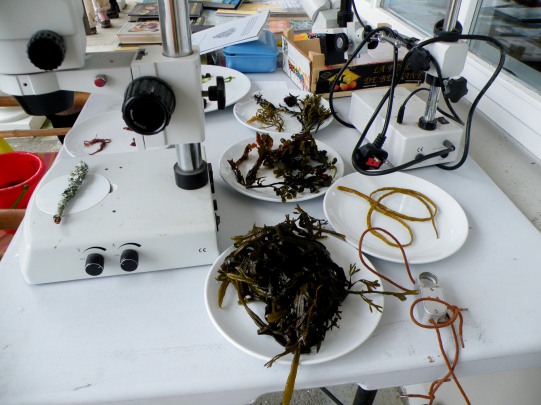
DSCF2706Microscopes and strong magnifying glasses were all available for us to have a look through.

More samples laid out for us to check out and learn about, far more than I can identify right now.  Further in the water there were even more types of seaweeds to be seen.  Howard and Mary never tired of explaining to us all the details, it was such an interesting hour spend on a lovely and warm Saturday afternoon in this beautiful part of Ireland.  My brother Johan and his wife Lorraine who were visiting Glengarriff, were among those interested and it was lovely sharing this time with them too.

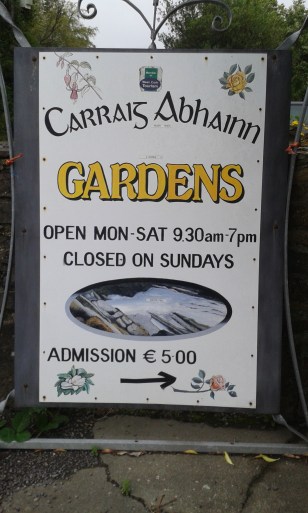
CARRAIG ABHAINN GARDENS

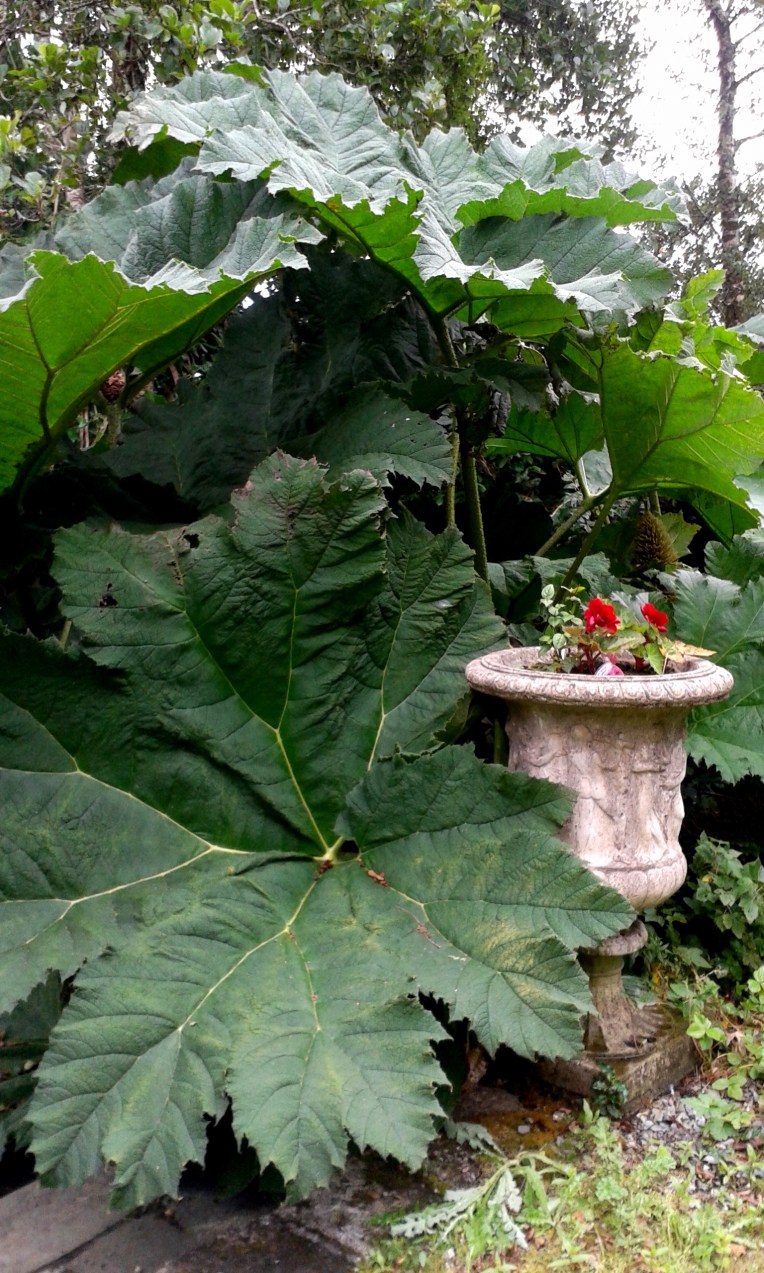
Carraig Abhainn Garden which lies in Durrus, West Cork.  It is one of the very interesting, well established and peaceful gardens in the area. It consists of 1-hectare which is bound by a mill stream. An amazing waterfall and further along the tranquil stream add to its charm and serenity. My daughter and I visited it recently with my grandchildren and the garden was loved by one and all. The children found it exciting with all its nooks and crannies, and we adults – although we often become like children when we are surrounded by nature – we just loved the tranquillity of the place. I was particularly interested in the variety of trees and plants, among them a Mimosa tree, a Korean Fir, and a whole range of other exotic trees, even a Banana tree! The variety of other subtropical plants, Palms, Rhododendrons and others was interesting too. I think it would be a lovely garden to visit in the autumn also just because of the variety of trees, although many of them are evergreens, a lot of them are deciduous trees also. I think my photos will speak for itself.  I hope that everyone enjoys the walk through this lovely garden with me.
20170803_132306

20170803_133143

20170803_132552
20170803_142255After our walk we had a chat with Eugene, the owner together with his wife of this beautiful garden.  Eugene is a goldmine of information on plants and trees and he knows his garden inside out.  I will be visiting again and he promised me a guided tour to which I am looking forward very much.  Here is a link to information on this garden.

http://www.ireland-guide.com/gardens/carraig-abhainn-gardens-.7116.html