I am taking a nice rest this afternoon, because for the moment all my seedlings and young plants are looked after and doing their own thing, growing mainly and getting strong, oh and defending themselves against the onslaught of slugs. I’m sitting in the livingroom but the door to the garden is wide open. Seagulls are flying over making an awful racket, and the rooks are not far off either, I often see them interact with each other, flying after each other. They are having the time of their lives!
The most exercise I’ve done today is walking around my smallish garden and picking a bunch of wild flowers. There is a great tit in the trees, it has this certain call lately, it makes me think that I’m in a large forest, it’s wonderful!
Our trees are very lush now , their best colour of all the seasons is now, the leaves, those of the oak tree only unfolding, are so fresh. One branch of the chestnut tree is very elegantly overhanging part of the vegetable plot.
The month of May is not far off. Soon the swifts will arrive over our house and gardens, when I hear them, for me it is summer no matter the weather.
Right now, in nature, it is the best time of the year!
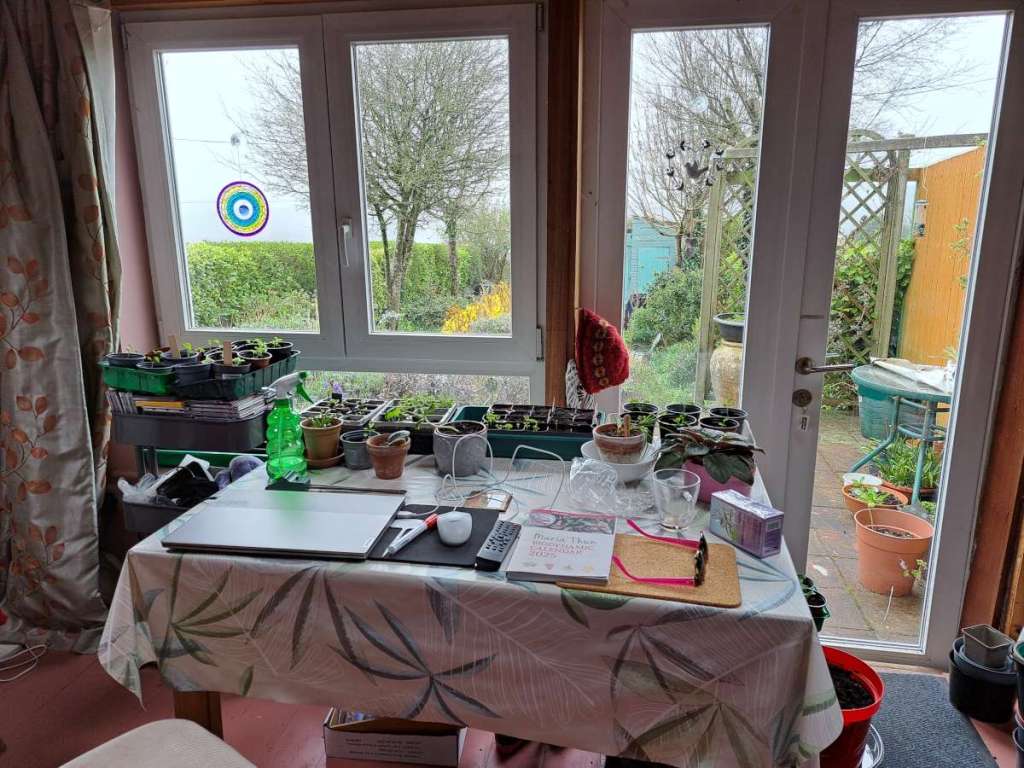
I’m sitting at the window looking out to our garden from our sunroom, which actually used to be called a Conservatory but when the old roof started to deteriorate and started to leak we got it covered in slate and put in two Velux windows, so now I call it the ‘sunroom’ and that will suffice.
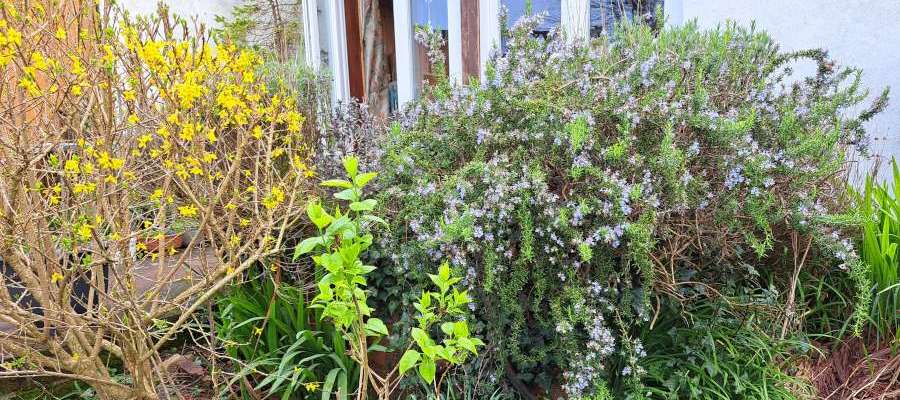
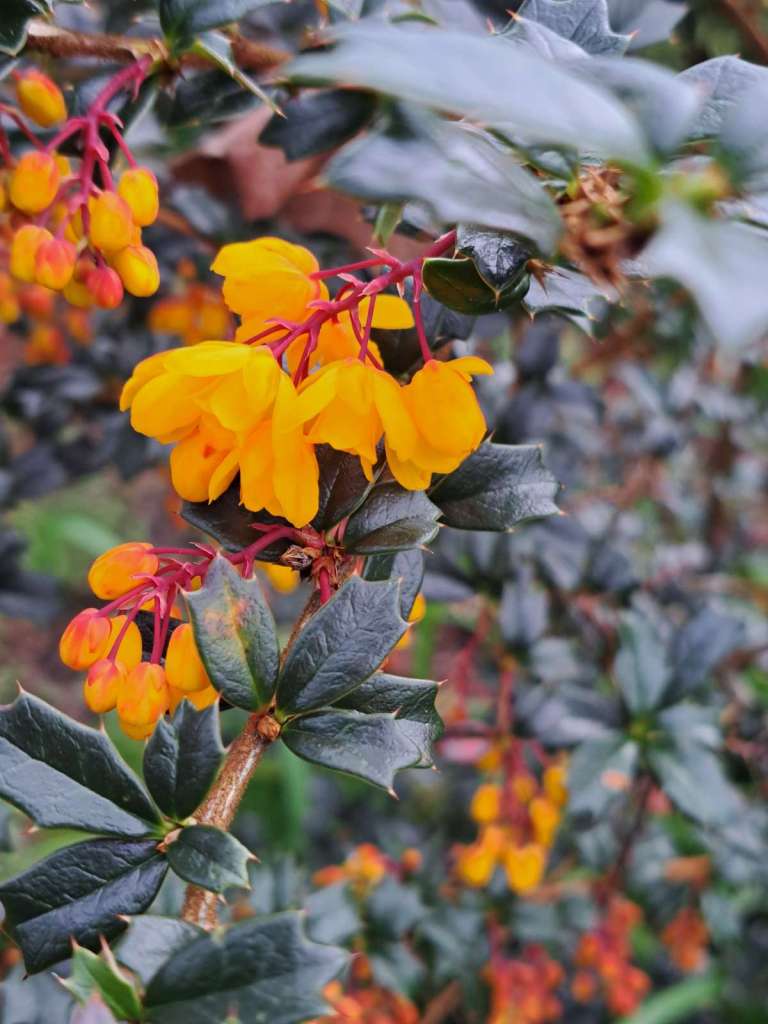
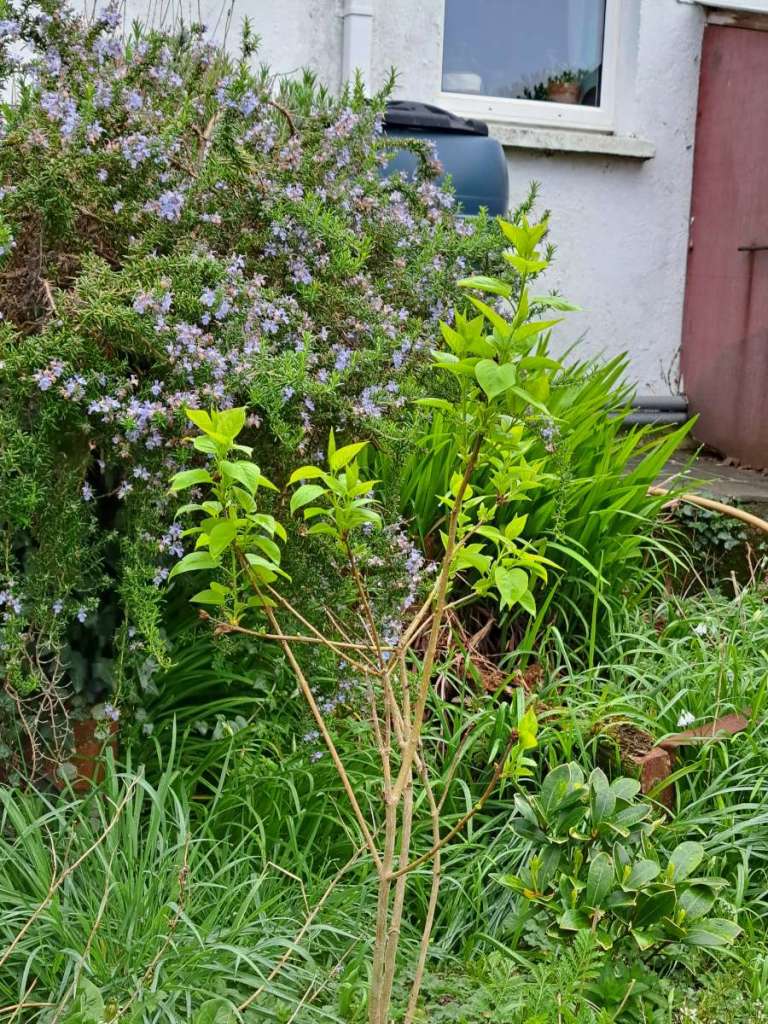
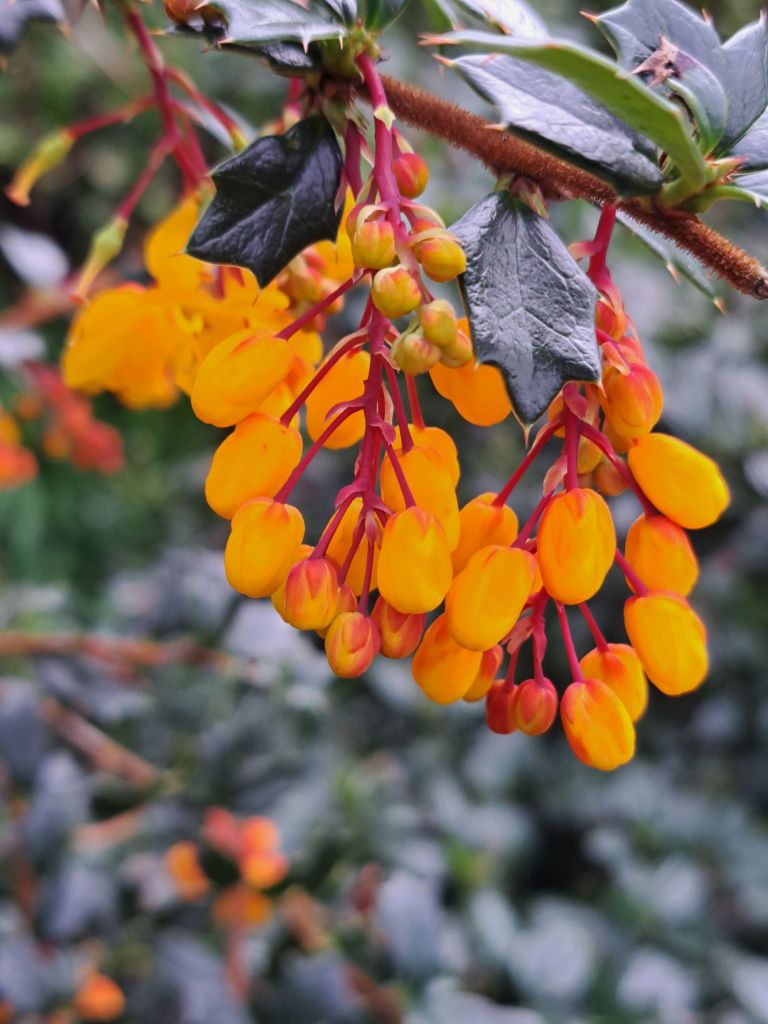
And as I look out to the garden I can see some beautiful shrubs that are flowering right now, the forsythia is a patch of yellow and then there is the Berberis Compacta fully decked in orange, it’s beautiful to see even through my still blurred eyes, I’ve had cataract surgery last week and I still cannot see clearly. The Azalea both the purple and white one are coming into flower too, and the Rosemary is one blur of purple and dark green.
ForsythiaRosemaryBerberis compactaVery old azeliaPurple azelia, small flowers
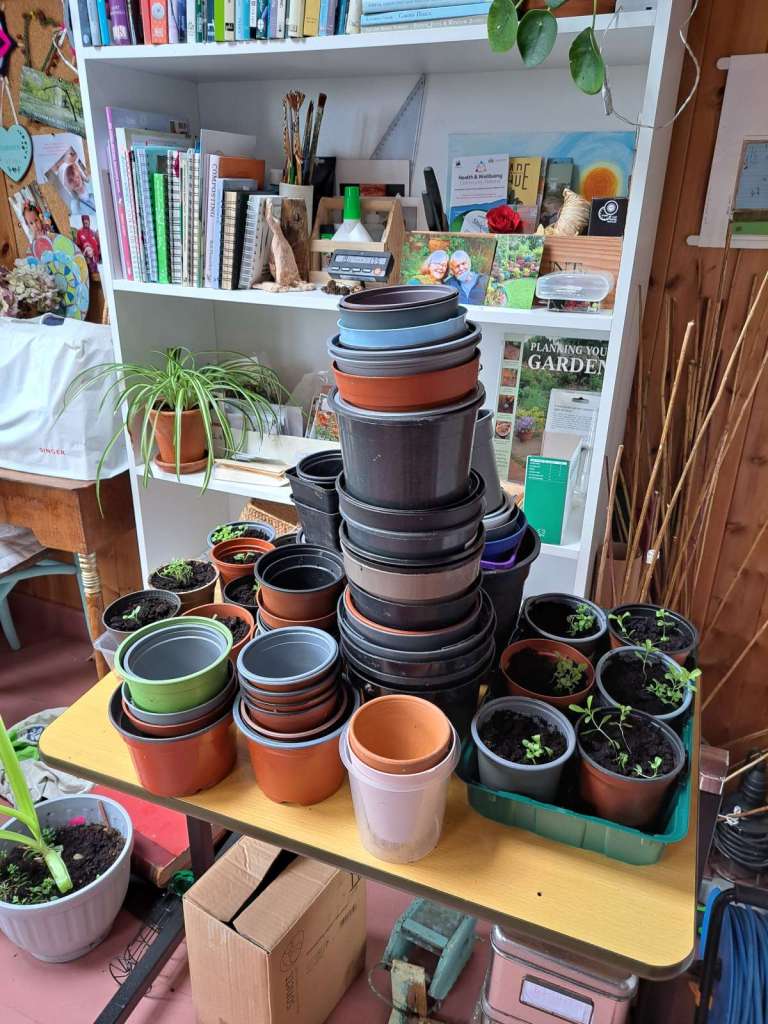
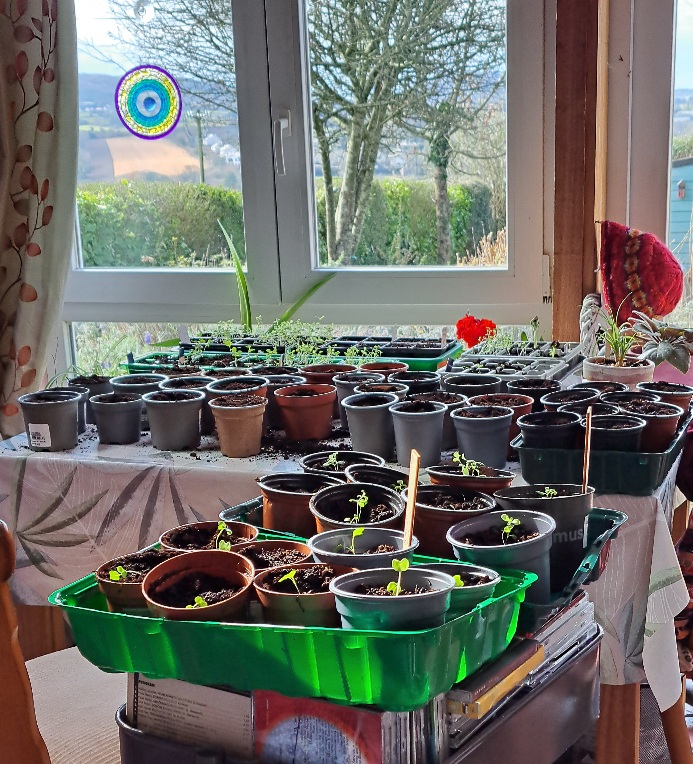
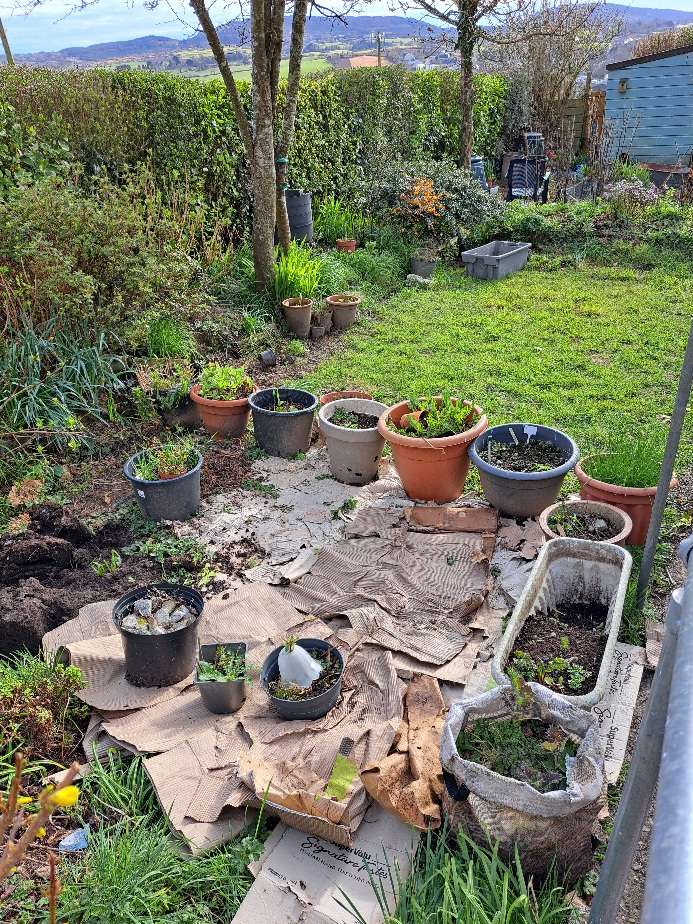
I’ve been working with my seedlings this morning; I’ve been repotting some of them. The room is filled with all sizes of pots, which I’m filling with soil, and I am planting seedlings like there is no tomorrow, I have got so many seeds coming on and this whole room is absolutely turned into a greenhouse. I’m so happy with having this space and being able to get my young plants going. I haven’t been able to set up the small plastic greenhouse in the garden yet but that’s the job that’s got to be done. I will then move all these young plants in there and get them to grow strong before I can put some of them out in the purposed plot, the soil needs to be prepared yet. The grass which I had covered with cardboard needs to be either dug or else I will just throw soil on top of it. The soil for the potatoes is ready though, and they have been chitin here on the press, so weather allowing, they are next to go into the ground.
Right now, the sky is gray and there’s a bit of wind, but my chestnut tree is starting to come into leaf, its buds are bursting. The sky out there is filled with birds flying in all directions, seagulls and crows especially, they’re all happy to be alive I think, yes there is lots of activity, for one I have seen our resident blackbird couple eyeing the thick hedge which is where they made their nest before.
It does look like rain and so it probably will rain but there is a lot of inside work and that’s what I’m busy with at the moment. I have 28 kale plants, they’re very small yet but that’s ok as they are only for use next winter, I sowed some extra to be able to share them with others, because that’s fun.
Young Lilac treeLemon BalmPieris berriesStill have to tackle the compostPlans for another vegetable plotSeedlings coming on
A week later and now we are April!
Despite my limited vision at the moment I was able to plant my potatoes, which is great as it puts me ahead. Meanwhile the sun has been shining for days and there is a warm wind today, my washing has been dancing on the line all morning, a lovely sight to behold because I can now put my clotheshorse away for the summer (I hope). Young plants and seedlings are coming along great and I’ve sowed more. The garden has dried out in the meantime, mud has become hardened already. I now urgently need a gardener, that is, a person who can do some of the jobs I cannot manage. My grandson has advised me to do proper fencing around my new vegetable plot rather than just put pots around it. The idea is to keep the cats from doing their business in the soil where the vegetables are growing. But I might just settle for keeping an eye on it daily and using a shovel. Not decided yet, but note that I have five different cats, not my own, visiting the garden!
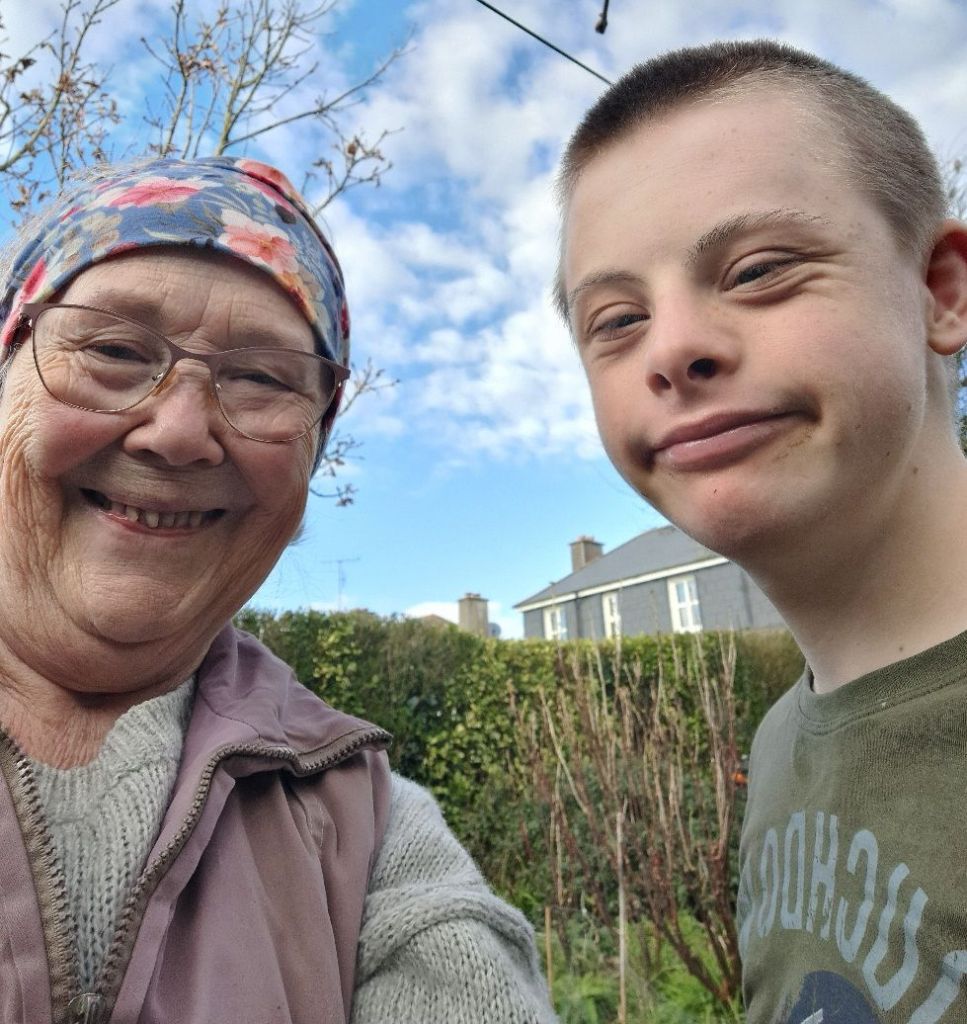
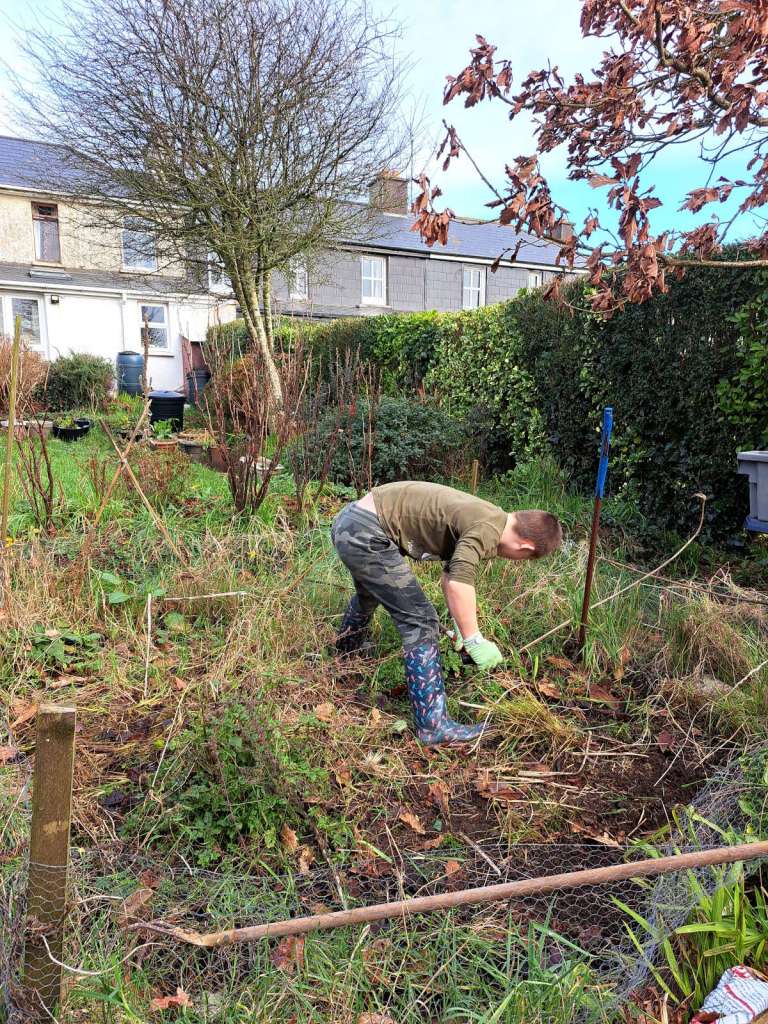
GARDEN AWAKENINGMy grandson helping me, so valuable.
With the month of March well under way our garden is crying out for attention. I have great plans this year, among other things is planting more vegetables and in order to realise this I’m digging up one third of our small lawn. Exciting!
I have been suffering a bit from writers block for a while now, hopefully my muze will return soon.
Wishing everyone a glorious spring, or as it happens, autumn time. Much love.
It is time for a bit of stock taking, and for catching up with many friends and followers of my blog. Personally the year 2024 has brought many changes, some challenges, some sad, and some good. Worldwide it’s been a sad and chaotic year too I think. Many of us have asked ourselves serious questions about our general humanity, our deeds towards our fellow human beings. A lot of good has been happening too during this past year, a lot of compassion has been shown, and brave and good people have shown to be always around.
I visit Ian, my husband, in the nursing home every week, something we both look forward to very much.
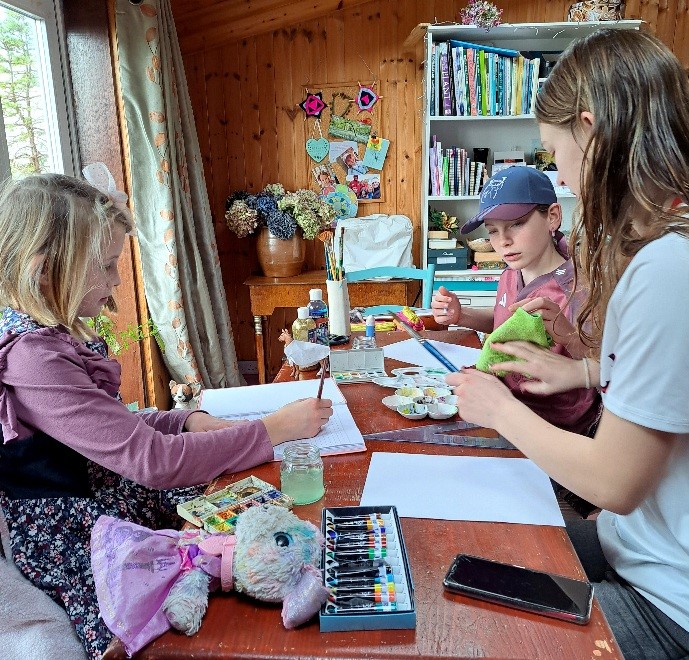
And now January is almost over and I’m still organizing my activities inside the house and out in the garden, and in society. Lots to do, all good things. During the winter I’ve availed of webinars and zoom meetings a lot. Webinars about grasses and rushes, and other natural subjects. Regular zoom meetings of a lace making group. And an introductory course in tree identification. Collage making or painting with my grandchildren is very rewarding too. Locally there have been meetings of the Early Retirement Group which has fabulous and interesting (mainly) other women as members and a good program, one of the things we do is a weekly chair yoga session which keeps us all quite flexible. Then the monthly book club and the poetry circle are such a joy, as are the very regular and hugely interesting art exhibitions. Skibbereen has it all. There is simply not enough time to do it all.
And then there is the weather which during winter can be quite challenging, storms, heavy rain, frost, the type of weather that makes you want to crawl behind the stove with a good book. Christmas and New Year celebrations seem to have come and went in a flash this past year. The dark days are now getting a little lighter and soon it will be the first of February, for Ireland that heralds the beginning of spring, it is also the feast of St.Bridgid and has now become a public holiday. And so…. I’m chitting my potatoes to have them ready for planting in March. My garden is still my focus a lot of the time.
This coming season my main big plan for the garden is to plough up half my little grass field so I can plant more vegetables. For the past five years I have added more and more shrubs because I had much less time to garden and thought it was the better way. This meant that I now have less and less space for vegetables. So space will have to be made. My grandson Ruben who is now a strong teenager and very willing to help me has already cleared one plot in the back of the garden, he wants to do more. We are great mates and I love him coming over and working alongside me, and afterwards we have pizza and watch a movie.
Luckily during the last storm none of our trees suffered, we have seven trees in a small garden. We live in a terraced house and the garden is relatively small. Ours are a birch, oak, chestnut, hawthorn and elderberry, and in the front garden, a currant tree and an acer. Our hawthorn tree was affected by blight last summer and lost all of its leaves, we’ll see what happens this year. The chestnut had been trimmed five years ago and has some rot in an outshoot and that will need looking after.
Gardening and planning a garden, as many people know very well, is a great joy, and keeps us fit, it’s also hard work at times, but that can be done in part, an hour here and an hour there on a daily basis, weather allowing of course (I’m a fair weather gardener). To be out in nature is such a joy, the fresh air, the scents, sounds, and seeing the growth is all delightful and will keep me going for ever. The observation possibilities of seeing insects, birds, wild plants and herbs growing, as well as tasty vegetables and trying out new types. And then there is the digging up of potatoes and the harvesting of edible produce, how much better can it get I think it satisfies one of our most basic instincts as humans, that of survival.
Not being sure what 2025 will bring for us all, I wish many blessing for each and everyone.
I heard the bells on Christmas day, their old, familiar, carols play, And wild and sweet the words repeat of peace on earth, good will to all mankind. Henry Wadsworth Longfellow
Wishing all my dear friends, family and followers a very happy and joyful Christmas, and a healthy and blessed New Year!
And a winter time filled with pleasurable winter celebrations.
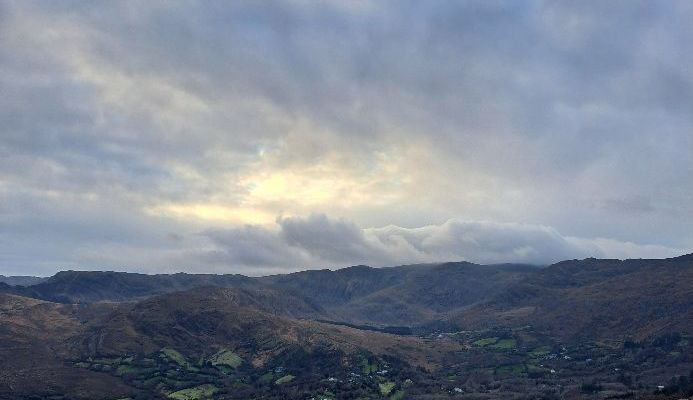
Travelling through the Caha mountains during winter I find that there is plenty of interest to see and get excited about even just along the way. While some of my drives are taken in bad weather conditions, heavy mist, rain and or wind, most of the time I’ve experienced dry and also regularly sunny weather.
Most of all, this winter I find the skies fascinating. The colours, subtle, in pastel pink, light blue, ashen grey or radiant white, and even as if with a magic brush, diffused streaks of periwinkle purple. I’ve seen it all in skies over the Bantry Bay, over the Caha mountains and over the Glengarriff valeys. Ever changing skies with light of a beautiful quality. It certainly holds the attention of the traveller. These days I drive home when the sun is setting, adding another marvel of light, the setting sun, often spectacular!
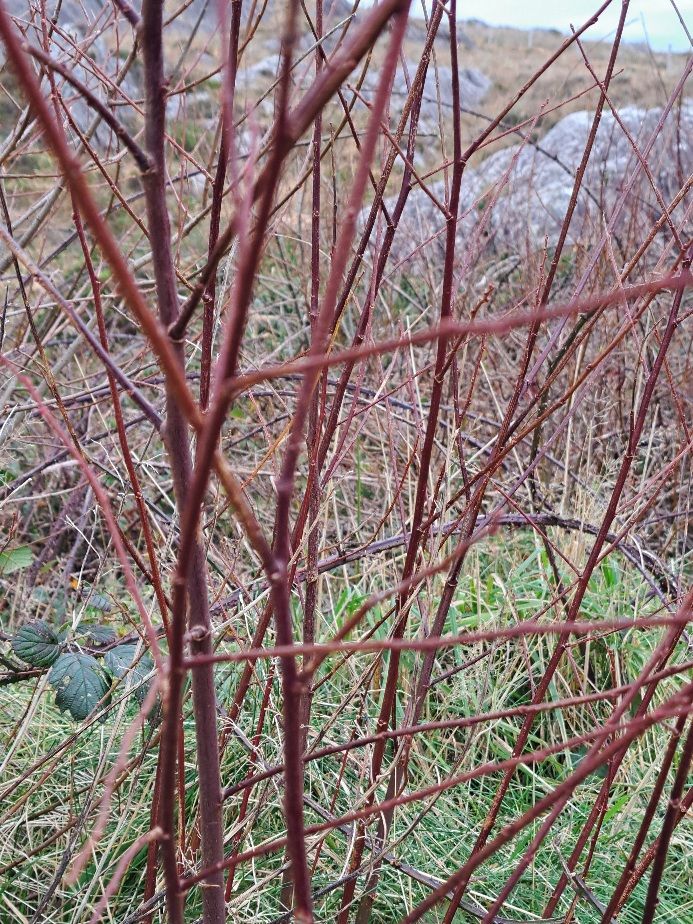
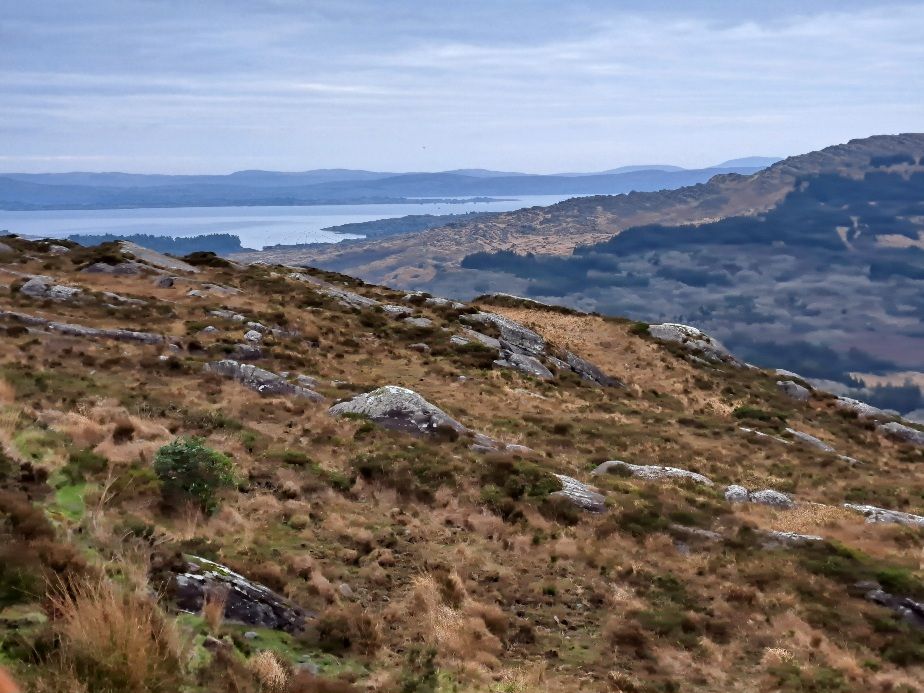
Looking down into the valley there is a whole palette of different browns, beiges and forest greens. A true feast for the eyes. As can be seen in the photo below Glengarriff National Forest has a lot of birch trees growing, and apart from their stark white trunks, their branches are particularly beautiful at the moment. Every time I pass clusters of them I try to think how to name their colour, a type of maroon, or a vintage wine, or does it look more like an English lavender, burgundy, gothic mulberry or umbral umber. It is hard to pinpoint exactly the colour of those branches, and it also depends how the light shines on them and how the rain brightens them.
Birch trees in the distance
A variety of other branches, among them the deep red of the dogwoods is always very nice in a landscape, and so is the drama of the bleached grasses, rushes and sedges covering whole stretches of hillsides with cream blonde colours or even rusty browns.
Darkness falls early these days, painting the landscape mainly in moss green, dark brown or black, though the mountains in the distance do give us some mauve. The landscape changes constantly, it is very noticeably when driving higher up, clouds throwing huge shadows over the valleys interspersed with stretches of sunlight. As I said there is a lot of interest even in winter on my journey. Probably much more to discover yet and that leaves me with a feeling of ever more excitement.
I came across two photos of winter foliage recently, these are paintings of the Danish painter Peder Mork Monsted, (1859-1941) from his ‘Winter’ series. I thought it shows the colouring of the birch trees beautifully and rather well. I think his work very nice. (Referenced from Gallery of Art) with thanks.
“As we live and as we are, Simplicity – with a capital “S” – is difficult to comprehend nowadays. We are no longer truly simple. We no longer live in simple terms or places. Life is a more complex struggle now. It is now valiant to be simple: a courageous thing to even want to be simple. It is a spiritual thing to comprehend what simplicity means.” ― Frank Lloyd Wright, The Natural House Santa Lucija, Gozo






























 agoyvaerts